False Teachers In The Church

Preacher and Bible

But there were also false prophets among the people, even as there will be false teachers among you, who will secretly bring in destructive heresies, even denying the Lord who bought them and bring on themselves swift destruction. And many will follow their destructive ways, because of whom the way of truth will be blasphemed. (2 Peter 2:1-2)

False Teachers In The Church

The early church faced many challenges as it came through the growing pains of infancy. In the beginning, there were many converts who were added to the church as three thousand souls initiated the first days of the kingdom. In time over five thousand people and then multitudes were added to the church. It was an incredible time of growth and like all things that grow, there would be growing pains. Slowly the forces of persecution began to affect the church and the first severe test of the church came by the hands of Saul of Tarsus. The metal of the early disciple’s character was tested and tried as the persecutions continued under the hands of the Romans. Often the problems faced by the New Testament church are viewed only from the standpoint of Saul’s persecution or the devastating impact of the Roman Empire as it tried to stamp out Christianity. In fact, one of the greatest threats to the church was not from forces outside the body of Christ but the insidious influences of false teachers that crafted a web of deception to lead the hearts of the people away from God. Paul would exhort the brethren at Corinth to beware of those who would deny the resurrection of Jesus as a failure to the whole doctrine of grace given by God. The apostle Peter is very concerned about the dangers brought from the teachings of those who would deny the Lord Jesus Christ. He writes about the false teachers that would use any means to dissuade the hearts of the disciples to follow false doctrines. This was a very real danger and the early church must be on guard for what Satan would throw against them.

Peter establishes some vital realities about truth and error. The church should never be lulled into believing that false teachers do not exist or sell their wares among the brethren. There are false prophets in the world and there are false teachers in the church. They will secretly bring in teachings that seem harmless at first but will, like leaven, grow into destructive heresies that will destroy souls. Many will follow the teachings of false doctrine because it appeals to their carnal nature and sound pleasing to what they want to hear. False teachers will use materialism as a means to attract and destroy the hearts of the faithful. The great danger of false teachers is their siren call to listen and follow doctrines that are in conflict with the word of God. It must be clear the nature of false doctrine is not an opinion or viewpoint of a person’s interpretation but a disregard for the word of God. As the father of lies, Satan will use men to accomplish his work of deceiving the hearts of those unwilling to believe in declared truth. The Holy Spirit preserved the epistle of Peter so that all men could see what impacted the church in the early days will impact the church throughout the ages. In other words, if there were false teachers in the church, in the beginning, there can be those within the ranks of God’s people that are not holding true to the word of God. This is not a license toward McCarthyism within the church where individuals actively pursue the theological beliefs of every member demanding allegiance to a certain position. The warning is a wake-up call that every saint must have the spirit of the Bereans of old that diligently sought the word of God in its context examining what the apostles were saying with what the word of God said. Fighting against error is using the word of God as the foundation of truth regardless of the opinions or teachings of men. From the old hymn of restoration heard long ago there is a need for book, chapter, and verse. Precepts are established upon precepts and lines are proven upon the lines of divine authority. When men begin to teach without the authority of scripture they slowly open the door to apostasy.

What is most disturbing about the warnings of Peter is the reality that this is not a first-century problem. Each generation lives with the cocoon of their own time without realizing that error comes in slowly and develops over generations by those who forget to establish authority with the word of God as the foundation of truth. History has shown how that many doctrines that once would have seemed impossible to find within the ranks of God’s people are now the fundamental truths of the apostate church in a world filled with many churches. In the first century, there was one church but now there are thousands. The apostles of the early church taught a plan of salvation that is denied by most believers in Jesus Christ today. Innovations fill the religious services of those who profess allegiance to Jesus like instrumental music, concert worship halls, fellowship buildings with family fun centers, acceptance of sexual freedoms as long as one loves Jesus, religion that is more a social and political in its character and the deafening sound of the devils siren is loudly heard in the absence of what the Bible teaches. Apostasy is alive and well in the generation of those who say they believe that Jesus is the Son of God. The church of Christ has never been immune from the trappings of false teachers who deny the power of the word to condemn sin, love the sinner and save the lost. Many churches are dying because they refuse to follow the New Testament pattern of authority in organization, worship, and evangelism. Preaching has been softened to a dull whisper. The Bible is seldom read or used in the discussion. Immorality fills the hearts of the adherents with immodest clothing, social drinking, denial of allegiance to the communion of Christ and generally a disinterest in spiritual matters. Members arrive to worship at 11:00 and leave at 12:00 dull, bored and indifferent.  There will be false teachers in the church and if the eyes of the saints are not opened to the word of God the church will die.


Posted in Uncategorized | Leave a comment

Nehemiah’s Prayer

praying man

Remember me, O my God, for good! (Nehemiah 13:31)

Nehemiah’s Prayer

There are many great prayers preserved in holy writ from men like Moses, David, Daniel, the prophets and the apostle Paul. Jesus prayed often to His Father teaching His disciples the nature of approaching the throne of God with grace and humility. The prayer of Jabez is found in the midst of a long genealogy that would be missed if the reader did not take careful note of what is said of the sons of Judah. One of the great books of the Old Testament is the story of a man born and raised in the land of Babylon who became the cup-bearer for a Persian king that would change the face of Israel’s history forever. Nehemiah, the son of Hachaliah, took on a task of huge proportion to accomplish something not for himself or the people but for the glory of God. The walls of Jerusalem lay in ruin and no one seemed to care. He took upon his own heart to have the courage to begin the building, face the opposition and accomplish in fifty-two days the establishment of the city of Jerusalem its walls and gates. Nehemiah was a leader extraordinaire. He had a gift for leading men. His spirit helped others see the potential in themselves. What set Nehemiah apart from others was not something he was born with as natural talent, or his stature or the depth of his wisdom so far as human wisdom would dictate. The final words of the book of Nehemiah are where the character of Nehemiah is found. He had a deep and personal relationship with the Lord God. Seven words form a prayer of love, diligence, courage, faith, hope, and promise. There was nothing arrogant about Nehemiah. He asked for the Lord to remember him and to bless his life for the good he could accomplish for the glory of his heavenly Father. Building the walls of Jerusalem was not about mortar and stone. It was about the city of God. Nehemiah was filled with sorrow because the place where God possessed the people was a run-down, broken city with burned gates and broken walls. He did everything within his power to change the city and united a people under the banner of the grace of God.

Adam Clarke writes, “Of Nehemiah, the Jews speak as one of the greatest men of their nation. His concern for his country, manifested by such unequivocal marks, entitles him to the character of the first patriot that ever lived. In the course of the Divine providence, he was a captive in Babylon; but there his excellences were so apparent, that he was chosen by the Persian king to fill an office the most respectable and the most confidential in the whole court. Here he lived in ease and affluence; he lacked no manner of thing that was good; and here he might have continued to live, in the same affluence and in the same confidence: but he could enjoy neither, so long as his people were distressed, the sepulchers of his father’s trodden underfoot, the altars of his God overturned, and his worship either totally neglected or corrupted. He sought the peace of Jerusalem; he prayed to God for it; and was willing to sacrifice wealth, ease, and safety, and even life itself, if he might be the instrument of restoring the desolation’s of Israel. And God, who saw the desire of his heart, and knew the excellencies with which he had endowed him, granted his request, and gave him the high honor of restoring the desolated city of his ancestors, and the pure worship of their God.”

The work of Nehemiah continues today for those with the courage to pray a small prayer of seven words. To implore the mind of God in the life of a humble servant like Nehemiah and to invite the presence of the Lord to dwell in the heart of a man who only wanted to bring glory to the Father; this is a story that resonates within the city of God as the church of Christ needs Nehemiah’s to rise up and build the kingdom of God to its eternal glory. Men and women who will pray for God to remember them for good in the work of teaching the lost the saving grace of Christ, building up the church to worship and be evangelistic in the measures of worship, teaching and doctrine and to rebuild the walls of God’s people so the world can see the glory of the Lord in the body of Christ. “Remember me, O my God, for good so that others can see You living in me” is a prayer where the heart is devoted to doing all that is possible to build the walls of the kingdom of Christ. There is much work to be done. Jesus reminds us the fields are white to harvest and workers are needed to go into the field. The prayer of Nehemiah is an expression of duty of the part of a man willing to roll up his sleeves and get busy about the work and to invite the grace of God to bless the efforts of the church in reaching the lost. There were many people living in Jerusalem at the time Nehemiah came to town but no one was working or concerned about the fallen walls and burned gates. They had not been praying the seven-word prayer. When Nehemiah came, everyone learned to pray and the work was accomplished. What do you pray?

Posted in Uncategorized | Leave a comment

God’s Plan For A Happy Marriage

happy marriage prov 2715

Drink water from your own cistern, and running water from your own well. Should your fountains be dispersed abroad, streams of water in the streets? Let them be only your own, and not for strangers with you. Let your fountain be blessed, and rejoice with the wife of your youth. As a loving deer and a graceful doe, let her breasts satisfy you at all times; and always be enraptured with her love. For why should you, my son, be enraptured by an immoral woman, and be embraced in the arms of a seductress? For the ways of man are before the eyes of the Lord, and He ponders all his paths. (Proverbs 5:15-21)

God’s Plan For A Happy Marriage

Fidelity will bring about a happy marriage. When God created the world, He set in motion many laws that when followed will bring about the intended purpose, design and outcome desired by the one who created everything to be very good. Before sin entered the world, God looked upon His creation and proclaimed it to be very good because it was very good. One man and one woman lived in a paradise garden and they both walked with God. Like the heavenly bodies that were placed in the sky in a precise manner for a precise purpose, the union of Adam and Eve was designed to maximize the full potential of why the Lord created two beings in His image. Until the fall of man, that design was lived in its perfection because the home was surrounded by the presence of the grace of God. The temptation of Eve was not only the beginning of man’s fall but the battle for the home that remains through every generation. The wisdom literature of the Old Testament is a reminder of the will of God to impress upon the hearts of all men and women the purpose and design of the home as intended by the Creator. Solomon uses the analogy of the cistern or a well to show the relationship enjoyed by a husband and wife should be exclusively their own. Wells of water were highly regarded for their life-giving force and possession of a well was severely protected. In some cases, drinking from a well of another would bring about death. The husband must guard the trust of this love for the wife and the wife to the husband with devoted love for the blessings each brings to the other. God created the marriage of a man and woman to share in the flowing waters of the blessings of conjugal, spiritual and personal fidelity. There is no purpose in allowing the streams of the marriage love to be spread among others. In marriage, two streams are joined together as one so they may both flow together as one without others merging into their union. Sexual immorality is sharing that stream with others and is condemned by the Maker and Creator of the marriage bed.

Often the marriage union can be viewed as one does dining at a fine restaurant. An order is placed for the desired dish and after it comes and is tasted the eyes look at what others have and a desire to have what they have fills the heart with envy, regret, and lust. There is nothing wrong with sampling the delicacies of another’s dinner plate but to disperse the fountain of marital fidelity among others is an abomination in the eyes of God. Marriage is a blending of souls only for the one union formed by the hand of God, instituted to be a faithful promise of hearts devoted to the purity of marriage. What happens in marriage remains in marriage. Happiness will only come from commitment to the creative design of God’s word for the union of one man and one woman. The fulfillment of marriage comes from each party committing to finding the blessing of one another in the union of God. Solomon exhorts the husband to be blessed in the fountain of marital happiness in the joy of his wife and his wife alone. There will be no regret, sorrow or heartaches that will last a lifetime in marriages that are held together by the desire of following the divine pattern. A woman who is loved by her husband will always be the wife of his youth. There will never be a desire for another because there is no other. The passions of the sexual designs of marriage are highlighted in the relationships husbands and wives share with one another. God created the woman to be a beautiful creation to become one with the man in every aspect of their union. Solomon tells the man to keep his heart and his mind upon the beauty of his wife physically, sexually, spiritually and emotionally. A man should be enraptured by his wife, to be ravished always with her love, and as the English Standard Version suggests, a man should be intoxicated by the love of his wife. This is further explained in the New American Standard Version that tells the man to be exhilarated always with the love of his wife. Happiness in marriage is when the man keeps his eyes on the wife of his youth.

There is a counter thought to the need of faithful love. Solomon poses the question of why would a man so devoted to his wife be enraptured by an immoral woman? The same word is used in the negative as it was earlier used in the positive. What makes a difference is what becomes of the enraptured soul that has filled the heart with a ravishing need to find sexual enjoyment outside of marriage. When Adam and Eve disobeyed God and failed to follow His divine plan, sin brought immense shame. For a moment they thought they would enjoy an eternal pleasure in eating the forbidden fruit but the moment they rebelled they felt shame, fear, and dread to be in the presence of God. Sexual infidelity is the same. There is a rush of desire that is as intense as any emotion but when gratified there is nothing but anger, shame, and fear. Guilt enters the mind as sin corrupts the pure heart. The word of God tells the tempted to keep the fountain of marital purity for one another and not to dispel abroad the blessings intended by God for marriage to others. There will never be any lasting happiness in sexual promiscuity and supposed freedom to disperse abroad the fountain of life. Marriage was created for a union of fidelity so that happiness can be enjoyed, enriched and enlivens the hearts of the man and woman in the holy bond of God’s design. A happy marriage comes from hearts that are happy in the word of God.

Posted in Uncategorized | Leave a comment

The Gospel Of Christ In Ezekiel

Ezekiel

“Therefore I will judge you, O house of Israel, every one according to his ways,” says the Lord God. “Repent, and turn from all your transgressions, so that iniquity will not be your ruin. Cast away from you all the transgressions which you have committed, and get yourselves a new heart and a new spirit. For why should you die, O house of Israel? For I have no pleasure in the death of one who dies,” says the Lord God. “Therefore turn and live!” (Ezekiel 18:30-32)

The Gospel Of Christ In Ezekiel

There is little that has changed when it comes to the relationship of man to God and especially how man comes to God. The covenants have changed over time from a patriarchal law to the covenant established with Israel at Horeb and finally the grace of God in the new testament of Christ. What has not changed is how man comes to God. Israel lived under the curse of the law and through the Law of Moses fulfilled the requirements of God to be found just in His sight. While the law was given only to the Jews and abolished when Christ rose from the dead, the principles of obedience were the same as prescribed to Adam, Moses, David, Elijah and the preaching of the gospel in Christ in the first century.  Ezekiel the prophet is living in the exile with the people of God preaching the same message that Paul the apostle would preach many years later in any city of the Roman Empire. Repentance is the first word of the gospel whether in the time of Ezekiel or the time of Paul. The judgment of God places man at risk. Because of the wrath of God, man must decide to change his life conforming to the will of the Creator or face the fury and displeasure of the Lord. The first thing the heart must do is to be filled with remorse for the rebellion of heart characterizing a sinful nature. Repentance is demanding a change in soul, mind, and spirit turning to the Lord for help. Godly sorrow motivates the heart of man to divest himself of pride and embrace the mercy of a loving God willing to forgive. Without repentance, there can be no forgiveness. To repent is to act upon the reality of what sin has done to the nature of man and God. The people of Israel needed to repent as much as the people of Philippi, Colosse, Rome or Jerusalem in the days of Paul needed to repent. Preaching the gospel of repentance did not begin on the Day of Pentecost. This has been the eternal message since the Garden of Eden.

Ezekiel admonishes the people to repent and turn from their sins to God. The message of repentance is not just a feeling of remorse but an action of the person to change everything about what they have done. Sin will destroy the soul and removing it far from the heart, soul, and mind of the person will show the character of repentance. Repenting of transgressions against God cannot be complete until the sin has been removed, rejected and reviled. This requires all the transgressions be removed. Keeping a few things around to appease the desires of the flesh is not repentance. Turning away from all their transgressions is where God meets the heart of man and forgives. In the case of the Israelite’s, they had to completely remove their desire for idol worship. Many of the kings of the southern kingdom were evil and a few were good but even the good kings would often not completely remove the Baals, Ashtoreth or high places where idolatry was practiced. Repentance requires a complete cleansing. Casting away all the transgressions which you have committed is the language of true repentance. Ezekiel was not preaching a new doctrine. This was true before the Law of Moses and the early church preached the same message of turning away from sin completely to serve the true and living God.

The real key to repentance is when a heart turns away and casts away all the transgressions of rebellion that a new heart and a new spirit are infused in the soul of man. There is no reason to be punished by God when He has offered His grace to allow man back into His fellowship. Repentance is a desire to be a better person and this can only come about when the desire is given to get a new heart. When a person goes to a doctor and finds they have heart disease requiring a transplant, everything is done to move in that direction to preserve life. So it is in the spiritual world to seek a new heart with a new mind to attack sin not allowing it to overcome the soul again and again. Repentance means all efforts are made to change the heart from the transgressive nature of rebellion to the accepting grace of God’s love. A new spirit is the willingness to get rid of anything that will bring harm to the soul again and again. Ezekiel and the prophets preached this message of repentance but the people refused to listen. Some tried to live in both worlds of idolatry and worship of God but that cannot be done. Their hearts were not fully devoted to the Lord and because of this divided loyalty leaned towards the idols instead of righteousness. Repentance demands a new heart and a new spirit to remove the stain of sin. Then, and only then, can one finally say they have repented. The message of Ezekiel is still the message of repentance today. Christ died to bring all men to the Father. Peter’s first words on the Day of Pentecost began with “repent” and that is what they did. Repentance is followed by turning away from sin and creating a new heart and filling a new spirit with the love of God. Repent – turn – create. The gospel of Christ in three words.

Posted in Uncategorized | 2 Comments

Look At The Fields

Look at the fields

So He came to a city of Samaria which is called Sychar, near the plot of ground that Jacob gave to his son Joseph. Now Jacob’s well was there. Jesus therefore, being wearied from His journey, sat thus by the well. It was about the sixth hour. A woman of Samaria came to draw water. Jesus said to her, “Give Me a drink.” For His disciples had gone away into the city to buy food. Then the woman of Samaria said to Him, “How is it that You, being a Jew, ask a drink from me, a Samaritan woman?” For Jews have no dealings with Samaritans. (John 4:5-9)

Look At The Fields

The life of Jesus was a wonderful cornucopia of moments that revealed the character of deity in the flesh and the surprising relationship of a teacher to His disciples. Jesus would find Himself in conflict with the religious leaders of the day because He made no separation of persons as He dined with Publicans, touched the flesh of lepers, spent time with little children, talked with tax collectors and was brazen enough to speak to a woman in the middle of the day at the well of Jacob. The Lord had left Judea wanting to return to Galilee but He needed to go through Samaria. More than a thousand years before the birth of Christ, Jacob gave a plot of ground to his son Joseph and there was a well that was still in use that was Jacob’s well. Wearied from His journey, the Lord sent the disciples into the city for food while He rested at the well. Soon after arriving at the well, a woman came from the city to draw water. As the woman approached the well, it would have been uncomfortable for her to see a Jew sitting by the well where she was to draw water. Being the middle of the day it has been surmised that because of the character of the woman which was later revealed by Jesus she came to the well at noon because of being shunned by the women of the city. Regardless, she was a Samaritan and the man resting by the well was a Jew. Long-held customs did not allow the Jews and Samaritans to interact much less a man dignify a woman by speaking to her. She warily took her vessel to draw water when Jesus speaks to her. He asked for a drink of water.

Jesus was tired. He was very tired. Exhausted from the grueling schedule and the long journey by foot from Judea, the Lord needed to take some time to refresh Himself and relax. Sending the disciples into the city to buy some food would give Him some much-needed downtime to reflect and gather Himself together. He was thirsty but there was nothing at the well that He could draw water. Deity sat by a well of water that He had created and could not draw the water. In the distance, a lone figure appeared carrying a bucket. It was a Samaritan woman who had lived a very immoral life. She was living with a man that she was not married although she had been married five times previous. When she began to draw the water from the well, Jesus asked a simple request. He desired a drink of water. This startled the woman as Jews would not ask a Samaritan for anything much less a Samaritan woman. As the conversation grew the man from Nazareth opened the eyes of the woman of Samaria to the bountiful grace of a loving God who came to give all men the water of life as a fountain springing up into everlasting life. There was no rabbinic prejudice in the man’s voice as He conversed with the woman and it did not dissuade the Lord the woman was not of the highest character in society. Two people came to a well to quench their thirsts but only one had the water of life. Jesus offered this outcast woman the greatest gift she would ever know.

The story of Jesus and the Samaritan woman is the eternal voice of God telling every man that He loves and cares for them desiring to save them from themselves. There are so many souls that wander the earth trying to find happiness in the carnal pleasures of the flesh like the woman from Samaria. She could not be satisfied in one marriage but had five husbands. This did not satisfy her and she decided to live with a man. She could never find happiness. As she walked to the well of Jacob she might have reflected on her life that had brought nothing but shame and heartache and believing there was no escaping her despondent life. There had been no hope in her life and there was no hope in her future. What she did not know was the man sitting by the well was going to give her something she had longed for all her life. He had the answer to what she needed. The water that He gave her would never make her thirst for the failings of human wisdom again. Believing in Jesus as the Son of God would change her life. Jesus was tired, weary and exhausted but He took the time to change the lives of not only the woman who came to the well but many of the Samaritans of that city who believed in Jesus that day. Everyone has a story and Jesus has the answer to every story. The disenfranchised of the world need the gospel as much (if not more) than the quiet neighbor who pays his taxes, work hard each day and attends church once in a while. Jesus talked to the woman at the well because she was not well. Her soul was corrupt with the filth of the world and Jesus washed her clean with the living water. Look at the fields for they are already white for harvest.


Posted in Uncategorized | Leave a comment

It Only Took One Generation

bible reading table

So the people served the Lord all the days of Joshua, and all the days of the elders who outlived Joshua, who had seen all the great works of the Lord which He had done for Israel. Now Joshua the son of Nun, the servant of the Lord, died when he was one hundred and ten years old. And they buried him within the border of his inheritance at Timnath Heres, in the mountains of Ephraim, on the north side of Mount Gaash. When all that generation had been gathered to their fathers, another generation arose after them who did not know the Lord nor the work which He had done for Israel. Then the children of Israel did evil in the sight of the Lord, and served the Baals; and they forsook the Lord God of their fathers, who had brought them out of the land of Egypt; and they followed other gods from among the gods of the people who were all around them, and they bowed down to them; and they provoked the Lord to anger. (Judges 2:7-12)

It Only Took One Generation

The book of Judges is a case study of the fickle nature of men who cannot keep the focus on spiritual things being tempted and swayed by the trappings of the world to leave God. Time and again they are delivered to the hands of their enemies and after a while when they cry out to the Lord salvation comes in the form of a judge who delivers them from their oppression. This will last for a short time and they fall again into the clutches of Satan who takes their hearts away from the Lord. The book is a cycle of obedience, rebellion, grief, deliverance and after a short time of faithfulness falling back into rebellion and suffering brought on by the wrath of God repeated throughout the book. One of the keys to the book is found in the early writings. As long as Joshua was alive there was great prosperity in the land and the hearts of the people followed the leadership of Joshua to be faithful. The elders who outlived Joshua exerted a great influence over the land as they told the stories of the early conquest and how God had delivered the land into the hands of Israel. For as much influence and goodness given by the generation that conquered the land, something was missed in the translation of that faith to the succeeding generations. Sadly a generation arose that did not know God. They did not know the works of the Lord in delivering the Hebrews from Egypt and the great works of the wilderness wanderings. Their early history of dwelling in Canaan was not taught in the course of God’s power working among the people. What happened to the next generation was ignorance of the word of God and it nearly destroyed the people. As a result, the people did those things that were evil in the sight of the Lord. Baal worship was accepted as the norm and they took very little time (if any) in a study of God’s word. Forsaking the God of their fathers, this new generation prospered and filled their lives with the enjoyments of a land flowing with milk and honey. Times were good and hearts were merry and no one took time to think about the Lord.

The wrath of God would be brought against them time and again throughout the story of the Judges. Their nature to seek after other gods did not end there. During the times of the united kingdom and especially when the nation of Israel was divided, the worship of Baal and gods of the people became the stumbling block leading to the destruction of the nation of Israel. There were many reasons that led up to the destruction but as the home was built so was the nation and what was not happening in the home was the telling of the story of the Lord God. Generations after generations were raised up that did not know God and did not learn the stories of the power of God. In the case of the book of Judges, it only took one generation and the nation went into a spiral fall of apostasy. This would become their pattern throughout the telling of the Old Testament as a warning to the people of God of what happens when one generation is neglected and not taught about God. The generation before them had the responsibility to teach the word of God. It was incumbent upon the fathers and mothers to instill in the hearts of their children the love of God, His power and grace and the old, old stories of His majesty. Instead, the parents taught their children nothing and a generation arose that did not know God.

There is a great danger in not taking care of every generation. The church of Christ is being filled with generations of young people who are not taught the word of truth. They sit on pews and attend Bible classes but have little knowledge of the word of God because their homes are not filled with God. The material pursuits of the world are a priority and often when conflict with allegiance to God defers to the worldly pleasure rather than stand for the Lord. Joshua and the elders had great influence but they died. It is clearly a need for generational faith be established in the hearts of the children so that when the parents are gone they will continue on throughout the next generation. Each family prepares their family to be the next generation of faithful saints who will continue the work of the Lord. It is tragic when the generational flow of Christians stops within a family. The church will suffer in years to come because children are not obeying the gospel and families are not passing along the faith of God to the next generation. Like Israel, those who do not follow the Lord will bring the teachings and desires of the world into the church and destroy the work of the Lord. The church will never cease to exist but local congregations are dying because the next generation does not know God. If as much effort put forth to help children become successful pioneers in the business world was put into teaching those same children the worth of spiritual heritage, the church would explode in the community. Let it not be said of our families a generation arises that does not know God. The consequences are too grave and the results are too deadly for the future of the church lest we anger the Lord.


Posted in Uncategorized | Leave a comment

The Lord’s Supper

lords supper

And as they were eating, Jesus took bread, blessed and broke it, and gave it to the disciples and said, “Take, eat; this is My body.” Then He took the cup, and gave thanks, and gave it to them, saying, “Drink from it, all of you. For this is My blood of the new covenant, which is shed for many for the remission of sins. But I say to you, I will not drink of this fruit of the vine from now on until that day when I drink it new with you in My Father’s kingdom.” (Matthew 26:26-29)

The Lord’s Supper

There is something powerful in the act of a memorial where time is set aside to reflect, ponder and deeply consider the life of a loved one. Since the beginning of time places have been set aside to bury the dead with markers signifying their burial place so that loved ones can return and commune with the precious memories of lost love, friendships, sacrifices, and family. Often grieving souls will embrace the marble monuments in their deep sorrow for their personal loss. Reminders are placed within the home, conversations turn to the laughter of days gone by and stories told from generation to generation regaling the exploits of previous generations. Sadly, a time will come when these memories fade away and markers that once held great prominence in the lives of many fall prey to the dust of time and fade away to obscurity. The names of past generations hold no meaning and their lives are nothing more than notations in a book with no life story connected and no feelings of relationship. Memorials of men fade in time to insignificance and unimportance. Two thousand years ago a man gathered with eleven disciples and instituted a memorial that has thrived for every generation since and will continue to enliven the hearts and souls of men for generations to come. Jesus Christ gathered His remaining faithful disciples and proclaimed to them a feast that would live without end as a memorial to what He was about to do – sacrifice His life for the agony of all men. In an upper room where the feast of Passover had solemnly been held as it had for generations since the great night of deliverance God bestowed upon the Hebrews, the Lord’s Supper was established.

The early church immediately embraced the memorial of their Savior. Luke tells of how the first Christians learned of the feast of remembrance and it became a solid foundation of the worship in the first century. Every first day of the week the church gathered together as a body of believers to reflect, remember, and ponder the immense love of sacrifice given by Jesus when He took the bread, blessed and broke it, and gave it to His disciples. Jesus knew what was going to happen in the next few hours and He knew His disciples were going to be caught unaware of how sudden He would die. The unleavened bread of the Passover would become the emblem of His body that would be tortured that day for the sins of all men. As a memorial feast, the bread would remind the faithful of how much God loved the world in sending His only begotten Son to die on a cross. Jesus then took the cup of the blood of the grape, and gave thanks, and gave it to His disciples to drink in memorial of the blood of a new covenant. The crucifixion would be overshadowed by the blood of God’s Son being poured out like a lamb to the slaughter. Giving the cup to the disciples, Jesus establishes the blood of a new covenant that would find salvation in His blood through His sacrifice with better promises, a better hope, and a greater High Priest. Remission of sins would not come from the blood of bulls and goats or from the fruitless efforts of men seeking to save themselves. Now the glory of God would surround a table of grace where the blood of Jesus Christ would remind the faithful of God’s love and the love of Jesus to die for all men. The bread and the cup – emblematic of everything man could hope forgiven by a loving Father to an undeserving world who would kill His Son in accordance with His own will.

Years later the apostle Paul would write to a church in Corinth of the powerful message given by Jesus when He instituted the supper. The man from Tarsus was not witnessed to the supper when Jesus met with His disciples in the upper room but the Holy Spirit had revealed to him the impact of that moment on the world. Remembering the sacrifice of Jesus Christ would become a memorial that would not be written on stone, wood or marble but in the hearts of all disciples throughout every generation. The names and memories of loved ones would fade to a distant past but the name and memory of Jesus Christ would be as alive in generations to come as it was in the first century. His story of love and sacrifice would be remembered every first day of the week in every month of every year since the beginning of the church. No memorial has lasted as long and no remembrance has remained in the hearts of men as the feast of God’s love in the Lord’s Supper. In every corner of the globe on the same day of the week, the faithful of God gather to sing, pray and talk about the death of a man on a Roman cross killed for nothing He had done but all He did was for the saving of all men. Jesus gave His disciples a means to come to know Him more in the feast of the supper. Thank God for His great love in sending His Son and thank God each first day of the week when the saints can stop and say thank you for the sacrifice of Jesus Christ.

Posted in Uncategorized | Leave a comment

Heaven Is Not About Me

Amazing-Sun-Rising-Pictures-for-desktops-wallpapers

The four living creatures, each having six wings, were full of eyes around and within. And they do not rest day or night, saying: “Holy, holy, holy, Lord God Almighty, who was and is and is to come!” Whenever the living creatures give glory and honor and thanks to Him who sits on the throne, who lives forever and ever, the twenty-four elders fall down before Him who sits on the throne and worship Him who lives forever and ever, and cast their crowns before the throne, saying: “You are worthy, O Lord, to receive glory and honor and power; for You created all things, and by Your will they exist and were created.” (Revelation 4:8-11)

Heaven Is Not About Me

The description of eternal life from God’s view is very different than the carnal view most people have about heaven. Describing what it will be like to be in Heaven from the viewpoint of man sounds more like a family reunion where folk who have not seen one another for ages rekindle friendships, new babies are introduced, food flows in abundant rivers of variety surrounded by music, laughter and good times. Questions are posed whether individuals will know one another creating an atmosphere of worry or fear of being in a place not knowing those who have been companions for a lifetime. Fanciful ideas are put forth that when eternal life is gained there will be many questions for Noah and how he built the ark or David and what it was like to stand against the giant in the valley of Elah. There is a need to sit down with Abraham, Isaac, and Jacob and discuss the promises made by God or have Moses give an oratory on the wilderness wanderings. Perhaps the apostles of Christ can give lectures on how the New Testament church began and the struggles they faced. Of course the ever popular belief there are really streets of gold filling a city that is 1500 miles square housing mansions where the saved will dwell. The concern is raised on how the righteous can live in heaven knowing their loved ones are in eternal perdition. For many souls, eternal life is nothing more than sitting around on a cloud playing a harp eating grapes all eternal day. The descriptions of heaven and eternal life fill more pages in the fanciful mind of man that God reveals in the only authoritative message of what heaven will be like. And that is where the mind of man separates from the mind of God.

Heaven is described in the Bible but at best all the words that fill the pages of holy writ are limited to ideals that are difficult for the human mind to digest. The apostle Paul described going into a place where he heard inexpressible words which he could tell no man and was unable to elaborate on what he saw in what he called the third heaven. John’s revelation is lite on words that explain the real emphasis of what eternal life will be and yet, for the most part, gives the only details about what lies beyond the vale of death. There is one thing that is found in the Bible that is true about heaven and until man grasps the full knowledge of how God has revealed himself will always miss the real meaning of heaven. Eternal life is not about the man – eternal life is everything about God and the Lord God alone. Near the end of the revelation, John describes the great city of God that does not need the sun to shine on it because God is there. Throughout the book of the Revelation the core teaching is how great the Lord God Almighty is and that regardless if it is Satan, world powers, false religions, saints, angels or heavenly beings, one responsive chord is heard throughout the message: everyone will worship God and God alone. He is the one on the throne. His glory fills the heavens. All of the creatures great and small stand before Him and give honor to His presence. There is no power greater than His power. When the final day of reckoning comes, the devil and his angels will bow before the great Almighty and by the authority of God alone will be cast into Hell. No man will stand before God as all will bow before Him. There will be no slapping God on the back and having long discussions with Him about the world and creation. He will not be a friend that goes for long walks hand in hand with His buddies. God is God and everyone will prostrate themselves before His eternal glory.

Understanding heaven is removing the trappings of this carnal world and seeing eternal life for what it is. Heaven is heaven because God is there and that is the only reason heaven is heaven. It is easy to think that life is so good here on earth that heaven will be a lot like our life of prosperity transferred to the eternal realm. There are millions of people in the world that live in poverty oppressed by the burdens of life that see heaven more clearly than the satisfied, content and wealthy people of this land. We want to sit on the front porch of our mansions feasting at the table and talking to the patriarchs as if we own the place. Most people live so far below the spiritual bar of reality it would take a seismic catastrophe to awaken them to their senses that heaven is not about them. Heaven is about God. He is the center, the focus and the only reason that men will be allowed to enjoy eternal life. These words will mean nothing when eternity begins because when heaven happens there will be no more questions. We will understand it all by and by – in more ways than we know.

Posted in Uncategorized | Leave a comment

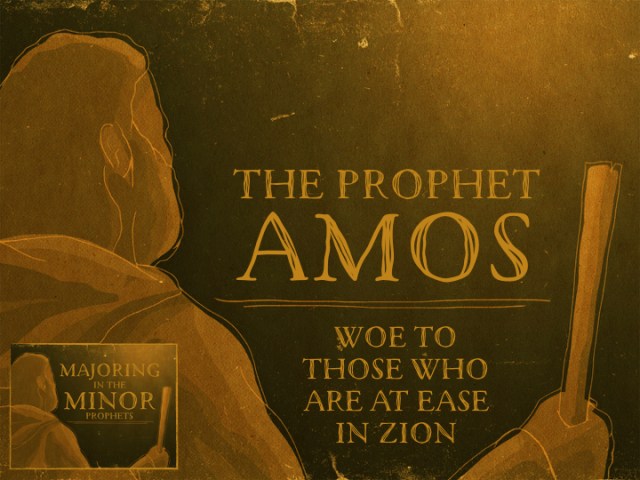
The Ease Of Apathy

amos prophet

Woe to you who put far off the day of doom, who cause the seat of violence to come near; who lie on beds of ivory, stretch out on your couches, eat lambs from the flock and calves from the midst of the stall; who sing idly to the sound of stringed instruments, and invent for yourselves musical instruments like David; who drink wine from bowls, and anoint yourselves with the best ointments, but are not grieved for the affliction of Joseph. (Amos 6:3-6)

The Ease Of Apathy

When the brothers of Joseph decided to sell their brother into slavery, they began a series of events that would change world history. Hated by his brothers, Joseph was a favored son of his father, Jacob. The older brothers began to resent and hate their brother because of the favoritism shown him by their father and also the dreams Joseph told them of declaring his rule over them. On a day when Joseph was looking for his brothers, they took him and threw him into a pit. While they sat down to eat, young Joseph begged them to let him go but they would not heed him. Rueben, the oldest brother, had planned on taking Joseph back to his father but while he was gone the other brothers sold Joseph to some Midianite traders passing by. Later the brothers would remember how they saw the anguish of his soul when he pleaded with them to let him go but they would not hear. Instead, they continued to eat their meal with an uncaring heart towards their own flesh and blood. The prophet Amos would use this story to indict the people of the northern kingdom of Israel for the extravagance and heartless feelings towards their fellow man. Israel in the time of the prophet was on the brink of destruction. The reign of Jeroboam II had ushered in unprecedented prosperity to the kingdom of Israel. It had also brought in social corruption, religious apostasy and luxurious living fueling apathy towards the spiritual condition of the nation and present need of repentance. The people of Zion were at ease and those who worshiped in Samaria trusted in the pagan idols. There was little or no concern for the religious fervor of serving the one true God. Life was filled with too much luxury and debauchery. While the prophets proclaimed the coming of the day of the Lord the ears of the people heard only the music of frivolity and entertainment. No one listened to those who preached judgment. Life was filled with too much raucous enjoyment to be bothered by the boring messages of the prophets of doom. Life was good and the good life was all there was.

Prosperity had brought the northern kingdom a period of wealth and abundance. The finest of life filled the hearts of the people. They lived in fine houses, drove nice cars and dressed in the finest of clothing. If there was a gadget to be had, it was theirs for the taking. Entertainment filled the screens of televisions, computers, cell-phones and electronic devices in every room and automobile. Weekends were filled with the frivolity of recreation and nights measured by the parties and love feasts of carnality. Food was abundant and wasted. Wine filled the bowls in oceans of pleasures as the aroma of sensuality filled the room. Life was exciting and unrestrained. Sadly, the description of the prophet Amos was not one of the nonbelievers in Jehovah God but what the prophet wrote about were the hearts of God’s people. It would not seem strange for pagans to live in such unrestrained measures but when the chosen nation of the righteous fills their hearts with the fleshly carnality of the world with little or no concern for the downtrodden, sinful person who needs the grace of God; judgment is coming. Amos was clear in his message. A plumb line was coming and the measure of God’s wrath will set aright the unmeasured rebellion of the people of Israel. The beds of ivory were taken away and there would be no lambs from the flock to enjoy as the Assyrians came down upon Israel with an unforgiving fury. There would be no music. Only the sounds of chains as the people are led away never to return. The affliction of Joseph was ignored by the people like the cries of their brother were ignored as they sat and ate.

The church of Christ is fighting against the prosperity of a country that has made the people of God a soft, unconcerned, disinterested and disassociated group who are more concerned with beds of ivory, lambs from flocks, sounds of music and wine from bowls than lost souls and unrepentant hearts. Churches are dying from the ease of apathy. The gospel is measured down so as not to offend. Judgment is frowned upon. Sin is softened or ignored. Apathy has filled the hearts with an hour of dull worship with as little time spent together so that the people can return to their hectic lives of luxury that brings them greater pleasure than the rewards of heaven. It is difficult for many in America to think heaven can be better than what they have now. Who would want to leave this world for something that could not be possibly better than the pursuit of happiness here? We have it all now so why worry about the lost, the needy, the disenfranchised, the lowly and the humble? Eat, drink and be merry and get through with church quickly so we can rush out during the invitation song to what we really enjoy. There is no time to assemble again or fellowship with brethren when schedules are filled with ball games, boat trips, golf games, travel and the joy of sitting in front of a glowing electronic box that excites and appeals and amazes our senses with so much entertainment. And there is no grief for the affliction of those who are crying out to be saved. Therefore thus will I do to you, O church; because I will do this to you, prepare to meet your God, O church! For behold, He who forms mountains, and creates the wind, who declares to man what his thought is, and makes the morning darkness, who treads the high places of the earth — the Lord God of hosts is His name.


Posted in Uncategorized | Leave a comment

He Told Them To Tell No One

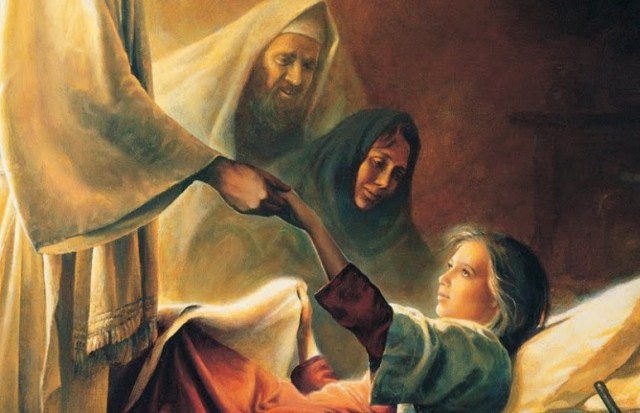
jairus_daughter1

When He came into the house, He permitted no one to go in except Peter, James, and John, and the father and mother of the girl. Now all wept and mourned for her; but He said, “Do not weep; she is not dead but sleeping.” And they ridiculed Him, knowing that she was dead. But He put them all outside, took her by the hand and called, saying, “Little girl, arise.” Then her spirit returned, and she arose immediately. And He commanded that she be given something to eat. And her parents were astonished, but He charged them to tell no one what had happened. (Luke 8:51-56)

He Told Them To Tell No One

A grieving father came frantically to Jesus seeking an impossible task that he knew could only be made possible by the greater healer of Israel, Jesus of Nazareth. Jairus was a ruler of the synagogue and his twelve-year-old daughter lay dying at home. Hope rested in Jesus coming in time to heal her and sparing the family the loss of their precious daughter. The Lord agreed to come to the home of Jairus but on the way was interrupted by a woman whose faith exceeded that of Jairus as she believed by touching the garment of Jesus she would be healed of a disease that racked her body for twelve long years. While the discussion was being made with the woman Jairus must have been frantic in trying to get Jesus to come to the house before it was too late. As the event of the woman subsided, someone from the home of Jairus came with the terrible news that his daughter had died. They told him not to trouble the Lord for there was nothing more to do. Jesus exhorted the grief-stricken father to not be afraid and believe because his daughter would be made well. How conflicted Jairus must have felt at this time. His daughter had been dying and coming to Jesus he had hoped to find her relief before she died. Now his daughter was dead. Did Jesus have that much power to raise the dead? The Lord assured him to have faith and his daughter would be made well. Jesus comes to the house and many of the crowd ridiculed Him for thinking there was more to do. From their viewpoint, death was final and any work of healing was passed. They knew the girl was dead. Nothing remained but to mourn and prepare for a funeral. Jesus had other ideas. He put everyone out of the room except Peter, James, John and the parents. This would give Him more quiet time to commune with the little girl. It would also make for a better circumstance for the young lady to awaken with the hysteria of the crowd. Anxiously the parents waited to see what Jesus would do. There was no great ceremony, exuberant expression of theatrics or showmanship on the part of the Lord. He took the girl by the hand and said, “Little girl, arise.” And she did. As if in a quiet sleep the girl rose up and looked into the eyes of her adoring parents. Jesus told the parents to get their daughter something to eat. The disciples Peter, James, and John looked in wonderment at what they had witnessed with their own eyes as they saw life have victory over death.

Luke writes the parents were amazed and astonished at what they had witnessed. Embracing their daughter they held her tightly about them rejoicing in the knowledge that Jesus had brought their daughter back from the dead. And then in one of the more remarkable statements of Jesus, the great Physician instructs the parents to tell on one what had happened. For Jairus and his wife, this was the most extraordinary event of their life. Their precious twelve-year-old daughter had suffered a great deal in sickness that eventually took her life. While her father was away seeking the help of Jesus, her mother had stayed at her bedside and watched as her precious bundle of life slipped the bonds of life. How much the heart of the mother must have burst in that final moment when her daughter died? It took a little time for her husband and Jesus to arrive to see the stained filled eyes of a mother’s grief fill the room. Lying on the bed was the lifeless form of their daughter. And now she is alive and fully recovered without fever or sickness. Few have experienced the joy of a loved one who dies to see them again in full life. Mr. and Mrs. Jairus had a story that would seldom be matched by any other. And then Jesus commands they tell no one what had happened. Matthew records that after Jesus departed the parents spread the news about Him in all that country. Why did Jesus exhort the parents to not tell anyone? How could they not tell the wondrous news of their daughter who was dead is alive again? Many were gathered on that day and knew the girl was dead. When did they saw her alive what were they to do? Jesus sternly warned them, saying, “See that no one knows it.”

The Holy Spirit never tells us why Jesus told many of those He healed not to tell anyone. Some miracles were a little hard to hide. When Jesus healed a blind man, He instructed him to tell no one yet that would be a little hard to hide. In the case of the daughter of Jairus, it was impossible for others not to know what had happened. Likewise, it would seem impossible the joy of the parents would not be heralded throughout the country at this their daughter who was dead is alive again. Jesus had incredible self-control over the power He wielded among the affairs of men and the power of healing. There was nothing Jesus could not do. He walked on water, raised the dead, healed every disease known to man and had power over the demon world. When He fed 5,000 men (not counting the women and children) He exhibited a power to feed the masses with a great supply that any king would die for in his country. The basic needs of men were met in the miracles of Jesus. By the power of the Holy Spirit men could be freed from the curse of the garden. The pain and sorrow of life were removed, the stain of death was washed away by His power and Jesus could reign as King over the earth in fulfillment of the words of Satan who said to Jesus, “All these things I will give You if You will fall down and worship me.” The Son of God could be king on earth to feed the hungry, heal the sick and raise the dead. Consider what the world would be if Jesus were here today to accomplish all these miracles. The answer is simple: a dark and decaying world filled with the wrath of God on a world unrepentant and unremorseful. Jesus did not come to take away the sorrow of the body but the tragedy of sin. He knew Jairus could not contain himself and He expected the mother to tell everyone how the daughter that died in her arms was alive again. They did not say anything until after Jesus left. The Lord was here for a greater mission and He did not want the distractions of His power to raise the dead to hinder His purpose. What He did in raising the daughter of Jairus was for the glory of His Father so that all men could see and know Jesus of Nazareth was the Son of God. A day was coming when the man from Nazareth would be crucified and it was then, like Moses lifting up the serpent in the wilderness, that all men would be drawn to the Son of God. When Jesus raised the daughter of Jairus from the dead He told her parents to say nothing. This would not be the case when Jesus was raised from the dead. Now He wants all of His disciples to tell everyone of the greatest miracle of all – the risen Savior. That is the message that takes away sorrow, death and the sting of sin.


Posted in Uncategorized | Leave a comment