Learning About Jesus

But you have not so learned Christ. (Ephesians 4:20)

Learning About Jesus

Osmosis is the process of gradual or unconscious assimilation of facts over time. There is little effort on the part of the individual to gain knowledge but rather a natural accumulation of information. Children learn to speak their native tongue by association with the family. Customs often are part of the fabric of life rooted in everyday life. Some things in life just come naturally. The knowledge of Jesus Christ does not come through passive effort or a process of familial osmosis just because one is brought up in the surroundings of the Bible. When children go to school, they learn through activity, effort, exercise, and study. Sitting in the school room will not give them the knowledge required to graduate. Those students who fail to apply knowledge will not be able to complete their education. This is understood in the public realm of seeking a higher education, but it seems many in the Lord’s church believe knowing Jesus comes simply by association.

Jesus Christ is the Son of God. The nature of a higher being can be learned through the agency of natural revelation, as seen in the creation, but it is impossible to learn about Jesus through nature. Creation testifies to the handiwork of the Divine. Revelation declares the story of Jesus through the written word. Examining the world through a microscope opens the revelations of God’s creative hand in forming a perfect world. Peering into the depths of space with all its grandeur will not testify to the existence of the Son of God. To know Jesus demands learning. Understanding who He is, where He came, why He emptied Himself, and how He will save can only come through the rigors of learning. The amount of effort will determine the level of knowledge. Learning about Jesus takes time – a lifetime. Understanding His character requires opening the Bible and plumbing the depths of the written word to see the grace of God’s Son. The less time spent learning about Jesus lessens the faith in the Son of God.

There will never be enough lifetimes to learn all there is to know about Jesus, but one life spent in devotion to a study of the life of Jesus will answer all the questions that trouble man. To know Jesus is to know the Book. Like all things worth seeking, hard work demands time spent studying God’s word to know everything about Jesus. God has blessed mankind with a written testimony of His mind to reveal to the world, Jesus Christ. There has never been a time in the history of man the word of God is so readily available through print and electronic revelation; yet, it seems to be the least-read message in the world. The Bible is the most prolific book published, but it will have little value if it is not read and studied. Paul reminded the saints at Ephesus they had learned Jesus and exhorted them to use that learning to renew the spirit of their minds. New men in Christ come from those who renew their hearts to read and study the life of Jesus and the story of Jesus. The Bible is the testimony of Jesus. Read it to be wise. Learn about Jesus. Don’t just read the words. Allow the life of Jesus to change your life. Learn.

Posted in Uncategorized | Leave a comment

The Holy Spirit And Jesus

But He, knowing their thoughts, said to them: “Every kingdom divided against itself is brought to desolation, and a house divided against a house falls. If Satan also is divided against himself, how will his kingdom stand? Because you say I cast out demons by Beelzebub. And if I cast out demons by Beelzebub, by whom do your sons cast them out? Therefore they will be your judges. But if I cast out demons with the finger of God, surely the kingdom of God has come upon you. (Luke 11:17-20)

The Holy Spirit and Jesus

The story of the Holy Spirit cannot be known without understanding the relationship between the Spirit and the Son. Jesus did not consider it beneath Him to come to earth and take on the form of fleshly man. As God, He emptied Himself of the divine to share in the mortal. The transition of God to man was the work of the Holy Spirit. From the writings of Moses through all the prophets, the Spirit spoke longingly about the revelation of the life of Christ. He affirmed thousands of years before the birth of Jesus that a child would be born that would bring redemption to all men. In the Garden of Eden, the promise of the Seed was made. Abraham was promised to be the father of the faithful. The Law of Moses was given to protect and guide the seed promise through nearly fourteen hundred years of history.

When the time came for Jesus to come to earth, a maiden named Mary was chosen to be the carrier of the Divine. Matthew records that Mary was with child by the Holy Spirit. An angel told Joseph the Child conceived in his wife’s womb was of the Holy Spirit. This was not the first time the Spirit and God’s Son had a part in the scheme of redemption. At creation, the Holy Spirit hovered over the face of the waters, and as part of the Godhead, Jesus was the Creator and Maker of the world. Now the plan to redeem man demanded the Son to leave the glory of the Father and dwell among men. The Holy Spirit was the agency to carry out the divine plan. Mary was a virgin through whom the Spirit would conceive the seed of God’s Son to be born as all men in her womb. Like all men, Jesus was born of a woman.

At the age of thirty, Jesus began His ministry. John the Baptist preceded Jesus to prepare the way for God’s Son. Jesus came to John to be baptized and rising from the waters, the Holy Spirit descended as a dove upon Him. The voice of the Father clearly spoke of His approval of the ministry of Jesus. The Godhead was found at the baptism of Jesus, with all three members of the Divine blessing the baptism. Later, John would declare he saw the Spirit upon Jesus, affirming He was the Son of God. When Peter preached to Cornelius and his household, he told them God anointed Jesus with the Holy Spirit and power. The ministry of Jesus was a manifestation of the power of the Holy Spirit, whom Jesus called the “Finger of God,” as the Father worked through the Son. Shortly after His baptism, Jesus was driven by the Spirit into the wilderness to be tempted by the devil.

Following the temptation, Jesus was full of the Holy Spirit in power, affirming His divinity. God put the Spirit upon Jesus to manifest His glory and fulfill the prophets’ words. Jesus never did any miracles before His baptism as He was endued with power from high only from the affirmation of the Father at His baptism. Casting out demons, healing the sick, changing the natural elements of the world, and raising the dead was accomplished by the power of the Spirit. Like in Creation, the Son and the Spirit worked in tandem to show the power of God to the world.

On the night of His betrayal, Jesus assured the eleven they would not be left without a Helper. Jesus promised to send the Holy Spirit to guide the apostles and help them remember what He had taught them. The eleven were told to remain in Jerusalem when the power from the Father would be put upon them through the Holy Spirit. When the work of Jesus was completed on earth, the Holy Spirit began His active work of the continued revelation of God’s plan to redeem men. The baptism of the Holy Spirit upon the apostles began the establishment of the New Testament church, spreading throughout the world. Through the teaching of the gospel, the name of Jesus was preached to every soul under heaven through the revelation of the Holy Spirit. The will of the Father was accomplished through His Son, Jesus Christ, and could not have been completed without the work of the Holy Spirit. Jesus is incomplete without the Holy Spirit.

Posted in Uncategorized | Leave a comment

The Personality And Deity Of The Holy Spirit

Finally, brethren, farewell. Become complete. Be of good comfort, be of one mind, live in peace; and the God of love and peace will be with you. Greet one another with a holy kiss. All the saints greet you. The grace of the Lord Jesus Christ, and the love of God, and the communion of the Holy Spirit be with you all. Amen. (2 Corinthians 13:11-14)

The Personality And Deity Of The Holy Spirit

To possess a personality is to have the combination of characteristics or qualities that form an individual’s distinctive character. This is especially true in the quality of being a person distinct from a thing or an animal. To have a personality suggests a set of behaviors, cognitions, and emotional patterns from the nature of the individual. This is found in the myriad ways human beings differ from one another, defining who they are as individuals with specific characteristics that distinguish them. Among the earth’s six billion inhabitants, six billion personalities are possessed by every man, woman, and child. Still, they share the common denominator of being created in the image of God. One humanity with unlimited personalities.

The character of the Godhead is united under the identification of being God. Yet, each person of the Divine Nature possesses individual traits identifying them as a part of the same. The Father has His identifying marks that make Him Lord God and Father, while Jesus is shown to be the only begotten Son of the Father. Completing the triad of the Godhead is the Holy Spirit, who also possesses personalities and identifying markers showing Him to be God and yet distinct in His own right. He has much the same attributes as the Father and Son. The Holy Spirit utters speech communicating the will of the Father. As a witness, He testifies as the Spirit of truth. Through the word, the Holy Spirit teaches and reminds men of the plan of the Father. Jesus said the Helper (Holy Spirit) would guide men into all truth as the Father directs him. The scriptures show the Holy Spirit guiding men in the work of the kingdom and, on occasion forbidding the plans of men to be carried out. Paul and Silas wanted to preach the gospel in Asia, but the Holy Spirit did not allow them. Paul often spoke of the Holy Spirit and, in his letter to Rome, outlined the work of the Holy Spirit in the lives of God’s people.

It is clear the Holy Spirit is a personal being who has a mind, seeking the completion of the work of God, possessing knowledge, and showing love. He is not just an entity that is abstract and mindless. The Holy Spirit is a person of the Godhead sharing in the emotional makeup of a personality. Everything about Him is divine, like the Father and the Son. Like the Father and Son, the Holy Spirit experiences men’s positive or negative responses. It is possible for men to grieve the Holy Spirit and to despise Him. In the days of Jesus, the religious leaders blasphemed the Holy Spirit bringing the wrath of God upon them. Peter rebuked Ananias and Sapphira for lying to the Holy Spirit, and Stephen charged the Jewish council with resisting the Spirit. A personal being can only experience these emotions.

The nature of the Holy Spirit is like that of the Father and the Son. When God created the heavens and the earth, the Holy Spirit was an active agent of creation. John baptized Jesus, and the Holy Spirit descended in the form of a dove while the Father spoke His approval of His Son. The Spirit carries the identifying marks of a divine personality as one who is omniscient, omnipresent, and omnipotent. Jesus was begotten by the Holy Spirit and called the Son of God. Worshiping the Father without showing honor to the Son and the Holy Spirit is impossible. The Spirit bears witness with the spirits of those who are saved; they are the children of God. His role in salvation is secured in the ages as a vital part of the Godhead made up of God the Father, Jesus the Son, and the Holy Spirit. To deny the essential part of the Holy Spirit to the divine revelation of God is to deny the authenticity of the Bible. Knowing the personality of the Father can only come from the reading of the word of God. The Holy Spirit manifested the personal character of the Creator on the pages of the Bible. Without the completed revelation by the Spirit, man would not know God. Reading the Bible reveals the Godhead as complete and whole yet individual and responsive to the needs of men. Thank God for the Holy Spirit.

Posted in Uncategorized | 2 Comments

The Most Important Election In History

Therefore, brethren, be even more diligent to make your call and election sure, for if you do these things you will never stumble; for so an entrance will be supplied to you abundantly into the everlasting kingdom of our Lord and Savior Jesus Christ. (2 Peter 1:10-11)

The Most Important Election In History

One of the great freedoms enjoyed by citizens of the United States of America is the opportunity to vote for those who lead the nation. Not everyone votes and the numbers can be very low in some years. There is a lot of rhetoric about the coming election as the most important in the country’s history. That would be true with each election, with exceptions of historical significance having a greater impact than others. One of the apparent realities of each election year is that (by God’s grace) the sun rises on the day after the election, and life continues. Arguments are made about whether the election was fair and whether the elected official had a right to be chosen by the populace. Those who lose will argue foul, and the political intrigue and backbiting will continue. The election process is not a pure science, and there will always be some level of corruption and deceit.

Many countries do not afford their citizens the right to vote. Some leaders will allow elections to take place, but these elections are nothing more than screens of deceit to appease the conscience of the citizens with the outcome predetermined. Corruption is rampant as men of less quality are positioned in seats of power to rule over their nations as despots. The election laws of corrupt nations do not look out for the good of the people. There is no truth in the process of human wisdom seeking the exaltation of self, and it is the innocent people who suffer. Democracy is a fickle mistress that allows the allurement of corruption to taint the election process. When the election is over, truth has often suffered more than anything that is won. Human wisdom exalts itself on the deceptive notion of honesty and truthfulness. But there is an election that is beyond the reach of the corruption of man, and that is the spiritual election of salvation.

Before the world was created, God had a plan to elect His creation to salvation. Promised through Jesus Christ, the need for salvation found its worth at Calvary when human wisdom killed the Son of God. Obedience to the will of the Father removed the wrath of God as the blood of Christ washed away sin. Faith alone could not save, and the heart of man learned to follow the pattern of obedience to salvation. No clearer demonstration of that can be found than the admonition of Peter to the pilgrims of the Dispersion of his day. Certain traits are necessary for salvation, including faith, virtue, knowledge, self-control, perseverance, godliness, brotherly kindness, and love. All of these are tempered by diligence to add these graces to the heart of the obedient servant. If a man adds these to his life, he will enjoy the greatest election in the history of man.

There is a powerful statement by Peter to give assurance to the saints of God. If a man employs the graces of God in his life, he will not be unfruitful or barren in the knowledge of Christ. Allowing the heavenly elements of grace to fill the heart, the soul can make its calling and election sure – to confirm a man’s calling and election. There is no corruption in this promise. God has promised the hope of eternal life to all who seek His will and follow the patterns of grace. The election of the saint is the greatest election a man can experience. Those who seek public office gain a moment’s glory in the twilight of human wisdom, but those who seek election in Christ will reign throughout eternity at the feet of the heavenly Father.

The greatest election in history is when a man is saved in the blood of Christ. Not everyone will be elected because few men accept the terms of election. The terms of eternal election cannot be corrupted. Only those who follow the laws established by God will be saved. There will be no one in heaven who has not been elected by the will of the Father. Many will believe they are chosen, but because they corrupted the process of God’s word, they will be lost. The final realization of the eternal election is realized when all who are saved know the grace of God saves them; those who are lost will agree with the righteousness of God they deserve to be denied eternal life. No one will argue about the results. All will agree. Eternal election is in Jesus Christ.

Posted in Uncategorized | Leave a comment

Touching Jesus

Now a woman, having a flow of blood for twelve years, who had spent all her livelihood on physicians and could not be healed by any, came from behind and touched the border of His garment. And immediately her flow of blood stopped. And Jesus said, “Who touched Me?” When all denied it, Peter and those with him said, “Master, the multitudes throng and press You, and You say, ‘Who touched Me?’ ” But Jesus said, “Somebody touched Me, for I perceived power going out from Me.” (Luke 8:43-46)

Touching Jesus

It was not uncommon for multitudes to throng around Jesus. During His days of popularity, thousands would come to hear him preach. Five thousand men (not counting women and children) came from surrounding cities to listen to the words of the man from Nazareth. When Jesus returned from the country of the Gadarenes, a great multitude gathered to Him by the seashore. A ruler of the synagogue met Jesus, begging Him to heal his dying daughter. Jesus followed Jairus to his home as crowds thronged Jesus. The people were so thick around Jesus that they pressed Him so that He could hardly move. Everyone was touching Jesus. As Jesus walked, He felt the power of the Holy Spirit leave Him, and Jesus demanded to know who had touched Him. It was puzzling as Peter said to Jesus that everyone was touching Him. The apostle could not imagine what Jesus was asking as the crowds pressed so tightly around Jesus.

A lone figure was standing outside the thronging crowd that no one noticed. A woman who had suffered from a blood condition for twelve long years watched the crowds press around Jesus. She had spent all her livelihood seeking a cure but found no relief. Hearing Jesus of Nazareth was nearby; the unnamed woman took a leap of faith. She believed if she was able but to touch the garments of Jesus without Him or anyone knowing; she would be healed. According to the law, she was an unclean woman, and anyone she touched would be unclean. This presented a conflict with her decision to touch the garments of Jesus. The crowd was so tightly surrounding Jesus she would have to nearly fight her way through the crowd to reach Jesus, touching many people in her pursuit of healing. Nothing would deter her from seeking relief. Her faith moved her with great courage to ignore the crowd and seek only to touch the clothing of Jesus.

The faith of the woman did not ask for a private audience with Jesus so that she could explain her condition. She did not wait until a more convenient time. Her courage moved her to make a bold and decisive decision to accept the impossible. Medical knowledge at that time had failed to heal her, and there was no answer to her condition. Jesus was in the midst of a thronging crowd, and the woman believed the power of God was so great she would have only to touch the garment of Jesus to be healed. Casting aside her fears of retribution by those she touched along the way, the Holy Spirit watched her weave through the crowd and steal a touch from the garment of Jesus. Immediately she was healed. God blessed her body with immediate relief, and she could feel the healing – and so did Jesus.

There were many people thronging Jesus so tightly He could hardly move. It is likely among all those touching Jesus; there were people with various degrees of physical sickness and disease, some known and some unknown. Out of all the crowd, none were healed but the woman with an issue of blood. Was the woman healed because she touched Jesus? No, she was healed because she believed in what the touch of Jesus would do for her life, and she acted on that faith. Touching Jesus (characterized by the crowd) did not save. Obedient faith with courage is how the woman was healed. Many people today thronging Jesus tightly have never enjoyed the healing power of faith and obedience. The only person healed that day was the woman who acted on her faith and, through courage, denied herself and the world to accept the impossible. That is true healing today. When a person’s heart acts on their faith with courage and determination to seek the power of Jesus to change their lives.

The woman who touched Jesus suffered from a blood disorder but what people need to see today is the disorder of sin. Touching Jesus will not take away sin. Coming to Jesus believing that only He can take away sin and facing the pressure of the world with courage in obedience is where healing comes. There are many obstacles between the woman and Jesus. She overcame, ignored, and conquered those obstacles and found relief in obedient faith. Sin will never leave those who press in on Jesus but have no faith in how He can change their lives. They remain as they are. Those who come to Jesus with obedient faith will find healing.

Posted in Uncategorized | Leave a comment

Willing Obedience In The Face Of Great Pain

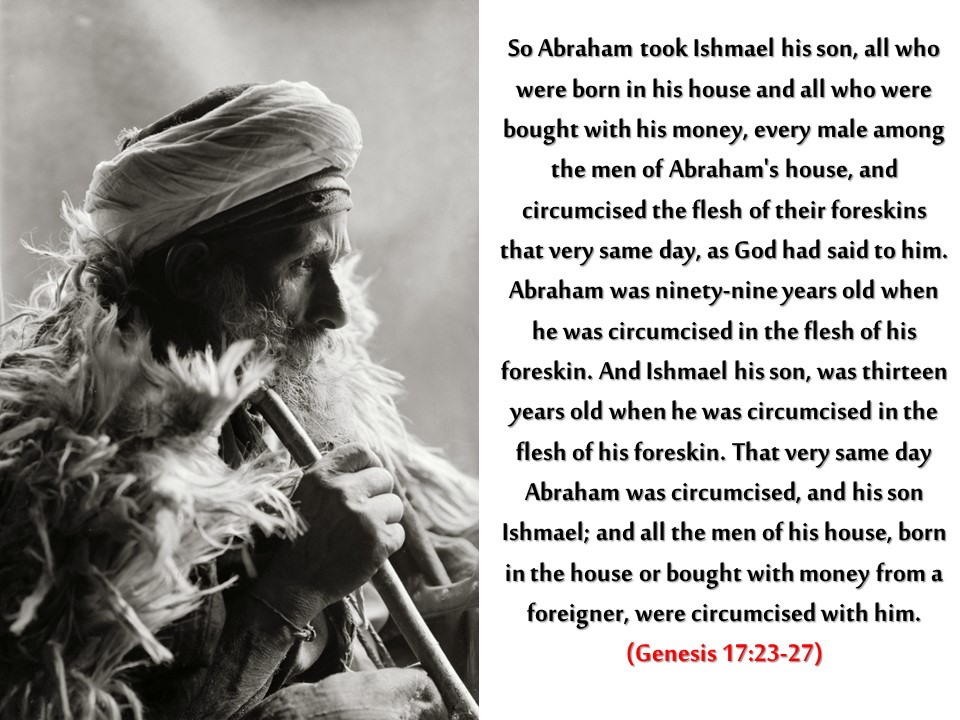
So Abraham took Ishmael his son, all who were born in his house and all who were bought with his money, every male among the men of Abraham’s house, and circumcised the flesh of their foreskins that very same day, as God had said to him. Abraham was ninety-nine years old when he was circumcised in the flesh of his foreskin. And Ishmael his son, was thirteen years old when he was circumcised in the flesh of his foreskin. That very same day Abraham was circumcised, and his son Ishmael; and all the men of his house, born in the house or bought with money from a foreigner, were circumcised with him. (Genesis 17:23-27)

Willing Obedience In The Face Of Great Pain

At the age of seventy-five, Abraham had been called by God to leave his family and go to a land shown to him by God that he would never possess. The Lord promised to make Abraham a great nation, and he would never see its fulfillment. Like a vagabond wandering the earth, Abraham moved from place to place, never having a permanent home for his family. Twenty-four years after God called him, Abraham was faced with a command from God. The Lord’s covenant with Abraham involves great pain for himself and his family. Thirteen years earlier, he had a son by his wife’s handmaiden. Now God requires Abraham to circumcise himself, Ishmael, and all the males in his tribe, including servants. Abraham had been through a lot in obedience to the Lord for the past twenty-four years. The promise of a son by Sarah seemed remote and impossible at best. Abraham had given up so much for his faith in God, and now he must physically injure himself and all in his family to serve the Lord.

The promise of a son through Sarah caused Abraham to laugh because he would be one hundred years of age and Sarah ninety. He thought Ishmael would be a suitable answer to the promise of God. The Lord affirmed to Abraham that Sarah would have a son and that the covenant would be established through Isaac. God promised Abraham that all He had said would come true. A ninety-year-old woman couldn’t have a child as it was equally impossible for a man of one hundred to impregnate a woman. Everything God told Abraham was impossible! There was nothing to base his decision on but the faith he had in the promises of God. What the Lord demanded of Abraham was a very painful surgery and would take time to heal with great discomfort. His thirteen-year-old son would also have to suffer under the knife. Every male in his household would need to be circumcised. Why would God require such a cost for obedience? In human wisdom, it was a high price to pay for faith.

After God left Abraham, there was no hesitation to obey the word of the Lord. At the age of ninety-nine, Abraham was circumcised. Ishmael and all who were born in the house of Abraham were circumcised. The faith of Abraham was on full display as an excruciating act was done in accordance with the word of the Lord. Abraham did not hesitate. He did not argue with God about the painful reality of cutting off the foreskin. No words were pleading for another way. Obedience did not come by faith alone. Abraham never argued with God to accept him as a good man and allow grace to be given without the painful consequence of circumcision. The word of the Lord required circumcision, and Abraham did not hesitate.

It is fair to place the story of Abraham in a modern context with how people react to the word of God. If many people today are put in the situation of Abraham, they will refuse to obey. The word of the Lord requires baptism for salvation – a very pain-free act – yet so many people argue, fuss, debate, and deny the need. They decry baptism as a work and believe they can be saved through faith alone. It was clear in the mind of God that Abraham was a man of faith, but that would not save him. He was told to mutilate himself physically, and Abraham did not hesitate. The pain of circumcision did not dissuade Abraham. He obeyed God unconditionally. So many people today would have refused circumcision. The apostle Paul told the saints at Colosse that baptism is a spiritual circumcision, but the difference is baptism is painless; still, people refuse. Be honest with yourself. If you do not believe baptism is essential for salvation, it is clear you would have refused what God commanded Abraham. No circumcision – no covenant – no salvation. No baptism – no covenant – no salvation.

Posted in Uncategorized | Leave a comment

The Holy Spirit A Member Of The Godhead

In the beginning God created the heavens and the earth. The earth was without form and void; and darkness was on the face of the deep. And the Spirit of God was hovering over the face of the waters. (Genesis 1:1-2)

The Holy Spirit: A Member Of The Godhead

The Bible is the mind of God, revealing the goodness and severity of the Lord. It begins with declaring God as the Creator and ends with the promise of seeing God face to face. Jesus said the Law of Moses, the Prophets, and Psalms declared His glory, and man finds in the new revelation the life of Jesus, the propagation of His teachings, and the applications of God’s law in the hearts of believers. God and Jesus are central characters of the Bible from Genesis to the Revelation. Lost in the shuffle of truth seekers is the other part of the divine nature known as the Holy Spirit.

Moses begins the creation story with the Spirit of God hovering over the face of the waters. The Holy Spirit continues to hover over the message of God’s word throughout the Old Testament and is fully revealed in the New Testament. Denying the story of the Spirit of God neglects the greater part of the divine Revelation. A student of scripture cannot understand God the Father and Jesus the Son without knowing the one Jesus called the “Finger of God.” The Holy Spirit is as much a vital part of Revelation as the Father and the Son. He has His place in the divine record to glory the Father as Jesus glorified the Father.

The Holy Spirit is not just an influence or impersonal power or emanation. He is alive and divine and powerful and full of personality. Possessing attributes of divinity, the Holy Spirit is an essential part of man’s salvation. His place in the scheme of redemption is preserved throughout scripture as the agency of the revelation and the incarnation of God’s Son on earth. Jesus and the Holy Spirit shared a special bond in their work of the earthly mission of the Christ. When the church was established, it began with the Holy Spirit. As the church spread throughout the world in the early days, the Holy Spirit was the fuel driving the engine of God’s divine will. Through His special gifts given to men, the Holy Spirit affirmed and confirmed the word of God as true. The joy of the Christian was found in the gift of the Holy Spirit shared by all those who were baptized into the body of Christ. Without the work of the Holy Spirit, the divine word could not have been completed. The work of the Holy Spirit continues today. He is the way to spiritual fulfillment for those who come to the blood of Jesus Christ.

Throughout the scriptures, God the Father is always magnified as the one true God. Jesus was also God but He was not the Father. Like Jesus, the Holy Spirit is God but not the Father nor the Son. He has His own divine attributes that show Him to be divine but separate from the Father and Son. The Holy Spirit is part of the Godhead or the Divine Nature. Paul refers to the Godhead in his sermon to the Athenians (Acts 17:29) and in two of his epistles (Romans 1:20; Colossians 2:9). The Greek words “theotes” and “theiotes” translate “Godhead” as being “deity, the state of being God; divinity; the divine nature or essence.” Moses begins Genesis with God (Elohim) in the plural, yet it is used in the singular (Genesis 1:1). When God makes man in His image, He declares a plurality in the Godhead when He says, “Let us make man in our image, after our likeness” (Genesis 1:26).

There are three persons identified who possess the divine nature or deity and constitute the plurality of the Godhead. The three were present at creation (Genesis 1) and the baptism of Jesus (Matthew 3:16-17). Matthew records the words of Jesus that all men should be baptized in the name of the Father, the Son, and the Holy Spirit (Matthew 28:18-20). On the night Jesus was betrayed, He tells the eleven the Father will send the Comforter after He (Jesus) leaves (John 14:16-18; 15:26; 17:3-5). Peter said in his sermon to the household of Cornelius that “God anointed Jesus of Nazareth with the Holy Spirit” (Acts 10:28). Paul mentions the Godhead in Romans 15:30, 1 Corinthians 12:4-6, 2 Corinthians 13:14, and Ephesians 2:18; 4:4-6.

The relationship of the Godhead is seen when the nature of God is viewed as divine. God the Father is divine, but He is not the Son nor the Holy Spirit. Jesus is divine, but He is not the Father nor the Holy Spirit. The Holy Spirit is also divine but is not the Father nor the Son. Each one of the Godhead is divine (deity, God) but possesses personalities that distinguish them one from another. The Holy Spirit is vital to the Godhead, a divine being. Throughout Biblical history, his work is essential to God’s eternal plan. Get to know the Holy Spirit.

Posted in Uncategorized | 2 Comments

Justice, Mercy, And Faith

Woe to you, scribes and Pharisees, hypocrites! For you pay tithe of mint and anise and cummin and have neglected the weightier matters of the law: justice and mercy and faith. These you ought to have done without leaving the others undone. Blind guides, who strain out a gnat and swallow a camel! (Matthew 23:23-24)

Justice, Mercy, And Faith

The professor presents a large glass jar before his class. He fills the jar with large rocks until there is no more room for the rocks. He asks the class if the jar is full, and they reply that it is. He then pulls out a jar with gravel and begins pouring the gravel into the jar. After he puts in all the gravel he can, he asks the class if the jar is full. Again, they say the jar is full. Finally, the professor brings out a jar of fine sand and begins pouring the sand into the jar containing the large rocks and gravel. When the jar is full of fine sand, the class responds the class is full.

The lesson the professor impresses upon the students is there are things in life that are essential before other things begin to clutter up life. If the fine sand had been poured in first, there would have been no room for the rocks or gravel. Pouring in the gravel at the wrong time would have hindered the rocks from being included. The rocks represent the important things in life: family, friendship, and relationships. The gravel is those essential things that will help in life, like jobs, homes, possessions, etc. Putting the fine sand represents all the things of life that are good to have but not as necessary. The order of importance is what will make the difference.

Jesus used a similar illustration when He rebuked the religious leaders for spending so much time on the small matters of life while neglecting the weightier matters of the law. Under the law, there were tithing requirements. The Pharisees had become so strict in keeping with the law that they gathered the tenth sprig of every garden herb and presented it to the priest. Jesus did not condemn them for this but highlighted their hypocrisy in neglecting matters of the law with greater consequences. The need for justice, mercy, and faith were the large rocks in the jar of the professor: they must be done first! Treating their fellow man with justice was more important than a sprig of mint. When the Pharisees gave alms, they made a great noise of trumpets blaring while showing no mercy to the needy. Their faith was not towards God but their self-righteousness.

Many things in life are essential to the character of the Christian. Going to worship services, attending Bible classes, reading the Bible, and such things are vital ingredients to a healthy and prosperous spiritual life. When these matters begin to overshadow the relationship of justice, mercy, and truth toward others and God, the sacrifices become invalid. Someone may ask if a brother or sister is faithful. Unconsciously, the answer is that, yes, that brother is faithful; the reason that conclusion is given is that they attend all the church services. Faithfulness is not determined by sitting on a pew. The Jews were very particular about making sure the correct amount of mint, anise, and cummin, were measured correctly and presented in accordance with the law. At the same time, they treated their brethren with contempt, disregard, and prejudice. As Jesus would tell them, they strained out a gnat and swallowed a camel.

The weightier matters of the law must be placed in their proper order. Justice, mercy, and faith must come before all things and exercise in the life of the Christian with priority. Too many of God’s people live on mint, anise, and cummin and neglect what God wants out of their lives. They live unproductive, unloving, and fruitless lives. The Christian must seek the higher things in their duty toward God. Showing justice to the needy, having mercy on the downtrodden, and trusting in the will of God is where true worship comes. Be careful of the gnats, and don’t let the camels choke your life to no value.

Posted in Uncategorized | Leave a comment

Remove Your Sandals

So when the Lord saw that he turned aside to look, God called to him from the midst of the bush and said, “Moses, Moses!” And he said, “Here I am.” Then He said, “Do not draw near this place. Take your sandals off your feet, for the place where you stand is holy ground.” (Exodus 3:4-5)

Remove Your Sandals

In certain cultures of the eastern world, the custom of removing shoes or sandals before entering a home or place of worship is common. For some, this is because of the dirt that accumulates on footwear that would be tracked into the house, insulting the hosts and going against the norms of culture. In many places, it is a sign of respect in the presence of someone considered divine. The customs vary from place to place, with regulations determined by the local culture. Moses was a shepherd accustomed to wearing sandals as he tended the sheep. On one occasion, the eighty-year-old former Egyptian prince was tending the flock of Jethro, his father-in-law. Moses led the flock to the back of the desert and came to mount Horeb. As he approached, he saw a curious thing when a bush was burning with fire but was not consumed. As he drew near, the Angel of the Lord appeared to him in a flame. Intrigued, Moses turned aside to see the burning bush. When God saw that Moses turned aside to look, the Lord spoke to Moses and told him not to draw near and for him to remove his sandals. This frightened Moses, and he hid his face.

There was nothing special about the ground Moses stood upon, but what made it holy was the presence of the Lord. God told him the ground was holy ground and he must remove his sandals. While the text does not say, Moses certainly obeyed the command of the Lord. Moses stood before the Lord barefoot. The symbolism was clear to Moses as he talked with God. He understood coming before the Creator of the world was an object of devotion by the creation. God must not be considered a good friend or a person of equality with men. Removing footwear was often done before the presence of great nobility to show honor and respect. How much more honor and respect to show the Lord God Almighty.

When Joshua was preparing to go against the city of Jericho, the Commander of the army of the Lord came to the son of Nun, demanding he remove his sandals. Joshua was told the ground was holy ground. Joshua did so. Moses was chosen to deliver the Hebrews from their Egyptian bondage, and Joshua was preparing for the conquering of the promised land. In both stories, the ground was sanctified by the presence of the Lord as a great plan was about to be unfolded. The communion of God and man was to be joined as one in a holy convocation. Worship is where God and man come together to deliver the soul from the bondage of sin, looking forward to the final deliverance of the soul to the eternal land of promise.

There is a symbol of the removal of that which defiles in the act of worship. Worship does not require the removal of footwear, but it does require the removal of those things that defile. In a symbolic measure, coming to the place of eternal communion begins by removing the sandals of life. God is spirit, and those who worship Him must come to Him in spirit and truth unshackled by the affairs and distractions of the world. One of the great needs of the human spirit is to recognize the holiness of coming in the presence of the Almighty. It is easy to develop a casual attitude, even a total disregard for the holy importance of worship. The early church assembled on the first day of the week to worship, and that pattern must be followed for the church today. When the saints gather to sing, worship, and commune in the death of Jesus Christ, God must be considered holy.

Worship on the first day of the week is considered an option that can be disregarded. Excuses abound about why saints will not obey the will of God to assemble. If they stood before the burning bush, they would offer the same reasons for not removing their sandals. The time of worship can become a weariness as it was in the days of Malachi, where the people worshiped the Lord with both sandals on (in a figure of speech). God is holy, demanding His people know they are standing on holy ground when they worship. Nadab and Abihu, sons of Aaron, were struck down for treating the Lord with disrespect. It would be considered an act of disrespect to enter the home of some cultures in the world with shoes on; how much more to dishonor God by the worldly defilements that we bring to worship.

Posted in Uncategorized | Leave a comment

The Eternal Harvest

Another parable He put forth to them, saying: “The kingdom of heaven is like a man who sowed good seed in his field; but while men slept, his enemy came and sowed tares among the wheat and went his way. But when the grain had sprouted and produced a crop, then the tares also appeared. So the servants of the owner came and said to him, ‘Sir, did you not sow good seed in your field? How then does it have tares?’ He said to them, ‘An enemy has done this.’ The servants said to him, ‘Do you want us then to go and gather them up?’ But he said, ‘No, lest while you gather up the tares you also uproot the wheat with them. Let both grow together until the harvest, and at the time of harvest I will say to the reapers, ‘First gather together the tares and bind them in bundles to burn them, but gather the wheat into my barn.’ “(Matthew 13:24-30)

The Eternal Harvest

Farming has been a part of the human experience from the beginning of time. Seeds are planted in the ground with the expectation of harvesting a crop and enjoying the fruit of the labor. Harvest is when the crops are gathered together and always comes with certain diligence required to enjoy the bounty. When Adam and Eve were cast from the Garden of Eden, God told Adam the ground would become a battlefield of thorns and thistles. Only by the sweat of his brow would man enjoy the bounty of the harvest. At the time of harvest, a separation would be required to remove the weeds that had grown profusely among the good seed. Men developed means to separate the grain and the weeds because the weeds were useless and unproductive for consumption. While the grain would be taken to market to be sold or used in homes for food, the weeds were bundled and burned. There was no use for the weeds.

Jesus used everyday pictures to fortify His teachings as parables. A parable is a means of painting a picture that everyone can see and understand. Parables are simple images with deeper meanings. It was common to see fields planted in wheat where men had sown the good seed in the ground. Over time, the grain would grow full as a blanket of golden kernels covering many acres of ground. Also, tares or weeds would grow among the wheat. If a man was unfortunate to have a vengeful enemy, a man might come and sow weeds among the wheat field to diminish the bounty of a man’s crop. There was little that could be done with the weeds. If workers tried to go through the field and take all of the tares out, they would risk pulling up many good stalks of wheat. The wise farmer would leave the tares until harvest. Jesus used that time of harvest to make an eternal lesson. Like the farmer who waits until harvest to remove the tares, the Heavenly Father waits for the day of judgment to separate evil men from the righteous.

The parable of the wheat and tares is a declaration by Jesus that a day of separation is coming. Many religious people believe that everyone will be saved and that God would never permit anyone to suffer. Jesus refutes that idea in the parable of the wheat and tares. There are two kinds of people in the world: those who are like the wheat (saved) and those who are like the tares (lost). They grow together in the same field, enjoying the same sunshine and rain and the blessings of God. Jesus said a day is coming when all men will come to the eternal harvest. On the day of harvest, those who are saved will be taken away from those who are lost. The lost will be burned. Those of the ‘wheat’ will be gathered into God’s eternal home (barn).

Jesus taught there is eternal judgment. Not everyone will be saved. Many will be the tares at harvest, which will never enjoy the fruits of eternal life. The good seed is the heart that will hear and obey the word of the Lord, living faithfully to the will of the Father. When the harvest comes, and the tares are separated, these will be those who lived in the freedom of a ‘tare-filled’ life doing whatever they wanted. The tares are burned. So it will be for those who do not obey the will of the Father. You are either an ear of wheat or a tare. Tares can become wheat when they repent and obey. That is a marvelous change that can take place within the heart of any man who desires to enjoy the blessings of heaven. What must I do to be saved? Stop being a weed and become fruitful in the kingdom of God. Repent and be baptized for the remission of sins, and you will no longer be a weed! Praise God.

Posted in Uncategorized | Leave a comment