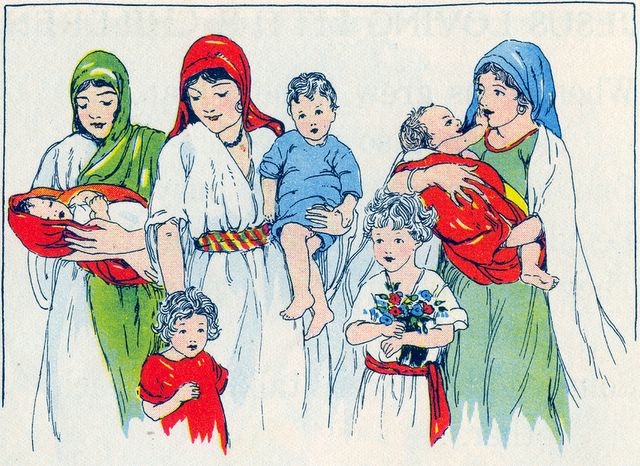
Bring The Children To Jesus

children Jesus

Then little children were brought to Him that He might put His hands on them and pray, but the disciples rebuked them. But Jesus said, “Let the little children come to Me, and do not forbid them; for of such is the kingdom of heaven.” And He laid His hands on them and departed from there. (Matthew 19:13-15)

Bring The Children To Jesus

It is a remarkable thing to consider that as busy as Jesus was trying to put into less than three years His ministry of salvation for all men the Son of God would often take time with children. The disciples did not understand and rebuked those who would dare interrupt their master. They would receive a harsh rebuke from the Lord for thinking He did not have time to engage with young children. On one occasion Jesus placed a young lad in the middle of His disciples and used him as an object lesson on the humility of character required to be a follower of the Christ. Jesus took time for children. Because of this, parents would bring their children to Him that He might put His hands on them and pray. They were seeking the blessings of this teacher and guide impressing upon their children His worth and importance. Little did they know how important He would become to themselves and their children when He emptied Himself on the cross. The Holy Spirit does not reveal how many of these parents who brought their children to Christ during His ministry would have brought their children to the story of Jesus in the early church. What is impressive about these parents is a deep desire to do something as simple and profound as bringing their children to Jesus for a blessing. They recognized Him as a teacher and as one to give wisdom to their children. Going beyond the pressures of those who tried to keep them away from Jesus, the parents wanted to let their children’s lives be touched by the hand of Jesus. He laid His hands and them and blessed them.

The people of Jesus day realized there was something special about the man from Nazareth. There is no greater need for parents in our day to see the need to give their children the most important example they will find in life: Jesus Christ. Learning about God and His Son begins at home. From infancy, children should be brought to Jesus through song, teaching, instruction, and example of godly parents who show Christ living in their life. Children in large part become the kind of people their parents instruct them to be. Learning about truth and righteousness is not something that is found without diligent effort, constant study and a devoted spirit to emulate the pattern of God’s word in life. The home is the bastion of the word of God. Prayer is the constant presence in the home with an examination of the Bible as a daily menu of the stories of God’s people. Children must first learn about God in the home and parents must be the first to introduce them to the man from Nazareth.

Many children do not know about Christ because their parents never took the time to bring them to the Bible.  The mistake that is most often made is parents who believe that taking their children to church is all they need to learn about the Bible. While the activities of the church whether in Bible class or worship time are invaluable to the training of the child if this becomes the only basis of knowledge the attempt to teach the lessons of God’s word will be severely limited. Bringing children to Jesus must begin at the hearth of the godly home nurtured by the hearing of the word of God. Fathers lead as spiritual guides to train their children in the way of truth and righteousness. Mothers exemplify the characteristics of a godly woman that knows well the stories of holy writ. The home becomes a haven of spiritual foundations built upon the love and grace of God. Nothing is more imperative to the teaching of children than what happens in the home. Like the parents long ago who brought their children to Jesus to be blessed by Him, fathers and mothers must bring their children to an understanding of the Son of God through the knowledge of God’s word and lives that are filled with the glory of God. If parents do not bring their children to Jesus, the world will take their children to the devil.


 

Posted in Uncategorized | Leave a comment

New Priesthood Means New Law

Jesus High Priest

Therefore, if perfection were through the Levitical priesthood (for under it the people received the law), what further need was there that another priest should rise according to the order of Melchizedek, and not be called according to the order of Aaron? For the priesthood being changed, of necessity, there is also a change of the law. For He of whom these things are spoken belongs to another tribe, from which no man has officiated at the altar. For it is evident that our Lord arose from Judah, of which tribe Moses spoke nothing concerning priesthood. (Hebrews 7:11-14)

New Priesthood Means New Law

When God gave the law to Israel at Sinai He ordained the tribe of Levi to be His priests and servants to guard the words of the covenant. Originally the Lord had said that Israel would be a kingdom of priests but following the worship of the golden calf and death of three thousand Hebrews God set up the priesthood after the tribe of Levi. Specifically, the priest only came from the family of Aaron. This would remain unchanged throughout the history of Israel. The attempt of Jeroboam to circumvent the law requiring priests to be from Aaron did not change the word of God when the kingdom divided after the death of Solomon. Jesus kept the law including all the activities connected with Temple worship as He watched the priest from the ancient family of Aaron carry out their duties each year when the Son of God came to the Temple. When Jesus died on the cross and rose the third day the priesthood changed forever. One of the most profound doctrines of the New Testament church was the teaching that the Aaronic priesthood was no longer binding and through Jesus, a new priesthood was established after the order of Melchizedek. When Abraham returned from rescuing his nephew Lot he was met by the king and High priest of Salem (later called Jerusalem) where the patriarch paid tithes to Melchizedek. It was a significant part of Jewish history to read of Melchizedek who was unknown as far as his lineage. Paul makes the argument in the Hebrew book that Jesus was a priest after the order of Melchizedek which required a changing of the law. Under the Law of Moses priest could only come from the tribe of Levi and from the family of Aaron. Jesus was born of Mary who was from the house of David who was from the tribe of Judah. The Law of Moses said nothing about priest coming from the tribe of Judah.

If perfection came through the Law of Moses there would never have been a need for a second covenant. For a man to believe that Jesus is the Christ the Son of God there would require a belief the Law of Moses is no longer binding because the priesthood of Jesus is not defined in the Law of Moses. Paul makes the argument the Law of Moses was abolished because Jesus is not a Levite and was not born from the family of Aaron. If the Law of Moses is still binding then Jesus cannot be a priest and could never serve as a High Priest. To deny Jesus is the great High Priest is to deny the kingship of Christ and refuse to accept that Jesus is the Son of God. No man could serve as a priest who came from the tribe of Judah. Jeroboam tried to change the law of God by having men who were not from Aaron serve as a priest but this was futile. If Jesus is the great High Priest and Jesus came from the family of David through the lineage of Judah then the only conclusion can be drawn is the Law of Moses has been abolished. When the priesthood changed the law changed. It is impossible to bind the Law of Moses and accept Christ as High Priest. If the priesthood has changed then the Law of Moses has no more authority for salvation. It is evident that Jesus arose from Judah and the Law of Moses says nothing about the tribe of Judah serving as priests much less ordained as High Priest.

The Law of Moses was annulled because the priesthood of Aaron was based on the blood of bulls and goats which could never take away sins. A time of reformation came when Jesus established the law of grace and truth through His blood nailing the Law of Moses (including the Ten Commandments) to the cross so that He could rise the third day as High Priest of the good things to come. He is the mediator of a new covenant making the Law of Moses an old covenant with no authority and no saving power. When men try to return to the Law as their guide and body of truth they immediately deny the Kingship of Jesus and His place as High Priest. Jesus offered one sacrifice for sins forever and sat down at the right hand of God as High Priest. If the Law of Moses is still binding Jesus could not sit at the right hand of God because He is from the wrong tribe and wrong family and sits on a throne that denies the word of God. But Jesus, because He lives and reigns forever, has an unchangeable priesthood. Binding the Law of Moses today requires identifying those from the family of Aaron through the tribe of Levi. What most people fail to understand is that no Jew for nearly two thousand years has been able to identify what tribe they are from. God removed the tribal identities because the Law was abolished. The only tribal identity that brings salvation is the tribe of Judah because Jesus came from the family of David. Thank God He gave the gift of His Son who was born of the seed of David to be the great High Priest to cleanse all men from their sins.

Posted in Uncategorized | Leave a comment

They Did Not Continue In My Covenant

hebrews people

For if that first covenant had been faultless, there would have been no occasion to look for a second. For he finds fault with them when he says: “Behold, the days are coming, declares the Lord, when I will establish a new covenant with the house of Israel and with the house of Judah, not like the covenant that I made with their fathers on the day when I took them by the hand to bring them out of the land of Egypt. For they did not continue in my covenant, and so I showed no concern for them, declares the Lord. For this is the covenant that I will make with the house of Israel after those days, declares the Lord: I will put my laws into their minds, and write them on their hearts, and I will be their God, and they shall be my people. And they shall not teach, each one his neighbor and each one his brother, saying, ‘Know the Lord,’ for they shall all know me, from the least of them to the greatest. For I will be merciful toward their iniquities, and I will remember their sins no more.” In speaking of a new covenant, he makes the first one obsolete. And what is becoming obsolete and growing old is ready to vanish away. (Hebrews 8:7-13)

They Did Not Continue In My Covenant

Israel shared a relationship with the Lord God that no other nation on earth could claim. The Hebrews were chosen by God not because of they were a mighty people in number (they were the least of all peoples) but because of God’s love for them. He had made a promise to Abraham and He kept His word with the covenant made with His servant to bring forth a nation so that all the nations of the world would be blessed. A covenant was established at Mt. Sinai between the people and the Lord which was ratified with the blood of animals and confirmed by the voice of the nation to be faithful to the promises given in the law. Before leaving Sinai the people disobeyed the covenant and worshiped the golden calf. Throughout the legacy of Israel’s history, the people would continually break the word of the Lord, reject the covenant made at Sinai and rebel against the voice of the prophets who cried for the people to repent. During the final days of Israel when only two tribes remained the prophet Jeremiah proclaimed the will of God to remove the first covenant and establish a new law that would be written in the hearts on His faithful people. Almost seven hundred years later the apostle Paul would describe in a letter to the first century Hebrew Christians the first covenant (Law of Moses) was flawed and the Lord would seek a second covenant as declared by Jeremiah. If the Law of Moses had been faultless (perfect), then no place would have been sought for a second. Because finding fault with the Law of Moses, the Lord proclaimed the days were coming when He would make a new law with the house of Israel and the house of Judah which would be very different from the covenant He made with them at Sinai. The reason a second covenant had to be made is that the children of Israel did not continue in His covenant and so the Lord disregarded and ignored the first covenant. God had been faithful in His part of the law; Israel had failed repeatedly to keep the law. Because of their rejection, the Lord rejected them.

In the legal world, a contract is a binding covenant as long as both parties fulfill the declarations stipulated and faithful participation of both parties agrees to continue in the arrangements outlined in the agreement. If at any time one of the parties fail to meet the requirements of the contract and a continued effort is rejected to resolve the dispute, the covenant is broken. There can be no doubt of the legality of a broken covenant when it is clearly demonstrated the one party did not follow the guidelines and instructions sworn to at the inception of the covenant. This principle of law did not originate with the wisdom of man but was ordained by the wisdom of the Creator. God made a covenant with Israel and stipulated innumerable blessings to the people if they would heed the words of the law. The Hebrews broke the covenant so often the day came when the Lord rejected them and canceled His promises made through the Law of Moses. He took them by the hand and led them out of Egypt but they did not honor Him. In the days of Jeremiah, the Lord promised to make a new covenant nullifying the old covenant. When God promised to make a new covenant He made the first covenant obsolete. The first law was old and the apostle Paul (who was a Hebrew of Hebrews) declared was vanishing away and to disappear. In the first century, the people of God would no longer follow a law that was outdated because of the blood of bulls and goats but they would find a new law sanctified by the blood of Jesus Christ. The first covenant was taken out of the way because Israel did not continue to be faithful to the agreement with God.

There are many in the religious world teaching the need to keep the pattern and teachings of the Law of Moses. Jeremiah would challenge this failed doctrine of trying to follow a covenant that God has rejected because the Jews rejected Him. They killed the Son of God sealing their final judgment of rejecting the will of the Lord. No man can be saved by the Law of Moses or keeping the commandments of the law (i.e. Ten Commandments). The law was given through Moses and the people of Israel broke that covenant. Grace and truth come through Jesus Christ and Him crucified. The only law that can save a man now is the blood of Christ and the perfection of His priesthood found in the church of Christ and His body. A new covenant has been made with Jew and Gentile alike and salvation is found in repenting and being baptized in the name of Jesus Christ for the remission of sins. The promise made through the Holy Spirit as spoken by Peter on the day of Pentecost still resounds in the hearts of those who will faithfully accept the covenant of Christ and His blood.

Posted in Uncategorized | Leave a comment

Teaching Contrary To The Law Of Moses

law of moses

Then Crispus, the ruler of the synagogue, believed on the Lord with all his household. And many of the Corinthians, hearing, believed and were baptized. Now the Lord spoke to Paul in the night by a vision, “Do not be afraid, but speak, and do not keep silent; for I am with you, and no one will attack you to hurt you; for I have many people in this city.” And he continued there a year and six months, teaching the word of God among them. When Gallio was proconsul of Achaia, the Jews with one accord rose up against Paul and brought him to the judgment seat, saying, “This fellow persuades men to worship God contrary to the law.” (Acts 18:8-13)

Teaching Contrary To The Law Of Moses

During the Apostle Paul’s second missionary journey, he is told by the Holy Spirit to go into the region of Macedonia to preach the gospel to them. This will eventually bring the preacher of the Lord to the city of Corinth, one of the populated, prosperous and immoral cities of Greece. There was a common saying that if one acted in an overtly wicked manner they were acting like a “Corinthian.” The city was home to the goddess Venus with licentious worship an integral part of the cities character. Paul would spend eighteen months in this city establishing the church and in working as a tentmaker with his fellow companions Aquila and Priscilla. There was a synagogue in the city and Paul spent much of his time during the year and a half in Corinth reasoning with Jew and Gentile alike. His message was the crucified Christ and that salvation could only come through a belief that Jesus was the Son of God and that He had come to ordain a new covenant found in the teaching of the first-century church. The Jews opposed Paul and shaking his garments against them, the apostle declared he would go the Gentiles to teach the good news of salvation. As a result of his teaching, Crispus, the ruler of the synagogue believed on the Lord with all his household and many of the Corinthians, hearing, believed and were baptized. After a time, the Jews rose up against Paul and brought him to Gallio, Roman proconsul of Achaia and brother of the great philosopher Seneca. Gallio would dismiss the attempt of the Jews to have Paul arrested or charged but what the Jews said about their fellow Jew was most telling.

Taking Paul before the Roman authorities is no small matter and the Jews believed they had a justified cause to bring him before Gallio. Their charge was that Paul was persuading men to worship God contrary to the law. Compelled by the Holy Spirit, Paul testified to the Jews that Jesus is the Christ. Many of the Corinthians and a number of the Jews believed in the teaching of Paul and were baptized on the belief that Jesus was the Christ. If salvation was found in keeping the Law of Moses and binding the precepts, commands, and doctrines of the Law, what was Paul preaching that upset the Corinthians Jews? By their own words, Paul was suggesting the Law of Moses was no longer a valid avenue of salvation as he was persuading men to worship God contrary to the law. Many believe today the Law of Moses is still a binding law but Paul (who was a Jew and Rabbi) taught the Corinthian Jews to worship in a manner contrary to the law given to Moses. The conclusion can only be the gospel message of salvation did not come from keeping the Ten Commandments as contained in the Law of Moses or the practices and worship of the Law of Moses. Paul was better versed in the Law of Moses than anyone living today and yet to believe the Law of Moses is still a valid body of law is made without consideration of a man who left the Jewish faith to embrace the grace of God in a crucified and risen Christ. The teaching of the apostle Paul clearly defined the Law of Moses was abolished as he wrote to the Roman church. If Paul is the author of the book of Hebrews the thesis of the entire message is the perfection of the new covenant over the old covenant; i.e. the Law of Moses and the law of Christ. Teaching men to worship contrary to the law shows that Paul taught the Jews of his day that salvation cannot come from keeping the Law of Moses whether in part or in the whole.

The Jews of Paul’s day continually sought ways to destroy the apostle and often made plans to murder him. His eventual death was orchestrated by the hatred of the Jews against the man that was their champion at one time. Luke tells the story of Paul’s early days when he was known as Saul of Tarsus and the efforts he put forth to destroy Christ and His church. When he came to a complete understanding of the grace of God he left the keeping of the Law of Moses and all its teachings to share the gospel of Christ. Paul never taught that men should keep the Law of Moses. In fact, the apostle throughout all of his writings shows the failing of the Law and the perfection of Christ and that abolished the Law of Moses with all its ordinances and customs. Israel had broken the covenant God made with them at Sinai and as early as the prophet Jeremiah determined there would be a better covenant in the Christ. Paul explains this in the book of Hebrews. The Jews of Corinth confirm the Law of Moses is abolished and obsolete. Paul taught men to worship God in a manner not in keeping with the law because the law could no longer save a man. As Peter and John declared in the early days of the church, there is salvation in no other name but Jesus Christ.

Posted in Uncategorized | Leave a comment

His Day The First Day

lords day

In the beginning, God created the heavens and the earth. The earth was without form and void, and darkness was on the face of the deep. And the Spirit of God was hovering over the face of the waters. Then God said, “Let there be light”; and there was light. And God saw the light, that it was good; and God divided the light from the darkness. God called the light Day, and the darkness He called Night. So the evening and the morning were the first day. (Genesis 1:1-5)

His Day The First Day

From the beginning of the world and the creation of man and woman, time has been marked by days and years. Though calendars have evolved throughout the history of man, all men have marked the passing of life in days, weeks, months and years. Ordained by God each week consists of seven days. On the fourth day of creation, the Lord created the sun, moon, and stars to be as signs and seasons, and for days and nights dividing the day and night. After the flood, God told Noah that all seasons and days would continue as they had from the beginning as long as the world would stand. However long the grace of the Almighty allows the universe to remain, days pass as fleeting shadows of increasing years and centuries. Man is trapped in the revolving door of days and weeks counting his life in years until time is no more and death approaches. Whether a man believes in God or not he recognizes the law of creation when he marks his life with days. With all the wisdom of man, he can never escape the invisible attributes of the Lord’s handiwork in determining his life with days and weeks. The challenge for all men has been how he spends those days and what the weeks of life will mean to him. Throughout the revelation of God to man the Divine has ordained certain things on certain days that would test the resolve of man to honor his Creator or deny Him. It is not insignificant to consider the world was created with the power of God to bring light dividing the darkness and the story of man begins. Darkness was on the face of the deep and by the word of the Lord, the light came and overwhelmed the darkness of the world. The first day was the first evidence of God’s love, His power, His might and His message of a hope that would save man from himself. On the first day of the week on the first day of creation, light ruled the world.

As God prepared to deliver Israel from the bondage of Egypt, the Lord told Moses the final plague would be the beginning of the calendar for His people. When the Lord told Moses what would come upon the nation of Egypt and the death of the firstborn, He gave instructions to the Hebrews to save themselves and flee the wrath of God. On the tenth day of the month, they would take a lamb, a male of the first year and keep it until the fourteenth day when it would be killed at twilight. Taking the blood and putting it on the doorposts and on the lintel of the houses where they eat the Passover meal, the children of Israel would be saved from the death of their firstborn. The tenth plague would take place on the night of the seventh day which corresponds to our Saturday night. The Lord instituted the seventh day as a holy convocation for the nation of Israel to remember how they were delivered from the Egyptians. Moses would define the day as the Sabbath day in the Law. The significance of the Sabbath was first realized because of what happened on the first day of the week. Under the Law, on the first day of the week, the people were to remove leaven from their houses and if a man ate leaven on the first day or other days he would be cut off from Israel. The first day of the week was a significant day for the feast of the Passover. It would have greater significance when the Passover lamb of Jesus Christ rose from the dead on the first day of the week.

The New Testament is very clear the Law of Moses has been abolished and as the Jews are no longer bound by that Law so the Gentiles cannot find salvation apart from Christ. God sent His Son into the world to save the Jew and the Gentile who could not justify themselves as a law to themselves or keeping the Mosaical law. The hope of eternal life is found in Jesus and in the divine wisdom of the Father He established the first day of the week as a day of remembrance for the sacrifice of Jesus, the love of God and the ordination of worship for all men who will obey His will. The first day of the week was when the Creator brought light into a world of darkness. In the New Testament church, the first day of the week is when God brought from the grave His only begotten Son that gave light to a world filled with sin. On the first day of the week, the Holy Spirit ordained that all men honor and worship the Lord without exception. Like the Passover lamb when Israel was in Egypt, Jesus became the sacrifice as His blood is now the evidence of God’s mercy to save men from His wrath. The beginning of salvation began on the first day of the week and has been bound as a sign of the everlasting covenant of grace to worship the Father who willingly gave His Son as a sacrifice. Sunday is not just a day of the week. It is a day of praise, worship, glory, and honor to the Lord for His love, His grace, His kindness, and His message that hope can only be found in Christ. There is a symbolism from the Law of Moses as the people prepared for the Passover feast to remove leaven from their homes on the first day of the week. It would do well for all those who honor God to use the first day of the week as a day of cleansing the leaven of the world from their lives so they can prepare their hearts for the devotion of the lamb that was slain on a Roman cross. Sunday is the day of the Lord for a reason. Never lose the meaning of this day.

Posted in Uncategorized | 2 Comments

The Family Of The Philippian Jailer

philippian-jailor_001

Then they spoke the word of the Lord to him and to all who were in his house. And he took them the same hour of the night and washed their stripes. And immediately he and all his family were baptized. Now when he had brought them into his house, he set food before them; and he rejoiced, having believed in God with all his household. (Acts 16:32-34)

The Family Of The Philippian Jailer

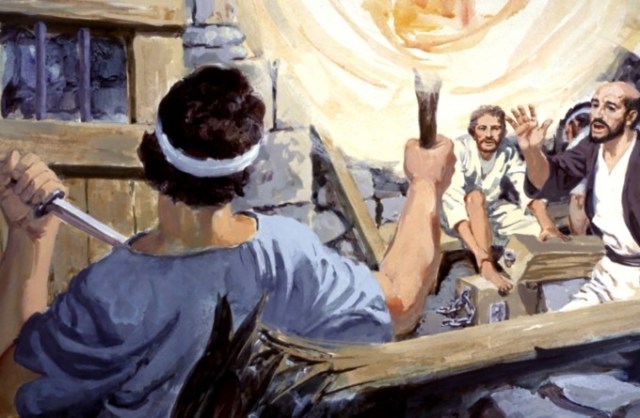
Serving as a jailer for the Roman authorities would not have been a very glamorous occupation requiring very little to do but to keep men awaiting execution or adjudication of charges. The Romans cells were dim, damp, and filthy with an incredible stench. These would have been places that were repugnant to the human senses and to be in charge of such places would require little more than men of lower morals and values to keep men as cattle. On the scale of men who would have been prime candidates for the gospel of Christ the Philippian jailer would not have risen to the top. When Paul and Silas arrived in Philippi, they encountered a certain slave girl possessed with a spirit of divination her masters used for fortune-telling. Annoyed by her constant harassment Paul cast out the evil spirit which greatly angered her masters. Inciting the crowd against Paul and Silas, the men were beaten with many stripes and thrown into prison. The jailer would have received these strangers with no little fanfare and decided to place these trouble makers into the inner prison. To further humiliate and punish Paul and Silas, the jailer had their feet fastened in stocks. Albert Barnes make a note about the jailer placing them into the stocks: “It is probable that the legs of the prisoners were bound to large pieces of wood which not only encumbered them but which were so placed as to extend their feet to a considerable distance. In this condition it might be necessary for them to lie on their backs; and if this, as is probable, was on the cold ground, after their severe scourging, their sufferings must have been very great. Yet in the midst of this, they sang praises to God.” And the jailer was the man who caused this misery on Paul and Silas.

The Lord had greater plans for His two servants. At midnight as Paul and Silas were singing hymns the Lord brought an earthquake that shook the foundation of the prison and immediately all the doors were opened and everyone’s chains were loosed. The keeper of the prison was startled awake by the earthquake. He thought that all his prisoners would have escaped at such an opportune time and decided to kill himself. Knowing the fury of the Roman authorities for allowing prisoners to escape there would be no other choice. From the inner prison, Paul cried out for the man to not harm himself because all the prisoners had remained. Calling for a light he fell down at the feet of Paul and Silas begging to know what he must do to save himself. In the midst of a terrible injustice done to these messengers of God a wonderful story of grace is found in Paul preaching not only to the jailer but to all that were in his house. The Philippian jailer then took Paul and Silas and washed their stripes. Now the incarcerated are treated with sympathy and gratitude instead of the harshness of the stocks. The jailer washed Paul and Silas of their stripes and then Jesus washed the jailer and his household of their stripes. Immediately the jailer and all his family were baptized. It is not known who made up his family but they believed with open hearts who had witnessed the earthquake and the great faith of Paul and Silas. The jailer had concern not only for himself but for his family. God’s grace was brought into the home of a man who just a day earlier was nothing more than a jailer imprisoning the outcasts of society. Now he and all his family were children of God and glorifying in the saving grace of a loving Lord.

After Paul and Silas baptized the jailer and all his family they were brought into the jailer’s home to receive nourishment as they all rejoiced together their new found faith. The spirits of Paul and Silas were lifted to the throne of God for such a powerful testimony of the power of the gospel. This would be a story often retold in the presence of many witnesses to show how the Lord can and will work in the lives of the most unsuspecting souls. The household of a Philippian jailer was now part of the household of God. Not only did the jailer learn of the grace of God but he also saw the faith of Paul and Silas as they returned to their cells. They did not flee or try to escape. It was certain they had been beaten openly and as a Roman citizen, Paul was charging the city officials of the high crime of condemning a fellow Roman without charge. The jailer learned a great lesson of trust in the will of the Lord when he saw how Paul and Silas remained in jail until they were released with legal means. Luke does not tell what became of the jailer and his family but one can imagine what a strong church there was in Philippi when Lydia and her friends met their new Christian friends – the jailer and his family. Later Paul would write to “all the saints in Christ Jesus who are in Philippi, with the bishops and deacons.” Could the jailer have been one of the bishops or deacons? It is certain he was one of the saints. Praise God for His incredible grace to save a jailer and his family.

Posted in Uncategorized | Leave a comment

Why Jesus Came To Earth

Zacchaeus-GettyImages-91728285-57ff9b235f9b5805c267ec49

And Jesus said to him, “Today salvation has come to this house since he also is a son of Abraham. For the Son of Man came to seek and to save the lost.” (Luke 19:9-10)

Why Jesus Came To Earth

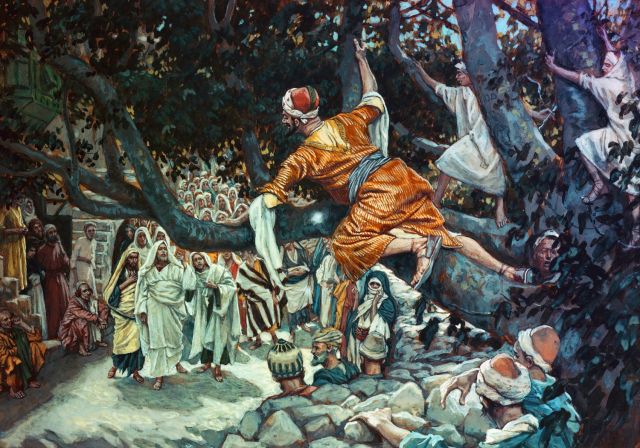
Zacchaeus was a wee little man but his story is one of the great stories of scripture. As Jesus was passing through Jericho he wanted to see the man from Nazareth he had heard so much about. Zacchaeus was a chief tax collector and very wealthy. In the Jewish world, he was despised as a traitor to the Jewish people for collaborating with the Roman authorities to collect undesired taxes and most often through avarice or cheating the citizens. As a chief tax collector, Zacchaeus would have been viewed with greater hatred. Because of his small stature, he was not able to see Jesus because of the crowd and decided to climb a sycamore tree so he could see Jesus as He walked by. When the Lord came to the place, He called for the tax collector to come down out of the tree as He wanted to stay at the house of Zacchaeus. This excited the tax collector and he hurriedly came down out of the tree and received Jesus into his house. Luke does not record the conversations of Jesus and Zacchaeus but something remarkable happened to the tax collector. He would give half of his goods the poor and if he had taken things dishonestly he would restore it times four. A change of heart took place in this chief tax collector. This seems to be the design of why Jesus wanted to come into his house and the Lord proclaimed glory to God for the salvation that had come to the house of Zacchaeus. Jesus tells all the people His purpose for coming was to seek and save the lost. There are three lessons learned from the story of Zacchaeus.

Jesus came to find the small people of the world. He did not come to find those physically small but those who were burdened with sin. His greater response came from the common man. The Jewish leaders were so filled with prejudices they could not see Jesus as the Son of God. When John the Baptist was imprisoned and sent messengers to Jesus, the Lord told them to tell John the common people were hearing the good news. The scholars and wise men of the world would not be impressed with a man who was born of a poor family in a city of no note in a place where animals were stalled. Jesus was the son of a carpenter and as far as the world was concerned an uneducated man. The common man readily heard the word of Jesus and many disciples followed Him. Jesus came to call all men to the gospel and their status in the world does not give them any greater privileges or influence because of who they are, what positions they hold or their monetary worth. All men are the same before God and He is no respecter of people. It seems the small people of the world have a greater interest and acceptance to the gospel call than those who fill their lives with the wisdom of man.

Jesus came to find the castaway of the world. Zacchaeus was hated by many and viewed as a person of ill repute. The Lord came to find souls regardless of their place in life. He would often spend time with those who were considered the sinners of His world. Everyone needed the gospel of salvation from the king to the peasant; from the rich man to the poorest beggar; and all nations of people regardless of skin color, height, weight, gender or social status. Jesus came to bring salvation to the homes of people like Zacchaeus that would find peace in the love of God. He was a wealthy man who realized his true worth was in the kingdom of God and riches made no difference for him. The world may have viewed him with disdain but he knew that God loved him and that Jesus had come into his home and changed his life. There are many people burdened with great challenges of sin but God loves them also. Paul would describe in his letter to Corinth how that some of them had been fornicators, idolaters, adulterers, homosexuals, sodomites, thieves, covetous, drunkards, revilers and extortioners but they had been washed, sanctified and justified in the name of the Lord Jesus. They found what Zacchaeus experienced in his house – the grace of a loving God.

Jesus came to find the hearts that would turn to the Father. The people complained that Jesus had to be a guest with a man who was a sinner. What they could not see is the fertile ground of a tender heart receptive to the saving grace of God. Whatever Jesus and Zacchaeus talked about is not recorded but one thing that is known is the change of heart that came to that house that day. Zacchaeus was a wealthy man who was now going to become a servant to the poor and an example of fidelity to those he may have cheated. His life changed dramatically because Jesus came into his house. This was not a peripheral feeling of religious pride but a genuine change of heart that would impact all that knew the chief tax collector. Here was a changed man and a fully changed man. When the gospel fills the heart there will be no room for selfishness or pride. Zacchaeus emptied his purse because he had emptied his heart to God. The story is not told but when this chief tax collector died his glory was not in what he left behind but what he found when he climbed into the bosom of Abraham as tall as any man. He found Jesus that day and it changed his life. And that is why Jesus came to earth.

Posted in Uncategorized | Leave a comment

A Disobedient And Contrary People And God’s Love

Exodus-19-21-1024x658

But to Israel he says: “All day long I have stretched out my hands to a disobedient and contrary people.” I say then, has God cast away His people? Certainly not! For I also am an Israelite, of the seed of Abraham, of the tribe of Benjamin. (Romans 10:21-11:1)

A Disobedient And Contrary People And God’s Love

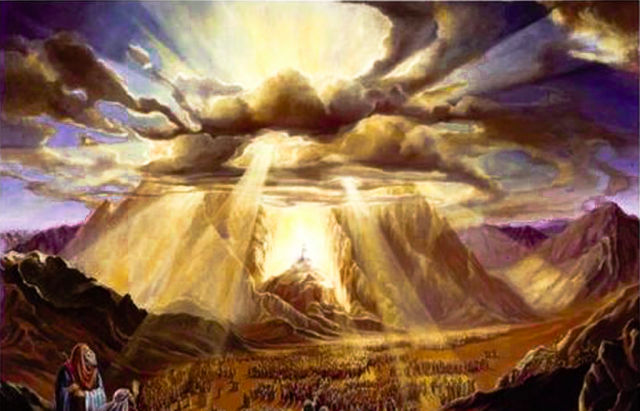
The nation of Israel was the apple of God’s eye enjoying all the favors of a chosen people born of adversity and cherished by the mighty hand of a compassionate Father to His children. With all the blessings, security and needs fulfilled by the providential hand of God, Israel could never grasp the measure of how much they would be cared for if they would obey the will of the Lord God who brought them out of Egypt. The Old Testament is a testimony to the stubborn will of Israel who continually disobeyed the Lord and acted in every contrary manner possible. They saw the mighty works of God through the plagues brought upon Egypt yet doubted Him as they approached the Red Sea. Shortly after their arrival to Mt. Sinai to receive a law the people fell into the carnal pleasures of calf worship with many lives lost. They were promised the land of Canaan as their own special inheritance yet when they arrived at its borders they rebelled against the will of God and failed to believe they could conquer the land with God’s help. Forty years of wandering in the wilderness removed the stubborn will of those who refused to give the Lord His glory but the new generation that would conquer the land struggled with their faith as the period of the Judges and Kings led to the destruction of the ten northern tribes and the final demise of the last remnants of a once powerful and mighty nation. The remnant of Israel came out of the bondage to await the coming Christ. When the Son of God came down from Heaven showing Himself to His own people they rejected Him and killed Him. The final bell was sounded in 70 A. D. when the nation of Israel was removed from the pages of history as the Romans destroyed Jerusalem. It is clear the history of Israel is characterized by the story of a disobedient and contrary people.

Paul’s plea in his letter to Rome was to illustrate the failure of Israel to accept the rule of God in their lives. As a nation, the Lord had rejected Israel because the people had broken the covenant given to them at Sinai. With all of their failures and while their history is filled with disobedience and going against everything God demanded of them, the Lord still loved them and desired they be saved. The apostle would write that his heart’s desire and prayer to God for Israel is that they would be saved. As difficult as the nation of Israel had been God did not cast them away. The love of God is seen in the history of Israel for the innumerable times the Lord extended mercy, grace, longsuffering, and patience and in every case offered the people His love if they would repent and return to Him. He did not condone their actions nor approve of their disobedience and demanded they repent. Sadly they rejected the mercy of God and His love. The Jews killed the Son of God but the Son of God died to give them hope. Fifty days after Jesus arose from the dead the first sermon of grace was given to a crowd of men that had assembled in Jerusalem to worship God. Three thousand devout Jews obeyed the gospel of Jesus Christ because God had not cast them away. They responded to the first call of grace and the early church was originally made up of the nation that is called a disobedient and contrary people. If Israel is the example of man’s rebellion God’s grace is the example of how much He is willing to love a people that are undeserving.

Reading the story of Israel and seeing how they were a disobedient and contrary people it is easy to see the nature of all men who find themselves before a righteous and merciful God. There was nothing special about Israel that made them worse than any other person on the earth. The Old Testament is filled with the story of how Israel struggled with sin and often they failed to give God the glory. Throughout the story of Israel God’s love and His wrath is clearly defined and illustrated for all men to see that sin is the evil man must overcome and although the struggle with sin is a constant challenge for man God is always faithful. Those who rebelled against the Lord and refused to repent were destroyed. The mercy of God was given to those who were disobedient and contrary and who repented and sought the love of God. That is the story of all men. The word of God is given to show all men the nature of sin and that if they repent God will extend to them His divine mercy and love. No man should ever ignore the wrath of God because it is as real as His love. The severity of God is fully documented as well as the goodness of the Lord is exalted in holy writ. Israel is the example of the struggle all men have. I say then, has God cast away all men? Certainly not! God so loved the world He gave His only begotten Son and through the blood of the Savior all men can find the love of God if they would repent and obey His will.


Posted in Uncategorized | Leave a comment

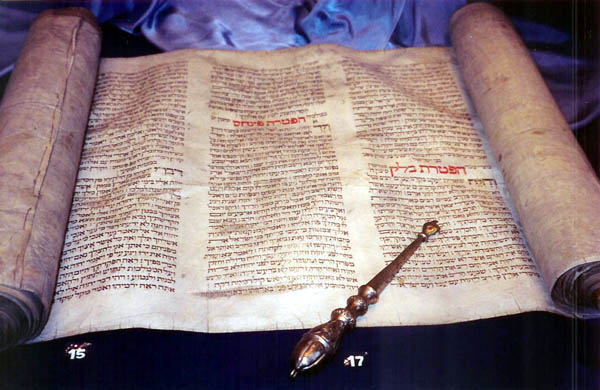
The New Testament Pattern Of Holidays

easter-lilly-vector question

Now about that time Herod the king stretched forth his hands to vex certain of the church. And he killed James the brother of John with the sword. And because he saw it pleased the Jews, he proceeded further to take Peter also. (Then were the days of unleavened bread.) And when he had apprehended him, he put him in prison, and delivered him to four quaternions of soldiers to keep him; intending after Easter to bring him forth to the people. (Acts 12:1-4; King James Version Bible)

The New Testament Pattern Of Holidays

Keeping days of significance has been a way that man enjoys certain milestones in life like birthdays, memorial days, and national days of historical remembrance and a myriad of holidays to commemorate a festival or important event. In our modern world, there is a notation for every day of the calendar year that honors everything from potatoes to bees to national donut day and jelly bean day. These days of holiday are an important part of the fiber of any culture to identify with a national climate or family tradition and on the whole, are harmless and expressions of fun and personal enjoyment. Like most things that are good of themselves, the nature of man is to impose or suggest holidays as a religious pattern and believe over time they are accepted by the will of the Lord and approved. The fourth day of July may be on the calendar of England but it is not celebrated as a day of freedom like it is in the United States because the significance is of no of importance. In like manner, there is no celebration of St. George’s day in America as this is a festival in England. Remarkably the New Testament does not reveal the early church celebrating any holidays or festivals that are so common in the modern view of religious people today. Two major events on the religious calendar are Easter and Christmas for those who profess a belief in Jesus Christ. No record is given where the first-century disciples signified certain days as festivals or holidays to celebrate the resurrection of Jesus (Easter) or the birth of Jesus (Christmas). When the scholars were translating the Bible into the English language for the Church of England (authorized by King James of England in 1604) they included the word “Easter” in the text of Acts 12. Albert Barnes sums up the problem very clearly when he writes, “There never was a more absurd or unhappy translation than this. The original is simply after the Passover. The word ‘Easter’ now denotes the festival observed by many Christian churches in honor of the resurrection of the Savior. But the original has no reference to that, nor is there the slightest evidence that any such festival was observed at the time when this book was written. The translation is not only unhappy, as it does not convey at all the meaning of the original, but because it may contribute to foster an opinion that such a festival was observed in the time of the apostles.”

The New Testament pattern of keeping holidays is nonexistent. Nothing in the writings of the early disciples suggests God approved of keeping certain days as religious holidays or festivals. Paul warned the saints in the churches of Galatia of imposing religious rites with days and months and seasons and years. He would also express concern to the church at Colosse for those judged by food or drink or regarding a festival or a new moon or Sabbath. The Jews were very familiar with religious holidays. Under the Law of Moses, there were festivals, Sabbaths and certain days that were an integral part of the worship of the nation of Israel. The days were restricted to the Jews alone and not binding on those not under the Law. When the church was established and the Law of Moses was done away with there were no holy days to keep in the significance of new moons or Sabbaths or the like. Easter was never celebrated by the early church no more than Christmas was celebrated by those who knew exactly when Jesus was born. The mother of Jesus was a part of the early church and yet the Holy Spirit never revealed the month or day of His birth. Easter and Christmas are part of the fabrication of the imagination of man to worship God in a secular and carnal fashion. These holidays do not honor God but they give a man a sense of identity to soothe his conscience for denying the Lord the other weeks of the year. Great fanfare will go into rising early on Easter morning to engage in a solemn service of Easter sunrise and by the middle of the same week, most individuals have returned to the pagan pursuits of the carnal mind. Christmas has become nothing more than a maddening pace of materialistic pursuit of spending and giving gifts to see who can outdo the Jones family that lives around the mystical corner of every neighborhood.

There is a day given by the Lord to remember, celebrate and acknowledge His majesty. It is a day that is in many ways as common as the other six days of the week it shares company with. However, from time beginning the Creator has desired for His creation to stop and spend time on a day to contemplate his place in the universe and the blessings of an eternal Father. For the Jews, this day became the seventh day of the week called Sabbath. When the Law of Moses was taken out of the way the law of Sabbath was removed and is no longer binding. A new day came from the mind of God for man to reflect upon the holiness of eternal grace and love: the first day of the week. On the first day of every week, the early church assembled to worship, praise and honor the love of God and His sacrifice found in the death of Jesus Christ on a cross. This is the day of worship inscribed by the Holy Spirit for all men to subject themselves to the will of the Father. Every first day of the week is imposed upon the soul of man to remember the sacrifice of Jesus. The Lord’s Supper is engaged each week as a reminder of the price for salvation. This is not a holiday but a day of joy and sadness reflecting the deep spiritual need of man for a loving Father. There is a pattern for the first day of the week in the New Testament. It is upon this pattern that all men should worship in spirit and in truth.

Posted in Uncategorized | Leave a comment

Slaughter Them Before Me

juddgment day

But as for these enemies of mine, who did not want me to reign over them, bring them here and slaughter them before me. (Luke 19:27)

Slaughter Them Before Me

The parables of Jesus were simple stories to drive home the point of an eternal truth offered for man to learn the will of the Father. They were direct in their nature and for the interested student conclusive in the lessons taught. There would be no room for doubt as to the meaning of the parable and Jesus used these storytelling events to impress upon His hearers the character of truth, righteousness and eternal judgment of God upon those who disobeyed Him. The parable of the talents and the parable of the minas are very similar with similar lessons for the Jews of Jesus day and for all men throughout the ages. In the parable of the minas, the concluding scene is very direct in its message of the wrath of God. Ten servants had received from their lord an equal amount with equal responsibility to do business until he returned. When the day of accounting came one of the servants came and because of fear he had not done anything with what was entrusted to him. The servant was fearful of his master because he knew what a severe lord he was. This did not excuse the man from receiving a harsh judgment from the Lord and was condemned for his lack of faith. At the end of the parable, the Lord calls together those who had early refused to serve under his lordship. When the nobleman went off into a far country the citizens hated him and sent a delegation after him saying they would not have him reign over them. Their rebellion was clear. When the Lord returned, judgment came against the rebellious citizens when the Lord called for them to be brought before Him and slain in His presence. The word suggests a slaughter because they refused to subject themselves to the will of the Lord.

Jesus taught many lessons to the Jewish people concerning events that would take place shortly in their own history. He knew of the coming Roman persecution against Jerusalem that would find fulfillment in A.D. 70 and the destruction of God’s city. The Lord also knew His own people would reject Him as Christ and suffer Him to be killed on a cross. They would bear the blood of rejecting Him as responsible for killing the Chosen One of God which Peter plainly preached on the Day of Pentecost. The parable of the minas was a lesson on how the people would refuse the rule of Christ and find judgment by the hand of the Romans but also by the hand of God in the eternal judgment. Beyond the scope of the judgment against the Jews, the parable of the minas teaches the reality of God’s wrath upon those who refuse to submit themselves to His will. There are many who will not obey the word of God and like the citizens of the parable saying, “We will not have this man rule over us.” Jesus tells the story of the judgment of God where all men will be gathered before Him and like the nobleman demand justice against those who did not want Him to reign over them. In the final day of reckoning, the fierce wrath of the Lord will be meted out upon those who reject the blood of Christ. The reality of the lake of fire and brimstone is the eternal slaughter of souls that will never perish. Jesus taught the wrath of God. He did not check His words to soften the message of those who would refuse to submit to His Father. The Son of God is very clear in the reality of a place of punishment. Refusing to believe in a place like Hell is refusing to believe that Jesus is the Son of God.

It is easy for the theology of man to refuse to teach or preach the eternal consequences of rejecting the authority of God. For most men the idea of a loving God that would punish anyone in eternal fire is unacceptable. They must reason how Jesus could use language found in the parable of the minas. The destruction of Jerusalem was a terrible slaughter of the Jews by the hand of the Romans. Jesus warned the nation years before the event and clearly illustrated how severe the judgment would be. If Jesus was correct about the terrible nature of the destruction of Jerusalem why would anyone think the eternal judgment would be anything less; if not more severe because it never ends? The nobleman in the parable demanded all those who did not want Him to reign over them to be brought and slaughtered before him. God is that nobleman and all those who refuse to submit to the will of the Father will be cast into an eternal fire where there are weeping and gnashing of teeth and total darkness. The cost of salvation was the life of the Son of God which measures the severity of the punishment against those who refuse to accept the gift of God in Christ. Not everyone who calls on the Lord will be saved but only those who do the will of the Father. Refusing to submit to God will bring about a great slaughter.

Posted in Uncategorized | Leave a comment