Concern For The Body

Therefore I say to you, do not worry about your life, what you will eat or what you will drink; nor about your body, what you will put on. Is not life more than food and the body more than clothing? (Matthew 6:25)

Concern For The Body

The beauty industry responsible for selling cosmetics and body imaging is worth around $532 billion. In the United States alone, the fashion industry is valued at approximately $343.70 billion, with store sales in 2019 totaling $195.85 billion. Tattoos and body art has soared from years past to be worth nearly $3 billion. Jewelry worldwide is an industry of well over $300 billion, with the United States earning an annual revenue of almost $61 billion. Health foods globally will increase to an industry worth nearly 1 trillion U. S. dollars by 2026. Fitness and wellness companies make up $100 billion globally. It is clear to see that billions of dollars are spent on body appearance every year.

There is great emphasis placed on body appearance. This takes the form of the types of clothing, hairstyles, makeup, and body image. Body art has no age limit or boundaries. The bold at heart will tattoo most of the body with images and statements and add as much piercing of jewelry as possible to the body language. The world is consumed with a “me, me, me” attitude of focus on the body and everything attached. Supermodels parade with glamour, portraying wealth, beauty, and power. Athletes boast of their physique as indestructible. The peer pressure to conform to the styles of the world are immense in every form. There is pressure to fill life with all the trappings of the carnal world of beauty, glamour, physical prowess, and the glorification of the body.

Jesus warned against the emphasis on the body. There is a need to provide those things necessary for the demands of life but dwelling on and worrying over the matters of the body and clothing destroys the spiritual eye of the child of God. Life is more than all the billions of dollars spent on cosmetics, jewelry, tattoos, body piercings, health foods, and health clubs for one single reason: the body will die. People of all ages die. It will not matter whether a person is rich or poor. The funeral director can only put one set of clothes on the body. Some jewelry may be placed on the body, but then it is buried in the ground. All the money spent on tattoos and body art will be food for the worms. A life consumed is wasted.

The challenge of life is to understand the real value of living. Solomon had fame, fortune, pleasure, and knowledge, and his wives turned his heart away from God. He summed up pursuing the carnal life as nothing more than vanity. There is no profit to the worldly pursuits because the end of the road is death. The end of life should be the awareness of the purpose of life. Having good things in life is not wrong but not to the exclusion of the preparation for the moment after death. Dwelling on all the worldly things is useless. People grow old and die. Get ready for that reality. Nothing in this world is real because it is not tangible. The billions of dollars spent for the glorification of the body are a waste of money, time, energy, and focus. Place your treasure in the heavenly matters where the thief will not break in and steal, and nothing will rust. Then, and only then, will you find true peace, happiness, joy, and contentment.

Posted in Uncategorized | Leave a comment

The Cockles Of Life

“Then let thistles grow instead of wheat and weeds instead of barley.” The words of Job are ended. (Job 31:40)

The Cockles Of Life

As a penalty for taking of the forbidden fruit, Adam was not only expelled from the paradise of Eden, where he tended the garden’s trees; he would now have to work by the sweat of his brow to sustain life. The Lord cursed the ground with thorns and thistles. After the flood, the Lord assured Noah that there would be seedtime and harvest, cold and heat, winter and summers, and day and night as long as the earth remained. What the Lord did not do was take away the weeds, thorns, and thistles. It would be a challenge for men to grow their food. In the Garden of Eden, food was provided by the hand of God, but now the man had to work by the sweat of his brow to produce a crop. Part of this curse was the introduction of weeds.

Weeds are amazing but undesirable plants. They are odious, useless, troublesome, and damaging to good crops. The life cycle of weeds moves very quickly compared to a healthy crop. Jesus illustrated in the story of the four soils where the seed fell among the thorns, and the thorns sprang up, choking the seed. Explaining the parable to the disciples, Jesus shows how the word of God is sown in the hearts of men, but the cares, riches, and pleasures of life choke the word, and there is no maturity. The contrast between receiving the word of God and the life cycle of weeds is understood as how worrying about the cares of life consumes the hearts of men to make them unproductive in the kingdom of God. Riches are weeds because they are useless and troublesome. When the heart spends its life on pleasures, it finds the experience an empty and vain existence.

When Job finished defending his character, he summed it up by pleading for the thistles to grow instead of wheat and cockles (weeds) instead of barley if he was guilty. While he tried to justify himself before his three friends and ultimately God, he did know the frustration of the cockles of life. A good crop takes time to grow with great effort to remove the thorns. Weeds have no trouble growing. Great amounts of money are spent on fertilizer to help the crops grow healthy, but there is no fertilizer for weeds. They grow profusely without it. If left unattended, the weeds, thorns, vines, and thistles will overtake and choke the healthy plant. Without removing the thorns, the plant will die.

Removing weeds is arduous and exhausting work. The tender plant has tender roots, but weeds have vicious foundations. Culling through the undergrowth of overgrown thorns and thistles will leave the body bloody and wounded. Ignoring the overgrowth will lead to certain destruction. Weeds are easily identifiable. Removing them is imperative to a healthy and productive crop. The cockles of life have the same resemblance. Eliminating the things in life that drain the energy and purpose of life is difficult. Rooted with deep resources, the cares of life can overwhelm the soul to worry about what to eat, what to drink, and how to provide the necessary needs. Jesus warned about placing the treasures of life too heavily on the needs of the body when the soul needed more care. It takes time to nurture a healthy spirit to serve the Lord. Growing the weeds of life is the easy way, the broad way, and the way that leads to destruction.

A good gardener will recognize the need for weeding the flower bed, plowing the ground to remove weeds, and putting every effort into preventing the growth of thorns. The soul who loves the Lord will daily remove the temptations of life’s cares, pleasures, and riches to overtake the soul. Many cockles of life damage the fertile ground of righteousness. It takes a discerning heart to identify those things that hinder growth. When a farmer plants a crop, he expects a bountiful harvest. No harvest can come without effort. Life is not about the here and now but about the life to come. The small amount of farming done in this life will bring about the bounty of an eternal harvest with God. Failing to weed the garden here will only bring death in the life to come. It’s time to get rid of the cockles. Put your gloves on. It’s hard work but worth it.

Posted in Uncategorized | Leave a comment

Living For Christ

For the love of Christ compels us, because we judge thus: that if One died for all, then all died; and He died for all, that those who live should live no longer for themselves, but for Him who died for them and rose again. (2 Corinthians 5:14-15)

Living For Christ

Freedom and democracy are the patriotic sounding board for those who want to choose how they live, where they live, and how they live their lives. Throughout the ages, nations have established realms allowing citizens to choose and decide how to live. Inalienable rights supersede governmental laws and cultural norms. These natural rights include the right to think for oneself, the right to life, and the right to self-defense, and they remain throughout every human’s lifetime. Thomas Jefferson, one of the main creators of the Declaration of Independence, explained the unalienable rights of each citizen were life, liberty, and the pursuit of happiness. The democratic republic of the United States was founded upon the principles of rights for every citizen.

Democracy is a powerful platform to build a nation but contrary to the foundation of the kingdom of God. There is no democracy in the kingdom belonging to Jesus Christ. A theocracy of the sovereign rule of God alone characterizes the kingdom Jesus established. The subjects of the kingdom are to obey the word of God. When someone obeys the gospel of Jesus Christ, they turn their lives totally over to the will of the Father. The church is not a democracy where the individual can vote for or against the law of God. There is no choice. God establishes law and expects the citizens of the kingdom to obey the word without reservation.

Obedience to God is not forced as if the Lord ruled as a dictator. The love of Christ compels the Christian to honor God in his life by giving his whole spirit to the will of the Father. This is based on the realization that Jesus died for the individual. It is easy to view the death of Christ as a global event, but in reality, the death of Jesus must be considered in a personal and singular manner. If a man cannot take into his heart the personal sacrifice Jesus made for him, he cannot and will not willingly subject himself to the will of God. The love of Christ compels a man, controls his will, and constrains the spirit to obey. When a man learns to subject himself to Christ, he empties his will for the one truth, one way, and life.

Jesus died for the individual. When the individual accepts the sacrifice of Jesus as a personal testimony of divine love, he is willing to give his life entirely to God. The decision must be made that when a man becomes a Christian, he no longer lives for himself. That is a hard decision to make. The spirit of freedom resides deep in the heart of all men, but that spirit cannot be in the heart of the Christian. Freedom can only be found in Christ measured by completely removing self and subjecting the soul to God’s will. Those who live for Christ should live no longer for themselves. They must put Christ first in everything. Are you compelled to live for Christ? Subject yourself to His will, and He will lift you up. Humble yourselves in the sight of the Lord, and He will lift you up. Bow in the presence of the I AM, and He will raise you up. Live no longer for self but for Jesus Christ and Him crucified. Living for Christ is the only way to die in Christ to gain eternal life.

Posted in Uncategorized | Leave a comment

Naboth The Jezreelite

And it came to pass after these things that Naboth the Jezreelite had a vineyard which was in Jezreel, next to the palace of Ahab king of Samaria. (1 Kings 21:1)

Naboth The Jezreelite

The city of Jezreel was located in the tribal lands of Issachar. It was of little importance until the days of Ahab and Jezebel when they made Jezreel a place for one of the palaces. On the eastern slope of the hill of Jezreel, a man named Naboth owned a parcel of ground given to him through ancestorial rights by his fathers. Naboth tended a vineyard on his land, which was close to the house of king Ahab. The king wanted to put a garden next to his house and offered Naboth money to buy the land. He also offered to barter the land for a better vineyard if Naboth agreed.

Under the Law of Moses, it was forbidden to sell a paternal inheritance. Naboth refused the offer by the king not for personal reasons but because to sell the land would go against the command of God. Ahab had no right to ask Naboth to sell or barter his land. The king was bound by the Law of Moses as much as Naboth. When the king inquired about the parcel of land, Naboth reminded the king the Lord forbade selling the land of inheritance. This displeased Ahab, and he went into his bedroom, where he lay down on his bed and turned his face to the wall. He was so upset he refused to eat. Ahab knew Naboth was right.

Jezebel heard that Naboth had refused to sell the land, but she reassured Ahab she would make sure the land was his. She writes letters to the elders and nobles of Jezreel bearing false witness against Naboth. In a cunning ruse of deceit, the men of the city proclaim a fast and seated Naboth with high honor among the people. Two evil men came and sat across from Naboth, accusing the good man of cursing God and the king. This was an offense worthy of death. Naboth and his sons were dragged out of the city and stoned to death without recourse. The wicked leaders of the city sent word to Jezebel that Naboth was dead. Ahab took possession of the vineyard to make his garden.

While the king basked in the success of obtaining the vineyard of Naboth, Elijah, the prophet, came to Ahab and told him because he had murdered an innocent man, his blood would fill the place where the dogs would lick up his blood. Further, the dogs would eat Jezebel by the wall of Jezreel, whoever belongs to Ahab and dies in the city, and the birds of the air shall eat whoever dies in the field. Ahab and Jezebel had taken an innocent man who, by right of the Law of Moses, refused to sell his land; and was murdered by the king. The sons of Naboth were also killed to remove any inheritance rights.

Nothing is known of Naboth except he was a man who owned a parcel of land coveted by the king. He was an ordinary man who worked hard in his vineyard to provide for his family. His sons worked alongside their father. The family of Naboth was like any other family living around Jezreel. They were honest people who lived in a kingdom filled with wickedness. In order to frame Naboth, false witnesses had to be brought in to accuse him of blasphemy, suggesting Naboth was a man of good character. The leaders of the city were corrupt and evil to put the plan of Jezebel into action to murder a man and his sons. They were also accountable. The sad part of the story of Naboth is the injustice of evil against the righteous. A man and his sons were falsely accused and stoned to death.

The prophet Elijah made it clear to Ahab and Jezebel that God was fully aware of their evil. No one like Ahab sold himself to do wickedness in the sight of the Lord because Jezebel, his wife, stirred him up. Naboth and his sons were murdered, and God would bring recompense to the family through divine justice. Ahab would die in battle, and the dogs licked his blood when his chariot was rinsed of his blood. Jezebel was killed when she was thrown from the window of her palace by her eunuchs. She was trampled underfoot by Jehu’s horse. After Jehu had eaten a meal, he sent servants to bury Jezebel, but all they found was her skull and the feet and palms of her hands. The dogs had fulfilled the word of the Lord.

There are many injustices brought upon people by evil men and women. As they stoned Naboth and his sons to death, the condemned wondered why God allowed the travesty to happen. God could have stopped the stoning, but He did not. Naboth and his sons died, but the judgment of God came true. Ahab and Jezebel died, and they will remain in the fires of hell without end. Life can be unfair, but eternity is just. Men will commit injustices in this life, and God will settle accounts in the world to come. Serve God today. You can hide nothing from God. Nothing.

Posted in Uncategorized | Leave a comment

God Pleads The Case Of The Poor

Do not rob the poor because he is poor, nor oppress the afflicted at the gate; for the Lord will plead their cause and plunder the soul of those who plunder them. (Proverbs 22:22-23)

God Pleads The Case Of The Poor

There has always been injustice in the world since sin began to dominate the hearts of men. The persecuted come from the ranks of the feeble, helpless, and poor among humanity. They are defenseless against the bullies of the world who seek to abuse them, take their possessions, and use them for their own gain. Poor people are abundant in the world. Because of circumstances often beyond their control, they cannot rise above their station in life. A cycle of continual misery accompanies their meager existence as they try to live above the poverty level.

God has always been mindful of the unfortunate. Under the Law of Moses, the corners of the fields were not to be harvested. The Lord forbade harvesting the grain along the edges of the field. Whatever the harvesters dropped was to be left for the poor. This was also the case with the harvest of grapes. The people were not to strip all the grapes from the vines nor pick up the grapes that fell to the ground. They were to be left to the poor and the foreigners living among them. This was a command with as much force as not to kill or commit adultery. God’s law prohibited the abuse and neglect of the poor.

A stern warning is given in the wisdom literature concerning the abuse of the poor. Taking advantage of the poor because he is impoverished is a sin. Robbing the poor because he is poor is an abomination before the Lord. All men were created in the image of God and bear His mark. Robbing the poor is robbing God. Mistreating another human being based on economic status is mistreating the creation of God. Courts of law were often held at the city gates, and another stern warning was given against the miscarriage of justice against the poor. Powerful men could easily abuse a man of lowly rank who has not have the means or funds to defend himself. Abuse of the poor was common in the courts of men. Without a proper defense, there was nothing the poor could do.

The nation of Israel represented the family of God’s people. They lived under the Law of Moses, which protected the poor against maltreatment. The wisdom literature was written for the people of God to treat the poor with respect and honor. God warned His people against the abuse of the poor and offered hope for those treated poorly. A court of law may rule against the poor man and take away all his possessions, but a day will come with God will settle all accounts. The men who testified against Naboth so that Ahab could steal his land were innocent in the courts of men, but when they died, they stood before the One who knew all they did. The Lord pleaded the case of Naboth, and the false witnesses, Ahab and Jezebel, all received their reward for abusing the poor.

When men plunder the goods of the poor in this life, they find that God will plunder their souls in judgment. Nothing escapes the eyes of the Lord. The poor can suffer in this life and find joy in the life to come. Those who oppress the poor now will enjoy the bounty of their possessions and then face the wrath of God in judgment. The lesson of accountability is to show love and compassion to the oppressed because eternity depends on it. Jesus told about the gathering of all humanity before the throne of God was likened to separating the sheep from the goats. The basis of this judgment was how the child of God treated others. If the heart showed benevolence, the soul was rewarded. When the heart showed cruelty and neglect to the unfortunate, they were cast into the everlasting fire with the devil and his angels. God looks after the poor. Mistreat the poor, and you will have God to deal with.

Posted in Uncategorized | Leave a comment

Figs And Faith

“And I will add to your days fifteen years. I will deliver you and this city from the hand of the king of Assyria; and I will defend this city for My own sake and for the sake of My servant David.” Then Isaiah said, “Take a lump of figs.” So they took and laid it on the boil, and he recovered. (2 Kings 20:6-7)

Figs And Faith

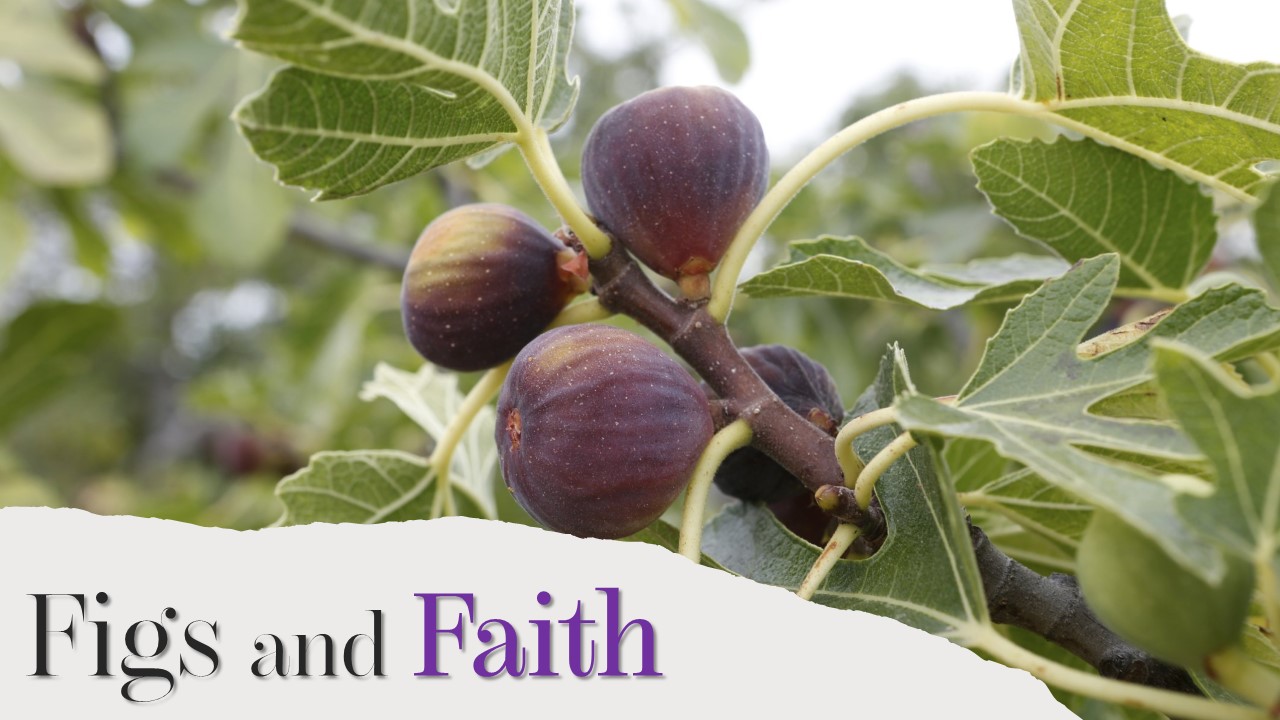
Hezekiah was the thirteenth king of the southern kingdom of Judah. In contrast to his father, Ahaz, Hezekiah was a king who loved the Lord and did what was right in the sight of God. He inherited the throne at age twenty-five, ruling for twenty-nine years. At thirty-nine, Hezekiah developed a boil that made him sick nigh unto death. Isaiah went to Hezekiah and told him to set his house in order, for he would die and not live. Hezekiah prayed fervently to the Lord with bitter tears pleading for his life. Before Isaiah could leave the palace, the Lord told the prophet that Hezekiah’s prayer had been heard. Through the mercy of God, the king would enjoy fifteen years of life.

The power of God to heal is instantaneous in many cases. Jesus healed the multitudes of all diseases and infirmities. Many of those the Lord healed experienced the cure immediately. The paralytic man delivered to Jesus through the roof was told to rise from his bed and go to his house. He immediately stood up, took his bed, and went out in the presence of them all. Jesus healed a blind man by spitting on the ground and making clay from the saliva. He then anointed the eyes of the blind man with the clay. The blind man was not healed immediately. Jesus told him to go to the pool of Siloam (still blind) and wash. The blind man went to the pool and washed and was made whole.

When Isaiah told Hezekiah he would not die, the king rejoiced in his heart. Hearing that he had fifteen more years to live would have given him a more profound love for the God he served. However, the boil had not been removed at the word of Isaiah, and the king remained near death’s door. Isaiah told the servants of Hezekiah to take a lump of figs and press it on the boil. When the cake of figs was placed on the boil, the king recovered. God could have removed the boil immediately, but He chose not to do so. If the king had rejected the fig remedy, he would have died. God promised to give Hezekiah fifteen years, but the king had to obey the word of the Lord. Without his faith in the promises of God and placing the figs on the boil, the king would have died. Like Abraham, Hezekiah found faith working together with his works, and by works, faith was made perfect. The king was justified by works when he placed the fig remedy on the boil. You see then that a man is justified by placing the cake of figs on the boil and not by faith only.

Posted in Uncategorized | Leave a comment

The Great Escape

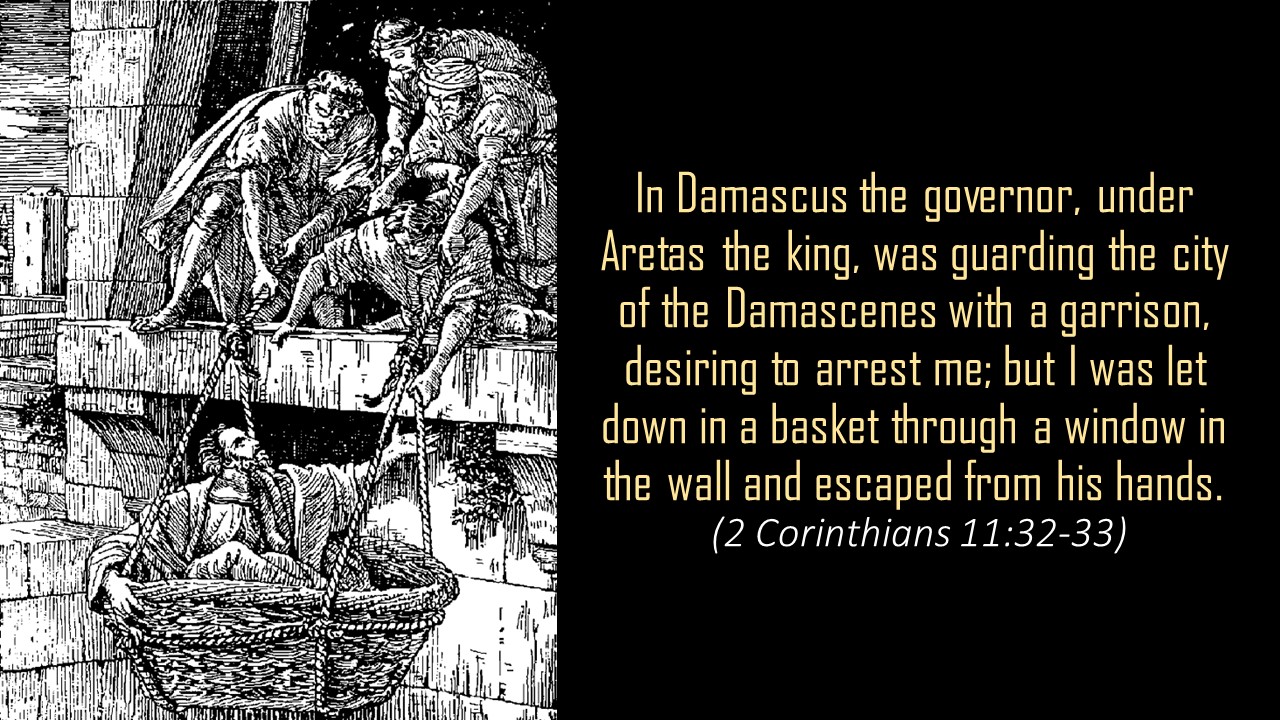
In Damascus the governor, under Aretas the king, was guarding the city of the Damascenes with a garrison, desiring to arrest me; but I was let down in a basket through a window in the wall and escaped from his hands. (2 Corinthians 11:32-33)

The Great Escape

Paul’s defense to the Corinthians of his suffering as a disciple of Christ included one of the earlier trials he faced when he became a Christian. The early life of Paul was very different than what happened that day when he approached the city of Damascus. Paul’s early life was robust with training in Jewish law, learning from the esteemed teacher Gamaliel, and becoming one of the most powerful men in Jewish leadership. When the followers of Jesus banded together and began to increase in number, the leaders of Israel became alarmed. They arrested Peter and John and warned them not to teach in Jesus’ name. Then they arrested the twelve apostles and, after beating them, warned them again. When Stephen withstood the Jewish council (which included Saul of Tarsus), they took him out and stoned him. Saul consented to his death.

Following the death of Stephen, Saul launched a furious attack on those who were of the Way. He gained authority from the high priests in Jerusalem to arrest the disciples of Jesus in Damascus and bring them bound to Jerusalem. As he approached the city, a bright light shone around him from heaven. The Lord told Saul to go into Damascus and wait. Three days later, Ananias came to Saul and baptized him for the remission of his sins. Saul of Tarsus was now a Christian. His enemies had become his brethren, and his former brethren had become his enemies.

After Paul became a Christian, he remained in Damascus and immediately began preaching about Jesus in the synagogues. Everyone was amazed at the transformation that took place in the man from Tarsus. Saul’s preaching became more and more powerful, and no one could refute his proof that Jesus was the Christ, the Son of the Living God. His preaching also brought a renewed source of enemies. His former Jewish brethren wanted Paul dead. Watching the gates day and night, the Jews plotted to kill Saul and solicited the governor’s help under Aretas, the king, to arrest him. Neither plan would succeed. Being told of the plot to kill Saul, the disciples of Christ lowered Paul down in a basket through a window in the wall. He escaped and made his way to Jerusalem, nearly 150 miles away.

Paul’s escape was an inglorious end to his trip to Damascus. He had arrived with the authority of the high priests and left in a basket, being let down in the dark of night. God’s providence overshadowed his escape, for there was much work for the new apostle to carry out for the kingdom of God. As Paul bumped along the Damascus wall, he must have reflected on the irony of his plight. A man with great authority and privilege in the world escaping for his life in a basket down the city wall. But he now served the King of Kings, and his escape would further the cause of Christ in years to come. God had a plan for the apostle, and he never let the persecutions and humiliations of life cause him to waver.

Suffering for Christ was a common thing for Paul. He had been beaten, locked in prisons, threatened, persecuted, stoned and left for dead, shipwrecked and in perils often. His best days were being let down in a basket to escape the watching eye of the guards seeking to arrest him. Paul knew how often God had blessed him with those baskets in life. The apostle took his suffering in the stride of an eternity-bound man. If Paul had anything to boast about, his boasting concerned his trials that made him stronger. The great escape. Down a wall in a basket. Incredible.

Posted in Uncategorized | Leave a comment

The Valley Of Decision

Multitudes, multitudes in the valley of decision! For the day of the Lord is near in the valley of decision. (Joel 3:14)

The Valley Of Decision

Joel is the prophet of decision. Using a catastrophic locust plague as a backdrop, the prophet of God unleashes a barrage of appeals to Israel to repent or face the wrath of God. The day of the Lord was coming, and severe destruction would come if the people did not repent. Repentance is the message of the book. The totality of God’s destruction would be thorough, complete, and exhaustive. There would be no mercy to an unrepentant nation. God’s wrath would burn hot on the people if they did not heed the day of the Lord. Joel told the people the judgment of God was at hand, it was coming, and it would be great and very terrible. A day would come that would be coming of the great and awesome day of the Lord. Joel’s conclusion is the appeal for the people to make a decision. He tells them the day of the Lord is at hand, and they are standing in the valley of decision.

The metaphorical language of Joel is very strong. There is no doubt the judgment of God was coming. History is replete with how God does not lie, and when He promises judgment, it comes. Israel had turned away from the Lord to serve idols. Moses had written in the law when Israel turned away from God to serve idols; judgment would come. The Lord had sent prophets into the land to turn the hearts of the people back. They rejected the messengers of God. Israel experienced a time of prosperity, but this came from becoming like the nations around them. God had not blessed them, and they forgot God. Now the Lord demands the trumpet be blown in Zion and an alarm sounded in His holy mountain. The people should tremble at the day of the Lord when they see the dust of the consuming armies coming to destroy them.

God pleads with the people to turn to Him with all their hearts, with fasting, weeping, and mourning. If they would rend their hearts, a merciful God would save them. He demands they blow the trumpet in Zion, consecrate a fast, and call a sacred assembly. When the people show works of repentance, God will relent from His fury. The day has come for a decision. Joel calls it the valley of decision. Whoever calls upon the name of the Lord shall be saved. Those who refuse will be destroyed.

The figure of the valley of decision is how God displays His mercy for all humanity. When men refuse to follow the will of the Lord, the wrath of God comes with a furious swarm like a destructive army of locusts. The crawling, consuming, and chewing creature leaves nothing in its path, and so will the Lord bring swift and utter destruction. Jesus pleaded with the people to repent or perish. They killed the Prince of Life. God has revealed His word to all the world through the Bible, and men reject His message. There is coming a day when all men will stand before the judgment bar of God. When that time comes, there will be no hope. The time for a decision is now. Salvation must come today. There can be no waiting or indecisiveness. We all stand in the valley of decision and must decide whom we will obey. Like Joshua declared so long ago, a day must come when a decision is made. Elijah implored the people to make up their minds about whom they would obey. The Lord has done all He can do and all He will do. Every man stands in the valley of decision. What is your decision? You will decide.

Posted in Uncategorized | Leave a comment

What Must I Do To Be Saved?

For this is good and acceptable in the sight of God our Savior, who desires all men to be saved and to come to the knowledge of the truth. (1 Timothy 2:3-4)

What Must I Do To Be Saved?

There is no doubt that God desires all of creation to be saved. He has given the world all the knowledge needed to answer the question of salvation. When the early church began, the first question was what needed to be done. Devout men gathered for Pentecost heard the gospel of Jesus Christ and how they had killed the promised Messiah. Their hearts were pricked, and they responded by seeking the answer to salvation. Peter told them to repent and that everyone should be baptized in the name of Jesus Christ for the remission of sins. Three thousand responded and were baptized.

Peter and John went to the temple to pray and met a lame man at the temple gate. After healing the man, Peter spoke to the people reminding them once again they had denied the Holy One and the Just, and killed the Prince of Life, whom God raised from the dead. He tells them to repent and be converted so that their sins may be blotted out. Many of those who heard the word believed. When Saul of Tarsus began persecuting the church, faithful saints went everywhere preaching the word. Philip went to the city of Samaria and preached Christ to them. The multitudes heeded the gospel of Christ, and there was great joy in the city. Simon, a notable sorcerer, also heard the teaching of Philip, and he believed and was baptized.

The Holy Spirit directed Philip to find a man traveling from Jerusalem to his home in Ethiopia. Philip approached the Ethiopian and asked him if he understood what he was reading. The man was reading from the prophet Isaiah. Invited to join him, Philip began where the man was reading and preached Jesus to him. As they went down the road, the Ethiopian asked Philip why he could not be baptized. Philip told him if he believed with all his heart, he could. The man confessed he believed Jesus Christ was the Son of God. They stopped the chariot, and both Philip and the Ethiopian went down into the water, and he baptized him.

Saul had begun to persecute all the disciples of the Way, disciples of Jesus Christ, with fierce persecution. He made plans to go to Damascus and arrest all the followers of Christ he could find. As he approached the city, the Lord appeared to him and told him to go into the city, and he would be told what to do. Blinded, Saul entered the city and stayed with a man named Judas, who lived on a street called Straight. Three days later, Ananias comes to where Saul is and heals him of his blindness. Ananias then tells Saul to arise, be baptized, and wash away his sins. Saul obeys.

There was a certain man in Caesarea called Cornelius, a centurion of the Roman army. He was a devout man who feared God with all his household, giving alms generously to the people and always praying to God. He was not a Christian, and none of his household were Christians. An angel appears to Cornelius and tells him to send to Joppa for a man called Peter. This man would tell Cornelius and his household words whereby they would be saved. Cornelius obeys, and when Peter comes, the family of Cornelius is baptized in water.

Paul and Barnabas go throughout the regions of the Roman Empire, preaching the gospel of Christ. Multitudes believe and are baptized. People from Cyprus, Antioch in Pisidia, Iconium, and Derbe believed in the gospel of Jesus Christ. Lydia and her household were baptized in Philippi. The Philippian jailer and his household were baptized. Many in the city of Thessalonica believed, including a great multitude of devout Greeks and not a few of the city’s leading women. The Bereans believed. Converts were made in the city of Athens. Many in the city of Corinth would believe as Paul spent a year and six months teaching. Paul found twelve men in the city of Ephesus who knew only the baptism of John. The apostle baptized the men into the name of Jesus Christ.

There are many untold stories of those who heard the word of God, repented of their sins, confessed that Jesus Christ was Lord and Savior, and were baptized for the remission of their sins. Luke offers the story of the early church, and every conversion story is the same pattern. Jesus had told the apostles to go into all the world and preach the gospel, baptizing in the name of the Father, Son, and Holy Spirit. Luke testifies this is what the apostles did. There are no stories of people being saved because they were good people. The apostles never taught salvation by faith only or grace alone. If you are a good person, that will not save you. Believing faith alone will save you is a lie. Thinking God’s grace alone will save you is a false hope. The book of Acts contains a little over 24,000 words. Read the book of Acts and see what you must do to be saved. Stop believing men and believe the word of God.

Posted in Uncategorized | Leave a comment

The Innocent Cry Of The Guilty

This is the way of an adulterous woman: she eats and wipes her mouth and says, “I have done no wickedness.” (Proverbs 30:20)

The Innocent Cry Of The Guilty

The nature of sin is realized in different ways. For some, transgressing God’s law brings shame and fear. Adam and Eve hid in fear because of sin and were ashamed. Cain had no fear or regrets about killing his brother. For most people, sin is a religious term that does not apply to them. The popularity of sin attests to the fact that most of the world is under the persuasion of the deceiver, who denies the guilt of sin. Agur points out in the proverb an adulterous woman engages in sexual immorality without any guilt or shame for what she does. This explains the nature of sin and why so many people have no guilt about the kind of lives they lead.

Satan has done well to blind the minds of sinful man to the reality of God’s omniscience. The omniscience of God is His all-knowing spirit that knows everything done by every person on the face of the planet – at the same time (which is part of his omnipotence). A woman can engage in sexual immorality in secret, but the man she is with knows, but most importantly, God knows. No darkness can keep things from the eyes of God. No place on earth exists where the Lord is not there. Men brag about reaching the summit of Mt. Everest, but God has been there since it was formed. The deepest part of the oceans is the dwelling place of God.

An adulterous woman forgets that God sees in secret. She may have escaped the detection of the world, but she (and he) can never escape the eyes of the Lord. Assuming the character of a good woman is a fantasy built upon hypocrisy. The world may see her as a beautiful debutante, sophisticated, and happy, but the Lord sees the blackness of her soul. Sin looks appealing. The lesson from Agur is the deceptive nature of sin. Satan has filled the world with souls bound for perdition who appear innocent and pure. Like the immoral woman, they wipe their mouths of sin and proclaim their innocence. “I have done no wickedness,” they chant. Their lies do not change the evidence of God’s knowledge.

There will be many shocked souls at the judgment bar of God when they hear the words of destruction. They will die believing they are innocent because no one found their guilt. Nothing they have done is wrong because they lived according to their desires with no guilt or shame. Sadly, the measure of sin is weighed in the divine balances of mercy, grace, and truth. Those who have failed to keep the will of the Father will find no favor on the last day. They may have fooled the world but can never fool the Lord. Let it be known. God sees and knows all. Every man will stand before the Lord God and Judge and give an account of all they have done in this body. Nothing will be left out. No one will claim innocence who is guilty when the judgment comes. All the guilty will know the power of God’s truth. He sees all, and He knows all.

Posted in Uncategorized | Leave a comment