Why Men Are Weary

But when He saw the multitudes, He was moved with compassion for them, because they were weary and scattered, like sheep having no shepherd. (Matthew 9:36)

Why Men Are Weary

The sheep is an animal wholly dependent upon someone to care, protect, and provide for them. When God created the sheep, He did not instill any means of protection like large teeth or razor-sharp claws. The feet of a lamb cannot deliver him from the fierce attack of a lion or bear. There is little a flock of sheep can do against wolves who come to feed. By themselves, the sheep are the most helpless of animals. Left to themselves, they would wander about without direction and starve to death or die of thirst. The only salvation sheep have is a shepherd’s guidance, protection, and care.

God created the sheep to be helpless, and God created man to be powerless. A lion is a fierce beast who devours its foe with ease. The instincts of the lion will find food and water. A lion is independent and singular in its purpose. This is not the case with the poor lamb, which cannot protect itself or provide its own nourishment. The nature of a man is like that of a lamb. God created humanity to be a creature wholly dependent upon the blessings of the Creator. The difference between a lamb and a man is that man was created in the image of God. He can choose evil or good, light or darkness, and righteousness or unrighteousness. Made in the image of God separates man from animals, but more often, the animals know God better than man. The ox knows its master’s crib. Man refuses to acknowledge that God is his Creator. With all the blessings of creation where man is created in God’s image, he struggles with accepting the will of God.

Jesus saw the people in the way a shepherd looks upon aimless sheep. Multitudes followed Jesus to hear His teaching and to be healed of their diseases. The miracles of Jesus were to confirm that He was the Son of God, but most people saw only the miracles. Jesus taught the word of the Father, and most turned a dull ear. The work of Jesus was complete with signs, wonders, and miracles confirming the message of salvation to a lost world; and often, at the end of the day, Jesus could only see the people as sheep without a shepherd.

The people that followed Jesus were weary, harassed, scattered, and helpless. This was not in an economic, political, or religious sense. What Jesus saw lacking in the people was a spiritual purpose. They were burdened under the weight of a failed religious system that exalted the rich and oppressed the poor. The Jewish teachers had corrupted the Law of Moses to their advantage at the cost of the people. Jesus taught as one with authority, not like the scribes. The people were amazed at the teaching of Jesus because it was direct and true. He fed the people the pure manna of God’s word. Those who followed the teachings of Jesus found peace in His word because it gave them purpose and direction. Jesus was sad when He looked upon the multitude and saw they looked so helpless.

Jesus came to take away the hopeless spirit of a destitute world. The Son of God came to seek and save the lost. There would always be the poor among the nations of the world, but Jesus came to give life to those dead in sin. The world is filled with helpless, wandering, aimless lives of people who seem fine on the outside but are inwardly empty shells. Jesus wants His people to see the fields are white to harvest in sharing the good news of Christ to a lost and dying world. We must recognize the need to show a world full of empty shells: Jesus Christ. Sheep without a shepherd – need a shepherd. Your neighbor without Christ – needs Christ.

Posted in Uncategorized | Leave a comment

What Is The Love Of God?

For this is the love of God, that we keep His commandments. And His commandments are not burdensome. (1 John 5:3)

What Is The Love Of God?

There has always been one thing God wants from His creation. Creating man and woman was the highest of His creation, and He crowned humanity with the divine image of an eternal nature. God did not ask much, but He expected everything. To love God, one must keep His commandments. God has always wanted men to love Him enough to keep His commandments. Rejecting the word of God is an affront to the nature and character of God. It shows disregard for the love of God. Man was created to show the glory of the Father. When men refuse to keep the will of the Father, it shows the lack of love needed for God’s blessings. The love of God is found when men keep the commandments of the Lord.

It is easy to say one loves God. What becomes difficult is to have that love and keep His commandments. The problem men have faced with their relationship with God is that they want to say they love Him but are not interested in doing what God says. Many will claim to love Jesus and never consider following His commands. Today’s health and wealth religion hawks the pleasure-driven-do-what-you-want-to-do gospel of loving Jesus and not worrying whether one is following the will of God. If a person believes in Jesus, that is all required. Loving God is an expression of outward faith without any action on the part of the individual. Religion becomes nothing more than a shallow emotional experience.

Keeping the commandments of God requires obedience to the word. This is called action. It is not possible to choose and pick which commands to keep. Obedience comes from the act of doing what the word of God says one must do to be saved. Saying you love God and refusing to be baptized for the remission of sins will not change a person into a saved individual. Proclaiming love for Jesus does not bring salvation apart from keeping the commandments. The faith-only doctrines of men destroy the fabric of the gospel to its core. There is no doctrine of faith-only in scripture, with the exception that salvation does not come by faith alone. Too many souls walk aimlessly through life, saying they love God and Jesus Christ and never do one thing to keep the commandments of the Lord.

The striking character of the commandments of God is to know that none of them are burdensome. When has God asked any man or woman to do something they could not do? The Lord told Abraham to offer Isaac as a burnt offering because God knew the test that would go through the mind of Abraham would be proven by his faith. God did not ask too much of Jonah, but Jonah thought so. On the day of Pentecost, when Peter and the apostles preached to the multitudes gathered at the temple, did the Holy Spirit ask them to do something they could not do? Peter told them to repent and be baptized for the remission of sins, and three thousand people obeyed. Why? They loved God.

When the scriptures say that salvation is found when a man repents and is baptized, refusing to obey the command shows a lack of love for God. Whatever the Lord has told men to do is not hard to understand and no less challenging to follow. At the root of the problem is love. People who refuse to do what the scriptures say show a lack of love for God. Do you want to love God? Keep His commandments, and remember that God has not and will not ask you to do something hard to do. Jesus did the hard part so that we could enjoy the grace of His Father. Love God. Keep His commandments.

Posted in Uncategorized | Leave a comment

What Happened When The Creator Died

And Jesus cried out again with a loud voice and yielded up His spirit. Then, behold, the veil of the temple was torn in two from top to bottom; and the earth quaked, and the rocks were split, and the graves were opened; and many bodies of the saints who had fallen asleep were raised; and coming out of the graves after His resurrection, they went into the holy city and appeared to many. (Matthew 27:50-53)

What Happened When The Creator Died

The death of Jesus is the focal point of God’s scheme of redemption. There is nothing in history before or that which is to come that will rival the significance of what happened at Golgotha in the city of Jerusalem. Jesus died to save men from sin. Through His sacrifice, death is defeated, Satan is limited, and the portals of Heaven are opened for those who seek its glory. Every first day of the week, faithful saints gather to remember the sacrifice of Jesus in the Lord’s Supper. The blood of Jesus is explained in the cup, and the bread representing the body of Jesus is taken to remember the love of God. For two thousand years, God’s people have memorialized the death of Jesus. There is something else that happened when Jesus died that is remarkable.

Jesus claimed to be God. He told the Pharisees He existed before Abraham. By the power of the Holy Spirit, the man from Nazareth healed every disease, cured all ailments, raised the dead, walked on water, and performed many signs and wonders before the people. His miraculous power proved He was the Son of God. No man could do what He did, and no man taught like Jesus. Accepting the miracles of Jesus as proof of His divinity also proves that He is the Creator of the world. He could not have power over the world unless He had greater power over the creation of the world. Jesus could curse a fig tree because He made the fig tree. Healing blindness was Jesus exercising divine authority over disease. Raising the dead comes from the creative power of the Son of God. Everything Jesus did proved He was the Son of God, Creator of the world. All things were created through Him and for Him.

The death of Jesus on the cross was unlike the death of the two men crucified on His right and left. Their legs were broken, and they died. Jesus died, and creation erupted. When the two thieves died, no one took notice. They were taken down and buried in some unmarked graves. Jesus Christ died, and the world almost came apart. The veil in the temple was torn in two from top to bottom. This veil was not a thin fabric easily torn. Ancient texts suggest the veil was so large it took nearly two hundred men to manipulate it. It was so thick when ripped in two the noise would have been deafening. When Jesus died, the priests would have begun the service for the afternoon. The veil was torn from top to bottom. This was not something any man could do. The world tore that veil asunder. It was the declaration by the hand of God the new covenant had come to the world, and the Law of Moses was obsolete.

When Jesus died, the literal earth reacted. There was an earthquake, and the rocks were split. Creation shook at the death of its Creator, the Messiah, the Son of God. When Jesus died, the world suffered the death of the One who created it. Graves were opened up throughout the region. After Jesus rose from the dead three days later, many saints who had died rose from the dead and walked into Jerusalem. Wives received their husbands alive again, fathers returned to their families, and a host of righteous people rose from the dead to testify to the death of the Creator. When Jesus died, the world responded. What a day when Jesus died.

Posted in Uncategorized | Leave a comment

Nations Are Only Drips

Behold, the nations are as a drop in a bucket, and are counted as the small dust on the scales; look, He lifts up the isles as a very little thing. (Isaiah 40:15)

Nations Are Only Drips

A 2021 survey ranks nations according to military alliances, international alliances, political influence, economic influence, and leadership. This survey determines how to define the nations that exert the greatest power on earth. In the 2021 survey, the top five nations are the United States, China, Russia, Germany, and the United Kingdom (in descending order). Ranked number 1, the United States boasts an economy with a GDP of $20.93 trillion in 2020. The United States spends more on its military budget ($778 Billion) than China, India, Russia, the United Kingdom, Saudi Arabia, Germany, France, Japan, and South Korea combined.

Great empires in history covered vast areas of land. The British Empire at one time covered 26% of the world. Rome built an empire spreading across three continents. In the steppes of Mongolia, the Mongol nation rose to one of the most powerful nations on earth. Russia, China, Spain, and the French once ruled vast tracts of land. Throughout history, nations have risen to prominence, boasting of powerful armies and navies, conquering peoples throughout the world. The empires of Rome, Britain, Mongolia, Germany, and Japan have all vanished in the dustbins of history, as will all nations. There will come a day when the United States of America will be a nation of no importance. All nations are nothing but a drop in the bucket in the eyes of God.

Isaiah wrote his message about God during the days of world upheaval. The Assyrians had been a fierce and powerful nation conquering the nations around them. Nineveh fell in 612 B.C. when the Babylonians, Scythians, and Medes attacked the city. In 605 B.C., the end of the Assyrians came at the battle of Carchemish. Babylon rose to world power after defeating Assyria. Isaiah lived through these turbulent times and offered a fresh view of world domination. God sees nations as nothing more than a drop in a bucket – a drip. Compared to the Lord God Creator, the greatest nation is but dust on a scale. The same Creator that formed the earth and destroyed the world in the days of Noah looks upon nations as merely a drop of water – nothing.

Everything must be viewed in perspective. God knows exactly how much water there is on earth to the ounce. Science has opened the vista of the heavenly portals but admits it has yet to reach a point of conclusion. God has measured the heavens and knows how big the universe is and how many stars there are to an exact number (He has a name for every star). If a man were to inquire how much the mountains weigh and the weight of the hills, God would give him an exact number. Why would a nation that spends $778 billion on the military cause any concern for God? Does it matter to the Lord if a country has a robust GPD of $20.93 trillion? As much as He is concerned about one drop of water.

Humanity is a funny creature, unlike the animals of the world. Isaiah began his book declaring the ox knows its owner and the donkey its master’s crib; but Israel did not know God. The animals know how great God is, but man refuses to acknowledge how small he is. Nations boast of their power and strength to the amusement of the animal kingdom. A nation will rise and fall, but God does not change. Nations are nothing more than a drop in the bucket and dust on the scale held in the hand of the Almighty. This is true of our country and any other country in the world. Praise God.

Posted in Uncategorized | Leave a comment

We Don’t Get What We Deserve

He has not dealt with us according to our sins, nor punished us according to our iniquities. (Psalm 103:10)

We Don’t Get What We Deserve

It is hard to understand the depravity of the human spirit when the character of the human soul considers itself to be worthy of honor. For the most part, a person is a good character in many ways. Many elements of the world are vile, rebellious, wicked, and immoral. The majority of the people on earth have a good moral compass, but their lives are not governed by a higher righteous law. A nonbeliever can be a good man. The goodness of a man’s worth can be measured in his kindness, generosity, love, and willingness to help others. These are good traits that help make the world a better place. It does not make a man righteous.

The struggle of the human identity has always been to see the value of the human soul in regard to the righteousness of God. When a man is told he is a sinner, he evaluates his life by his good deeds failing to appreciate the deeper consequence of his relationship with God. There are only two kinds of people in the world – righteous and unrighteous. This characterization can only be defined as good and evil, holy and unholy, or saved and lost. There is no third option to call a man good or benevolent. In the eyes of God, there can only be righteous and unrighteous. A man’s relationship with God is measured by whether the man does the will of the Father, not if he is religious or not. Understanding the true character of a man is where seeking salvation begins.

Sin is a transgression of the law of God, and every man sins. The relationship between man and God is solely based on how man acknowledges the nature of sin. If he refuses to admit he is a sinner who needs grace, God will never mean anything to him. Each time the Bible reveals a person’s true character is when the heart understands the nature of sin. Noah built the ark, moved by godly fear, believing in the power of grace and mercy because he understood the consequence of sin. Abraham was justified by faith as a measure of knowing his need for a loving God. David experienced the forgiveness of the Lord God when the man after God’s own heart sinned with Bathsheba. He said to Nathan, “I have sinned against the Lord.”

David wrote in Psalm 103 how he understood the grace of God. Looking at himself through the mirror of self-introspection, David knew if God dealt with him as he deserved, he would not live. Comparing God’s righteousness and man’s sinful nature is where man realizes how God should punish man but does not. Everyone deserves God’s wrath, the Lord’s anger, and the righteous judgment of a fearful and living God. And yet – God does not punish according to what a man deserves. He should deal harshly with sinful men. There is every right for the Lord to punish a man for what he really deserves. God does not.

There is no comparison to the mercy of God. On his best day, a man can never measure up to the loving-kindness of a forgiving Father. As the man who prayed at the temple implored, “God be merciful to me, a sinner.” There is nothing else to say. When we have done all we can do, we are still unprofitable servants worthy of death. The grace of God says otherwise. First, God sent His Son so that we can have forgiveness through His blood. Allowing sinful man to be in His presence is the great measure of grace given to man. Second, the Father has promised sinful man to dwell with Him in eternity, washed in the blood of Jesus Christ, and risen to walk in newness of life. We are not punished according to our sin and iniquity. Thank God.

Posted in Uncategorized | Leave a comment

Catching A Snake By The Tail

Then Moses answered and said, “But suppose they will not believe me or listen to my voice; suppose they say, ‘The Lord has not appeared to you.’ ” So the Lord said to him, “What is that in your hand?” He said, “A rod.” And He said, “Cast it on the ground.” So he cast it on the ground, and it became a serpent; and Moses fled from it. Then the Lord said to Moses, “Reach out your hand and take it by the tail” (and he reached out his hand and caught it, and it became a rod in his hand), “that they may believe that the Lord God of their fathers, the God of Abraham, the God of Isaac, and the God of Jacob, has appeared to you.” (Exodus 4:1-5)

Catching A Snake By The Tail

When the Lord spoke to Moses at the burning bush, He told him he would return to Egypt to bring the Hebrews out of Egypt. Moses had fled forty years earlier and had become a shepherd with his father-in-law, Jethro. The time had come for God to fulfill His promise to Abraham giving the children of Abraham a law and the land that was promised in the covenant of circumcision. Pharoah would not willingly let the people go. The ruler of Egypt refused Moses on multiple occasions until the final plague, where the firstborn of Egypt would die, and Pharaoh relented.

Moses had left Egypt after killing an Egyptian fighting with a Hebrew. He believed he would deliver the Hebrews from their oppressors, but God had other plans. After forty years, the Lord appears to Moses at the burning bush, telling him to return to Egypt, but Moses hesitates. He did not consider himself qualified to do the work of the Lord, arguing with God about what he was asked to do. The day after he killed the Egyptian many years earlier, two Hebrews were fighting when Moses tried to break them up. They asked Moses if he intended to kill them as he did the Egyptian. Moses had no confidence in himself to carry out the will of the Lord. He questioned God about what qualified him to be the deliverer of the people.

The Lord told Moses to look at what was in his hand. As a shepherd, Moses carried a shepherd’s staff or rod. God instructed Moses to throw the staff on the ground which Moses did. Immediately, it became a serpent. The scriptures do not suggest what kind of serpent the rod of Moses became, but it scared Moses enough that he ran from it. God was proving something more than turning a rod into a serpent. It would also test the faith of Moses. The Lord told Moses to reach out his hand and take the serpent by its tail. Anyone who handles snakes, especially poisonous snakes, knows how to catch the snake by the head. Catching a snake by the tail makes certain the snake will bite, even if it is not poisonous. Moses had to have faith and courage to obey the word of the Lord, and the writhing snake became a rod again.

There are many lessons found when Moses took the snake by the tail. Later, after God sent fiery serpents among the people killing many, Moses made a bronze serpent placing it on a pole which became the salvation of the people. The rod turning into a snake could have symbolized the cobra, an imagery of Egypt. There is an allusion that could be drawn from the serpent in the Garden of Eden. Whatever lesson is drawn from the rod becoming a snake, the image of Moses grasping a serpent by the tail is an object lesson of trusting faith in the will of God.

The scriptures do not say what kind of snake it was, but it can be easily assumed that it was a serpent with deadly intentions. Moses fled from the snake. He was afraid of the snake. As a seasoned shepherd, he knew the difference between a harmless and a poisonous serpent. God told Moses to take the serpent by the tail demanding a lot of faith on Moses’s part. Later, Aaron, brother of Moses, threw down his rod before Pharaoh and it became a serpent. In a similar manner, the magicians of Pharaoh also threw down their rods, and they became snakes through enchantment. But Aaron’s rod swallowed up their rods. This was a sign to the court of Pharoah, but it was also a reminder to Moses that God was with him. He was to lead the people out of Egypt. It would not be an easy task. The will of God was accomplished through His power working through Moses.

There are times God asks His people to trust Him enough to take a snake by its tail. The business end of the snake can bring a lot of harm and damage, but God says to take it by its tail. With faith, courage, and trusting in the will of God, we can face those challenges knowing that God will turn our serpents into wooden staffs – harmless and useful. We can grab that wily serpent called the devil by the tail and defeat him through the power of God. When heartaches and trouble come upon us, we can know that God will use His power to make those trials useful in our lives. When Moses took the serpent by the tail, it turned into a rod. The shepherd’s staff was one of the most important tools in his work. It saved lost lambs and drove off the wolves who tried to take the sheep. Let God turn your serpents into a useful staff – grab it by the tail and believe in God’s power.

Posted in Uncategorized | Leave a comment

Why Is It Well With My Soul?

When David saw that his servants were whispering, David perceived that the child was dead. Therefore David said to his servants, “Is the child dead?” And they said, “He is dead.” So David arose from the ground, washed and anointed himself, and changed his clothes; and he went into the house of the Lord and worshiped. Then he went to his own house; and when he requested, they set food before him, and he ate. (2 Samuel 12:19-20)

Why Is It Well With My Soul?

The hymn “It Is Well With My Soul” is one of the most influential and enduring songs written. Singing the hymn is a moving experience of the deep emotion set as the backdrop to a terrible event that happened to the author of the hymn, Horatio Spafford. The Spaffords had suffered the loss of their four-year-son, and the 1871 fire in Chicago financially ruined the family. Horatio had been a successful lawyer who invested heavily in the area of Chicago that was destroyed by the fire. In 1873, the family suffered an economic loss when things took a turn for the worse. Deciding a trip to Europe was needed for the family; the Spaffords booked to travel on the SS Ville du Havre to join D. L. Moody in an upcoming evangelistic tour in England. At the last minute, Horatio could not go and sent his wife and four daughters ahead.

Tragically on the crossing of the Atlantic Ocean, the SS Ville du Havre collided with another ship, the Loch Earn, and sank quickly. Horatio’s four daughters perished, and only his wife survived. When she arrived in England, she telegraphed her husband a simple telegram, “Saved alone.” Rushing to her side, Horatio came to the place where the SS Ville du Havre had sunk, and his daughters perished and wrote the words of the hymn. Originally the hymn was called Ville du Havre, from the name of the stricken ship. Philip Bliss put the words to music in 1876, and it has become the hallmark of hymns describing the deep pain of loss but the resilient spirit of hope in Jesus Christ.

How is it possible to have hope in the face of such sorrow? What brought Spafford to write that it was well with his soul when the sadness of loss overwhelmed him like the rolling sea billows? Many answers can be given. Those who have suffered this loss are the only ones who truly know the depth of pain the Spaffords suffered that day. What is found as the pinnacle of hope in the song is the spirit of promise that God has given His children that whatever happens to them in life, God has taught His children to trust Him and know that all can be well with their soul. This will not take away the searing pain of loss. It will find a place to live with the emptiness and void that is left.

Perspective has much to do with the value of life and how it is viewed. Job suffered the loss of ten children in one event in one day. There were ten burial gowns made for his children. Ten burial plots were chosen. One funeral for ten children. How can anyone endure this kind of loss? All of the sufferings of Job came from the loss of everything else. He was a very wealthy man who became a very poor man in an instant. And then he lost his health. He did not sin, and he did not blame God. There were times of struggle, and he debated his friends, and he would find himself questioning the will of God, but Satan could not destroy his faith and trust in God. Most would have cursed God and given up hope. Not so with Job. He sang long ago, “It is well with my soul.”

David was punished with the death of his child born to Bathsheba. He knew the cause of the child’s death was the consequence of his sin with Bathsheba. It should be remembered that Bathsheba lost a child that day also. David and Bathsheba mourned their child and were able to continue to serve God in faithfulness. When he knew of the child’s death, he dressed himself and worshiped the Lord. Afterward, he returned home to eat. The servants were nervous about how David was acting. He assured them he was of sound mind. He was at peace with the will of God.

How can it be well in the soul of one who has suffered such great loss? The wellness of the soul is the peace found in the love of God and His protective care that He knows, He understands, and He has a family that embraces those who mourn. There is no family like the family of God made up of people who share their loss as a victory in Christ to overcome. The joy of eternal life is when the Father wipes away all the tears from the eyes. Those eyes that mourn their loved ones gone too early. It is possible to be well in the soul. Find your comfort in God, in Jesus Christ, the Holy Spirit, and the family of God. It is well with my soul.

Posted in Uncategorized | Leave a comment

God Always Says Yes

And lest I should be exalted above measure by the abundance of the revelations, a thorn in the flesh was given to me, a messenger of Satan to buffet me, lest I be exalted above measure. Concerning this thing I pleaded with the Lord three times that it might depart from me. And He said to me, “My grace is sufficient for you, for My strength is made perfect in weakness.” Therefore most gladly I will rather boast in my infirmities, that the power of Christ may rest upon me. Therefore I take pleasure in infirmities, in reproaches, in needs, in persecutions, in distresses, for Christ’s sake. For when I am weak, then I am strong. (2 Corinthians 12:7-10)

God Always Says Yes

Prayer is pleading the promises of God. The ability of creation being able to talk with the Creator is a gift of grace God allows for sinful man. There is nothing man has done to merit a merciful God accepting the petitions of men, but the Father implores His children to speak to Him. The promises of God have been written down so the world can know the personality of God so that men can know what to ask in prayer. Prayer and the Bible go hand in hand. Everything that is needed to arm the soul with prayer is found in the scriptures. From the beginning of the stories in Genesis to the unveiling of the eternal paradise in the Revelation, God has shown the answer to prayer is always yes, and He never tells man no. Understanding how God answers prayer will help to know the power of God.

At first glance, the idea that God always says yes is contradictory. When the question of answered prayer is discussed, the answers are given that God will say yes, no, and or it is time to wait. Paul had a problem. He was experiencing a thorn in the flesh, a great problem in his life. The Holy Spirit does not reveal what the thorn was because the lesson is not about the thorn but the manner God answers prayer. Paul entreated the Lord three times to remove the thorn. Whatever the thorn was, it became the focus of Paul’s life to remove it. He pleaded with the Lord begging Him to take away the messenger of Satan. The answer God gave Paul was not a no but rather the strength that God said yes according to His will.

God told Paul all he needed to endure the thorn in his flesh was the grace of God. Through the power of the Lord, Paul would be strengthened. This was a positive, not a negative. If a man asks for something and is told no, he may feel rejected, and his petition is useless. God never answers prayer in a negative way because His way is true, just, holy, and purposeful in the lives of His children. Every time God answers a prayer, the petitioner must realize the answer is yes, according to the grace of God. Paul realized that in his prayer. He pleaded with the Lord to remove the thorn three times, and through the infirmity of the thorn, Paul became stronger. God did not say no to Paul; He said yes.

Prayer is not a vending machine demanding God give a man what he wants. God knows more about what a man needs than a man knows what he needs. He always says yes because the Lord sees the larger picture. If a man prays about a job he earnestly desires and prays fervently about that job to the Lord, he must learn to leave that prayer with the Lord and allow His grace to answer the petition. If the man does not get the job, does He blame God for telling him no, or does he, like Paul, accept the word of God with joy that God knows more about whether the job was a good decision or not? God said yes – according to His will.

Men get a little spoiled about prayer when God tells them no. They think God does not understand and that He is not giving them what they need. The truth should be realized that when a man prays to God, whatever answer is given is the correct answer for the good of the individual. God is always right because His answers are always yes! Paul was told the grace of God would allow him to overcome the thorn in the flesh. When the apostle saw the answer of God as a positive yes, he took pleasure in his infirmities, reproaches, needs, persecutions, and distress. Everything Paul did was for the sake of Jesus Christ. He realized that God answered his prayer with a yes so that when he was weak, he could be strong. God is right all the time. He always says yes, and I am thankful He never tells me no.

Posted in Uncategorized | 1 Comment

Glory In The Lord – Righteousness

But of Him you are in Christ Jesus, who became for us wisdom from God—and righteousness and sanctification and redemption— that, as it is written, “He who glories, let him glory in the Lord.” (1 Corinthians 1:30-31)

Glory In The Lord – Righteousness

The Chinese language is one of the oldest continuous languages in the world, first written over 4,500 years ago. The inventors of the written language drew pictures to express words or ideas that formed words. Simple pictures were combined to make more complex thoughts. The word for “older brother” came from the diagram of the word “mouth” and “man.” The “mouth man” or “spokesperson” for the family was usually the oldest son or brother. Well-known history and common everyday things were used to make a word so people could remember it. Through the centuries, it has transformed in different ways, but the framework of the language remains the same. Words are formed by putting together characters in relationship to one another.

Many interesting words in the ancient Chinese language have Biblical references. The word “migrate” comes from the words “great,” “division,” “west,” and “walk.” This seems to speak of the tower of Babel when the early descendants would have walked from the west to the area of China. The word “forbidden, to warn” comes from “two trees” and “God” (abbreviated form). “Boat” is derived from “vessel,” “eight,” and the word “people.” All of these point to stories in the Bible.

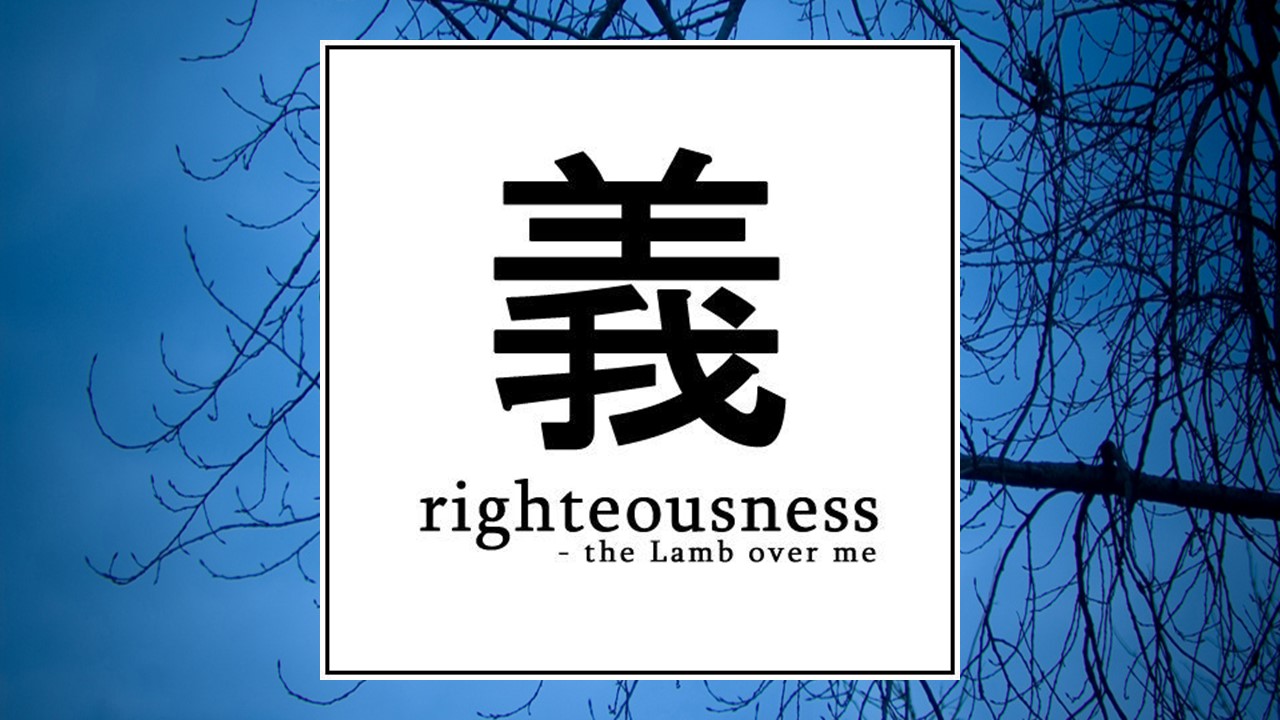
The Chinese language is very descriptive when it comes to the word for “righteousness” (yi). This word comes from the derivation of two words, “lamb” (yang) and “me, self, or I (wo).” The significance is found where the lamb is the top character, and the personage of self is the bottom character. To be righteous or to live according to righteousness can only be done when the Lamb of God (Jesus Christ) rules over the man. This principle is foundational to living a Christian life – Jesus Christ must always be first.

Righteousness is not determined by the desire for human wisdom. What is right and wrong can only be determined by the One who established authority. As Creator, God the Father rules supreme with all authority. God gave His Son, Jesus Christ, all authority. Submission to the rule of Christ is paramount to being a faithful servant of God. Righteousness is where Christ is all and man is nothing. Obedience is measured by the law of God. Faithfulness comes from a righteous heart subjected to the will of the Father. A Christian is a slave of righteousness because they have placed the Lamb of God above all things and humbled themselves to a subservient role.

When a man obeys the gospel of Jesus Christ, God unites him with His Son. Righteousness is measured by what the Lamb (above) places upon the man (below). Christ made us right with God; he made us pure and holy and freed us from sin. Righteousness is living for the glory of God. If there is anything a man can boast in, it must be to boast in the Lord. Seeking righteousness is submitting to the rule of God. The example of godliness is found in the righteous lives of those who profess allegiance to Jesus Christ. He must be first (top), and man must be last (bottom). Changing that order is not righteousness.

Posted in Uncategorized | Leave a comment

God Has A Covenant With Animals

And as for Me, behold, I establish My covenant with you and with your descendants after you, and with every living creature that is with you: the birds, the cattle, and every beast of the earth with you, of all that go out of the ark, every beast of the earth. Thus I establish My covenant with you: Never again shall all flesh be cut off by the waters of the flood; never again shall there be a flood to destroy the earth. (Genesis 9:9-11)

God Has A Covenant With Animals

The flood in the days of Noah was a global death sentence to all flesh, man and animal alike. God had warned Noah of the impending doom and the finality of its destruction upon the world. The flood was on the earth for forty days and rose above the highest mountains by more than twenty feet. All flesh on earth died. Every person outside the ark perished. The birds, cattle, beasts, and every creature, large and small, died. Everything that breathed and lived on dry land died, including dinosaurs. The flood wiped out every living thing on the earth. The only people who survived were the eight souls in the ark.

After more than a year inside the ark, the floods abated, and Noah and his family were able to walk on dry land again. Noah made an altar to the Lord and took of every clean animal and every clean bird and offered them as a burnt offering to the Lord. God smelled the soothing aroma of the sacrifice and told Noah as long as the earth remained, there would be seasons of seedtime and harvest, cold and heat, winter and summer, day and night (so much for global warming theories). The world changed when God placed the fear of man on the animals for the first time. God allowed man to eat meat, provided it did not contain its lifeblood. Then God spoke to Noah and his sons and established a covenant the world would never be destroyed by a flood again. This did not suggest the Lord would never destroy the earth. He promised never to bring a global flood to destroy man.

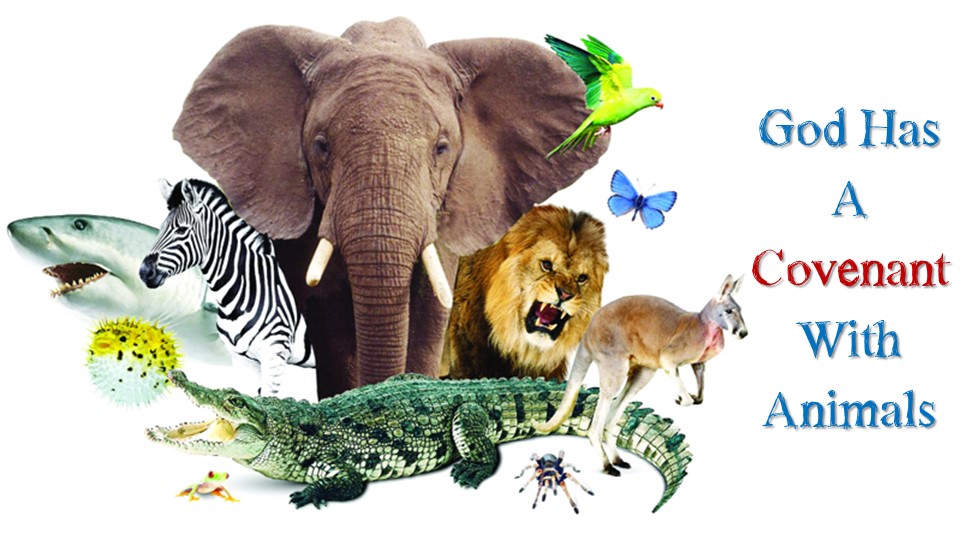
While the focus of the flood story is on Noah and his family and the covenant of the rainbow in the sky, it is often overlooked that the covenant God made with Noah and his sons included every living creature, including the birds, the cattle, and every beast of the earth. The rainbow is a sign between God and man and also a sign between God and animals. There was a reason the Lord instructed Noah to preserve the animals in the ark. When God told Noah to build the ark, He said He was bringing a flood on the earth to destroy all flesh with the breath of life; everything on the earth would die. Before Noah began building the ark, He promised that He had a covenant with every living thing of all flesh to save them. God saved the animals through the obedience of Noah to build the ark and preserve the animals.

God’s covenant with the animals shows His concern for His creation. Creatures of the sea were created on the fifth day, along with the birds of the heavens. God saw His creation as good and blessed the sea creatures to be fruitful and multiply, fill the waters in the seas, and let the birds multiply on the earth. He looked upon the world filled with birds and the seas with animals, which pleased the Lord. On the sixth day, before creating man, the Lord  brought forth every living creature of the earth, like cattle, creeping things, and beasts. This would also include what is commonly referred to as the dinosaurs. He blessed these animals, and when He looked upon the earth filled with land animals, it pleased the Lord.

The creation of man was eternally different than the animals of the water, sky, and land. Man was created in the image of God. This separates man from animals as an eternal creature. No creature is made in the image of God; only man. Animals were not beguiled or sinned when the serpent came to Eve, and the woman was deceived. Only man has the capability of transgressing the law of God. It is only within the character of man to sin. Jesus came into the world to save man, not animals. An animal has no redeeming value (spiritual) as it has no eternal spirit.

After the flood, God told Noah he could eat animals. To kill an animal for food is not murder. Every living thing that moves is food for man. If a man kills another man, it is murder because man was created in the image of God, and the Lord will hold him guilty. Killing a cow for a hamburger is not murder. Having permitted the world to eat meat, God reminded Noah the covenant He made not to destroy the world was also made with the animals. This covenant does not elevate the animal kingdom to any spiritual level but shows God’s concern and care for the animals. To treat God’s creation with cruelty is sinful as it abuses what the Lord has created for man’s benefit and enjoyment. The rainbow is a covenant established between God and all flesh on earth.

Jesus came to die for sinful man, not animals. When men die, they stand before a righteous God who will judge whether they are good or evil. Animals die, and the breath of life given to them by the hand of God returns to Him. There is no judgment for the animals, no eternal life, and no life hereafter. Animals cannot be judged as good or evil. But it must be remembered that God has a covenant with the animals.

Posted in Uncategorized | 2 Comments