Job’s Wife and Three Friends

OTPE62Job’s Wife And Three Friends

Little is known of the wife of Job but it is easy to see what a blessing it was to be married to a man who was “blameless and upright, one who feared God and turned away from evil” (Job 1:1). She lived in the opulence of the man who was the “greatest of all the people of the East” (Job 1:3). Her life was filled with the glory of God sharing the blessings of seven sons and three daughters. When Satan came against Job he touched the lives of the servants lost in the destruction and the heart of Mrs. Job. She suffered the loss of animals and servants and the lives of ten children along with her husband. The crushing blow of poverty was felt in her heart as she saw the work of her husband’s hands disappear and the possessions they enjoyed together taken away. The death of children born of her womb would have been more than anyone could endure. But Satan was not finished. He then came and inflicted a most horrible malady on Job personally. “So Satan went out from the presence of the Lord, and struck Job with painful boils from the sole of his foot to the crown of his head” (Job 2:7).

The wise man wrote, “An excellent wife is the crown of her husband” (Proverbs 12:4). Job’s condition was so awful that when his friends came to visit they could hardly recognize him. “And when they raised their eyes from afar, and did not recognize him, they lifted their voices and wept; and each one tore his robe and sprinkled dust on his head toward heaven” (Job 2:12). Job’s wife loved her husband and to see him in such a state would have been beyond the breaking point of endurance. Job 2:9 tells us she “said to him, ‘Do you still hold fast to your integrity? Curse God and die!’” (Job 2:9). In the Garden of Eden Satan came to the woman deceiving her and getting man to sin (Genesis 3; 1 Timothy 2:14); in the story of Job Satan attacks Job and causes the woman to sin.

It is a remarkable irony how we charge Job’s wife in her outburst of “curse God and die” and yet being honest with ourselves find it difficult to witness all that happened to the man you love and not have a reaction of horror and fear. That is what Satan does to us. Job endured the temptation and while he challenged the Lord (bringing the wrath of God upon him); the wife of Job also had her “demons” to battle. And she lost. And so do I – so often. The story of Job’s wife is not about Job 2:9 but Job 42:12-13 – “Now the Lord blessed the latter days of Job more than his beginning; for he had fourteen thousand sheep, six thousand camels, one thousand yoke of oxen, and one thousand female donkeys. He also had seven sons and three daughters.” Job’s wife came through the tragedy and was blessed like Job. Her faith remained in her trust for God. Her life was blessed with ten children and prosperity and a husband who was no longer afflicted. She did okay.

Examining the life of Mrs. Job may well reflect our own fear that we would find ourselves more often in her shoes rather than the place Job found himself. She told her husband to curse God and die and it could have been the heat of the moment in her sorrow and love for her husband or her heart could have turned against God. But the end of the story is the key to seeing her life in proper perspective. She remained faithful to God in her frailty. She made a mistake but the Lord forgave her and blessed her.

The three friends of Job made a similar mistake. Their advice and counsel was wrong. They were overwhelmed in grief when they saw their friend and could hardly recognize him. Job remained steadfast in his character but they did not. But the end of the story is the grace of a loving God. “And so it was, after the Lord had spoken these words to Job, that the Lord said to Eliphaz the Temanite, ‘My wrath is aroused against you and your two friends, for you have not spoken of Me what is right, as My servant Job has. Now therefore, take for yourselves seven bulls and seven rams, go to My servant Job, and offer up for yourselves a burnt offering; and My servant Job shall pray for you. For I will accept him, lest I deal with you according to your folly; because you have not spoken of Me what is right, as My servant Job has.’ So Eliphaz the Temanite and Bildad the Shuhite and Zophar the Naamathite went and did as the Lord commanded them; for the Lord had accepted Job” (Job 42:7-9). Eliphaz, Bildad and Zophar repented and found grace in the eyes of the Lord.

The story of Job is about God’s forgiveness to all of us who do not understand what is happening in the world and why things happen to us and “why me” and “this is not what I wanted life to be” – and the Lord gently telling us “’I will never leave you nor forsake you.’ So we may boldly say: ‘The lord is my helper; I will not fear. What can man do to me?’” (Hebrews 13:5-6). Job’s wife and three friends are true character studies of those of us who struggle with sin and often lose the battle. Paul struggled mightily with sin (Romans 7:13-25). The apostle Peter is known for his mistakes. But the grace and mercy of God is willing to forgive my sins and bless me with His kindness and long suffering. Thank you Lord for your abundant measure of forgiveness in my frailty. Thank you for examples like Job that walk among us today who show the character of righteous strength enduring unbelievable heartache and yet faithful to the Lord.

← Back

Thank you for your response. ✨

Posted in Character Study, Christian, Church, Marriage, Morality, New Testament, Old Testament, Proverbs, Social Issues, Uncategorized | Leave a comment

How Great Is Our God

Earth2How Great Is Our God

“Who has measured the waters in the hollow of His hand, and marked off the heavens by the span, and calculated the dust of the earth by the measure, and weighed the mountains in a balance and the hills in a pair of scales” (Isaiah 40:12)? The achievements of man is compelling when we stand before the height of the Burj Khalifa Tower in Dubai, UAE reaching 2,716 feet 6 inches; or the Three Gorges Dam (China) displacing 39,300,000 cubic meters; and touching the pyramids of Egypt that have stood for nearly 5,000 years. The Guinness Book of World Records attest to all the similar feats of man to create the fastest, largest, most powerful inventions of man.

The prophet Isaiah writes, “To whom then will you liken God” (Isaiah 40:18)? What comparison can be made to the one who measures the waters of the world in the hallow of His hand? It is estimated there are 332,500,000 cubic miles of water on the face of the earth covering 70% of the earth. Including all bodies of water there is an estimated 1.3-1.5 billion cubic kilometers of water. The hallow of the hand is only a part of the hand and yet the Lord God holds 332,500,000 cubic miles in the hallow of His hand. Just imagine how big the rest of Him would be.

Not only does our Creator hold all the waters of this world in the hallow of His hand He measures the universe “with a span.” A span is generally the distance from the tip of the thumb to the tip of the smallest finger (roughly nine inches). Contained within that “nine inches” the Lord God Almighty holds the known universe that is estimated to be 93 billion light years across. The circumference of the earth is only 24,901 miles and the distance of the earth to the moon is an average of 384,403 miles. The Sun is 93 million miles away and we have not even started to go where no man has gone before. It is estimated there are billions of galaxies and yet the Lord holds all of these within the span of His hand. Just imagine how big the rest of Him would be.

How much dust is in the world? Half of it can be found under any child’s bed I suspect. But consider the dust that fills the earth from the four corners and our God calculates this volume in a measure. He could tell us (if He wanted) exactly how much dust is present on the Earth and Moon and Mars and in the universe. First of all that takes a really big measuring container. Second, to know the exact amount of dust in the world is awesome – “For the Lord Most High is awesome; He is a great King over all the earth” (Psalms 47:2). Third (and most amazing) He knows where all the dust is. How great is our God.

It has been suggested the volume of Mount Everest is 2417 cubic kilometers and if you multiply that by how many mountains there are; throw in the volume of the hills – all of these numbers are unknown to man; you would not be close to the exact number Jehovah God would be able to tell in a split second of the weight of the mountains and hills of earth. How much do the Rocky’s weigh or the Alps or the impressive Andes or the Himalayas? Only God knows but the fact is – God knows. And He has a scale big enough to weigh the mountains and the power to put the mountains and the hills on the scale. What an awesome God we serve.

“To whom then will you liken God? Or what likeness will you compare to Him? … Have you not known? Have you not heard? Has it not been told you from the beginning? Have you not understood from the foundations of the earth? It is He who sits above the circle of the earth, and its inhabitants are like grasshoppers, who stretches out the heavens like a curtain, and spreads them out like a tent to dwell in. He brings the princes to nothing; He makes the judges of the earth useless” (Isaiah 40:18, 21-23). Our God is so big he sits “above the circle of the earth.” We are like grasshoppers to Him. To God the heavens are nothing more than a curtain and the heavens a tent. So expansive and yet so insignificant to the majesty of God.

Great men have ruled in the affairs of men and tyrants have stricken our world with wars. The nation of Egypt once so proud and powerful is held in check as an impoverished nation by the decree of the one who sits above the circle of the earth (Ezekiel 29:9-15). King Nebuchadnezzar learned first-hand who rules in the kingdoms of men. “The king spoke, saying, ‘Is not this great Babylon, that I have built for a royal dwelling by my mighty power and for the honor of my majesty?’ While the word was still in the king’s mouth, a voice fell from heaven: ‘King Nebuchadnezzar, to you it is spoken: the kingdom has departed from you! And they shall drive you from men, and your dwelling shall be with the beasts of the field. They shall make you eat grass like oxen; and seven times shall pass over you, until you know that the Most High rules in the kingdom of men, and gives it to whomever He chooses’” (Daniel 4:30-32).

Daniel told King Belshazzar that God held his “breath in His hand and owns all your ways” (Daniel 5:23). No king, prince, despot, tyrant, president or any man can stand before the mighty God. The Lord still works in the affairs of men and while there can be fear over the tyranny of the historical empire of Rome, destruction of the Third Reich or oppression of the Empire of Japan; and the present fear of terrorist and world war – GOD STILL RULES! All the plans of men will come to naught. Paul told the Athenians that “God is Lord of heaven and earth” and has determined the preappointed times and boundaries of man’s habitation. He rules! Our God is an Awesome God. But it’s not over.

On the fourth day of creation God created the lights in the firmament. Moses writes, “Then God made two great lights: the greater light to rule the day, and the lesser light to rule the night. He made the stars also” (Genesis 1:16). Gazing into the night sky overwhelms the senses with the grandeur and majesty of a star speckled sky filled with millions of lights. The amazing God we serve is a God who created all the stars (billions upon billions) and in His great power and wisdom has a name for each one of them. Isaiah declares, “Lift up your eyes on high, and see who has created these things, Who brings out their host by number; He calls them all by name, by the greatness of His might and the strength of His power; not one is missing” (Isaiah 40:26). No power of man can match this knowledge. There are no words to describe the indescribable wonder of a powerful God who possesses such knowledge. And yet He is our God.

On this tiny blue planet in the middle of a vast universe of billions of heavenly beings our Great and Awesome God loves us and cares for us. First there is fear in knowing such an awesome God because man is only a “drop in the bucket” (Isaiah 40:15) compared to Him. Secondly we find comfort in this knowledge because He is so great what can He not do for me? “Have you not known? Have you not heard? The everlasting God, the Lord, the Creator of the ends of the earth, neither faints nor is weary. His understanding is unsearchable. He gives power to the weak, and to those who have no might He increases strength. Even the youths shall faint and be weary, and the young men shall utterly fall, but those who wait on the Lord shall renew their strength; they shall mount up with wings like eagles, they shall run and not be weary, they shall walk and not faint” (Isaiah 40:28-31).

Our God is such a great God. He gave us His Son. His Son gave us His life. Our God offers the hope of eternal life for the grasshoppers before Him. He loves me; even me. “What then shall we say to these things? If God is for us, who can be against us” (Romans 8:31)? My God is an Awesome God.

← Back

Thank you for your response. ✨

Posted in Character Study, Christian, Church, Marriage, Morality, New Testament, Old Testament, Proverbs, Social Issues, Uncategorized | Leave a comment

Today Is Monday

clockToday is Monday. The clock needs winding. When my father retired from the phosphate mines in central Florida they gave him a mantel clock with his name on it. It is an eight day clock that requires winding with a chime for each quarter hour and numerical chimes for the top of the hour. One of the jobs on Monday is to wind the clock and to adjust the time. It has a habit of running fast. Sometimes it has a habit of stopping. This came about as a result of the last move where it got a little more movement than it needed. Without the attention given on Monday the clock does not work. When the clock is set in motion it becomes a wonderful song throughout the week of chimes with gentle reminders of the passing of time. Monday’s are great days to wind the clock. This is the second day of the week – not the first! The Lord established seven days in a week in creation. Monday is the day after the Lord’s day (Revelation 1:10) and is a great day of the week. For many it becomes the first day of the work week. This is a day of winding the clock for the rest of the week and setting things in order. Yesterday was a day of worship and praise to God. The first day of the week was spent in joyful remembrance of what Jesus has done for me. Our hearts were guided by the Holy Spirit on the first day of the week as we dug deep in the word of God. Now we get to go out into the world and show them Christ living in us. Monday’s are not bad days because this is the day we get ready for a great week. Empowered with the love of God we set our lives to chime the music of grace, love and forgiveness in a world filled with sadness, despair and hopelessness. We are the music of the chiming bell letting the world see Christ living in us. Refreshed with the worship of the Lord’s day we are energized to go to our jobs as people of God. The companies we work for are blessed to have our spirit in their employ. Our friends will see us living for truth and righteousness. We are heard this week! Today is Monday and we should wind our lives up in the King of Kings and let the world know there are many on the mantel of life that want the world to hear the plea of salvation from the cross of God’s Son. I love Monday’s; don’t you?

← Back

Thank you for your response. ✨

Posted in Character Study, Christian, Church, Marriage, Morality, New Testament, Old Testament, Proverbs, Social Issues, Uncategorized | Leave a comment

The Funeral Of Jesus

AP0305 JPGThe Funeral Of Jesus

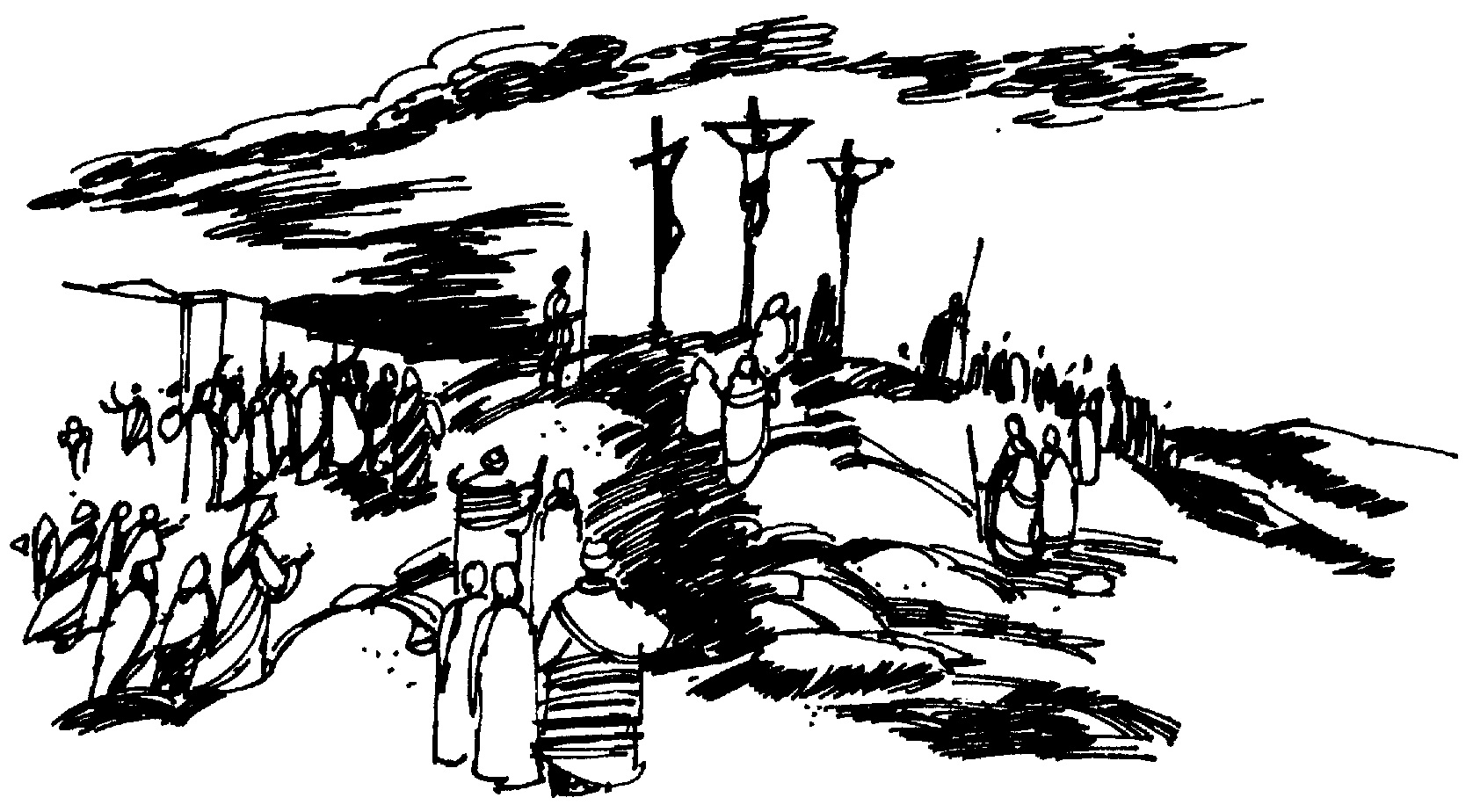
There was no pomp and no procession filled with mournful criers lamenting the death of a loved one. The crowds had diminished and returned to their homes. Three men hung on wooden trees of death with soldiers milling below with no concern. All the acquaintances of Jesus, the women who followed Him from Galilee including Mary Magdalene, Mary the mother of James and Joses, and the mother of Zebedee’s sons (Luke 23:48,49; Matthew 27:55,56) looked on with dispassionate despair. The screams of the two thieves whose legs had been broken to hasten death still linger in the air. The man in the middle hangs limp in death with his side pierced; blood and water staining his body.

Joseph of Arimathea asked Pilate for the body of Jesus (Luke 23:50-52). Consent was given and Joseph, joined by Nicodemus (John 3:1-15; 7:45-52) went to Golgotha to retrieve the body of Jesus.  Removing the nails from the feet, the body of Jesus was let down to the ground to remove the nails from his hands. The face of kindness, compassion and love was now stilled in the gray shadow of death. The soldiers removed the cross and the body was taken up to be prepared for burial.

How does one feel the emotions of sadness to carry the body of Jesus to a place of preparation? His hands lie still that once gave sight to the blind. His voice is silent that once taught the beatitudes of grace. The smile of compassion is faded to a mask of death. Eyes that once gazed into the lives of men are closed in silent repose. The body of the Son of God is bloody, dirty, filthy and bruised with the lashes of a terrible scourging and crucifixion.

The men lay Jesus down to wash his body. Are tears mixed with the careful love these men have to clean the body of Jesus? Do their voices tremble as they speak to one another in moving the body of Jesus? When they turn the body of Jesus over and see the ribbons of flesh remaining from the scourging, do their hearts break in despair? The washcloths are filled with blood. Their hands are stained with the stench and horror of death. Finally the body is cleaned.

A mixture of myrrh and aloes (about a hundred pounds – John 19:39) is used to cover the body of Jesus. The two men take the fine linen cloth and wrapping the body with the spices and cloth enclose his body (John 19:40). The scent of death is removed by the perfume of Jesus life filling the world by His sacrificial love. The preparation finished, the two men carrying the body to the tomb of Joseph. Entering they lay the body of Jesus in the new tomb. A handkerchief is placed around the head of Jesus. Leaving, Joseph rolls a stone against the entrance of the tomb. “Now the women who had come with Him out of Galilee followed, and saw the tomb and how His body was laid” (Luke 23:55).

The funeral is over. The friends pause for a moment to think of their Lord inside the tomb. They return home to prepare spices and perfumes for a proper burial later. They need not have bothered. When they return on the first day of the week, Jesus is risen – He lives – He reigns – He has conquered death. This lonely funeral brings hope to all men in the resurrection of Jesus Christ, the Son of God, the Lamb of God. “He will wipe away every tear from their eyes; and there will no longer be any death; there will no longer be any mourning, or crying, or pain; the first things have passed away” (Revelation 21:4).

← Back

Thank you for your response. ✨

Posted in Character Study, Christian, Church, Marriage, Morality, New Testament, Old Testament, Proverbs, Social Issues, Uncategorized | Leave a comment

Today Is Monday

Today is MonMondayday. The second day of the week is a great day because it is the day after the first day of the week. On the first day the saints of God worshiped the Almighty with psalms, hymns and spiritual songs. They fellowship in the union of the one Body. The prayers of righteous priests were sweet incense to the Father above. Remembrance was given for the sacrifice of God’s only begotten Son on a cross of wood. The mind of God was revealed through teaching and preaching the word of God from holy pages of writ. Spirit filled people begin Monday with a new determination to the work in the vineyard of the Lord. We do not shrink back nor walk on cautioned paths but lead forth victoriously to a great week of changing the world where we are with the fragrance of Jesus Christ. Our banners fly high in our homes. Our faith is seen in the work place. Our families are examples of the grace of God living through the communion of the Holy Spirit. We stand boldly before a perverse generation of those opposed to righteousness. The victory is ours as we serve the King of Kings and Lord of Lords. This week the battle cry comes from the charge of Nehemiah who proclaimed his allegiance to the work of God. “And I told them of the hand of my God which had been good upon me, and also of the king’s words that he had spoken to me. So they said, ‘Let us rise up and build.’ Then they set their hands to this good work” (Nehemiah 2:18). Tell the world how the hand of God is upon you. Rise up and build this week for the harvest is white. Let us all set our hands to the task of the good work of Jesus Christ.


← Back

Thank you for your response. ✨

Posted in Character Study, Christian, Church, Marriage, Morality, New Testament, Old Testament, Proverbs, Social Issues, Uncategorized | Leave a comment

The Wise, The Mighty And The Rich

The Wise, The Mighty And The Rich051_c_worshiptemplates_com

The achievements of man throughout history declare the powerful intelligence given by the Creator for man to have dominion over all the world. Egypt constructed pyramids that stand after thousands of years and the marvels of mummification still intrigue scientist today. Rome built a nation on the technological advances of its day that would revival any civilization throughout history. China raised a wall of stone, brick, earth and wood almost four thousand miles long that can be seen from space. July 21, 1969 Neil Armstrong walked on the surface of the moon – a scientific milestone showing the mastery of man’s wisdom. The last 45 years have seen an explosion of wonders changing the lives of every person on the planet.

Wars have been fought continually since the beginning of time. The modern warfare is fought with the advancements of man’s wisdom that can destroy whole cities with a single weapon, launch missiles from hundreds of miles away, rain “shock and awe” on a nation and bring fear to all who stand against the might of a powerful nation. The might of man is explosive, powerful, deadly and dreadful.

The American dream is filled with the promise of riches, wealth and the good life. Large homes, new cars and boats, fashionable clothes, tech gadgets that entertain the family, televisions the size of sofa’s and a lottery in forty-four states that make gambling socially acceptable. Athletes are paid millions of dollars to play a sport, Hollywood churns out sewer infested filth bringing in trillions of dollars, executives loot retirement funds to support their degraded view of the common man and the almighty dollar is worshipped in nearly every home as the god of happiness.

“Thus says the Lord: ‘Let not the wise man glory in his wisdom, let not the mighty man glory in his might, nor let the rich man glory in his riches; but let him who glories glory in this, that he understands and knows Me, that I am the Lord, exercising lovingkindness, judgment, and righteousness in the earth. For in these I delight,’ says the Lord” (Jeremiah 9:23-24). If all the wisdom of man and the might of man would be secured in the vault with all the riches of man the final sum would not be an atom’s atom closer to the magnificence of the Almighty Jehovah – nothing man can do would ever be worthy of consideration before God. The only thing that matters in this life is to understand there is a God and man is not Him. To know the Lord is to have a deep reverence for the nature of He who is called Jealous (Exodus 34:14). Man must recognize that God is Lord and Jesus is King of Kings and Lord of Lords (Revelation 19:16). The character of a loving Father is steadfast love, a just hand and a law that is right in the purest form.

The wisdom of man and his might and all his riches is nothing before the Lord. “Behold, the nations are as a drop in a bucket, and are counted as the small dust on the scales; look, He lifts up the isles as a very little thing” (Isaiah 40:15). Solomon concluded that man’s all is to “Fear God and keep His commandments” (Ecclesiastes 12:13) and all the wisdom of man and his mighty power and his wealth will not save him. Our challenge is to look in the mirror of our life and see how far we have trusted our own wisdom and might and riches. Do we need the wisdom found in the word of God? How often do we trust the Lord to make our decisions for us or are we despots who rely upon our own might. The power of money may drive more of our life than we realize – look at the bank account and see how much glorifies God. Man is a funny creature. He is the only one who fails to realize where his blessings come from (Isaiah 1:3). Our wisdom should come from above (James 3:17-18), our might from God (2 Timothy 1:7) and our riches from His grace (Ephesians 1:3).

← Back

Thank you for your response. ✨

Posted in Character Study, Christian, Church, Marriage, Morality, New Testament, Old Testament, Proverbs, Social Issues, Uncategorized | Leave a comment

Abraham And Baptism

baptismAbraham And Baptism

Is baptism necessary for salvation? Most of the religious world denies the need for baptism rejecting it for faith alone. The father of faith, Abraham, bears testimony of the necessity of baptism for salvation. At the age of ninety-nine the patriarch and his eighty-nine year old wife, Sara, received the news that within “the time of life” (Genesis 18:10) a son would be born. Before Isaac’s birth, a covenant was established between Abram and his descendants showing a sign of promise with God through the act of circumcision. “This is My covenant which you shall keep, between Me and you and your descendants after you: Every male child among you shall be circumcised; and you shall be circumcised in the flesh of your foreskins, and it shall be a sign of the covenant between Me and you” (Genesis 17:10-11).

Circumcision was the cutting of the foreskin required of all males born in the house of Abraham or bought with money. Refusal resulted in the person to be “cut off from his people” (Genesis 17:14) as they had broken the covenant with God. The names of Abram and Sara were changed showing the promise of God and the assurance the promise would be found in Isaac and not Ishmael (Genesis 17:19-21). When the Lord finished talking with Abraham He went from him and “Abraham took Ishmael his son, all who were born in his house and all who were bought with his money, every male among the men of Abraham’s house, and circumcised the flesh of their foreskins that very same day, as God had said to him” (Genesis 17:23).

Establishing a covenant with Abraham the Lord confirmed with the “immutability of His counsel” (Hebrews 6:17) a promise made in the Garden of Eden of the Seed fulfilled in Christ (Genesis 3:15; Galatians 3:16). The significance of circumcision was the affirmation of God’s promise of salvation through the obedience of Abraham and his descendants to His will. This was not open for argument or discussion and understood so clearly that First Century Christians faced an onslaught of pressure from Jewish converts to follow the law of circumcision (Acts 15). Circumcision was the defining moment when a person entered a covenant with God. Abraham so clearly understood the command of God he circumcised himself at the age of ninety-nine, his thirteen year old son Ishmael and all the men of his house.

Paul’s letter to the church at Colosse bears the mark of Abraham’s obedience when the apostle shows the covenant of God in a spiritual circumcision.  “In Him you were also circumcised with the circumcision made without hands, by putting off the body of the sins of the flesh, by the circumcision of Christ, buried with Him in baptism, in which you also were raised with Him through faith in the working of God, who raised Him from the dead” (Colossians 2:11-12). As in the physical act there must be a spiritual action of putting to death the old man creating the new (2 Corinthians 5:17). Baptism is the spiritual circumcision of the heart. The Lord declared the covenant of salvation in circumcision and refusal to keep the command resulted in the person being lost. Without the covenant of baptism there will be no salvation. “He who believes and is baptized will be saved; but he who does not believe will be condemned” (Mark 16:16).

The faith of Abraham caused him to take drastic measures at the age of ninety-nine as well as his son and all the men of his house. Many today refuse baptism as a drastic measure of works and would have refused to be circumcised in the day of Abraham. Did it make sense to the wisdom of man what cutting a piece of flesh would have to do with salvation and especially the nature of the sacrifice? Abraham walked by faith before God commanded him to be circumcised (Romans 4) and when commanded by God to show his faith in the covenant of circumcision “circumcised the flesh of their foreskins that very same day, as God had said to him” (Genesis 17:23). His faith led him to obey the command of the Lord without question.

Baptism is the defining moment when a person becomes a child of God as circumcision was for the children of Abraham. Faith alone does not circumcise the heart or repentance alone. The circumcised descendants of Abraham were cut to the heart and three thousand were spiritually circumcised in baptism (Acts 2:36-41). Luke shows in Acts many stories of salvation and each one shows the moment they became a child of God: “And now why are you waiting? Arise and be baptized, and wash away your sins, calling on the name of the Lord” (Acts 22:16). Sins are washed away in “the circumcision made without hands” (Colossians 2:11).

Baptism saves because it is the covenant of God and promise of salvation (1 Peter 3:21; Romans 6:3-6). “For he is not a Jew who is one outwardly, nor is circumcision that which is outward in the flesh; but he is a Jew who is one inwardly; and circumcision is that of the heart, in the Spirit, not in the letter; whose praise is not from men but from God” (Romans 2:28-29).

-Biblical Insights, May 2014 Gary Kerr, Editor

Posted in Character Study, Christian, Church, Marriage, Morality, New Testament, Old Testament, Proverbs, Social Issues, Uncategorized | Leave a comment

Freedom Comes With Duty

Freedom Comes With Dutyfreedom_t_nv

It has been a wonderful blessing to enjoy the freedoms of the United States of America. Our land has been a blessed land of prosperity, opportunity, privilege and advancements in a level of comfort few in man’s history of enjoyed. Shelves are filled with a bounty of food, technology, wares, apparels, and almost everything imagined in the human desire. The foundation of our country was founded upon a need to allow the individual to express himself within the boundaries of his own desires and needs. As the young country grew it experienced the birth pains of a nation filled with a youthful spirit of promise and hope for a better life. The pursuit of happiness was the American dream. “Let freedom ring” was the mantra on the voices of millions. And for many years, “God bless America” had meaning.

In the process of growth there comes pain. Often this pain comes from the natural needs of change. More often the pain comes from the abuse of freedom in the process of growth. The ideals of the founding fathers were based upon a simple idea of self-determination and were guided most frequently by a knowledge of the Creator. The Bible was a respected source of knowledge both as a guide and a book of law that helped form the foundation of our constitution. The more freedom was given the more freedom man took. Our world today looks little like the pursuit of self-determination envisioned in 1776; it represents more the relativism of a society that Thaxter Dickey described as “necessary for those who put their own pleasures above everything else … [eliminating] a standard moral compass and lets people plot their own random but convenient course through life’s ethical issues” (Challenges of Our Times; Florida College Annual Lectures, February 4-7, 2008; pg 12)

Freedom cannot be defined by a simple idea that I am free to do what I desire. Freedom to live as we wish is an allusion; a myth; a lie! There is no absolute freedom. When we loose ourselves from the supposed bondage of God we find ourselves entrapped in the slavery of Satan. Paul writes, “Do you not know that to whom you present yourselves slaves to obey, you are that one’s slaves whom you obey, whether of sin leading to death, or of obedience leading to righteousness” (Romans 6:16)? We are a slave to either the righteousness of God or the ungodly nature of the devil. We serve in the army of one of those camps. There are two paths to walk in life: the narrow way and the broad way (Matthew 7:13-14). It is mere propaganda to believe that freedom has no consequence. Freedom comes with duty.

Adam and Eve were free in the Garden of Eden to eat of every tree of the garden “but of the tree of the knowledge of good and evil you shall not eat, for in the day that you eat of it you shall surely die” (Genesis 2:16-17). Their freedom came with the duty to obey the Lord. While the focus is given to the tree of knowledge of good and evil and how Eve and then Adam took of the forbidden fruit; lost is the reality their freedom allowed them to eat of 99% of the trees in the garden. Satan convinced Eve that God was being unfair to limit the 1% and she should ignore the law. She did. He did. The freedom they wanted was an allusion because when they gave up their allegiance to Jehovah God they were enslaved with a cruel task master referred to as the “Great Serpent” (Revelation 12:9).

The Lord has always given man freedom but this freedom comes with the diligence of duty. We are free to drive our machines on the highways but without laws there would be chaos and death. Freedom has restraints. Freedom has duty. In our relationship with God we are free (John 8:32) but that freedom comes with our obedience to the will of God (Luke 6:46). God desires all men to be saved (1 Timothy 2:4) and within the grace of His laws man is preserved in peace and contentment. John reminds all men the character of God’s law: “For this is the love of God, that we keep His commandments. And His commandments are not burdensome” (1 John 5:3).

Freedom is not freedom from law. Every ship needs a compass and every society needs a moral compass to guide them. The red-white-blue of freedom is not without cost and requires law keeping. Through the grace of God Jesus Christ set us free and yet enslaved our hearts to the will of God. “And having been set free from sin, you became slaves of righteousness” (Romans 6:18). Freedom in Christ does not free one from the law of God but binds him to the covenant with the Lord. “For you, brethren, have been called to liberty; only do not use liberty as an opportunity for the flesh, but through love serve one another” (Galatians 5:13).

Thomas Huxley wrote, “A man’s worst difficulties begin when he is able to do as he likes.” Freedom without law becomes chaos. The heavenly hosts of sun, moon and stars are not free to roam about where they wish or the world would have never survived. The design of nature is in an orderly fashion and chaos ensues when men try to circumvent the natural pattern (Romans 1:26). Freedom to the American mind is likened to the days of judges when it says, “In those days there was no king in Israel; everyone did what was right in his own eyes” (Judges 21:25). That is not freedom – that is lawlessness.

The mantle of freedom can only be worn by those who are subjected to the will of that freedom. To be in Christ is to live in the grace, mercy and will of the Father. “Not everyone who says to Me, ‘Lord, Lord,’ shall enter the kingdom of heaven, but he who does the will of My Father in heaven. Many will say to Me in that day, ‘Lord, Lord, have we not prophesied in Your name, cast out demons in Your name, and done many wonders in Your name?’ And then I will declare to them, ‘I never knew you; depart from Me, you who practice lawlessness!” (Matthew 7:21-23).

← Back

Thank you for your response. ✨

Posted in Character Study, Christian, Church, Morality, New Testament, Old Testament, Social Issues, Uncategorized | Leave a comment

That Does Not Fade Away

to-god-be-the-glory_wide_t_nvThat Does Not Fade Away

“Blessed be the God and Father of our Lord Jesus Christ, who according to His abundant mercy has begotten us again to a living hope through the resurrection of Jesus Christ from the dead, to an inheritance incorruptible and undefiled and that does not fade away, reserved in heaven for you” (1 Peter 1:3-4).

During a remodel of a newly purchased home, a father helped his daughter remove a lot of old stuff from the garage and house spending a few weeks hauling pickup loads to the landfill so the remodeling could get underway. After about three weeks, the former owner called and asked to come by because he had left some things behind in the garage. There was little that remained and the new owners were unsure what would have been left of any value. To their surprise the former owner had hidden more than $60,000 in cash and another $20,000 in gold coins in some old paint cans. A search of the landfill was not a success.

The Egyptians have taught us that earthly treasure is only an object of a later times discovery. In the 1930’s many American learned the awful truth of the value of material things when the stock market crashed and the nation was plunged into a great financial depression. Fortunes gain today can be lost in the twinkling of an eye the next day. One of the greatest myths in advertising is a “life time” warranty because it remains dependent upon the whims of economy and the state of the nation. The news is filled with stories of men and women working 30 years for a pension plan and then finds the coffer empty because of the squandering of greedy executives. One certainty of this world is the uncertainty of what will take place tomorrow.

Jesus exhorted His disciples to have a different view of worldly possessions. There is the frantic search of what to eat, drink and put on the body and life is filled with the worries and anxieties brought about by the produce of our own demise – possessions. “Therefore I say to you, do not worry about your life, what you will eat or what you will drink; nor about your body, what you will put on. Is not life more than food and the body more than clothing” (Matthew 6:25)? His point is clear: life is more than what we spend our lives gaining. There is a greater reward than the rusting treasures of this life. Earlier the Lord had said, “Do not lay up for yourselves treasures on earth, where moth and rust destroy and where thieves break in and steal; but lay up for yourselves treasures in heaven, where neither moth nor rust destroys and where thieves do not break in and steal. For where your treasure is, there your heart will be also” (Matthew 6:19-21). We spend all our lives piling up possessions of this life and then we die and leave it to whom? Solomon understood this lesson. “Then I hated all my labor in which I had toiled under the sun, because I must leave it to the man who will come after me. And who knows whether he will be wise or a fool? Yet he will rule over all my labor in which I toiled and in which I have shown myself wise under the sun. This also is vanity” (Ecclesiastes 2:18-19).

Buying a brand new car is the first step to its final decay. Building new homes is a pursuit consuming life to maintain, fix, repair, protect, paint, replace and worry about for years. The bicycle with a new coat of paint turns to rust. Even our bodies that we spend thousands of dollars to look young and beautiful still grow old and wrinkled and one day return to the dust from whence it came. “Lift up your eyes to the heavens, and look on the earth beneath. For the heavens will vanish away like smoke, the earth will grow old like a garment, and those who dwell in it will die in like manner; but My salvation will be forever, and My righteousness will not be abolished” (Isaiah 51:6).

The great joy of being a child of God is knowing that while all that we see about us is perishable the promise of eternal life is imperishable. This comes from a proper viewpoint of the life now and the life to come. Peter’s admonition to the “pilgrims of the Dispersion” (1 Peter 1:1) was to think about the inheritance promised that was incorruptible and could not be defiled and would not fade away. It is impossible for God to lie (Titus 1:2) and the promise He made is “by two immutable things, in which it is impossible for God to lie, we might have strong consolation, who have fled for refuge to lay hold of the hope set before us. This hope we have as an anchor of the soul, both sure and steadfast” (Hebrews 6:17-19). Nothing man will do can compare to the promise given by the Father.

There should be no doubt in the promise of God. Our lives should be focused not on the “I don’t know” of salvation but the blessed assurance of the promise given that Heaven is ours. “These things I have written to you who believe in the name of the Son of God, that you may know that you have eternal life, and that you may continue to believe in the name of the Son of God” (1 John 5:13). A crown of life awaits the children of God that will not fade nor rust. The promise of eternal life is the promised held in trust by the blood of Jesus Christ to those who abide in Him. I am saved. I am redeemed. I live for the King of Kings and Lord of Lords and long for the day He returns so that I may see His face and dwell in His presence throughout the eternal ages.

← Back

Thank you for your response. ✨

Posted in Character Study, Christian, Church, Marriage, Morality, New Testament, Old Testament, Proverbs, Social Issues, Uncategorized | Leave a comment

Lessons From The Sycamore Tree

BTH_35Lessons From The Sycamore Tree

A children’s song has made the sycamore tree a most famous tree of the Bible. The “wee little man” who climbed its limbs to see Jesus has forever placed the relative to the fig tree a common picture of Bible lore. The sycamore tree of scripture is not to be confused with the maple tree familiar to North America. It produced an inferior fruit to the fig tree and was often planted by the wayside for shade to weary travelers. Fausset writes, “The tree is always green, and bears fruit often throughout the year, so that it is of much value to the poor. The wood, though porous, is durable, and suffers neither from moisture nor heat; Egyptian mummy coffins of it are sound after entombment for thousands of years” (Fausset’s Bible Dictionary). There was an abundance of sycamore trees in the lowlands of Israel (1 Kings 10:27; 2 Chronicles 1:15; 9:27; Isaiah 9:10).

Sycamore trees were of such importance that King David assigned Baal-Hanan the Gederite to oversee them in the lowlands (2 Chronicles 27:28). David would not build the House of the Lord but he began organizing all that was needed to complete the task under the guidance of his son, Solomon. 2 Chronicles 23-29 contains the extensive work laid out for the Levites, priests, musicians, gatekeepers, treasuries, military divisions, leaders of tribes, and thousands of other people in preparation of the Temple plans.

Baal-Hanan was in charge of the sycamore trees – not the most glamorous job title but it was an integral part of the building of the Temple. He was not one of the thirty-eight thousand men who served as Levites in the holy place of God’s house. His place was not to be one of the skilled musicians who would “prophesy with harps, stringed instruments and cymbals” (2 Chronicles 25:1) nor to be a “captain of thousands and hundreds” (2 Chronicles 27:1) but his place was important. Tending the sycamore trees was his task and while not glitzy and exciting as others positions he was important. He had a place in the plan of God. The apostle Paul would show the Corinthians that everyone has a place in the work of the Lord. “And the eye cannot say to the hand, ‘I have no need of you’; nor again the head to the feet, ‘I have no need of you.’ No, much rather, those members of the body which seem to be weaker are necessary” (1 Corinthians 12:21-22). The Lord needs a lot of “Baal-Hanan” in the church today who are willing to live in the lowlands and tend sycamore trees. Everyone is important! Everyone is needed – even, yes, the weaker members.

Psalm 78 is a vivid picture of the history of Israel. Asaph glorifies Jehovah God for His infinite mercy and kindness towards a rebellious people and also declares the power of the Lord against nations who turn away from the Creator. The psalmist reminds Israel of the fury of God “When He worked His signs in Egypt, and His wonders in the field of Zoan … He destroyed their vines with hail, and their sycamore trees with frost … He cast on them the fierceness of His anger, wrath, indignation, and trouble, by sending angels of destruction among them. He made a path for His anger; He did not spare their soul from death, but gave their life over to the plague, and destroyed all the firstborn in Egypt, the first of their strength in the tents of Ham” (Psalms 78:43-51). The sycamore tree stands as a testimony to the will of God over the futile plans of men. He brought low the powerful nation of Egypt in destroying the economy of its fruit. Egypt had never seen a plague of flies, frogs, caterpillars, locust, hail and frost as dealt by the mighty hand of God. The lesson is found in the eternal plans of God overshadowing the pride of men who trust in themselves.

James challenges the plans of man when he declares, “Come now, you who say, ‘Today or tomorrow we will go to such and such a city, spend a year there, buy and sell, and make a profit’; whereas you do not know what will happen tomorrow. For what is your life? It is even a vapor that appears for a little time and then vanishes away. Instead you ought to say, ‘If the Lord wills, we shall live and do this or that.’ But now you boast in your arrogance. All such boasting is evil” (James 4:13-16). The will of God is found in the sycamore tree as a reminder that God is still in control and no matter what nations may do the Lord God will still have His way in the affairs of men.

The prophet Amos was a hard man. Growing up in Tekoa (twelve miles south of Jerusalem) was a difficult and hard life. Keeping watch over sheep and tending the sycamore tree made him a man of humble origins. His answer to King Amaziah who charged him to stop prophesying was that he was not of the lineage of prophets nor was he trained as a prophet. “I was no prophet, nor was I a son of a prophet, but I was a sheep breeder and a tender of sycamore fruit. Then the Lord took me as I followed the flock, and the Lord said to me, ‘Go, prophesy to My people Israel’” (Amos 7:14-15). Amos was a simple man doing the great work of the Lord. He had no credentials to make him stand out. There were no letters of education and prestige attached to his name. He came from no pedigree of orators who could boast of their training. He was a preacher of the gospel of the Lord. That is all he was.

When Peter and John were brought before the Sanhedrin in Acts 4 the council “saw the boldness of Peter and John, and perceived that they were uneducated and untrained men, they marveled. And they realized that they had been with Jesus” (Acts 4:13). The Lord needs a lot of men and women from Tekoa. What makes a difference is not the level of education or training but whether a person has walked with Jesus. Like a shepherd who smells like his sheep, the disciple of Jesus must know the aroma of Christ in their lives. “Now thanks be to God who always leads us in triumph in Christ, and through us diffuses the fragrance of His knowledge in every place. For we are to God the fragrance of Christ among those who are being saved and among those who are perishing” (2 Corinthians 2:14-15).

The people must have thought Zacchaeus had lost his mind. A grown man (in rich clothing) climbing a tree. How undignified. What man of stature would act like so much a child as to despoil his clothing and reputation by such conduct? “Now behold, there was a man named Zacchaeus who was a chief tax collector, and he was rich. And he sought to see who Jesus was, but could not because of the crowd, for he was of short stature. So he ran ahead and climbed up into a sycamore tree to see Him, for He was going to pass that way. And when Jesus came to the place, He looked up and saw him, and said to him, ‘Zacchaeus, make haste and come down, for today I must stay at your house.’ So he made haste and came down, and received Him joyfully” (Luke 19:2-6). Zacchaeus changed a lot of things that day. He would later tell Jesus that he would “give half of my goods to the poor; and if I have taken anything from anyone by false accusation, I restore fourfold. And Jesus said to him, ‘Today salvation has come to this house, because he also is a son of Abraham; for the Son of Man has come to seek and to save that which was lost’” (Luke 19:8-10).

The Savior is looking for people to climb a sycamore tree. Shedding the garments of this world man must seek the Lord with their hearts and desire to live godly lives before Him. Zacchaeus cast aside the pressure of his peers to see Jesus and gladly accepted the will of God into his life. Humility. A man of small stature but giant faith. Would others be willing to climb a tree to see Jesus? “Therefore humble yourselves under the mighty hand of God, that He may exalt you in due time, casting all your care upon Him, for He cares for you” (1 Peter 5:6-7). When we bring ourselves low the Lord brings us up. Zacchaeus was vertically challenged only in the flesh. His vertical was all the way to the throne of God. Thank you Zacchaeus for climbing that sycamore tree.

Posted in Character Study, Christian, Church, Morality, New Testament, Old Testament, Social Issues, Uncategorized | Leave a comment