Blessed Are They That Die In The Lord

simplify_plainBlessed Are They That Die In The Lord

The headlines declare the death of notable people of the day who impacted the world with their physical prowess in sports, talents in the entertainment field or lasting historical significance on the landscape of the political world. Monuments rise in their honor, institutions are named after them and the annals of history fill with the stories of their exploits. The heroes of the day live on in the memories of the historical significance their lives had on the world about them. Little known are the myriads of men and women who pass through life unnoticed by the world at large but impact a greater sphere of influence in the hearts of a community of believers.

Since time began, the stories of simple people living godly lives and passing to glory received little press with the world at large. Without the record of God’s people preserved in the Bible few would know who Moses, David, Elijah, Mary, Peter, Dorcas and Philemon were. A host of other names fills the register of the saints who have gone home to be with the Lord. In every generation, common men and women never find their names pressed on marble or remembered on pages of history because their lives are spent with the eternal hope of a better land beyond the vale of death. They do not live for the accolades of the praise of men but the honor of a loving God.

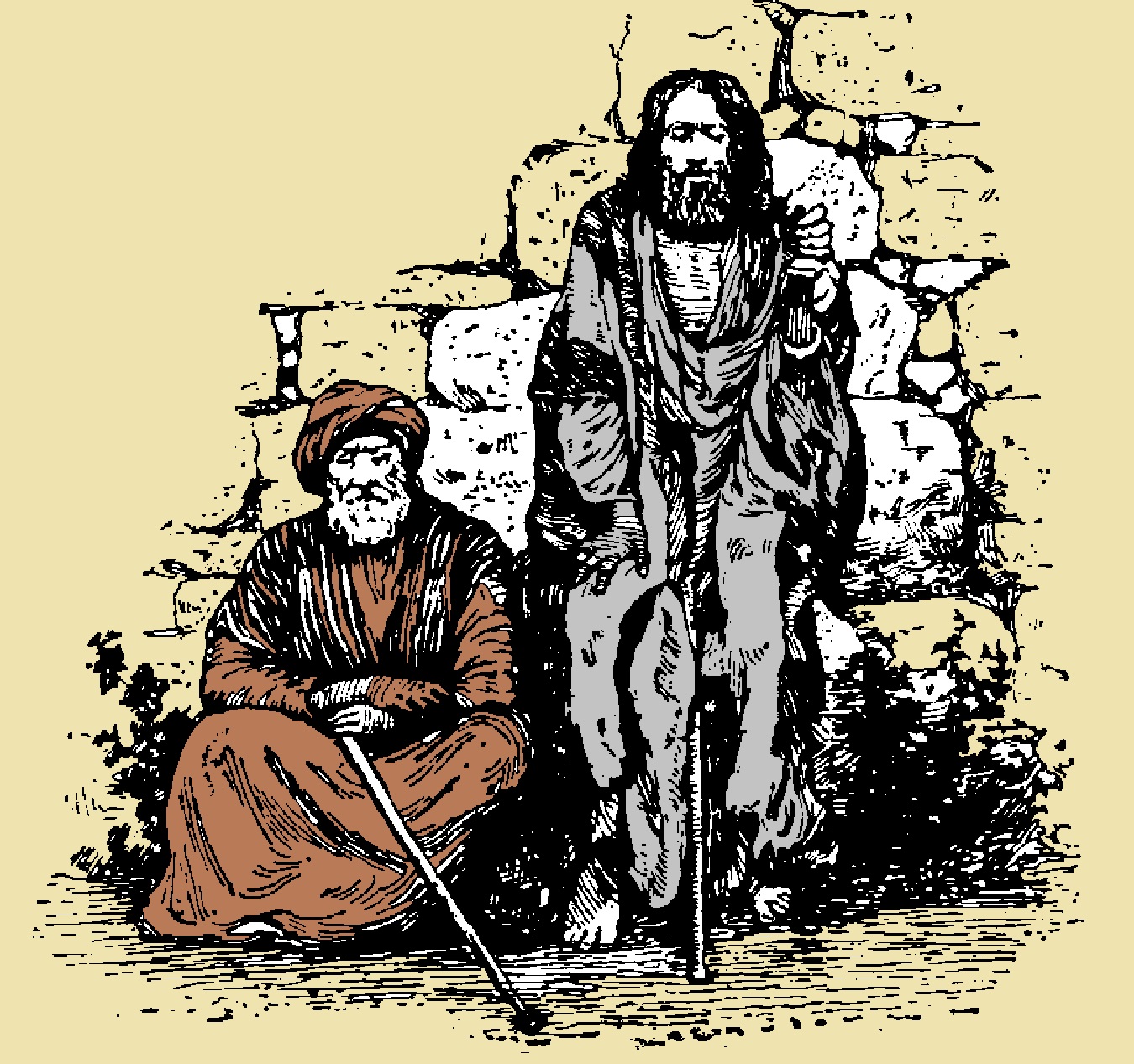
Jesus tells the story of two men who lived very different lives. One man was a rich man who lived on a daily portion of incredible wealth. He was well respected in his community as a man of significance and influence. He had five brothers who made up a family that enjoyed the sumptuous lifestyle of the rich and famous. There was little significance given to the other character in the story that was laid at the gate of the rich man. His name was Lazarus. He was a man of great poverty and miserable existence. The beggar was covered with sores unnoticed by those who passed by. He was ignored by the rich man. The life of Lazarus was sustained by the crumbs that fell from the rich man’s table.

Life was different for each man at an extreme level. What bound them as one was death. There is little doubt when the rich man died great fanfare was given for many days on his behalf. When Lazarus died, hardly anyone gave notice. The difference is how God sees the death of the two men. Lazarus “died, and was carried by the angels to Abraham’s bosom. The rich man also died and was buried” (Luke 16:22). Jesus reminds His disciples that life is not about the honor of men but the blessing of God. It was after death that life was at the extreme opposite. Lazarus was in the eternal blessing of God and the rich man was in the poverty of darkness and pain.

The death of God’s saints take place daily. Throughout the world, angel’s wings carry the people of God to a place of rest and comfort. A small gathering of fellow disciples will gather to mourn their passing. Some notice will be given in the community of news. By and large, few will know the significance of what these godly lives have impressed on others. Simple men who served as elders of a local church, women who were an influence of righteousness helping a small church grow and examples of saints who face the challenges of life with courage, determination and faith. These are the real heroes.

John sees many wonderful visions in the Revelation. In the midst of the tribulation of God’s people the aged apostle declares, “Here is the patience of the saints; here are those who keep the commandments of God and the faith of Jesus. Then I heard a voice from heaven saying to me, ‘Write: Blessed are the dead who die in the Lord from now on.’ ‘Yes,’ says the Spirit, ‘that they may rest from their labors, and their works follow them’” (Revelation 14:12-13). The saints are men and women who serve the Lord faithfully dying with the hope and promise of eternal life on their lips. They have lived before God in faith keeping the commandments of the Lord. Death is not viewed with fear but joy as they face the promise of eternal life. Dying in the Lord is peace, comfort of spirit and joy of sleep to awaken in glory. They take rest from the labors of life.

Men fear death. Saints embrace death. The end of life is found to be a blessing so that tears can be wiped away, sorrow removed and pain forever taken away. There is joy in seeing a life lived fully for 94 years to pass in glory for the hope longed for since early childhood. Incredible faith is found in the eyes of one who faces the certainty of death with the blessed assurance of the joys that lay beyond. There is no fear. Peace fills the heart.

The works of God’s saints live on in the hearts of those who knew them and loved them. Their teaching fills the mind. The faith of their courage helps the fainting heart to find strength and carry on. Few will know the lasting impact of these simple lives upon a host of fellow saints who carry their names with them. Blessed are those who die in the Lord. “I have fought the good fight, I have finished the race, I have kept the faith. Finally, there is laid up for me the crown of righteousness, which the Lord, the righteous Judge, will give to me on that Day, and not to me only but also to all who have loved His appearing” (2 Timothy 4:7-8).

Posted in Uncategorized | Leave a comment

Elders Are Shepherds

psalm-233b-he-leadeth-me-mat14880The elders who are among you I exhort, I who am a fellow elder and a witness of the sufferings of Christ, and also a partaker of the glory that will be revealed: Shepherd the flock of God which is among you, serving as overseers, not by compulsion but willingly, not for dishonest gain but eagerly; nor as being lords over those entrusted to you, but being examples to the flock; and when the Chief Shepherd appears, you will receive the crown of glory that does not fade away. (1 Peter 5:1-4)

Elders Are Shepherds

The apostle Peter is one of the great figures in the New Testament. He was called by Christ, along with his brother and ten other men, to serve an important role in the ministry of the Lord. Luke describes the beginning of the church in the Acts of the Apostles with emphasis upon the work of Peter from Pentecost to the conversion of Cornelius. Two epistles bear his name as we find that he also served as an elder of the church. Peter was a busy man. He was a husband, father, preacher, apostle and elder. It was the latter work that he exhorts his fellow pilgrims to remember how important their position was in the local congregation.

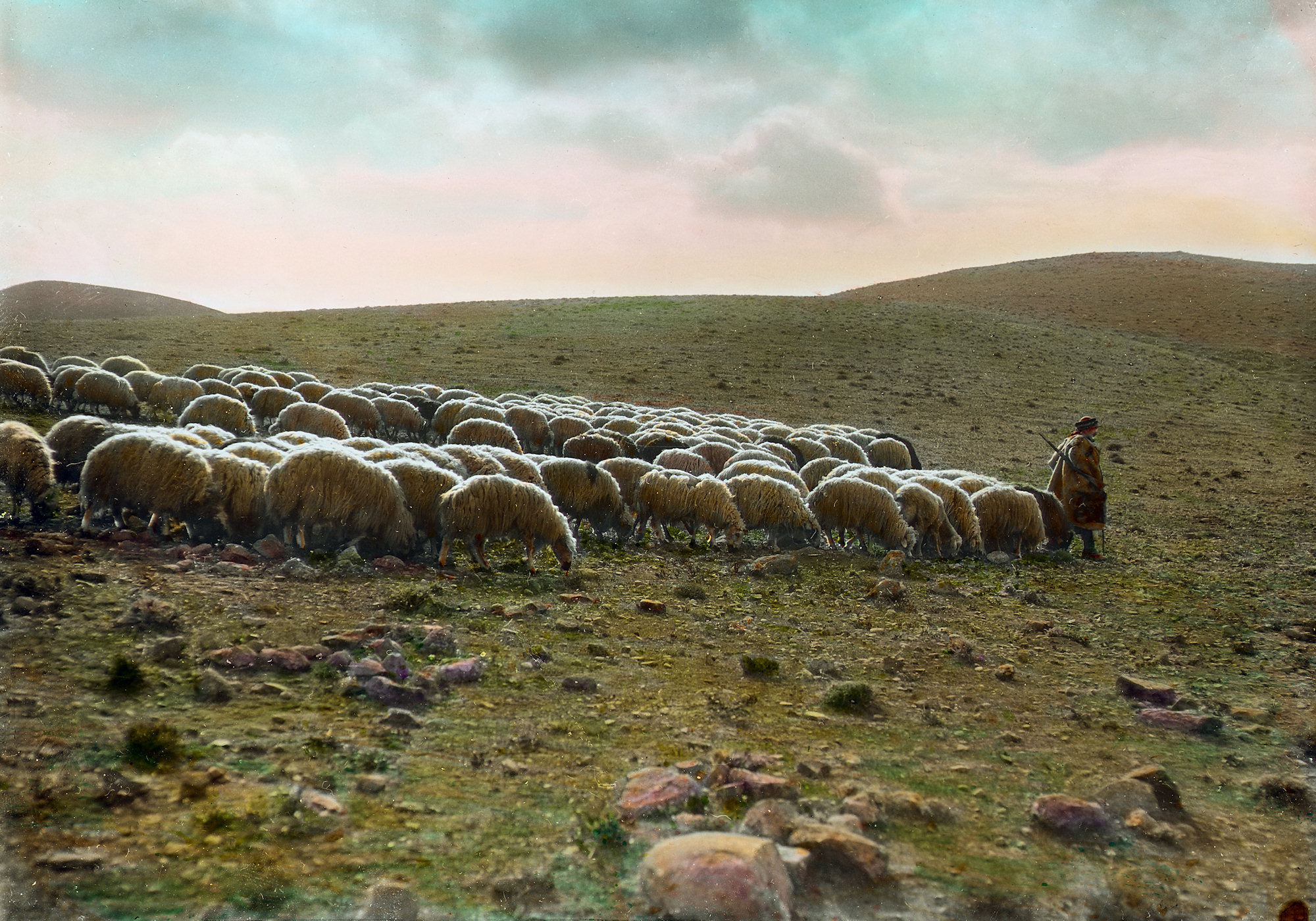
An elder was a man of unique qualities. Paul outlined the characters of the elder in his letters to Timothy and Titus. Peter’s brief exhortation was to remind elders their work was defined by a life of sacrifice. A shepherd’s life was not easy. The sheep were unable to defend themselves or care for their needs without the constant vigil of the good shepherd. David described in his psalm how exhaustive the work of the shepherd was to take the sheep to green pastures and still waters; protect them from the dangers surrounding them; healing their wounds and seeking after those who were lost. Jesus used the image of the shepherd to show the close personal relationship shared between the sheep and the shepherd who called them all by name. Shepherds were leaders. The flock willingly followed the voice of the shepherd because they knew only one voice and that voice protected and provided for them.

Elders must recognize the role of leadership in the church is patterned after a willing heart to live a life that others would follow. Shepherds lead and members follow. Like the compassionate shepherd, an elder must be approachable and inviting for others to talk with and seek their advice. Serving as overseers of the flock means to look over the spiritual needs of the flock. The Lord has entrusted the lives of the members into the hands of those who serve as shepherds of the flock.

Peter wants the elders to consider how important their example is to the spiritual growth of the members. They live a pattern that others will follow. As shepherds of the flock, their care for the members will show how much they are willing to sacrifice. Every man who serves as an elder must know what it means to be a shepherd as found in Psalm 23 and John 10. To learn the lesson of the Chief Shepherd, an elder must be familiar with Ezekiel 34. Peter affirms the men who serve as elders will face the judgment of the Lord in the manner they serve as shepherds of the flock. They receive a heavier judgment because of the trust given to them by the Lord. The joy of faithful service will be found when the Chief Shepherd appears.

Shepherding the flock of God is a wonderful life of service dedicated to the work of the local congregation growing in the grace and knowledge of Jesus Christ. Not everyone can fill the shoes of those who live as shepherds of God but prayers should be constantly lifted for the men who face the work of leadership with courage and faith. Every congregation needs men who are willing to take the mantle of leadership and care for the flock of God.

Leadership is intentional influence. (Michael McKinney)

Posted in Uncategorized | Leave a comment

Our God Is The God Of Our Salvation

veil-nebula-12445Let God arise, let His enemies be scattered; let those also who hate Him flee before Him. As smoke is driven away, so drive them away; as wax melts before the fire, so let the wicked perish at the presence of God. But let the righteous be glad; let them rejoice before God; yes, let them rejoice exceedingly. Sing to God, sing praises to His name; extol Him who rides on the clouds, by His name YAH, and rejoice before Him. A father of the fatherless, a defender of widows, is God in His holy habitation. God sets the solitary in families; He brings out those who are bound into prosperity; but the rebellious dwell in a dry land.

O God, when You went out before Your people, when You marched through the wilderness, the earth shook; the heavens also dropped rain at the presence of God; Sinai itself was moved at the presence of God, the God of Israel. You, O God, sent a plentiful rain, whereby You confirmed Your inheritance, when it was weary. Your congregation dwelt in it; You, O God, provided from Your goodness for the poor. The Lord gave the word; great was the company of those who proclaimed it: “Kings of armies flee, they flee, and she who remains at home divides the spoil. Though you lie down among the sheepfolds, You will be like the wings of a dove covered with silver, and her feathers with yellow gold.” When the Almighty scattered kings in it, it was white as snow in Zalmon. A mountain of God is the mountain of Bashan; a mountain of many peaks is the mountain of Bashan. Why do you fume with envy, you mountains of many peaks? This is the mountain which God desires to dwell in; yes, the Lord will dwell in it forever.

The chariots of God are twenty thousand, even thousands of thousands; the Lord is among them as in Sinai, in the Holy Place. You have ascended on high, You have led captivity captive; You have received gifts among men, even from the rebellious, that the Lord God might dwell there. Blessed be the Lord, who daily loads us with benefits, the God of our salvation!

Our God is the God of salvation; and to God the Lord belong escapes from death. But God will wound the head of His enemies, the hairy scalp of the one who still goes on in his trespasses. The Lord said, “I will bring back from Bashan, I will bring them back from the depths of the sea, that your foot may crush them in blood, and the tongues of your dogs may have their portion from your enemies.” They have seen Your procession, O God, the procession of my God, my King, into the sanctuary. The singers went before, the players on instruments followed after; among them were the maidens playing timbrels. Bless God in the congregations, the Lord, from the fountain of Israel. There is little Benjamin, their leader, the princes of Judah and their company, the princes of Zebulun and the princes of Naphtali.

Your God has commanded your strength; strengthen, O God, what You have done for us. Because of Your temple at Jerusalem, kings will bring presents to You. Rebuke the beasts of the reeds, the herd of bulls with the calves of the peoples, till everyone submits himself with pieces of silver. Scatter the peoples who delight in war. Envoys will come out of Egypt; Ethiopia will quickly stretch out her hands to God. Sing to God, you kingdoms of the earth; oh, sing praises to the Lord, to Him who rides on the heaven of heavens, which were of old! Indeed, He sends out His voice, a mighty voice. Ascribe strength to God; His excellence is over Israel, and His strength is in the clouds. O God, You are more awesome than Your holy places. The God of Israel is He who gives strength and power to His people. Blessed be God! (Psalm 68; To the Chief Musician. A Psalm of David. A Song.)

Our God Is The God Of Our Salvation

There is nothing to compare when it comes to the glory and the power of the Lord God. Everything in this world is a wonder to behold and the universe will remain a dark mystery as man tries to glimpse the edges of the vast emptiness of space. David knew the incredible feeling of how majestic God was as words failed to encompass the vastness of the power of the Creator. No one was greater than God was. Everything melts in the presence of the Lord. This power is not to be feared by the righteous because it is their salvation. God rides the clouds, protects the fatherless, shakes the earth when He marches through the wilderness, fills the heavens with the abundance of rain, provides goodness for the poor, defends the defenseless with His thousands of thousand chariots and rides on the heaven of heavens. Who can stand before Him?

The enemies of the Lord flee at His presence like wax melting before a fire. Rebellious hearts dwell in a parched land because there are no blessings there. Kings of armies will flee before the might of the Lord God wounded by His great power. The fierceness of God’s wrath will be a terror to those who rebel against Him but it will be a comfort to the righteous that trust in Him. David extols the people to sing songs of praise to such a wonderful and powerful God. Righteousness will bring the blessings of the Lord God upon all those who submit to Him ascribing strength to the only true Lord. Every blessing comes from the hand of the Lord and He is the God of all salvation. He is more awesome than anything man can imagine.

David’s declaration of the mighty power of God was written in the long ago but the message of his psalm still resonates today. This ancient literature is a timeless reminder that God still rides on the clouds and His unnumbered chariots continue to serve His purpose of protecting the people of God. His excellence is over the disciples of Christ who serve Him daily in faith believing that all blessings come from Him. God’s power is just as mighty today as it was when David penned his psalm. Christian’s hold dearly to the knowledge of how wonderful the mighty power of God is in the lives of all those who serve Him. He shakes the foundation of the world when He marches through the course of history showing His power and His might over rebellious men. The truth of God will march through every generation unscathed by the feeble attempts of man to change His word. He sends out His voice and it is a mighty voice heard by all that fear Him.

The knowledge of God’s glory is a powerful reminder of how great He is and how small we are. Yet, He loves us so much and protects us. His provisions come daily bringing joy to the heart to those that trust Him. He is the God of our salvation. This will never change because He is unchanging. The dark clouds of fear may loom over the horizon in troubled times but the mountain of the Lord will always rise above shining brightly the awesome glory of God the Lord. Trust in Him. Love Him. Serve Him. Let God arise in your heart and your fears will be scattered and driven away.

Posted in Uncategorized | Leave a comment

All Lives Connect To Jesus

hands-colorsNow Jesus Himself began His ministry at about thirty years of age, being (as was supposed) the son of Joseph, the son of Heli, the son of Matthat, the son of Levi, the son of Melchi, the son of Janna, the son of Joseph, the son of Mattathiah, the son of Amos, the son of Nahum, the son of Esli, the son of Naggai, the son of Maath, the son of Mattathiah, the son of Semei, the son of Joseph, the son of Judah, the son of Joannas, the son of Rhesa, the son of Zerubbabel, the son of Shealtiel, the son of Neri, the son of Melchi, the son of Addi, the son of Cosam, the son of Elmodam, the son of Er, the son of Jose, the son of Eliezer, the son of Jorim, the son of Matthat, the son of Levi, the son of Simeon, the son of Judah, the son of Joseph, the son of Jonan, the son of Eliakim, the son of Melea, the son of Menan, the son of Mattathah, the son of Nathan, the son of David, the son of Jesse, the son of Obed, the son of Boaz, the son of Salmon, the son of Nahshon, the son of Amminadab, the son of Ram, the son of Hezron, the son of Perez, the son of Judah, the son of Jacob, the son of Isaac, the son of Abraham, the son of Terah, the son of Nahor, the son of Serug, the son of Reu, the son of Peleg, the son of Eber, the son of Shelah, the son of Cainan, the son of Arphaxad, the son of Shem, the son of Noah, the son of Lamech, the son of Methuselah, the son of Enoch, the son of Jared, the son of Mahalalel, the son of Cainan, the son of Enosh, the son of Seth, the son of Adam, the son of God. (Luke 3:23-38)

All Lives Connect To Jesus

Genealogies are not the most exciting passages to read in the Bible. There are a lot of who begot whom and names hard to pronounce. It is hard to draw lessons from these lists found many times throughout holy scrip. Studies of genealogy are a form of a hobby for most people but to the Jew it was their identity. Coming from twelve tribes of Israel, it was vital for every Jew to know which tribe they belonged. Throughout the centuries, families passed down the lineage to maintain the structure and order of their heritage. It was not until the coming of Christ and the dissolution of the nation of Israel that tribal identity was lost. Jews today have no lineage to trace but to Abraham.

Matthew and Luke both record the lineage of Jesus. Luke is the author that takes Jesus back to Adam, declaring Jesus to be a man. His book unveils the humanity of Jesus in contrast to John’s message of the divinity of Christ. Matthew’s genealogy establishes Jesus as the son of Abraham fulfilling the seed promise through the lineage of Israel. When Luke pens the genealogy of Jesus to Adam he brings together every human being on the face of the earth regardless of skin color, nationality or language. The student of the Bible realizes that we are all brothers and sisters because we all come from Adam and Eve.

Jesus was born in the flesh as every person comes into the world. Gabriel told Mary the Holy Spirit would come over her and the power of the Highest would overshadow her as Jesus was conceived in her womb. She was pregnant for a period of nine months and while in Bethlehem gave birth to Jesus in the same manner as all women. Jesus was a baby who had to learn to walk, talk and grew into manhood in the same manner as all men. He is the son of Adam. I am a son of Adam. You are a son of Adam. We all come from the same family of Adam and Eve. Following the great flood of Noah’s day, the nations of the earth came from Ham, Shem and Japheth but we remain the same family. The tower of Babel created the nationalities and cultures of the earth but we retain the same DNA markers of Adam and Eve.

Luke’s account of the genealogy of Jesus should remind us that we ALL share in the lineage of God’s son – physically and spiritually. The Son of God left His glory and became a man of flesh to show how important every life matters to the Father. Because of Adam, we are all brothers and sisters. By the power of the word of God, Adam and Eve were formed to create a world of people. The sadness of hatred is that those we hate are those of our own family and Jesus is one of our family members in the flesh. When we hate someone, we hate Jesus. More importantly, Jesus came to bring an abundant life through His death on the cross. The Son of God died for everyone. He died for every tone of skin, size, age, gender, nationality and Jesus died for all men beginning at Adam.

Every life is precious to God. He proved it by giving His only begotten Son as a sacrifice. Hatred killed the Son of God but love brought Him from the tomb. God’s grace is offered to all men – from Adam to the precious child born today. You and I share the same lineage as we trace our heritage to a garden called Eden. Sin destroyed that happiness and continues to fill the world with hatred. Remember that Jesus is the Son of Man and we are His brethren. Love one another. Pray for one another. Be at peace with all men – all lives matter to Jesus Christ.

Few of us realize that racism is man’s gravest threat to man, the maximum of hatred for a minimum of reason, the maximum of cruelty for a minimum of thinking. (Abraham J. Heschel, Address, Chicago, January, 1963)

Posted in Uncategorized | Leave a comment

Who Will Follow Jesus

ntpe08And behold, two blind men sitting by the road, when they heard that Jesus was passing by, cried out, saying, “Have mercy on us, O Lord, Son of David!” Then the multitude warned them that they should be quiet; but they cried out all the more, saying, “Have mercy on us, O Lord, Son of David!” So Jesus stood still and called them, and said, “What do you want Me to do for you?” They said to Him, “Lord, that our eyes may be opened.” So Jesus had compassion and touched their eyes. And immediately their eyes received sight, and they followed Him. (Matthew 20:30-34)

Who Will Follow Jesus

Blindness is a terrible disease robbing the mind of the beauty of God’s creation. The eyes represent the window of the soul that without clarity make it very difficult for man to function. We seldom think of the importance of good eyesight until either age or disease mars the ability to see clearly. Some men are born blind while others incur some malady in life that takes away their eyesight. During the ministry of Jesus, blindness was a tool used by the Lord to show His incredible power of healing. Through the ages, man has been able to cure many diseases. Blindness is an impossibility to cure and this was especially true during the days of Jesus.

Matthew’s account of the blind men is parallel to the story by Mark and Luke of the healing of Bartimaeus. What is wonderful about this story is the faith of the men to consider that Jesus could give them sight. This was a clear impossibility. There was no precedent in the annuals of man that would suggest this could be done. However, hearing the man from Nazareth was traveling the road, they begged Him to consider their plight and give mercy. Their faith came in many forms. While they cried out, the crowd tried to stop them. They refused to be quiet. Jesus did not go to them but commanded they come to him (a difficult feat for a blind man). The Lord could have known what their desire would be but He requires them to answer Him. Their request was simple: they wanted their sight. Jesus granted the request.

It is difficult to imagine what feeling must have come over them as they stood before a man they had never seen and in the darkness of their blindness begged for sight. Even more incredible is the euphoria of that moment when their eyes were opened. Light poured in, the colors of the world burst into their brains and their hearts leaped within their breast. Jesus stood before them. They beheld the beautiful face of the one who saved them. What more could they do but follow Him. Their savior was standing before them and their lives were changed forever.

Sadly, the men would have little time with the miracle worker. Jesus was on His way to Jerusalem and it would not be long before the eyes opened by the power of love witnessed the death of Jesus on a cross. What became of the men? The scriptures do not tell. They followed Jesus after their healing and passed into the mist of time. Their legacy reminds us of a greater cure. Sin blinds the hearts of men and there is no cure but the love of God. Every disciple of Christ has experienced the moment of the true Light coming into his or her life by God’s grace. The joy we felt as we saw the world clearly for the first time must never be lost. Following Jesus should always be a reminder of how He opened our eyes and gave us sight. The journey we follow is not to a cross but to a resurrection. Thank God for His loving power that made our healing possible. The greatest joy will be when we see Him face to face. What a day that will be.

The rewards of heaven are so great and glorious, and Christ’s burden is so light, his yoke so easy, that it is a shameless impudence to expect so great glories at a less rate than so little a service, at a lower rate than a holy life. (Jeremy Taylor, Holy Living, 1650)

Posted in Uncategorized | Leave a comment

The Virtuous Woman

otpe28And now, my daughter, do not fear. I will do for you all that you request, for all the people of my town know that you are a virtuous woman. (Ruth 3:11)

The Virtuous Woman

The story of Ruth is a love story filled with sadness, devotion and virtuous character. Ruth was not a Jew but a woman of Moab. She and her sister Orpah married the two sons of Elimelech and Naomi from Bethlehem in Judah. Tragically, Elimelech, Mahlon and Chilion all died leaving Naomi and her two daughter-in-law’s in desperate straits. Returning to Judah, Naomi exhorted her daughter-in-law’s to return to their own people but Ruth desired to remain with Naomi. Arriving in Bethlehem, the women found themselves in the fields of a wealthy relative of Elimelech named Boaz. It was at the beginning of barley harvest and Ruth went to the fields to glean after the reapers.

Boaz came from Bethlehem to see about his gleaners and noticed Ruth. He was told she was the Moabite woman who had returned with Naomi. Ruth asked to be allowed to glean the fields and Boaz instructed her to glean no other field but his own. This surprised Ruth and she asked why he was being so gracious. Boaz tells her he has heard all that Ruth has done for Naomi and how she remained with Naomi rather than live with her family in Moab. The character of Ruth preceded her as a woman of virtue.

Near the end of the barley harvest and wheat harvest, Naomi wants to secure a life for Ruth. She instructs her daughter-in-law to find Boaz and after he lies down, uncover his feet and lay down. This was not something untoward but a reminder to Boaz of an obligation of a close relative. The incident seems odd but Naomi knows the character of Boaz and Ruth that no one will be taken advantage of from the other. Following the instruction of Naomi, Ruth lays at the feet of Boaz until he is awakened at midnight. He agrees to fulfill the custom of the close relative. One of the things he tells Ruth is all the people of Bethlehem know that she is a virtuous woman. She is not a Jew but a Moabite. Earlier in the history of Israel, the men had gone after the woman of Moab committing harlotry. Ruth was not the character of the Moabites. She was an “outsider” but her reputation was righteous and pure.

The story ends with the marriage of Boaz and Ruth establishing the lineage of David and eventually Jesus Christ. Among the lessons from the wonderful book of Ruth is the character of a woman from foreign land who was fully devoted to her mother-in-law and whose reputation was evident in her life. Boaz told her the whole city knew she was virtuous woman. This did not happen by chance. As a foreigner and especially a Moabite, Ruth would have been expected to be a woman of dark character. She stood out for all of the women. Solomon posed the question, “Who can find a virtuous wife, her worth is far above rubies.” Ruth was a jewel in the crown of righteousness among women.

Outward beauty is not what is praised in the eyes of God. Charm is a deceitful attraction. The true character of a woman is a view of virtuous character. A woman of excellence is a person of inward beauty who is chaste, modest and filled with the goodness of the Lord. Ruth was such a person. Mothers should model their daughters after the character of Ruth. Wives can find a pleasant image of beauty when they examine the life of the Moabite woman. Boaz knew that. And so did God. Now that is a great story.

No beauty leaves such an impression, strikes so deep, or links the souls of men closer than virtue. (Robert Burton, Anatomy of Melancholy, II, 1621)

Posted in Uncategorized | Leave a comment

God Among The Nations

every-nationThe vision of Obadiah. Thus says the Lord God concerning Edom — we have heard a report from the Lord, and an envoy has been sent among the nations saying, “Arise and let us go against her for battle.” Behold, I will make you small among the nations; you are greatly despised. The arrogance of your heart has deceived you, you who live in the clefts of the rock, in the loftiness of your dwelling place, who say in your heart, ‘Who will bring me down to earth?’ “Though you build high like the eagle, though you set your nest among the stars, from there I will bring you down,” declares the Lord. (Obadiah 1:1-4)

God Among The Nations

Obadiah is a small book with a huge message. Little is known about the prophet but the vision of Edom is timeless with the message of God among the nations. Throughout the history of man, nations have exalted themselves as impenetrable fortresses of safety. Building walls around cities with impressive fortifications have given a false sense of security that no one can penetrate. Great cities like Nineveh, Babylon and Jerusalem seemed without fear and yet their destruction came at a heavy price. History is littered with the skeletons of nations who have tried to rule the world and failed. Egypt was once a super-power but now is a base nation. The Assyrians, Babylonians, Persians, Greeks and Romans filled the world with their domination but only ruins of a once mighty people remain. Germany and Japan sought for world dominion leading to world wars that killed millions. The once proud British Empire that stretched from sunrise to sunset is gone.

The vision of Obadiah is a reminder that when nations exalt themselves before God, He will bring them down. Edom was a nation protected by the vast caves and high places of a difficult land. The people felt secure in their cities lifting their hearts to a prideful boast that no one could drive them out. The Lord would bring judgment upon the Edomite’s because of their rejoicing at the fall of God’s people and their pride. No nation can stand before the wrath of a vengeful God – including the nation of Edom.

God among the nations is a story as old as man. After the flood in the days of Noah, man began building a tower to the heavens and the Lord intervened. Bob Waldron points out the purpose of the division of languages was to guarantee that no nation would ever have the power to rule the world as one. Nations rise and fall according to the will of the Lord God. He will never allow one people or one nation to exalt itself for very long. When the wickedness of the people becomes too great, the Lord will bring the nation to its knees. Reading the prophets is a clear forecast of all the nations that exist today and their future. History is a clear image of how the word of God is true. When all is said and done with the kingdoms of men in ruin, the kingdom of God will still be standing as immoveable because that is the will of the Lord. Nations built by man will fall. The church of the Lord will remain intact until His return. That is God among the nations and God among His royal nation.

The State that undermines the authority of God and rejects the supremacy of the moral order is thereby destroying the strongest supports of its own authority and is on the way to ruin. (John T. McNicholas, No Wall Between God and the Child, 1947)

Posted in Uncategorized | Leave a comment

The Ten Commandments And The Priesthood

ten_commandments-title-2-still-4x3For when the priesthood is changed, of necessity there takes place a change of law also. (Hebrews 7:12)

The Ten Commandments And The Priesthood

Jewish Christian’s in the first century faced a monumental challenge from their Jewish heritage. Keeping the Law of Moses was not an infrequent occurrence but daily life in every facet of their family, work, nationality and faith. Believing Jesus was the Christ was a tremendous sacrifice learning to walk away from a law they had known since birth. As their faith turned from a devotion to Moses and the Law to the spiritual law of Jesus Christ, there were many roadblocks and hurdles they had to overcome. The book of Hebrews is a powerful thesis to the victorious faith of those who learned of the better promises in Christ serving a better priesthood.

In his argument of redemption by Christ, the author presents the problem of the priesthood being changed necessitating the change in the law. Moses was given a law by the Lord that required an established priesthood from the tribe of Levi. Aaron was the first High Priest and through the son of Jacob, the Levites became the priestly tribe. No one could serve as priests who were not Levites. The Levitical priesthood was a core element of the Law of Moses but the book of Hebrews shows the priesthood was changed. Animal sacrifices could not take away the sins of the people because Jesus had shed His blood for redemption. The Law of Moses was faulty leading to the need of a better law. Symbolically, God had shown the change of the Law when Jesus died as the veil in the Temple tore from top to bottom. There were limitations to the Law of Moses. Hebrews proves the Law of Moses has been done away with so that Jesus Christ can reign supreme as the High Priest for God’s people.

The book of Hebrews shows the Ten Commandments are no longer valid. Many in the religious world believe the Commandments are still binding today. It must be remembered the Ten Commandments were linked to the Levitical priesthood and when the priesthood was annulled, the Ten Commandments were taken away. The priesthood is necessary for the implementation of Law and the Ten Commandments are a part of that law. Without the Levitical priesthood, there can be no Ten Commandments. There is a necessary change in the law. Following the Ten Commandments is rejecting the better priesthood of Jesus Christ and denying He is the only way of salvation. In the first century, Jewish Christians struggled with keeping part of the Law of Moses and serving Christ as His disciples. Today, religious people face the same struggle trying to be a Christian and keeping part of the Law of Moses. The two are not compatible.

The Ten Commandments and the Law of Christ are at odds with one another. One serves the law of an abolished priesthood and the other flows from the side of Jesus Christ who died to establish the better priesthood of Melchizedek becoming a Mediator of a better covenant, which was established on better promises. Salvation will never come in keeping the Ten Commandments. Jesus is the only way and His priesthood is the only means of true worship.

Posted in Uncategorized | Leave a comment

Running With The Wrong Friends

friends-bad-influenceMy son, if sinners entice you, do not consent. If they say, “Come with us, let us lie in wait to shed blood; let us lurk secretly for the innocent without cause; let us swallow them alive like Sheol, and whole, like those who go down to the Pit; we shall find all kinds of precious possessions, we shall fill our houses with spoil; cast in your lot among us, let us all have one purse.” My son, do not walk in the way with them, keep your foot from their path; for their feet run to evil, and they make haste to shed blood. Surely, in vain the net is spread in the sight of any bird; but they lie in wait for their own blood, they lurk secretly for their own lives. (Proverbs 1:10-18)

Running With The Wrong Friends

Peer pressure is one of the greatest influences upon the hearts of young people. It is not limited to the young as the older heart can fall under the same spell. The early days of forming the character of life is ripe with dangers of running with the wrong kind of people. Many lives are filled with the remorse of youth following after the influences of those who lived in wickedness. Sowing wild oats of freedom always brings a harvest of regret, misery, pain and suffering. Every generation must learn the lesson of the destructive enticement of evil friends.

From birth, a need for acceptance is a part of life. Solomon began his great book of wisdom reminding young people following the wrong kind of friends will end in disaster. So often, the heart will want to be free from the will of the parents forgetting that freedom is never found in the arms of rebellious friends. A young man will declare that he does not want his parents running his life; only to find the friends that led him astray were running his life. Everyone is a slave to something. The prodigal son who sought for freedom from his father found a different kind of slavery in the hog wallow. When sinners entice, a warning flag should remind the young soul dangers awaits.

Friends make the evil they do sound fun and exciting. Shedding innocent blood and robbing neighbors is supposed to be an exhilarating experience. Shock and dismay come when the youth is arrested and imprisoned and he wonders where the fun went. It has all been a lie. No matter how often the crime is committed, there will never be the satisfaction of enough. Life becomes a cycle of misery, fear and anger. There is no joy and there is no happiness.

Young people must be brave to refuse to walk with such friends removing their lives from these influences. There will never be the success promised by lying friends. Solomon clearly points out the only thing that is going to happen is death. So many young people lose their lives because they are at the wrong place at the wrong time with the wrong kind of people. The glimmering hope of a good life is destroyed because of the friends who tempt the young heart to follow the siren call of peer pressure. The answer is clear: do not walk in the path of friends who are rebellious. You will find yourself in the same pit of despair. Change friends. Live for good things. Be happy.

There’s small choice in rotten apples. (William Shakespeare, The Taming of the Shrew, 1594)

Posted in Uncategorized | Leave a comment

No One Wins

SIN_KILLS_SIGNWhen he entered his house he took a knife, laid hold of his concubine, and divided her into twelve pieces, limb by limb, and sent her throughout all the territory of Israel. And so it was that all who saw it said, “No such deed has been done or seen from the day that the children of Israel came up from the land of Egypt until this day. Consider it, confer, and speak up!” (Judges 19:29-30)

No One Wins

The Bible is filled with remarkable stories. There are few that can live up to the story of the Levite and his concubine. During the final days of the judges, there was no king in the land and everyone did as they pleased. Samson has died and Samuel will appear on the scene in years to come. It was a lawless time for Israel and evil began to abound. A certain Levite had a concubine traveling through the land of Benjamin. Jerusalem had not been subdued yet as it was still a foreign town (called Jebus). Desiring not to stay in the city of foreigners, the Levite chose to stay in the Benjamite city of Gibeah. No one gave them a place to stay until finally an old man who had been working in the fields came into the city and gave them board. While they were dining, certain men came to the house and demanded the Levite be brought out so they could rape the man. The old man refused the request but finally the Levite gave the men his concubine. All night long, the perverted men of Gibeah raped the woman. When morning came, they let the woman go and she crawled back to the place where the old man lived. Her last dying act was to fall before the door and place her hand on the threshold.

When the Levite found his concubine, he took her home, cut her up and sent her body parts to all the tribes of Israel. It was a declaration of the wickedness the men of Gibeah and a demand for justice to be meted out for such a crime. The eleven tribes of Israel were incensed at the cruelty of the men of Gibeah. Drawing an army of 400,000 the decision was made to demand recompense from the tribe of Benjamin to deliver the evil men for justice under the Law. Benjamin refused. Instead, they gathered an army of 26,700 and a civil war began between Benjamin and their Israelite brothers. When it was all said and done, more than 65,000 men were dead. And for what? The men of Gibeah were destroyed along with the inhabitants. After the people buried their dead, what was gained? Nothing. Nobody won.

Sin brings misery, death, hatred, perversion and no one wins. From the first taking of the fruit in the garden to the final day of existence when the trumpet will sound, sin will strike down the multitudes of those who believe there is something to be gained. What was gained by Eve taking the fruit? Nothing. Satan is the father of lies, he is the liar of all liars, the great deceiver and the one who whispers in the ear that sin will bring great happiness and joy and it never happens – understand clearly – it never happens! For a moments reckless folly the joy expected from the fruits of sin turns putrid and vile. No one wins when they sin. It never brings joy. There will never be happiness. Death is covered with the delights of temptation. Its poison is masked by the aroma of sweetness. Horror is the only thing you will find at the end of sin’s dark tunnel.

Jesus Christ came to give life and to give it abundantly. There is only one happiness and that joy is found in the cleansing blood of His grace. He conquered sin so that we will no longer be slaves of the wiles of Satan. The devil has been defeated. He has no power but only what we allow him to have in our life. Renounce the presence of sin in your life for the death it brings. You will not win with sin. Victory is found only in Jesus Christ who destroyed the sting of death.

There was a time when sin shocked us. But as the brainwashing progresses, what once amazed us only amuses us. We laugh at the shady joke; tragedy becomes comedy; we learn to speak the language of Vanity Fair. (Vance Havner; 1901-1986)

Posted in Uncategorized | Leave a comment