Thankfulness Comes From Peace

thankful-title-1-still-16x9And let the peace of God rule in your hearts, to which also you were called in one body; and be thankful. (Colossians 3:15)

Thankfulness Comes From Peace

A thankful heart is born from a spirit of contentment realizing that all blessings come from God and He rules in all the affairs of men. Thanksgiving is a wonderful time of year to spend with family, enjoy culinary delights and reflect on the bountiful measures of prosperity afforded this great land. It is a time of giving and sharing. To fully appreciate the value of Thanksgiving, God must be at the center. When George Washington proclaimed the day of thanksgiving, he impressed upon all citizens the message that the struggling nation was granted prosperity by the hand of the “great Lord and ruler of nations.” He called God the “beneficent author of all the good that was, that is, or that will be.” Abraham Lincoln would later declare the blessing of Thanksgiving as “thanksgiving and praise to Almighty God, the beneficent Creator and Ruler of the Universe.” In all matters of thanksgiving, the Lord must be at the center.

Thanksgiving is a daily remembrance. True hearts of thanksgiving come from the peace of God that rules the heart. The calm assurance of the hand of the Lord in all the affairs of life brings a solace springing forth a bounty of thankfulness. God’s peace is the measure of faith that relies upon the thankful heart. Trusting in the will of the Lord to guide each step is where true thankfulness arises. It is hard to be thankful when fear, worry and doubt darken the way. Reading the word of God establishes faith. When faith is born in knowledge of the majesty of God’s power hope begins to soar. As the heart is lifted from the travails of this world, the spirit of man is filled with thanksgiving. He recognizes the power of the Lord in the affairs of man and his trust is in the will of God. The peace of God guides the heart to the table of thanksgiving.

Thanksgiving is a wonderful time to enjoy the bounties of the land. Tables are filled with an overflowing of foods and delights of the palate. It should not be forgotten that a great deal of work went into preparing this feast. To enjoy the blessings one must remember the diligent effort put forth to make it all possible. If there was a similar spirit of activity to the spiritual body, how much more thanksgiving would be found every day as the peace of God rules the heart and mind. The peace of God comes from hearts that are prepared each day to trust in the Lord. It is a lot of work but the rewards are endless. His peace guards the heart from evil and the body of Christ is magnified as souls are united in the common purpose of the Lord. The joy of eternal life is the focus of thankful hearts. No day can be dismissed without a bounty of thankfulness to a God who gave his son to die for the sins of all men. Real thanksgiving comes from the knowledge Jesus died on the cross and he arose. Thank God for his great and wonderful gift. Happy Thanksgiving today and every day.
Posted in Uncategorized | Leave a comment

Leviathan

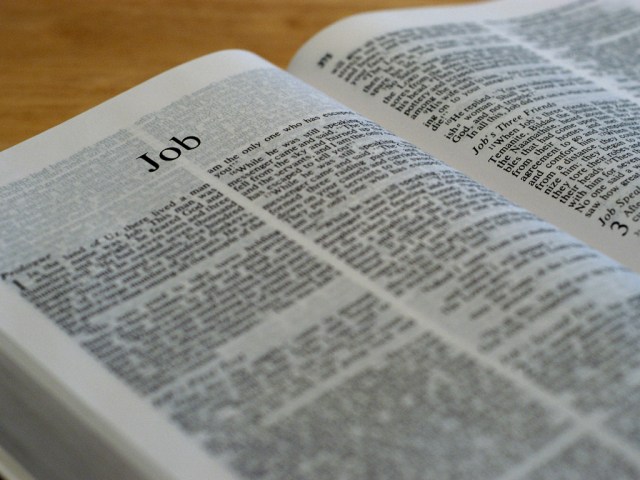
bible-jobCan you draw out Leviathan with a hook, or snare his tongue with a line which you lower? Can you put a reed through his nose, or pierce his jaw with a hook? Will he make many supplications to you? Will he speak softly to you? Will he make a covenant with you? Will you take him as a servant forever? Will you play with him as with a bird, or will you leash him for your maidens? Will your companions make a banquet of him? Will they apportion him among the merchants? Can you fill his skin with harpoons, or his head with fishing spears? Lay your hand on him; remember the battle — never do it again! Indeed, any hope of overcoming him is false; shall one not be overwhelmed at the sight of him? No one is so fierce that he would dare stir him up. Who then is able to stand against Me? Who has preceded Me, that I should pay him? Everything under heaven is Mine. “I will not conceal his limbs, his mighty power, or his graceful proportions. Who can remove his outer coat? Who can approach him with a double bridle? Who can open the doors of his face, with his terrible teeth all around? His rows of scales are his pride, shut up tightly as with a seal; one is so near another that no air can come between them; they are joined one to another, they stick together and cannot be parted. His sneezing’s flash forth light, and his eyes are like the eyelids of the morning. Out of his mouth go burning lights; sparks of fire shoot out. Smoke goes out of his nostrils, as from a boiling pot and burning rushes. His breath kindles coals, and a flame goes out of his mouth. Strength dwells in his neck, and sorrow dances before him. The folds of his flesh are joined together; they are firm on him and cannot be moved. His heart is as hard as stone, even as hard as the lower millstone. When he raises himself up, the mighty are afraid; because of his crashings they are beside themselves. Though the sword reaches him, it cannot avail; nor does spear, dart, or javelin. He regards iron as straw, and bronze as rotten wood. The arrow cannot make him flee; slingstones become like stubble to him. Darts are regarded as straw; he laughs at the threat of javelins. His undersides are like sharp potsherds; he spreads pointed marks in the mire. He makes the deep boil like a pot; he makes the sea like a pot of ointment. He leaves a shining wake behind him; one would think the deep had white hair. On earth there is nothing like him, which is made without fear. He beholds every high thing; he is king over all the children of pride.” (Job 41)

Leviathan

Growing up in Florida seeing large alligators was not uncommon. Visiting zoos revealed animals of voracious appetites thankfully enclosed behind secure bars of metal or glass or roaming safely at a distance. The waters of earth teem with large creatures that remind man of how small he is and nearly powerless to tame. There are some frightening creations walking and swimming in the world. It is difficult to imagine the kind of creature that Job knew so well and other Old Testament writers were familiar with. In the closing account of the book of Job, the Lord God brings to the mind of Job the powerful image of Leviathan. Reading the description seems almost impossible. Leviathan was an incredible sea-creature of serpent proportions. Created on the fifth day of the early world, Leviathan was nearly unrealistic in its reality. Job was well aware of Leviathan and what made this creature so powerful.

Leviathan was not a parabolic representation of the Lord to draw Job’s attention. This creature was a real, living and awesome thing to behold. There was nothing to compare with Leviathan save the behemoth. Man was given dominion over all the animals of the earth but Leviathan was a dominant foe. Job had questioned God and the Lord put Leviathan before the eyes of Job and challenged him to tame the beast. The physical description is incredible. Leviathan has impenetrable defenses with his outer coat, terrible teeth and massive proportions. It would seem almost fairy tale to accept a creature that shoots forth light from its nostrils or burning lights with sparks of fire from its mouth. God created this powerful sea-beast and all of it is true. Nothing can prevail upon this creature and he is the king over prideful men. It is easy to say Leviathan is not a creature you would want to meet in the day or night.

The message of God affected Job’s heart. There were many things the Lord told Job about the conflict this righteous man was having with his circumstance. Reminded in a very visible way the greatness of the Almighty, Job acknowledges the power of the Lord. If the creator of the world can fashion an animal like Leviathan, what can man do to challenge the word of God. Job realized that as terrifying as the sea creature was, there was little to compare with the terror of the one who made Leviathan. This creature does not exist today but the Lord does. He is the one who fashioned man and rules over man. Proud men are nothing in the eyes of the Lord. The psalmist Asaph speaks of the Lord breaking the heads of Leviathan showing the power of the creator. Leviathan is fed by the hand of the Lord and lives and dies according to the will of God. Isaiah declared the majesty of God in his power to destroy Leviathan reminding Israel of the coming judgment.

In the history of man there seems to be no better time than to bring back Leviathan to remind man of how puny he is and wasteful his pride. Job gives us a detailed description of the beast to be taken literal and true exemplifying the omnipotence of the one who rules the universe by his mighty power. Read again the testimony of Leviathan. Stand in awe of this mighty creature but do not fear him. Rather, fear the one who made Leviathan.

His wisdom and power in creating an ant or bee is no less than in the making of the sun and its spheres. (Judah Halevi, Cuzari, c. 1135)

Posted in Uncategorized | Leave a comment

An Almost Christian Is Not A Christian

almost

Now as he thus made his defense, Festus said with a loud voice, “Paul, you are beside yourself! Much learning is driving you mad!” But he said, “I am not mad, most noble Festus, but speak the words of truth and reason. For the king, before whom I also speak freely, knows these things; for I am convinced that none of these things escapes his attention, since this thing was not done in a corner. King Agrippa, do you believe the prophets? I know that you do believe.” Then Agrippa said to Paul, “You almost persuade me to become a Christian.” And Paul said, “I would to God that not only you, but also all who hear me today, might become both almost and altogether such as I am, except for these chains.” (Acts 26:24-29)

An Almost Christian Is Not A Christian

The apostle Paul had some remarkable opportunities in his life. Before he became a Christian, he was the power behind the first intensive persecution of the early church. By God’s grace he learned the truth of Jesus Christ and became the driving force for the success of the early church. His preaching took him in many corners of the Roman Empire teaching intellectuals, fishermen, scribes, religious leaders, women gathered by a river and often leading Roman officials. He could touch the hearts of the common people and make uncomfortable governors and kings. Felix, governor of Judea and Agrippa the king had an audience with the man from Tarsus learning firsthand the powerful testimony of the gospel of the King of Kings. Paul was unashamed to speak clearly and direct to these men of power. Standing before a throng of Roman officials, the apostles declared plainly the story of Jesus Christ moving Agrippa and Festus to imprint immortal words upon the pages of God’s word.

King Agrippa was a ready audience for Paul. He was an expert in the customs of the Jews knowing the nature of the Hebrew doctrine. Weaving the testimony of his own conversion, Paul appeals to the heart of Agrippa to believe Jesus as Christ the Son of God. Festus listened closely moved by the words of Paul. It was the governor who first could not hold back his feelings as he shouted with a loud voice Paul was mad. The heart of Festus could feel the truth of Paul’s words. Truth and reason tore through the mantle of the governor’s heart with the clarity of a burning sun. A remarkable thing happened when Paul turned to Agrippa and directly asked him if he believed the prophets. The chained prisoner addressing the King with such a direct and challenging question struck deep in his heart. Paul answered for Agrippa bringing home the message of truth. The king was moved. His heart was conflicted because he knew Paul was telling the truth. With all the testimony and the evidence that Jesus was the Son of God, Agrippa cowardly replied that Paul almost persuaded him to become a Christian. Sadly, the governor and king left never to become a child of God. Almost but lost.

No one is saved by getting close to heaven. Eternal life is given to those who are saved; not almost saved. A person who is drowning can almost be saved but they will be lost. Believing in Jesus Christ alone does not save. The demons believe and they tremble (unlike many today) yet they are doomed to destruction. On the day of Pentecost, Peter told the multitudes to repent and be baptized for the remission of sins. Repenting alone would not save. The eunuch from Ethiopia saw water but until he was immersed, he was lost. Cornelius was a devout man who feared God with all his household, giving alms to the people and praying to God always. He was lost although he was a religious man. It was not until Peter came and baptized them they became Christians. Paul’s conversion did not happen on the Roman road to Damascus. It came about three days later when Ananias came to him and said, “Why are you waiting? Arise and be baptized, and wash away your sins, calling on the name of the Lord.” Waiting did not save Paul. Obeying did.

There are many ‘almost Christians’ in the world today. Those who believe in Jesus Christ and are moved like Festus and Agrippa are on the right road but have not been washed in the blood of Jesus. Almost obeying the gospel is being totally lost. Obedience requires fulfilling the will of God in every way. Satan has successfully convinced the religious world that faith alone will save; being a good person will save, works alone will bring redemption and a myriad of lies that make a lot of ‘almost Christian’s convinced they are saved – when they are not. Paul declared to King Agrippa that he wished he would obey the gospel of Christ fully. The apostle was not an ‘almost Christian.’ He had obeyed the word of God granting him salvation by the grace of a loving and merciful God. The moment he became a child of God was when Ananias lifted him from the waters of baptism. He was a Christian through and through.

Posted in Uncategorized | Leave a comment

Taking Care Of Jesus

ntpe05Now it came to pass, afterward, that He went through every city and village, preaching and bringing the glad tidings of the kingdom of God. And the twelve were with Him, and certain women who had been healed of evil spirits and infirmities–Mary called Magdalene, out of whom had come seven demons, and Joanna the wife of Chuza, Herod’s steward, and Susanna, and many others who provided for Him from their substance. (Luke 8:1-3).

Taking Care Of Jesus

The life of Jesus was an incredible schedule of preaching, teaching, healing, endless miles of walking, and finding quiet time for meditation and prayer. It was an exhausting work for nearly three years with little time for rest. Lost in the shuffle of daily activities are the quiet women who followed Jesus from city to town caring for his daily needs. A testimony of the humanity of the Lord was his daily needs of food and drink. He could have miraculously taken care of these needs as he did in feeding the five thousand but that would destroy the humanity of his mission. On one occasion, he saw a fig tree he thought had fruit on it but when he came to the tree, it was barren. Jesus had hunger like all men. When he fasted for forty days, he hungered. At the well of Jacob, he desired water. With few references the gospel writers mention the women who followed Jesus caring for his daily needs.

Jesus had no home to call his own, no income to care for his needs and was dependent on others for his daily provisions. His earthly father, Joseph, was a poor carpenter who died before his ministry began. With Mary his mother he began the journey to the cross accomplishing the work of his heavenly Father. Food had to be provided and these women made those provisions out of their own substance. They fussed over him mending his garments, urging him to rest, following him everywhere he went. Often when Jesus would be teaching his disciples these women would be in the front row listening attentively. There can be no doubt the presence of these women warmed the heart of the Lord as they mothered him with their love.

The ministry of these women had purpose. They were thankful for what Jesus had done for them. The Lord had healed them of evil spirits and how could they express their thanksgiving more than dedicating their lives to his well-being. Mary Magdalene was especially singled out as she endured the torture of seven demons before Jesus cast them out. Some of the women had sicknesses Jesus had healed. What a wonderful relief they felt. Their gratitude was to serve Jesus as he had served them. Remarkably, a woman whose husband was a steward of King Herod also helped take care of the needs of Jesus. Quiet women doing an important work for the Son of God.

There would be another day when these women would be at a place they could never have dreamed would happen. Standing at Golgotha, the women who tenderly cared for Jesus of Nazareth watched him die. It came suddenly and without warning. There was nothing they could do but watch. Along with Mary the mother of Jesus, the women wept as they witnessed the cruelest of tragedies. Their Lord who healed them and thousands of others, showed his power in miracles of feeding, nurturing, proclaiming the will of his heavenly father – was crucified and agonizing with incredible pain – and they could do nothing but watch. Unknown to these women was what they were doing for Jesus. They could not bring him down from the cross but their presence lifted the spirit of the dying Son of God because they were there. As the scheme of redemption was unfolding for the entire world, Jesus stopped and gave reassurance to his beloved mother. It was as if the universe came to a halt as the little boy that graced the life of a maiden named Mary expressed in eternal tones his love for her. How that must have soothed the heart of his mother and the other women with her. Through their tears came the voice of cheer. These women blessed Jesus with their substance and he in turn blessed them with his love.

Women have a vital role in the work of the Lord. The church is filled with quiet women going about doing their work of nurturing, caring, tending to needs and showing the love of God in the hearts to others. Only a few of the women who followed Jesus are named and those who are named have little to be known of their life story. There are multitudes of godly women who love the Lord and from their substance quietly go about doing good. The joy for the women at the cross was realized more fully for what happened on the first day of the week. There can be little doubt the forty days Jesus spent before returning to his father involved spending time with his mother and her companions who continued to care for his daily provisions. The early church was blessed with the example of these women who helped take the good news of Jesus Christ to the whole world. Certain women doing a simple work of caring for the Son of God. What a powerful example in the life of Jesus Christ.

Posted in Uncategorized | Leave a comment

David’s Thanksgiving

thanksgiving_tTherefore David blessed the Lord before all the assembly; and David said: “Blessed are You, Lord God of Israel, our Father, forever and ever. Yours, O Lord, is the greatness, the power and the glory, the victory and the majesty; for all that is in heaven and in earth is Yours; Yours is the kingdom, O Lord, and You are exalted as head over all. Both riches and honor come from You, and You reign over all. In Your hand is power and might; in Your hand it is to make great and to give strength to all. Now therefore, our God, we thank You and praise Your glorious name. But who am I, and who are my people, that we should be able to offer so willingly as this? For all things come from You, and of Your own we have given You. For we are aliens and pilgrims before You, as were all our fathers; our days on earth are as a shadow, and without hope. O Lord our God, all this abundance that we have prepared to build You a house for Your holy name is from Your hand, and is all Your own.” (1 Chronicles 29:10-16)


David’s Thanksgiving

Building the temple of the Lord was in the heart of King David but his son would be the one to fulfill that dream. David was a man of war and the Lord prohibited him from the construction of His house. The king implored the people to give of their wealth to build the house of the Lord and the response was overwhelming. David’s psalm of thanksgiving is a beautiful expression of how wonderful the Lord blesses His people for their love and devotion of Him. Thanksgiving comes from a heart filled with the love of God. It strips away the pride of man. The heart knows that everything given to man is by the power of the Creator. Man is only a servant in the world blessed with all things good that comes by the will of a loving Father.

Thanksgiving is about the greatness, the power and the glory, the victory and the majesty of the Lord. A thankful heart is bowed low realizing the feeble attempts of man come only by the blessings of the Lord. Everything man receives from the earth comes from God. The soil produces crops because life is germinated by God. Man does not do that. He can toil the earth but the bounty is only by the hand of the one who formed the seed. All that is in the world comes by the will of God. The abundance of the sea, the field and the sky is ordained by the creative design of a loving Father. He is exalted in thanksgiving.

Thanksgiving is acknowledging the rule of God in life. Riches and honor come from Him. The air comes from His hand, the sun shines according to His will and the firmament is established by His word. In His hand is power and might and strength comes from Him alone. There is a reason to give thanks to God and praise His glorious name. The Lord God reigns, rules and holds the breath of man in His hand. Thanksgiving is the creator of the world allowing feeble man to come into His presence and acknowledge Him. Giving back to the Lord our portion is returning to Him what was His to begin with. The Lord allowing man to come before Him is the greatest measure of thanksgiving.

Sharing a meal of thanksgiving is proclaiming the glory of God and His unending blessings of the earth established by His hand. Every day should be an exaltation of the wondrous glories of an eternal Father who loves us so much He gave His only begotten Son. Through Christ, we have hope, love, joy and redemption. There is nothing more to be thankful for because this thanksgiving will never end. Plates will empty and days will pass from a celebration of Thanksgiving but the joy of eternal hope will never fade. Thank you God my Father for the abundance of Your forgiveness, Your love, Your patience, Your presence and most especially the promise of eternal life with you. Thank you, Lord God Almighty.

Gratitude tries to return more than has been received. (Thomas Aquinas, Summa Theologiae 2a-2ae, cvi. 6, 1272)

Posted in Uncategorized | Leave a comment

Meshuggener

sunrise2

Meshuggener

Each morning I receive from Merriam-Webster a new “Word of the Day.” It is a helpful and challenging activity to broaden the horizon of learning. This morning I received the word ‘Meshuggener’ (noun – muh-SHUG-uhner). My spell-checker is going a little crazy with this word but it is a real word. Merriam-Webster explains: “From bagel and chutzpah to shtick and yenta, Yiddish has given English many a colorful term over the years. Meshuggener is another example of what happens when English interprets that rich Jewish language. Meshuggener comes from the Yiddish meshugener, which in turn derives from meshuge, an adjective that is synonymous with crazy or foolish. English speakers have used the adjective form, meshuga or meshugge, to mean ‘foolish’ since the late 1800s; we’ve dubbed foolish folk meshuggeners since at least 1900.”

Whether you recognize the word meshuggener or a foolish person, the Bible mentions a lot of meshuggener. The poet David said a man who does not believe in God is a meshuggener. A hard lesson for meshuggeners is that wealth has no value in the grave. Those who live all their lives gaining the wealth of the world leave all their stuff to others. That is meshuggener. The way of a meshuggener is right in his own eyes because he believes he knows everything. A meshuggener is counted wise when he holds his peace and when he shuts his lips, he is considered discerning. The book of Proverbs is filled with lessons for a meshuggener.

Jesus parable of the ten virgins is the greatest tragedy of those who do not believe in God. Five of the virgins were wise and five were meshuggeners. The wise women prepared and were ready no matter when the bridegroom came. Five of the women did not make preparation and while the bridegroom tarried, all fell asleep. Without warning the shouts rang out the bridegroom was coming. The five wise virgins trimmed their lamps and joined the wedding party. Caught unawares, the five meshuggeners hurried and sought out those who sold lamp oil. By the time they had found the oil and made their way to the wedding feast it was too late. The door was shut and would not be opened for anyone.

The lesson of the five meshuggeners is parallel to the coming of the Son of God. So many people are slumbering in the cares and riches of the world taking no thought of their eternal life. Jesus explained in the sermon on the mountain the majority of people will be found to be meshuggeners. Few will be saved because only few are ready. If you are not ready to meet the Lord when He comes – you are a meshuggener. And whatever you call it, the end is still the same. And that is a sad story.

Posted in Uncategorized | Leave a comment

It All Belongs To Him

temple-herods

“The silver is Mine, and the gold is Mine,” says the Lord of hosts. (Haggai 2:8)

It All Belongs To Him

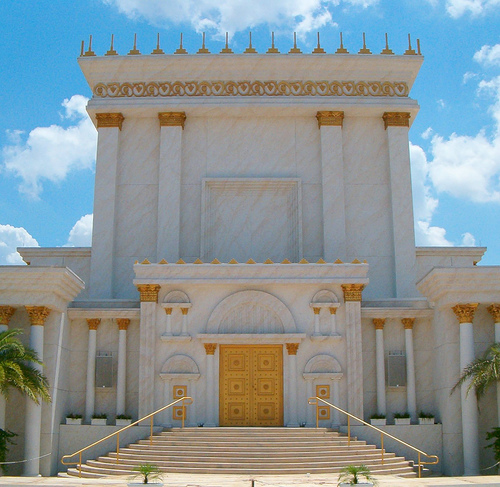
After the children of Israel returned from the long captivity that saw the burning and destruction of the temple, it was time to rebuild the House of the Lord. By the hand of God, the remnant of His people possessed the land of their forefathers. In their joy of living in the promised land they had forgotten to give God the glory of rebuilding His house. The people lived in paneled houses but the temple of God was in ruins. Haggai and Zechariah implored the people to rebuild the place where the glory of the Lord once ruled. It would be a difficult task but the second temple was completed in 516 B.C.

When the foundation of the second temple was completed, there was great sorrow because it was not like the former glory of Solomon’s temple. A sense of defeat filled the hearts of the people as they compared the glory of the first temple with their feeble efforts in rebuilding the second. Solomon had filled the temple with the wealth of the land with an incomparable presence but the people of Haggai’s day had nothing. How could they restore the temple like that of Solomon when they had no gold, silver or anything? They were poor and had little. The temple would not be the glorious edifice of Solomon’s day. Their hearts were discouraged and downtrodden.

The temple of Solomon was an incredible example of the wealth and splendor of man’s achievement. When the people began building the second temple, a sense of despair filled their hearts. What they forgot is the temple was a place of worship regardless of the outward adorning. The Lord reminded them that while Solomon’s temple was a beautiful edifice adorned with gold – it was the worship that was important to God. Building the second temple would pale in comparison to the first but whether it had gold or silver would not matter to God because He owned all the things of the world. The Lord wanted the hearts of the people, not their gold.

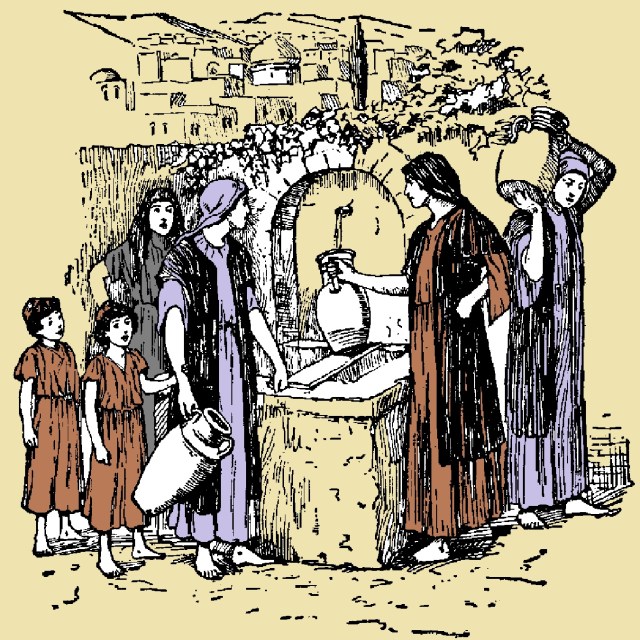
Jesus reminded the woman at the well worship to God has always been about truth and spirit. There is nothing wrong with worshipping in a beautiful building or nicely adorned place but worship is not about the things that God already possesses. All the gold and silver belong to the Lord and He is not impressed. What He desires is the heart of men to honor Him, serve Him, love Him and devote their hearts and wills to Him. Haggai was reminding the people of priorities. The second temple would never rival the first but all the Lord wanted in the temple was the hearts of the people. Men have put so much emphasis upon the outward adorning of pleasure driven worship they have forgotten the real meaning of praising God in spirit and truth. Haggai’s lesson begs the question: what is the purpose of our worship?

Too many church members sit smugly in church on Sunday, some closing their eyes and others eyeing the clothes, and with a dozen other things ahead of God in their lives. (Vance Havner; 1901-1986)

Posted in Uncategorized | Leave a comment

Turning A Mistake To Glory

chained-hands1Therefore, though I might be very bold in Christ to command you what is fitting, yet for love’s sake I rather appeal to you–being such a one as Paul, the aged, and now also a prisoner of Jesus Christ–I appeal to you for my son Onesimus, whom I have begotten while in my chains, who once was unprofitable to you, but now is profitable to you and to me. I am sending him back. You therefore receive him, that is, my own heart, whom I wished to keep with me, that on your behalf he might minister to me in my chains for the gospel. But without your consent I wanted to do nothing, that your good deed might not be by compulsion, as it were, but voluntary. For perhaps he departed for a while for this purpose, that you might receive him forever, no longer as a slave but more than a slave–a beloved brother, especially to me but how much more to you, both in the flesh and in the Lord. (Philemon 8-16)

Turning A Mistake To Glory

The circumstance of Onesimus is unknown why he ran away from his master, Philemon. Slaves took an incredible risk if they decided to leave their masters without permission because there were few places they could go to find protection. The Roman Empire was so vast, eventually a slave would be caught and severe penalties would be enforced. The Empire was full of thousands of men, women and children who lived the life of slavery. Throughout the New Testament writings, slavery was used as an expression of discipleship to Jesus Christ and on a few occasions, the commands of the Lord forbade slaves to be unruly towards their masters. In kind, masters were forbidden to be harsh to their slaves. How Onesimus came to know Paul is of speculation but it was the greatest thing that ever happened to this runaway slave.

Onesimus took a brave step when he decided to slip away from the home of Philemon. There were many anxious days and nights as he secretly moved about the land. It is possible he was caught and imprisoned with Paul and that is when his life changed. The apostle took every opportunity to teach others the gospel and this runaway slave was no exception. The joy of salvation brought Onesimus into a servitude with Jesus Christ and a brotherhood with Paul and his master, Philemon. Paul’s letter to Philemon is an expression of his respect for his friend and an appeal to receive Onesimus back – not just as a slave but now as a brother. Onesimus had made a grave mistake to run away. Paul acknowledges this but what was an unfortunate decision changed the lives of the slave and the master. Philemon was now blessed with a servant who was also a servant of the Lord.

Paul alludes to the providence of God in the decision of Onesimus to run away. Could it be the slave running away fulfilled a purpose in the plan of the Lord to bring him to Christ? Regardless, the reality was that Onesimus made a mistake but his decision turned out for glory. Philemon must see the wonder working power of Christ in the life of Onesimus and the joy of a slave who was now a brother. As a Christian, Onesimus will be a more valuable slave than ever before. The bond of Philemon to his slave will change dramatically and what a blessing.

Mistakes often fill our lives. We make a decision that is a bad choice and one we will regret for a long time. What we learn from Onesimus and Philemon is the joy of turning a mistake into glory. Was it wrong for the slave to run away? Yes. Was Philemon upset about the action of his slave? Probably. Was there a greater good found in the story of a runaway slave? To the glory of God, the slave became a child of God and what looked like a tragedy turned into rejoicing. Paul’s appeal to Philemon is one of perspective. The apostle does not supposed to demand of Philemon the wrong Onesimus did but to remember the joy of how something bad turned into something good. How Philemon receives his slave will determine the outcome of both of their lives. When we look at mistakes and regrets, we should also look at the opportunities that come from a broken heart, remorseful spirit and a desire to do right. A greater good so often can come from a tragedy.

Forgiveness is the joy of being a child of God. The relationship we share with the Father is the expression of love we have for one another. Our Father forgives us when we repent and we should forgive those who have wronged us. No man need be defined by his failures but how he rises from the ashes of a broken life to serve God in glory. Onesimus made a serious mistake but he made a decision that had eternal consequence. Perhaps he ran away so he could fall in the arms of a forgiving Savior. To God be the glory.

There is nothing final about a mistake, except its being taken as final. (Phyllis Bottome, Strange Fruit, 1928)

Posted in Uncategorized | Leave a comment

The House Of The Righteous

PrintIn the house of the righteous there is much treasure, but in the revenue of the wicked is trouble. (Proverbs 15:6)

The House Of The Righteous

There are many similarities of those who seek God and those who do not. In contrast, there is one thing that separates the believer from the unbeliever. The rain falls on the just and the unjust and all men share in the common bounties of life. A man can be wealthy whether he is righteous or not. Living unrighteous does not suggest ill health or poverty as righteousness will not guarantee prosperity. The treasure of the righteous is not unlike the revenue of the wicked. All men can share in the material blessings of the world in a like manner regardless of their spiritual viewpoint. In the Old Testament, the man Job was a wealthy man that feared God with a deep reverence. David met a man named Nabal that was very rich but was a harsh and evil man. Job and Nabal enjoyed the fruits of the world but their characters were different.

The character of the righteous and the wicked is what sets them apart. Whether a righteous man is rich or poor does not change his life. He lives in the contentment of God’s grace knowing the Lord will care for him. There is joy if the bread is few and there is joy if the table is filled with abundance. His eye is not on the quantity of what he possesses for he knows that life does not consist of the things he has. The character of his heart measures life for a man of God because his fulfillment comes from an eternal reward. A wicked man believes that gold will bring him happiness. His life is consumed with building bigger barns to hoard possessions he will never enjoy. The character of the wicked is the trouble of a life filled with empty promises. Seeking after fame, fortune and pleasure, the wicked man is driven to fill his life with all thing things that are temporary. He finds he is never happy. Trouble is the only reward a wicked man finds.

Godliness is profitable for this life because it produces a character of satisfaction. A heart filled with the presence of God will bring joy whether one is rich or poor. There is much treasure in the house of those who love the Lord. Faith guards the door, love fills the rooms and hope shelters the home with the mantle of God’s grace. The house of the wicked in unprotected, empty and void of hope. Riches are measured by character, not possessions.

Humanly speaking, it is only when the hair is white, when … life is almost over, that men begin to realize how hopelessly elusive is the happiness promised by wealth and fame. (Joseph McSorley, Be of Good Heart, 1924)

Posted in Uncategorized | Leave a comment

The Agnostic Atheist

14495457_10154056066883525_5086144359139091796_nBut without faith it is impossible to please Him, for he who comes to God must believe that He is, and that He is a rewarder of those who diligently seek Him. (Hebrews 11:6)

The Agnostic Atheist

There are distinctions between a person who claims to be an agnostic and one who declares a belief in denying God. An agnostic claims to disbelieve in God because it is impossible to know whether God exists and an atheist readily affirms there is no God. The distinction is semantical as the result of their system of belief is a denial of eternal authority. Separating the atheist from the agnostic is splitting hairs of how each one denies the existence of what is clearly seen in creation and affirmed through the unchanging word of God. Remarkably, while the agnostic and the atheist deny a belief in God, they affirm a system of belief upon which they establish their unbelief. Innate in all man is belief. What they do with that belief is decide if their faith is in a Creator or themselves as creation.

An agnostic will deny God because he denies any scientific means to prove there is a God. If it cannot be replicated in the laboratory then it must be false. Denying God because there is no way to prove him in a visible world only suggests man has no desire to attempt any proof of God’s existence. If may be safe to say the atheist will go to great lengths to prove there is no God while the agnostic stands around with his hands in his pockets shrugging his shoulders saying “I don’t know.” Ironically, the man who shrugs his shoulders in denial cannot explain his own birth. He had nothing to do with it, had no control over it and came from the womb of another human being growing into an intelligent being denying he is an intelligent creation and he has no answers. The atheists will spend his life disproving his existence. His birth was a phenomenon of unlinked events chained together in a continual chance of precise requirements of impossible necessary sequences producing a human being evolved from non-human particles. At the same time, they decry the believer in God because of faith. There is more faith required in the belief of an atheist than a follower of an eternal Creator.

Agnostics and atheists share the same DNA, both in body and belief. Neither can explain the biological creation; either denying lack of proof or disproving by a convoluted system of unbelieving faith. All men have a system of belief that by itself shows the eternal nature of how God made man. Every civilization has based their society on a system of belief and the question has always been whether their belief was in an eternal Father or themselves. Ultimately, the reason men deny God is that they want to make a god of their own desire so they can live in the false security of man’s wisdom. The totems of men have always been the image of man. Making a golden calf allows man to enjoy the pleasures of himself, the pride of ruling his own life and rejecting the authority of a higher being. Man worships man like an ant bows before his fellow insect.

Paul reminds the Roman disciples the invisible attributes of God are clearly seen. King David expressed in prose the viability of the word of the Lord and the powerful testimony of the created world. Faith in the heavenly Father requires a belief that He is. There is nothing more man can find within himself that will change that. God is who He is and will always be who He is. Denying ones birth does not change the reality. Accepting the knowledge of God also requires the belief of life after death. Agnostics and atheists believe man is an animal that dies and ceases to exist. Their belief is predicated on the need to live in such a manner there will no consequence or penalty. The driving force to deny God is to live with no judgment. Sadly, agnostics and atheists will learn too late, there is a God and there is consequence. Seeking God is the only happiness man will find in this life and the life to come.

Agnosticism is not open-mindedness; it is culpable inaction. (Nels F. S. Ferre, Faith and Reason, 1946)

Posted in Uncategorized | Leave a comment