God’s View Of Parenting

parents honor

Every one of you shall revere his mother and his father, and keep My Sabbaths: I am the Lord your God. (Leviticus 19:3)

God’s View Of Parenting

Fear, reverence, and respect are words that describe the way the Jews viewed the Sabbaths of the Lord according to the Law of Moses. There was no greater day in the life of the Jewish community than the Sabbath as a day to be kept holy. The Sabbath reminded the people of the power of the Lord to deliver them from bondage as when they came out of Egypt. It would be a day to consider the power of God as He provided all things necessary for life including the protection of His might against the enemies of Israel. As part of the Decalogue given to Moses at Sinai, keeping the Sabbath was a restriction imposed by the word of the Lord as the words of the covenant for the Jews. They were to keep the Ten Commandments as part of the Law of Moses in its completeness with penalties attached for those who disobeyed. The Ten Commandments included a law of respect for parents that followed the keeping of the Sabbath. After the failed invasion of Canaan and the decree of the Lord that Israel would wander in the wilderness for forty years, a man was found picking up sticks on the Sabbath and brought before Moses. Putting him under guard, the people inquired what should be done with him. The Lord spoke to Moses and told him the man must be put to death by the hand of all the congregation as they stoned him with stones. The man who picked up sticks on the Sabbath was taken outside the camp and stoned to death. This impressed upon the mind of all those who were commanded to stone the man to death the reverence given to the word of the Lord concerning His Sabbaths. There would be no question how the Lord felt about the people honoring the Sabbath as a holy day. It is to this significant act of reverence the Lord attaches the regard children should have toward parents.

The Lord instructed Moses in the Law that the people should be holy because the Lord their God was holy. There is no doubt to the significance of holiness attached to the keeping of the Sabbaths and in the same context, the Lord shows His expectation of how the people fear, honor and reverence their mothers and fathers. Contained within the Law of Moses were penalties of death for those who dishonored their parents. If a child strikes their father or mother they were to be put to death. Cursing a parent would bring the penalty of death. Profaning the Sabbath was punished by death showing that God put respect of parents and reverence for the Sabbath on equal with one another. Reverence for the Sabbath was the same reverence expected for parents. There is no question of interpretation in the punitive requirements of the law concerning the Sabbath and respect for parents. God was very clear and the people understood the clarity of the law. The Law of Moses was given to the people who were brought out of Egypt and became a national law to Israel. It was not a law given to the Gentiles or any other nation. Keeping the Sabbath was significant only to the Hebrews and the laws attached to it were in keeping with the history of the nation of Israel. The Jews struggled to keep the law and showed the futility of the Law of Moses when the Lord sent them into the bondage of Babylon. Jesus came and put away the old covenant inscribed to the Jews and opened a pathway for the Gentiles to find salvation in the blood of Christ. The punitive laws of the Sabbath were done away when Christ died on the cross including the laws pertaining to putting to death children who cursed or abused their father or mother. What is learned from the study of the Law of Moses is how God feels about His people being holy and the families regard for parents. This has not changed and will never change.

In the Garden of Eden, the Creator ordained the home in a world of sinless perfection. When Adam and Eve disobeyed God and took of the forbidden fruit, they ushered in the challenges of the home and the need for law. Before the giving of the Law of Moses, the Lord demanded respect for parents as much as He commanded men regarding murder. The Ten Commandments did not establish murder as a sin or disrespect for parents as sinful. This was in the mind of God from the beginning. Using the Law of Moses, the student of scripture can understand the value the Lord places on the home and the expectations of His people to honor the father and the mother. Children should be taught to revere their parents as much as they should be taught to honor the Lord because He is holy. One must be viewed as vital to salvation as the other. The New Testament teaches the principles of respect for parents as children obeying their fathers in the Lord. Revere the Lord and honor parents. This is the will of God.
Posted in Uncategorized | Leave a comment

The Spirit Of Repentance

Spirit Of Repentance

Come, and let us return to the Lord; for He has torn, but He will heal us; He has stricken, but He will bind us up. After two days He will revive us; on the third day He will raise us up, that we may live in His sight. Let us know, let us pursue the knowledge of the Lord. His going forth is established as the morning; He will come to us like the rain, like the latter and former rain to the earth. (Hosea 6:1-3)

The Spirit Of Repentance

It is not in the nature of man to admit wrong. One of the most challenging parts of the human gene is a willingness to change the heart admitting failure and accepting the rule of a higher being. The Lord calls this repentance and without the desire to admit wrong, change the will of a stubborn spirit to allow the law of God to rule the heart, man is doomed. To accept the will of God a man must empty himself of his own will. The Lord requires this of everyone but it is not just because He wills it; rather it manifests the mercy of a loving Father willing to forgive and receive back the lost soul. Hosea pleads with the people to return to the Lord and while there will be severe consequences to those who refuse, the prophet shows how the mercy of a kind and benevolent Father is the motivation behind repentance. With every instance of sin the wrath of God is revealed. He tears, strikes down and destroys the unyielding heart bent on unrighteousness. Returning to the Lord is the message of grace that a man deserves the wrath of the Divine and through that same message of grace He will heal those He has torn away. The character of God is fierce but it is forgiving in ways too great for men to comprehend. Everything man has done from the paradise of Eden to the final day when the particles of the universe are destroyed, exemplify the righteous judgment of God because man is an enemy, sinner, disobedient and rebellious creature deserving of death. And then the word of God responds with the heavenly chorus of grace that seeks for the heart of man to return to the Lord and He will forgive. He has torn, but He will heal; He has stricken but He will bind again. Defining the nature of grace is to see the hand of a compassionate God who is not willing that any should perish but that all should come to repentance so the loving hand of a merciful Father can soothe the troubled spirits of His children. The plea of Hosea is for the people of God to come and return to the Lord.

Repentance will come from a heart willing to submit to the kindness of a wrathful God who will revive, raise up and fill the mind of man with the knowledge of divine grace. It is the full intention of the Father for His children to live in His sight. It is sad to see that God is blamed for the failures of what man has done to himself and to others when the Father has no greater desire than to enjoy the presence of His creation. Grace does not come from the hand of God apart from the knowledge of the Lord. Knowing the word of God is what fills the heart with the comfort of hope, promise of salvation and the joy of forgiveness. Sin brings heartache, misery, and darkness but the grace of God brings the morning of joy and the cleansing of latter and former rains to the earth. There is something soothing in the gentle rains of a summer’s day that bring comfort, coolness, and consolation that all is well. Repentance is the measure of man seeking the joy of love extended by the Father reminding the soul that God still loves and He still forgives and His mercy endures forever. Stubborn pride hinders the joy of salvation. Humility exalts the glory of God. Coming to the Lord revives. Refusing to repent destroys. God will come to His people like the rain cleansing the broken spirits of grief, sorrow, and travail. No greater joy can a man enjoy in life than when he empties himself of his obstinate vanity and embraces the love of the merciful Father.

The measure of forgiveness is found in the mind of God but the action of repentance can only come from the willingness to come to the Lord. It is within the power of God to save all men but that is not the will of the Father to make men do what they do not will to do. Hosea seeks to bring the nation of Israel back to the one true God with promises of healing, binding up again, reviving the broken spirits and living in God’s presence but that is all dependent upon one measure: the people must return to the Lord. The grace of God knocks on the door of each man’s heart but there is only one way to open the door and that is from the inside. Grace, mercy, and love are offered by the Lord. What man does with that grace, mercy, and love is where humility and repentance move him in the direction of forgiveness. A call to repentance always comes with the first word: Come. The invitation of God is afforded to all men. Sadly, as Jesus taught, most will not accept His call taking the wide path to destruction. The Lord says come, take His yoke and learn from Him and He will give rest to the soul. That blessing of rest comes from hearts humbled by the grace of God and His promise of forgiveness.

Posted in Uncategorized | Leave a comment

God’s Mercy On Israel

god_of_mercy

Even when they made a molded calf for themselves, and said, “This is your god that brought you up out of Egypt,” and worked great provocations, yet in Your manifold mercies You did not forsake them in the wilderness. The pillar of the cloud did not depart from them by day, to lead them on the road; nor the pillar of fire by night, to show them light, and the way they should go. You also gave Your good Spirit to instruct them, and did not withhold Your manna from their mouth, and gave them water for their thirst. Forty years You sustained them in the wilderness; they lacked nothing; their clothes did not wear out and their feet did not swell. (Nehemiah 9:18-21)

God’s Mercy On Israel

There is no greater image of the mercy and grace of God than how the Lord dealt with ancient Israel. Born from the seed of Abraham as His own special people, the Lord brought forth a powerful nation from the bondage of Egypt and set them up as the blessed among all nations on earth. He promised the Hebrews that He would save them and He did. Leading them through the Red Sea, the hand of God protected the people, fed the nation and promised them a land that flowed with milk and honey. A second time the hand of the Lord led the people across dry land as the River Jordan was forded and the conquest of Canaan began. A little over three hundred years later the people of God wanted a king and Saul, son of Kish was anointed its first ruler. David became the second king and his son Solomon took the nation to the zenith of its power and glory. Following the death of Solomon, the kingdom divided and a period of great tragedy began. It would only take two hundred years for the northern ten tribes of Israel to be destroyed by the invading army of the Assyrians. One hundred thirty-six years after the fall of Samaria, Jerusalem is destroyed and the temple of the Lord burned. According to the word of the Lord, seven decades would pass before the people return to possess the land. The first group of freed captives returns and twenty years pass when a second Temple is built. Then seventy-one years later a cup-bearer from the king of Persia comes to Jerusalem and under his leadership rebuilds the walls of the desolated city in fifty-two days. As the celebration of the building of the walls is undertaken, the children of Israel assemble on the twenty-fourth day of the month with fasting, in sackcloth, and with dust on their heads to acknowledge their sins and ask the mercy of God to forgive them. The Levites, Jeshua, Kadmiel, Bani, Hashabniah, Sherebiah, Hodijah, Shebaniah and Pethahiah cried out to the people the dirge of Israel’s rebellion and disregard for the word of God. Beginning with the acknowledgment of the Lord who created the heavens, the song of confession puts forth the constant rebellion of the people in contrast to the continuing mercy of God to forgive them. Sinai with the golden calf is remembered along with the complaints of the people for the manna the Lord gave them. They were a disobedient nation who killed the prophets, cast the law behind their backs and worked great provocations against the Lord God. The Lord punished the people for the rebellion including the captivity in Babylon. In all of this, the mercy of God was shown time and again through the prophets and because God did not utterly destroy the people allowing a remnant to return.

Mercy is an unfathomable gift when it comes from God. Men can show mercy to one another when they believe a fellow man is worthy but when it comes to understanding the mercy of God, nothing humankind has done merits the grace, love, and mercy of the Lord Almighty. The character of the human spirit is the plague of sin that rebels against the hand of a benevolent Creator who never fails His creation, provides unlimited and boundless gifts of love and doing all of this in the face of men who will despise, murmur, complain and dishonor the name of God. Pride fills the heart of human wisdom to believe the creature made a little lower than the angels is a god himself. At the height of mythology the human spirit creates gods who are temperamental, angry, and unforgiving because no man can create a character larger than himself. The Lord God Almighty who is merciful and longsuffering could not have formed in the mind of man because He is so much larger than any pebble of human wisdom could devise. Israel was the chosen apple of God’s eye and they rebelled, murmured, refused to obey and tested God at every corner and yet the Father was merciful in patience, kindness, love, and benevolence. He did not forsake them in the wilderness (although He had cause) and the pillar of the cloud did not depart from them by day because the Lord was still leading His people to the land He had promised them. The pillar of fire by night gave them security and comfort to know they were not forsaken. Everything the people needed was provided through the word of the Lord. He gave them food and water to sustain them as forty years unfolded into a new generation of people who would serve Him. They lacked nothing and were ungrateful. God’s love remained constant and His mercy unyielding.

Reading the story of Israel in the Old Testament can cause a man to wonder why the Lord endured the afflictions of a rebellious people. Some might argue God was too patient and should have tried to find other people to lead. The Holy Spirit crafted the story of the Old Testament to show to all men the nature of the nation of Israel is the nature of all men. What is found when looking into the mirror of God’s word is the story of Israel is the story of human failings and God’s mercy. Replace the blessings shown to Israel for the many years of its existence with the incredible blessings of God upon the lives of His people today and what is found is the mirrored image of all that God has done and how often the human frailty of rebellion rears its ugly head. What an honest man sees in Israel is the honest reflection of his own soul. The affliction of the soul is the constant war of righteousness against unrighteousness and how often unrighteousness wins the day. All have sinned and fallen short of the glory of God and the daily battle of sin is a real and constant threat. It is possible to bring sin under control but its impact will continue as long as there is breath in the body. What is greater than the knowledge of sin is the understanding that God will forgive time and again and show His mercy time and again and express His love without merit to a creature that does not deserve such love. No man is worthy of God’s love. There are none that do not hold guilt for the death of Jesus Christ. Every person that dwells upon the face of earth is guilty of the blood of the Son of God and yet the mercy of the Father offers pardon. When a man begins to understand the mercy of God he begins to grow in his personal faith and to see his own failings and cause for grace from a benevolent Father. God is ready to pardon, gracious and merciful, slow to anger, abundant in kindness and will never forsake the righteous. Praise God for His mercy.

Posted in Uncategorized | 1 Comment

Solving Church Problems

authority command example inference

But some of the sect of the Pharisees who believed rose up, saying, “It is necessary to circumcise them, and to command them to keep the law of Moses.” Now the apostles and elders came together to consider this matter. (Acts 15:5-6)

Solving Church Problems

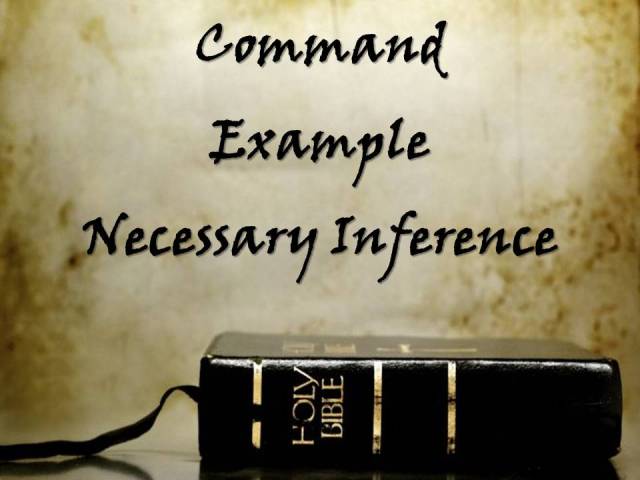
Authority is necessary for life for almost everything a man does. Governments are ordained by God to establish a body of law which governs the lives of its citizens for their welfare. Officials have the power to enforce kingdom laws because authority has been granted to them in the exercise of such administration. Without authority there would be chaos. Sports are measured by rules and regulations with referees and umpires maintaining the laws of the governing body which determines what is right and wrong. There are implied lines of authority in nature that humankind must live within such as the law of gravity. While the understanding of authority is easily identified in every walk of life with necessary implications, religion is often viewed as a discipline where authority is not required. It is often said about the Bible that it is only a personal interpretation of scripture and that no man can bind truth upon another. The reason there are so many churches is that everyone can read the Bible as they want to read it and come to conclusions that fit their choices. When this same line of argument is used in courts of civil law, the arguments are rejected because there are no established theories of jurisprudence but only the facts of the case. A person’s interpretation of the law can be a powerful argument of logic and reasoning but the judge will not accept such rational because the law does not allow for personal bias to determine adjudication of what is written in the legal precedent of the governing body. In the arena of human wisdom men have changed and abused with crafty wisdom the laws to fit their own needs and serve their own purpose. One certainty in the existence of mankind is that when the Lord God establishes a law, only He can change that law. When that law is enacted, it will never change. The law for a person living in 1234 is just as binding on a person living in the year 2034 because God does not change and the covenant He established through His Son Jesus Christ has not changed. The question remains on how to establish Bible authority and the historian and gospel writer, Luke, gives us the pattern for divine jurisprudence.

One of the great problems in the early church was men teaching the disciples that unless a person was circumcised according to the custom of Moses, they could not be saved. The teaching of Judaizing Christians greatly influenced the infant church and potentially could have destroyed the church in the beginning. So large was the problem that it was decided that Paul and Barnabas and certain others of the church in Antioch should go to Jerusalem and discuss the question with the apostles and elders. Among the church were some that had been from the sect of the Pharisees who taught that it was necessary to circumcise and keep the Law of Moses. The apostles and elders came together to consider the matter which became a dispute among the brethren on how to address the problem. Then Peter stood up and presented an argument based upon his experience with teaching Cornelius, a centurion of the Roman Italian Regiment, and the subsequent conversion of the household of Cornelius. When he finished, the multitude kept silent as Barnabas and Paul declared how many miracles and wonders had been worked by God through them among the Gentiles. The journey of Barnabas and Paul had taken them throughout the region of Asia Minor teaching the gospel to the Gentiles establishing churches throughout the region. Finally, James, the brother of Jesus, explained how the scriptures taught the necessity of binding the word of God as authority. The question was settled and the problem solved by establishing a pattern of authority that all the brethren could model after and know the answer to whether a person had to be circumcised or not to be saved. Law was not established by the opinions of Paul or Barnabas or how Peter thought things should be but rather authority was established on three principles of divine law: command, example, and necessary inference.

There have been problems in the church from the beginning. The New Testament church was not immune from the wiles of the devil who seeks to destroy the kingdom of Christ. In the two thousand years since the Day of Pentecost, the church of Christ has suffered from the apostasy of Roman Catholicism and the denominational concepts of Protestants who created multiple churches with different names, creeds, worship, and dogmas. In a world ripe with religious division, the question of authority must be established to know where truth begins and human wisdom corrupts. The example of the events of Jerusalem with the question of what must a man do to be saved is the pattern of how to establish authority. The fundamental hermeneutics of divine law will always be established by the same principles governed by the early church when they met to decide how to answer the false teachings of certain men. Through the example of Peter, Barnabas, Paul, and James, the Lord put forth in holy writ that authority comes from a command (specific command from God; James); example (approved example from the New Testament; Barnabas and Paul), and necessary inference (implied within the text; Peter). Trying to rewrite the law of divine interpretation will only bring the student back to the same conclusion. Solving church problems can only be done when following the divine pattern. Without this view of the word of God, the opinions and interpretations of men will govern authority resulting in vain and false worship.

Posted in Uncategorized | Leave a comment

God Is Not

God is not

God is not a man, that He should lie, nor a son of man, that He should repent. Has He said, and will He not do? Or has He spoken, and will He not make it good? (Numbers 23:19)

God Is Not

Describing the nature of God can only be understood by seeing Him as all-knowing, all-powerful, and all-present in all things that pertain to the universe. It is difficult for the mind of man to see how powerful the Lord God Creator is considering that He dwells in eternity where He existed before the worlds were formed and have seen the acts of every man since Adam and will live beyond the existence of all men in eternity to come. The Bible reveals the personality of the Father as one who is full of love and yet disposed to wrath. He created the world with incredible beauty without sin and destroyed the world with a flood because of sin. In the day of the flood, the wrath of God was brought upon everything that had breath killing every man, woman, child and beast with terrific measure and at the same time shows grace by telling the son of Lamech how to save himself and seven others in an ark of gopher wood. Down through the eons of time the Lord God has shown Himself to be the only true and living God revealing Himself through by the evidence of the material world and the written word. There is much to be said about who God is and a lifetime will only touch the hem of the garment of the knowledge of how great the Lord shows Himself to be. The Bible reveals many sides of the character of God and the written word reveals some things about God that He is not.

When the children of Israel camped in the plains of Moab, the king of Moab enlists the help of a prophet named Balaam to curse the Hebrews as the Moabites were in dread of being destroyed by Israel. Balaam prophecies as the Lord instructs him and in his second prophecy reveals that God is not a man that He would act like a man. One of the fundamental failures of humankind is to believe that God is like him and that whatever the wisdom of man declares this would be the will of God. Men try to bring the Creator down on the level of the creation as if the clay can demand from the potter anything. God is not a man to act like a man or to think like a man. He is far separated from His own creation as Lord, Savior, Father, and Judge. Jesus will tell the Sadducees of His day that God is not the God of the dead, but of the living. The Jewish sect said there was no resurrection and in response to a puzzling question about who is to marry whom in the resurrection, the Son of God reminds His detractors that God cannot be imprisoned with the chains of human wisdom. Men are confined by the sphere of time but God is eternal. Jesus reminds the Sadducees that God spoke to Abraham one thousand years before and He still lives. God is not the God of the dead, but of the living.

The apostle Paul further explains the character of God when he writes to the church at Corinth reminding them that God is not the author of confusion but of peace, as in all the churches of the saints. Chaos described the worship of the Corinthians and the apostle tells the early Christians that everything the Lord has done has been with purpose and design. When men allow their own wisdom to recreate the will of God there will be confusion. God did not create a world of confusion but order and design. In the church, there should be purpose and design in the worship demanded of God. Paul tells the churches in Galatia that God is not mocked and men should not try to fool an everlasting divine being that knows all things. When the Lord established the world He created a law of sowing and reaping that holds true in nature and also the nature of man. When man desires the flesh and sows to the flesh he will reap what he sows. No man should mock God to believe that God does not see and know what man has done. It is impossible to serve the living God and fill the desires of the flesh. In a letter to some Hebrews that were endangering their souls by turning away from the covenant of Christ, the author exhorts the saints to remember that God is not unjust to forget their work and labor of love which they showed toward His name by ministering to the saints. While they suffered severe persecution, the Lord was confident of greater things for them. It is difficult to face trials but God is not unaware of the struggles His children face. He knows what they endure, He understands their heartaches and feels their pain in the trials of life. The Christian should know that God is not unjust to overlook the labors of His children because He is not ashamed to be called their God, for He has prepared a city for them. Faith is the ingredient of character that molds the spirit of man to know that God is not ashamed of them when they follow His will. Finally, the greatest blessing possessed by man is the knowledge that God is not willing that any should perish but that all should come to repentance. It is an eternal message from a kind and loving Father that He has never had any desire to destroy His creation. He is not slack concerning His word given to men to repent and live but is longsuffering toward all men as He is not willing to destroy anyone. What God does toward the disobedient is not what He desires but He must carry out righteous judgment because He is holy. There is no joy in what the Lord must do and God has never desired to see men destroy themselves. His grace has afforded everything a man needs to save himself but often chooses to rebel the grace of God leaving the Lord no choice but to punish. It is an eternal sadness to know that no one must perish because God is not willing that any should perish yet the majority of men will die an eternal death because they did not serve the true and living God. God is not a lot of things but what makes Him so wonderful is what He is.

Posted in Uncategorized | 1 Comment

Three Generations Of Apostasy

Three Generations Of Apostasy

So these nations feared the Lord, yet served their carved images; also their children and their children’s children have continued doing as their fathers did, even to this day. (2 Kings 17:41)

Three Generations Of Apostasy

Assyria was one of the great empires of ancient history used by God to bring judgment upon His own people the Hebrews. Two hundred years after the death of Solomon and the division of the nation, the ten northern tribes of Israel were carried to Assyria. The rebellion of the northern tribes was complete with an unwillingness to serve the Lord in any fashion rejecting the pleas of the prophets to repent and turn to the Lord. All of the kings of Israel did what was evil in the sight of the Lord provoking Him to anger. They built for themselves high places in all their cities, from watchtower to fortified city. Sacred pillars and wooden images filled the land and they burned incense on all the high places like the nations around them. They rejected the statutes and covenant of God and followed idols and worshiped all the host of heaven, and served Baal. And they caused their sons and daughters to be burned as offerings to the gods, practiced witchcraft and soothsaying and sold themselves to do evil in the sight of the Lord, to provoke Him to anger. When the Assyrians came into the land the people of God were unrepentant. They feared the Lord but served their own gods. After Assyria settled its own people in the land a mixed religion of paganism and worship of the one true God developed that would become known as the religion of the Samaritans. By the time of Jesus Samaria was entrenched with the mixed religion of the nations around them and diluted belief in Jehovah God. Each generation believed the lie of the previous generation creating a lineage of ungodliness, wickedness and pagan worship of the one true God. The fathers taught the children and the grandchildren learned the vices of the previous generation and a legacy of rebellion was firmly established in Samaria. Generational ungodliness became the norm and it all came from the family.

It is difficult to imagine how the holy people of God became so wicked and so defiled in the religion of idolatry. Israel was the apple of God’s eye and a holy nation devoted to a righteous covenant promised to Abraham, Isaac, and Jacob. The Lord had shown His love to the people for more than seven hundred years but they would not listen. When the northern tribes rebelled against Judah and Benjamin and became the Israel of the north, the kingdom never saw rest as every king did evil in the sight of the Lord. Kings like Ahab ruled with Jezebel by his side as the people of God fell deeper and deeper into sin and unrighteousness like the nations around them. There were few bright spots in the legacy of the north as found in the maiden taken by the Syrian commander, Naaman, during the reign of Ahab. She believed in the power of God to do the impossible when she told her mistress a prophet in Israel could heal her husband of leprosy. Somewhere in the land of idolatry, a family was teaching their daughter to trust in the power of God. But this was the exception. The people served their carved images and the children and the grandchildren were learning the craft of idolatry like their fathers before them. Three generations of apostates setting the course of the northern tribes of Israel to be destroyed by the wrath of God.

No nation is destroyed as a nation but when the family dies the nation dies. Israel was destroyed not because the nation of Israel had become evil. The destruction of the nation originated in the heart of the home where God was supposed to reign supreme and His word the center of the home. Every nation that has fallen over time began in the little cottage in the glen or the wealthy home of the city where the desires of the world and the carnal pleasures of life filled the hearts and minds of the family. When children are taught to love the world more than God the home begins to die. Israel had every reason to find its worth in the blessings of the providential care of God but they began slowly to turn their eyes toward the nations around them. Worship to the Lord was replaced with the frivolity and pleasures of the world that appealed to their carnal minds. They would still make their offerings to the Lord but their hearts were far from God. Many generations removed from the days of Israel in Canaan, the church is slowly dying in many places because of the same generational apostasy. Parents are teaching their children their self-worth is being popular with the other kids and having successful jobs where they can live in nice homes and drive new cars. Friends must come from influential and important families. Acceptance is the most important part of the child’s life as they mold their character to be like their friends. The Bible is never opened and prayers are non-existent. Parents fuss and fight with one another as they work long hours, live for recreation, give their children everything but God. Each generation teaches the next generation to trust in idols and the church dies. The spirit of Samaria is strong where people fear the Lord yet serve their own gods and the cycle repeats itself time and again.

Posted in Uncategorized | 1 Comment

Read The Wall

Writing-on-the-wall

And this is the inscription that was written: MENE, MENE, TEKEL, UPHARSIN. This is the interpretation of each word. MENE: God has numbered your kingdom, and finished it; TEKEL: You have been weighed in the balances, and found wanting; PERES: Your kingdom has been divided, and given to the Medes and Persians.” Then Belshazzar gave the command, and they clothed Daniel with purple and put a chain of gold around his neck, and made a proclamation concerning him that he should be the third ruler in the kingdom. That very night Belshazzar, king of the Chaldeans, was slain. (Daniel 5:25-30)

Read The Wall

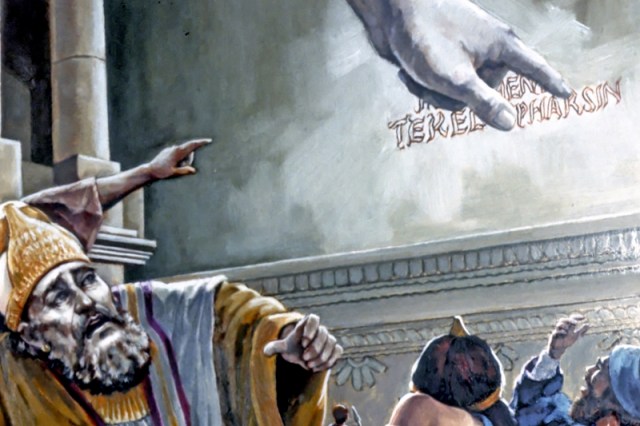
The one certainty of life is the uncertainty of when death will come. No one knows the time of their death except Jesus who knew His hour. Like an unwelcome guest, death invades life at the most inopportune time. There are no signs to indicate the immediacy of the vale of death and no warning signs hinting at the demise of the body. Ironically this creates a false sense of security that life is endless with no thought of what is a certain reality for all men, regardless of where they find themselves in life. The poor man dies just as suddenly as a rich man. Powerful men will succumb to the sting of death as easily as the most insignificant citizen of the kingdom. The earth is filled with thousands of nationalities that share one common gene and that is the poison of death that flows through everyone. Long ago when the people of God were in bondage to the foreign power of Babylon, a Jew was called to the feasting hall of the king to answer a riddle. Belshazzar sat on the powerful throne of Babylon as his father and grandfather, Nebuchadnezzar, had done. He was wealthy as a king could be, the most powerful man in the kingdom and ruler over one of the most formidable nations that existed on earth. There was a reason to make merry and to enjoy all the privileges of wealth, fame, power and fleshly lusts. Calling for the treasures of Israel to be brought into the banquet hall, the king and his lord, his wives, and his concubines drank from them. They drank wine and praised the gods of gold and silver, bronze and iron, wood and stone. It was a grand affair with the king enjoying his power to the fullest. Nothing in his heart would cause him to believe this day would be his last. The same hour the fingers of a man’s hand appeared and wrote opposite the lampstand on the plaster of the wall of the king’s palace. In terror, Belshazzar saw the part of the hand that wrote and the words inscribed upon the wall. He would give kingly honor to any man that would tell him the meaning of the words. Among the captives was a man named Daniel. The king called for the Hebrew to come and tell the meaning of the words. Daniel was brought in before the king.

Ignoring the promises of wealth and power promised by the king, Daniel told Belshazzar what the writing was and the meaning of the words. The fingers of the hand were sent from Almighty God who held the breath of all men in His hand. The inscription read, “Mene, Mene, Tekel, Upharsin.” This was a three-part message from God to king Belshazzar. The first two words meant that God had numbered the days of the kingdom and it had come to an end. Tekel signified the king had been weighed in the balance and found wanting. Finally, the once great and powerful nation of Babylon had been divided and given to the Medes and the Persians. Lavishing Daniel with gifts of purple and gold, king Belshazzar honored Daniel as the third ruler in the kingdom. He need not have bothered. History will record that night Belshazzar, king of the Chaldeans, was killed by Gadatas and Gobryas, generals of the Persian army under the command of Cyrus. The judgment against Belshazzar was swift, punitive and in fulfillment to the writing on the wall. When Cyrus brought his army against Babylon, they diverted the Euphrates River and walked into the city through the dry channels under the walls. The king and his army were caught unaware as they celebrated the feasts of the gods and the city was given up to revelry. Feasting in the banquet hall and using the articles from the Temple of Solomon as his defiling of the God of Israel, Belshazzar lost his life as the writing on the wall had determined. The word of the Lord had come true.

The wall of life is replete with messages from God for men to take heed and be warned of coming judgment. Unlike the plaster walls of Belshazzar, the word of God reminds men of the frailty of life through every generation as viewed from the revelation of the Lord. What Daniel told Belshazzar was not new as all men faced the uncertainty of when death would come. Jesus reminded the disciples that in the days of Noah, men were feasting, marrying, working, and going busy lives as if nothing would change and then the rain came and the flood increased and soon all breath on life was extinguished save eight souls. Two things are certain in the fabric of life: death will come without warning or the Lord will return with His holy angels. One of two things will happen and at present death is the major factor while all men wait for the coming of the Lord. Regardless, the end result is the same. The warning of God to Belshazzar is just as important today as it was so long ago. God has numbered life and the time of the earth and neither will last forever. Death is a real commodity for the human flesh that all the vitamins and exercise will not change. Denying the reality of death does not remove the certainty of death. Inherent in the souls of all men is to understand that life will end. When the Lord comes everyone on earth will come to an end as will the heavens and the earth. The real question about the certainty of death is whether a person is found wanting (like Belshazzar) or found pleasing before God. The answers are so diametrically opposed from one another. If a man is found wanting there is no joy and if a man is found pleasing there is eternal happiness. Reading the writing on the wall should remind all men of the place they find themselves before God. Finally, what will become of life today? Many a man who desired to repent at the midnight hour died at 11:30 unprepared. Belshazzar was killed that night. Knowing that life is short and upon this short life eternity depends, what are you doing about the writing on the wall?

Posted in Uncategorized | Leave a comment

What Did Jesus Say?

What did Jesus say

He who believes and is baptized will be saved, but he who does not believe will be condemned. (Mark 16:16)

What Did Jesus Say?

Jesus went about all Galilee, teaching in the synagogues, preaching the gospel of the kingdom and healing all kinds of sickness and all kinds of disease among the people. Great multitudes followed Him as He taught the message of the Father. When Jesus taught the multitude on a certain mountain, the people were astonished at His teaching, for He taught them as one having authority. His words were powerful and moving and unlike anything that had been heard from the Jewish teachers of the day. On one occasion, the Jewish rulers sent officers to arrest Jesus but when the officers returned empty-handed, the chief priests and Pharisees asked, “Why have you not brought Him?” The officers answered them, “No man ever spoke like this man.” Everyone who heard the teaching of Jesus was astounded by the clarity of His message, the power of His truth and the force of scriptural foundation in all He said. There was no doubt in the minds of those who challenged Him that seeking a war of words with Jesus of Nazareth would be a futile effort. The Jews tried often to catch Jesus in His speech and failed on every account. John the Baptist sent two of his disciples to Jesus inquiring if the Lord was truly the Coming One, or should they seek another. Jesus replied the miracles done among the people showed Him to be the Christ and the poor had the gospel preached to them and they understood His message. The gospel writer Mark said the common people heard Jesus gladly. Reading the four gospels of the life and teaching of Jesus impresses upon the individual the power of the words of Jesus. There were many people who rejected the words of Jesus denying He said and sadly there are many people today who read the words of Jesus and continue to deny His teaching.

Mark writes a powerful message of the character of Jesus as a man of power. His message resonated with the Roman mind that loved power and authority. The shortest of the gospels, Mark presents the Son of God with the image of divine authority. After the resurrection of Jesus from the dead, the Lord appears to the eleven and commissions them to go into all the world and preach the gospel to every creature. He tells them the simple plan of salvation that when one believes the gospel and is baptized they will enjoy the blessings of salvation. If they do not believe they will be condemned. By the power of the Holy Spirit, the eleven would show through the evidence of many miracles the gospel as genuine confirming the word through the accompanying signs. After Jesus returned to the Father the eleven went out and preached everywhere and what they preached was what Jesus told them to preach. He told them to preach the gospel and they did. When a person believed in the word of the gospel and asked what they needed to do to be saved they were told to repent and be baptized for the remission of their sins. Many would answer the gospel call and put on Christ in baptism. Many others did not believe the word of the Lord and denied Jesus was the Christ. They did not believe and were not baptized for the remission of their sins because they did not believe in the fundamental truth of the gospel: Jesus Christ is Lord. When Paul was in Athens he preached a powerful message of the true and living God in a world given over to idolatry. When they heard of the resurrection of the dead, some mocked, while others wanted to hear more. Some men believed Paul and were baptized just like Jesus said including Dionysius the Areopagite, a woman named Damaris and others with them. They believed what Jesus said and were saved. Others did not believe. Why were the mockers and disbelievers not baptized? They did not believe. There was no reason to refuse something they did not believe. This was the pattern throughout the Acts of the Apostles as Luke shows the preaching of the gospel in fulfillment of the command of Jesus. Those who heard the gospel and believed were baptized. For those who did not believe they refused the grace of God and were condemned.

There are many religious people today who deny the words of Jesus. Mark is an authoritative writer of the divine word of God telling the story of Jesus as he was moved by the Holy Spirit. Earlier in the gospel of Mark, Jesus said that anyone who is ashamed of Him and His words will be refused by Jesus Himself when He comes in the glory of His Father with the holy angels. To deny the words of Jesus will bring judgment upon the heart of the unbeliever. Jesus told the eleven that when a person believes and is baptized he will be saved. When men say today that baptism does not save and is not necessary for salvation they take the words of Jesus and deny He said them. No matter how often a person twists their understanding of the words of Jesus the truth remains the same. He that believes and is baptized will be saved and he that does not believe will be condemned. The argument is made that Jesus did not say that those who are not baptized shall be damned; it says those who do not believe will be damned. In fact Jesus did say that because if a person does not believe they will not believe baptism has any purpose. It is incredible the lengths of human wisdom people will exercise to deny the words of Jesus when all is said and done the words of Jesus remain the same. The sad reality is how many people believe they are saved by faith alone and do not realize that according to the words of Jesus they are condemned. What Mark wrote has remained unchanged for two thousand years. These are the words of Jesus. Denying them does not make them go away. When did Jesus say at any time that faith alone saves? Where in scripture is found the foundational truth of denominational dogma that man is saved by faith only? James is the only writer that uses the words faith alone and that is when he says that man is not saved by faith alone. Every example of conversion (without exception) in the New Testament church follows the words of Jesus when He said he that believes and is baptized will be saved. Paul affirmed in his writings the necessity of baptism because Jesus said it was. The words of Jesus will judge you on the last day and it will not be different from what Mark wrote.

Posted in Uncategorized | Leave a comment

Salvation In A Snake

serpent bronze moses

Then the Lord said to Moses, “Make a fiery serpent, and set it on a pole; and it shall be that everyone who is bitten when he looks at it, shall live.” So Moses made a bronze serpent and put it on a pole, and so it was if a serpent had bitten anyone when he looked at the bronze serpent, he lived. (Numbers 21:8-9)

Salvation In A Snake

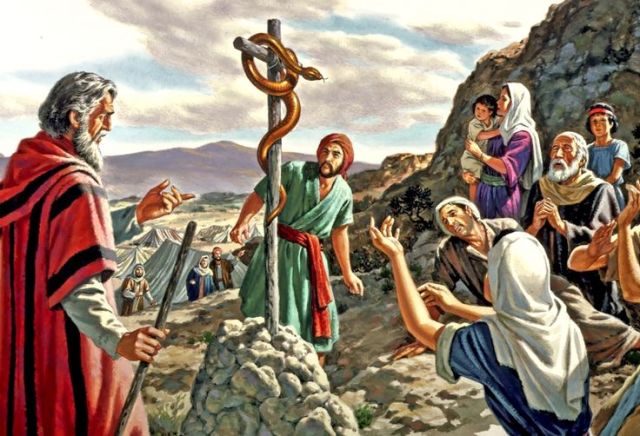
It had been forty years since the Hebrews left Egypt and their journey was fraught with discouragement, rebellion, murmuring and dissatisfaction with the way God had treated them. Aaron had died and because of Edom’s refusal to allow them passage through their land, the people had to detour around the country as they made their way to the Promised Land. After a victory over the Canaanite king of Arad, the soul of the people became very discouraged. They complained to Moses and against God for the past forty years of trial saying they had no food and no water. Their spirits were filled with despondency. Tired of the monotonous manna provided by God, the people were angry with the Lord and showed their displeasure. Although God had given them water to drink and food to eat including the manna and quail, the heart of the people rose up against the blessings of the Lord with unthankful spirits and voices of complaint. The land they traveled was a sparse and difficult land uninviting to all who traveled its borders. They forgot how God had cared for them in the worst of circumstances and was unsatisfied with the providential care of the Lord. Speaking against God and against Moses, they took their frustrations out on the Lord and His servant. As punishment for their rebellious hearts, the Lord sent serpents among the people, and they bit the people; and many of the people of Israel died. It did not take long for the people to realize their mistake and begged Moses to intervene to the Lord for mercy against the vipers. God could have simply destroyed all the snakes with a sweep of His hand but the Lord told Moses to make a fiery serpent and set it on a pole. If a person was bitten by a snake, they could look upon the bronze serpent crafted by Moses and their life would be spared. The man of God did as the Lord instructed and the plague of serpents ended.

The nation of Israel numbered close to two million people. Whenever the people camped in a certain place, each tribe had a specific area they were assigned to set up camp. The tabernacle was in the center of the encampment. Naphtali, Asher, and Dan were placed north of the tabernacle with Judah, Issachar, and Zebulun on the east and other tribes to the south and west. Moses had his tent on the east side of the tabernacle as well as the children of Aaron who kept charge of the sanctuary. If you were of the tribe of Judah it would not be difficult to find Moses and the bronze serpent because you were on the east side of the tabernacle. However, if you were bitten by a serpent and you belonged to the tribe of Ephraim, Manasseh or Benjamin, it would require you coming to the east side of camp to find Moses and the bronze serpent in order to live. If a person was bitten by a serpent they could sit in their tents and believe on the Lord and His power and ask God to bless them with His grace and die in their tent. God told Moses that salvation would only come to those who looked upon the bronze serpent. This required something more than faith but action. All the belief in the world could not save them and would not save them. The matter of faith had to be saving faith. Being cured of a snake bite does not come from a bronze serpent on a pole. The bronze does not save and the figure of a snake does not take away the poison. Someone could argue strongly the metal bronze had no power to heal and the image of a serpent would not bring saving power. What they failed to understand was the bronze serpent healed the affliction of the serpent’s bite because it was the word of God and His grace that brought life when a man looked upon the bronze serpent. Obedience to the word of the Lord would give life. Faith alone would not save. You see that faith was working together with their works, and by works, faith was made perfect when they looked upon the serpent.

During the ministry of Jesus, a man named Nicodemus came to Jesus at night to converse with the Lord about His work. In the discussion that followed, Jesus told the ruler of the Jews that like Moses lifted up the serpent in the wilderness, so the Son of Man would be lifted up. The death of Jesus on the cross was a figure of the saving power of God to the Jews in the wilderness when the deadly poison of serpents began killing the people. In an ironic parable of God’s wisdom, a serpent was chosen to save the people from death. It was a serpent that was used to bring sin into the world in the Garden of Eden and like the serpent lifted up in the days of Moses, Jesus would become the curse to cleanse men of the poison of sin. Faith alone in Jesus Christ will not save. A person can believe in Jesus and die in their sins because they have not obeyed the word of the Lord. The Bible never teaches salvation by faith alone. Like the serpent in the wilderness, men must come to the Lord and obey His word to find salvation. No matter where a man finds himself, he must come to the Lord and obey His word to enjoy the cleansing power of God’s grace. There are many who deny the purpose of baptism as salvation by works. If they were in the wilderness with Moses, they would also deny the purpose of a bronze serpent on a pole as salvation by works; and they would die in their tents because of their refusal to obey the word of the Lord. Is there something mystical about immersing in water that saves? No more than the bronze metal used to form the serpent but unless one looked upon the bronze serpent they would die. If a person refuses to accept the remission of sins in the waters of baptism they will die in their sins apart from the grace of God. Salvation came from a bronze serpent in the wilderness when men obeyed the word of the Lord. Today salvation comes from the blood of Jesus Christ found only in the waters of baptism with the washing of regeneration and renewing of the Holy Spirit. Jesus told Nicodemus this was how a man was born again.

Posted in Uncategorized | Leave a comment

Added To The Church

acts.2.47_lg

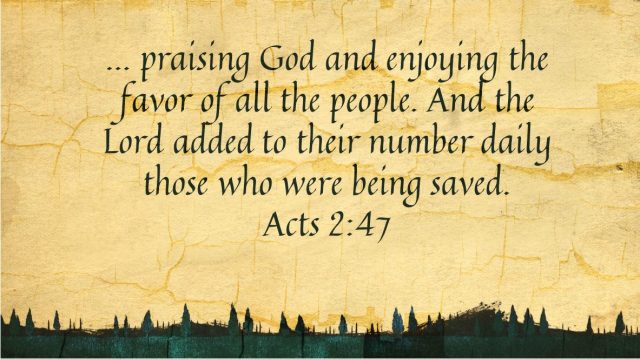
So continuing daily with one accord in the temple, and breaking bread from house to house, they ate their food with gladness and simplicity of heart, praising God and having favor with all the people. And the Lord added to the church daily those who were being saved. (Acts 2:46-47)

Added To The Church

The New Testament church had its beginning on the Day of Pentecost in fulfillment of the Old Testament prophets and the word of Christ before returning to the Father. It was an incredible time as the gospel of a crucified Savior was first preached and recipients of the saving blood of Christ became part of the eternal kingdom of God. Three thousand devout Jews accepted the invitation of the apostles to repent and be baptized for the remission of sins and to receive the blessings of the Holy Spirit in spiritual fellowship with the Divine. Luke records the events of those first days as the new converts to God’s new covenant began to explore the teachings of the apostles proclaiming a risen Christ and establishment of the Way known as the church of God’s elect. Hearing the message of how they had killed the Christ, those who were pricked in their hearts cried out to the apostles to know what to do to be saved. Peter tells them the word of the Lord and they responded with great gladness and joy. While men obeyed the word of the Lord on earth there was something very important occurring in the presence of God. The Lord was adding to the church all those who were being saved. This is a special connect when considered in the whole message. There was a need for men to find salvation in Jesus Christ and the apostles preached the message of grace to those gathered in Jerusalem. Not everyone responded to the sermon of Peter and many walked away without being moved by the message. Three thousand souls were impacted by what they heard and wanted to know how they could be forgiven. The first gospel sermon proved Jesus of Nazareth to be the Christ and Peter explained that to receive the remission of sins, those who wanted to be saved had to repent and change their lives in sorrow for killing the Son of God. This would then be followed by immersion in water for the remission of sins. There is no doubt how the Holy Spirit crafted the words of salvation showing without reservation that baptism is for the remission of sins and without immersion there can be no forgiveness of sins. Why would Peter give them a false answer when their eternal souls depended on it? If there was another way to be saved, how could the apostles require three thousand people to be immersed with no purpose in their baptism? Peter told them that salvation would be found in the waters of baptism and this was a promise to every generation.

If the scene of Pentecost was recreated today (and it is often repeated) and people asked what to do to be saved, what kind of answers would they receive? In most cases (nearly all) the answers would not be what Peter said two thousand years ago to three thousand desperate souls. They would be told to accept Christ as their personal Savior but that is not what Peter said. Multitudes are told that faith alone saves and yet that is not the answer Peter gave. As a matter of fact, throughout the book of Acts when the question is asked of what a man must do to be saved, there is never a case of conversion where a man is told to be saved by faith alone. Luke was a careful historian who did not leave out any facts or details as he was guided by the Holy Spirit. His book is a careful testimony of what the early disciples taught and his record of what happened on the Day of Pentecost cannot be challenged. Yet in the minds of most religious people who accept Jesus as the Son of God there is a strong denial of exactly what came out of Peter’s mouth: repent and be baptized for the remission of sins. A person can argue all day long that baptism does not save but at the end of the day what Peter said remains. Not only do the words of Peter stand as true now as they were then, but the New Testament also affirms time and time again the necessity of baptism. The early disciples never denied salvation by repentance, grace, mercy, love, faith, hope, blood and a host of matters given by God to save sinful man from His wrath. What is tragic is how the one thing that changes a person’s relationship with God is denied by almost the entire Christian world. Baptism has never stood alone as Peter did not tell the people on Pentecost to be baptized and that was all they needed to do. He told them to repent and to be baptized because they believed in the word of God because the grace of God has been shown through the writings of the prophets and the love of God expressed in the death of Jesus. Salvation includes the hope of God because Jesus has been raised from the dead. Three thousand people were saved at Pentecost because of the complete plan of God including all the things above culminating in an act of obedient faith in the waters of baptism. Without baptism, there would be no cleansing of sin.

Luke continues the story of those first days by showing how the first Christians enjoyed learning about this new covenant. One important point that he makes is what happens when a person repents and is immersed for the remission of their sins. Obedience to the gospel is where a person is added by God to the holy nation of the elect, the bride of Christ, His family of saved, the redeemed called saints and the church of Jesus Christ. The Lord added to the church daily those who were being saved suggesting the saved are in the church. Not only has baptism been delegated to an outward sign of an inward grace (without necessity), the church is viewed as a nonessential part of a Christian walk. If the church is not important then why is God adding the saved to something that has no meaning and that Jesus died for is worthless? According to the Holy Spirit, the saved are in the church and the only way the saved can be added to the church is when they repent and are baptized for the remission of their sins. If a person refuses to believe baptism saves them then they can never have their sins washed away and God will never add them to the church where the saved reside. Where are the saved? In the church. How is one added to the church? Repentance and immersion. Who does the adding? God does. Why does God add a person to the church? They through faith from the grace of God have obeyed the will of the Lord. To be in Christ is to be in the church. Salvation is in the church, not out of the church. If God does not add you, you are not saved. If you are outside the church, you are lost. If you refuse to do what Peter told the three thousand at Pentecost you will not be added by God to the church where the saved are.


Posted in Uncategorized | Leave a comment