Only A Shadow

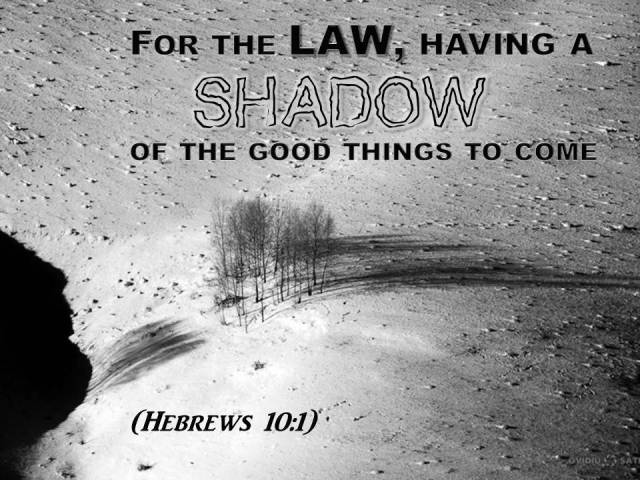
For the law, having a

For the law, having a shadow of the good things to come, and not the very image of the things, can never with these same sacrifices, which they offer continually year by year, make those who approach perfect. (Hebrews 10:1)

Only A Shadow

There is no book in the New Testament that more clearly defines the failings of the Law of Moses than Hebrews and its message of better things. The author skillfully crafts an argument of the imperfections of the Law against the perfections of the New Covenant established by the blood of Jesus Christ. No comparison can be made between the better sacrifices given in better hope through the blood of God’s Son rather than the offerings of bulls and goats. Jesus is of a greater priesthood as in the order of Melchizedek instead of the failed priesthood of Aaron. Nearing the end of his dissertation of the superiority of the law of Christ, the writer unfolds a secret about the revelation of the Old Testament. At the time of the writing of Hebrews, the Old Testament had been firmly established for many centuries containing the same books as found in the modern Bible (with a different organization). Jesus read from the same material and the early disciples taught a risen Christ from the text of the Old Testament. The old Law was written as a shadow of things that were coming in the time of Jesus Christ. A shadow is not something that is real but a figure of that which is real. The shadow of a glass of water will never give nourishment but the real glass filled with water will save a life. Hebrews opens the minds of the early Jewish Christians to understand the failure of going back to the Law would only take them to something created by God as only a shadow. The Old Law was not the real intention of the wisdom of God. Trying to keep the Law of Moses proved to be futile until Jesus came and lived a perfect life under its rule. The Gentiles proved they could not save themselves as a law to themselves. Salvation for the Jew and Gentile would only come through the blood of Jesus Christ. The best promises are found in the new covenant of Christ as the law was only a shadow of the good things to come in Jesus.

The Law of Moses was not the image of the final will of God. Paul explained in his letter to the churches of Galatia the Law of Moses was given because of sin or transgression. Without the Law of Moses being in place the Seed promise would not have been fulfilled and the world would have returned to the state of depravity as it was in the days of Noah. Everything in the Law of Moses was only a shadow of the real promises of God found in Christ. With all the thousands upon thousands of animals sacrificed under the Law, the perfection of the joy of heaven could never be complete until the coming of the Son of God. The Law could never make its subjects perfectly with the blood of bulls and goats. Moses constructed the Tabernacle as the shadow of what is found in the New Covenant in Christ. The Holy of Holies was a fearful place to be under the Law of Moses where only the High priest entered once a year for the atonement of the people. Jesus entered the Holy of Holies once and delivered men from the wrath of God. Now all the children of God can boldly enter into the Holiest to commune with the Father through the veil, that is, the flesh of Jesus. Throughout the teachings of the Law of Moses God shows His power and glory through the types and anti-types with shadows of the real. One of the clearest doctrines found in the book of Hebrews is the annulment and removal of the Law of Moses. As a shadow, the Law was not designed to remain and purposed to be taken out of the way through the death of Jesus. Embracing the Law of Moses in any form is to accept a shadow of a failed system done away by the will of God through His Son Jesus Christ.

A further study of the Old Testament will show many shadows of the real in the New Testament. The story of Noah and the flood is a wonderful story of the saving grace of God. When God told Abraham to offer his only son as a sacrifice in the land of Moriah it would find its fulfillment in the death of God’s only Son in the same land. Mount Sinai would prefigure the image of the mountain called Zion and the heavenly Jerusalem with Jesus the Mediator of the new covenant. Moses would lift up the brazen serpent in the wilderness to heal the people from the serpent’s sting and Jesus would declare to Nicodemus many centuries later how the Son of God would be lifted up that whoever believes in Him should not perish but have eternal life. Jonah’s refusal to obey the voice of God brought the wrath of the Divine upon him and was swallowed by a giant fish where he remained three days and nights. This would be the shadow of the death and resurrection of Jesus Christ in the burial of the tomb. Naaman the commander of the army of Syria would find relief from the disease of leprosy in the waters of the Jordan in a like figure where baptism removes the disease of sin. Stories upon stories fill the Old Testament testifying as shadows of the better things to come in Jesus Christ. All that is found in the story of the Christ is the real message of hope and truth for no man will come to the Father but through the blood of Jesus Christ. He is the real, the true and the perfect.

Posted in Uncategorized | Leave a comment

The Incredible Faith Of The Joppa Church

faith incredible

At Joppa there was a certain disciple named Tabitha, which is translated, Dorcas. This woman was full of good works and charitable deeds which she did. But it happened in those days that she became sick and died. When they had washed her, they laid her in an upper room. And since Lydda was near Joppa, and the disciples had heard that Peter was there, they sent two men to him, imploring him not to delay in coming to them. (Acts 9:36-38)

The Incredible Faith Of The Joppa Church

Following the conversion of Saul of Tarsus, the early church enjoyed a period of peace and tranquility as the number of disciples was multiplied and the work of preaching the good news of Christ was spread throughout the regions of Judea, Galilee, and Samaria. The apostle Peter went through all parts of the country preaching and showing the power of God through miracles. Arriving at Lydda, Peter healed Aeneas, who had been bedridden eight years and was paralyzed. Many turned to the Lord as evidence of the power of God was affirmed by the working of the Holy Spirit. About ten miles away in the town of Joppa, a group of saints was quietly doing the work of the Lord with benevolent hearts and sincere spirits in the New Testament pattern of the kingdom of Christ. One of their members was a woman named Dorcas who used her talents as a seamstress to make tunics and garments for those in need. She was not one who made a big splash on the canvas of church work like preaching, teaching or refuting the opponents of Christ but in her small, unobtrusive manner went about the work of doing what she could do to help others. The work of this saintly woman had a marked influence on many people. For unknown reasons she became ill and died. The church was heartbroken to lose such a wonderful disciple and mourned her passing. Then something remarkable happened among the flock at Joppa. They had heard the apostle Peter was a few miles away in Lydda and no doubt had heard how he healed Aeneas. A germ of hope rose in the hearts of the saints when the decision was made to send a messenger to Lydda and ask for the apostle to come to Joppa. What they would ask Peter to do was beyond impossible. Healing a man from eight-year bondage was a powerful testimony of God’s work and they would now ask Peter to go a step further: raise their dear sister from the dead. Two men were dispatched to Lydda seeking the apostle Peter to come to Joppa without delay.

Peter did not delay and came to the upper room where Dorcas had been placed. The breath of life had returned to God who gave it and when Peter came into the room, Dorcas was clearly dead. Many stood around their departed sister showing the tunics and garments she had made with tears flowing from grief. Putting all the people outside the room, the apostle knelt down and prayed to the Father to grant mercy on the life of this disciple who he called in the Hebrew, “Tabitha.” Turning to the body, Peter said, “Tabitha, arise” and she opened her eyes and sat up. God returned the spirit of life to the body of this godly saint and showed His glory to all those in Joppa and the surrounding country. How joyous for the church in Joppa to see again the sparkling eyes of their dear sister Dorcas as she was alive again. Many believed in the Lord because of the miracle of Peter raising Dorcas from the dead. But there was a greater miracle that took place before Peter arrived. The saints in Joppa believed that with God all things were possible including the hope of raising someone from the dead. There were many people that died during this time and Luke does not account for every miracle that was performed. What sets this story apart is not so much what happened to Dorcas but the cause of her life being restored. The church in Joppa was unified with a common cause of the power of God to do the impossible. Dorcas did not raise herself from the dead. Peter did not happen along through the town of Joppa and hears of Dorcas dying. The reason this saint of God was brought back to life was that the saints in the church at Joppa were filled with life and hope. They acted in great faith to bring a man to raise Dorcas from the dead.

The faith of the early church is an extraordinary example of what the church of Christ can do when united with a common purpose and a common goal. Nothing was too hard for the disciples in Joppa. They were filled with a caring heart that helped others. Dorcas was a wonderful example of someone doing all she could do in the manner that she could do her best for the Lord. Who is to know the untold tunics she crafted or the numerous garments she made for so many in the city of Joppa. “Made by Dorcas” was stamped on garments of those who lived in Joppa as she was known as a godly woman exemplifying the beauty of Christ in her life in her way. The people in Joppa knew who Dorcas was because of her faith. When she died she left a vacuum that grieved the souls of the saints because of her charity. Who was the first to suggest the saints send for Peter? Where did the idea come that such a great miracle could take place? Why would Peter travel ten or twelve miles to heal a woman he never met? What if someone in the crowd doubted and crushed the suggestion? The result would have been a great miracle would not have happened and many would not have believed in the Lord. There is much work for the church to do in this modern age and the spirit of the Joppa church needs to fill the hearts of God’s people. The church needs to carry out its work in sharing the gospel of Christ in example, deeds, actions, words, and efforts to teach the lost. Great faith is required to believe in the impossible. There are too many nay-sayers who will crush the hope of enthusiasm to do the impossible. What the church needs now are hearts that will meet the day with the same vigor and faith of the Joppa church and believe in the power of God to raise the dead. Not literally for those days are past but to raise dead hearts who need Jesus Christ and dying hearts in the church who no longer believe in the power of God to save the lost. Let’s all send to Lydda and ask Peter to come and show us the way to the greatest miracle of all: a lost soul saved in the blood of Jesus.

Posted in Uncategorized | Leave a comment

The Lord God Never Fails

Zeph 35 He never fails

The Lord is righteous in her midst, He will do no unrighteousness. Every morning He brings His justice to light; He never fails, but the unjust knows no shame. (Zephaniah 3:5)

The Lord God Never Fails

There is no comparison between man and God and the divide becomes more apparent when the character of God is considered. While the Bible is filled with the attributes of the Divine, the prophet Zephaniah declares four essential qualities of the Lord God that define His dealing with those who would disobey Him. The judgment of God is not like the judgment of men. Everything He does is righteous or based on the purity of truth. It is impossible for the Lord to do anything unrighteous or that any act of God is without cause and purpose. Every day shows the fidelity of God’s word that is measured by absolute righteousness because the Lord never fails. Zephaniah’s final point is the entirety of how different man is from his Creator. Man fails often and history is filled with the valley of bones where man has failed time and time again. It is impossible for a man not to fail. The free will choice given to him in the garden takes him to fall prey to the wiles of the devil and while the spirit is willing the flesh is weak. It is without measure how often man fails. God can do no unrighteousness and He can never fail. When the scripture says the Lord can never fail it means that in the history of man; for however many thousands of years men have walked the face of the earth; the Creator has never failed in anything He set His mind to do and accomplish. Foremost because He does not do right things but rather He is the meaning of everything true and righteous. Secondly, when men try to thwart the plan of God the Lord weaves the misguiding’s of men into a greater plan according to His will. All things work together for the good of the righteousness of God without fail because the Lord God never fails.

The creation of the world was in perfect harmony with the will of God. He created the earth, sun, moon, and stars in a perfect symmetry of universal perfection which has remained constant since the day it was created. Consider the knowledge the moon that men gaze upon tonight is the exact same moon first beheld by Adam and Eve. The moon is on average 238,855 miles from earth and has remained in the same orbit since God formed it on the fourth day of creation. It has never failed to rotate around the earth. The sun has never failed to illuminate the surface of the world and the distance of the sun is imperative to the survival of humanity. With an average distance of 92,955,807 miles, the sun keeps a constant distance from the earth so not to burn it up (being too close) or too far (putting the earth in deep freeze) because God never fails in what He creates. The human body is an amazing testimony to the word of the Lord. Adam and Eve are the only two humans created apart from the natural process of birth. Cain was the first child in the womb of Eve and he came out in perfect order as God designed. Many eons removed from that first birth, humanity populates in the same perfection of the conception between a man and woman that brings forth life by the will of God. The heart beats without stopping for many, many years and then as the divine pattern determines, death comes to all men. This is not failure but design. The body functions in every way until the day of death. God’s pattern does not fail and the world is a testimony to the perfection of the will of the Lord. If a man can see the unfailing power of God in the world, why can he not see the unfailing power of the word of God? Everything God has said has come true and nothing of the will of the Lord has failed.

In the Garden of Eden, the Creator promised salvation to fallen man and He kept His word when He so loved the world He gave His only begotten Son. When the world became dark with sin the Lord told Noah what to do to be saved and brought judgment upon those who did not believe in Him. His word was true as Noah obeyed from the heart and those who rejected the preaching of Noah perished in the flood. Nothing God did or said failed. Zephaniah was reminding rebellious Judah their history dictated the firm conviction of God’s word as unfailing and true. He never failed them but they rejected Him often. His grace offered redemption if they repented and He was true to His word. Israel failed to accept His mercy and perished because of it but the fault lay in the heart of the people, not the word of the Lord. This lesson must be learned today that nothing God has said has failed. There is a good side to this message and a bad side. Everything the Lord has promised in salvation is true if men would repent and obey His word. The wrath of God is true and He will not fail to bring to bear His fury upon those who do not repent and obey Him. Regardless, the Lord never fails. Do not fail the One who will not fail you. God is not willing that any should perish but longs for those who are in sin to come to Him and seek mercy. As a God who never fails He has promised to wash away sins in the waters of baptism to raise up His new child in a covenant with the One who never fails.

Posted in Uncategorized | Leave a comment

Mocking Jesus

hell fire image

Then the soldiers of the governor took Jesus into the Praetorium and gathered the whole garrison around Him. And they stripped Him and put a scarlet robe on Him. When they had twisted a crown of thorns, they put it on His head, and a reed in His right hand. And they bowed the knee before Him and mocked Him, saying, “Hail, King of the Jews!” Then they spat on Him, and took the reed and struck Him on the head. And when they had mocked Him, they took the robe off Him, put His own clothes on Him, and led Him away to be crucified. (Matthew 27:27-31)

Mocking Jesus

It seems incredulous the Divine would allow the carnal to strip Him of His clothing, place a crown of thorns upon His head and spend hours mocking and laughing with acid derision and He not invite the hosts of angels from the hand of the Almighty to destroy them all. When the garrison of the Roman army’s elite saw an opportunity to take a puny looking man who claimed to be a king and treat him with vile contempt, mockery and abuse him by spitting in his face, slapping him and beating on him with a stick with great laughter they lavished all the contempt of a seasoned warrior would inflict on his enemy. These were men who were accustomed to the rigors of hardship. Their training was to kill other men and they were very efficient at their murderous task. Whenever a criminal was condemned to crucifixion, the garrison of soldiers was first tasked to scourge the victim to a near-death state before releasing him for the final journey to be crucified. No one would escape the clutches of these ruthless killers. Torture was their weapon of choice as their pitiless victim could do nothing to fight back or to escape. A garrison of soldiers could number as high as six hundred men trained in the art of war. Once condemned, the helpless object would endure harsh torture before the agony of the cross. The garrison of Romans soldiers had Jesus of Nazareth in their clutches and they poured all their fury and wrath upon Him because He claimed to be a king. And Jesus remained silent in the face of His accusers. He could have called twelve legions of the heavenly hosts to His bidding but the call was never made. How anxious the angels must have been to hear the word from the Father to go and save the Son. Jesus suffered at the hands of men and no voice in heaven was heard to stop it.

hen the Romans had Jesus in the Praetorium, they could only see a man who was powerless. Mocking him was an easy thing to do because they had control of the man from Nazareth and could do as they wished. There would be no punishment for their treatment of Jesus because it was allowed under the harsh rule of the Romans. These soldiers represented the power of the Roman government to execute swift judgment on those who would dare oppose them. No one was there to plead the case for the convicted man and no armies would swoop down from heaven to save the Son of God. The power and might of the Roman army did its best as it mocked, scourged, abused and killed the only begotten Son of God. Jesus was crucified and for many in the city of Jerusalem and throughout the Roman Empire was forgotten as another victim of Roman law. Slowly the garrison of men who mocked Jesus began to die. Some may have died in battle, others from circumstances of nature or abuse from other men. Regardless, over a short period of time all those gathered in the Praetorium met their deaths as happens to all men. It was then the shocking truth of what they had done became crystal clear. These men knew what Jesus looked like and to their horror, they now saw the one they mocked in the glow of eternal light. There would be no mocking, no beating, no spitting and no joy in their eyes. The man they beat on and treated with contempt was now the most powerful being they had ever seen in their short lives. And there was no escape. For all their laughter and derision of Jesus on earth, words escaped them for the horror they faced in eternal damnation. A once proud and arrogant warrior stood before the King of Kings and Lord of Lords and trembled with every ounce of his being. Jesus would not mock these pitiful men as they stood in the judgment of His grace. His heart was grieved for the tragedy of sin and the consequence that lead most men to deny Him and mock His name who must now face the wrath of the Father. Righteousness demanded a just reward. Judgment is passed. Souls are lost.

Two thousand years ago a garrison of Roman soldiers gathered around a man viewed from their eyes as a pitiful and worthless man. They mocked him with great satisfaction. Tired of their sport, they put His clothes on Him and took Him to Golgotha where they nailed Him to a tree. He was nothing more than a common criminal to these men who regarded Him with little notice. Myriads of souls continue to mock Jesus today as an ineffective, weak and powerless story of a man more of myth and legend than fact. The Son of God is not visible on earth as He was before the garrison of Roman soldiers but in our day His presence is denied by most people, His message ridiculed by the majority of humanity and the acceptance of a righteous judgment laughed at. There is little belief in the reality of Jesus. He is mocked as a superfluous story of man’s imagination created to fill a need for a god-figure. The Bible is discarded as a book of fables and the Creator of the universe is fiercely attacked as useless, worthless and laughable. Mocking Jesus did not end with the Romans soldiers killing Jesus on a cross. His mocking continued throughout the centuries and is in full force in the modern world of hedonism, sensuality, debauchery, humanism and man’s obsession with self-gratification as his own god. Religion has changed the image of the Son of God to fit their pleasures of dogmas, creeds and false doctrines to choose the church of their choice. Mocking Jesus did not end at the cross. It continues today by souls who – like the Roman soldiers – believe they are their own god. Like the soldiers who mocked Jesus, all those who mock Him today will die and stand face to face with the real Jesus. There will be no escape and no quarter given. Judgment will be final and eternal. If there is one reality that is assured it is the knowledge that all those who are cast into the lake of fire will never mock Jesus again.

Posted in Uncategorized | Leave a comment

David Fought For A Cause

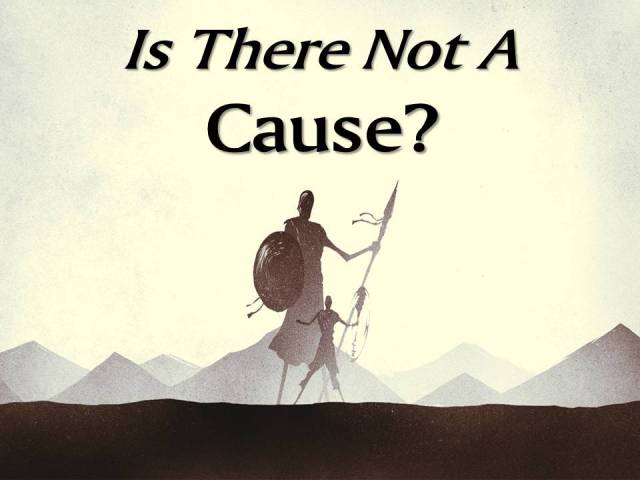
Is There Not A Cause

Philistine, that he should defy the armies of the living God?” And the people answered him in this manner, saying, “So shall it be done for the man who kills him.” Now Eliab his oldest brother heard when he spoke to the men; and Eliab’s anger was aroused against David, and he said, “Why did you come down here? And with whom have you left those few sheep in the wilderness? I know your pride and the insolence of your heart, for you have come down to see the battle.” And David said, “What have I done now? Is there not a cause?” (1 Samuel 17:26-29)

David Fought For A Cause

When the Philistines gathered their armies together to battle against Saul and the men of Israel, a great champion named Goliath went out from the camp of the Philistines calling for a champion from Israel to fight him. Goliath was a giant of a man standing over nine feet tall wearing a coat of mail weighing 125 pounds. He was a terrifying image of battle-hardened killing machine few men if any could fight against. For forty days, every morning and evening, the Philistine champion strutted in front of the Israelite army. Dwelling in Bethlehem of Judah was a man named Jesse who had eight sons. Three of his sons were part of King Saul’s army that stood against the Philistines. His youngest son David tended the sheep and took provisions to his brothers. Early one morning, David took the provisions of roasted grain, ten loaves of bread and ten cuts of cheese for his brothers and the captain of the thousand. As he talked with his brothers, Goliath stood before the army of Israel and challenged the fearful men who fled before him. The champion of the Philistines had put great fear in the hearts of the army including Saul. There was a reward offered to any man who would fight the giant including great riches, the hand of King Saul’s daughter and exempt the warrior’s father from taxes in Israel but no one would fight Goliath. None of these things impressed the young shepherd who wanted to know who was going to kill the man who defied the army of God and brought reproach upon the nation of Israel. David had no interest in the carnal rewards of killing a man who stood against the army of Israel. He wanted to know who would stop the uncircumcised from his defiance of the true and living God. No one answered. David’s older brother, Eliab, chastised his younger brother for being prideful and was angry against him. What Eliab could not see and the army of Israel failed to understand was there was a cause standing before larger than the nine-foot giant called Goliath.

David saw immediately the problem and sought to set things in order. For forty days Goliath had defied and defiled that army of Jehovah God and out of fear no man moved near to fight the champion. Saul was struck with dread and fear and became a weak leader. The only one who understood the cause of the Lord was the young shepherd boy who walked into the valley of Elah to stand before the giant. King Saul recognized the youth of David was no match for a hardened warrior like Goliath but the king was looking on the outside. Somewhere along the way Saul had lost his faith in the power of God who delivered Israel from bondage by His mighty hand, brought the people through the Red Sea and conquered all armies that stood before them. Canaan was overrun through the power of God to defeat all enemies and if Saul would have trusted in the will of the Lord, Goliath would have been dead long ago. It took a young boy from Bethlehem to show the army of God there was something to fight for. The reward was not the cause. What David saw was the vindication of righteousness against a force that dared stand against the army of God. No army in the world could defeat the nation of Israel because God was their king, their warrior, and their deliverer. Looking at the giant Goliath brought fear to the hearts of the mighty warriors but David saw Goliath for what he was. The champion of the Philistines was not so huge he was unable to be defeated; David saw the giant for what he really was: an incredibly large target that could not be missed. No matter the size or disposition of Goliath, the Lord God was larger, more powerful and His will would be done. Reassured, David stood before the giant and defeated him with a stone from the brook. God won a great victory that day because David fought for a cause.

The church of Christ stands in the valley of Elah being opposed with the giants of worldliness, sensuality, religious error, false doctrine, apathy and a host of Goliaths that paralyze the hearts of the faithful to do nothing. What made the story of the Philistines and Israel tragic was it made the people of God do nothing and that is where they met their defeat. From its beginning, the church has faced persecution. What defined the New Testament church is they did not stand idly by and shrink back in fear. Luke describes how the people of God were scattered abroad preaching the word during the persecution of Saul of Tarsus. This pattern of courage is necessary for the church to thrive in a world filled with a disregard for Biblical authority, lack of respect for righteousness and a denial of the one true God. Accepting the carnal appetites of the world makes the church more like the Philistines instead of the nation of God’s people. Allowing the entertainment philosophy of modern religion to guide the decisions of the local church will only prevent the purpose of the church. David understood there was a cause and he fought for the cause. The church must awaken to remind itself of its cause and that cause is Christ crucified. Anything less than the gospel of Jesus Christ denies the purpose of the death of God’s Son. Denominationalism must be opposed, rank denial of clear Biblical teachings on adultery, fornication, homosexuality, marriage, and divorce must be defined by truth and the social gospels of immodesty, drinking and carnality must be stood against if the church is to survive. Eliab and others became ineffective through fear and allowed Goliath to oppose the army of God. David had the courage to walk into the valley and defy the enemy of the Lord. Victory can only be found when the church has the courage to remember the cause and to take the actions to purpose the cause in the local work. As soldiers of Christ, the church is a battle-ready army not standing but fighting for the banner of truth and cause of righteousness – no matter the cost.

Posted in Uncategorized | Leave a comment

New Testament House Church

MAYDELL NOV 02 PIC 5

Greet the brethren who are in Laodicea, and Nymphas and the church that is in his house. (Colossians 4:15)

New Testament House Church

When the New Testament church began on Pentecost, three thousand devout Jews believed Jesus was the Christ and were baptized for the remission of their sins. Luke writes how God added the saved to the church and that later that great fear came upon the church following the sudden death of Ananias and Sapphira. When Saul of Tarsus began his persecution of the followers of Christ, he sought to harass the church which was at Jerusalem making havoc of the church. There are few references to how the church organized itself with three thousand initial members of the saved and whether the multitudes baptized on Pentecost remained in Jerusalem. The church is identified in Jerusalem and then found in Judea, Samaria and as far as Antioch. As the development of the church continued churches were established throughout the Roman Empire through the work of men like Peter and Paul. The canon of scripture began to be formed establishing the organization and structure of the church especially in the writings of the now apostle Paul (formerly Saul of Tarsus). From these writings a glimpse of New Testament church work is formed to show that God intended the early disciples to assemble together each first day of the week for fellowship in the communion of remembrance of the Lord’s Supper and to engage in the preaching, teaching, and admonition of the word of God. Paul went through the churches ordaining elders in every church showing a divine pattern of leadership of men who would shepherd the flock among them. The epistles to the Romans, the church of God at Corinth, saints in Ephesus, Philippi, Colosse and the churches of Galatia establish the divine pattern of churches in every place following the pattern of New Testament teaching given through the Holy Spirit. Jesus promised in the gospels that He would build His church, Luke writes about the beginning and propagation of the church purchased with the blood of Christ and men like Paul, Peter, James, and John outline the pattern of the church in their epistles. All came to the same conclusion the church is an organized body that assembled in one place for the purpose of worship and exhortation.

There is one part of the early church that is only hinted at but obvious in its conclusion. Where did all the saints meet? Luke does not say where the three thousand on Pentecost gathered together and it is unlikely all stayed in Jerusalem. The church did exist in Jerusalem for many years and a short time after Pentecost the number of men came to be about five thousand. Paul sheds light on the logistics of the early church when he mentions in his letter to Colosse the church found in the house of Nymphas. He also referred to the home of Priscilla and Aquila as the meeting place of the church (letter to Romans and to Corinth) and the church in the home of Philemon. When the church met in the homes of the saints they gathered together as the people of God for the purpose of worship following the divine pattern given by the Holy Spirit. The reason the early church met in homes is the early Christians could not erect public buildings for the sole purpose of assembly. This would especially be true under persecution. Through every century the people of God found ways to gather together as the local church to carry out the work of sharing the good news of Jesus Christ. The place of the assembly was expedient to carry out the command and varied from buildings, caves, open fields, under trees and wherever the faithful could gather to fulfill the divine pattern of the New Testament church. Meeting in homes is a pragmatic way if large enough to accommodate the number of the assembly but does not detract from the pattern of gathering together as a local body of believers.

John saw in the Revelation seven churches in the cities of Ephesus, Smyrna, Pergamos, Thyatira, Sardis, Philadelphia, and Laodicea. These were churches organized in the pattern of the teachings of New Testament. The church at Ephesus had elders who were exhorted by Paul to feed the flock among them and to serve as overseers of the church. This would be accomplished whether the church met in an assembly hall or in the home of a saint. Wherever they met they gathered together in one place to fulfill the commands of the Lord. Paul reminded the church at Corinth that when they came together to partake of the Lord’s Supper they were to have a proper attitude showing the pattern of coming together. The apostle affirms the command to come together as a local body of saints under the leadership of spiritual leaders. Singing together as the church can only be done when the saints assemble as one. To be exhorted by prayers, teaching and preaching are found in the local assembly. The conclusion is that while the church can meet in many disciplines of location the command to gather as one as the local body of Christ is without question. There can be some confusion by some that local assembly is not necessary and that a modern view of the church at home is a function of the early church. Indeed, worship in the home is necessary but when members forsake the assembly of the saints they fail to follow the divine command of how the early church was organized. Elders cannot shepherd members who refuse to submit themselves to the oversight ordained by the Holy Spirit. The Lord’s Supper is a communal activity of saints that gather together instead of a single act of an individual. Early Christians met in homes out of necessity as many churches today are found in apartments, homes, rented buildings and yes, beneath the canopy of a tree. The place is incidental. Assembly as a body of people is commanded.

Posted in Uncategorized | Leave a comment

Despising The Worship Of The Lord Of Hosts

Worship Letterpress

A son honors his father and a servant his master. “If then I am the Father, where is My honor? And if I am a Master, where is My reverence?” says the Lord of hosts to you priests who despise My name. Yet you say, “In what way have we despised Your name?” (Malachi 1:6)

Despising The Worship Of The Lord Of Hosts

The prophet Malachi had a formidable task before him as he surveyed the worship of the people of God. Written after the second temple was built following the captivity of Israel, the warning of religious laxity is clearly presented in a time that while worship was restored to the land the heart of the people was anything but respectful toward God. Their offerings were insolent to the character, holiness, and reverence due the Lord of hosts. They went through the motions of worship and brought offerings for sacrifice but not with a whole heart and not with a spirit of reverence for the favor of the Lord. The charge made against Israel was the people had more respect for the fathers and governors than God. When a sacrifice was brought to the temple it was the lame and sick among the animals that were presented and sometimes the sacrifice had been stolen. The evil of Jewish worship was the careless manner of coming before the Creator of the world as if He were a common man to present broken sacrifices from darkened hearts tainted by the false love of their Savior and King. Sacrifice was defiled by their actions and their hearts. Respect was token when worshiping the Lord although this kind of behavior would never be done before kings and governors. Malachi charges the people with gross dishonor by treating the worship as a carnal time for self-importance. The name of God is treated with contempt and He will have none of it. God looks down upon the worship of Israel and pleads with someone to shut the doors so the priests would not put worthless sacrifices on the altar. The Lord is not pleased with the attitudes of those who come before Him in vain and trifled worship. As a result of the indolence of the people, the name of the Lord is being profaned among the nations and viewed as no different as the gods of idolatry.

From the beginning of the world when Cain and Abel offered sacrifices to the Creator, respect and honor have been required for the worship of man to his Lord and Master. Throughout holy writ men have trifled with the worship of God and found His wrath instead. Nadab and Abihu, sons of the High Priest Aaron, met their death when they dishonored the worship of God. Uzzah was struck dead because he failed to keep the word of the Lord. Israel had returned from the captivity by the grace of God and while the second temple restored the worship to the land of Israel, the heart of the people cared very little for devotional worship. They had more respect for other men than God. Their worship was heartless and without meaning. Malachi delivered a message of divine anger to those who did not respect the worship of the Lord of hosts and warns the worshipers in the New Testament church of the same wrath against those who would see church worship as a time of dishonor. The apostle Paul spent a lot of time trying to correct the problems in the church at Corinth for their disrespect for true worship. They had fallen into the same trap of the Jews in Malachi’s day by coming to worship and having a fun time, a place to enjoy frivolity, offering worship that was broken with the attitudes of recreation and play. There was no reverence. Respect was not given to the holy character of God. The services had become a circus of amusement and sideshows. God’s word was not lifted in honor. His name was not lifted in reverence and respect. Worship was anything but worship.

There is a constant danger in the church of Christ to allow a frivolous and profane attitude of worship to prevail in the hearts of God’s people. Church services become a time of weariness by those who are shallow in their understanding of the word of God. Lacking depth for divine perception, worship becomes a time of superficiality where the focus is more on the man than upon the holy character of the Lord of hosts. The reverence due to the Lord is not felt by the masses who assemble to be entertained and have their ears tickled with the fancies of carnality. Worship must be done in spirit and truth according to the Son of God. Anything short of this is vain worship and God abhors vain worship. Sneering at the pattern of divine worship will engage the wrath of the one who sent His Son to die for the sins of men. Without a proper view of acceptable worship, the offerings will become profane and useless. Malachi’s message sought to turn the hearts of the returning Jews to a true pattern of worship. His book is found as the final testimony before the famine of divine revelation begins but must be read as the first book to open up the portals of true worship in the eyes of the Lord of hosts. This day is the first day of the week and a time to respect, honor and revere the name of God. What is done in the assembly of the saints will determine the honor given the Lord of hosts whether His name will be great among the nations or defiled by the disrespect of its worshipers. “For I am a great King,” says the Lord of hosts, “And My name is to be feared among the nations.”

Posted in Uncategorized | 1 Comment

The Tupperware Wife

tupperware

Husbands, likewise, dwell with them with understanding, giving honor to the wife, as to the weaker vessel, and as being heirs together of the grace of life, that your prayers may not be hindered. (1 Peter 3:7)

The Tupperware Wife

In many homes, there is a special place that is sacred as a place for prized and valued possessions called the china cabinet. This piece of furniture is often itself a valuable piece of furniture handed down from generation to generation. In general a china cabinet is different from a curio cabinet by its construction and purpose. A china cabinet displays specialty dinnerware and crystal while a curio cabinet can be purposed for many different kinds of displays of things valuable to the owner. The idea behind the cabinets is to allow guarded storage of valuable items and is normally not intended for daily use. In the kitchen cabinets are everyday dishes and glassware that is not as prized as what is found in a china cabinet. Children learn early that breaking one of the regular dishes is met with disappointment but to break something from the china cabinet is an incredible loss with a higher level of distress than any other kind of dish. A distinction is made from the items of the china cabinet and those utensils for common everyday use. In 1942 Earl Tupper introduced the world to an unbreakable plastic bell-shaped container that would become known for generations as Tupperware. It revolutionized the home and would become a staple of modern kitchens. One of the things seldom seen in any home is a Tupperware cabinet and it would be very doubtful that Tupperware would be kept in a china cabinet. China dishware is a very delicate and costly material made various materials that create fine china, bone china, and porcelain. Tupperware is plastic and is nearly unbreakable and does not have the value of fine china.

Whether the apostle Peter had Tupperware in mind when he exhorted the husbands to honor their wives is not clear but the point of his admonition was very clear: husbands are to treat their wives as individuals of great worth. Giving honor unto the wife shows the respect due to her character as created by God when Eve was brought to man. Adam and Eve formed a union of love for one another as the Lord intended for each to show their respect for His divine pattern. Sin destroyed that union as the woman would be subjected to the man but this does not allow the husband to dishonor his wife. As the spiritual leader of the home, the husband must show the path of righteousness to his wife as treating her with the nobility of fine china, not Tupperware. A wife that is viewed as nothing more than a common, undesirable and necessary part of a marriage will not be elevated to be the place expected by God. She is not Tupperware but a prized possession that should be shown love, nourishment, cherishing and the example of Christ as head of the church. Paul wrote to the Ephesians to love their wives as Christ loved the church. It is clear the Lord did not view the church as a piece of common plastic but something so valuable and so highly prized that He gave His life for the church. Husbands are to dwell with their wives with understanding and to present their wives to the world as the beautiful creation of the finest of creations crafted by the hand of God. The woman is the weaker vessel not in mental abilities but the preciousness of her character in the home. Her place in the home should be honored by the man as fitting the delicate nature of her calling by the Lord. Husbands who love their wives as their own bodies will cherish their wives as vessels of honor.

There are too many Tupperware wives who are not honored by their husbands. It may be fair to say there are as many wives who want to be Tupperware wives and demand their rights in the home as leaders but this is not the pattern established by God. There is much for the woman to do in the home in her role of the spiritual fortitude of the husband and the children but her role remains in subjection to the man with chaste conduct accompanied by fear. Her beauty is not the outward adorning of the hair with gold or putting on fine apparel but the hidden person of the heart, with the incorruptible beauty of a gentle and quiet spirit. When God looks down into the home, He wants to see the wife as a person treated like the finest china and not as a common dish of Tupperware. What is precious in the sight of the Lord is a wife who is refined with the godly character of righteousness. When the husband and wife come before the throne of God their prayers are not hindered. The prayers of the husband are tempered by his treatment of the wife as he dwells with her in understanding, giving honor to his wife as to the incredible worth and value she is to him and the godly home she creates. God will bless their home as He blesses their prayers for the wife is not treated like Tupperware but the finest of china.

Posted in Uncategorized | 1 Comment

What We Did To Jesus

Sin

For He shall grow up before Him as a tender plant, and as a root out of dry ground. He has no form or comeliness; and when we see Him, there is no beauty that we should desire Him. He is despised and rejected by men, a Man of sorrows and acquainted with grief. And we hid, as it were, our faces from Him; He was despised, and we did not esteem Him. Surely He has borne our griefs and carried our sorrows; yet we esteemed Him stricken, smitten by God, and afflicted. But He was wounded for our transgressions, He was bruised for our iniquities; the chastisement for our peace was upon Him, and by His stripes we are healed. All we like sheep have gone astray; we have turned, every one, to his own way; and the Lord has laid on Him the iniquity of us all. (Isaiah 53:2-6)

What We Did To Jesus

God sent His only begotten Son to the world they created to give His Son a ransom for the price of redemption. Only through the suffering of Christ would man find hope from the wrath of God. All the blood of animals would not take away the stain of rebellion from sin and reconcile the heart of man with God. The measure of sin demanded the greatest sacrifice in the greatest manner of suffering known to man. It would not be a miracle that would save man or an easy path to cleanse the stain of sin from the world. Jesus would suffer like no other because He was God, sinless, perfect and innocent and death was the final price He had to pay on the cross. It was the will of the Father Jesus die and He fulfilled with word of prophecy to become the slain lamb but it is imperative that all men know the reason Jesus died: personal accountability of every man. Isaiah declares the suffering Savior as one who was despised, rejected, smitten by God and afflicted, wounded, bruised and by stripes carried out the will of God but the reason was because of what I have done to Jesus. The event of His death took place two thousand years ago and all men that now live bear the shame and reproach of the guilt for what was done to the Son of God. He bore my grief from the darkness of my sin. Jesus carried my sorrows because I inflicted the ravaging pain of rejection. The Lord was stricken from the plague of my sin. My transgressions wounded Him, all my iniquities bruised Him and the chastisement of my peace was upon Him. Jesus was scourged by the Romans who served my guilt as if I was the one who held the whip in my hand. It is easy to blame the soldiers long ago for what happened to Jesus and to place all blame upon the Jews for rejecting Jesus until one realizes that every man had a hand in the death of Jesus. I killed Jesus.

Isaiah says that we all turned to our own way. What Adam and Eve did in the garden was to choose their own desires above the will of God. Sin is always an expression of self-worth and pride to be our own gods to determine what is right and wrong. John defined sin as the transgression of the law of God. Jesus died as a sacrifice for my rebellion to the word of God. No man has lived without sin save Jesus Christ making all men accountable for the death of Jesus. What Isaiah describes is what I have done to the Son of God as if I were present at the death of Jesus. I must take responsibility for the actions that I have done that brought about the death of Jesus in a manner that is personally accountable so that I can see how large the gift was given by God. Until I realize what I have done to Jesus that caused His death it will be difficult to understand the unfathomable grace of a loving Father. The early church fulfilled the instructions of Jesus to remember the sacrifice of Jesus each first day of the week as a memorial and reminder of who killed Jesus. Thinking about the Lord’s Supper is a proper time to reflect upon why Jesus died – MY SIN. Partaking of the bread and the fruit of the vine is more than eating a little crust and sipping some juice. It becomes personal accountability for the reason the Son of God died on a cross. My sins put Him there and His love kept Jesus on the cross. The Father has laid on Jesus the iniquity of us all. Me and my sins and you and your sins.

Jesus poured out His soul unto death and was numbered with the transgressors. He bore the sin of many but He bore my sins especially and He made intercession for the transgressor: ME. My sins nailed Jesus to the cross. The scourging, mockery and shameful treatment of the Son of God were done by the will of my hand. I stand guilty of the body and blood of Jesus Christ. There is no other person to blame. Satan cannot be blamed for what I have done. Jesus did not die for a few souls but all souls that have rebelled against the will of the eternal God and that includes me at the top of the list. Paul was not the chief of sinners because I am the chief among sinners. The cross has my name written all over it. Under the title placed by the Romans is my name. Jesus knows my name because He knows my name as the reason He suffered and died. I did all those terrible things to Jesus and all because of my sin. Allowing this image of God’s love to forgive me is where the grace of God removes the guilt of sin. We hid our faces from Him and He was despised and we did not esteem Him. Jesus died on the cross for my sin. In the resurrection the Father brought hope to my life in showing me His eternal forgiveness to remove my sin and to lift me up to glory. I was lost but now I am found. Thank you Jesus for your love to save me from my sin. Even in the face of all the reasons Jesus died He is willing to forgive me. I find peace and hope in the forgiveness of Christ’s blood to take away my sin and make me whole again. It is important to know what I have done to Jesus and more important to know what Jesus has done for me. Thank God for His eternal grace.

Posted in Uncategorized | Leave a comment

The Five Ours Of Jesus

crown-of-thorns (1)

Surely He has borne our griefs and carried our sorrows; yet we esteemed Him stricken, smitten by God, and afflicted. But He was wounded for our transgressions, He was bruised for our iniquities; the chastisement for our peace was upon Him, and by His stripes, we are healed. (Isaiah 53:4-5)

The Five Ours Of Jesus

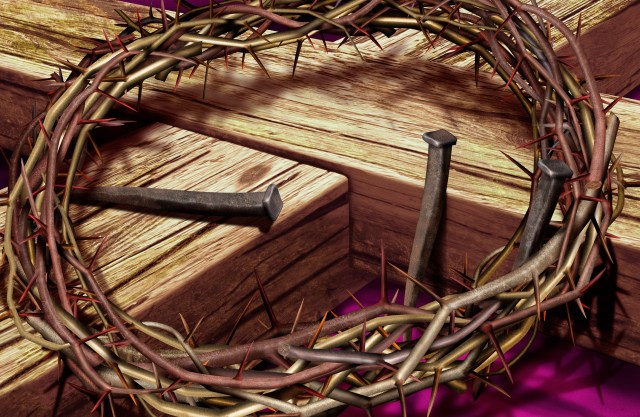
Without standing at the cross of Jesus and seeing His body scourged, beaten, spat upon and battered by the mocking of Roman soldiers who would nail the hands of the Son of God to a tree along with His feet driven with iron spikes; it is difficult to grasp the incredible love of God to allow unholy man to abuse His only begotten Son. The cross is anything but glorious. It has been fashioned into gold and worn around necks as if a symbol of pride and showmanship when in fact the cross was the depravity of the most heinous manner devised man to slowly kill its victim. Jesus did not take the gall that would have lessened His pain and He born the full impact of the crucifixion with every shooting pain and unbearable torture of His back upon the cross. Enduring those hours of suffering goes beyond the realm of understanding when by the word of His voice seventy-two thousand angels would ascend and destroy all of humanity. Jesus remained silent. He learned obedience by the things which He suffered. His death would give life to all men and through His suffering pave the way for glory to those who would accept the gift of His sacrifice. The cross must be realized for what it really means. It was not because of any sin committed by Jesus that He was on the cross. There were those who came to charge Jesus with blasphemy and charge Him to death but none could be found of credibility. Finally, two false witnesses came forward saying He said He would destroy the temple of God and build it in three days. The Jewish leaders took Jesus to the Romans where He was condemned to die even though Pilate declared Jesus innocent. Because of the pressure of the Jews who cried out for crucifixion, the Son of God was condemned to death. Jesus died an unjust death condemned for a crime He did not commit and had never broken the Law of Moses in any degree. A pure and innocent man died that day and there was a reason His death was required.

The prophet Isaiah declared hundreds of years earlier the coming Christ would suffer many things from the hands of unjust men. He would be despised and rejected by men, wounded, bruised, chastised and suffer the affliction of stripes as a lamb to the slaughter. Jesus fulfilled this prophecy and became the suffering Savior. Isaiah declares the reason for the Son of God to suffer. It was not for anything He would have done but because of the sins of mankind that would bring about the death of God’s Son. There are five “ours” in the woeful message of Isaiah’s prophecy of the suffering Christ and they all point to the putridity of men. Jesus has borne OUR griefs and OUR sorrows. The grief endured by the Son of God was the affliction brought upon Him by OUR sins in the consequence of the physical suffering of the cross. Jesus was a man feeling all the pain of the whip used to scourge Him. He was in incredible pain when He bore the cross. When they nailed His hands to the cross and then lifted Him up His level of pain increased in unbelievable waves of torture. Gathering His feet together and driving those nails through His flesh was an experience of incredible suffering. Jesus bore OUR griefs and carried OUR sorrows because of HIS love for OUR condition. The cross was every part of the physical horror intended by humanity to devise against another. Jesus suffered the worst death created by man because the nature of sin demanded His suffering.

Beyond the physical suffering of the cross, Jesus was wounded for OUR transgression and bruised for OUR iniquities. He was pierced for OUR rebellion and crushed for OUR sins. There was no justification for the Son of God to be sentenced to death because Jesus knew no sin. In the three decades of His short life, the man from Nazareth never sinned. And yet because of OUR sin He willingly and courageously bore the suffering of the cross because of OUR state of depravity, darkness, and rebellion. He was beaten so we could be whole. He was whipped so we could be healed. The chastening for our well-being fell upon Him, and by His scourging, we are healed. Jesus took the wrath of the Father on Himself so OUR lives would not face the fury of the Divine. He took upon Himself to endure the cross and He laid His life down that He could take it again for the hope of man to live in eternal life. OUR transgressions and OUR iniquities nailed Jesus to the cross and the chastisement of OUR peace was upon Him because Jesus loved OUR lives to the point of death. It is impossible to stand at the cross and not see the five OURS of Jesus as He shed innocent blood for the redemption of all men: OUR griefs, OUR sorrows, OUR transgressions, OUR iniquities, and OUR peace. Jesus died for ME. Thank you Jesus for loving ME.

Posted in Uncategorized | Leave a comment