Salvation Came To The House Of Cornelius

salvation

And he told us how he had seen an angel standing in his house, who said to him, “Send men to Joppa and call for Simon whose surname is Peter, who will tell you words by which you and all your household will be saved.” (Acts 11:13-14)

Salvation Came To The House Of Cornelius

Caesarea was located between Joppa and Dora on the coast of Palestine. Its unique place along the coast afforded a large protected harbor and became a great city of commerce. The city was the official residence of the Roman Governors with such men as Felix and Festus who presided over the trials of Paul and was also the military headquarters of the province. In the early days of the church, Peter was brought to Caesarea to meet a Roman Centurion who had been told by an angel to send for the apostle so that Peter could speak words to them. Obedient to the heavenly vision and instructions of the six men from the house of Cornelius, Peter came to see Cornelius and impart whatever words would exhort and encourage these Gentile prospects. His meeting with Cornelius would change the world.

When Peter arrived at the home of Cornelius, the Roman Centurion fell at his feet and worshiped him. Forbidding this, the apostle exhorted the soldier to rise as they were equals as men. Peter inquired why he had been called and Cornelius related the visit of the angel and the instructions for Peter to be sent for. The angel told Cornelius that when Peter arrived he would speak to them telling them how they and everyone in the household could be saved. Complying with the vision of the Lord, Cornelius gathered his family and others together to hear the message of Peter given to him by the Lord. Following the baptism of the Holy Spirit, Peter baptized Cornelius and his household in water in the name of the Lord for the forgiveness of their sins. The Gentiles had now received the blessing of salvation and Cornelius was the example of God’s grace to all men – Jew and Gentile.

Salvation came through many avenues of the divine working of God through the agency of men and the acceptance of truth in honest hearts. Cornelius was a devout, God-fearing man, as was everyone in his household but they were not saved. He gave generously to the poor and prayed regularly to God but he was not saved. What Cornelius needed was the word of God spoken to him so that he can come to the knowledge of truth through the grace of God. Peter was chosen to go to Caesarea and speak words of salvation to those gathered and through the divine providence of mercy; salvation came to the house of Cornelius. Paul reminds the Roman saints that faith came from hearing the word of God. Salvation is not simply a feeling or response to some stimuli that brings joy to the heart. Knowledge is the conduit of truth and without the word of God, there can be no understanding of the will of the Lord.

Peter explained to the church in Jerusalem how Cornelius and his household were saved. The good works of Cornelius did not save him. When the angel came to the Roman Centurion he could have told him what to do to be saved but that was not his task. The angel did not save Cornelius. After Peter’s arrival and the apostle began to tell those gathered the wonderful news of Jesus Christ, the Holy Spirit was poured forth upon all those who heard the word. The baptism of the Holy Spirit did not save them. Those who came with Peter were astonished the gift of the Holy Spirit had been given to the Gentiles. At this point, Cornelius and his household were not saved. Peter, recognizing the divine meaning of the vision he had experienced in Joppa, implored those gathered to be baptized in water. Cornelius and his household were baptized in water for the remission of their sins. Now they were saved.

There were many parts to the conversion of Cornelius and his household but it culminated when Peter came and spoke words to them by which they were saved from their sins. The pattern of salvation has remained unchanged since that day of joy in Caesarea. Doing good deeds will not save a man and being very religious will not save. Knowing what to do to be saved cannot save until the heart moves to obedience. Cornelius became a child of God when he entered the waters of baptism. It is that moment the grace, mercy, and love of God wash sins completely away. Responding to the words of the gospel of Christ, salvation comes. Heed the words of God today. Obey the Word.

Posted in Uncategorized | Leave a comment

God Loves You – What Do You Say?

love of God

“I have loved you,” says the Lord. “Yet you say, ‘In what way have You loved us?’” (Malachi 1:2a)

God Loves You – What Do You Say?

The burden of Malachi to the people of Israel warns against the laxity of their faith in God as they went through the motions of worship. Post-exilic Israel was very different from the glory days of Solomon when Temple worship was dedicated to the truth of worship of the Lord. It was drudgery for the people to offer their sacrifices and they complained about the weariness and dullness of having to make all the sacrifices and keep the law. The people dishonored the name of God by their actions. They brought contemptible food to the Lord saying it was acceptable to defile the Lord’s table. The spirit of the people believed the law to be too burdensome for them to keep. Complaining it was too hard to serve the Lord they turned their noses at God’s word. As a result, sacrifices were made up of stolen, crippled, and sick animals.

Malachi begins his message with a rhetorical question by the Lord to the people. God reminds the people how much He has loved them and yet the people dare question the love of God. From the viewpoint of the Jews, God had not shown His love to them. Where were the blessings? How were the people faring in this post-captivity existence? Why had God allowed Israel to be taken by the Babylonians? Where was the mercy of the Lord towards His Beloved? The heart of the people had turned to ridicule and profaning the love of God. It was so vile to the nostrils of the Lord that He demanded someone to shut the Temple doors so the worthless sacrifices could not be offered! The Lord of Heaven’s armies was not pleased and He would not accept their defiled offerings. To make matters worse, the people asked where the love of God was. They could not see it from their standpoint. All they could see was the plight of their own miserable lives.

Faith is often measured by where a person is standing with God. The people of Malachi’s day did not see much hope but that was because they could not see the love of God. If they had taken the time to reread the history of Israel from the promise of Abraham through the turbulent years of rebellion, unrest, idolatry, bondage, and deliverance, they would have seen the hand of a loving God caring for and protecting His people. God never turned away from His promises. He never failed in any word He had given them. The blessings promised if they were obedient were given one-hundred-fold and without measure. Their existence was due to the love of God. If it had been the will of the Lord, the tribes of Judah and Benjamin would have wiped out like the ten northern tribes. The grace of God saved the remnant and returned them to the land. That was the love of God.

It is easy to be critical of God when life is not going the way the heart of a man desires. What the people expected is unknown but it is clear they were not very happy with the word of the Lord. All the unhappiness of the Jews had come from their own sin and rebellion and they dared blame God? He tells them He loved them and they respond by asking how He had loved them? It seems incredible the Lord did not reach down at that moment and destroy them all. The love of God was shining upon the people and they could not see the sunshine for the clouds of their own sin.

God so loved the world He gave His only begotten Son and yet men still blame God for their plight. The blessings of the Lord come upon the just and the unjust, the good and the bad, and the righteous and the unrighteous. He is especially loving to His children. Yet there is found a spirit of dissatisfaction that God is not aware of the needs of men. Nothing has failed in the promises of God and there has never been a time in the history of mortal man that the Lord has not kept His blessings from those who obey him. The disparity that arises in the heart of man is born of selfish pride and arrogance; not the lack of God’s love. There is one thing certain in this world: the love of God can never be challenged. It is real, it is powerful and no man can stand against it. They will deny it and refuse it but the love of God will win out in death because it is eternal. What do you say to the love of God?

Posted in Uncategorized | Leave a comment

Absent But Present

Absent But Present

For though I am absent in the flesh, yet I am with you in spirit, rejoicing to see your good order and the steadfastness of your faith in Christ. (Colossians 2:5)

Absent But Present

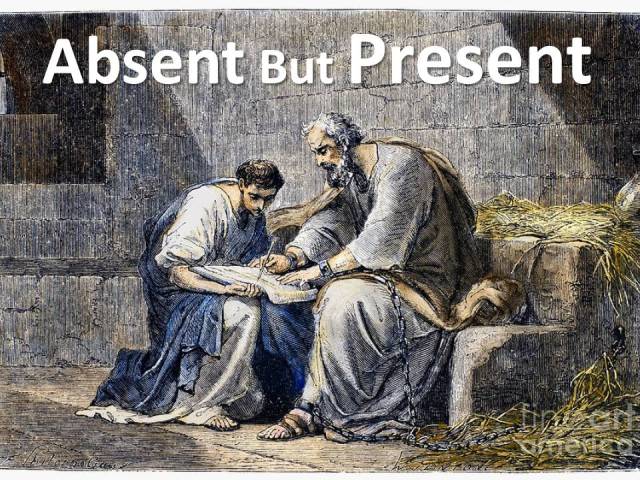
When Paul was in a Roman prison writing a letter to the saints at Colosse, he did not know that two thousand years later his words would strike a deep chord among the saints of God all over the world. The apostle of Christ did not know what COVID-19 was and trying to imagine one the hardest working missionaries of God being subdued with social-distancing and wearing a face mask as impossible. He would obey the laws of the land but what grief that would have been to his energy, determination, and desire to teach all men Christ Jesus and Him crucified.

Paul’s work had been interrupted when they arrested him but he continued to work from his imprisonment. Letters were written, charges given to the disciples to carry out the work of teaching, and no doubt every person the apostle came in contact with he taught them the gospel. His work would lead to some in Caesar’s household learning the truth of salvation. The prison epistles of Paul are not filled with despair and discouragement. They are some of the most joyful, uplifting, and exciting letters of the New Testament. He may have been absent from those he longed to be with but he stayed connected either through letters, personal greetings, prayers, and the knowledge the family of God shared in the covenant of fellowship. He was absent but he was present with his brethren.

It is hard to see Paul locked away in a prison. He was full of energy and wanting to go all over the world if he was able. When he wrote a letter to Rome he spoke of his desire to go to Spain and preach the gospel. It seems the apostle never saw that desire come true but it speaks to the heart of a man who was hindered often in what he wanted to accomplish. He languished for more than two years in Caesarea while Felix, Festus, and Agrippa tried to decide what to do with him. His trip to Rome was fraught with the danger being stranded for three months on Malta. Arriving in Rome he would be imprisoned, released, and then imprisoned again before being executed by the sword. Throughout his life as a Christian, Paul never stopped working for the Lord regardless of where he was. He was absent from many brethren but he made the saints fell as if he was with them all the time.

The COVID-19 epidemic has changed the face of the body of Christ. It seems incredulous that assemblies have needed to be closed and for many places in the nation, reassembling will still be a slow and painful process. There is grave concern on how the absence will impact the spiritual lives of many members who may not bear up well during this present distress. Children are unable to be in Bible classes that for the large part gave them spiritual life. Elders are struggling to maintain the work of the local church in a spirit of unity. Going into homes to teach the gospel plan had been curtailed. These are serious times for the church. If one thing is needed it must be the spirit of Paul that while absent, saints find ways to be present with one another.

Many avenues can be used to keep connected with the brethren. Local church leadership should avail themselves of every means possible to find a way to be present with every member. Paul’s purpose in writing to Colosse was to express his love for their good example of living as they should and that their faith in Christ was strong. There can be little doubt when the letter was read among the brethren, it uplifted their spirits. Tychicus came with the letter to tell them about the work of Paul (in prison) and to fill their hearts with joy. The letter to Colosse was to be shared with the church at Laodicea and Paul’s letter he wrote to Laodicea was to be read to the church at Colosse. What was Paul doing? While Paul was absent he reached out to be present with his brethren.

This year will be marked by the impact of COVID-19 on every fabric of life. There are concerns about the impact of the economy and for good reasons. A greater concern is how this will impact the local congregation and its work. Without the fellowship of brethren one for another the church may be in trouble. God’s work must continue and it is accomplished through the diligent efforts of the whole body doing its own special work, helping the other parts grow so that the whole body is healthy and growing and full of love. We may be absent but let us be present with one another.

Posted in Uncategorized | Leave a comment

Living Without A King

judges-21-25-concretized-christianity

In those days there was no king in Israel; everyone did what was right in his own eyes. (Judges 21:25)

Living Without A King

Following the conquest of the land of Canaan, the nation of Israel went through a period of anarchism because there was no king in the land. Joshua had led the people into the promised land and kept the people united through his leadership. Before he died, Joshua exhorted the people to follow the word of God and trust in His will to guide their lives. A large stone was set up under a large oak tree by the sanctuary of the Lord in Shechem as a testimony to the covenant of Israel with the Lord. It did not take long for the importance of the stone to lose its meaning.

After the death of Joshua, a generation arose that did not know the Lord and did not know the stories of the patriarchs like Abraham and the history of Israel coming out of Egypt led by Moses and the struggles in the wilderness. The people began to follow after Baal and serve other gods from among the people who were around them. Before entering Canaan, God had told the people He would fight for them and they would live in peace if they obeyed His word. Because the people rejected the counsel of the Lord, the enemies of Israel plundered them and despoiled them of all their blessings. God set up judges to rule them but the people refused to listen to them and played the harlot with other gods and bowed down to them. How quickly they turned away from the path of their ancestors, who had walked in obedience to the Lord’s commands.

Four times in the book of Judges the reason for the chaotic conditions of the nation are stated. Without a king, the people did what they wanted to do. There was no central leadership and authority to curtail their plunge into idolatrous worship. Without measures in place to curb the appetites of the people, nothing was left to chance and they fell headlong into the carnal pleasures of the flesh. The rebellion of the people came from the lack of sufficient authority to subdue their desires. Without law, the land is filled with lawlessness. Everyone does what they think is right in their own eyes. There is no single measure of the law. Anything that pleases the individual is acceptable and no one can judge another to what is right and wrong. Authority challenges the personal desires of the individual and without authority everything is acceptable.

At first glance, the reason for the nation to be lawless is there was no king in the land to judge them. Later, during the days of the last judge, Samuel, the people demand a king. This helps unify the nation and for 120 years, Israel is united. After the death of Solomon, Israel divides into two kingdoms with the northern tribes going after the Baal’s and Ashtoreth’s and they were destroyed 200 years later. Judah would follow a little over 100 years later to captivity.

Israel had kings but they were still wicked, lawless, and rebellious. Why? The problem during the period of the Judges was because there was no central figure of authority to guide the people. There was no king and everyone did what was right in his own eyes. The failure of the nation came because they did not retain God in their hearts as the king of their lives. Having a central figure of authority like Saul, David, and Solomon helped but when the nation divided having kings on the throne did not always do well for the nation. When the heart of the people is not faithful to the King Most High, it matters not who sits on a throne in Jerusalem. What the Lord wanted from His people was for them to serve Him because He was their King and Master. Allegiance had to come from the devoted heart of those who wanted to serve God with or without a man sitting on a throne. The first problem was there was no king in Israel but the bigger problem was there was no king in the heart of the people.

Obedience can only be measured by who rules the heart of men. The church is organized with men who shepherd the flock of God to guide, instruct, admonish, challenge and direct the hearts of the saints among them. Their guidance is crucial to the furtherance of the gospel and the eternal work of the church of Christ. The Bible is the fully revealed word of God telling men of the grace of God to save those who would obey Him. Everything needed to save a man’s soul is given to the world but if the heart is not willing to accept the Kingship of Jesus Christ, everyone will do what is right in their own eyes. Preaching has no effect if the heart is not open. Leadership is destroyed if allegiance to God is not practiced first.

Israel could have prospered without a king sitting on the throne if the people had only let God rule in their hearts. The sinfulness of man tries to excuse his actions by complaining they need a man on a throne when the real trouble lies in the failure of the heart to accept the rule of God. If a man does not first establish God as ruler of his life, everything that follows will be shallow and lawless. Arguments about scripture come from hearts that are unwilling to accept the authority of the Lord as final. A man can reject the Lordship of God in this life but death will bring the great awakening of the King of Kings and Lord of Lords. To please God, you must first enthrone God. Nothing matters if this is not done first.

Posted in Uncategorized | Leave a comment

Everything Is About Jesus

scrolls pen

Then He said to them, “These are the words which I spoke to you while I was still with you, that all things must be fulfilled which were written in the Law of Moses and the Prophets and the Psalms concerning Me.” And He opened their understanding, that they might comprehend the Scriptures. (Luke 24:44-45)

Everything Is About Jesus

The Bible is an amazing book containing sixty-six books formed together in a cohesive theme of divine revelation. Written by more than forty writers covering fifteen-hundred years from different parts of the world and having a diverse background, the authors tell the story of the genesis of the world and humanity, rise and fall of nations, and the incredible story of God’s Son becoming flesh. Moses begins the story of the Bible with the first five books of creation, the beginning of Israel, and the establishment of the law. The book of Joshua unveils the conquering of the land of Canaan in fulfillment of God’s promise to Abraham and throughout the remaining books of holy writ the turbulent and often perilous times of the nation of Israel. Silenced for more than four hundred years after the prophet Malachi, the story of Jesus burst upon the scene with the writings of four men telling similar but varied stories of the Christ.

When Jesus taught His disciples in those forty days after the resurrection, He opened their understanding to comprehend the scriptures they were familiar with. At that time, only the books of the Old Testament had been written. All of the Old Testament as found in the modern Bible was in the hands of the people of Jesus’ time. The modern division has thirty-nine books of law, history, poetry, and prophecy. Jesus referred to the Old Testament as the Law of Moses and the Prophets and the Psalms. What He said about the Old Testament was far beyond the view most have of the ancient book. Jesus said the Old Testament was about Him. Everything written in the Old Testament was fulfilled in the story of Jesus Christ.

It is easy to get lost in the details of the Old Testament and the stories that fill its pages. Jesus defined the Old Testament as the testimony of His life and purpose for coming to earth. Reading the Old Testament with fresh eyes looking for Jesus will open the understanding of the thirty-nine books as testimonies of the divine plan of God. Jesus was in the beginning when the world was created. He was part of the judgment that brought the flood upon the world. The promises made to Abraham were about Him as the promise of the Seed found its fulfillment in Christ. Paul would explain to the Roman saints how the Jews proved that men could not be saved by keeping the law and the Gentiles would not save themselves as a law to themselves. Salvation can only come through Christ and the Old Testament proves this.

The revelation of God can be found in the laws of nature but without the special revelation of scripture, no man can know the character of God. Reading the Old Testament the goodness and severity of the Lord are found on every page. Grace, mercy, truth, and righteous flow from the stories of the Old Testament. The failure of humanity to answer sin is clearly defined in the feeble attempts of human wisdom to answer its greatest challenge. Jesus is the fulfillment of the Law, Prophets, and Psalms because they declare salvation cannot be found apart from Jesus Christ. Understanding the Old Testament in terms of the life of Jesus changes the nature of the study of the thirty-nine books. The Old Testament is not just about the history of the world but the birth of Jesus. Moses writing the Law declared the need for the law of Christ to save men. The psalms attempt to find words to praise God but can only be felt through the life of Jesus Christ.

Everything in the Old Testament is about Jesus. Faith comes from hearing and hearing comes from the word of God. This faith must be tooled to see the deeper message of the Old Testament declaring the glory of the Christ. Without an understanding of the work of God’s Son in the Old Testament, nothing can be learned of the will of the Lord. Which book in the Bible tells the story of Jesus? Jesus told His disciples that all of the nearly 600,000 words in the Old Testament were about Him. Read the Old Testament with fresh eyes. Everything is about Jesus.

Posted in Uncategorized | Leave a comment

Doing Good On The Sabbath

sabbath day

Now when He had departed from there, He went into their synagogue. And behold, there was a man who had a withered hand. And they asked Him, saying, “Is it lawful to heal on the Sabbath?”—that they might accuse Him. Then He said to them, “What man is there among you who has one sheep, and if it falls into a pit on the Sabbath, will not lay hold of it and lift it out? Of how much more value then is a man than a sheep? Therefore it is lawful to do good on the Sabbath.” Then He said to the man, “Stretch out your hand.” And he stretched it out, and it was restored as whole as the other. Then the Pharisees went out and plotted against Him, how they might destroy Him. (Matthew 12:9-14)

Doing Good On The Sabbath

The enemies of Jesus tried fruitlessly to entrap the Lord in His teachings and to condemn Him when He healed the sick. It seems incredulous that after witnessing a miracle anyone would plan to destroy the Son of God but it happened often. One of the main contentions with Jesus and the Pharisees was Jesus healing on the Sabbath. The religious leaders could not see the power of God in the miracle but had become so narrow-minded in their keeping of the law they denied the miracle and condemned Jesus.

On one of many occasions when Jesus would go to the synagogue, a man was there who had a deformed hand. Seeing an opportunity to challenge Jesus, the Pharisees said, “Does the law permit a person to work by healing on the Sabbath?” They were not concerned about the man with the malformed hand but used the poor soul to find a way to bring charges against Jesus. They hoped that Jesus would say yes so they could condemn Him. Expecting Jesus to perform a miracle so that charges could be brought against Him shows how depraved the hearts of the Jewish leaders had become.

Jesus was not unaware of their deceit. The Pharisees never could trap Jesus in His teaching no more than they could deny His miracles. Responding to their hypocrisy, the Lord poses a question to the Pharisees. If they had a sheep that fell into a well on the Sabbath, wouldn’t they work to pull it out? Of course, they would. The Law of Moses did not prohibit taking the donkey or ox from the stall to water it. If a donkey or an ox fell into a pit and it was the Sabbath, the Law did not demand the animal die in the pit. The Pharisees had bound doctrine where the Lord never intended.

The law permitted men to do good things on the Sabbath. A man is of much more value than an animal and the individual with the withered hand deserved the mercy of God to be healed. Arguing about the doctrine of the Sabbath denied the needy the grace of God. Jesus told the man to stretch out his hand and it was restored as whole as the other. Doctrine is given by God as His law and it must remain unchanged. The law of the Sabbath was not changed because Jesus showed mercy to a man in need. What the man remembered about that Sabbath day would never be forgotten.

It is easy to enforce doctrine over mercy. Arguing about the jot and the tittle of the law can produce strife, false teaching, and take the law of God places it was never intended. The Pharisees had taken traditions and violated the commandments of God. Enforcing their doctrines on men, the Jewish leaders had imposed man-made ideas as commands from God. Nothing was further from the truth. Jesus healed the man on the Sabbath because it was a good thing to do. The Pharisees did not win the argument and went out trying to find ways to destroy Jesus. They would have their way when Jesus was killed on the cross. Three days later (the day after Sabbath), a new law came into being that would offer all men the mercy and grace of God. Care must be taken not to make the doctrine of the Sabbath become the law of Christ in the church.

Posted in Uncategorized | Leave a comment

The Wisdom Of Agur

Proverbs-30-5-6

Every word of God is pure; He is a shield to those who put their trust in Him. Do not add to His words, lest He rebuke you, and you be found a liar. (Proverbs 30:5-6)

The Wisdom Of Agur

An unknown Hebrew sage named Agur had some things to say to two unknown men named Ithiel and Ucal. These three men are not found anywhere in scripture, but the wisdom laid forth by Agur is timeless. Among the many admonitions the sage offered, he began by showing the power and authority of the word of God. He recognized that he was not the smartest man and lacked common sense. However, Agur respected the word of God and considered its message divine and without equal. Human wisdom can deny the validity of truth found in the word of God but for those who have humble hearts, the word of God is tried and found true and pure. There is a flawless nature to the word of God.

The character of the word of God has been the same from the beginning. Agur was writing from a perspective that did not include the known word as revealed today in the pages of the Bible. With the limited revelation given to men like Agur, he recognized that God’s word was holy, divine and should not be tampered with. Every word of God is pure. Agur knew he could not pick and choose which words he liked and those he could ignore. Whatever measure of revelation he referred to was all he needed to understand his obedience to the word of God. His view of scripture was flawless and true.

Believing the word of God was pure enabled Agur to trust in the power of its message to guide his life. The word of God was not given for oratory displays of wisdom but life-changing messages that move the heart to be a person like the Father. If the word of God does not change the person, the soul has not accepted the power of the word of God to change their lives. Agur calls the word of God a shield to those who put their trust in the protection of God. A shield is used for offense and defense. Any soldier going into battle without a shield would quickly be defeated. Fighting against the wiles of Satan demands the shield of faith which can stop the fiery arrows of the devil. Trusting in the word of God shields the heart from the power of temptation, doubt, and fear.

One common theme since the beginning of time is the warning of changing the word of God. The first word out of the serpent’s mouth to Eve was to challenge the word of God. Moses declared a curse on any who would add or take away from the word of God. John in writing the Revelation pronounced judgment upon all who would add or subtract from the word of God. Agur affirmed the word of God was true and adding to the word of God would bring the judgment of the Lord upon the rebellious heart. Any man who adds or takes away from the word of God is a liar. The word of God is settled in heaven and no man has the right or authority to change the word of God.

There is a grave penalty for those who preach a gospel not found in the word of God. A greater consequence will come upon those who ignore the word of God. Many will lose their eternal life because they followed doctrines not found in the scriptures. All liars will be cast into the lake of fire including those who sought to change the word of God. The seriousness of God’s authority in His word is without question. Every word given by God is true and righteous and anyone would do well to heed the words of God. Failing to obey the word of God will bring eternal judgment with darkness and the weeping and gnashing of teeth. The words of Agur remain intact today as part of the word of God. He declares the truthfulness of God’s word and men today would do well to heed the commands, statutes, judgments, and laws of the word of God. Every word of God is pure.

Posted in Uncategorized | Leave a comment

Hezekiah’s Prayer

HezekiahsPrayer2

Then Hezekiah prayed to the Lord, saying: “O Lord of hosts, God of Israel, the One who dwells between the cherubim, You are God, You alone, of all the kingdoms of the earth. You have made heaven and earth. Incline Your ear, O Lord, and hear; open Your eyes, O Lord, and see; and hear all the words of Sennacherib, which he has sent to reproach the living God. Truly, Lord, the kings of Assyria have laid waste all the nations and their lands, and have cast their gods into the fire; for they were not gods, but the work of men’s hands—wood and stone. Therefore they destroyed them. Now, therefore, O Lord our God, save us from his hand, that all the kingdoms of the earth may know that You are the Lord, You alone.” (Isaiah 37:15-20)

Hezekiah’s Prayer

The Assyrian army surrounded Jerusalem and the situation looked very dire. It seemed impossible for any hope against such an avenging army that had annihilated the northern tribes into oblivion and now they stood at the gates of Jerusalem. Sennacherib, king of the Assyrian Empire sent envoys to persuade the people of Jerusalem to give up and surrender. There was great fear and consternation. King Hezekiah, king of Judah, sought the advice of Isaiah the prophet who assured the king no harm would come to the city. The Assyrians sent a letter to Hezekiah warning him not to trust in his God to deliver the city because the might of the Assyrian army was more powerful than the people of Judah. Hezekiah took the letter to the temple and spread it before Lord. The king pleaded for the Lord to deliver the city.

Hezekiah’s prayer revered the name of God recognizing that only God could save the people. Referring to the Ark of the Covenant where the Lord communed with the people, Hezekiah recognized the authority of the Lord God as the one who dwelt between the cherubim. There was only one true God and He was the one who created the heavens and earth. Prayer begins with knowing that God is the only one to worship and only through His divine power would deliverance be granted. The kingdoms of the earth are at the mercy of the Lord God and that included the boasting of the Assyrians.

Prayer is seeking the favor of God upon His terms. Asking the Lord to incline His ear and open His eyes to the words of Sennacherib was seeking the will of God to be done without the favor of man. Hezekiah knew the king of Assyria was nothing more than a man much like himself. All men must know there is one true God and that only through the divine will of the one who made heaven and earth will the affairs of men be ordered. Sennacherib boasted that no one could stop him but he had not come face to face with the true God. Hezekiah sought the favor of God whom the Assyrians had brought reproach. The gods of men were dead but the God of Hezekiah was the living God.

There was no doubt the Assyrians were a devastating army and they had laid waste to many nations including the brethren of Judah and Benjamin. The northern tribes would never recover as they faded away into the dust of Israel’s history emerging as the hated Samaritans. All of the gods Israel of the north had served did not deliver them. Baal and Ashtoreth were no match for the army of the Assyrians because they were nothing more than the work of men’s hands – wood and stone. The Assyrians defeated all the gods of the wicked northern tribes because they were useless and powerless. What Sennacherib would soon discover is the God of Judah was not like the gods of their brethren.

Hezekiah pleaded with the Lord to show His power against the Assyrians. The king said, “O Lord our God.” It was personal with the king. He knew the value of prayer was the relationship he had with the Lord and through his pleadings God would deliver them. Hezekiah believed the Lord God of Israel was greater than the immense army surrounding Jerusalem and that as hopeless as the situation seemed, God was greater. Pleading with God to deliver them, the king recognized that all the earth would come to know the one true God. That night, the angel of the Lord came to the camp of the Assyrians and killed one hundred and eighty-five thousand men of war. The Assyrian army was broken. Sennacherib returned home and was murdered by two of his sons. The God of Judah was unlike the gods of Israel.

Hezekiah’s prayer is a lesson on how the people of God face overwhelming pandemics, economic distress, a crisis of health, and the many challenges of life. Possessing a deep belief in the authority of God over the heavens and earth will bring the soul of God’s people to spread their worries and fears before His throne. Asking the blessings of the Lord and seeking His intervention is the power of prayer. Hezekiah asked the Lord to hear and for the Lord to open His eyes to see. Prayer is asking and seeking the favor of the only true God. The greatest blessing of prayer is the privilege of God’s children to beseech the blessings of the Father and He will answer. Sometimes the challenges of life will seem impossible but with prayer and faith in the only true God, the impossible can be done. Let the earth know that God is the Lord. Tell the world there is only one true God. Let the light of Christ shine bright in this time of concern. God is greater than a virus. He still rules. Praise God.

Posted in Uncategorized | Leave a comment

Roman Greetings

Businessman Offering Handshake

Greet Priscilla and Aquila, my fellow workers in Christ Jesus, who risked their own necks for my life, to whom not only I give thanks, but also all the churches of the Gentiles. Likewise, greet the church that is in their house. Greet my beloved Epaenetus, who is the firstfruits of Achaia to Christ. (Romans 16:3-5)

Roman Greetings

The letter of Paul to the saints in Rome is filled with doctrinal and theological arguments that can sometimes be difficult to understand. Paul is trying to impress upon his readers the meaning of God’s grace and how faith, law, and baptism are essential ingredients to salvation. It can be a daunting book to read as he unfolds the gospel of salvation by grace, justification by faith and the divine plan of the death, burial, and resurrection of Christ seen in the waters of baptism. Near the end of his letter, he exhorts the saints to present their bodies as living sacrifices to God and explains the application of the law of grace in the lives of the Christians. While the book is heavy on doctrine, Paul concludes his letter with some very personal exhortations.

After telling about his plan to visit Rome, Paul sends greetings to and from thirty-five named individuals and a host of brethren in the churches of Christ. He commends Phoebe for her untiring labors in the kingdom and sends greetings twenty times to various brethren who are his fellow countrymen, fellow prisoners, fellow workers, beloved, approved, and chosen in the Lord. The word the apostle uses is a deeply endearing term of personal connection with the brethren. He sends greetings or salutations to the brethren with a word that means to enfold in the arms, salute, and embrace. Paul knew the value of a personal relationship with his brethren and showed in writing how much he loved and appreciated all those who were in the church of Christ.

One of the most important parts of the COVID-19 crisis is where assembled worship has been interrupted. It is doubtful many realized how important gathering as saints would become as the world turned upside down with churches unable to meet together. The reason many churches temporarily closed their doors was because of their love for one another. The response of the contagions of the virus demanded a responsible action on the part of church leaders. As time progressed it became clear what was lost was more precious than first realized. The inability to greet one another has become paramount in the struggle to regain a normal pattern of worship. As the conditions of the virus subside churches will begin to have measured responses to assemble. It is at these moments the reality of not assembling will be felt.

Paul’s Roman greeting shows the importance that each member of the church has to the other. He names people because they are important to him. There are many more he refers to as simply the church in someone’s home or greeting one another with a holy kiss as was customary. How often have we realized in the past months how important it is to shake the hand of a brother or sister in Christ, to hug with compassion our fellow Christians, to hear the sound of glorious singing of saints worshiping God together and the noise of brethren visiting with one another? We have missed the opportunity to embrace our brethren.

The experience of the past few months should serve to impress upon our hearts two vital lessons: first, God designed the church to be a gathering body of saints who need one another. Many assemble with the saints on an infrequent basis only coming once in a while. They may come sporadically as the mood fits them. Could it be that God is telling us that if that is all you are interested in serving Him that He will take it completely away? The church is made up of souls who need to embrace one another and that cannot be done by proxy. Jesus died so that His people would wash one another’s feet and that cannot be accomplished via a correspondence course or Facebook or staying home. These past few months should awaken the souls of the weak to be strong in the Lord.

A second lesson we learn is how much we need one another. The wise man said, “As iron sharpens iron, so a friend sharpens a friend.” Paul sent specific greetings because he knew how important those greetings and salutations were for him and to those in Rome. We should greet one another. Never allow worship to go without greeting everyone – not just those in your special group. Absence does not make the heart grow fonder; it hurts. Greet the saints of God with joy and happiness. The day will come when the conditions of social distancing will end and we can enjoy the blessings of greeting our brethren. May we never take for granted the simple words of greeting one another.

Posted in Uncategorized | Leave a comment

Boasting Against The Lord

AP0208c

Then the Rabshakeh said to them, “Say now to Hezekiah, ‘Thus says the great king, the king of Assyria: “What confidence is this in which you trust? You speak of having plans and power for war; but they are mere words. And in whom do you trust, that you rebel against me? Now look! You are trusting in the staff of this broken reed, Egypt, on which if a man leans, it will go into his hand and pierce it. So is Pharaoh king of Egypt to all who trust in him. But if you say to me, ‘We trust in the Lord our God,’ is it not He whose high places and whose altars Hezekiah has taken away, and said to Judah and Jerusalem, ‘You shall worship before this altar in Jerusalem’?” ‘ Now, therefore, I urge you, give a pledge to my master the king of Assyria, and I will give you two thousand horses—if you are able on your part to put riders on them! How then will you repel one captain of the least of my master’s servants, and put your trust in Egypt for chariots and horsemen? Have I now come up without the Lord against this place to destroy it? The Lord said to me, ‘Go up against this land, and destroy it.'” (2 Kings 18:19-25)

Boasting Against The Lord

One of the amusing views of the angels is the pride of man and his incessant boasting. The scriptures remind humanity the highest he can get is lower than angels. All men are restricted in the boundaries of their habitation because God has established the line of his existence and regardless of what men can do, they will never be able to cross that line. When God created man He gave Him dominion over the earth but that is all. The universe is beyond his grasp as early man discovered when they tried to build a tower in their arrogance. God confused their language effectively creating a divided world inhibiting the will of man.

During the turbulent times of the divided kingdom of Israel and Judah, the king of Assyria came up against all the fortified cities of Judah and took them. The king of Judah, Hezekiah, tried to dissuade the Assyrian king with gold stripped from the temple of the Lord and other gifts but to no avail. Sennacherib sent a great army against Jerusalem demanding the king submit to his rule. It was a dire situation with great fear among the people. The king of Assyria sent a spokesman to negotiate with the inhabitants of Jerusalem demanding their surrender. Trying to break the will of the people, the Rabshakeh sought to compromise their trust in God. He boasted their victories over the other “gods” of the nations and lands they conquered. The king of Assyria boasted that no god could stand against him. This included the Lord of Israel.

Boasting against the one who created the world is an exercise in fatality. Sennacherib was a great military leader and made Assyria a powerful and terrible army that conquered many nations. Coming up against Jerusalem was not unlike any of the other nations they had conquered but the Lord God of Israel was not to be trifled with. Isaiah the prophet gave assurance to the king and the people of Jerusalem that God would deliver them. It came to pass on a certain night the angel of God killed 185,000 Assyrian soldiers. When the surviving Assyrians woke up the next morning, they found corpses everywhere. Then King Sennacherib broke camp and returned to his own land. One day while he was worshiping in the temple of his god Nisroch, his sons Adrammelech and Sharezer killed him with their swords.

The Lord God will not be trifled with by the pride and arrogance of men. There has never been a time in history that God’s will has not been accomplished over those who tried to enforce their pride against Him. Pharaoh learned many hard lessons that destroyed his country when he sought to defy God. The children of Israel became an object lesson of the cost of rebellion. In the early days of the church, King Herod was struck down by an angel of God for his pride. All of the Khans, Caesar’s, Hitler’s, Stalin’s, and despot of power are struck down. If there is one lesson from the present distress of COVID-19 is that no nation on earth is as powerful as they thought. Economies are in shambles, health concerns are real and confusion rules the hearts of those who boasted many months ago of their power and might.

Boast against God at your own peril. Great and powerful men (and women) will shake their fists against the knowledge of God until death separates their spirit from their body. As eternity dawns, their clenched fists of rebellion will open to hands pleading for a mercy that will not be granted. It is then they will meet face to face the Creator, Ruler, Sovereign, and Lawgiver of the world. Sadly, in their arrogance, they will face an eternity of eternal fire and condemnation. Sennacherib boasted against the Lord God while he was alive but learned in death that God rules.

Posted in Uncategorized | Leave a comment