Thankful For Brethren

I thank my God, making mention of you always in my prayers, hearing of your love and faith which you have toward the Lord Jesus and toward all the saints, that the sharing of your faith may become effective by the acknowledgment of every good thing which is in you in Christ Jesus. For we have great joy and consolation in your love because the hearts of the saints have been refreshed by you, brother. (Philemon 4-7)

Thankful For Brethren

The preaching work of the apostle Paul was an exhausting mission of long hours, arduous travels, and constant concern for the church. Few men could keep pace with the workload Paul put upon himself. He traveled all over the Roman Empire. Every city he came to was a preaching opportunity. His writings filled the churches with exhortations, challenges, rebukes, instructions, and directions. He debated Jews and Romans alike. Kings heard him preach as well as common sailors. Paul knew untold numbers of people in his work. Many opposed his preaching both in the church and without. A few times, he stood at odds with his dear friends and, on one occasion, parted company with Barnabas. Paul had a lot on his plate and some delicacies were not very palatable. But there were always brethren that he could rely on and he was thankful for those special saints.

It is easy to be overcome with the negatives of preaching and view the work of the church as hard and an unthankful task. Paul had some brethren that refreshed his soul because they were filled with love and faith for the Lord and these beloved saints encouraged others. Philemon was a man that was special to the heart of Paul. It is most likely that Philemon lived in the city of Colosse and was a convert of the apostle while he labored in Ephesus. Paul calls Philemon his beloved and fellow laborer. A situation had arisen where one of Philemon’s slaves, Onesimus, had run away and taken something of value. Somewhere in the scheme of divine providence, Onesimus had obeyed the gospel and Paul was sending the slave back to Philemon. Paul urges his beloved friend to receive his new brother in Christ back with love. There was all the confidence of the apostle that Philemon would follow his advice.

Philemon was one of the brethren in a preacher’s life that would constantly refresh the soul of the weary apostle. Paul was thankful for Philemon’s encouragement, mentioning him often in his prayers. The love and faith of Philemon helped Paul face hard days of discouragement and despair. Philemon shared his faith. The saints were built up by the faithful example of Philemon. Paul wants his beloved friend to know how much his encouragement meant to him and he told him so. The church was made better by the faith of men like Philemon.

Preaching the gospel can be trying at times. Faced with criticism, the servant of the Lord can fill his heart with all of the negative feelings that sometimes comes with the work. Failures in the local work can become larger than they need to be. Disappointments can mount. Disagreements can divide. Disharmony can fracture relationships. Paul faced many things in his ministry, but his concern for the church was above all. It weighed heavy on his mind. Saints like Philemon reminded the apostle that while the body of Christ is filled with challenges, there are many brethren that thanksgiving must be given for their simple, unnoticed but well-deserved praise gives blessing to workers in the kingdom. Jesus faced immense criticism, but he loved to hold and pray for children. The company of disciples that held close to him carried him through the most difficult times. When Jesus was dying on the cross, a few disciples, including his mother, stood before him to let him know he was not forgotten. Special people.

Times can be hard and things may not work out as desired, but there will always be people like Philemon and Apphia, Archippus and yes – even people like Onesimus. A slave now a slave of Christ returning to his master because he loved God more than his own life. As Paul concludes his letter to Philemon, he mentions others who enriched his life. There were men like Epaphras (a fellow prisoner) and Mark, Aristarchus, Demas and Luke. Demas would forsake Paul and that was a reminder of the challenges brethren face and how sometimes they fail the Lord and fail the church. But Paul pressed on with thanksgiving of men like Philemon. Let the church be filled with men and women who are examples of faith and love in Jesus Christ. To the Philemon’s that live in my life – thank you.

Posted in Uncategorized | Leave a comment

Excel In Life

Do you see a man who excels in his work? He will stand before kings; He will not stand before unknown men. (Proverbs 22:29)

Excel In Life

The character of the child of God is to rise above the carnal nature of men to show the glory of the Father in every part of life. There is a spirit of greed and lust in the hearts of worldly men who pursue the golden ring of success through any means possible. Righteousness is the spirit of a man who seeks to honor God in every part of his life. This is especially true as a reflection of the kind of work a man does. It has always been the desire of God for His people to stand above the world in character, disposition, and fidelity. Laziness has never been pleasing to the Lord. A slothful man is a disgrace to the nature of righteousness. Examining who God called to do His work – it is found they were all busy and industrious. Each one had a different role and came into the picture of God’s grace at different times but the successful ones sought to excel in what they did.

A man who excels is someone that stands above his peers. The irony is the humble man is who stands the tallest. God wants His children to excel above the norms of what is expected. The Christian is a hardworking, diligent and faithful employee in the job place. His work reflects his love for God to be honest and dutiful in carrying out his responsibilities. He strives to excel in his knowledge. The purpose of his excelling is not to be seen of men but rather to let the image of the heavenly Father reflect in his work. It is doubtful he will stand before a king, but his example would put him at the head of the line if there were a king to approach.

Righteous men and women are needed in a world filled with slothfulness, despair, and dishonesty. Communities are made better by Christian neighbors helping those in need, showing kindness to strangers, and living an example of faith. Because of the industry of the child of God, unknown men will recognize Christians as people of honor. This does not dissuade the world from persecuting the righteous but God exalts the man and woman that excels in all they do for His glory. The goal of a Christian is to let the world see Christ living in them. Standing before kings and unknown men is not for human recognition. Excelling in life is to excel in the glory of God.

Posted in Uncategorized | Leave a comment

Examining The Indictment Against Jesus

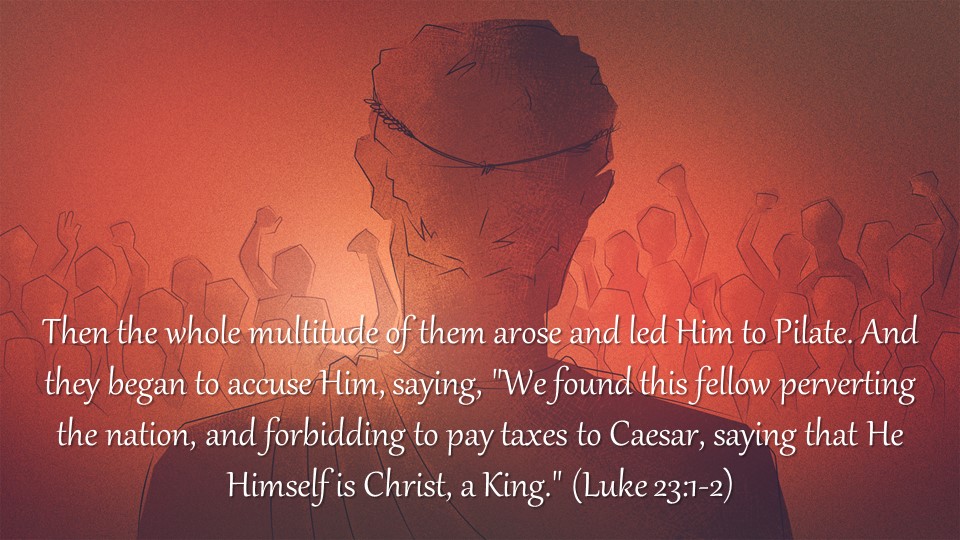
Then the whole multitude of them arose and led Him to Pilate. And they began to accuse Him, saying, “We found this fellow perverting the nation, and forbidding to pay taxes to Caesar, saying that He Himself is Christ, a King.” (Luke 23:1-2)

Examining The Indictment Against Jesus

The trial of Jesus before the Jewish Sanhedrin and the court of Pilate is historically a travesty of justice from the Hebrew and Roman sides of the law. Jesus was charged, convicted, and executed on the perverted testimony of two witnesses, the blatant disregard for Hebrew law by the High Priest and Jewish council, and the cowardice of Pontius Pilate, governor of Judea. Jesus was arrested on Thursday night by a band of Temple officers and Roman soldiers and by Friday afternoon was dead. After His arrest, Jesus was taken before Annas and then to Caiaphas. Following a preliminary examination, Jesus was arraigned before the Sanhedrin and formally tried and condemned to death on the charge of blasphemy. A second assembly of the Jewish Court determined to send Jesus to Pilate.

When Jesus was brought before Pilate, the accusers charged Jesus with high treason against Caesar. Their indictment was threefold: Jesus had perverted the nation, taught the people to refuse to pay taxes to Caesar, and called Himself a king. Charging a man with perverting a nation is extremely vague. Accusing Jesus of leading a rebellion against taxes was utterly false. When asked whether to pay taxes or not, Jesus had taught that men should render to Caesar what was required and render to God what is commanded. The final charge was true but conveyed in such a manner to induce guilt. Jesus was a king, but He never claimed to usurp authority as a king on earth in the political sense but as a spiritual ruler. Pilate acquitted Jesus of the charges when he said, “I find no fault in this Man.”

Realizing they were losing their momentum against Jesus, the people were the more fierce with Pilate and accused Jesus of stirring up the people, teaching throughout Judea. Again, another vague charge with no legal authority and testimony. Jesus did teach throughout Israel, but He never taught insurrection against the Roman government. He taught against the hypocrisy of the Jewish leaders, who, from envy, sought to have Jesus killed. Instead of releasing Jesus, Pilate thought he could let Herod, Tetrarch of Galilee, handle the case. Staying only a short time and being mocked and brutalized by the soldiers of Herod, Jesus is returned to Pilate.

Pilate calls for the Jewish leaders announcing that Herod found no fault in Jesus and reminding them he had also found no charge against the man from Nazareth. Pilate sought to end the case by offering to scourge Jesus and release Him. This was rejected by the Jews, who demanded Jesus be crucified. Cowardice filled the heart of Pilate and he yielded to the crowd’s demands and ordered Jesus crucified.

When Jesus was taken to Caiaphas, the chief priests, elders and all the council sought false testimony against Jesus to put Him to death. Many false witnesses came forward, but no solid charges could be made. Finally, two false witnesses were found who charged Jesus with claiming to destroy God’s Temple and build it in three days. Again, false charges are based upon misrepresenting the teaching of Jesus. When Jesus drove out the merchants and money changers from the Temple, the Jews asked for a sign for authority to do such a thing. Jesus told them that if they destroyed the temple, He would raise it up in three days. The Jews were astonished at what Jesus said, reminding Him it took forty-six years to build the Temple and He would raise it up in three days? Jesus was not talking about the Temple in Jerusalem but the temple that was His body. The Lord signified His death and resurrection.

It is ironic the indictment against Jesus was that He would tear down the temple and raise it the third day. They were right in their charge, but they were wrong in the application. What they were doing was the will of the Father. Jesus was going to die Friday afternoon and on the first day of the week, God would raise Him from the dead. The trial of Jesus before the Jews and Gentiles was a declaration of the need of all men for salvation. Under Jewish law, Jesus was tried and convicted illegally. Jesus was not a Roman citizen and was executed illegally by the Romans. All men stand condemned for bringing false charges against Jesus, exercising false judgment against the Son of God, and facing the indictment of God’s wrath for killing His Son.

Fifty days after the trial of Jesus, His death and resurrection, three thousand Jews learned what they had done to the Holy One. God was willing to forgive those who repented and sought His forgiveness – even for killing His Son. The stain of sin corrupted the trial of the Sanhedrin and the pretense of Pilate and Herod, but the trial of Jehovah God in the day of judgment will be pure and holy. His Son will not be on trial and there will be no false charges brought into the court of God’s law. All men will be tried according to divine truth and divine justice will be meted out to all who are guilty and joy for those who are faithful. God’s judgment is righteous. Are you ready to meet your Judge?

Posted in Uncategorized | Leave a comment

Cyrus The Shepherd Of God

Who says of Cyrus, ‘He is My shepherd, and he shall perform all My pleasure, saying to Jerusalem, “You shall be built,” and to the temple, “Your foundation shall be laid.” ‘ “Thus says the Lord to His anointed, to Cyrus, whose right hand I have held—to subdue nations before him and loose the armor of kings, to open before him the double doors so that the gates will not be shut. (Isaiah 44:28-45:1)

Cyrus The Shepherd Of God

Isaiah was one of the great prophets of the pre-exilic period of Israel eight centuries before Christ. His ministry in Judah took place in 740 B.C. during the days of Uzziah, Jotham, Ahaz and Hezekiah, kings of Judah. The prophet’s message reflected the times in which he lived. He was keenly aware of the spiritual degradation of the nation of God and impending doom at the hands of the Babylonian army. Isaiah would be the statesman prophet who would see the fall of his beloved nation because the people rejected the word of God. In the face of such destruction, Isaiah’s messianic message of hope would be delivered to assure the people of God’s continuing care for His people. A remarkable thing took place in the language of the divine assurance of deliverance.

In 606 B.C. The Babylonians captured Jerusalem and twenty years later, the city and the temple of Solomon were destroyed. Seventy years after the fall of Jerusalem (536 B.C.), the decree of Cyrus allowed the Hebrew captives to return to Jerusalem and rebuild the temple of God. Cyrus was the son of Cambyses, the prince of Persia, and was born about 599 B.C. In the days of Isaiah, the Babylonian empire ruled the world but in 539 B.C. Cyrus the Mede captured the city of Babylon.

Isaiah prophesied the people of God would be in bondage for seventy years and that prophecy came true. What is remarkable about the prophecy of Cyrus performing the pleasure of the Lord to destroy Babylon, deliver the Jewish captives and rebuild Jerusalem and the temple is the words of Isaiah took place one hundred and fifty years before the return of Israel to Jerusalem. The prophecy of Cyrus in Isaiah’s message was not only would God raise a kingdom to punish Babylon and deliver His people, the name of the king who would do the will of God was Cyrus. When Isaiah wrote the words of his message, Cyrus was not born. It is incredible to consider prophecy about a nation doing the will of the Lord, but in Isaiah’s book, a king is named before he was born.

The Bible is proven to be a divine book by the content of its message and the fulfillment of prophecies far beyond the scope of human wisdom. Prognosticators can make wild guesses about future events and seldom hit the mark. The Bible not only tells of coming kingdoms (Assyria, Babylon, Greece and Rome in the book of Daniel) but can declare the name of a certain king who will do a certain thing during a certain time in the history of Israel. The mention of Cyrus as king is evidence of the power of the Lord God to prove He is the creator of the world, the ruler of all nations, and the author of an eternal message. Cyrus became a shepherd of the Lord to fulfill the scheme of redeeming men from the bondage of sin. The Lord uses pagan kings to carry out His work. Isaiah shows the Bible to be the word of God by declaring the name of a king yet born in a foreign and pagan land that would deliver the people of God. If God can declare the work of Cyrus years before he is born, consider what God has done through His Son Jesus Christ. Cyrus, the shepherd of God, died in 529 B.C. Jesus Christ became the sacrificial Shepherd who died and rose again. Isaiah’s hope in the Messiah is fulfilled in Christ. He is the King of kings and Lord of lords.

Posted in Uncategorized | Leave a comment

Change The Heart

Finally, brethren, whatever things are true, whatever things are noble, whatever things are just, whatever things are pure, whatever things are lovely, whatever things are of good report, if there is any virtue and if there is anything praiseworthy—meditate on these things. (Philippians 4:8)

Change The Heart

The world can become a very dark place to live. Watching the news in the constant exposure of the frenzied world of media can change dispositions, attitudes, moods, and thoughts. The wise man said in the Proverbs the issues of life come from the heart and a man becomes what he dwells upon. Technology has brought the world into the home with a constant 24-hour daily intake of news to the point of ad nauseum. There is not a day that goes by the news outlets do not report on murder, rape, crime, hatred, and wars. Filling the airwaves with the filth of the world is like living in a dump and seeing nothing but garbage and waste all around; not realizing there is a beautiful world beyond the walls of the disposal of human filth.

Sin kills the mind. The world is fascinated with the struggle of human waste. Before the days of technology, news traveled very slowly and, in most cases, was seldom known or heard beyond the borders of one community. Sin has always filled the world with violence. The world of Noah was so wicked God killed every human being on the face of the earth. Only Noah and his family were saved from the wrath of God. Murder is the oldest crime in history when Cain killed Abel. There will be wars and rumors of wars as long as the world stands. There will never be a time when the knowledge of the unrighteous will not permeate the nostrils of the Lord God with the stench of a foul odor. Sin brings misery, pain, suffering, and the sewage of Satan’s vile hatred for God.

The fate of the world was sealed when sin entered. All of the darkness and torment of hell was unleashed upon man. The challenge for the child of God is to look beyond the putridity of hatred and see something different. It becomes too easy to begin each day with the news. Social media has pumped the incessant noise of a chaotic world into the home so loud that young children grow up in fear. Watching the news and filling the heart with the distress of the world embattles the faith of righteous people. The soul of man grows dark from the vile pictures of life. There comes a time when enough is enough and children of God must take a personal stand to be what God wants them to be.

There will always be sin in the world, but the child of God does not have to dwell on it. Paul admonished the saints at Philippi to change their view of life. It is doubtful they received a lot of news about what happened beyond their district and if they did, it was months or years old. They were unaware of what was happening in the far eastern world of China or the northern climes of Britannica. There were troubling stories in Thrace, Macedonia and Asia and travelers would fill the markets with the news of events in the area of Philippi. Paul wanted the Christians to change their hearts to think on things that were true, noble, just, pure, lovely and of good report. That list alone would exclude every news agency existing today and most of Facebook, Twitter, and whatever useless machine of mental destruction that is out there. Peace comes from God when the heart is anxious about nothing. That peace will not come from the garbage daily ingested in the heart of men.

We need to take back our hearts. The heart that fills itself with the filth of the world will find itself stained with the depression and disharmony of a world mad with sin. Filling the heart with the word of God, the fellowship of saints, and the communion of assembling with the people of God will dissuade the overwhelming tsunami of Satan’s siren call of sin and wickedness. A man will become what he thinks. There will be no joy, extreme fear, and trepidation if he allows the dribble of news to guide his life. In the past two years, many of God’s people have succumbed to the noise of a frantic world driven by the fear-mongers and God-haters of the world. Precious souls have turned away from the light of God’s word to the world of fear. It is time to take back the heart. Meditate on the things that exalt the heart to glory. Whatever things are righteous, dwell on them, think about them, and live with them. The first step to connect with the blessings of God is to disconnect from the curse of human wisdom. Turn off and turn on. Get rid of it. Refuse to follow. Disconnect. Turn the heart back to God.

Posted in Uncategorized | Leave a comment

Jesus At That Moment

For I delivered to you first of all that which I also received: that Christ died for our sins according to the Scriptures, and that He was buried, and that He rose again the third day according to the Scriptures, and that He was seen by Cephas, then by the twelve. (1 Corinthians 15:3-5)

Jesus At That Moment

The resurrection of Jesus is the decisive moment in the history of mankind. Every part of the will of the Father came to fulfillment when God raised His Son from the dead. Hades was not able to hold Jesus. The resurrection of Jesus was not like Lazarus or Jairus’ daughter or any other soul brought from the grave. All those brought out of the realm of the dead again faced death again. Jesus arose and will never die. His death marked the end of the power of Hades, death, sin, the will of the devil and the fear of death. No sacrifice could atone for the sins of men but the blood of Jesus. The cross was the emblem of God’s love allowing His only begotten Son to suffer at the hands of the creation. Through the blood of Jesus, sanctification was offered to all who would obey the word of the Lord.

Jesus knew He would die on the cross. He told His disciples He would go to Jerusalem and suffer many things at the hands of the elders, chief priests, and scribes. They would kill him using the Roman execution of the cross. Jesus said He would be buried and fulfilling prophecy; He was buried in a new tomb. Like Jonah in the belly of the great fish, the Son of God would remain three days in the tomb. The greatest moment came on the first day of the week when God took His Son from the bowels of the realm of the dead and gave Him life again. Jesus rose on the third day according to the scriptures. Salvation was ushered in through the grace of God for all men to come to the Father.

The gospels all record the story of the empty tomb. Mark describes how Jesus rose early on the first day of the week. The Lord first appears to Mary Magdalene and then the disciples beginning with Peter. On the same day, ten of the apostles had gathered in a locked room when Jesus appeared to them. A week later, they have assembled again, including Thomas and Jesus appears a second time. The Lord will spend over a month with His disciples, teaching and instructing them concerning the kingdom of Heaven.

None of the gospels record the moment Jesus arose. The impact of the moment Jesus rose has eternal consequences and blessings. Jesus had emptied Himself to come in the form of a man although He was God. He was born of a woman as all men. His early life was filled with the same needs and challenges faced by everyone. At the age of thirty, the Son of God began His short ministry to bring the word of His Father to the world. In the beginning, the people were very receptive. As the teachings of Jesus began to sink into the hearts of men, they began to reject Him and persecute Him.

Jesus knew how He would die and why He would die. There was no doubt how His life would end. In Gethsemane, Jesus struggled as the shadow of the cross fell heavy upon Him. When He was arrested, He was treated contemptuously and with violence. They dragged Him from one place to another without regard to His needs. The soldiers beat Him and, before crucifying Him, scourged Him. Crucifixion was a precise instrument of the highest levels of torture invented by men and Jesus felt every shocking wave of pain. He endured hours of incredible suffering. One of the things the Lord was able to mumble before He died was His work was finished. Death was a welcome blessing for Jesus as the suffering of the mortal body ceased. Carried by angels to the bosom of Abraham, Jesus found rest and comfort.

Three days after His death, the time came for Jesus to rise from the dead. What a glorious moment for the Son of God. He was rejoined with His Father in the eternal glory of divine unity. Jesus knew the resurrection sealed the scheme of redemption firmly in the will of the Father. There was nothing that would change the grace of God. Finally, after the millennia of human struggle to overcome sin, Jesus had paved the way, declared the truth of redemption, and paved the way to eternal life. That had to be an incredible moment for Jesus as He walked away from the realm of the dead. He knew everything had been accomplished. The trepidation of Gethsemane was only for a moment. Glory awaited Jesus on the first day of the week. Jesus was free from death. He had accomplished the will of His Father. Is it possible Jesus smiled with eternal joy at what happened when He walked away from the tomb on that first day of the week so long ago? You and I can rejoice for the love of Christ to suffer and die and, by the hand of His Father, rise from the dead. May that day come soon.

Posted in Uncategorized | Leave a comment

I Thank My God

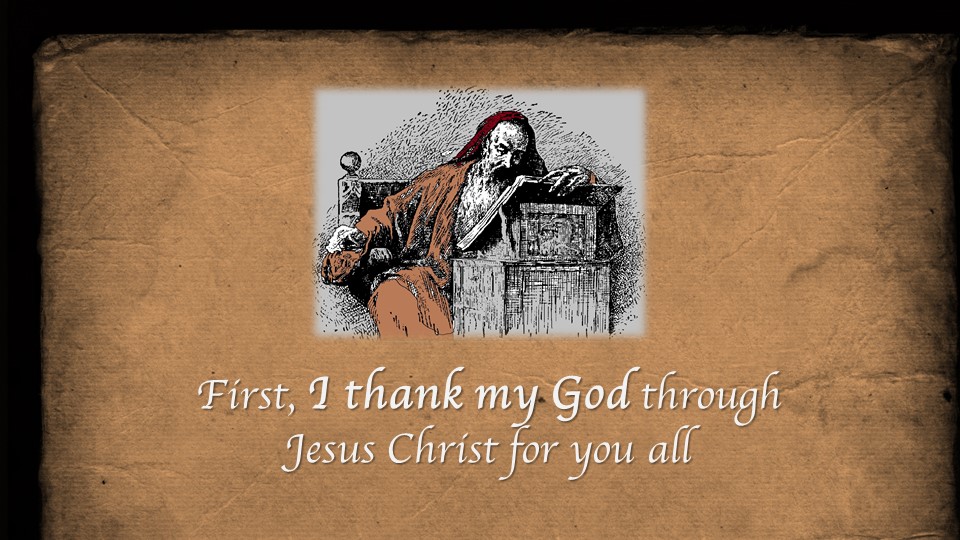
First, I thank my God through Jesus Christ for you all, that your faith is spoken of throughout the whole world. For God is my witness, whom I serve with my spirit in the gospel of His Son, that without ceasing I make mention of you always in my prayers. (Romans 1:8-9)

I Thank My God

Paul was a man full of thanksgiving. He enjoyed telling his brethren how much they meant to him and how thankful he was for their love, devotion, spirit, remembrance, and care for him and the work of the Lord. On numerous occasions, the apostle expressed his thanksgiving to God for individuals and congregations. It was a part of the language of Paul of Tarsus that he let others know how thankful he was of them. His thanksgiving was directed to God. He knew the joy of Christian fellowship was a blessing of being in Christ. Writing to the brethren in Rome, he calls them the beloved of God, called to be saints. His thanksgiving is given to God for the association of that beloved unity found only in the grace and peace of God the Father.

The church in Corinth suffered near-catastrophic problems of spiritual abandonment with petty divisions, carnality, immorality, legal disputes, questions of marriage, self-denial, and abuses in the worship services over spiritual gifts. Paul had to address some hard issues with challenging solutions that would have tested the metal of any congregation. He begins his letter with a message of thanksgiving. How do you find common ground to address the problems of Corinth? Paul tells them how thankful he is for their faith and belief in the coming of Jesus Christ.

In Paul’s letter to Philippi, he thanks God upon every remembrance of the brethren. In every prayer to the Father, the thankful apostle tells God how much the saints in Philippi mean to him and their fellowship in the gospel. The church in Thessalonica was on the prayer list of thanksgiving for Paul. He writes to them and tells them how thankful to God he is for their devotion to receive the word of God as truth and enduring suffering for the cause of Christ. Their faith grew exceedingly and the love of each one toward the others was well-known and Paul told them, “Thank you.” It was a hard letter to write to his friend Philemon, but Paul had some things that needed to be said about a slave named Onesimus. The apostle tells Philemon how thankful he was to God for his beloved friend and fellow laborer and that he often mentioned him in his prayers. Thanksgiving and prayer are bonded together with a heart of love.

A thankful heart is a joyful heart that is content with the blessings of the Father. Paul left a pattern of thanksgiving directed toward his Father as he prays for his fellow saints and brethren in Christ. Thanksgiving begins with an attitude of heart directed toward God. Paul would often say that he was thankful to God for others. He let God know of those he was thankful for. The register of prayer in the heavenly library was full of ledgers with Paul’s name on them. He constantly sent prayers to the Father for the church and the saints who worked tirelessly for the cause of Christ. “I thank my God” was a common theme of Paul’s writings because that was the common theme of his heart.

The joy of thanksgiving expresses gratitude through prayer. Paul told the Roman saints his prayers were without ceasing as he remembered them daily. The mind of Paul was filled with the love of his brethren. Thankful hearts are praying hearts and praying hearts thank God for all the saints who quietly work in their communities to let others see Christ. There is much to be downtrodden and depressed in a dark world, but prayers of thanksgiving are beacons of light reaching up to the throne of God. Be thankful. Pray. Thank God for the blessings of faithful brethren, courageous saints, and hard-working congregations that shine as lights in a perverted world. Thank you God.

Posted in Uncategorized | Leave a comment

Much Needed Clothing

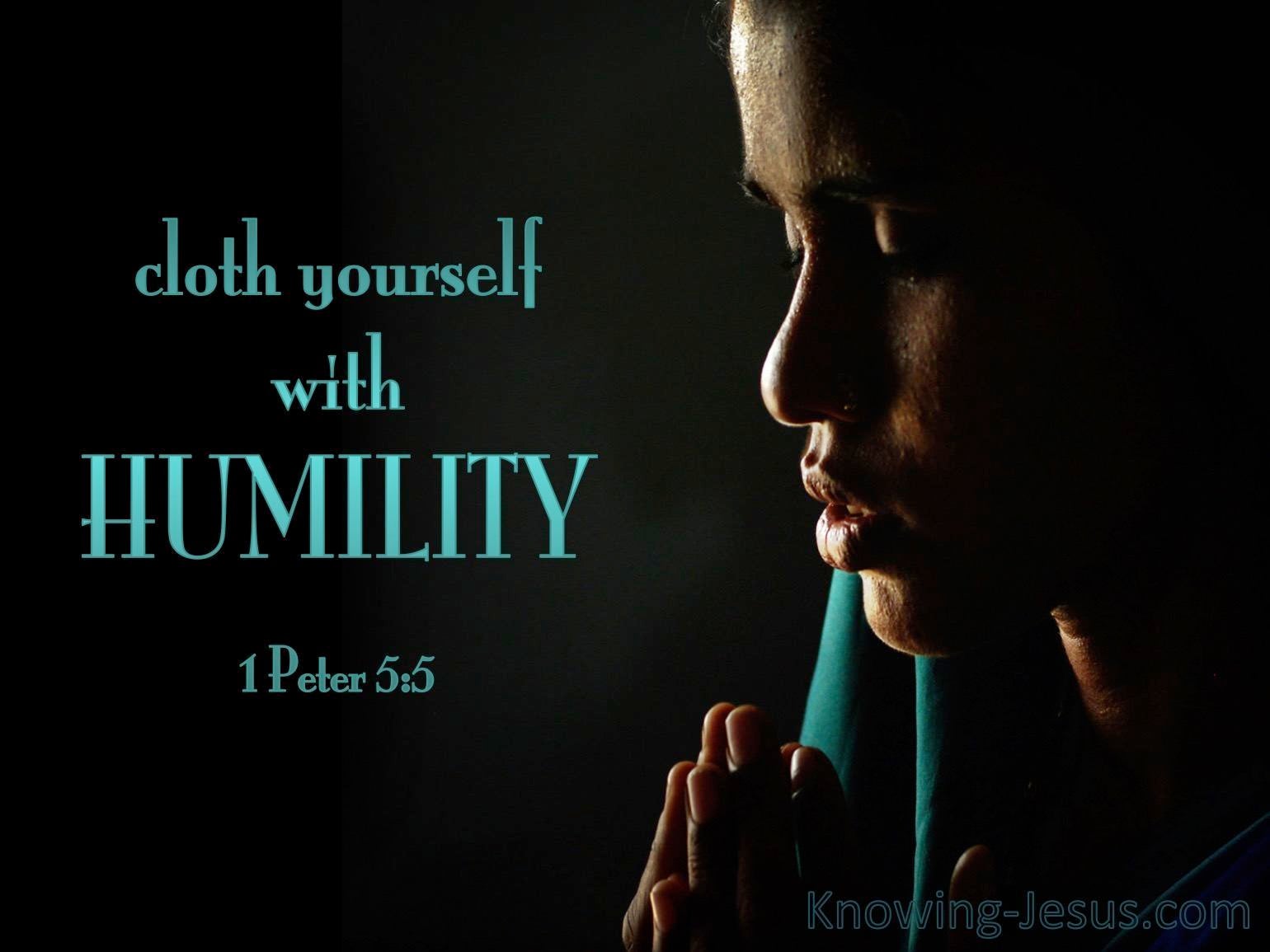
Likewise you younger people, submit yourselves to your elders. Yes, all of you be submissive to one another, and be clothed with humility, for “God resists the proud, but gives grace to the humble.” (1 Peter 5:5)

Much Needed Clothing

The manner of dress says a lot about a person. Someone who wears little or revealing clothes shows the world their contempt for modesty. Wearing too many garments embellished with ornaments can be immodest. There are admonitions in scripture that men and women should clothe themselves with modesty without the pretense of outward adorning. The child of God is more concerned about the inward clothing than the world’s fashions. Peter writes about the chaste conduct of women to be the hidden person of a gentle and quiet spirit and concludes his letter with the admonition for all to clothe themselves with the garments of humility.

Modesty comes from an understanding of how God desires His children to dress. The clothing of humility is a spiritual garment that covers the person’s spirit, showing the world a character of godliness. Humility is not a trinket worn on the ankle or bracelet hanging from the wrist. It becomes a garment that shows the world the heart of the person is seeking the exaltation of God. The praise of men is a tempting garment, but the child of God molds their character to humble themselves before God and man. Humility becomes the nature of the soul. Arrogance and pride are dismissed as unworthy garments. Anger, malice, and hatred do not fit the style of the Christian. Having an unforgiving heart destroys the garment of humility. The apparel of humility can only come from the wardrobe of the divine when a heart is humble before the presence of God.

What a person wears says much about their character. The garment of humility expresses the desire of the soul to be like Jesus Christ. When the Lord walked among men, everyone knew the kind of man He was by the garments He wore. This is not the outward appearance but the inward man Jesus manifested to others. He was kind and understanding, forgiving and gracious. His humility was found in Him driving the money changers from the house of His Father. The rebuke against the Pharisees did not come from hatred but humble submission to the will of His Father. Jesus wore the garment of humility and those who walk in His footsteps must wear the same clothing.

The garment of humility is only one size, but it fits everyone. It cannot be tailored to the desires of the human heart and cannot be modified. God created the garment of humility to be the same for all. Pride cannot be a part of the garment. Human wisdom will not alter its character. Humility begins with submission to the will of the Father. It requires emptying the soul of what is desired in man to accept the rule of God first. Submission is the thread permeating the garment. Only when a man allows the kingship of Christ to rule the heart will the armor of God fit like a garment of humility. This garment will protect the child of God from the wiles of the devil, warm the heart with the love of God, and show the world the power of salvation in Jesus Christ. One final note about the garment of humility: it must be worn to have any value. Put on the Lord Jesus Christ with a humble heart and wear this garment each day. Humble yourselves in the sight of the Lord and He will lift you up.

Posted in Uncategorized | Leave a comment

Why Were There 153 Fish?

Simon Peter went up and dragged the net to land, full of large fish, one hundred and fifty-three; and although there were so many, the net was not broken. (John 21:11)

Why Were There 153 Fish?

After His resurrection, Jesus spent forty days with His apostles, teaching and admonishing them concerning the kingdom of God. He was in bodily form and, on one occasion, enjoyed breakfast by the sea with His apostles. After a night of fishing, Peter, Thomas, Nathaniel, James, John, and two other disciples saw a man on the shore who asked if they had any food. They replied they had not, and the man told them to cast the net on the right side of the boat and they would find fish. So they did, and they couldn’t haul in the net because there were so many fish in it. John, the apostle, realized it was Jesus and told Peter, who jumped into the sea swimming toward Jesus. The other disciples were about one hundred yards from shore and brought their small boat to land. They found breakfast waiting for them when they arrived—fish cooking over a charcoal fire and some bread. Jesus told them to bring some more fish. John records the haul that morning was one hundred fifty-three large fish. With such a load, the net did not break.

The Holy Spirit points explicitly out there were one hundred fifty-three fish. Nothing more is said about the number and no reference is made of such. It seems unusual to determine there were one hundred fifty-three fish, but the scriptures are exact on the number. Not less or more – exactly the number John stated. Why were there one hundred fifty-three fish? Men have tried to determine the symbolic meaning of this enumeration over the centuries.

Augustine observed that 10 is the number of the law and 7 that of the Spirit, which being added equals 17, and all the numbers from 1 to 17 when added equal 153, and thus the number practically represents all the elect. Hence, the one hundred fifty-three fish are explained. This is like the question, “Why are fire trucks red?” One answer is that fire trucks have four wheels and eight firefighters: four plus eight equals twelve. There are twelve inches in a foot. A foot is a ruler. Queen Elizabeth is a rule, and the ‘Queen Elizabeth’ is one of the largest ships on the seven seas. Seas have fish. Fish have fins. The Finns fought the Russians. The Russians are red. Fire trucks are always rushin’. Therefore, fire trucks are usually red. Between Augustine and explaining why fire trucks are red, the wisdom of man strains under the weight of the ridiculous.

John does not explain any significance to the one hundred fifty-three fish. The fact remains the men put the net on the right side of the boat and caught a huge cache of large fish that, when counted, equaled one hundred fifty-three fish. It was quite a miracle to catch that many fish. Trying to understand the number of fish misses the point of the miracle or the opportunity of Jesus with His disciples. There is no significance to the number and no hidden meaning. The wisdom of men often clouds itself in the pursuit of silly fables and mysteries within scripture that have no relevance to truth. Men have failed to understand the simple truth of God’s word, exercising useless examinations of fables and genealogies. When the Lord wants to make a number lesson, He explains it. The problem with human wisdom is they seek after things beyond the scope of God’s word.

Many reject the Bible because they look too deeply for mystery or intrigue hidden treasures. Topics range from where Cain found a wife to whether Jesus had long hair and a beard. Hours are wasted over trivial matters that have no bearing on finding the truth. It is like digging for treasure with a toothpick discovering the microscopic evidence of a grain of dirt instead of seeing the vast field of God’s grace and love in Jesus Christ. The result often is failing to obey the word of God. Baptism is rejected because it has been scrutinized and sanitized to the point of ridicule. Why is baptism necessary for salvation? Jesus said it was. There is a pattern for baptism explained by the New Testament writers, but the three thousand (why that number?) on Pentecost did not question what Peter said – they obeyed. Paul did not argue with Ananias – he arose and washed away his sins.

The Bible is written to direct the heart of every man to the eternal throne of God. If God cannot give a man a book he can read and understand, how great is His wisdom or power? It is human wisdom that worries more about the why of one hundred fifty-three fish than simply accepting the story and seeing God’s power. An open heart is necessary to accept the teachings of Jesus Christ. When a child reads the story, he does not ask about the number. He sees it more clearly than most. It becomes to him a story about Jesus eating breakfast with His disciples by the seashore. What a beautiful story. And oh, by the way – they caught one hundred fifty-three fish that day. That is a story they told again and again.

Posted in Uncategorized | 2 Comments

Everyone Has A Place In The Kingdom

I commend to you Phoebe our sister, who is a servant of the church in Cenchrea, that you may receive her in the Lord in a manner worthy of the saints, and assist her in whatever business she has need of you; for indeed she has been a helper of many and of myself also. Greet Priscilla and Aquila, my fellow workers in Christ Jesus, who risked their own necks for my life, to whom not only I give thanks, but also all the churches of the Gentiles. Likewise greet the church that is in their house. Greet my beloved Epaenetus, who is the firstfruits of Achaia to Christ. Greet Mary, who labored much for us. Greet Andronicus and Junia, my countrymen and my fellow prisoners, who are of note among the apostles, who also were in Christ before me. Greet Amplias, my beloved in the Lord. Greet Urbanus, our fellow worker in Christ, and Stachys, my beloved. Greet Apelles, approved in Christ. Greet those who are of the household of Aristobulus. Greet Herodion, my countryman. Greet those who are of the household of Narcissus who are in the Lord. Greet Tryphena and Tryphosa, who have labored in the Lord. Greet the beloved Persis, who labored much in the Lord. Greet Rufus, chosen in the Lord, and his mother and mine. Greet Asyncritus, Phlegon, Hermas, Patrobas, Hermes, and the brethren who are with them. Greet Philologus and Julia, Nereus and his sister, and Olympas, and all the saints who are with them. (Romans 16:1-15)

Everyone Has A Place In The Kingdom

The church of the New Testament was an amazing group of individuals who had different talents, functions, opportunities, and works that made them distinct yet familiar. Paul worked feverously to spread the gospel throughout the world and he did not do it alone. Luke tells the story of Paul’s journeys, listing a few of the fortunate souls who could travel with the apostle – including himself. It was not an easy life. When Paul spoke of hardships on the road, including shipwrecks and distress, there were disciples with him suffering the same things. Writing to the saints in Rome, Paul opens a door of thanksgiving for all the people that worked so hard for the kingdom. The list is not exhaustive and there can be little doubt the rollcall of the faithful was quite long. Paul shows in his exhortation how there is something for everyone to do in the kingdom of God.

Phoebe was a dear sister of Paul, a servant of the church. Paul commends her for the help she gave so many, including himself. Priscilla and Aquilla had the distinction of being fellow workers in the Lord with Paul. The exhaustive work of Paul was aided by saints like Priscilla and Aquilla, who were not passive helpers but co-workers enduring the hardships of preaching. The list of fellow workers included Urbanus, Tryphena, Tryphosa, and Persis. To be a laborer is to be a hard worker. Joining Paul on any trip included hardship and some (like Demas) could not do the work. It is not known how Priscilla and Aquila risked their own necks for Paul but this couple was locked into a fervent dedication to the work of the Lord. Traveling with a man like Paul could be dangerous.

Epaenetus was a beloved of Paul who was an early convert when the apostle preached in Achaia. There was a woman named Mary who labored much with the group. Everyone wants to know her story. Andronicus and Junia labored with Paul and suffered imprisonment with him. It is possible these two were related to the apostle, but it is uncertain. What is certain is their dedication to the kingdom of God to suffer the hardships of prison. Among the apostles, their names were remembered. Amplias was among a list of beloved in the Lord, including Stachys. Apelles was a tried and faithful disciple of Christ. Whatever tribulation Apelles endured; it was for the love of God.

Several brethren used their homes for the brethren to worship. That would take a lot of energy and work to prepare the house and open their homes to others. Priscilla and Aquilla opened their home as Paul would later commend Nymphas (Laodicea) and Philemon for the same labor in the Lord. Paul greeted the families of Aristobulus and Narcissus who were in the Lord. He mentions Rufus and his mother and Paul commends his own mother (very interesting) along with the sister of Nereus. Families are essential to the work of the Lord.

Herodion was a countryman of Paul who was commended. Paul is thankful for Asyncritus, Phlegon, Hermas, Patrobas, Hermes, and the brethren who are with the apostle. Philologus and Julia are set apart for their faithfulness. As Paul concludes his letter to Rome, he commends Timothy, his fellow worker and is thankful for Lucius, Jason, Sosipater, Tertius, Gaius, Erastus and Quartus. It is quite a list – a list of names shows how each one did their part and helped the kingdom of God grow.

Two thousand years have not faded the exhortations given by Paul to the illustrious list of faithful saints. Most of the names are unknown but they are known to God. Everyone has a place in the kingdom of God to do what they can do. Not everyone can be an apostle like Paul, but the hard-working preacher of the gospel recognized the work of a host of saints that labored hard for the kingdom of God. Many more could be listed, but time would not allow. Paul commends the saints. God knows the saints. There is something for everyone to do. Let us all be busy and work and do all we can do for the kingdom of God.

Posted in Uncategorized | Leave a comment