Imitate God

Therefore be imitators of God as dear children. (Ephesians 5:1)

Imitate God

To imitate God is to be a follower of God in how He Himself reveals His character to the world. When a man obeys the gospel of Christ, he becomes a child of God. As a child, the person begins to take on the characteristics of the Father who bore him into the kingdom of Jesus Christ. The imitation of God is a learned experience as the old man of sin is removed with the new man created according to God, in true righteousness and holiness. There are many traits of God that are replicated in the life of the Christian. These qualities identify the man as being like God the Father as he takes on his heavenly Father’s personality, thoughts, and expression.

There are many characteristics of God that identify His eternal glory and power. God does not lie. He gets angry, but it is righteous anger. There will never be any corrupt speech from the mouth of God. The Father does not possess bitterness, wrath, anger, clamor, or evil speaking. God is full of kindness, tenderness, and forgiveness. These attributes are to be imitated in the life of the Christian so they will be like their Father. God is full of love, and He abhors evil. The Father is full of light as His Son is the light of the world. The wisdom of God is eternal. All of these things are to be imitated in the life of the child of God.

Walking like God is to learn to imitate Him so the world will no longer see self but the image of the Father. There are many traits that people possess that identify them as members of a family. Sons will take on the persona of their fathers, and daughters will grow to look and behave like their mothers. This is a natural evolution of family traits shared by parents and children. The more the Christian spends in the word of God, the more they learn how to imprint the image of God on their hearts. Imitating God becomes who a person is. When the world looks at the individual, they see the glory of the heavenly Father in kindness, forgiveness, and holiness. Sadly, the world looks like the Father of lies, imitating the character of Satan. All men are children. The question is: who do you imitate? The glory of the Father will bring eternal life. Imitate God as dear children.
Posted in Uncategorized | Leave a comment

The Rapture Is Real

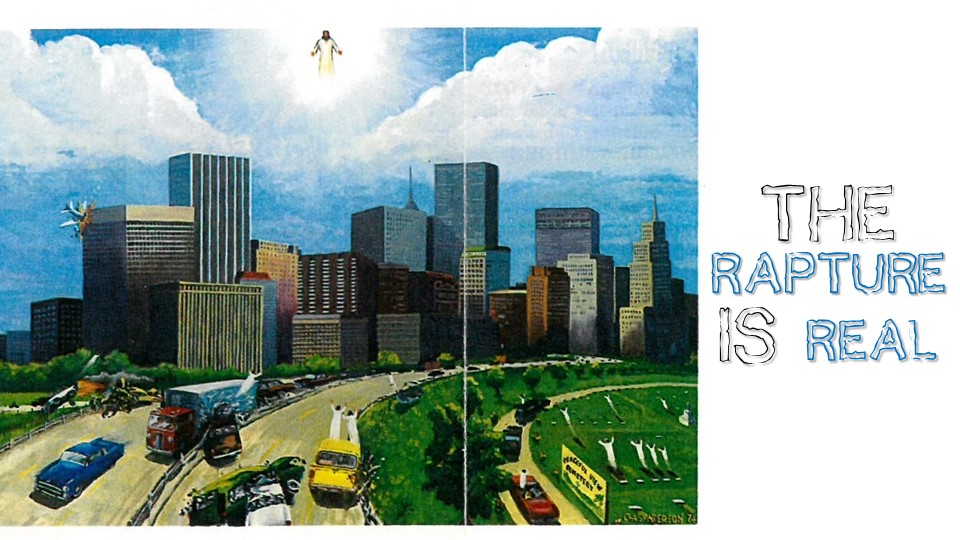
For this we say to you by the word of the Lord, that we who are alive and remain until the coming of the Lord will by no means precede those who are asleep. For the Lord Himself will descend from heaven with a shout, with the voice of an archangel, and with the trumpet of God. And the dead in Christ will rise first. Then we who are alive and remain shall be caught up together with them in the clouds to meet the Lord in the air. And thus we shall always be with the Lord. Therefore comfort one another with these words. (1 Thessalonians 4:15-18)

The Rapture Is Real

One of the popular doctrines in recent history is the teaching of a rapture where saints of God mysteriously disappear without warning. The rapture precedes a seven-year habitation of the righteous with Christ, followed by a battle of Armageddon and Jesus establishing a kingdom to reign for a thousand years. This doctrine is credited to being authored by John Nelson Darby (1800-1882), a 19th-century theologian. Darby was an influential member of the Plymouth Brethren and founder of the Exclusive Brethren.   Hal Lindsey’s book The Late Great Planet Earth became a textbook in the 1970s on the doctrine of premillennialism, and the Left Behind series by Tim LaHaye helped the teaching become entrenched in the minds of many in the religious world. In the early 20th century, the doctrine became the basis of the Schofield Reference Bible.

The rapture is real fiction. Of the many doctrines created by the imagination of human wisdom, the teaching of a rapture is nowhere found in scripture in any form or suggestion. Honest students of scripture recognize when a doctrine is not found in the Bible, it is false – without question. The word rapture is never found in the word of God. There is nothing more clearly defined than the absence of the rapture. Remarkably, the proof text often presented as evidence of a rapture shows it cannot be a quiet disappearance of the saints.

Paul encouraged the saints in Thessalonica to comfort one another with the knowledge of Christ’s return. The early Christians believed strongly in the return of Jesus Christ, as if it could happen at any moment. Many first-century disciples did not understand death and resurrection and became concerned about what would happen to those who had died when Jesus returned. They were afraid the dead would not enjoy the fruits of the coming of Jesus. Paul assured them there was nothing to be concerned about. Jesus would return to earth, and those who had fallen asleep in Jesus (died) would not be left behind.

The coming of the Lord would be a very loud and visible event. Jesus will descend from heaven with a shout. This does not suggest a quiet, invisible appearance of the Lord to a select few. A heavenly shout is something heard worldwide at the same time. Those in Kansas would hear the shout as those in New Zealand would also hear the sound of heaven burst forth. In addition, the voice of the archangel and the trumpet of God would be heard. It is unclear what the voice of an archangel sounds like and how loud God’s trumpet will be, but there is no doubt it will be the most deafening sound human ears have ever heard. The followers of the rapture say there will be no sound which means the rapture is real fiction.

There is nothing further from the truth than the Left Behind dogma of a rapture. Jesus Christ will return for only a second time, and the world will be destroyed. He will never set up a kingdom on earth because He is reigning at the right hand of God as King of Kings and Lord of Lords. The dead in Christ will rise first, and then in the twinkling of an eye, those who are alive and remain will be caught up together with all the saved in the clouds (not earth) to meet the Lord in the air (not the earth). The good news of grace is this is how the saints will always be – with the Lord.

The rapture is real fiction and a fairytale that will deceive the hearts and minds of those who refuse to be honest with the Bible. Nothing in the Bible suggests a rapture. This false doctrine is only the imagination of human wisdom. Be honest and be true. Do not accept or believe such a thing will take place. Jesus will return to earth again, and no further work will be done. His return will bring a final end to creation and then the judgment. Forget the rapture – are you ready for final judgment?

Posted in Uncategorized | 3 Comments

The Six Companions Of Baptism

There is one body and one Spirit, just as you were called in one hope of your calling; one Lord, one faith, one baptism; one God and Father of all, who is above all, and through all, and in you all. (Ephesians 4:4-6)

The Six Companions Of Baptism

One of the most prolific doctrines changing the plan of salvation is the denial of the necessity of baptism. Satan has crafted a specific part of God’s will to ensure the destruction of those who believe they are saved; when they are not. In the Garden of Eden, the devil deceived Eve with great subtlety. He continues his onslaught against the pattern of salvation. Most religious groups who say they follow Christ deny that baptism is necessary for salvation. Salvation by faith only is a significant doctrine fortified by the belief in a sinners’ prayer for salvation. The idea of salvation through grace alone removes any notion of the necessity of baptism as nothing more than a work. Do the scriptures teach baptism as a requirement for salvation?

Paul’s letter to the church at Ephesus is a declaration of the eternal purpose of the church. He emphasizes the character of faith and the immeasurable joy of grace. Ephesians is a letter filled with faith and grace. Paul unveils the eternal purpose of God of things planned before the foundation of the world. Redemption would come through the blood of Christ, the forgiveness of sins, according to the riches of God’s grace. The word of truth is central to the gospel of salvation and the necessity of belief. Part of the eternal plan was the church showing the manifold wisdom of God. Jesus Christ is the head of the church, which Paul calls the body. The elements of redemption are found in the teachings of blood, peace, faith, grace, and the church, highlighted throughout Ephesians.

Paul appeals to the saints to find the unity of the Spirit in the bond of peace by acknowledging the seven pillars of truth in the grace of God. There is one body, and as he declared earlier, the body is the church showing there is one church. Everyone would agree there is one Holy Spirit. Through the grace of God, there is only one hope for the future. Jesus declared He was the only way, truth, and life to the Father. Paul affirmed there is only one Lord.

Contrary to the worldview of religion, there is only one faith. Coexisting is impossible for those who follow Jesus Christ because there is no other faith. True believers accept there is only one God. Accepting other gods is vain worship and an abomination to the one true God. Almost all who follow Jesus Christ and identify as a ‘church’ that abides by the teaching of Christ would accept and agree to the above six pillars of truth. All of these are necessary for salvation. It is impossible to be saved without the body, the Spirit, the hope, the Lord, the faith, and the one God outlined by Paul.

The sixth pillar of unity is baptism. If baptism is not necessary for salvation, why did the Holy Spirit, through the pen of the apostle Paul, declare there is one baptism? To deny baptism as essential for salvation is to deny the other pillars of unity. In fact, refusing to accept water baptism as the means of salvation denies the Godhead: the Holy Spirit, the Lord (Jesus Christ), and God (Father of all, who is above all, and through all). The early church taught the necessity of baptism. There is only one baptism because there is only one Lord. Paul included faith and grace earlier in his letter. Water baptism does not deny faith and grace but expresses the obedience of a heart filled with faith in Jesus Christ and the amazing grace of the Father. Paul wrote what Jesus said – anyone who believes and is baptized will be saved. But anyone who refuses to believe will be condemned.

Posted in Uncategorized | Leave a comment

Learning About Jesus

But you have not so learned Christ. (Ephesians 4:20)

Learning About Jesus

Osmosis is the process of gradual or unconscious assimilation of facts over time. There is little effort on the part of the individual to gain knowledge but rather a natural accumulation of information. Children learn to speak their native tongue by association with the family. Customs often are part of the fabric of life rooted in everyday life. Some things in life just come naturally. The knowledge of Jesus Christ does not come through passive effort or a process of familial osmosis just because one is brought up in the surroundings of the Bible. When children go to school, they learn through activity, effort, exercise, and study. Sitting in the school room will not give them the knowledge required to graduate. Those students who fail to apply knowledge will not be able to complete their education. This is understood in the public realm of seeking a higher education, but it seems many in the Lord’s church believe knowing Jesus comes simply by association.

Jesus Christ is the Son of God. The nature of a higher being can be learned through the agency of natural revelation, as seen in the creation, but it is impossible to learn about Jesus through nature. Creation testifies to the handiwork of the Divine. Revelation declares the story of Jesus through the written word. Examining the world through a microscope opens the revelations of God’s creative hand in forming a perfect world. Peering into the depths of space with all its grandeur will not testify to the existence of the Son of God. To know Jesus demands learning. Understanding who He is, where He came, why He emptied Himself, and how He will save can only come through the rigors of learning. The amount of effort will determine the level of knowledge. Learning about Jesus takes time – a lifetime. Understanding His character requires opening the Bible and plumbing the depths of the written word to see the grace of God’s Son. The less time spent learning about Jesus lessens the faith in the Son of God.

There will never be enough lifetimes to learn all there is to know about Jesus, but one life spent in devotion to a study of the life of Jesus will answer all the questions that trouble man. To know Jesus is to know the Book. Like all things worth seeking, hard work demands time spent studying God’s word to know everything about Jesus. God has blessed mankind with a written testimony of His mind to reveal to the world, Jesus Christ. There has never been a time in the history of man the word of God is so readily available through print and electronic revelation; yet, it seems to be the least-read message in the world. The Bible is the most prolific book published, but it will have little value if it is not read and studied. Paul reminded the saints at Ephesus they had learned Jesus and exhorted them to use that learning to renew the spirit of their minds. New men in Christ come from those who renew their hearts to read and study the life of Jesus and the story of Jesus. The Bible is the testimony of Jesus. Read it to be wise. Learn about Jesus. Don’t just read the words. Allow the life of Jesus to change your life. Learn.

Posted in Uncategorized | Leave a comment

The Holy Spirit And Jesus

But He, knowing their thoughts, said to them: “Every kingdom divided against itself is brought to desolation, and a house divided against a house falls. If Satan also is divided against himself, how will his kingdom stand? Because you say I cast out demons by Beelzebub. And if I cast out demons by Beelzebub, by whom do your sons cast them out? Therefore they will be your judges. But if I cast out demons with the finger of God, surely the kingdom of God has come upon you. (Luke 11:17-20)

The Holy Spirit and Jesus

The story of the Holy Spirit cannot be known without understanding the relationship between the Spirit and the Son. Jesus did not consider it beneath Him to come to earth and take on the form of fleshly man. As God, He emptied Himself of the divine to share in the mortal. The transition of God to man was the work of the Holy Spirit. From the writings of Moses through all the prophets, the Spirit spoke longingly about the revelation of the life of Christ. He affirmed thousands of years before the birth of Jesus that a child would be born that would bring redemption to all men. In the Garden of Eden, the promise of the Seed was made. Abraham was promised to be the father of the faithful. The Law of Moses was given to protect and guide the seed promise through nearly fourteen hundred years of history.

When the time came for Jesus to come to earth, a maiden named Mary was chosen to be the carrier of the Divine. Matthew records that Mary was with child by the Holy Spirit. An angel told Joseph the Child conceived in his wife’s womb was of the Holy Spirit. This was not the first time the Spirit and God’s Son had a part in the scheme of redemption. At creation, the Holy Spirit hovered over the face of the waters, and as part of the Godhead, Jesus was the Creator and Maker of the world. Now the plan to redeem man demanded the Son to leave the glory of the Father and dwell among men. The Holy Spirit was the agency to carry out the divine plan. Mary was a virgin through whom the Spirit would conceive the seed of God’s Son to be born as all men in her womb. Like all men, Jesus was born of a woman.

At the age of thirty, Jesus began His ministry. John the Baptist preceded Jesus to prepare the way for God’s Son. Jesus came to John to be baptized and rising from the waters, the Holy Spirit descended as a dove upon Him. The voice of the Father clearly spoke of His approval of the ministry of Jesus. The Godhead was found at the baptism of Jesus, with all three members of the Divine blessing the baptism. Later, John would declare he saw the Spirit upon Jesus, affirming He was the Son of God. When Peter preached to Cornelius and his household, he told them God anointed Jesus with the Holy Spirit and power. The ministry of Jesus was a manifestation of the power of the Holy Spirit, whom Jesus called the “Finger of God,” as the Father worked through the Son. Shortly after His baptism, Jesus was driven by the Spirit into the wilderness to be tempted by the devil.

Following the temptation, Jesus was full of the Holy Spirit in power, affirming His divinity. God put the Spirit upon Jesus to manifest His glory and fulfill the prophets’ words. Jesus never did any miracles before His baptism as He was endued with power from high only from the affirmation of the Father at His baptism. Casting out demons, healing the sick, changing the natural elements of the world, and raising the dead was accomplished by the power of the Spirit. Like in Creation, the Son and the Spirit worked in tandem to show the power of God to the world.

On the night of His betrayal, Jesus assured the eleven they would not be left without a Helper. Jesus promised to send the Holy Spirit to guide the apostles and help them remember what He had taught them. The eleven were told to remain in Jerusalem when the power from the Father would be put upon them through the Holy Spirit. When the work of Jesus was completed on earth, the Holy Spirit began His active work of the continued revelation of God’s plan to redeem men. The baptism of the Holy Spirit upon the apostles began the establishment of the New Testament church, spreading throughout the world. Through the teaching of the gospel, the name of Jesus was preached to every soul under heaven through the revelation of the Holy Spirit. The will of the Father was accomplished through His Son, Jesus Christ, and could not have been completed without the work of the Holy Spirit. Jesus is incomplete without the Holy Spirit.

Posted in Uncategorized | Leave a comment

The Personality And Deity Of The Holy Spirit

Finally, brethren, farewell. Become complete. Be of good comfort, be of one mind, live in peace; and the God of love and peace will be with you. Greet one another with a holy kiss. All the saints greet you. The grace of the Lord Jesus Christ, and the love of God, and the communion of the Holy Spirit be with you all. Amen. (2 Corinthians 13:11-14)

The Personality And Deity Of The Holy Spirit

To possess a personality is to have the combination of characteristics or qualities that form an individual’s distinctive character. This is especially true in the quality of being a person distinct from a thing or an animal. To have a personality suggests a set of behaviors, cognitions, and emotional patterns from the nature of the individual. This is found in the myriad ways human beings differ from one another, defining who they are as individuals with specific characteristics that distinguish them. Among the earth’s six billion inhabitants, six billion personalities are possessed by every man, woman, and child. Still, they share the common denominator of being created in the image of God. One humanity with unlimited personalities.

The character of the Godhead is united under the identification of being God. Yet, each person of the Divine Nature possesses individual traits identifying them as a part of the same. The Father has His identifying marks that make Him Lord God and Father, while Jesus is shown to be the only begotten Son of the Father. Completing the triad of the Godhead is the Holy Spirit, who also possesses personalities and identifying markers showing Him to be God and yet distinct in His own right. He has much the same attributes as the Father and Son. The Holy Spirit utters speech communicating the will of the Father. As a witness, He testifies as the Spirit of truth. Through the word, the Holy Spirit teaches and reminds men of the plan of the Father. Jesus said the Helper (Holy Spirit) would guide men into all truth as the Father directs him. The scriptures show the Holy Spirit guiding men in the work of the kingdom and, on occasion forbidding the plans of men to be carried out. Paul and Silas wanted to preach the gospel in Asia, but the Holy Spirit did not allow them. Paul often spoke of the Holy Spirit and, in his letter to Rome, outlined the work of the Holy Spirit in the lives of God’s people.

It is clear the Holy Spirit is a personal being who has a mind, seeking the completion of the work of God, possessing knowledge, and showing love. He is not just an entity that is abstract and mindless. The Holy Spirit is a person of the Godhead sharing in the emotional makeup of a personality. Everything about Him is divine, like the Father and the Son. Like the Father and Son, the Holy Spirit experiences men’s positive or negative responses. It is possible for men to grieve the Holy Spirit and to despise Him. In the days of Jesus, the religious leaders blasphemed the Holy Spirit bringing the wrath of God upon them. Peter rebuked Ananias and Sapphira for lying to the Holy Spirit, and Stephen charged the Jewish council with resisting the Spirit. A personal being can only experience these emotions.

The nature of the Holy Spirit is like that of the Father and the Son. When God created the heavens and the earth, the Holy Spirit was an active agent of creation. John baptized Jesus, and the Holy Spirit descended in the form of a dove while the Father spoke His approval of His Son. The Spirit carries the identifying marks of a divine personality as one who is omniscient, omnipresent, and omnipotent. Jesus was begotten by the Holy Spirit and called the Son of God. Worshiping the Father without showing honor to the Son and the Holy Spirit is impossible. The Spirit bears witness with the spirits of those who are saved; they are the children of God. His role in salvation is secured in the ages as a vital part of the Godhead made up of God the Father, Jesus the Son, and the Holy Spirit. To deny the essential part of the Holy Spirit to the divine revelation of God is to deny the authenticity of the Bible. Knowing the personality of the Father can only come from the reading of the word of God. The Holy Spirit manifested the personal character of the Creator on the pages of the Bible. Without the completed revelation by the Spirit, man would not know God. Reading the Bible reveals the Godhead as complete and whole yet individual and responsive to the needs of men. Thank God for the Holy Spirit.

Posted in Uncategorized | 2 Comments

The Most Important Election In History

Therefore, brethren, be even more diligent to make your call and election sure, for if you do these things you will never stumble; for so an entrance will be supplied to you abundantly into the everlasting kingdom of our Lord and Savior Jesus Christ. (2 Peter 1:10-11)

The Most Important Election In History

One of the great freedoms enjoyed by citizens of the United States of America is the opportunity to vote for those who lead the nation. Not everyone votes and the numbers can be very low in some years. There is a lot of rhetoric about the coming election as the most important in the country’s history. That would be true with each election, with exceptions of historical significance having a greater impact than others. One of the apparent realities of each election year is that (by God’s grace) the sun rises on the day after the election, and life continues. Arguments are made about whether the election was fair and whether the elected official had a right to be chosen by the populace. Those who lose will argue foul, and the political intrigue and backbiting will continue. The election process is not a pure science, and there will always be some level of corruption and deceit.

Many countries do not afford their citizens the right to vote. Some leaders will allow elections to take place, but these elections are nothing more than screens of deceit to appease the conscience of the citizens with the outcome predetermined. Corruption is rampant as men of less quality are positioned in seats of power to rule over their nations as despots. The election laws of corrupt nations do not look out for the good of the people. There is no truth in the process of human wisdom seeking the exaltation of self, and it is the innocent people who suffer. Democracy is a fickle mistress that allows the allurement of corruption to taint the election process. When the election is over, truth has often suffered more than anything that is won. Human wisdom exalts itself on the deceptive notion of honesty and truthfulness. But there is an election that is beyond the reach of the corruption of man, and that is the spiritual election of salvation.

Before the world was created, God had a plan to elect His creation to salvation. Promised through Jesus Christ, the need for salvation found its worth at Calvary when human wisdom killed the Son of God. Obedience to the will of the Father removed the wrath of God as the blood of Christ washed away sin. Faith alone could not save, and the heart of man learned to follow the pattern of obedience to salvation. No clearer demonstration of that can be found than the admonition of Peter to the pilgrims of the Dispersion of his day. Certain traits are necessary for salvation, including faith, virtue, knowledge, self-control, perseverance, godliness, brotherly kindness, and love. All of these are tempered by diligence to add these graces to the heart of the obedient servant. If a man adds these to his life, he will enjoy the greatest election in the history of man.

There is a powerful statement by Peter to give assurance to the saints of God. If a man employs the graces of God in his life, he will not be unfruitful or barren in the knowledge of Christ. Allowing the heavenly elements of grace to fill the heart, the soul can make its calling and election sure – to confirm a man’s calling and election. There is no corruption in this promise. God has promised the hope of eternal life to all who seek His will and follow the patterns of grace. The election of the saint is the greatest election a man can experience. Those who seek public office gain a moment’s glory in the twilight of human wisdom, but those who seek election in Christ will reign throughout eternity at the feet of the heavenly Father.

The greatest election in history is when a man is saved in the blood of Christ. Not everyone will be elected because few men accept the terms of election. The terms of eternal election cannot be corrupted. Only those who follow the laws established by God will be saved. There will be no one in heaven who has not been elected by the will of the Father. Many will believe they are chosen, but because they corrupted the process of God’s word, they will be lost. The final realization of the eternal election is realized when all who are saved know the grace of God saves them; those who are lost will agree with the righteousness of God they deserve to be denied eternal life. No one will argue about the results. All will agree. Eternal election is in Jesus Christ.

Posted in Uncategorized | Leave a comment

Touching Jesus

Now a woman, having a flow of blood for twelve years, who had spent all her livelihood on physicians and could not be healed by any, came from behind and touched the border of His garment. And immediately her flow of blood stopped. And Jesus said, “Who touched Me?” When all denied it, Peter and those with him said, “Master, the multitudes throng and press You, and You say, ‘Who touched Me?’ ” But Jesus said, “Somebody touched Me, for I perceived power going out from Me.” (Luke 8:43-46)

Touching Jesus

It was not uncommon for multitudes to throng around Jesus. During His days of popularity, thousands would come to hear him preach. Five thousand men (not counting women and children) came from surrounding cities to listen to the words of the man from Nazareth. When Jesus returned from the country of the Gadarenes, a great multitude gathered to Him by the seashore. A ruler of the synagogue met Jesus, begging Him to heal his dying daughter. Jesus followed Jairus to his home as crowds thronged Jesus. The people were so thick around Jesus that they pressed Him so that He could hardly move. Everyone was touching Jesus. As Jesus walked, He felt the power of the Holy Spirit leave Him, and Jesus demanded to know who had touched Him. It was puzzling as Peter said to Jesus that everyone was touching Him. The apostle could not imagine what Jesus was asking as the crowds pressed so tightly around Jesus.

A lone figure was standing outside the thronging crowd that no one noticed. A woman who had suffered from a blood condition for twelve long years watched the crowds press around Jesus. She had spent all her livelihood seeking a cure but found no relief. Hearing Jesus of Nazareth was nearby; the unnamed woman took a leap of faith. She believed if she was able but to touch the garments of Jesus without Him or anyone knowing; she would be healed. According to the law, she was an unclean woman, and anyone she touched would be unclean. This presented a conflict with her decision to touch the garments of Jesus. The crowd was so tightly surrounding Jesus she would have to nearly fight her way through the crowd to reach Jesus, touching many people in her pursuit of healing. Nothing would deter her from seeking relief. Her faith moved her with great courage to ignore the crowd and seek only to touch the clothing of Jesus.

The faith of the woman did not ask for a private audience with Jesus so that she could explain her condition. She did not wait until a more convenient time. Her courage moved her to make a bold and decisive decision to accept the impossible. Medical knowledge at that time had failed to heal her, and there was no answer to her condition. Jesus was in the midst of a thronging crowd, and the woman believed the power of God was so great she would have only to touch the garment of Jesus to be healed. Casting aside her fears of retribution by those she touched along the way, the Holy Spirit watched her weave through the crowd and steal a touch from the garment of Jesus. Immediately she was healed. God blessed her body with immediate relief, and she could feel the healing – and so did Jesus.

There were many people thronging Jesus so tightly He could hardly move. It is likely among all those touching Jesus; there were people with various degrees of physical sickness and disease, some known and some unknown. Out of all the crowd, none were healed but the woman with an issue of blood. Was the woman healed because she touched Jesus? No, she was healed because she believed in what the touch of Jesus would do for her life, and she acted on that faith. Touching Jesus (characterized by the crowd) did not save. Obedient faith with courage is how the woman was healed. Many people today thronging Jesus tightly have never enjoyed the healing power of faith and obedience. The only person healed that day was the woman who acted on her faith and, through courage, denied herself and the world to accept the impossible. That is true healing today. When a person’s heart acts on their faith with courage and determination to seek the power of Jesus to change their lives.

The woman who touched Jesus suffered from a blood disorder but what people need to see today is the disorder of sin. Touching Jesus will not take away sin. Coming to Jesus believing that only He can take away sin and facing the pressure of the world with courage in obedience is where healing comes. There are many obstacles between the woman and Jesus. She overcame, ignored, and conquered those obstacles and found relief in obedient faith. Sin will never leave those who press in on Jesus but have no faith in how He can change their lives. They remain as they are. Those who come to Jesus with obedient faith will find healing.

Posted in Uncategorized | Leave a comment

Willing Obedience In The Face Of Great Pain

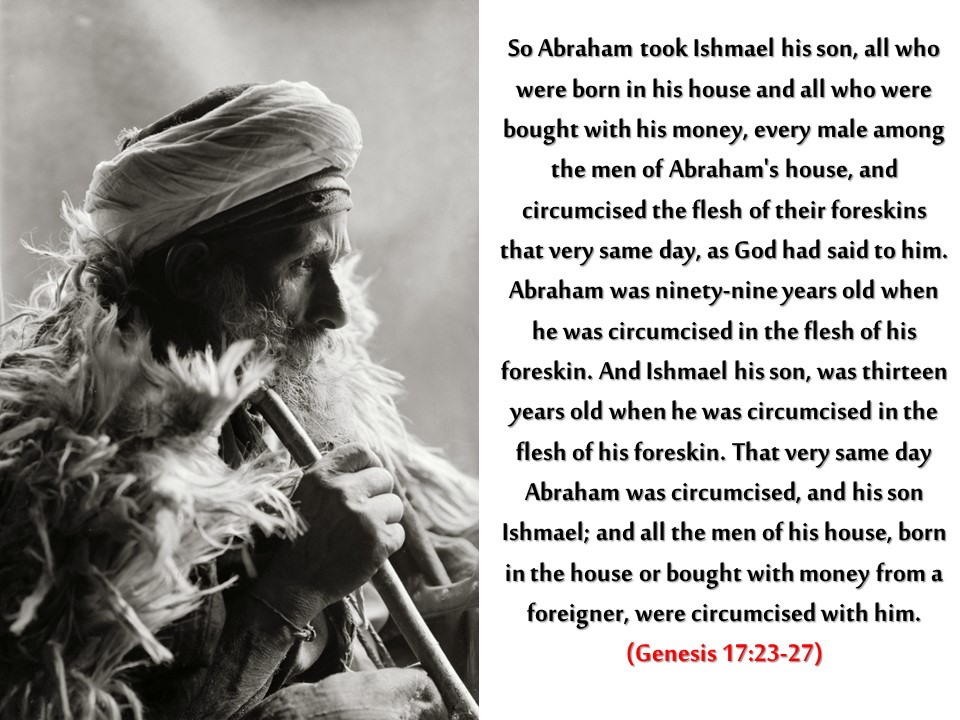
So Abraham took Ishmael his son, all who were born in his house and all who were bought with his money, every male among the men of Abraham’s house, and circumcised the flesh of their foreskins that very same day, as God had said to him. Abraham was ninety-nine years old when he was circumcised in the flesh of his foreskin. And Ishmael his son, was thirteen years old when he was circumcised in the flesh of his foreskin. That very same day Abraham was circumcised, and his son Ishmael; and all the men of his house, born in the house or bought with money from a foreigner, were circumcised with him. (Genesis 17:23-27)

Willing Obedience In The Face Of Great Pain

At the age of seventy-five, Abraham had been called by God to leave his family and go to a land shown to him by God that he would never possess. The Lord promised to make Abraham a great nation, and he would never see its fulfillment. Like a vagabond wandering the earth, Abraham moved from place to place, never having a permanent home for his family. Twenty-four years after God called him, Abraham was faced with a command from God. The Lord’s covenant with Abraham involves great pain for himself and his family. Thirteen years earlier, he had a son by his wife’s handmaiden. Now God requires Abraham to circumcise himself, Ishmael, and all the males in his tribe, including servants. Abraham had been through a lot in obedience to the Lord for the past twenty-four years. The promise of a son by Sarah seemed remote and impossible at best. Abraham had given up so much for his faith in God, and now he must physically injure himself and all in his family to serve the Lord.

The promise of a son through Sarah caused Abraham to laugh because he would be one hundred years of age and Sarah ninety. He thought Ishmael would be a suitable answer to the promise of God. The Lord affirmed to Abraham that Sarah would have a son and that the covenant would be established through Isaac. God promised Abraham that all He had said would come true. A ninety-year-old woman couldn’t have a child as it was equally impossible for a man of one hundred to impregnate a woman. Everything God told Abraham was impossible! There was nothing to base his decision on but the faith he had in the promises of God. What the Lord demanded of Abraham was a very painful surgery and would take time to heal with great discomfort. His thirteen-year-old son would also have to suffer under the knife. Every male in his household would need to be circumcised. Why would God require such a cost for obedience? In human wisdom, it was a high price to pay for faith.

After God left Abraham, there was no hesitation to obey the word of the Lord. At the age of ninety-nine, Abraham was circumcised. Ishmael and all who were born in the house of Abraham were circumcised. The faith of Abraham was on full display as an excruciating act was done in accordance with the word of the Lord. Abraham did not hesitate. He did not argue with God about the painful reality of cutting off the foreskin. No words were pleading for another way. Obedience did not come by faith alone. Abraham never argued with God to accept him as a good man and allow grace to be given without the painful consequence of circumcision. The word of the Lord required circumcision, and Abraham did not hesitate.

It is fair to place the story of Abraham in a modern context with how people react to the word of God. If many people today are put in the situation of Abraham, they will refuse to obey. The word of the Lord requires baptism for salvation – a very pain-free act – yet so many people argue, fuss, debate, and deny the need. They decry baptism as a work and believe they can be saved through faith alone. It was clear in the mind of God that Abraham was a man of faith, but that would not save him. He was told to mutilate himself physically, and Abraham did not hesitate. The pain of circumcision did not dissuade Abraham. He obeyed God unconditionally. So many people today would have refused circumcision. The apostle Paul told the saints at Colosse that baptism is a spiritual circumcision, but the difference is baptism is painless; still, people refuse. Be honest with yourself. If you do not believe baptism is essential for salvation, it is clear you would have refused what God commanded Abraham. No circumcision – no covenant – no salvation. No baptism – no covenant – no salvation.

Posted in Uncategorized | Leave a comment

The Holy Spirit A Member Of The Godhead

In the beginning God created the heavens and the earth. The earth was without form and void; and darkness was on the face of the deep. And the Spirit of God was hovering over the face of the waters. (Genesis 1:1-2)

The Holy Spirit: A Member Of The Godhead

The Bible is the mind of God, revealing the goodness and severity of the Lord. It begins with declaring God as the Creator and ends with the promise of seeing God face to face. Jesus said the Law of Moses, the Prophets, and Psalms declared His glory, and man finds in the new revelation the life of Jesus, the propagation of His teachings, and the applications of God’s law in the hearts of believers. God and Jesus are central characters of the Bible from Genesis to the Revelation. Lost in the shuffle of truth seekers is the other part of the divine nature known as the Holy Spirit.

Moses begins the creation story with the Spirit of God hovering over the face of the waters. The Holy Spirit continues to hover over the message of God’s word throughout the Old Testament and is fully revealed in the New Testament. Denying the story of the Spirit of God neglects the greater part of the divine Revelation. A student of scripture cannot understand God the Father and Jesus the Son without knowing the one Jesus called the “Finger of God.” The Holy Spirit is as much a vital part of Revelation as the Father and the Son. He has His place in the divine record to glory the Father as Jesus glorified the Father.

The Holy Spirit is not just an influence or impersonal power or emanation. He is alive and divine and powerful and full of personality. Possessing attributes of divinity, the Holy Spirit is an essential part of man’s salvation. His place in the scheme of redemption is preserved throughout scripture as the agency of the revelation and the incarnation of God’s Son on earth. Jesus and the Holy Spirit shared a special bond in their work of the earthly mission of the Christ. When the church was established, it began with the Holy Spirit. As the church spread throughout the world in the early days, the Holy Spirit was the fuel driving the engine of God’s divine will. Through His special gifts given to men, the Holy Spirit affirmed and confirmed the word of God as true. The joy of the Christian was found in the gift of the Holy Spirit shared by all those who were baptized into the body of Christ. Without the work of the Holy Spirit, the divine word could not have been completed. The work of the Holy Spirit continues today. He is the way to spiritual fulfillment for those who come to the blood of Jesus Christ.

Throughout the scriptures, God the Father is always magnified as the one true God. Jesus was also God but He was not the Father. Like Jesus, the Holy Spirit is God but not the Father nor the Son. He has His own divine attributes that show Him to be divine but separate from the Father and Son. The Holy Spirit is part of the Godhead or the Divine Nature. Paul refers to the Godhead in his sermon to the Athenians (Acts 17:29) and in two of his epistles (Romans 1:20; Colossians 2:9). The Greek words “theotes” and “theiotes” translate “Godhead” as being “deity, the state of being God; divinity; the divine nature or essence.” Moses begins Genesis with God (Elohim) in the plural, yet it is used in the singular (Genesis 1:1). When God makes man in His image, He declares a plurality in the Godhead when He says, “Let us make man in our image, after our likeness” (Genesis 1:26).

There are three persons identified who possess the divine nature or deity and constitute the plurality of the Godhead. The three were present at creation (Genesis 1) and the baptism of Jesus (Matthew 3:16-17). Matthew records the words of Jesus that all men should be baptized in the name of the Father, the Son, and the Holy Spirit (Matthew 28:18-20). On the night Jesus was betrayed, He tells the eleven the Father will send the Comforter after He (Jesus) leaves (John 14:16-18; 15:26; 17:3-5). Peter said in his sermon to the household of Cornelius that “God anointed Jesus of Nazareth with the Holy Spirit” (Acts 10:28). Paul mentions the Godhead in Romans 15:30, 1 Corinthians 12:4-6, 2 Corinthians 13:14, and Ephesians 2:18; 4:4-6.

The relationship of the Godhead is seen when the nature of God is viewed as divine. God the Father is divine, but He is not the Son nor the Holy Spirit. Jesus is divine, but He is not the Father nor the Holy Spirit. The Holy Spirit is also divine but is not the Father nor the Son. Each one of the Godhead is divine (deity, God) but possesses personalities that distinguish them one from another. The Holy Spirit is vital to the Godhead, a divine being. Throughout Biblical history, his work is essential to God’s eternal plan. Get to know the Holy Spirit.

Posted in Uncategorized | 2 Comments