Jesus Loves The Little Children (Gary Ogden)

Don-and-GaryJesus Loves The Little Children

(Gary Ogden)

Jesus was a busy man. His days were filled with teaching, healing, and dealing with opponents. Large crowds pressed upon him and pressing concerns occupied his attention. He constantly had to correct misconceptions of his disciples, especially the Twelve who worked with him every day.

Near the end of his earthly ministry, the disciples were arguing again about who was the greatest in the kingdom (Mark 9:34). That discussion had to get old for the Lord because they just couldn’t seem to get it straight. Once again, Jesus said, “If any man would be first, he shall be last of all, and servant of all.” Then he took a little child into his arms and said, “Whosoever shall receive one of such little children in my name, receiveth me…” (Mark 9:36).

It wasn’t too long after as Jesus was immersed in teaching the multitudes (Mark 10:1), that some of the parents brought their little children to Jesus for him to touch and bless them. In spite of what Jesus had so plainly said about “receiving little children” the disciples rebuked the parents for bothering the Master (Mark 10:13). This bothered Jesus, he was moved with indignation toward his disciples, and stated matter-of-factly, “Let the little children come to me. Don’t stop them, because the kingdom of God belongs to people who are like these little children” (v.14, Sim. Eng. N.T.). He further stated that “whoever does not receive the kingdom of God as a little child will by no means enter it.” At that point, he took the children in his arms and blessed them (v.16).

What a sight it must have been, Jesus with all the important things he had to do, all the important people he had to see and discuss high matters with and he took the time for little children. He did not just use them as object lessons for his sermons, but truly loved and cared for them. I’m sure it must have been a great drain on his time and energy to take time out for the children, but he was gracious to do so. If I had been a parent living in that time, I think I would have wanted the Lord to hold my sons in his arms and bless them. Can’t you just see the smile on Jesus’ face as he held the little children and infants?       

“Let the little children come to me.” It would seem that there is more to the statement than just allowing them to come into his presence to be touched and blessed. Jesus would be concerned with ultimate spiritual welfare of these children and one day would want them to come to him in faith and obedience.

What about the parents who wanted their children to be touched and blessed by Jesus? What parent, in his or her right mind, wouldn’t want God to bless their child and to be in his presence? Good parents today still want that for their children. They want them to become acquainted with Jesus and the Heavenly Father. They want their children to “come to Jesus.”

Jesus is no longer on earth so developing faith in our children by teaching them about the Lord must be a priority. It is the prime responsibility of Christian parents to instill in their children the knowledge of Christ, God, the Bible and the spiritual relationship that is called the church. They read Bible stories to their children just like they read nursery rhymes. They pray with their children and talk with them about Bible principles. They faithfully take them to assemblies where the Bible is taught and worship is performed. They want their children to be comfortable “in the presence of the Lord.”

Can these little children be taught such high and lofty principles? It might astound you what they pick up, even in the nursery class. I heard the other day that toddler Brett taught newcomer Savannah to say “Bible.” He said, “Bible” about a dozen times and she finally said it. How many little children in our society today know how to say “Bible” much less what it’s all about?

Jesus still wants the little children to come to him, but not enough parents are bringing them! Unfortunately, some Christian parents are falling down on this great responsibility. They’ve lost interest themselves and so their children are going to suffer from the loss. Jesus has some choice words for such parents and anyone else who would hinder a child from coming to Christ: “But whoever causes one of these little ones who believe in me to sin, it would be better for him if a millstone were hung around his neck, and he were drowned in the depth of the sea” (Matthew 18:6). What greater sin is there than extinguishing the fire of faith in Christ in the heart of a little child? Think about it!

Sometimes, we feel we just don’t have time for the little children. We get so busy with so many “important” things that we don’t find the time to fit the little children into our lives. We don’t intend to neglect or ignore them, but our priorities are mixed up. If Jesus could find time to pick up, caress and bless the toddlers and infants, surely we can show them some attention and affection. Are you any busier than Jesus was?

We need to spend time and affection on little children because Jesus said that when we humble ourselves as little children we are fit subjects for his kingdom. Those who despise the children and the child-like spirit cannot get through the door of the kingdom.

In the words of the children’s song, “Jesus loves the little children, all the children of the world…..They are precious in his sight.” Do you love the children? How are you showing it? Do you possess the child-like spirit of humility?


Posted in Character Study, Christian, Church, Marriage, Morality, New Testament, Old Testament, Proverbs, Social Issues, Uncategorized | Tagged , , , , , , , , , , , | Leave a comment

One Thing I Do: 2014

2014-Numbers-Happy-2014-New-Year-Images-WallpaperOne Thing I Do: 2014

Every 365 days we renegotiate our resolutions we failed to live by the previous year and promise to try harder in the next 365 days to uphold the resolve so easily entrusted to our temporal spirit of flesh. Within 90 days of said new resolutions we find ourselves squandering away the tenacity that so easily ensnared us with hope New Years. Man is the only creature that makes these kinds of promises. The animals live day to day with the knowledge of where their food comes (Isaiah 1:3) and how silly those created in the image of God frantically seek for satisfaction in new acquired resolutions to frame their lives with.

The need to find resolve in our hearts is what the Lord has always wanted for his people. Joshua uttered those wonderful words of declaration when he said, “But as for me and my house, we will serve the Lord” (Joshua 24:15). Abraham was a man known by God “that he may command his children and his household after him, that they keep the way of the Lord, to do righteousness and justice, that the Lord may bring to Abraham what He has spoken to him” (Genesis 18:19). David was a man after the heart of the Lord “who will do all My will” (Acts 13:22). These men had resolutions in their lives that guided their hearts to the throne of God.

Paul had a simple set of resolutions he lived by. It was not a complex set of requirements that demanded a long list of do’s and don’ts. He did not try to make unreasonable expectations upon himself. His motto in life year by year was clear and demonstrative: “Not that I have already attained, or am already perfected; but I press on, that I may lay hold of that for which Christ Jesus has also laid hold of me. Brethren, I do not count myself to have apprehended; but one thing I do, forgetting those things which are behind and reaching forward to those things which are ahead, I press toward the goal for the prize of the upward call of God in Christ Jesus” (Philippians 3:12-14).

The apostle from Tarsus knew the struggles he faced in life and how often he failed to live up the grace of God (Romans 7:13-24). The thorn in the flesh was paramount in his life to teach him the sufficiency of the grace of God (2 Corinthians 12:7-10). His life was measured by the battle lines draw against the “spiritual hosts of wickedness” (Ephesians 6:12). The race he ran was filled with hardships of tribulations, distresses, imprisonments, needs and suffering (2 Corinthians 6:4-10; 11:23-28). How was he able to live such a full life without fear but with power, love and a sound mind (2 Timothy 1:7)? He did ONE thing: he forgot those things behind and reached for the things ahead!

Standing before King Agrippa the prisoner Paul declared that he did many things contrary to the name of Jesus of Nazareth. “This I also did in Jerusalem, and many of the saints I shut up in prison, having received authority from the chief priests; and when they were put to death, I cast my vote against them. And I punished them often in every synagogue and compelled them to blaspheme; and being exceedingly enraged against them, I persecuted them even to foreign cities” (Acts 26:10-11). New Year’s resolutions do not remove the guilt of yesterday; only the grace and mercy of God. Paul was able to clearly affirm that his past did not define who he was nor did it determine his future. Forgiven of his sins (Acts 22:16) he was reaching forward to those things which were ahead. Paul was going through life ‘looking through the front windshield not the rear view mirror.’

On the mountain Jesus instructed His disciples to seek the rule of God in their lives and not worry about “tomorrow, for tomorrow will worry about its own things. Sufficient for the day is its own trouble” (Matthew 6:34). If I am not to be concerned about the next day why should I fret about my yesterdays? Forgetting those things that are behind is the knowledge that we can make better choices today because we are reaching toward a higher call. All of my decisions will be framed within the will of God. Only Satan wants us to focus on yesterday to see what miserable failures we are and how worthless we become in examining our lives. Driving with yesterday’s failures will only cloud what we can accomplish today.

As I approach a New Year my resolve should be to forget the things that are behind. To forget something is to “disremember” it (fail or be unable to remember something). Remove the stain of guilt with God’s love. “As far as the east is from the west, so far has He removed our transgressions from us” (Psalms 103:12). He did not say north and south: He said EAST and WEST. “Blessed be the God and Father of our Lord Jesus Christ, who according to His abundant mercy has begotten us again to a living hope through the resurrection of Jesus Christ from the dead” (1 Peter 1:3). The “abundant mercy” of God helps us forget the past.

Peering over the horizon of a new year our focus should be to do “all in the name of the Lord Jesus” (Colossians 3:17). Reaching forward is how Paul planned his day. He wanted to lay hold of what he had put in front of his life: a goal! Henry David Thoreau said one thing right: “We only hit what we aim at.” Unlike Thoreau the apostle Paul had a goal of eternal reward as he patterned his life to the true and living God. Everything in life must be measured by this goal. Whatever resolutions are made should only be made with the goal of a higher call in God.

The life of a child of God is filled with promise and hope. It will not be measured by the futile pursuits of materialism or pleasure. Our resolutions will be built upon the simple truth of God’s will. Like Paul I will do one thing: forget what is behind and reach forward to what is before me. I will make my goals to reflect in my prayer life, my time in God’s word, my time with my fellow Christians, my efforts with the local family of God and my hope in the promise of eternal life.

When 365 days fade from the sands of time many we know will no longer be with us. For some who are reading these words time will be shorter as life is taken during this year. The reality of the coming of the Lord should never be far removed from our knowledge as he will return as a thief in the night (2 Peter 3:10). But does it matter? Enoch lived in such a way that when he “was translated so that he did not see death” (Hebrews 11:5) it was not a surprise to him. Saints of God live 365 days a year with the expectation of the coming of the Lord and when that happens they will be found waiting not wanting (Luke 12:35-48; 2 Thessalonians 1:10-12).

Moses the man of God said, “So teach us to number our days, that we may gain a heart of wisdom” (Psalms 90:12). With the passing of an old year and the promise of a new year we should number our days in accordance with the grace of God. Be thankful for the breath of life given by God that we are able to see another day. Plead the promises of God to guide you through another year. Live each day looking to Jesus as Savior, King, Lord and Teacher so that when time is no more we may all stand on the eternal shores of God’s promise and give praise and glory to Lord God Almighty.

Posted in Character Study, Christian, Church, New Testament, Proverbs, Social Issues, Uncategorized | Tagged , , , , , , , , , | Leave a comment

The Simple New Testament Gospel (Gary Ogden)

PICT0062 (2)

The Simple New Testament Gospel (Gary Ogden)

Nearly 2,000 years ago, a man of Galilee walked the earth, said many things and by his life and death changed the world forever. He claimed to be more than a mere man; he said he was the son of God and that He was with the Father from the beginning of time. To prove those claims, he performed miracles of healing and showed his power over nature by calming storms and even raised the dead. The ultimate proof of his claims was that he was raised from the dead on the third day after his crucifixion.

He said he was going to die and be raised again and it happened just as he said. He made many disciples, some of who would die telling the story of the crucifixion of the Savior and his resurrection. The Lord had commanded his apostles to “Go into all the world and preach the gospel to every creature” (Mark 16:15). This gospel was what would save men from the horror of sin; it was the power of God unto salvation.

As these men fulfilled that great commission, those that believed their message responded in a favorable way by being baptized for the remission of their sins: “Now when they heard this, they were cut to the heart, and said to Peter and the rest of the apostles, ‘Men and brethren, what shall we do?’ Then Peter said to them, ‘Repent, and let every one of you be baptized in the name of Jesus Christ for the remission of sins; and you shall receive the gift of the Holy Spirit. For the promise is to you and to your children, and to all who are afar off, as many as the Lord our God will call.’ And with many other words he testified and exhorted them, saying, ‘Be saved from this perverse generation. Then those who gladly received his word were baptized; and that day about three thousand souls were added to them’” (Acts 2:37-41).

Then they banded together in accordance with the Lord’s command and became a congregation to worship and work together after God’s ordinances: “And they continued steadfastly in the apostles’ doctrine and fellowship, in the breaking of bread, and in prayers” (Acts 2:42). They were known simply as the church, or the Lord’s church, the church of Christ. They were followers of Christ and were called simply, Christians: “The disciples were first called Christians in Antioch” (Acts 11:26).

The church of Christ is a congregation established and patterned after the New Testament blueprint. Terms of church membership are taught exactly as they were taught by the apostles 2,000 years ago. The same gospel taught by Paul and Peter and John and all the inspired men are taught in Bible classes and from the pulpit. If the gospel of Christ was the power of God unto salvation 2,000 years ago (“For I am not ashamed of the gospel of Christ, for it is the power of God to salvation for everyone who believes…” Romans 1:16), can there be any question that it will still save men and women today?

All need to be made the friends of God because “all have sinned and fall short of the glory of God” (Romans 3:23). Sin separates us from the God of the universe and the gospel is God’s remedy for the problem. If we die in our sins, then we must spend an eternity away from the presence of God in flaming fire of hell.

Thanks be to God that he provided a sacrifice for our sins and revealed the terms of pardon in the Bible. It is extremely important for all of us to learn the simple gospel plan of salvation if we want to go to heaven when this life is over. It makes no difference how moral or religious we think we are, we still need to know the truth as revealed in God’s holy word, the Bible.

Posted in Christian, Church, New Testament, Old Testament, Uncategorized | Tagged , , , , , , , | Leave a comment

Too Much Emphasis On One Thing

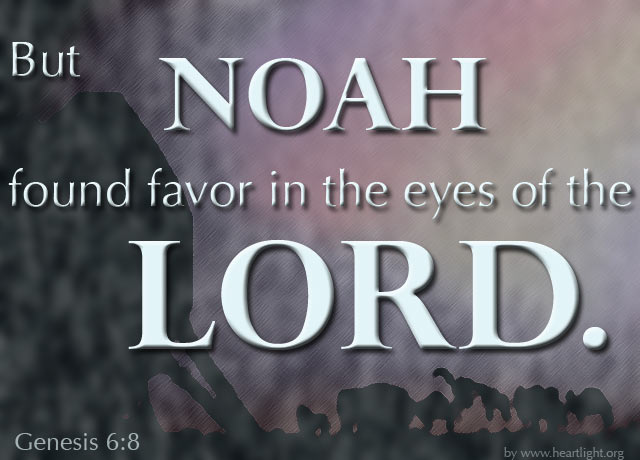
genesis6_8Too Much Emphasis On One Thing

The Bible is a book of words. According to the New Clarified Reference Edition Bible (Royal Publishers, Inc. 1966), there are about 592,439 words in the Old Testament and about 181,253 words in the New Testament. The word “and” occurs 35,543 times in the Old Testament and 10,684 times in the New Testament. Paul shows the conduit of information from the mind of God to the will of man carried forth by the written word – “How that by revelation He made known to me the mystery – as I have briefly written already, by which, when you read, you may understand my knowledge in the mystery of Christ” (Ephesians 3:3-4). This process is through the “finger of God” (Luke 11:20) as explained by Peter in 2 Peter 1:21 – “For prophecy never came by the will of man, but holy men of God spoke as they were moved by the Holy Spirit.”

As “faith comes by hearing and hearing by the word of God” (Romans 10:17) we learn from a study of God’s word what we must do to be saved. This knowledge is not based upon how many times it is recorded in scripture but the emphasis placed by the Lord on obedience. The word “faith” is found over two hundred times in the New Testament but the words for “sin” appear nearly three hundred times in the New Testament. It would seem obvious the need for faith outweighs the practice of sin regardless of the number of times one is found in the writing of the New Testament.

Salvation through baptism can be viewed in a similar manner where a charge of too much emphasis on baptism overshadows the need for faith. Suggesting the oft times reference to faith compared to less than eighty times of baptism would conclude that baptism is not necessary for salvation, playing only a minor role in the scheme of things. Yet the place of baptism in the plan of salvation is just as prevalent as other things emphasized by the religious world today. One should never be placed in significance over the other or to the exclusion of the other but placed in the proper role as directed by God.

One clear teaching of the Lord from the beginning is that salvation is never accomplished by the emphasis of one thing. In the story of Noah and the flood (Genesis 6-9) we see the grace of God telling Noah what was coming and how to avert destruction; the mercy of God by saving Noah and his family; the love of God to deliver the family in the ark; Noah’s faith in doing all the Lord commanded (Genesis 6:22; Hebrews 11:7); and the fear of God that moved Noah to be obedient (Hebrews 11:7). There is hope in his deliverance as Noah looked for the promise of God. Building the altar after the flood expresses the thanksgiving of Noah’s heart for salvation.

Was Noah saved by faith alone? Did grace by itself deliver Noah? How did works play into his salvation? Could Noah have emphasized one means of salvation over the other? The joy of Noah’s story is not rooted in emphasis of one thing but the complimation of all the things that brought him to the other side of God’s judgment. And yet Peter says of Noah, “When once the Divine longsuffering waited in the days of Noah, while the ark was being prepared, in which a few, that is, eight souls, were saved through water. There is also an antitype which now saves us–baptism (not the removal of the filth of the flesh, but the answer of a good conscience toward God), through the resurrection of Jesus Christ” (1 Peter 3:20-21). Is Peter guilty of over-emphasizing the point of salvation through water neglecting the grace, mercy and love of God? His conclusion is clear: there was a time when deliverance came and all the elements of salvation pinnacled at the moment the rain began and the ark lifted high above the earth. A change took place.

Paul shows that without the grace of God there is no salvation. “For by grace you have been saved through faith, and that not of yourselves; it is the gift of God, not of works, lest anyone should boast” (Ephesians 2:8-9). Are we saved by grace alone? Does Paul suggest that salvation cannot be through works? The grace expressed by Paul in this passage is the grace found with Noah. Noah could not have known the flood was coming apart from God and with that knowledge would not know how to save himself. The grace of God told him the flood was coming and how to save himself and Noah could not boast he knew any of those things. Was Noah saved apart from works? God instructed him to build an ark (height, width, length, material, decks, windows, doors, etc) and Noah was saved through works when he did what God said.

James outlines the role of works and faith in James 2. “Was not Abraham our father justified by works when he offered Isaac his son on the altar? Do you see that faith was working together with his works, and by works faith was made perfect? … You see then that a man is justified by works, and not by faith only … For as the body without the spirit is dead, so faith without works is dead also” (James 2:21-26). Salvation never comes by ONE thing unless it is ONE heart agreed to do ALL that is commanded of the Lord.

Did Jesus overemphasize baptism? He told Nicodemus he had to be born of the water and the spirit (John 3). Matthew records the commission of Jesus to His disciples, “Go therefore and make disciples of all the nations, baptizing them in the name of the Father and of the Son and of the Holy Spirit, teaching them to observe all things that I have commanded you; and lo, I am with you always, even to the end of the age” (Matthew 28:19-20). Mark also tells of this commission when Jesus said, “Go into all the world and preach the gospel to every creature. He who believes and is baptized will be saved; but he who does not believe will be condemned” (Mark 16:15-16). Luke tells Theophilus Jesus said, “that repentance and remission of sins should be preached in His name to all nations, beginning at Jerusalem” (Luke 24:46-47). Jesus told the disciples to teach and baptize those who believed and to spread the message of repentance and “remission of sins” (which Peter calls baptism – Acts 2:38).

The reason that baptism is vital to salvation (not to exclude anything else) is only in the waters of baptism are sins washed away. The removal of sinful flesh does not take place only in belief (see James 2:19). Grace does not bring this upon a man alone nor the love of God alone. When someone in faith, being divinely warned of things not yet seen, moves with godly fear, obeys the will of God in washing away their sins (Acts 22:16); dying in Christ by crucifying the old man and rising in newness of life (Romans 6:3-6) – salvation occurs. Noah was saved by water and Peter’s argument is that we are saved by water! It is important to remember that EVERY case of conversion in the book of Acts involves the washing away of sins through baptism – showing its necessity.

Can baptism be overstated as the only thing I need to do to be saved? This also is a false representation of God’s will. It is easy to think the only thing I need is to “get baptized” and I am good for eternity. Often we give more emphasis on baptizing a person rather than saving a person. There are not “five steps to salvation” and never have been. A medley of blessings from God moves a person to obedience when their heart learns of Jesus Christ. The need for a ‘simplistic’ gospel is to frame the eternal truths within a convenient fast-food drive through and send them on their way. First Century disciples never believed in such theology. Phillip “preached Jesus” to the man from Ethiopia. Paul preached the “divine nature” to idol worshippers in Acts 17. The Lord gave us sixty-six books to learn of His will and we must embrace all the character of God in this message.

Baptism is essential to salvation (Galatians 3:26-27) but so is everything else given to us by God. An honest student of scripture will recognize the balance of truth needed to paint the complete tapestry of God’s love for man in Jesus Christ. We should not present the truth less than what is found in scripture either (like faith only salvation). Paul exhorts all to preach the “whole counsel of God” (Acts 20:27). Anything less is the counsel of men.

Posted in Character Study, Christian, Church, New Testament, Uncategorized | Tagged , , , , , , , , , , , , , | Leave a comment

Faith – Seeing What Cannot Be Seen

faithFaith – Seeing What Cannot Be Seen 

Vance Havner said, “It is part of Satan’s program to make our faith and practice complicated and involved. Now and then we need a rediscovery of the simplicity that is both in and towards Christ, in Him and in our faith in Him.” By its nature faith has a modest yet profound spirit that defies human wisdom. The science of man expects evidentiary proof in everything he knows and trusts. Without the clear evidence and reason for a thing there is doubt. Faith has a character that is simple without the complications of knowing each atom of knowledge involved in the situation. The Hebrew writer defines faith as “the substance of things hoped for, the evidence of things not seen: (Hebrews 11:1). It is proving something not seen and believing the invisible to be visible.

How do we explain the creation of the world? Adam was the first one on scene but he was five days late. Moses wrote about it many years later only through the inspiration of the Holy Spirit. I wonder what he thought of as he wrote those beautiful words of Genesis 1 and described something that his eyes did not behold. His heart must have swelled with joy as the Spirit guided his hand to describe those early days of Paradise and then the terror of judgment in the flood. Writing about the lives of his ancestors Abraham, Isaac and Jacob and his own parents hiding him from Pharaoh and the journeys of the people of Israel. Faith guided Moses to see things not seen and it was a simple trusting faith.

Why would Abraham take his only begotten son to offer as a human sacrifice (Hebrews 11:17-19)? Did he understand why God demanded this sacrifice that was against every principle of righteousness Abraham knew about God? His answer to Isaac was, “God will provide for Himself the lamb for a burnt offering” (Genesis 22:8). Simple faith without the baggage of man’s wisdom trying to unravel the mystery of God. Why did Noah build the ark, David stand before the behemoth Goliath, Gideon defeat the Midianites, Daniel overcome his exile and untold legions of saints rise in victory over the oppression of Satan? Faith! Faith in God! Faith in God’s plan. Faith in God’s will. Faith not in man but in the Everlasting Father and His will.

The pure stream of faith in our lives flows from a devoted desire to allow God to do His part and accept His will sight unseen. It is not as complicated as we want it to be and sometimes make it to be. Faith can sometimes be measured as the Pharisee of Jesus day who was more concerned about “tithe of mint and anise and cumin, and have neglected the weightier matters of the law: justice and mercy and faith” (Matthew 23:23). Trusting God does not require analysis. We can talk about our faith and plan for our faith and pray about our faith but until the knees bent in prayer start moving the feet towards faith in trusting God’s way we will never grow to see what cannot be seen.

Abraham’s test is our test of faith. There was nothing to explain what God ask of him yet he obeyed “accounting that God was able to raise him up, even from the dead” (Hebrews 11:19). What information did Abraham have to base that decision? Not sure. We have the resurrection of Jesus Christ as our surety and often we find less faith in our lives than Abraham. Trust God! Faith does not require a blueprint or DNA strand to move the child of God. “What then shall we say to these things? If God is for us, who can be against us? He who did not spare His own Son, but delivered Him up for us all, how shall He not with Him also freely give us all things” (Romans 8:31-32)? If we would have trusted the Lord five more minutes He would have shown His power in our lives. Yet we do not trust him and lean on our own understanding and fail.

The story of Abraham sacrificing his son was a three day journey. God could have told Abraham to walk out the door of his tent and offer Isaac there. He could have waited until the next day. A key ingredient to the test of faith was testing Abraham for three days journey to the land of Moriah. Faith guided him each morning as they ate their breakfast and prepared for the day’s journey. Abraham would have walked a week if he had to because he had a simple faith in knowing that whatever the Lord required he would obey. “God will provide for Himself” is how faith is seen in our lives to know that regardless of how much time it requires we do not hedge the Lord into our own will and demand evidence.

Posted in Character Study, Christian, Church, Morality, Old Testament, Social Issues, Uncategorized | Tagged , , , , , , , , , , , , , , , , , , , , | Leave a comment

The Christmas Story And The Wise Men

The Christmas Story And The Wise Men

(Kent Heaton)

Twas the week before Christmas and all through the land

Not a Bible was open in anyone’s hand.

The story of Jesus is told again and again

But the truth of His birth is confused among men.

They tell of his birth in a place called a stable

His mother and father were not even able

To find a room at a place for him at an inn

So they settled for a manger to place the Lord in.

With shepherds around him and wise men there

The story of Jesus is told with small care

A star is above the stable so high

As the scene of His birth is told in a lie.

We read of a story much changed from this

From the words of men who tell it amiss.

They celebrate Christmas as if Christ is there

But never see what the scriptures lay bare.

The Lord was laid in a manger so soft

And the shepherds saw angels singing praises aloft

They came and found Mary and the child in that place

And gave praises to God for His wonderful grace.

But the wise men were not there nor ever would be

They saw the star in the East and made haste to see

The one who was born King of the Jews

The one who would bring such wonderful news.

They found the young child secure in a home

With Mary His mother and Joseph alone.

There were no shepherds as told by men

There was no manger nor ever had been.

They gave Him their gifts and they parted away

Warned by God to go home another way.

Herod came and killed all the males

In his anger and wrath he made Rachel wail.

The story is told in the Bible for all

To heed the true words and the gospel call.

It matters much what the story will say,

We must obey all of He who is the Way.

The apostle John wrote down in his book

That every man must take time to look

At what he may add to the words of this story

Or what he may take from the divine glory.

The story of His birth is one story alone

And man must not change one word or one tone.

God’s word is true and will always stand

Through the passing of time and the shifting of sand.

Speak truth my friend and you will find

No other story and no other kind.

So wonderful and glorious as this story told

As the story of Jesus from the pages of old.

Posted in Character Study, Christian, Church, Morality, New Testament, Social Issues, Uncategorized | Tagged , , , , , , , | Leave a comment

Facts About The Birth Of Jesus

060Facts About The Birth Of Jesus 

It will come as a surprise to many people to learn the true facts about the birth of Jesus. The problem with the teaching of men is the changes that take place over time that go unnoticed and unheeded by what is real truth. There are many people who believe Jesus was born on December 25 in a manger with shepherds and three wise men surrounding Him with a star shining above. Nothing is more foreign to the truth or the real story of what the Bible tells of the birth of Christ.

What are the facts about the birth of Jesus according to the WORD OF GOD?

  1. The birth of Jesus is announced to Joseph in Matthew 1 and to Mary in Luke 1.
  2. The birth of Jesus is found in Matthew 1 and Luke 2.
  3. An angel of the Lord announces to the shepherds the birth of Jesus the same night of His birth (Luke 2:8-14).
  4. The shepherds visit Jesus in the manger the same night of His birth (Luke 2:15-20).
  5. The “star” is not present at the manger.
  6. Eight days later Jesus is circumcised according to the Law of Moses (Luke 2:21).
  7. At least 32 days later (40 days following birth – Leviticus 12:2-6), Jesus is presented at the Temple and an offering of a pair of turtledoves or two young pigeons is given by Joseph and Mary (Luke 2:22-24).
  8. Jesus is presented to Simeon and witnessed by Anna at the Temple (Luke 2:25-38).
  9. Almost two years later wise men from the East come looking for Jesus – first going to Jerusalem inquiring of Herod – then journeying to Bethlehem (five miles from Jerusalem) to “the HOUSE, they saw the young Child” (Matthew 2:1-12).
  10. The “star” comes “over where the young Child was” – the house where Joseph and Mary are with Jesus (Matthew 2:9).
  11. We do not know how many wise men came to see Jesus. We do not know their names or their nationality. They brought gifts. (Matthew 2:11)
  12. Joseph is warned in a dream to go to Egypt by an angel of the Lord (Matthew 2:13-15). The gifts from the wise men would help make this journey possible. He was “there until the death of Herod, that it might be fulfilled which was spoken by the Lord through the prophet, saying, ‘Out of Egypt I called my Son.’”
  13. Herod massacres all the male children from two years old and under in Bethlehem “according to the time which he had determined from the wise men” (Matthew 2:16-18).
  14. Following the death of Herod, Joseph takes Mary and Jesus to Nazareth (Matthew 2:19-23; Luke 2:39-40).
  15. At the age of twelve, Jesus goes with Joseph and Mary to Jerusalem for the Feast of the Passover and amazes the scholars with his knowledge. Joseph and Mary find Him three days later (Luke 2:41-50).
  16. “Then He went down with them and came to Nazareth, and was subject to them, but His mother kept all these things in her heart. And Jesus increased in wisdom and stature, and in favor with God and men” (Luke 2:51-52).
  17. Jesus had four brothers born of Joseph and Mary (James, Joses, Judas and Simon) and at least two sisters (Mark 6:3)
  18. Jesus begins His ministry at the age of thirty (Luke 3:23).

The Lord does not reveal when Jesus was born. It was likely in spring but the Bible does not reveal his birthday or the year of His birth. Christ was born somewhere between 7 B.C. and 4 B.C. Herod (Matthew 2:3,16) died in 4 B.C. and Jesus was born during his reign. Ferrell Jenkins writes, “It is impossible to keep Christ in Christ-Mass for He was never in it. The Catholic Church dreamed that up all by themselves without the help of Christ, and I might add, without His approval.” Should we hold to traditions of men instead of God’s word? Jesus said, “Well did Isaiah prophesy of you hypocrites, as it is written, “‘This people honors me with their lips, but their heart is far from me; in vain do they worship me, teaching as doctrines the commandments of men.’ You leave the commandment of God and hold to the tradition of men.” And he said to them, “You have a fine way of rejecting the commandment of God in order to establish your tradition” (Mark 7:6-9)!

John wrote a warning at the end of the Revelation that is true for the rest of the Bible. It is a warning given by the Lord under the Law of Moses (Deuteronomy 4:2). Does it matter if we tell the story of Jesus’ birth correctly? Can we worship in a manner that is not found in Scripture? “For I testify to everyone who hears the words of the prophecy of this book: If anyone adds to these things, God will add to him the plagues that are written in this book; and if anyone takes away from the words of the book of this prophecy, God shall take away his part from the Book of Life, from the holy city, and from the things which are written in this book” (Revelation 22:18-19).

The birth of Jesus is a most wonderful story that we should tell every day of the year. Without the manger there would be no cross but without the cross there would be no hope (Romans 6; 1 Corinthians 15). God shows us His power in the birth of Jesus and He shows us His will in the teachings of Jesus. Of the four gospels a small fraction pertains to His birth: proving Jesus was the Messiah of promise (Matthew) and showing Him to be as Adam in the flesh (Luke). Jesus came for men to worship Him in His death and the glory of His resurrection. May we honor Jesus as “Lord and Christ” (Acts 2:36).

Posted in Character Study, Christian, Church, Morality, New Testament, Social Issues, Uncategorized | Tagged , , , , , , , , , , , , , , , , , , , , , | Leave a comment

It Would Have Been A Better Thing

kneeling


It Would Have Been A Better Thing 

The sermon of Jesus on the mountain is an indispensable source of foundational truths of what it means to be His disciple. In simple and clear terms the Lord outlines the character of those who would be like the Father in perfection (Matthew 5:48). The moral code of Jesus’ followers is unveiled in challenging admonitions to be the “salt of the earth” and “light of the world” (Matthew 5:13-16). Serving God cannot be done while the heart still rests upon the decaying laurels of the world (Matthew 6:24). Wisdom will find its worth from those who heed the instructions of the message and build their lives on the rock of salvation (Matthew 7:24-27).

When Satan attacks our lives he does so on three fronts: the lust of the flesh, the lust of the eye and the pride of life (1 John 2:16). His battle plan is simple, direct and destructive. Temptation comes when we are drawn away by our own lusts and sin is allowed to conceive in our hearts to our failure before God (James 1:13-15). There are many things that weigh heavily against the lusts of our flesh and eyes and our pride of things in this life. Daily the devil bombards us with the subliminal messages of our desires seeking to draw us away from the fellowship of a loving Father. Life will bring its own temptation to sin living in a “crooked and perverse generation” (Philippians 2:15). Often we bring that temptation upon ourselves and at what cost? Jesus offers a solution to our own dilemmas by showing us how we create our own problems.

Since the beginning of time the lust of the flesh and the lust of the eye have drawn men into immorality and debauchery. Creating a man and woman in the garden was God’s way of illustrating the beauty of a union without shame. “And they were both naked, the man and his wife, and were not ashamed” (Genesis 2:25). After Adam and Eve took of the forbidden fruit, “The eyes of both of them were opened, and they knew that they were naked; and they sewed fig leaves together and made themselves coverings” (Genesis 3:7). Sin brings shame. Jesus taught in Matthew 19 that His Father had hallowed the marriage union and that it should be preserved in union of one man and one woman. Adultery is breaking that union and lusting after a woman is how Jesus shows in the mountain sermon the breakdown of the mind to desire a woman in the mind. His solution was a radical surgery. The answer of the Lord is a simple yet seldom used means to deal with sin. “If your right eye causes you to sin, pluck it out and cast it from you; for it is more profitable for you that one of your members perish, than for your whole body to be cast into hell. And if your right hand causes you to sin, cut it off and cast it from you; for it is more profitable for you that one of your members perish, than for your whole body to be cast into hell” (Matthew 5:29-30).

There are many parts of the body that are vital but the eyes and the hands are two parts of the body that are important to everyday living. However, as important as the eye and the hand may be it is possible to live without them. The heart and the brain are not only vital to life but the human body cannot exist without them. Not so with the eyes and the hands. Living in blindness is a very difficult life and living without hands would make daily existence a greater burden. But it is possible to live in blindness and without hands. Facing the temptation of the lusts of the heart Jesus instructs His followers to consider how important anything would be that causes that temptation. He is not asking anyone to literally pluck out their eyes or cut off their hands. What He is suggesting is that it is important to weigh the value of anything that would destroy our soul.

Our modern world is framed with the belief that life cannot exist without certain things: television, computers, internet, smart phones, FaceBook, Twitter and a host of other technologies that we believe make our lives more comfortable. One of the greatest problems facing the church today is the influence of pornography in the hearts of men and women destroying personal lives, marriages, families and churches. Televisions are filled with satellite and cable programs exalting the immoral virtues of a world gone to seed in the devil’s bedroom of ungodliness. Smart phones are used to text unrighteous messages of unfaithfulness, sexual immorality and gossip along with pictures and videos. Social media outlets are filled with pictures of worldly pursuits, sensual provocations and wicked gossips of slander and bullying. The belief is that life demands these machines of men to bring order and happiness to our lives.

“For it is written, ‘As I live, says the Lord, every knee shall bow to me, and every tongue shall confess to God.’ So then each of us will give an account of himself to God” (Romans 14:11-12). In the great and notable day of judgment when we stand before the throne of purity and righteousness; what will it mean that we had to have our internet or we had to have that smartphone? How important will it be at that moment that we had to be on Facebook or Twitter? What value will that high end television set be with our cable bill of every channel known to man on the day we stand before God? Jesus said that it would have been better for us to not have our eyes and our hands in judgment than to allow them to cause us to lust after a woman. No one standing before a righteous judge will have any interest in those things that we have convinced ourselves we MUST have in this life.

This does not suggest that any of the modern conveniences are evil of themselves. There is no shame in the naked body found in the union of marriage. Shame comes when it is taken out of the holy union of a man and woman in marriage. What we fail to see in the deception of Satan is that he uses good things for his evil purpose. It would be easier to get rid of anything that was evil in itself but where we may fail to act is when something by its nature is good yet causes us to sin it should be removed. And we can live without it. It may be difficult (like living without eyesight) but it is not impossible! How terrible it will be to stand in judgment and say how foolish we were to allow anything to keep us from eternal life. Jesus says to get rid of it! “Can a man carry fire next to his chest and his clothes not be burned? Or can one walk on hot coals and his feet not be scorched” (Proverbs 6:27-28)?

The application is long reaching. Our jobs may cause us to be less than we should be for Christ. The friends we keep could challenge our faith in the Lord. “For what does it profit a man if he gains the whole world and loses or forfeits himself” (Luke 9:25). How important will that job be or our friends are if we lose our souls because of it. Nobody ever worries about how much money they have in the bank when they are dying. And when the chilling finger of death invades your heart you will not be as concerned about the internet, television and smart phone; as a matter of fact it will mean nothing to you. Life is a matter of choice. What I choose to impact my life will have a positive or a destructive influence upon my eternal life. If needed, do I have the courage to remove those things that would destroy me? It would have been better if we had removed those things.

Posted in Christian, Church, Marriage, Morality, New Testament, Proverbs, Social Issues, Uncategorized | Tagged , , , , , , , , , , , , , , , , , , , , , , | Leave a comment

To Those Who Do Not Believe Baptism Saves


baptismTo Those Who Do Not Believe Baptism Saves

The answer to what a person must do to be saved should be a clear and concise conclusion to all who read the revealed word of God. John reminds us the commandments of God are not hard to understand nor burdensome to keep (1 John 5:3). From Genesis to Revelation the mind of God unfolds the plan of redemption for man in printed form “by which, when you read, you may understand my knowledge in the mystery of Christ” (Ephesians 3:4) as Paul exhorted the saints in Ephesus. Obedience comes from a heart that follows the “form of doctrine” (Romans 6:17) setting us free from sin (Romans 6:22). The book of Acts is filled with stories of early disciples who heard and understood the word of God and “gladly received his word were baptized” (Acts 2:41); “went down into the water, and he baptized him” (Acts 8:38); “preached the things concerning the kingdom of God and the name of Jesus Christ, both men and women were baptized” (Acts 8:12); “and immediately he and all his family were baptized” (Acts 16:33). In every story of the new birth baptism is part of the plan for redeeming man. With an overwhelming body of evidence of the place baptism has in the essential character of salvation, why do so many reject its need?

When the earliest dawns cast their shadows upon a new earth, Adam and Eve walked in communion with the Lord. Satan would not be content with this peace and came to Eve to deceive her into rejecting the word of God. He did not force her to take of the forbidden fruit nor coerce her will to do his bidding but he used the deceptive speech of a liar and attacks the simple command of God. Of all the trees in the garden she could eat of every tree save one. “But of the tree of the knowledge of good and evil you shall not eat, for in the day that you eat of it you shall surely die” (Genesis 2:17). The simplicity of the command was the advantage Satan used against Eve. If the command of God was complex and hard to understand it would have been more difficult for Satan to deceive her. “Has God indeed said” (Genesis 3:1) is how the devil deceived the woman into looking at the simple law of God and question if that was really fair. She knew the law and she understood the law. “So when the woman saw that the tree was good for food, that it was pleasant to the eyes, and a tree desirable to make one wise, she took of its fruit and ate. She also gave to her husband with her, and he ate” (Genesis 3:6).

Sin is a transgression of God’s law (1 John 3:4). The rebellion against the word of God is always at the price of refusing to follow the clearly defined will of God. The Lord has never asked of any man to do more than he could do. Abraham was told to offer Isaac as a burnt offering (Genesis 22) as a test but he was not being asked to do anything that he could not do. “By faith Abraham, when he was tested, offered up Isaac, and he who had received the promises offered up his only begotten son” (Hebrews 11:17). How difficult was the command to offer Isaac (v2)? Abraham clearly understood the terms the Lord had laid down “so Abraham rose early in the morning … and went to the place of which God had told him” (Genesis 22:3). The Father asked His only begotten Son to become a sacrifice for all men and Jesus “learned obedience by the things which He suffered. And having been perfected, He became the author of eternal salvation to all who obey Him” (Hebrews 5:8-9).

Today Satan tickles the ears of men as he whispers, ‘Has God indeed said you must be baptized to be saved?’ Few in the religious world believe that baptism is essential for salvation. The ‘Standard Manual for Baptist Churches’ (Hiscox) says “Baptism is not essential to salvation, for our churches utterly repudiate the dogma of ‘baptismal regeneration;’ but it is essential to obedience, since Christ commanded it” (pp20-21). It is difficult to understand how something can be essential for obedience but not essential for salvation. Yet this illustrates a common view held by many that baptism is not essential for redemption in Christ. When Satan succeeds in drawing the hearts of men away from the simple command of God he has gained the victory of deception that leads to rebellion against the Lord.

Christ commanded baptism in two ways. First, He became the pattern of baptism by His own immersion. “And John tried to prevent Him, saying, ‘I need to be baptized by You, and are You coming to me?’ But Jesus answered and said to him, ‘Permit it to be so now, for thus it is fitting for us to fulfill all righteousness.’ Then he allowed Him” (Matthew 3:14-15). Second, He told His disciples to “make disciples of all the nations, baptizing them in the name of the Father and of the Son and of the Holy Spirit” (Matthew 28:19). Mark writes, “He who believes and is baptized will be saved; but he who does not believe will be condemned” (Mark 16:16). Luke unveils the plan of God to have the gospel of salvation begin in Jerusalem preaching “repentance and remission of sins” (Luke 24:47). He further unfolds the fulfillment of this command in his letter to Theophilus of the Acts of the Apostles.

Peter preached baptism in Acts 2 & 3 and later with the household of Cornelius in Acts 10. Ananias exhorted Saul of Tarsus to “arise and be baptized and wash away your sins” (Acts 22:16; 9:1-18). Philip baptized men and women in Acts 8:12 and took the man from Ethiopia into the water and baptized him (Acts 8:38). Paul baptized and taught the necessity of baptism in all of his preaching. Writing to the Romans he shows how that baptism is the death, burial and resurrection “just as Christ was raised from the dead” (Romans 6:4). To the Galatians he proclaimed, “For as many of you as were baptized into Christ have put on Christ” (Galatians 3:27). The saints at Colosse learned that baptism is like a spiritual circumcision (Colossians 2:11-12). Peter affirmed that baptism saves in 1 Peter 3:21.

The essential nature of baptism does not remove salvation by grace (Ephesians 2:1-9) or the love of God (John 3:16) and will not diminish the mercy of God (1 Peter 1:3). Obedience is characterized by doing all the will of the Father (Matthew 7:21). Salvation comes from faith and works (James 2:14-26). As a part of the wonderful plan of saving man baptism is where the blood of Christ washes away our sins (Matthew 26:28; John 19:34; Romans 6:3-4). Baptism is indispensable, required, compulsory, necessary and essential to the saving of the soul. The Holy Spirit revealed it, Jesus commanded it, the disciples followed it and the Father demands it. How can I deny the word of God? Can it be that a simple command of faith has become a stumbling block of Satan to keep one from Heaven? “But Peter and the other apostles answered and said: ‘We ought to obey God rather than men’” (Acts 5:29).

Posted in Christian, Church, Morality, New Testament, Social Issues, Uncategorized | Tagged , , , , , , , , , , , , , , , , , , , , , , , , , , | Leave a comment

Building Buddha

Spring-Temple-BuddhaBuilding Buddha

It was not long after the flood in the days of Noah that man turned his heart inward with pride. Genesis 11 records the story of the building of the “tower whose top is in the heavens” (v4). The purpose of the tower was to make a name for themselves. Could the story of the flood have driven the arrogance of man to do something greater than their fathers had told them? What purpose would be served to make a name for themselves? Who would they brag too? It is the proud nature of man to make something larger than himself to exalt his own image above his world. The tower in Shinar was not completed as the Lord confused the language and the people scattered “abroad over the face of all the earth” (v9).

The desire to build the tower of Babel continues today. How tall can man build a building? As of 2013 the tallest man-made structure in the world stands a dizzying 2,722 feet in Dubai, United Arab Emirates. Skyscrapers fill the skyline of many cities in the world. And no greater example of the wisdom of man exalting his own wisdom is the building of statues honoring the gods of men. The Spring Temple Buddha is a statue depicting Vairocana Buddha located in the Zhaocun township of Lushan County, Henan, China. At 420 feet, which includes a 66 foot lotus throne, it is the tallest statue in the world. By comparison the Statue of Liberty is only 305 feet. Of the fifteen tallest statues in the world, eight resemble one form or another of Buddha. Located in China (5), Myanmar, Japan and Thailand these statues are the totems of the folly of man.

No one can deny the beauty of these statues from an aesthetic view. The sadness of what these statues represent is found in Isaiah’s account of man’s folly to build idols. “Those who make an image, all of them are useless, and their precious things shall not profit; they are their own witnesses; they neither see nor know, that they may be ashamed. Who would form a god or mold an image that profits him nothing? Surely all his companions would be ashamed; and the workmen, they are mere men. Let them all be gathered together, let them stand up; yet they shall fear, they shall be ashamed together” (Isaiah 44:9-11). In 2011 an earthquake and tsunami devastated the Miyagi prefecture of Japan. Located in Sendai City the Sendai Dai Kannon Temple is home to the 328 foot-tall Daikannon statue. The statue did nothing to protect or help the people as Isaiah says, “A deceived heart has turned him aside; and he cannot deliver his soul, nor say, ‘Is there not a lie in my right hand?’” (Isaiah 44:20).

Buddha did not build his statue. The folly of idol worship is that man creates his own god and bows down to it seeking deliverance (Isaiah 44:17). “They do not know nor understand; for He has shut their eyes, so that they cannot see, and their hearts, so that they cannot understand. And no one considers in his heart, nor is there knowledge nor understanding to say, ‘I have burned half of it in the fire, yes, I have also baked bread on its coals; I have roasted meat and eaten it; and shall I make the rest of it an abomination? Shall I fall down before a block of wood’” (Isaiah 44:18-19)? The real abomination of idol worship is man using the natural resources of God’s creation to form a god of his own from rock, metal, stone and wood. “Professing to be wise, they became fools, and changed the glory of the incorruptible God into an image made like corruptible man–and birds and four-footed animals and creeping things” (Romans 1:22-23). Michel de Montaigne wrote, “Oh senseless man, who cannot possibly make a worm, and yet will make gods by dozens” (Essays, Bk. 2, ch. 12, 1580).

It may be easy for a Christian to view Buddhism with great skepticism because there is no 420 foot image to bow down to. The idols of men are not always carved of wood and stone. They find themselves rooted deep in the hearts of those who worship other things before the Lord. The problem with idol worship has always been when we put anything before God. In the Garden of Eden Adam and Eve failed to honor God when challenged by Satan. The temptation began with “Has God indeed said” (Genesis 3:1)? That is the root of idol worship. The deception of woman and the subsequent failure of Adam to abide by the authority of God lowered the Creator to a subservient position. When God told them they could eat of every tree but the tree of knowledge of good and evil (Genesis 2:16-17) He wanted them to worship Him first.

In the Law of Moses Jehovah clearly stated the need to worship Him first. “I am the Lord your God, who brought you out of the land of Egypt, out of the house of bondage. You shall have no other gods before Me. You shall not make for yourself a carved image — any likeness of anything that is in heaven above, or that is in the earth beneath, or that is in the water under the earth; you shall not bow down to them nor serve them. For I, the Lord your God, am a jealous God” (Exodus 20:2-5). Israel would later be punished by God through the Assyrians and Babylonians because of their idol worship. Jesus reinforced the sovereignty of God when He said, “The Lord our God, the Lord is one.  And you shall love the Lord your God with all your heart, with all your soul, with all your mind, and with all your strength” (Mark 12:29-30). Idol worship comes when we allow our minds and hearts to serve ourselves and not God.

A carnal mind is building a Buddha in our lives to fall down to. The carnal mind is not subject to the law of God (Romans 8:7). Refusing to yield to the will of God is exalting the wisdom of man above God. As falling down to a wooden idol is foolishness so is refusing to subject our lives to God’s will. Idol worship is where we find our dependence. The pursuit of money can be an idol. Lust of the flesh can drive our needs to worship pleasure. Fame and popularity focus our lives upon the here and now. Living for today and all of its gusto is nothing more than bowing our spirits to a temporary world of deceit. What idol delivers men in death? Why do we believe that our riches and prosperity will deliver us? None will save us but the one true God and Lord. He is not worshipped by men’s hands (Acts 17:24-31). Nothing man can build will match the grandeur of the power of God. As God said to Job, “Where were you when I laid the foundations of the earth? Tell Me, if you have understanding” (Job 38:4).

All the towers of Babel built by man will come to nothing. The world is held together by the word of God and at His word the world and all that is in it will be destroyed (2 Peter 3:5-12). The word of God endures forever (Psalm 119:89). Where does your heart rest and to whom will you give your life to honor and glorify?

Posted in Morality, New Testament, Old Testament, Social Issues, Uncategorized | Tagged , , , , , , , , , , , , , , , | Leave a comment