When Life Is Unjust

chained-hands1Moreover I saw under the sun: in the place of judgment, wickedness was there; and in the place of righteousness, iniquity was there. I said in my heart, “God shall judge the righteous and the wicked, for there is a time there for every purpose and for every work.” (Ecclesiastes 3:16-17)

When Life Is Unjust

The abuse of power has always filled the earth. Wherever sin has resided the greed of evil hearts have subjected the world to a perversion of what is right. Innocent people have been abused, tortured and killed because wicked men had the right of rule. The travesty of unrighteous judgment is meted out in the slaughter of thousands against the defenseless. Instead of fairness and a system of justice men of great power have destroyed the lives of the common man so they can gain a measure of boastful pride and self-indulgence. Life is unfair. It is unjust what some men do to others.

There can be a view of life that blames God for this evil. Every day humanity suffers at the hands of evil men. Where is the Lord in these times of desperation? Does He not see what men do to others? Courts are filled with bribes putting innocent lives in jeopardy. Corporate leaders abscond with millions of dollars leaving families destitute. Laws are enacted that take away basic freedoms. Lying and stealing are the mottos of a world gone awry. In the place of judgment only wickedness resides.

Children of God suffer under the hand of unrighteousness. Being a Christian does not exempt one from suffering. Paul told Timothy to expect travail if he desired to live as a Christian. There are times when injustice is changed and righteousness prevails. But when life is hard and cruel against the lives of the people of God there comes a better day when all accounts are settled. The wisdom of the literature of old reminds us when life is unfair here it will be made right before the throne of God. Nothing is hidden from His sight. It is important for the Christian to view the justice of the Lord as complete and thorough. A wicked man can have his way in this life but he will never have his way before the bar of the Almighty Lord God. Justice will be established on the day of complete judgment.

There is comfort in the teaching of divine judgment. It is easy to be consumed with the sadness of a world filled with unrighteousness. A good man has been sentenced to 27 years in a foreign jail for something he did not do and while he will suffer the consequences of evil in this life his reward is what he will find when the final judgment is passed on evil men. Vengeance belongs to the Lord and His justice is pure and righteous. Once again we learn that living is not about this life but living for the life that is to come. What a day that will be when the judgment of God is passed on wicked men. There is a time there for every purpose and for every work!

Where the beauty and wisdom of the Divine working are most manifested, there also are manifested most clearly the terror of God’s wrath, and inevitableness of His power. (John Ruskin, Modern Painters, IV, 1856)

Posted in Character Study, Christian, Ecclesiastes, God, Morality, Old Testament, Social Issues | 1 Comment

Confession Establishes A Covenant

APOS01But what does it say? “The word is near you, in your mouth and in your heart” (that is, the word of faith which we preach): that if you confess with your mouth the Lord Jesus and believe in your heart that God has raised Him from the dead, you will be saved. For with the heart one believes unto righteousness, and with the mouth confession is made unto salvation. (Romans 10:8-10)

Confession Establishes A Covenant

A man from Ethiopia had been to Jerusalem to worship and as he returned home he found himself immersed in the book of Isaiah. The reading of the prophet intrigued the Ethiopian as he tried to discern the message of God. Traveling through the region of Gaza a stranger approached his chariot and asked to join him. Hearing the Ethiopian reading the prophet Isaiah the invited guest asked if he understood the passage. Wanting to know more Philip the evangelist began to explain the story of the man from Ethiopia. Later as they came to water the eunuch asked why he could not be baptized in accordance with the teaching of Jesus. Philip told the eunuch that if he believed in his heart he could. Upon this command the Ethiopian proclaimed he believed Jesus was the Christ and this Jesus was the Son of God. Stopping the chariot Philip took the eunuch into the water and baptized him for the remission of his sins. The key to this story is found not only in the eunuch’s need to hear the gospel of Christ and to be baptized into water but a covenant he made when he confessed Jesus Christ as Lord.

It is important to note the covenant required of the Lord for salvation. Man cannot be saved by faith alone. The eunuch needed to hear the message of truth from God’s word. His heart had to believe all the truth contained in the teaching of the Lord. Philip began at Isaiah 53 and taught the Ethiopian the story of Jesus with the Ethiopian concluding that Jesus taught salvation was consummated in the waters of baptism. Before this took place a covenant would be established. This covenant was a confession. The eunuch was required to believe and confess certain things to establish the covenant between himself and God.

Paul explains this covenant in Romans 10:9-10. A covenant is an oath taken to cement an agreement between two parties. Obedience to salvation cannot be fulfilled unless a confession is made with the mouth that Jesus is Lord. What happens when confession is made is a covenant is established between the believer and God. There are four parts to this covenant: (1) “I BELIEVE”; the oath taken is a personal belief. (2) “THAT JESUS”; this is a real person, not a myth. Acknowledging that Jesus is real requires an abiding faith in a man we have never seen. We have to accept everything He did, He taught and He commanded. He arose from the dead! (3) “CHRIST”; Jesus was not only a man in the flesh but He was God. Believing Jesus is the Christ is establishing a covenant of faith that He is Lord. There is no other way, there is no other truth and there is no other life. (4) “IS THE SON OF GOD”; the final part of the covenant made with God is believing that Jesus Christ is HIS Son. Obedience is supreme. There is no turning back. Allegiance to one King, one Lord and one Savior. His word is the only word we can follow.

When we confess Jesus Christ we make a promise to God to be faithful. If we fail in our belief of Jesus we break a solemn oath we made when we obeyed the gospel. The marriage vow is a covenant made with God that should not be broken. A vow made to God in obedience should not be broken either. Confession is our oath of the covenant established when we are baptized into Christ.

The heart of revival, of the deeper Christian life, of Christianity, is making Jesus Lord. (Vance Havner, 1901-1986)

Posted in Christian, Church, Jesus Christ, obedience, salvation | Leave a comment

Spend Time With Jesus Now

sands of timeThen, six days before the Passover, Jesus came to Bethany, where Lazarus was who had been dead, whom He had raised from the dead. There they made Him a supper; and Martha served, but Lazarus was one of those who sat at the table with Him. Then Mary took a pound of very costly oil of spikenard, anointed the feet of Jesus, and wiped His feet with her hair. And the house was filled with the fragrance of the oil. But one of His disciples, Judas Iscariot, Simon’s son, who would betray Him, said, “Why was this fragrant oil not sold for three hundred denarii and given to the poor?” This he said, not that he cared for the poor, but because he was a thief, and had the money box; and he used to take what was put in it. But Jesus said, “Let her alone; she has kept this for the day of My burial. For the poor you have with you always, but Me you do not have always.” (John 12:1-8)

Spend Time With Jesus Now

It would not be long before the Son of God died at Golgotha. The shadow of the cross was heavy on the heart of Jesus as He set His face towards the inevitable purpose of His coming. Enjoying a meal with the disciples everything seemed to be as peaceful as could be. Mary and Martha were there as well as Lazarus and the marvel of his resurrection still moved the disciples. Life seemed as good as could be expected in the eyes of the crowd. Martha was busy with the preparations of the food. Like before Mary was keenly aware of Jesus. She anoints the feet of Jesus with expensive oil wiping His feet with her hair. Judas was quite offended by the obvious waste. Jesus rebukes the disciples for losing focus on what He had taught them about His mission. He had repeatedly told them He was going to go to Jerusalem and die. This was going to take place within a week and while the apostles were unaware of the exact time they acted as if they had all the time in the world. For Jesus time was short. His death was coming. This was not a time to quibble about money. Some things would remain the same but the footprints of Jesus would soon disappear from the world.

Time is a bell that is rung that cannot be ‘un-rung.’ The minutes of yesterday will never be lived again. Everything hinges upon the doorway of now. Jesus reminded the disciples that some things in the world will never change. Worrying about the poor is a noble aspiration but they will always be in the world. Poverty will never be eradicated as long as the world will stand. Jesus was not making a point about the poor but the argument made by Judas to spend the money was a wasteful gesture when the death of Jesus was nigh. That was the important thing. Jesus would be killed by His own people the Jews. His disciples would scatter. It would not be until the third day when Jesus arose from the dead the world would understand the love of Jesus. But then after a brief period of time the Lord would ascend to His Father. He would be gone.

How often we spend so much time on trivial matters that have importance but little value compared to eternity. Our jobs are very important, even necessary. God expects man to work with his hands to provide for the family. Yet so many become overwhelmed by the necessity of work little time is given for the weightier matters of service to God. There will be many souls lost for the value of their jobs because they spent no time with Jesus. The poor will always be here and work will always be necessary. For those who work themselves to the grave will die without God and for what? Jesus was here for a short time. Life is here only for a short time. Time is like the precious oil Mary poured on the feet of Jesus. It is of great value and there are many things to spend it on. But when our focus is spending life working our jobs, enjoying our recreation, increasing our popularity and knowledge in the world to the neglect of our service to God – the loss is eternal.

Jesus will not always be calling. There will come a day when the invitation of salvation will cease. The efforts of man will be destroyed. Where you spend eternity will depend on whether you washed the feet of Jesus with your life or wasted it on frivolous living.

Time is precious, but truth is more precious than time. (Benjamin Disraeli, Speech, September 21, 1865)

Posted in Character Study, Jesus Christ | Leave a comment

A Personal Relationship With The Father

to-god-be-the-glory_wide_t_nvThen one of the scribes came, and having heard them reasoning together, perceiving that He had answered them well, asked Him, “Which is the first commandment of all?” Jesus answered him, “The first of all the commandments is: ‘Hear, O Israel, the Lord our God, the Lord is one.  And you shall love the Lord your God with all your heart, with all your soul, with all your mind, and with all your strength.’ This is the first commandment. And the second, like it, is this: ‘You shall love your neighbor as yourself.’ There is no other commandment greater than these.” So the scribe said to Him, “Well said, Teacher. You have spoken the truth, for there is one God, and there is no other but He. And to love Him with all the heart, with all the understanding, with all the soul, and with all the strength, and to love one’s neighbor as oneself, is more than all the whole burnt offerings and sacrifices.” Now when Jesus saw that he answered wisely, He said to him, “You are not far from the kingdom of God.” But after that no one dared question Him. (Mark 12:28-34)

A Personal Relationship With The Father

In a world of packaged products we look for a simple way to help us understand greater truths. We bullet things to make them easier to follow. Simplicity is a tool of marketing to present ‘CliffsNotes’ of an idea so that we can grab a quick thought and understand the greater meaning. Jesus incorporated this style of teaching on many occasions. Like the scribe in our story we want to ask a single question that will sum up what our life is all about. His question was simple: “What is it all about?” He knew there were numerous commands given by God but he (like us) asked Jesus to give him a single idea that would declare the whole truth. He was not disappointed.

The first thing man must do is to HEAR. Everything begins with the hearing. Man has always failed in his efforts to please God when he fails to hear what the Lord says. There is only ONE Lord and He and only “HE” must be heeded. Listening to men will not bring him to know the will of God. To have a relationship with the Father begins with an attentive ear.

Second, love must come from the heart. To have a relationship with the Father there must be a heart filled with a love that is willing to listen, submit and obey. Every fiber of our being must be in love with God. Our heart, our soul, our mind and every strand of our strength must be immersed in a constant love of the Father. So full is our love we think about the Father every day, we talk about our Father every day, we listen to the words of the Father every day – a day does not go by that we are not in communion with the Father. Love has that power. When we fall in love with a person we think of them often longing to be with them. To have a personal relationship with God is a daily experience of love. We talk to Him through prayer as we listen to His words from the Bible. He is our love. We want to know everything about Him because we love Him so.

Third, our love for the Father finds itself fulfilled as we show that love to others. Love has a vertical and horizontal relationship. Our love for the Father (vertical) can only be understood when we show love to our neighbor (horizontal). One is dependent on the other. We cannot love God if we do not love our neighbor. In other words the Father tells us if we cannot love His children we cannot love Him. Love is not just an idea it is an action. Loving our neighbor is an active part of our life because we love the Father so much. Love manifests itself through the care we give to others. Love is fulfilled in our love for others.

The scribe made one final observation. A relationship with the Father is not about how many animals we can sacrifice on the altar. Salvation comes from a heart that loves the Lord with every part of our being so that we can offer true sacrifices of obedience. Serving Christ with little or no devotion is not worth much. Giving meager lives of loveless crumbs will not give satisfaction to our lives. God wants all of our life. He gave us all of our life and He wants us to give it all back to Him. That is how we have a personal relationship with Him.

God is on the lookout for candidates with hearts perfect toward Him. He is not a talent scout looking for somebody strong enough or good enough. He is looking for someone with a heart set on pleasing Him and an eye single to His glory. He will do the rest. (Vance Havner, 1901-1986)

Posted in Christian, God, Gospels, Prayer | Leave a comment

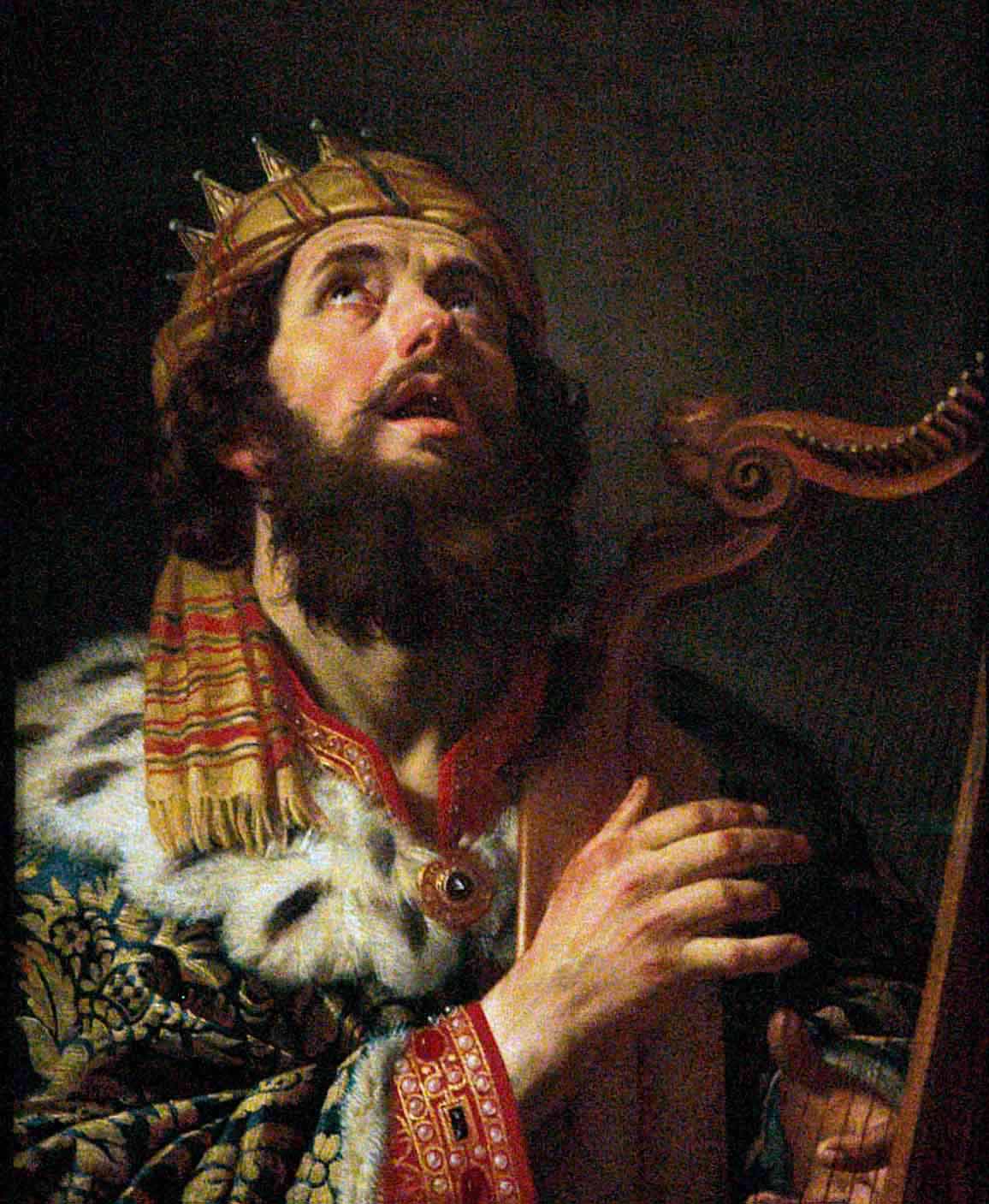
The Sweet Psalmist Of Israel

psalmistNow these are the last words of David. Thus says David the son of Jesse; thus says the man raised up on high, the anointed of the God of Jacob, and the sweet psalmist of Israel. (2 Samuel 23:1)

The Sweet Psalmist Of Israel

Reading the book of Psalms is an experience where one finds the glory, majesty and beautification of the grace of Jehovah God. It is not merely a book of poetry. Painted across each tapestry of praise the joy of living in the presence of the Lord is declared with deep colors of prayer, meditation, security, righteous judgment and bountiful hope. Jesus acknowledged the power of the Psalms before ascending as a testimony of Himself. Quoted often in New Testament scrip the musings of the ancient disciples declare the fulfillment of God’s divine plan. Martin Luther said the book of Psalms could easily be called a “little Bible” since it “contains, set out in the briefest and most beautiful form, all that is to be found in the whole Bible.”

The collection of one hundred fifty psalms is a complete picture of who God is. David the king is the author of nearly half the psalms. He is a man completely devoted to a life of thinking about his heavenly Father in every possible way. Called the “sweet psalmist of Israel” the shepherd boy extols the character of the Lord as worthy of praise and honor because of the loving care of his Shepherd. David knew God as few men have ever known Him. He declared the coming of the Messiah. Justice would be meted out to those who rebelled against the Lord. Faithfulness is a common thread in his writings and the praise of God’s mercy fills the page. If you want to know who God is read the psalms.

Prayer is a vital part of the heart of God’s children. Look at the psalms on bended knee and find the words to express to the Father the yearnings of the heart. Learning to pray will come from the psalmist who expressed in tones of majesty the greatness of a loving Father. Use the words of the psalms to frame the words of prayer. David was a man after the heart of God because his heart was always talking to the Father. Singing is not an act of worship contained within the Sunday morning building. David shows in his psalms that giving God glory through psalms is a way of living. Sing the psalms in your heart to praise the glory of what the Lord has done. His is greatly to be praised.

The book of Psalms is a great story. Take time to read, meditate, praise and glorify the Lord with the sweet psalmist of Israel.

The Psalms are our Bread of Heaven in the wilderness of our Exodus. (Thomas Merton, Bread in the Wilderness, 1953)

Posted in David, Old Testament, Psalms | Leave a comment

The Story Of Who

BVCA-14HE WHO loves father or mother more than Me is not worthy of Me. And HE WHO loves son or daughter more than Me is not worthy of Me. And HE WHO does not take his cross and follow after Me is not worthy of Me. HE WHO finds his life will lose it, and HE WHO loses his life for My sake will find it. HE WHO receives you receives Me, and HE WHO receives Me receives Him who sent Me. HE WHO receives a prophet in the name of a prophet shall receive a prophet’s reward. And HE WHO receives a righteous man in the name of a righteous man shall receive a righteous man’s reward. And whoever gives one of these little ones only a cup of cold water in the name of a disciple, assuredly, I say to you, he shall by no means lose his reward. (Matthew 10:37-42)

The Story Of Who

Discipleship with Jesus is about the WHO. When people heard the teaching of Jesus they were astonished. It was unlike anything they had heard before. The Lord came with plain speech directed at the hypocrisy that pervaded the spirits of God’s people for centuries. He wanted His followers to return to the old paths of truth and obedience of His Father. When the Lord sent out the twelve disciples he strictly warned them of the trials of their journey. Along with personal choices the twelve had to make Jesus outlined the message they were to deliver to the people. It is a message that many would not tolerate today.

Christ did not come to bring peace for men but rather offer peace to man. His teaching would separate families because one would believe and another disbelieve. It seems harsh to consider that within a family the teachings of the Lord would cause division and through the teaching of God families would be separated. The teaching of Jesus is the same message from the beginning: nothing can stand before obedience to God. If love for mother or father is more important than love for God then salvation is forfeited. Even if love for our own children exceeds the love we have for the Father there can be no hope. The Lord rejects anyone who does not put His Father first. HE WHO!

To be a follower of the Christ there is a cross to bear. This language does not have the sting as it did in the First Century. We have taken the cross of Jesus and made jewelry out of it. It is fashioned as gold, silver, wood or some beautiful jewel to admire. For the people who heard Jesus the cross was a horrific instrument of death. Hanging a cross around the neck for the first disciples would be like putting a hangman’s noose or guillotine around the neck. The cross was abhorrent! Jesus said that if you want to follow Him you have to take up an instrument of surrender and death. This suggests complete obedience. When a person takes up a cross they are going to a place where they will die. Following Jesus Christ requires a death to self. Anything less is not accepted. HE WHO!

There is joy in rejecting family and taking up a cross for the Lord. Losing a family because of truth will find its reward in eternity. Many Christians were crucified (literally) for their faith. The difference for the follower of God is that life is about the blessings of eternity. Jesus plainly shows that you can have everything in this life like family and ease of worldly joys but without God will lose your soul. Persecutions will come in the lives of God’s people but losing life here for Christ gives life in Heaven. Living and dying for the sake of Christ is the eternal reward. HE WHO.

One of the important parts of being a disciple of Jesus is a spirit of benevolence. The Lord takes note of those who care for His people. Something as small as a cup of cold water to a little person means a lot to Jesus. Nothing is unimportant to the compassionate heart of God’s people. There is a sense of steel and velvet to the service of God. When men follow His word it may seem harsh and difficult yet through a love for others kindness is shown from a simple cup of water. All of this matters. HE WHO.

They [Christians] walk in humility and kindness, and falsehood is not found among them, and they love one another. They despise not the widow, and grieve not the orphan. He that hath distributeth liberally to him that hath not. (Aristeides, Apology, c. 150)

Posted in Character Study, Christian | Leave a comment

I Am The Lord

sunrise4Then the Lord spoke to Moses, saying, “Speak to the children of Israel, and say to them: ‘I am the Lord your God. According to the doings of the land of Egypt, where you dwelt, you shall not do; and according to the doings of the land of Canaan, where I am bringing you, you shall not do; nor shall you walk in their ordinances. You shall observe My judgments and keep My ordinances, to walk in them: I am the Lord your God. You shall therefore keep My statutes and My judgments, which if a man does, he shall live by them: I am the Lord. (Leviticus 18:1-5)

I Am The Lord

There are emphatic statements of God throughout scripture. The purpose of these declarations is to arrest the attention of the people to the character of the Lord and His insistence upon their complete obedience. Found only in the Old Testament the statement “I am the Lord” is repeated around 162 times. The majority of scriptures will be found in two books: Leviticus (45) and Ezekiel (67). It should not be lost on the reader the context of these books and the assertion by God His people clearly understand His will. The name of the Lord is Holy and to be held in reverence. Not simply because it is a good thing to do but the name of the Lord establishes truth.

The book of Leviticus is a telling of the Law. Moses has been called by God to recite the specifics of the Law which were given on Mount Sinai. Over and over again while the Law was being outlined God put emphasis on the letter of the law reminding the people who brought them out of the land of Egypt, who performed mighty miracles in their presence and who cared for their every need. “I am the Lord” was a stamp of authority sealing the testimony of His word on the hearts of the people for them to obey. The Lord is a jealous God (His name is Jealous) and allegiance to one God was paramount to obedience. Jehovah would not accept being anything but first and only.

Ezekiel was a prophet during the turmoil of the captivity. He was a priest of the Lord among the captives by the river Chebar in Babylon. As a watchman over the house of Israel Ezekiel prophesied of the final destruction of Jerusalem with the razing of the temple and deportation of the Jews to bondage. The message was clear: what God had promised in the Law if Israel turned away from Him was now coming to pass. The Lord abhorred idolatry which leads to the destruction of the nation. Pride had brought the people of God to ruin and relying upon other nations to deliver them was folly. When all was said and done the judgment of God rained down upon the rebellious nation because the character of the Lord had remained unchanged. Through the writing of Ezekiel this single thought was repeated over and over again: “that you may know that I am the Lord.” He wanted the captive people and those about to feel the sting of the whip to understand that sin will not be tolerated. He had warned them in the Law and now they would learn the hard way that what was declared in the beginning was still true.

The challenge today is to remind the world the Lord is still in charge and His word continues to judge the world in righteousness. Through the Bible God’s will is proclaimed and His word is unchangeable. Sin is still abhorrent in the eyes of the Lord God Almighty and if men reject Him the penalty of rebellion will be given. Salvation can only come from hearts that accept the message that God is Lord and there is none like Him. The word of God shows forth that He is Lord. If men reject Him today they will face Him in judgment and then they will know that He is Lord. Every knee shall bow. All of humanity will understand who the Lord is.

By the name God I understand a substance infinite, eternal, immutable, independent, all-knowing, all-powerful, and by which I myself, and every other thing that exists were created. (Rene Descartes, Meditations, 1641)

Posted in Ezekiel, God, Law of Moses, Old Testament | Leave a comment

A Four Part Defense Of The Gospel

paul_preachingThen Agrippa said to Paul, “You are permitted to speak for yourself.” So Paul stretched out his hand and answered for himself: “I think myself happy, King Agrippa, because today I shall answer for myself before you concerning all the things of which I am accused by the Jews, especially because you are expert in all customs and questions which have to do with the Jews. Therefore I beg you to hear me patiently. My manner of life from my youth, which was spent from the beginning among my own nation at Jerusalem, all the Jews know. They knew me from the first, if they were willing to testify, that according to the strictest sect of our religion I lived a Pharisee. And now I stand and am judged for the hope of the promise made by God to our fathers. To this promise our twelve tribes, earnestly serving God night and day, hope to attain. For this hope’s sake, King Agrippa, I am accused by the Jews. Why should it be thought incredible by you that God raises the dead? Indeed, I myself thought I must do many things contrary to the name of Jesus of Nazareth. This I also did in Jerusalem, and many of the saints I shut up in prison, having received authority from the chief priests; and when they were put to death, I cast my vote against them. And I punished them often in every synagogue and compelled them to blaspheme; and being exceedingly enraged against them, I persecuted them even to foreign cities. While thus occupied, as I journeyed to Damascus with authority and commission from the chief priests, at midday, O king, along the road I saw a light from heaven, brighter than the sun, shining around me and those who journeyed with me. And when we all had fallen to the ground, I heard a voice speaking to me and saying in the Hebrew language, ‘Saul, Saul, why are you persecuting Me? It is hard for you to kick against the goads.’ So I said, ‘Who are You, Lord?’ And He said, ‘I am Jesus, whom you are persecuting. But rise and stand on your feet; for I have appeared to you for this purpose, to make you a minister and a witness both of the things which you have seen and of the things which I will yet reveal to you. I will deliver you from the Jewish people, as well as from the Gentiles, to whom I now send you, to open their eyes, in order to turn them from darkness to light, and from the power of Satan to God, that they may receive forgiveness of sins and an inheritance among those who are sanctified by faith in Me.’ Therefore, King Agrippa, I was not disobedient to the heavenly vision, but declared first to those in Damascus and in Jerusalem, and throughout all the region of Judea, and then to the Gentiles, that they should repent, turn to God, and do works befitting repentance. For these reasons the Jews seized me in the temple and tried to kill me. Therefore, having obtained help from God, to this day I stand, witnessing both to small and great, saying no other things than those which the prophets and Moses said would come–that the Christ would suffer, that He would be the first to rise from the dead, and would proclaim light to the Jewish people and to the Gentiles. Now as he thus made his defense, Festus said with a loud voice, “Paul, you are beside yourself! Much learning is driving you mad!” But he said, “I am not mad, most noble Festus, but speak the words of truth and reason. For the king, before whom I also speak freely, knows these things; for I am convinced that none of these things escapes his attention, since this thing was not done in a corner. King Agrippa, do you believe the prophets? I know that you do believe.” Then Agrippa said to Paul, “You almost persuade me to become a Christian.” And Paul said, “I would to God that not only you, but also all who hear me today, might become both almost and altogether such as I am, except for these chains.” When he had said these things, the king stood up, as well as the governor and Bernice and those who sat with them; and when they had gone aside, they talked among themselves, saying, “This man is doing nothing deserving of death or chains.” Then Agrippa said to Festus, “This man might have been set free if he had not appealed to Caesar.” (Acts 26:1-32)

A Four Part Defense Of The Gospel

It had been more than two years since his arrest in Jerusalem. Paul had been brought up on charges by his fellow Jews of sedition against their own laws. Taken to Caesarea to appear before a governor of the land named Felix he continued to defend his position of innocence. A new governor took over the case and Paul again shows he had done nothing wrong. During his stay under the governor Festus, King Agrippa and Bernice came to Caesarea where Festus explained the case to the king. Desiring to know the facts the King had Paul brought before the council to hear his story. With great pomp and circumstance the entourage of the King entered the auditorium. It was with much less pomp the prisoner was brought before the bar. Paul’s defense was a masterful piece of declaring the message of Jesus Christ. With a simple four-point presentation the apostle opened the gospel of redemption to a Roman court.

Paul first posed a philosophical question about resurrection. “Why should it be thought incredible by you that God raises the dead?” For anyone who believes in God the immediate conclusion is that the Lord is not limited by anything. To believe in God is an example of great faith. When a person accepts the reality of the one Creator who formed the world in six days what would limit the Creator to raise a man from the dead? Belief in Jesus is founded upon the knowledge that God raised Him from the dead. Paul spent his early life trying to disprove an event that was impossible to ignore. The resurrection is an easy doctrine to believe.

Second, Paul knew that Agrippa had a personal knowledge of the Law of Moses and the customs of the Jews. Appealing to this understanding the apostle poses a question of Jewish scripture. “Therefore, having obtained help from God, to this day I stand, witnessing both to small and great, saying no other things than those which the prophets and Moses said would come–that the Christ would suffer, that He would be the first to rise from the dead, and would proclaim light to the Jewish people and to the Gentiles.” What happened to Jesus was exactly what the scriptures foretold would take place. Belief in the prophets and Moses required belief in the sacrifice of Jesus as being the one promised. A careful survey of the Law of Moses and the Prophets and the Psalms would declare that Jesus was the Christ.

A third argument presented by Paul was the historical evidence. He declares, “For the king, before whom I also speak freely, knows these things; for I am convinced that none of these things escapes his attention, since this thing was not done in a corner.” The events of the empty tomb and the furor that followed did not escape the attention of Roman officials. Jesus life and his death became news. His followers were turning the world upside down. Agrippa knew of the story of Jesus. Anyone could have visited the tomb of Jesus and seen it was empty. The soldiers guarding the tomb knew what had happened. Jesus resurrection was a matter of historical record.

Finally the wearied apostle made a personal appeal. The King had been touched by Paul’s words. He admitted there was little evidence to support a denial of Jesus. Yet the king was not ready to change his heart. Paul’s final exhortation was to beg those gathered to believe in the story of Jesus like he had done. His life had been spent destroying everything Jesus stood for and now he was standing before the world defending the reality of the Son of God. Paul said, “I would to God that not only you, but also all who hear me today, might become both almost and altogether such as I am, except for these chains.” A prisoner who was free appealing to those free to come out from their bondage of fear.

Paul touched the hearts of those gathered that day. Sadly the opportunity to obey the gospel never came to those privileged to hear one of the great sermons of the day. They went back to their own lives without realizing the joy of God’s redeeming grace. Paul would go to Rome. Imprisoned for a time and released he was arrested one final time before a Roman blade removed his head. It was not a moment of defeat but a life of glory that awaited the aged apostle. He stood before kings. Now he stands before the King of Kings. And that is a great story.


Posted in Christian, Church, Jesus Christ, Paul | Leave a comment

For The Love Of Gomer

forgive power ofWhen the Lord began to speak by Hosea, the Lord said to Hosea: “Go, take yourself a wife of harlotry and children of harlotry, for the land has committed great harlotry by departing from the Lord.” So he went and took Gomer the daughter of Diblaim, and she conceived and bore him a son. (Hosea 1:2-3)

For The Love Of Gomer

The prophets were unusual men. Their task was herculean as they tried to bring the hearts of the people back to God. In the end the nation of Israel was destroyed with a remnant taken off to captivity for seventy years. The message of the prophets has been preserved through the Holy Spirit to give a model of God’s love, grace and mercy to a rebellious people. Some of these men were asked to do unusual things. Hosea was no exception. Instructed by the Lord to take a wife of harlotry he obeyed. He and Gomer had three sons: Jezreel, Lo-Ruhamah and Lo-Ammi. A shocking and sad truth becomes evident in the story of Hosea. Lo-Ruhamah and Lo-Ammi were not Hosea’s children. Gomer was being unfaithful to her husband. Later Hosea was told to take his adulterous wife back and to love her which he did buying her for the price of a common slave.

On the face of the story there is a reaction of horror. A man marries a woman of less than favorable character. She bears three children but instead of the joy of family it is discovered the woman continues her immoral ways bearing two of the sons by other men. The disgust for such a woman would easily be justified but then to find out the man goes out and finds the woman prostituting herself in the world and brings her back home. What man in his right mind would do such a thing? How could anyone look upon Gomer with anything but absolute disgust? Why would the Lord require this by the hand of his prophet?

For the Christian today the story of Hosea and Gomer seems disturbing. It is only when we spend time to understand the story that it is discovered who Gomer really is. The woman of rebellion is you – and she is me. Being comfortable with sin is very easy. We can become smug in our view of how we live before God. Sin is rebellion. How many times have we gone before the Lord and begged forgiveness one more time. Is it possible to count the number of times we have been forgiven? Do we deserve to be taken back again and again? God’s mercy is the theme of Hosea because His amazing love is expressed through the actions of Hosea. Gomer does not deserve the love of Hosea but Hosea loves his wife and will do anything for her. We do not deserve God’s love but His abounding mercy continues to fill our lives. Grace. Amazing. Love. Unending. The Lord keeps taking us back.

Hosea’s final message is telling. “Who is wise? Let him understand these things. Who is prudent? Let him know them. For the ways of the Lord are right; the righteous walk in them, but transgressors stumble in them.” Thank you God for your unending love, your incredible mercy and your grace that is more amazing every day.

Grace is unconquerable love … waits not for merit to call it forth, but flows out to the most guilty, is the sinner’s only hope. (William Ellery Channing; 1780-1842; Works)

Posted in Christian, Forgiveness, Morality, Prophets | Leave a comment

Changed Lives


AMAZING-GRACE1Afterward I went into the regions of Syria and Cilicia. And I was unknown by face to the churches of Judea which were in Christ. But they were hearing only, “He who formerly persecuted us now preaches the faith which he once tried to destroy.” And they glorified God in me. (Galatians 1:21-24)

Changed Lives

Saul of Tarsus was born with a silver spoon in his mouth. He came from a family that nurtured him as a devoted child of Abraham. His teaching was at the feet of Gamaliel, one of the greatest scholars of his day. As pedigrees goes Saul had it all. He came from the tribe of Benjamin known for their fierce spirit. Privilege came as a Pharisee placing him in a position of authority. When the followers of a man from Nazareth began to oppose the Law of Moses he became a one man movement of persecution against them. And he was very good at what he did. He shut up many Christians in prison, voted to have them killed, persecuted them in every synagogue and tortured them to deny Christ. His life had one purpose: annihilate the followers of Jesus. Nothing could contain his rage against the church.

It was on the road to Damascus the life of Saul changed forever. The church would never be the same either. Three days after the Lord appeared to Saul on the road the great persecutor of the church of Christ became a disciple of the Lord. His fierce spirit of devotion would now spend his final years declaring the gospel of salvation in the Man he sought to destroy. For the disciples living in Damascus the last person they would have ever dreamed that would become a Christian was Saul. He was the poster boy for persecution. Yet there he sat in the house of Judas still dripping from the baptismal waters eating a meal.

Paul would later write the gospel was the power of God to salvation. When those words were penned upon the parchment they meant so much more to the apostle. There is great power in the teaching of Jesus Christ. It has the power to change lives. Found in the seed of God’s love is a message that will take sinful man and give them a grace found only in the bosom of the Lord. Saul of Tarsus would die as a devoted servant of Jesus Christ. His life is a testimony to how the word of God can change lives. The vilest of sinner can become a child of God. Those whom we think least likely to have interest in the gospel are the first row candidates. When Paul went about preaching throughout the Roman world people were talking about his conversion and glorifying God.

The gospel of Jesus Christ has not changed. It will still bring those enslaved by alcohol and drugs to the cross of redemption. Women who sell their bodies, criminals who have known little compassion, immoral lives and corrupt hearts will find cleansing in the blood of Jesus Christ. The death of Jesus was not a surgical sacrifice for a select few. He died for all men – everybody! His death was to save the Jew, the Moslem, the Buddhist, the middle class American, the one with a different color skin or nationality, those lost in the slums of poverty and the mansions of wealth, young or old, tattooed, purple haired punkers and especially the socially content arrogant religious neighbor. Jesus Christ came to save you in the place you find yourself no matter where that is.

There is in truth a sort of reverence due to sinners, when we look at them not as in their sins, but simply as having sinned, and being the objects of a Divine yearning. (Frederick W. Faber, The Spirit of, 1914)

Posted in Christian, Jesus Christ, New Testament | Leave a comment