Jesus Went Looking For Him

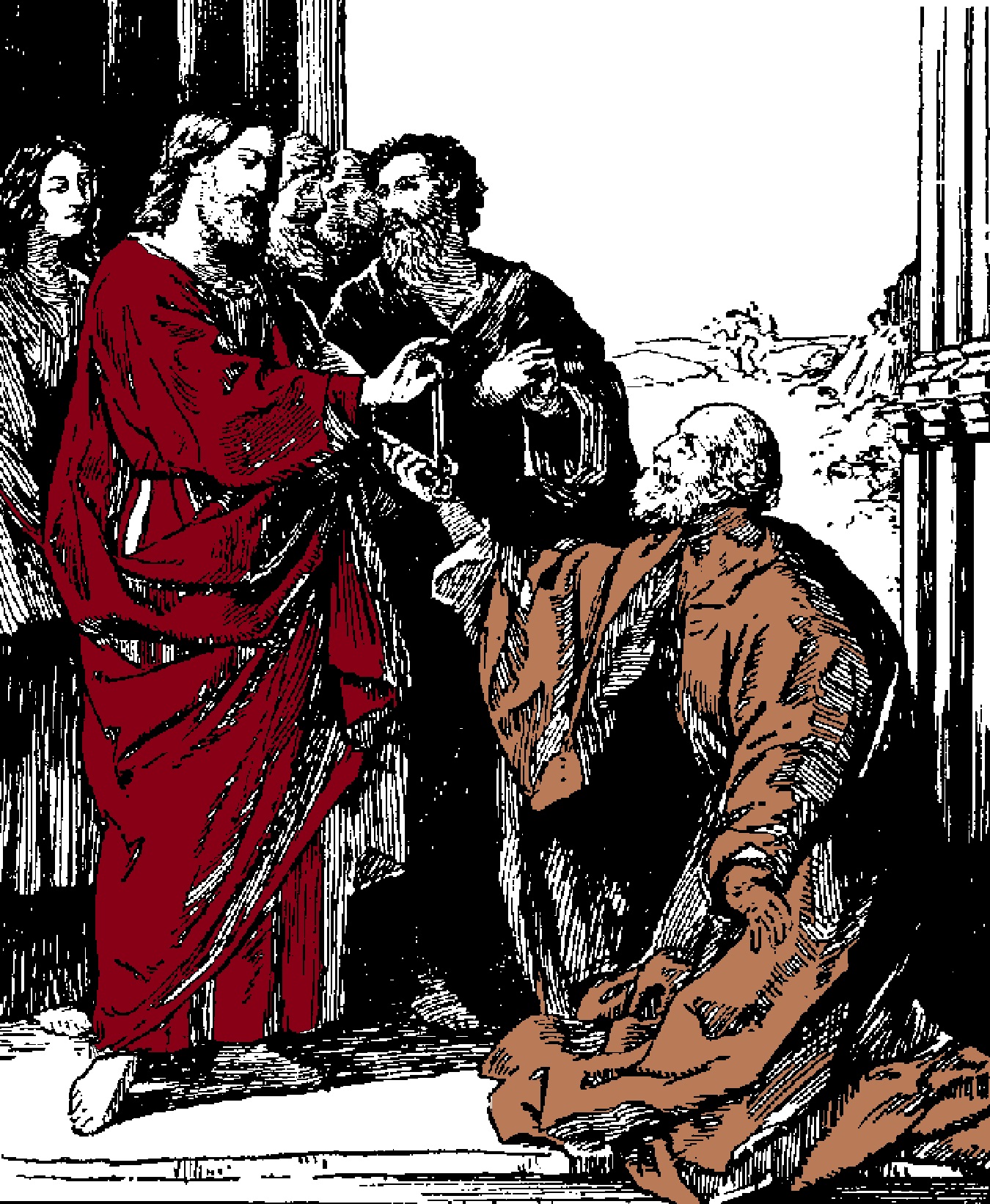
CHRT46They answered and said to him, “You were completely born in sins, and are you teaching us?” And they cast him out. Jesus heard that they had cast him out; and when He had found him, He said to him, “Do you believe in the Son of God?” He answered and said, “Who is He, Lord, that I may believe in Him?” And Jesus said to him, “You have both seen Him and it is He who is talking with you.” Then he said, “Lord, I believe!” And he worshiped Him. And Jesus said, “For judgment I have come into this world, that those who do not see may see, and that those who see may be made blind.” (John 9:34-39)

Jesus Went Looking For Him

Being born blind is a sad life in many ways. On the first level, there is no knowledge of what the world looks like so they never know what they are missing. There is no reference point to use if someone describes what he or she sees. A person born blind is not as handicap for the same reason because their world has always been in darkness. The greatest tragedy is the blind cannot see the beauty of God’s creation. There are many reasons why a child can be born blind and this would be especially difficult in the Bible times. Not understanding the science of blindness, people were treated harshly.

While in Jerusalem Jesus and His disciples came upon a man born blind from birth. The disciples used the poor man as an object lesson to inquire who was to blame for his condition. Always the teacher, the Lord took the opportunity to show His power among His disciples and healed the blind man; anointing the eyes with clay and saliva and telling the man to wash in the pool of Siloam. To the amazing joy of the man, he came back seeing. It is wonderful to consider what he thought of as he first viewed the world with his new eyes. There can be little doubt the first person he wanted to talk to was the voice that healed him. To his disappointment, the man called Jesus had left.

The first hours of his new life were very hard. He was taken before the Pharisees and grilled about his healing. His parents were brought in to confirm he had been blind. Finding no satisfaction to their questions, they cast the former blind man out of the synagogue. This must have been a horrible day for the man. He had been blind from birth. A stranger named Jesus had healed him of the impossibility. The first few hours of his sight-seeing life had been filled with anger and hatred. He may have wished he had his blindness back so he would not see the angry faces of the Pharisees. The Jewish leaders had ridiculed him and cast him out of the synagogue. How humiliating and sad he must have felt. Little did he know someone was coming to see him.

Jesus heard what happened to the man and here is where the story takes a powerful turn. The Lord came looking for him. Of all the people in the whole of the city, Jesus was looking for one man. Because Jesus had left before the blind returned from the pool of Siloam, he did not know what Jesus looked like. In a moment of great emotional relief, the blind man looked into the eyes of Jesus and saw his savior. Jesus came for him. Jesus came looking for one man and he was the one. What a joy to speak to the one who saved him. “Lord I believe,” he proclaimed and he worshipped Jesus.

This story is the revelation of God’s Son. I am blind but now I see. The sweat and tears of my Lord was mixed with blood and He anointed my eyes with His grace so that I can see His love. At the cross, Jesus bathed my life with the waters of life. He anointed me with His mercy to take away the darkness of my sin. He came for me. He came for you. His life will give you sight to see what cannot be seen without His power. We need to proclaim, “Lord I believe” and we must worship to one who gave us sight. He came to find us and to save us. Thank you Lord.

Now it is faith to believe that which you do not yet see; and the reward of faith is to see that which you believe. (Augustine; 354-430; Sermon XLIII)

Posted in Uncategorized | Leave a comment

Three Fathers

abramAs He spoke these things, many came to believe in Him. So Jesus was saying to those Jews who had believed Him, “If you continue in My word, then you are truly disciples of Mine; and you will know the truth, and the truth will make you free.” They answered Him, “We are Abraham’s descendants and have never yet been enslaved to anyone; how is it that You say, ‘You will become free’?” Jesus answered them, “Truly, truly, I say to you, everyone who commits sin is the slave of sin. “The slave does not remain in the house forever; the son does remain forever. “So if the Son makes you free, you will be free indeed. “I know that you are Abraham’s descendants; yet you seek to kill Me, because My word has no place in you. “I speak the things which I have seen with My Father; therefore you also do the things which you heard from your father.” They answered and said to Him, “Abraham is our father.” Jesus *said to them, “If you are Abraham’s children, do the deeds of Abraham. “But as it is, you are seeking to kill Me, a man who has told you the truth, which I heard from God; this Abraham did not do. “You are doing the deeds of your father.” They said to Him, “We were not born of fornication; we have one Father: God.” Jesus said to them, “If God were your Father, you would love Me, for I proceeded forth and have come from God, for I have not even come on My own initiative, but He sent Me. “Why do you not understand what I am saying? It is because you cannot hear My word. “You are of your father the devil, and you want to do the desires of your father. He was a murderer from the beginning, and does not stand in the truth because there is no truth in him. Whenever he speaks a lie, he speaks from his own nature, for he is a liar and the father of lies. “But because I speak the truth, you do not believe Me. (John 8:30-45)

Three Fathers

Following the attempt to trap Jesus with the adulterous woman, the Pharisees challenged the witness of the Lord as being untrue. Jesus always deferred to the will of His Father and the Pharisees asked Him to declare who His father was. Throughout His teaching, He would speak of the relationship He shared with the heavenly Father causing anger among the Jewish leaders. They could not see the works He did as evidence of His Sonship with the Father. Their hearts were filled with the pride of the ancestral Jewish heritage rooted in being children of Abraham. It is interesting they told Jesus they had never been in bondage to anyone. Somehow they forgot the captivities of Assyria, Babylon, Persia, Greeks and now the Romans.

Jesus acknowledges the Jews were the descendants of Abraham from the physical seed but they failed to see the importance of being the seed of Abraham in the spiritual sense. If they were the children of Abraham by faith, they would see that Jesus was the Son of God. Instead, they sought to kill Jesus. Their hearts were not guided by the word of truth but the word of their heritage. They boldly proclaimed that Abraham was their father and Jesus turned their argument against them saying Abraham would have accepted Jesus as the Son of God. The Jews respond by saying that God was their father and they had only one father. Playing on the use of ‘father,’ Jesus again tells them they are acting like another father – the devil. The end of this conversation angered the Jews so much they took up stones to throw at Jesus but He hid Himself and passed by.

The Jews prided themselves in being the children of Abraham more than being the children of God. They boldly proclaimed God was their father but their hearts told a different story. If they were children of Abraham, they would only be children of God. Abraham was never intended to be worshipped as a replacement for the one true Father. Physical heritage does not save a man. Being a child of Abraham did not save a person. Having the faith of Abraham would save a man. In the end, the unbelieving Jews were children of Satan because they built their hope on a heritage of man’s pride.

Salvation will only come to those who seek the one true Father – Jehovah God. Being born to a ‘Christian family’ does not save a person. The blessings of being raised in a home where God is the center will not bring about salvation simply because of a physical heritage. True faith comes from a heart that believes, accepts and embraces the love of the one true Father on a personal basis. Going to church services every week does not make a Christian. Doing all the right things in the right way does not make a Christian. Claiming a father’s heritage of the flesh will not save. Obedience comes from a heart devoted to the Heavenly Father. When we follow any other father – we really serve Satan.

Faith, like the whole Christian life, is an encounter in which God takes and keeps the initiative. (Eugene Joly, What is Faith, 1958)

Posted in Uncategorized | Leave a comment

Tough Love Is Hard To Do

tough loveFor we hear that there are some who walk among you in a disorderly manner, not working at all, but are busybodies. Now those who are such we command and exhort through our Lord Jesus Christ that they work in quietness and eat their own bread. But as for you, brethren, do not grow weary in doing good. And if anyone does not obey our word in this epistle, note that person and do not keep company with him, that he may be ashamed. Yet do not count him as an enemy, but admonish him as a brother. (2 Thessalonians 3:11-15)

Tough Love Is Hard To Do

The church of the New Testament was not a perfect group. Satan would not take long to inflict the early church with sinful practices, attitudes and actions that brought reproach on the work of the Lord. In the beginning, harmony filled the ranks of the first Christians. The church at Jerusalem was a model church to follow. Soon, the devil had his way with people like Ananias and Sapphira. Murmuring began among the Hellenists, prejudice against the Hebrews became a problem, false doctrines began to be circulated among the churches and places like the city of Corinth hosted many problems for the local church. It was the best of times; it was the worst of times.

Paul, writing to the church at Thessalonica, highlighted some of the challenges faced by the early disciples. People were not wanting to work and causing problems among the brethren. Busybodies were going from house to house causing dissension, division and disharmony. The church was being hammered by the attitudes of ungodly hearts seeking to turn the church of the Lord into a carnal group of self-seekers. It was taking its toll. Action was needed and Paul had the answer.

Discipline is never a pleasant thing especially when it involves the punitive side. The necessity of this action is understood from what happens if nothing is done. To allow the fracturing of the church in Thessalonica to continue would mean its eventual downfall. The apostle had heard of the problems in the church and commanded the brethren to take the appropriate action. His words were commands and exhortation but filled with authority. The busybodies were to be commanded to cease from their sinful practices and mind their own business. Love must fill the church in kind actions and words. Forgiveness was exhorted to build relationships of unity among the brethren. Attitudes of hearts must be changed to grow without being weary.

The toughest part of Paul’s admonition is the command to take action against those who refused to repent. After all else has failed and the saints refuse to stop their pernicious actions, they were to be disciplined by letting the congregation know of their unrepentant heart and the command to not have an intimate relationship with the rebellious brethren. This was not a choice. This was a command. The purpose of the action was to bring shame (if possible) to the hearts of the rebellious. Attitudes were important because the sinful brethren were still brethren – not enemies. However, until they repented, the brother or sister who refused to obey the command of God was to be disciplined. It was tough love but it was love from a heart seeking to save a soul.

Two thousand years has not changed the command as Paul wrote to Thessalonica. There are still times within the body of Christ that sin must be challenged and adjudicated in the proper manner of God’s will. We must seek to maintain the purity of the church by following the command of God – not the carnal opinions of man.

In times of prosperity, the church administers; in times of adversity, the church shepherds. (Fulton J. Sheen, The Priest Is Not His Own, 1963)

Posted in Uncategorized | Leave a comment

Enough Is More Than I Have

How much is enough concept, man and words on blackboard

Hell and destruction are never full; so the eyes of man are never satisfied. (Proverbs 27:20)

Enough Is More Than I Have

It is hard to imagine the number of people who have died since the beginning of time. At present, there are a little over six billion people living on planet earth. With each century, millions of lives are lost to an endless parade to the grave. Wars, famine, disease, and natural causes all lend themselves to the constant flow of death. In a twist of observations, the wise man suggests that while the grave seems never to be full – so the desires of man are never enough. There has never been a time when men could truly say that all they ever desired or wanted was complete. The horizon always has a tantalizing appeal of seeking what is beyond. Oceans have been traversed seeking new lands, continents have given up age-old secrets and the heavens above are plumbed for every ounce of information. In the long quest of man seeking greater heights, he finds at the end of his journey an empty expanse calling him to look for more. There never is enough.

For the most part, the pursuit of the unknown has driven man to find more about the world he inhabits. Science has expounded the knowledge of the beautiful world created by the hand of God. Seeking answers is embedded in the need of man to know everything he can. Sadly, this same desire has destroyed man. The appetite of the flesh is insatiable. Failing to see the nature of sin as only a temporary pleasure, man pursues more and more of what he desires filling a bottomless cup with what he believes is enough. Working a lifetime to have enough money to be happy is like trying to fill the vast caverns of death with all the people who have died. It cannot be done. The lesson of the wise man is to realize the failed theology of getting enough is impossible. Having enough will always be a little more than we have. Pleasure will always drive the hungering passion for more.

The word ‘enough’ is a funny word because so often it never means what it says. “If only I can have enough of this or that I will be happy,” the reckless proclaim. The eyes of man are never full. They will always be looking for something more, something else, and something new, and something more exciting, and something … sufficient? Never happens. A lifetime can never make possible the filling of the desires of the flesh. Yet the aim of most people is to gain enough.

Jesus came to give us all we need. There is a way to have everything we seek in life and enjoy the blessing of unending happiness. It is found in a relationship with the Son of God. Jesus came to give peace and hope to the desperate hearts of men seeking the elusive dreams of enough. In Christ, we can be full yet never satisfied. A lifetime can never complete the full picture of who God is and the love of His Son. The greatest joy is to know that a day will come when we can truly say, “enough is enough.” Death will be enough because beyond the shadow of the grave is all we need. What a joy that will be to have enough in the presence of our Father.

What care I though I have not much, I have as much as I desire, if I have as much as I want; I have as much as the most, if I have as much as I desire. (Arthur Warwick, Spare Minutes, 1637)

Posted in Uncategorized | Leave a comment

The Attitude Of The Second Mile

second mile“You have heard that it was said, ‘An eye for an eye and a tooth for a tooth.’ But I tell you not to resist an evil person. But whoever slaps you on your right cheek, turn the other to him also. If anyone wants to sue you and take away your tunic, let him have your cloak also. And whoever compels you to go one mile, go with him two. Give to him who asks you, and from him who wants to borrow from you do not turn away. (Matthew 5:38-42)

The Attitude Of The Second Mile

Radical. That was the teaching of Jesus on the mountain. His sermon is a vast array of character building lessons awakening the eyes of the dull of heart Jews of His day. The response of the multitude was astonishment. They had never heard this kind of teaching from their own scribes. In one part of the sermon, Jesus contrasts the thinking of stoic law keeping to matters of the heart. It is easy to remember how to treat the evil person. If they hurt you, you hurt them. There was in the Law of Moses provisions for recompense but Jesus wants the people to listen to the heart of the matter. The Law was given as a schoolmaster bringing the Jews to Christ. God did not want the burnt offerings – He wanted their whole hearts. The attitude of the second mile would drive the lesson home.

Evil men abound who take advantage of others. Often, because of the humble spirit of God’s people, they are taken advantage of by worldly-minded men. This would happen to the disciples of Christ but the reaction of His followers would be very different than the expected response. The child of God does not seek revenge when offended by others. Followers of Jesus Christ will not have a lynch mob mentality against those who do not love God. The figure of being slapped in the face is not a matter of physical abuse. Taking a tunic or cloak in a legal matter is of little consequence. Being pressed into service to deliver a dispatch would be done with a spirit of “how far do you want me to take the message?” The attitude of the second mile is not a restrictive spirit but a willing heart to serve others for the glory of God.

Today the world is filled with injustices and difficulties. The idea of being pressed into service is not so common but the attitude of the heart is still needed. Christian’s are people who do more than others do because they serve the Lord. Their heart is filled with a benevolent spirit of kindness, gentleness and an attitude of going the second mile. Evil men abound and hearts that are willing to do more than expected need abound in the body of Christ. “What more can I do?” should always be on the lips of the people of God. There is much work to do for the kingdom of God and we must always be ready to put our shoulders to the task with diligence. The world can be a hardhearted world but the children of God season their communities with the grace of the lives. Jesus declared in the sermon on the mount that His disciples are lights to the world and like salt, seasoning to the influence of others. Going the second mile for others is how we show that grace in our lives.

Jesus set forth high standards for His disciples in His sermon. What is important to remember in His teaching is that Jesus never asks us to do anything He was not willing to do Himself. When it comes to the attitude of the second mile, go to Golgotha and see the suffering Savior on the cross. He did not go the second mile. He went all the way to the throne of His Father for you and for me. Can we do any less with our fellow man?

There is no Christian truth so clearly revealed as this, that the spirit of every Christian must be a spirt of sacrifice. (P. A. Sheehan, 1902)

Posted in Uncategorized | Leave a comment

I Am Holy

holinessTherefore gird up the loins of your mind, be sober, and rest your hope fully upon the grace that is to be brought to you at the revelation of Jesus Christ; as obedient children, not conforming yourselves to the former lusts, as in your ignorance; but as He who called you is holy, you also be holy in all your conduct, because it is written, “Be holy, for I am holy.” (1 Peter 1:13-16)

I Am Holy

Understanding God the Father is a difficult challenge for the mind of man. There is no comparison – never has been – never will be. God is so much larger than man is and the reality of man is so much smaller. Consider that as Creator the Lord can hold the universe (known and unknown) in the palm of His hand. He has a name for every star (try counting them one night). Man fumbles around trying to find his beginning and the Lord God has no beginning and no end. Before the world was created, He was; man was not even dust. The knowledge of the mind of Jehovah is filled with the lives of every human being that has ever lived, living now and the lives of all those who will live before the end of the world. He remembers everything – literally. He knows everything – literally. He exists everywhere – literally. How incredibly awesome is our God. And He wants us to be like Him. The Lord wants us to be holy because He is holy.

The nature of holiness is defining. God wants us to be holy people following the character of His holiness. It is important to see that we are not expected to do holy things but to be holy people. Often men think that if they do holy things God will see them as holy. Other men may think the person to be holy because of the things they do. Contrary, the admonition is to be holy people living holy lives from a heart consecrated to the love of God. Righteousness is not measured by the deeds of good works but the spirit of the heart dedicated to the will of the Lord.

Holiness comes from minds that are prepared with the grace of God. Devotion to God is found in the spirit of love for the Father – desiring to mold the heart with the image of the Lord. We are holy because we think in holy ways. Sober minded hearts are filled with the measure of the Father’s love showing forth in the words, deeds and lives of holy people. Like the Father, we do not do holy things – we are holy. Every atom of our existence is filled with the desire to be like God. Faith directs every step. Hope guides the heart in every decision. Devotion carries the spirit through the difficult paths of obedience. God’s people mold their conduct into His will in complete faith and trust. Holiness is a natural outpouring of who we are. Why? Because that is who God is.

“Holy” has the same root as “wholly”; it means complete. A man is not complete in spiritual stature if all his mind, heart, soul, strength are not given to God. (R. J. H. Stewart, Spiritual Conferences of, 1952)

Posted in Uncategorized | Leave a comment

The Burning Bush

moses-and-burning-bushNow Moses was tending the flock of Jethro his father-in-law, the priest of Midian. And he led the flock to the back of the desert, and came to Horeb, the mountain of God. And the Angel of the Lord appeared to him in a flame of fire from the midst of a bush. So he looked, and behold, the bush was burning with fire, but the bush was not consumed. Then Moses said, “I will now turn aside and see this great sight, why the bush does not burn.” So when the Lord saw that he turned aside to look, God called to him from the midst of the bush and said, “Moses, Moses!” And he said, “Here I am.” Then He said, “Do not draw near this place. Take your sandals off your feet, for the place where you stand is holy ground.” Moreover He said, “I am the God of your father–the God of Abraham, the God of Isaac, and the God of Jacob.” And Moses hid his face, for he was afraid to look upon God. And the Lord said: “I have surely seen the oppression of My people who are in Egypt, and have heard their cry because of their taskmasters, for I know their sorrows. So I have come down to deliver them out of the hand of the Egyptians, and to bring them up from that land to a good and large land, to a land flowing with milk and honey, to the place of the Canaanites and the Hittites and the Amorites and the Perizzites and the Hivites and the Jebusites. Now therefore, behold, the cry of the children of Israel has come to Me, and I have also seen the oppression with which the Egyptians oppress them. Come now, therefore, and I will send you to Pharaoh that you may bring My people, the children of Israel, out of Egypt.” (Exodus 3:1-10)

The Burning Bush

An aged shepherd moved his flock to the back of the desert as he had done many times before in the tedious work of tending sheep. A mountain was there and the sheep could find good pasture to feed on. It had been a remarkable year as the patriarch thought of where he was forty years previous. What a change had taken place. He remembered growing up the privileged son of the king of Egypt. His allegiance had been divided as he was known as the son of Pharaoh’s daughter but in his heart, he knew he was a Hebrew. On a fateful day so many years before, he had murdered a man believing that God had placed him among the nation to deliver his people from slavery. Instead of being hailed a hero, he had banished himself to a desperate part of a country far away tending a flock for his father-in-law. He gazed over the flock that had become so familiar to him drinking in the irony of his life.

It was then something caught his eye. There was a bush on fire. This could be a dangerous thing and concern for the flock. As he looked, he realized the fire burned brightly but the bush was not consumed. He had never seen such a sight. Moving towards the flame a voice spoke to him calling out his name. The voice told him to remove his sandals from his feet for the ground where he stood was holy ground. The Lord God was speaking to Moses and from this time on his life would never be the same.

The burning bush was a pivotal point in the history of man. It was not just about Moses but about the promise God had made to deliver man from the bondage of sin. A promise first made in the garden of Eden, confirmed through Abraham, Isaac and Jacob and now begun in earnest through the deliverance of the people of God from Egypt. Moses would be the leader of the people to draw them forth from the land of Egypt. The life of Moses was a testimony of the grace of God upon all men. Born a Hebrew, he was raised in the house of Pharaoh as a son of great privilege. This all came to nothing when he murdered a man fleeing for his life to Midian. Moses seems to have an arrogance about himself that was lost after forty years tending sheep. The Lord needed a humble leader to bring His people out of Egypt. Moses needed to be humbled before taking that job.

God’s providence is evident throughout the life of Moses. Saved from the river, he would lead the people through a sea to freedom. Born a Hebrew, his name would always remind the people of his Egyptian heritage. A man powerful in words and deeds had to become a man of a humble spirit to guide the people of God. The life of a prince became a life of a shepherd. Moses complained of his inability to lead the people while talking to God at the burning bush but on Mount Nebo decades later, he would see the promised land where he had brought the faithful of the Lord. His life is one of contrast. Conflicts always confronted him. His love for the Lord never diminished. Moses was a faithful man of God who first realized his purpose at the burning bush.

We all need those moments. Its life changing. For us it is a cross. It is burning with the love of God that we cannot take our eyes off for the wonder of what we see. The place of the cross is holy ground where we meet our Savior. Freedom is found when Jesus rose from the dead crossing the river of death victoriously leading us to the promised land. In death, we cross the Jordan to live with God forever. Our Savior is Jesus Christ. Now that is a great story.

Posted in Uncategorized | Leave a comment

We Will Not Listen To You

jeremiahThen all the men who knew that their wives had made offerings to other gods, and all the women who stood by, a great assembly, all the people who lived in Pathros in the land of Egypt, answered Jeremiah: “As for the word that you have spoken to us in the name of the Lord, we will not listen to you. But we will do everything that we have vowed, make offerings to the queen of heaven and pour out drink offerings to her, as we did, both we and our fathers, our kings and our officials, in the cities of Judah and in the streets of Jerusalem. For then we had plenty of food, and prospered, and saw no disaster. But since we left off making offerings to the queen of heaven and pouring out drink offerings to her, we have lacked everything and have been consumed by the sword and by famine.” (Jeremiah 44:15-18)

We Will Not Listen To You

Man has a stubborn heart. The book of Jeremiah is a powerful testimony to the gracious mercy of God and the rebellious heart of those set on doing what they want to do regardless of what the word of God says. Israel had been torn apart because of sin. Ten tribes had been completely destroyed and the remaining two tribes of Judah and Benjamin were struggling to keep their heads above the tide of judgment sweeping the land. Babylon was the super-power of its day and judgment had come to the city of Jerusalem. Zedekiah the king of Judah saw his sons killed before his eyes before Nebuchadnezzar put out Zedekiah’s eyes taking him bound to Babylon.  The governor had been murdered along with many other Jews. Eighty men who came to worship at the house of the Lord were murdered and thrown into a pit. The people came to Jeremiah asking if the Lord would allow them to flee to Egypt. He warned them disaster would meet them if they did. These were perilous times. If there was a time to listen to the word of the Lord, it was now.

The response of the men who came to Jeremiah is quite telling. They knew their wives had burned incense to idols. For the past few years the nation of God had been devastated by assassination, invasion and calamities one after the other. Now the heart of the people rested in the hope of Egypt to deliver them. Inquiry had been made whether the people should go to Egypt and Jeremiah had told them the Lord forbade it. In an open statement of rebellion, the people refused to listen to the word of God because they knew better. Anything Jeremiah would tell them was of no use because if anyone would save the people it would be the people. They blamed God for their misery (which was actually true) recalling the bountiful days they enjoyed serving idols. What they failed to remember was the misery suffered throughout the land was brought about by the hand of God as punishment for their refusal to obey Him. And now they were going to do the same thing again and find the same result. No wonder Jeremiah is known as the “weeping prophet” after dealing with these people.

The refusal of the people to heed the word of Jeremiah was very clear. They would not listen to him. Their rebellious heart was straightforward that anything they would decide would come from their own lips. The queen of heaven gave them happiness and they will follow her instead of the Lord God. Living under the blessings of idols, they believed they had plenty of food, were well off and saw no trouble. Life was good under the hand of ungodliness. Living under the hand of God only brought misery. So they thought. Judgment did come to the people. Their lives were destroyed and they lost their hope of salvation. For a bowl of pottage in life’s quagmire of sin, life was fruitful for a moment and then death. When awakened in eternity, they learned there was no queen of heaven – only the Lord God Almighty.

Reading the prophets has always been the historical reference to our present day. Pleading to a lost and dying world to follow Jesus is ignored because men see that living a life of godliness is oppressive. Enjoying the gusto of life with all of its trappings of immorality, parties, free spirit of doing whatever pleases the flesh is the same language of worship to the queen of heaven. Life is better when the flesh is satisfied. Joy comes from a bottle or drugs. Sexual prowess is the badge of lustful pleasure. Money brings the happiness of the soul. “Do not listen to the word of the Lord,” they cry. “It does not seek the good of man’s needs in the flesh,” they pronounce. And then – like the days so long ago in the land of Egypt – judgment comes. The party ends. Flesh is corrupt. Desire has faded. Death opens the eyes of the deceived. God is real. His word is true. Too late. Sad.

If God lived on earth, people would break His windows. (Proverb)

Posted in Uncategorized | Leave a comment

A Simple Guide For Life

joy2And whatever you do, in word or deed, do everything in the name of the Lord Jesus, giving thanks to God the Father through him. (Colossians 3:17)

A Simple Guide For Life

In a world seeking simple things to make life easier, the gospel of Christ is filled with easy patterns to follow. The life of the Christian is to be a joy. There are so many blessings it would take more than a lifetime to count them. Lost in the confusion of an oppressive world the child of God can lose their focus and reason to rejoice for all God has done for them. Those little gems of God’s grace sprinkled throughout His word will help to strengthen the heart and give a joyful attitude to the life of a Christian.

The new man in Christ is a person who seeks to do everything in his or her life by the pattern of Jesus Christ. To do something in the name of the Lord is to walk along His path following His direction. As Creator, the Lord knows everything that is good for man. The purpose of the will of God is not to oppress the spirit of man but to set it free for what it is designed to do. Filling life with the thanksgiving of God’s grace is where true happiness and contentment are found. Paul exhorts the people of God to live each day seeking to follow the pattern of Jesus Christ. The application is where the lesson is found.

Jesus is a wonderful example of love and kindness. He stood firm for the truth of God. His teaching was from the mouth of His Father. Prayer filled His life. Sharing the good news of the living water with others was a constant source of strength for Him. He loved people. His message was stern against the religious hypocrisy of the day. In every part of His life He lived to please the Father above. Whatever we do in life, we should follow the pattern of Jesus. Let His name be on our lips when we speak. As we talk with others, let the spirit of Christ grace our tongues. This is where kind words are found and forgiveness is seen. When we go to work, people should see the spirit of Christ living in our work place. Our demeanor is the character of godliness. We should always remember that we serve a greater master than those who sign our paycheck. Our work ethic is governed by the Lord God.

Husbands and wives fill their homes with the name of the Lord Jesus. Prayers are often, the Bible is the focus of the home, and love is bound with the presence of God. Mothers and fathers are teaching their children that whatever is done should be done in the name of the Lord. Decisions are measured by what pleases the Lord. An example is impressed upon the community that our homes are filled with the grace of Jesus Christ. As the lights in the world, our friends and neighbors see Christ living in us. We are not people who grumble and complain all the time. People of God are thankful people. There is much to be thankful for and we acknowledge that every day of our lives. Whatever we are going to do today is going to be showing the name of Jesus Christ in our actions and the thanksgiving of a loving God in our hearts. You want joy? Live life with the name of Jesus Christ embedded in everything you do.

When we serve with joy, we promote His honor and glory; because we show that we do it with affection, and that all we do is nothing compared to what we would wish to do. (Alphonsus Rodriguez, On Christian Perfection, 1611)

Posted in Uncategorized | Leave a comment

Women’s Work

12009625_911585205557889_2576733924608112016_nI commend to you Phoebe our sister, who is a servant of the church in Cenchrea, that you may receive her in the Lord in a manner worthy of the saints, and assist her in whatever business she has need of you; for indeed she has been a helper of many and of myself also. Greet Priscilla and Aquila, my fellow workers in Christ Jesus, who risked their own necks for my life, to whom not only I give thanks, but also all the churches of the Gentiles. Likewise greet the church that is in their house. Greet my beloved Epaenetus, who is the firstfruits of Achaia to Christ. Greet Mary, who labored much for us. (Romans 16:1-6)

Women’s Work

The early church was a beehive of activity. From the beginning of the first converts in Jerusalem, the saints worked together in building one another up and enduring the persecutions of those opposed to the gospel. Luke recounts the work of the apostles in the Acts showing much of the work of Peter and Paul. Men like Stephen are given as examples of strength who suffered death for Christ. Philip taught the man from Ethiopia,  Ananias baptized Saul of Tarsus, Cornelius and his household learned the gospel and Apollos was shown the way more perfectly by Aquila and Priscilla. As Paul closes out his letter to the church in Rome, he acknowledges over thirty people who have had a great impact on the work of the church. Many of these godly saints were women busy in the work of the Lord.

It is easy to assume that because scripture forbids the woman from taking a leadership role in the church there is nothing for them to do. On the contrary, Paul commends a number of women for the efforts they put forth in working for the Lord. Phoebe is the first on his list when he begins to close out his epistle. She did not hold any office within the church but she was a diligent servant or worker for the Lord. There is a lot of work to be done in a local congregation. Women are not forbidden from doing the work of the Lord. They are encouraged to be a vital part of the kingdom of Christ in the diligent effort of leading souls to Christ. Like Priscilla, Phoebe would have been a great influence in sharing the gospel of Christ. Paul would later write to Timothy that older women are to be teaching the younger women and guiding them in the instructions of the Lord. This did not take place during Sunday morning or Wednesday night Bible class. Teaching the younger women was a daily activity of being mentors to young women in their homes.

Phoebe was a hard worker and Paul commended her for the exhaustive efforts she put forth to help the church grow in grace and knowledge. Priscilla is a wonderful example of a wife dedicated to helping her husband do the work of teaching others. They had taken Apollos aside and helped him learn the way of truth more clearly. It was Priscilla and Aquila that had risked their necks for Paul. They were both workers in the kingdom. Their home was where the church met and it would be certain Priscilla’s role was vital to make that happen. Paul mentions Mary who labored much for the Lord. Whether this is the mother of Jesus is not known as there were many women named Mary. The Roman brethren would have known whom Paul was speaking but the point is that Mary was a busy person for the kingdom of the Lord. Other women are mentioned. Workers all of them.

The scriptures plainly show the woman cannot take a position of leadership within the church but let us not throw the baby out with the bathwater in suggesting there is nothing for them to do. There is a lot of work for women like Dorcas to do, the mother and grandmother of Timothy, those godly women who seek to direct the hearts of younger women and the wives of those men who take on the role of leadership as God designed. Preachers need wives who encourage, exhort and bless the efforts of their husbands. Older women have much to offer in showing grace in their lives as Christians. There is a lot of work for women to do. God bless them each one for the spiritual legacy they leave on the hearts of others.

Let it be said to the credit of womanhood that there is no record in the gospel of any woman ever opposing Jesus. (Vance Havner; 1901-1986)

Posted in Uncategorized | Leave a comment