What Did Jesus Look Like?

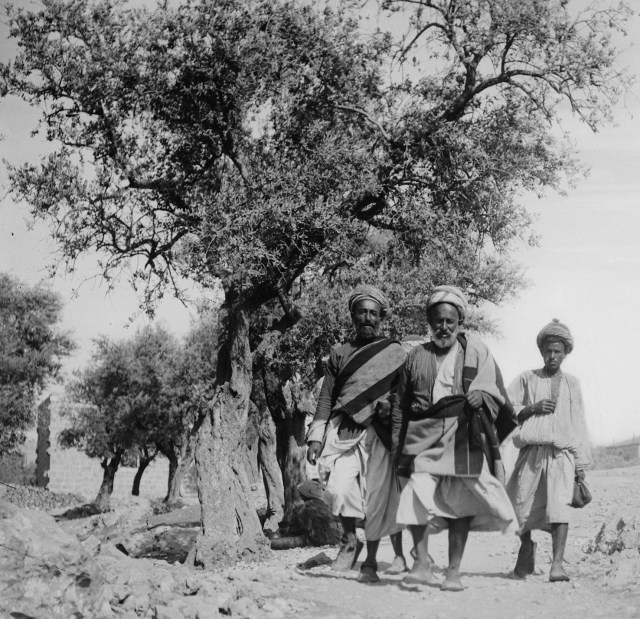
Peasants, mat01227b

Who has believed our report? And to whom has the arm of the Lord been revealed? For He shall grow up before Him as a tender plant, and as a root out of dry ground. He has no form or comeliness; and when we see Him, there is no beauty that we should desire Him. He is despised and rejected by men, a Man of sorrows and acquainted with grief. And we hid, as it were, our faces from Him; He was despised, and we did not esteem Him. (Isaiah 53:1-3)

What Did Jesus Look Like?

As the teacher was walking through her classroom she noticed one little girl intently drawing in her notebook. Inquiring what the little girl was so focused on she replied that she was drawing a picture of God. The teacher gently admonished the little girl that no one knew what God looked like and the little girl replied, “They will when I get finished.” Jesus told the Samaritan woman that God was a spirit and He must be worshiped as a spirit. In the Revelation John saw One seated on the throne but no information is given as to his visage with any certain details apart from having an appearance of jasper and sardius stone. Jesus on the other hand left His spiritual abode with the Father and became like a man taking on the form of a man and living in the flesh of the carnal man. His conception was by the power of the Holy Spirit but His birth was exactly like any other human. Jesus was born in due time and was wrapped in swaddling clothes as newborn babies would be treated. He had to learn to talk, to walk and move about and to learn how to eat and care for Himself. First as a young child in the city of Bethlehem He did what all young children do and then lived in Egypt for a time before settling in Nazareth where He would learn the trade of Joseph. Along with His brothers and sisters Jesus would be as ordinary as any Jewish boy in Israel. There was nothing unusual about Him from other children. As He grew into adolescences and his teen years His friends did not notice anything unusual about Him. He did startle the teachers at the Temple at the age of twelve but nothing is known of the next eighteen years as He grew into manhood.

Isaiah gives a hint to the appearance of Jesus in his prophetic text. Contrary to the Renaissance pictorials of Jesus glowing with a halo and shining face, the presentation of Jesus was unremarkable. If the text is taken to a certain conclusion Jesus was not an attractive man by any standards. The prophet Isaiah declared that if a person would look at Jesus there would be no beauty in Him that anyone would take notice. His face was as ordinary as any other Jewish citizen of Nazareth. In a crowd to twenty people no one would think the son of Mary as remarkable. On the yearly pilgrimages to Jerusalem where thousands of people crowded the roads to worship the Lord God no one would have given Jesus a second glance. He was so unremarkable He was plain. His presence was unobtrusive and unpretentious. It is hard to imagine the Son of God could not be picked out of a crowd of people. Not until Jesus was thirty years old did people take notice of Him. When He began to teach people were astonished. As the miracles multiplied the crowds began to seek Him. Throughout the ministry of Jesus people were drawn to Jesus for many reasons but it was not because of his debonair good looks and charming smile. It was His gentle touch and His compassionate heart that would leave a lasting impression on others. The force of His words moved people to change their lives. Jesus did not come to win a popularity contest. In fact Jesus came to die on a Roman cross. What He looked like was of no importance. The physical imagery of the Son of God could have been the most remarkable picture in all of creation. God sent His Son to give His life for man and the unremarkable man from Nazareth finished the work of His heavenly Father when He died on the cross. Hanging on the cross there was no glory around His head, no angels singing alleluia and few people took great notice about the man in the middle. He was a criminal and deserved to die. Only a handful of faithful disciples looked at the haggard face of Jesus and saw the love of God.

Isaiah’s statement about the coming Christ is critical for men to embrace and see the purpose of life. Jesus was a beautiful person because of what He was and who He was. His work was to save all men and through His blood bring all men to God. There is a divine purpose in looking at the man on the cross who had no form or comeliness and no beauty that we should desire Him. For those who are smitten with the grace of God what they seen in the cross is the most beautiful story man has ever known. They do not see the face of a man; they see the heart of God’s Son dying for their sins. He was despised and rejected by men but accepted by His Father. Jesus bore our sorrows and our grief so that we would be spared from the penalty of death. We hid our faces from Him but His face radiated the love of God. He was despised and while we did not esteem Him – the Savior asked His Father to forgive us. I know what the face of Jesus looked like. It is as clear as anything in this world. The face of Jesus is found in the word of God. Eyes of mercy, lips of grace, face of compassion and a heart willing to die for me. One of the great blessings of eternal life is found in John’s imagery of the Revelation. The aged apostle writes that we will see His face. I hope Jesus does not mind if I just reach out and touch that face. It is such a beautiful face.


Posted in Uncategorized | Leave a comment

God’s War

spiritual-warfare (1)

The sons of Reuben, the Gadites, and half the tribe of Manasseh had forty-four thousand seven hundred and sixty valiant men, men able to bear shield and sword, to shoot with the bow, and skillful in war, who went to war. They made war with the Hagrites, Jetur, Naphish, and Nodab. And they were helped against them, and the Hagrites were delivered into their hand, and all who were with them, for they cried out to God in the battle. He heeded their prayer, because they put their trust in Him. Then they took away their livestock—fifty thousand of their camels, two hundred and fifty thousand of their sheep, and two thousand of their donkeys—also one hundred thousand of their men; for many fell dead, because the war was God’s. And they dwelt in their place until the captivity. (1 Chronicles 5:18-22)

God’s War

Genealogies are not the most exciting areas of scripture to read but there are many jewels contained within the placement of those who begot one another. It has been suggested that Ezra wrote the “Chronicles” telling a history of Israel from the time of King Saul’s death to the remnants return following the captivity. Nearly a third of the first book deals with genealogy as this was vital to establishing a historical record of ancestry of the Jewish people. Between the families of Reuben, Gad and Joseph (sons of Jacob) there was an incredible force of fighting men numbering 44,760 valiant men. Manasseh was one of the sons of Joseph and along with Ephraim represents the family of Joseph in tribal identity. The Chronicle explains how these three families joined together to form a formidable fighting army that gained many victories for the Lord. They are described as courageous men skilled in the art of war and aggressive in their attack. United in their purpose through the avenue of prayer they put their trust in God gaining incredible victories with much spoil. During the battle they cried to the Lord for His intervention and He heeded the prayer because they put their trust in Him. These were mighty men of war very skilled but they knew the source of the power came from the Lord and they trusted His power more than their own. The bounty resulted in 302,000 animals being taken along with 100,000 of the enemy. It was a 2:1 ration against them in the final analysis but they gained the victory. Many were killed not because the men were valiant and strong in their own might but because the war that was waged belonged to the Lord. The war was God’s war.

The days of carnal warfare came to an end when Jesus Christ came into the world to save all men. Paul declared the weapons of warfare are now spiritual for casting down arguments and everything that exalts itself against the power of God. While the methods of fighting have changed the spirit of war has not; the battle still belongs to the Lord. Like the sons of Reuben, the Gadites and half the tribe of Manasseh, the church needs valiant men and women who are able to bear the shield of faith and sword of the Spirit to make war against the wiles of the devil. Courage is needed to face an overwhelming army of principalities, powers, rulers of the darkness of this age and spiritual hosts of wickedness that war against the kingdom of Christ. Saints who are skilled in the word of God and the use of truth to destroy the arguments of immorality, false doctrine, religious error and complacency are needed to fight the great war of God. There is a greater need for trained soldiers of Christ to stand against the increasing pressures of a carnal world. As the war rages men and women must lift up their voices and cry out to God in the midst of battle for help. The war against unrighteousness will be difficult and fraught with danger. Without the protective blessing of the Lord there can be no victory. No man can gain the victory by his own power. Prayer is the incense of the smell of battle placed in the hands of Jehovah God to let His guiding hand bring about victory. When the people of God unite in prayer the Lord will heed their supplications and give the victory. The battle belongs to the Lord if trust is put in His will and His way. Prayer must be lifted on wings of complete trust that God will secure the victory as He did with the sons of Reuben, Gad and Manasseh.

Many fell dead in battle because the war was God’s. This is a profound statement of the power and majesty of the Lord God who reigns, rules and regards the affairs of man as His purpose and design for sending the Christ. The war still belongs to God. He gave His Son as the gift of love to show all men there is no victory without Him. Jesus rose from the dead and death has no power. God brought forth His Son from the grave and hades will be cast into the lake of fire. The governments of the world that stand against the kingdom of God will be cast into the second death along with the harlot of Babylon and the beast of spiritual error. Nothing will be able to stand against the King of Kings and Lord of Lords because the battle belongs to the Lord. The message of God’s word is the will of the Lord will be finished according to His power. He created the world and governs the affairs of the world and it will be by His power the world is destroyed. Man did not create the world and while given dominion of the world is banished to the role of servant to the great I AM. The destiny of man was not determined by the wisdom of man but the knowledge of God revealed the battle plan to defeat the great dragon and overcome death. The war belongs to God. He fights it His way and the outcome is determined by His will. Soldiers of Christ who stand in battle array against Satan will have the victory because they know the war is God’s and through courage and prayer bring glory to the cause of righteousness and truth. Fight brethren. Make war in the name of God.

Posted in Uncategorized | Leave a comment

Imitate Christ

impact_imitate

Imitate me, just as I also imitate Christ. (1 Corinthians 11:1)

Imitate Christ

The art of imitation is the ability to replicate the total character of another into the spirit of self. Florence Nightingale said, “People talk about imitating Christ, and imitate Him in the little trifling formal things, such as washing the feet, saying His prayer, and so on; but if anyone attempts the real imitation of Him, there are no bounds to the outcry with which the presumption of that person is condemned.” Imitation is following the pattern of something established mimicking the complete essence and character of the object copied. Paul was bold to exhort the brethren to imitate him as he imitated Christ. On a personal level it is a challenge to mold ones character to be like Christ. Asking others to follow the example of life followed by the individual is a larger test asking others to look carefully at their lives and mimic what they say and do. All of this must be governed by the need to imitate life after the example of Jesus Christ. Eight words placed Paul squarely in the sights of the brethren to open up his life, examine his life and seek to pattern their attitudes, actions and life after another man. Pride did not lead the apostle to seek this investigation but humility to show others how much he tried to form his life into the image of the divine. Later Paul would call himself the worst sinner known to man. He was not a perfect man and praised the Lord for His infinite mercy to grant eternal grace to the man who once was a blasphemer of truth. Now he is asking brethren to imitate his life as he seeks to follow the pattern of Christ. The context of his letter to Corinth was to exhort the brethren to be concerned with their attitudes toward others and not to give offense to the Jews, Greeks or to the church of God. He pleaded with the Corinthians to imitate his life in dealing with those things lawful and unlawful. What makes the appeal stronger is that Paul lived in such a manner he could in good consciousness plead with the saints to imitate him. If the apostle had not patterned his life in such a way, they would be hesitant to follow after Paul.

All of God’s people are enjoined to be like Christ. The spirit of God should be the whole of man’s character in love, deeds, kindness, words and attitudes toward others. Many passages address the molding of the Christian character to the image of God through the example of Jesus. Walking in the footsteps of Jesus is carefully patterned lives that follow the path of the Lord in truth, righteousness and holiness. The real test of servitude is whether an exhortation can be given for others to follow the individual example as a pattern of truth, righteousness and holiness. Everyone leaves an impression upon the hearts of others whether good or bad. A key ingredient in the life of a Christian is how others see them and understand them. Often little concern is given to what other people see in the lives of a child of God but every life is a reflection of the Father. Like in the physical family the actions and demeanor of the children reflects the values and attitudes of the parents. When people of the world see God’s children playing in the frolic of carnality they view the heavenly Father with the disdain of hypocrisy. It is sad to think of the souls who were tainted with the imitation of God’s children who were not emulating the spirit of Christ. When envy, strife, hatred and division exist in the family of the Lord it reflects to the world a sour note of discord that will only bring harsh judgments of condemnation for the pretense seen in their lives. Yet the example of godliness in the hearts of disciples of Christ will help others see the joy of eternal life in the blessing of God’s word.

Imitating Christ allows the life of a Christian to shine as a light to the world. Jesus told the mountain multitude that what the world needed to see was God living in their lives. When the life of Christ lives in the life of the Christian he or she is setting forth a pattern of truth for others to see and follow. This is not the only means of conversion but it has a huge impact on the reception of grace through the exemplary life seeking to follow the word of God. It takes courage to ask others to follow the example of self. First self must be molded to Jesus Christ so that what others follow is the character of the Son of God. When life is governed by the example of Christ greater joy will be found in the heart, soul and mind and security of knowing that what others see they can emulate and follow. May all of God’s children present their hearts in such a manner they can boldly say to others, “Imitate me just as I also imitate Christ.”

Posted in Uncategorized | Leave a comment

No Matter What God Reigns

god reigns

And I heard, as it were, the voice of a great multitude, as the sound of many waters and as the sound of mighty thunderings, saying, “Alleluia! For the Lord God Omnipotent reigns! (Revelation 19:6)

No Matter What – God Reigns

The Revelation of John is a challenging book of visions that play across a grand stage of divine disclosure to the wonderful scenes of judgment upon those who would oppress, persecute and harm the faithful of God. Rooted deep within its pages of mysterious images of seals, trumpets, woes and declarations is a common theme that the Lord God has never forgotten His people and will never allow them to be filled with hopelessness in the face of great trial. He never promises to deliver His saints from harm often allowing the forces of evil to kill His people but the eternal lesson from the beginning of time is the view of life as a temporary time of sojourn with the faith to see beyond the vale of death to a better world. What has challenged man is his inability to allow his soul to be free from the earthly trappings of the flesh and long for the spiritual bounties of grace promised in eternal life. As the saints of God faced an uncertain future in the world of their day, John pens a message that life is not about the here and now but the glory of victory found in Christ Jesus. The early Christians lived in a world bent on their destruction. Through the power of government, religion, carnality and every evil Satan could throw at the church, the faithful of God suffered immense persecution. The message of the Revelation was not a promise to remove all of these terrible things from their lives but to assure the righteous that God heard their cries and that glory would be found in the realm of eternity. It is hard when a man is in the midst of a fiery trial to see the purifying power of the experience to be something of glory. While no one can face such trial without fear and trepidation the hope is given that through the eye of faith one can courageously maintain a faith in the love of God to deliver the soul from death. Life is but a vapor. Eternity is without end. If a man suffers in life it is but a short time compared to an eternal misery if found faithless. Reading the Revelation the message of hope is established upon the powerful testimony that regardless what man will do to the righteous of God, those who are faithful will ultimately receive the victory.

As the saints of God lived through the terrible persecutions put upon the early church, a single message of hope delivered their spirits from despair. Salvation and glory and honor and power belong to the Lord God because He reigns. He rules above all men. His power is greater than anything man has. The powers of men can only do so much and then they are destroyed. History is filled with the decaying ruins of great nations who exalted themselves against the Lord God and were destroyed. Where are the Romans, the Huns, the Imperial nations and those who sought to rule a thousand years? All the nations of men fall when they deny God and serve their gods of power, wealth and immorality. The book of the Revelation is a clear message of God’s power and might over all those who oppose His people. The Lord God is omnipotent, almighty, all-powerful, invincible and unstoppable. There is nothing that man can do that will stand in the way of the will of the Lord. Governments can ban the Bible but the word of God endures. An immoral world can persecute the righteous but the purity of truth remains. Saints may die at the hand of ungodly men but death is but a transition for the child of God to a place where there is no pain and suffering. What is there that man can do to a child of God that will destroy him? Praise belongs to God because He is omnipotent and shows His power to care for His children regardless of what men may do.

Life is not about what happens here but the glory that is revealed in the life to come. Righteous souls see life for what it is: temporary. Unrighteous souls see life for what it is not: eternal. The joy of being a Christian is the knowledge that God is so powerful in His love, mercy, grace and promises that nothing in this world will hinder the faith of the child of God. Reading the Revelation reminds the faithful that God is all powerful. Satan is destroyed along with death and Hades and all those who oppose the word of God. Praise belongs to God as one opens the heart to see His omnipotent power and believes that while facing the crucifix of earthly trial the joy of heaven waits. Jesus faced the cross with a determined faith for what lay beyond. Life is but a cross to bear for a moment and then glory. God raised His Son from the grave and gave hope to all who will trust in Him. Believing in the power of God as omnipotent assures the heart the power of God to give life after death. Facing the darkness of death is replaced with the knowledge of the light that is given to those who die in the Lord. He is all powerful and mighty. Praise God and sing Alleluia for the Lord God Omnipotent reigns.

Posted in Uncategorized | 1 Comment

Spiritual Abortion

Sin

Blessed is the man who endures temptation; for when he has been approved, he will receive the crown of life which the Lord has promised to those who love Him. Let no one say when he is tempted, “I am tempted by God”; for God cannot be tempted by evil, nor does He Himself tempt anyone. But each one is tempted when he is drawn away by his own desires and enticed. Then, when desire has conceived, it gives birth to sin; and sin, when it is full-grown, brings forth death. (James 1:12-15)

Spiritual Abortion

The fundamental truth about sin is that it is completely voluntary on the part of the participant. No one has ever been forced to commit sin. Satan did not force Eve to take of the forbidden fruit. He suggested an alternative plan with a subtle lie that caused the woman to look at the fruit as something to desire and to enjoy. Her taking of the fruit was a choice solely made from selfish motives to fulfill an inner desire. It is easy to blame sin on others, environment or social norms but the truth about sin is abundantly clear that every time man sins it is because he is making a moral choice to disobey the will of God so that he can enjoy a moments reckless folly. Temptation is the lure of sin. It does not come immediately. There is a process that sin takes every time the road is traveled by a weak spirit. Sin begins in the heart of desire. The soul of man is filled with a longing, thirst and hunger for something that seems impossible to avoid. There wells up in the manna of evil a deep need for fulfillment and an enticing spirit envelopes the will of man to turn his face toward a forbidden fruit with great intensity. Sin has not been committed yet. Temptation desired and enticed has not born the fruit of rebellion but it is quickly moving in that direction. Allowing the thirst to go unquenched and the hunger to go unfed leads the mind to have a greater desire to taste the forbidden fruit. Without removing the desire, evil is conceived in the heart and sin is born. Allowing sin to grow more and more brings about death. Such is the fate of all men that struggle with the power of sin.

Satan wants man to believe that he is helpless in the face of temptation. If the devil can convince someone that sin is inevitable and expected, the soul will fall quickly under the sway of the evil one. The Holy Spirit declares that sin does not have to have dominion over the heart of the righteous. Using the analogy of the process of birth, the Holy Spirit suggests sin begins as a desire that must be cultivated to bring about sin. Sin begins with temptation. From the heart of temptation desire is increased. Enticed to continue, sin conceives a seed of rebellion to the will of the Father. There is a time the seed grows and will give birth to sin. If left unchecked, sin will grow fully and kill the heart. What the Holy Spirit wants the child of God to know (and Satan does not want the child of God to know) is that if there is spiritual abortion prior to birth sin will not kill the soul. Spiritual abortion is killing the desire before it can grow. If desire is enticed and conceives there is still time to abort the temptation and stop the soul from sinning. Allowing desire to conceive and grow fully to maturity sin will give birth to actions that will harm the soul of man. When David saw Bathsheba for the first time he had not sinned. He was tempted when he saw her bathing on the roof top but he could have aborted his feelings quickly and turn away. He allowed her image to grow in his mind and his desire for her moved him to have her brought to his house. Again he could have stopped the process and sent her back home. Sadly, sin came with David and Bathsheba because it was never aborted and gave birth to sin and death. Such is the nature of sin in all men.

Sin can be stopped. Knowing the process of sin will help build a wall of courage to stop the desires from growing into something that will bring about sorrow, sadness and regret. An old saying said that allowing the bird to land on the head was not the sin but allowing the bird to build a nest is where the trouble comes from. Sin can be aborted and must be aborted if the heart is courageous enough to admit it is knocking at the door of the heart. Do not open the door and sin will not come in. Paul reminded the Corinthian saints that God will not allow man to be tempted beyond what he is able to endure. In other words God offers another door instead of sin and we have but to choose the right door. Sin always – underline always – comes first with a choice. God does not tempt man with evil. Satan tempts man with his wicked ways and pernicious thoughts. Resist the devil and he will flee from you. Man can stop sin if he recognizes the value of spiritual abortion. The devil has convinced too many of God’s people that sin is normal – it is not normal! Each man is tempted when HE is drawn away. There can be no blame on society, birth, parents, or even God. Every man will give account of his own sins because his sins are his own. Armed with the knowledge that sin can be stopped the saint can live a life less hampered by the shackles of sin. You can stop sin. By God’s grace there is nothing sin can do in the life of those who draw closer to the Father and live deeper in the Spirit of God and walk holy in the steps of Jesus. Sin will not have dominion. Period.

Posted in Uncategorized | Leave a comment

Praise The Lord

psalm 117

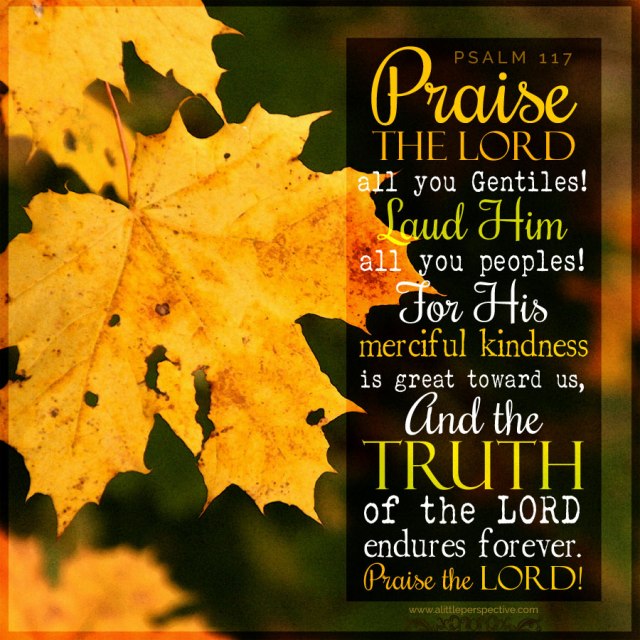
Praise the Lord, all you Gentiles! Laud Him, all you peoples! For His merciful kindness is great toward us, and the truth of the Lord endures forever. Praise the Lord! (Psalm 117)

Praise The Lord

According to the New Clarified Study Edition of the Bible (Royal Publishers; 1966) the Bible was divided into chapters by Stephen Langton about 1228. The Old Testament was divided into verses by R. Nathan in 1448 and the New Testament by Robert Stephanus in 1551. The entire Bible divided into chapters and verses first appeared in the Geneva Bible in 1560. There are 1189 chapters in the Bible and the middle and shortest chapter of the Bible is Psalm 117. The original authors never wrote their books in chapters and verses but this division helps for study efforts and reference. Psalm 177 happens to be in the middle of the chapter division and shows the uniformity and union of thought expressed throughout the Bible – old and new. An unknown writer scribed the psalm as an exhortation for all peoples to praise the Lord. Worship has never been confined to one people but given for all men to come to know the Creator and Maker of all men. The psalm exalts the praise of God among the non-Jews as necessary and desire of the Lord. Salvation for the Jew came through the law but salvation was given to the Gentiles as Paul would later write as a law to themselves. Abraham was justified by faith yet he never lived under the Law of Moses. All men were required to obey the Lord in whatever station of life they found themselves. The command to worship is as old as the sacrifices of Cain and Abel. God created man for His glory and instructed man to praise Him as the Savior of men and Creator. All men must extol the character and nature of the Lord. During the time of the Law of Moses the Holy Spirit hinted to the day when all men would be brought under one banner of truth in Jesus Christ the Son of God. Jew and Gentile must come to the gospel of Christ for salvation and praise the Lord.

The mercy of God is given to all men. His steadfast love for all men is declared from the moment of crisis in the Garden of Eden when man fell to the hour of victory when God raised Jesus from the dead. The merciful kindness of God is great toward all men who would come and serve the King of Kings and Lord of Lords. God’s love is abounding to every man and woman who desires to find eternal life. The Lord has never excluded man from knowing His grace and mercy. He has revealed Himself in various ways in times past but has in these days revealed Himself by His Son calling all men to come to the cross. The mercy of God is great, incredible, amazing and filled with the wonderment of eternal love. There are many reasons to praise the Lord and acknowledging the merciful kindness of God is where man must begin. Praising the Lord comes from the knowledge His truth endures forever and He is always faithful. God has never failed in any of His promises. The word of the Lord is everlasting. Examining the word of God from the beginning of time until day present it is clear the mercy of the Lord endures forever. Reading the Bible from beginning to end declares the solidity of character as God reveals Himself to early man and leaving His testimony for generations not yet born to find eternal life. The truth of the Lord endures forever but it is settled in heaven and by the hand of the Lord.

Psalm 117 is the middle verse of the Bible and shows the praise, mercy and truth of all the chapters that precede it and all the chapters that follow. Crafted by man for his use, chapter divisions serve a purpose to declare the unity of the Bible in thought, purpose and message. Critics of the Bible will try to find disunity, disharmony and confusion within the passages of holy writ but the book itself becomes its own testimony of the grand fashion the Lord has formed His word. All men can read and understand the message of hope. The Bible is written in such prose that regardless of the language it is translated, the generation it is found or the character of the man – the gospel is the power of God unto salvation to all that believe – whether Jew or Gentile. Psalm 117 begins with the need to praise the Lord and ends this thirty word psalm with the exhortation to praise the Lord. The Bible begins with praise to the Lord and the Bible ends with praise to the Lord. Men would do well to begin their lives with praise to the Lord so that when they face the end of life they will praise the Lord. What is in the middle of the Bible is where man will find his beginning and his end. Praise the Lord.

Posted in Uncategorized | Leave a comment

Jesus Rejoiced

rejoice

In that hour Jesus rejoiced in the Spirit and said, “I thank You, Father, Lord of heaven and earth, that You have hidden these things from the wise and prudent and revealed them to babes. Even so, Father, for so it seemed good in Your sight. All things have been delivered to Me by My Father, and no one knows who the Son is except the Father, and who the Father is except the Son, and the one to whom the Son wills to reveal Him.” (Luke 10:21-22)

Jesus Rejoiced

The life of Jesus was an arduous and difficult journey to a certain end at a Roman cross. His work would be an exhaustive daily schedule of teaching, preaching, healing, rebuking and admonishing that would have tested the limits of most men. Often the Lord would have to go away to a mountain for solitude and peace from the multitudes. He seldom got rest. The scriptures bear out the challenge of His ministry to prepare the world for the greatest gift God could give accomplished in the death of Jesus on the cross. There were bright moments in the life of Jesus and one such that is recorded by Luke is when the scripture says that Jesus rejoiced in the Spirit. The Lord was not a sullen man prone to mood swings of sadness but the overwhelming nature of His work seems to highlight the writing of Luke to declare that Jesus had something of which to rejoice over. The seventy had returned with joy at what they were able to accomplish and while commended by the Son of God for their diligent work reminded them the greatest joy was to have their names written in heaven. It seems the Lord was overtaken by a spirit of joy at the faces of the seventy that were excited to be part of the work of God and accomplishing so many things for the purpose of the kingdom. It was defining moment for Jesus and He was filled with delight and joy. The mind of Jesus was filled with the eternal happiness of what He had come to earth to accomplish. Through His sacrifice men would be drawn back to the Father. In His death salvation would be given to the world. What the seventy were able to accomplish was but a small part of the larger picture of the plan of redemption. Jesus had seen Satan fall like lightening from heaven and the work of subduing the evil one was well on its way to fruition. There was something to rejoice about.

Jesus was a man tempted in all points as other men. He had the same needs that all men had and imbibed in the carnal challenges of the flesh through temptation yet without sin. Luke is the writer who brings out many of the human characteristics of the Son of God as he testifies to the humanity of God. Unique to Luke is the phrase “Jesus rejoiced.” Luke wanted his readers to see Jesus as He really was – a man who enjoyed the joy of laughter, spirit of rejoicing and kindness of a happy heart. There was much for Jesus to accomplish and little time to bring all the eternal plans of His Father to bear upon the world. Luke is the gospel writer who wants the reader to appreciate the life of Jesus was very much like the life of all men. The Lord required sleep, food, and drink. He grew tired and weary and at times became angry. His mind was on His journey to Golgotha but he showed continual compassion for others. And yes there were times that Jesus felt joy, happiness and contentment. Like a breath of fresh air, Jesus peered into the eyes of His disciples and felt an emotion of joy. It is remarkable to see He who was God expressing the basic human quality of rejoicing.

All men must see Jesus for who He is: God and man. John the gospel writer declares the divinity of Jesus by His miracles and Luke unfolds the humanity of Jesus as a man. It is difficult to see Jesus as a man. For most, He is God alone and they find it a challenge to see Him as a person fighting the carnal will of the flesh. Jesus was born of a woman and grew up in Nazareth with His brothers and sisters and had to learn how to walk, talk and care for Himself. There were times of laughter for Jesus around the family table. The son of Mary would have experienced the same maladies of all men. Luke opens the curtain on the life of He who was God as one of a man when he declares that Jesus rejoiced. What a remarkable statement. How refreshing to see Jesus for who He was and what He left for men to see as the dying Savior of the world. A man would be crucified on the cross that once felt joy. He endured the cross for the joy that was set before Him. Jesus Christ became the Savior of all men. His greatest joy came when the Father raised Him from the dead and set Him on high at His right hand. Now all men can rejoice that He is King of Kings and Lord of Lords. Rejoice. And again I say rejoice. Jesus did.

Posted in Uncategorized | Leave a comment

The Courage Of Nathan

preach-word

When the wife of Uriah heard that Uriah her husband was dead, she mourned for her husband. And when her mourning was over, David sent and brought her to his house, and she became his wife and bore him a son. But the thing that David had done displeased the Lord. Then the Lord sent Nathan to David. (2 Samuel 11:26-12:1)

The Courage Of Nathan

When the story of David and Bathsheba is told, the central characters are the focus of adultery, immorality, deceit, shame and murder. It is a dark time in the life of King David as he allows his carnal appetites to lead him into a grievous sin that would define the rest of his life. Bathsheba would mourn the death of her husband and later the death of her firstborn son. There were many consequences to the reckless moment of folly when David brought Uriah’s wife to his home. One of the main characters in the story is often overlooked for the role he had to play in carrying out the word of the Lord. David had successfully hidden his sins from the prying eyes of the people with the exception of Joab and possibly a few others. For the nation of Israel the death of Uriah was a cost of war. To the mind of God it was murder. When the mourning period was over for Bathsheba David took Uriah’s wife for his own. It would seem that everyone assumed the poor widow would bear the son of Uriah in sadness not knowing that David was the father of the child. The Lord knew who the father was. In God’s time someone had to confront the king with his sin. Nathan was the chosen vessel the Lord would use to confront the king of Israel with a sin that would define his dynasty and legacy.

Nathan was a prophet in the land and was a counselor of David. Earlier the king had desired to build a house for God and Nathan agreed it would be a great thing for David to do. During the night the word of the Lord came to Nathan telling him that David could not build the Temple because he was a man of war. The prophet informed the king of God’s word and David accepted the will of the Lord. Then came that fateful day when the Lord spoke to Nathan telling him of David and Bathsheba and that he, Nathan, must confront the king about his sin. This must have crushed the prophet who had to know what few people knew and then to convey to the guilty party the word of the Lord. It would have distressed Nathan greatly to hear about his king and the level of culpability in the affair of Uriah and Bathsheba and David’s actions. Making matters worse – it was tasked upon Nathan to stand before the king and reveal the sentence of the Lord upon the heart of this man of God. The prophet Nathan did not shirk his responsibility and went to the king and boldly proclaimed the word of the Lord and the sentence of guilt upon David and Bathsheba. He had to bear the terrible news the child that would be born would die and he knew the reasons why. No man had a greater burden to bear than to go before a good man like David and open up the wounds of sin declaring the grace of God to a fallen man. Nathan did what God commanded him to do.

There are great men and there are men like Nathan. His task was an impossible mission for many men who would faint at the hint of standing before King David and reveal the terrible sin that made this story so tragic. Adultery, deceit, drunkenness and finally murder all spells doom to those of faint heart. Nathan would have been greatly distressed over the affair and looked deep within himself at the moment he must stand before David and tell him what he knew. There must have been many hours of prayer as the prophet prepared himself to charge his king with the word of God. Nathan was a man of God because he knew that as painful his task the word of the Lord must be proclaimed. He carried out the will of the Lord. There is a need in the church of God today for men to have the courage of Nathan to boldly stand for truth and righteousness regardless of who is in need of the charge. It is easy to take the lower road of compromise and ignore the problem. Sin will have its way in the hearts of God’s people and when those who teach and proclaim the word of God fail to admonish, rebuke and chasten sin they fail as messengers of the Lord. Nathan was blessed with challenging a man who had a tender heart and recognized immediately his sin. The prophet would continue to be a treasured adviser for David and Bathsheba. Sometimes men like John the Baptist will lose their lives because they dared speak the truth about a powerful man. John told King Herod he was in an unlawful marriage. He had the boldness of Nathan but Herod was no David. Those who teach and preach the word today must stand on the shoulders of men like Nathan and John and preach the word – only the word. It must be preached before hostile audiences and disenchanted hearts but preach the word we must. Nathan had the courage to challenge the king of Israel. Are you up to the task? Preach the word.

Posted in Uncategorized | Leave a comment

The Family Who Fears The Lord

family prayer time

Blessed is every one who fears the Lord, who walks in His ways. When you eat the labor of your hands, you shall be happy, and it shall be well with you. Your wife shall be like a fruitful vine in the very heart of your house, your children like olive plants all around your table. Behold, thus shall the man be blessed who fears the Lord. The Lord bless you out of Zion, and may you see the good of Jerusalem all the days of your life. Yes, may you see your children’s children. Peace be upon Israel! (A Song of Ascents; Psalm 128)

The Family Who Fears The Lord

As the people of God returned to the Temple each year they would sing psalms of praise going to Jerusalem and returning home. This would be an incredible sight to see the pilgrimages of Israel accompanied by singing and rejoicing. Many of the psalms are labeled songs of ascent as they would go up to Zion. Found in these psalms are deeply moving hymns of praise to the deliverance of the Lord, the power of His word and the importance of family. Psalm 128 is a song of ascents that speaks to the blessing for those who fear the Lord from the standpoint of the family. As the basic foundation of the world, a family who fears the Lord will be blessed beyond measure. It is important to establish the home on the word of God that will teach the fear of the Lord. This fear is not a frightful relationship but one of love and confidence. Respectful fear is giving honor to God for who He is, what He is and His providential care over the family. Teaching the fear of God in the family brings the family closer to the eternal truth of how the Lord formed the home. The man serves as the leader of the home to guide the heart of his wife and children in the pathway of truth, righteousness, grace, and mercy of the Lord God. He must first fear the Lord so that he can teach and be an example of respect for the Lord to his family. His leadership is tempered by what he learns in his personal relationship with God. He walks according to the word of God. A family that fears the Lord begins with the man of God taking the reins of holy grace as his own and showing how the fear of the Lord guides his life as a husband and father to his children. The fear of the Lord is not something that is taught by command but shown in word and deed through the life of the man who loves the Lord with all his heart, soul and mind. As the leadership of the home goes so finds the relationship of the home to God.

Fearing the Lord is found in the ability of the man to labor with his hands in the work of providing the necessary needs of the family. Work is one of the first things the Creator placed upon man. After the curse man would work by the sweat of his brow to provide for the family but his task remained the same. Eating the labor of the hand is a blessing of taking care of the family showing a respect for the Lord and His divine plan. The Lord condemns a slothful and lazy man who is unwilling to care for his own. Paul would call such a man worse than an infidel. This disrespects God when a man refuses to provide for his family and this is a fearful thing to fall into the hands of the living God. Fearing God is taking care of the family given to him by the hand of God. A man who fears the Lord will have a wife like a fruitful vine in the very heart of the house. Her blessing comes from the fear of the Lord as she respects her husband and honors God. Through her life the home becomes a place of blessing. The image of the fruitful vine in the midst of the house is where the woman finds her place as the center of the home. Her presence warms the home and the fear of the Lord dwelling in her heart guides the heart of her husband and her children. The children learn the fear of the Lord from the soothing voice of their mother. There is nothing more eternal in the hearts of children who grow up hearing the voice of their father and mother singing praises to God, reading from his word and showing in their lives a love for truth. Homes that are built upon a devotion to spiritual matters are blessed with happiness and serenity rooted in the grace of God. The man who leads his home by God’s word will be blessed in the fear of the Lord.

The home that fears the Lord will be blessed by the Lord. When worship is the center of the home and God’s grace overshadows the hearts of the family there will be untold blessings. Fear is the essential ingredient to the home. The man fears the Lord as head of the home as the woman submits her will to the fear of the Lord teaching her children to fear the Lord. Peace comes from showing respect and honor to the word of God. Children who grow up with worldly parents will have little interest in eternal matters when they grow to adulthood. Many families are torn apart when children refuse to honor God rebelling against the church, the word of God and the admonition of the shepherds of a local church. One reason comes from a lack of fear for holy things most often demonstrated by the parents over the informative years of the child’s life. Without the fear of God in the home there will be no peace and divine prosperity. Fear begins in the home not the church. Parents must first show this fear in their lives so that when they teach their children the family will be united under the same cause. Sing praises to the Lord God as the family assembles together for worship in the fear of the Lord. The family that fears the Lord together will worship before the throne of the Father together.

Posted in Uncategorized | Leave a comment

Those In Christ In The Church

1-corinthians letterTo the church of God which is at Corinth, to those who are sanctified in Christ Jesus, called to be saints, with all who in every place call on the name of Jesus Christ our Lord, both theirs and ours. (1 Corinthians 1:2)

Those In Christ In The Church

The church at Corinth faced many problems as evident by the first letter of the apostle Paul to this challenged church. They had internal strife, doctrinal missteps, rebellious spirits and a host of things that would have destroyed most groups. Through the writing of Paul and admonition of the Holy Spirit, the second letter to Corinth seems to show they corrected many of these problems. A remarkable part of the first letter is not the content of the letter but how Paul begins his letter. He knows what he must address to the church and all of the things the Lord was very displeased with what they were doing. His tenor was going to be harsh, pointed, and demanding changes be made. His beginning shows wisdom in dealing with a difficult situation and the real nature of the disciples in the church of Christ. First he refers to the brethren as a church of God which is exactly what they were. With all the problems they still were a people of God and Paul wanted to know that. The church is made up of sinners trying to find their way through life with a few regrets as possible. As the church is made up of people there will be struggles such as found in Corinth. Reading the first letter to the Corinthians one would wonder how anyone could worship at such a place. Jesus would later tell the saints at Sardis that while the Lord viewed the church as dead there were still some that would walk with Him in white. Corinth was a church that belonged to God and He loved them. They would respond to the teaching of Paul showing the grace of the Lord to give them time to correct the matters that were concerning. Corinth was a church of God.

When Paul spoke of the people who made up the church of God at Corinth he referred to them by three descriptions. First he referred to the members as those who were sanctified in Christ Jesus. The meaning of sanctification is to be set apart to holiness. This is a paradox considering what Paul was about to write about the problems at Corinth but the church of God remains a place for sanctified people. Those in Christ are to be set apart for holy living. Implied in the description is the need for the brethren to change their lives to emulate the character of Jesus. Secondly Paul calls the brethren saints or to show them they are what they are called to be. They were members together of a spiritual community given to higher ideals found in Jesus Christ. The modern religious world has destroyed the real meaning of a saint and taken away the Biblical use of a term endearing to the nature of God’s children. Paul wanted the brethren to know they had a nobler calling to live for than the carnality that plagued the church of God at Corinth. They were saints and should live as such. As sanctified people of God in Christ Jesus and part of the church of God at Corinth they should look at themselves as the saints of the Lord living with the character of holiness. Finally Paul calls the people of Corinth by the character that set them apart from the pagan world they lived in and those who opposed righteousness; he referred to them as those who called on the name of Jesus Christ. Children of God call upon the name of Jesus Christ as their Lord, Savior and King. Those who call upon the Lord worship Him, honor Him and pledge their devotion to Him. The members of the church of God at Corinth were sanctified, saints and people who called on the name of Jesus Christ.

Those in Christ Jesus are part of the church that belongs to God. What sets them apart from the world is their sanctification to the holy word of God and holy lives. The measure of their life is based upon a relationship with the Lord walking in the steps of Jesus Christ. Sanctification is a visible means of showing the world a higher walk of life. Professing to be a Christian and not living in the word is hypocritical and contrary to the purpose of being called out of the world. Those called from the world should leave the things of the world and live like saints who are called to form their lives by the grace of God. Saints are all the people of God who have dedicated themselves to growing in Christ, meditating on the word of God, walking according to truth and in the light and serving the will of the Father as their only guide. It is special to be called a saint but only because the blood of Christ that takes away the stain of sin. Holiness is the character of a saint because they are calling on the name of the Lord as their King and Lord. Allegiance is found in the name of Christ serving as a faithful servant. Calling on the name of the Lord is a manner of living. Everyone will hear the voice of God in the lives of those who spend their days calling on the His name. What they will hear is the glory of God in each part of the life of the saint. The church of God at Corinth was filled with those sanctified, saints and calling on the name of the Lord kinds of people that God loved. May we strive to be like Corinth. Sanctified. Saints. Calling on the name of the Lord.

Posted in Uncategorized | Leave a comment