Who Is The Lord?

Who-is-God-2

Therefore know that the Lord your God, He is God, the faithful God who keeps covenant and mercy for a thousand generations with those who love Him and keep His commandments; and He repays those who hate Him to their face, to destroy them. He will not be slack with him who hates Him; He will repay him to his face. Therefore you shall keep the commandment, the statutes, and the judgments which I command you today, to observe them. (Deuteronomy 7:9-11)

Who Is The Lord?

The question may be asked to identify the whole character of God. Most do not believe there is a Creator who demands worship and obedience rejecting the Bible as a book of myths. Many accept the idea of an eternal God but fail to fully understand the nature of who the Lord is. They view Him in partial clips of His love or His wrath without accepting the whole image of how He is portrayed in the Bible. When the Lord brought the Hebrews out of Egypt, He reminded them often that He was not like any gods the people had seen in Egypt or that other nations worshiped in their polytheistic wisdom. The one that delivered the nation from bondage was God, the faithful God who does not lie and keeps every word He established with the previous generations as well as the generations to come. There is nothing man can compare to the nature of the Lord God. As Moses writes the final chapter in the brief history of Israel since it departed Egypt forty years before, he reminds the people of their failure to appreciate and acknowledge the awesome power of the Lord God. Without a deep love for the character of the Lord the nation of Israel would not soon remain. This would form the history of Israel as they would enjoy a united kingdom for more than one hundred years before falling into civil war dividing the nation; leading eventually to its destruction and bondage. Why did the nation fail? How did a people so blessed above all peoples on the earth lose everything? When the heart of the people forgot who the Lord was and walked in their own paths, their doom was sealed.

Salvation must begin with knowing the Lord is God and God alone. There is no other. The worlds were created by the mouth of God. When He spoke the world came into existence. In the beginning, God created the heavens and the earth because He is God. Egypt had been the greatest power on the face of the earth but God destroyed them through His mighty works to illustrate to all men the gods of men were nothing and He was God. The deliverance of Israel was not done by their hands as they were incapable of saving themselves. They had been in bondage four hundred years and could do nothing to free them from the harsh affliction of Pharaoh. The plagues inflicted on Egypt came from the hand of God. When the night came in the final plague and all the firstborn died except among the Hebrews, this was the hand of the Lord showing His incredible power and might that He was God. Crossing the Red Sea on dry land was by the mighty work of the Lord God who then destroyed the army of Pharaoh in the same sea. Throughout the forty years of wilderness wanderings, the Lord gave the people water from rocks, manna on the ground and quail from the wind to feed and nurture His nation. No enemy could stand against Israel because God was the Lord and no power on earth could defeat Him. Moses reminds the people of the Lord God – He is God.

Believing that God is real is just the beginning of knowing who He is. His great power is manifested in so many ways but the character of the Lord is defined by His love and His wrath. The mistake that most men make with God is to believe that He is a single faceted God who is nothing but love. He is a faithful God who keeps His word for generations showing His love in innumerable ways. This is highlighted by His mercy, His grace and His everlasting love. It is easy to focus on this appealing nature of God to the exclusion of everything else. Often in the history of Israel the Lord showed His love. Having compassion on them in bondage, protecting them from the enemies that would have destroyed them, giving them water to drink when they were thirsty and feeding them with an abundance of food characterized the love of God. Moses had brought Israel to the border of the Promised Land as the hand of God would give them victory over all the peoples of Canaan and give the people great blessings. Knowing God understands His love, His kindness, and His benevolence. But love Him is not all He requires. The Lord God is a faithful God who demands His people obey Him. This means to keep His commandments. Never has the Lord extended love towards any people without the expectation of obedience. When God created Adam and Eve and placed them in Eden, he blessed them above measure but expected them to obey them. They rebelled and were punished. Israel was a holy people as a special treasure above all the peoples on the face of the earth but when they disobeyed the word of the Lord, He punished them. Moses said that God will repay those who hate Him. Jesus would later explain that when a man did not obey the word of the Lord He did not love the Lord. Obedience is an expression of love and disobedience is an act of hatred. God does not hesitate to punish and destroy those who reject him. Knowing God is knowing He is God and that all the blessing of heaven resides in the character of the eternal one but if men refuse to obey the word of the Lord, there will be consequences. Salvation is not by grace alone and never has been by grace alone or Israel would have never been destroyed. Knowing the Lord God is keeping the commandments, the statutes and the judgments which the Lord God commands, to observe them. Anything short of this is failing to know who God is and the nature of His character.


Posted in Uncategorized | Leave a comment

The Kingdom Of God

kingdom_of_god

And I also say to you that you are Peter, and on this rock I will build My church, and the gates of Hades shall not prevail against it. And I will give you the keys of the kingdom of heaven, and whatever you bind on earth will be bound in heaven, and whatever you loose on earth will be loosed in heaven. (Matthew 16:18-19)

The Kingdom Of God

There are many names the Holy Spirit attributed to the New Testament church. It was called the Way, the body of Christ and the bride of Christ, the house of God and the flock of the Lord. The nature of the church is seen from a structural viewpoint as well as the organizational emphasis of the human body. When Peter confessed that Jesus was the long-sought Messiah or Christ, the Son of God declared the divine pattern of the kingdom of God fulfilled in the church. Jesus said He would build His church and Peter would receive the keys of the kingdom of heaven showing the church and the kingdom of heaven are one and the same entity. On the Day of Pentecost when three thousand devout Jews obeyed the gospel of Christ, the Father added them to the church or the kingdom of heaven. Luke records in the Acts of the Apostles the growth of the church which can also be seen as the growth of the kingdom. Whenever the church is mentioned it also includes the nature of the kingdom. Saul of Tarsus persecuted the church or caused havoc to the kingdom of God. When Saul obeyed the gospel he became a citizen of the kingdom of Christ leaving his allegiance to the kingdom of Israel and the Law of Moses. One of the great challenges of the New Testament church was to convince citizens of the kingdom of Israel to become citizens of the kingdom of Christ. The Law of Moses was the law governing Israel and the new covenant of God took the Law of Moses away. This was hard for many to accept. Some tried to bind portions of the Law of Moses (like circumcision) upon new Christians but through the teaching of the Holy Spirit, the church established the new covenant of Christ as the law for the kingdom or church. For the Gentiles, the conflict came from the allegiance to the law of the Roman Empire and the law of Christ. Jesus taught in His ministry that a disciple should render to Caesar those things that belong to Caesar but to render to God the things that belong to God. This became very difficult for the First Century Christian who faced more than two hundred years of persecution as the two kingdoms clashed. They were taught to honor the king and submit to every law but never allow their allegiance to the kingdom of God to be overshadowed by allegiance to man.

The church is the kingdom of God with one king, one law and one spiritual territory. A kingdom is recognized when a law is established and land created. Jesus purchased the church with His own blood and thereby established the kingdom of God by His sacrifice. When the early Christians began to teach the gospel the borders of the kingdom began to spread from Jerusalem to Judea, Samaria and the uttermost parts of the earth. The kingdom of God was found in cities like Antioch, Derbe, Lystra, Ephesus, Corinth, Thessalonica and the imperial city of Rome. Citizens of the household of Caesar including the palace guard were members of the body of Christ thereby making them citizens of the kingdom of Christ. In time the gospel began to spread to the furthest reaches of the world as souls became obedient to the law of the kingdom of God and enjoying the fellowship of being fellow citizens with all saints. After the persecution from the Roman Empire ceased the apostate church began to persecute the true believers and citizens of the kingdom of God. For nearly fifteen hundred years the Roman Catholic Church held sway in the Western world while the kingdom of God silently continued to assemble in places seldom recorded by history. The writer of the book of Hebrews boldly asserted the kingdom of God could not be shaken and two thousand years have proven the statement to be true. Churches of Christ continue to dot the landscape all over the world showing the character of the kingdom of God in fulfillment of the promise of Jesus. No power or might will be able to subdue the kingdom of God. It is everlasting according to the will of the Lord.

Jesus promised to build His church and He is the head of one church. That church is the kingdom of God where Jesus is King of Kings and Lord of Lords. There is only one King. As lawgiver, there can only be one law given by the word of the Lord. Many churches have been created in the past five hundred years attempting to dethrone Christ from His throne. They have tried to change the law of God teaching things not according to the Bible. Churches have embraced different names that distinguish them as man-made religions that appeal to the whims of carnal wisdom. The Bible shows there is one kingdom and that one kingdom is the one church of Christ. No kingdom has multiple kings or multiple laws according to the interpretation of one group of citizens over another. All those who are members of the kingdom of God abide by the same law without deference to the period of time lived, national identity or historical preference. The kingdom of God today is the same church established in the First Century when men follow the same laws of the New Testament kingdom. Jesus built one church and He established one kingdom.

Posted in Uncategorized | 1 Comment

God Sent

AAH_planofsalvation_header

But when the fullness of the time had come, God sent forth His Son, born of a woman, born under the law, to redeem those who were under the law, that we might receive the adoption as sons. (Galatians 4:4-5)

God Sent

At the beginning of time, the Lord God planted a garden where He placed man to enjoy all the blessings of living in the presence of his Creator. There were two trees in the midst of the garden that represented the goodness and severity of God. The tree of life would give man fullness of life without end. Adam and Eve were not permitted to eat of the tree of knowledge of good and evil as the wrath of God would come if they disobeyed. Through the deceitfulness of Satan, Eve was beguiled into eating the forbidden fruit and gave some to Adam. As a result of their disobedience, God sent them out of the garden. Before expelling them from Eden, the Lord promised a Seed would come and restore the garden relationship of man and God. Many centuries later an angel appeared to a maiden in Israel and told her she would have a son and shall call his name Jesus. The timing of the birth was in accordance with a divine plan when God sent His Son, born of a woman, into the world to redeem man and return the garden relationship lost in Eden. In the story of the garden, God sent the man out with no hope of saving himself. Announcing the birth of Jesus, God sent His only begotten Son into the world to bring hope to a lost man. In both cases, the grace of the Divine is found in the love of God willing to send His Creation away from him in Eden so that He could send His Son to redeem men. Without the mercy of God, there would be no joy, no redemption and no hope. Losing the tree of life condemned man to the sting of death and victory of Hades.

The early world was destroyed because all the intents and thoughts of men were evil and the Lord destroyed the world with a great flood. Through the seed of Abraham, the light of hope beamed in the heart of men seeking a Savior. This seed came about because God sent Abram away from his home promising to make his descendants as many as the stars of heaven. God sent Joseph into Egypt so that He could bring them out many years later under the leadership of Moses. Because of their disobedience, God sent the nation of Israel into a wilderness for forty years before sending them into Canaan to possess the land. The Lord sent the hand of the Israelites against the people of the land to cast them out because their sin had reached the portals of heaven and judgment had come. God sent judges among the people of Israel to judge them before sending three men to lead a unified kingdom. When the nation divided into a civil war the Lord sent the Assyrian Empire to destroy the northern ten tribes before sending the armies of Babylon against the remnant remaining in Judah and Benjamin. God sent His people into bondage for seventy years and then sent them back home to Jerusalem to await the coming Messiah. Through all these years God sent prophets and teachers to warn and instruct the people but they would not listen. Finally, an angel sent by God appeared to Joseph and Mary announcing the coming of the Divine who would save His people from their sins. At the age of thirty, God sent His Son into the wilderness to be tempted by Satan. A few years later God sent His Son to Golgotha outside Jerusalem where He would die for the sins of the world. Three days later God sent his resurrected Son back to earth to testify for forty days the good news there was life after death. Jesus had conquered death and overcame the sting that beguiled the heart of men.

On the Day of Pentecost, God sent twelve men to testify to devout men gathered in Jerusalem the saving grace of Jesus Christ. From that moment on God sent His disciples throughout the world to preach a risen Christ whom God sent into the world that through His blood redemption could be found and hope realized. The day the Lord sent the man out of the garden was a day of beginnings when God would continue to send His message of hope and joy through the ages so that all men could realize the joy of knowing the grace of a divine Father. It was nothing that man could do or say that would bring his eternal hope. God sent His love from the heavenly throne as a measure of His divine love for undeserving men who constantly rebelled against His will. Because God sent His Son into the world, man can receive the garden again where he can commune and walk with the Father in peace. There is great joy in knowing that God so loved the world that He sent His only begotten Son that whosoever obeys His will can enjoy the paradise of eternal life. By God sending His grace all men can be redeemed receive the adoption as sons.

Posted in Uncategorized | Leave a comment

We Will Assemble Wednesday Night

dec 25

We Will Assemble Wednesday Night

This Wednesday is Christmas. The question has been asked if there will be services or Bible class this Wednesday night considering the day is December 25. There will be those who will decide to skip attending Wednesday night because they are enjoying a holiday with presents and dinners. It is probable many churches in the area and across the country will dismiss whatever regular kind of activity they engage in this Wednesday in deference to Christmas. In January many churches cancel their worship services to either show the Super Bowl at the church building or closes services altogether. Of course, this follows the trend of many churches that have decided the Sunday night service is unfruitful. This Wednesday night we will be having Bible Class as we do each week because as a church of the Lord we serve the King of Kings and not the whims of carnal men.

The church faces many problems and chief among them is the secularization of its purpose with the influence of a prosperous material world that emphasizes more the carnal desires than spiritual. There will be those who will be shocked to see the lights on at the building Wednesday night. They might think we are having a special service to commemorate the birth of Jesus but again this is a mistaken idea brought in from the world. On Wednesday night we will study the Bible, sing some songs and pray together as if it were any other time of the year. There will be nothing different about the Bible study because we are gathered to worship the Father as we do each and every week.

The holiday calendars of men do not guide the work of the church, the Bible does. We do not celebrate Christmas as the birth of Christ because December 25th is not the birth of Jesus. The Bible never mentions the Mass of Christ as begun by the apostate Roman Catholic Church. None of the early Christians set aside the day of Christ’s birth as anything special and they had good reason to do so. Luke tells us the mother of Jesus was part of the disciples in the early church. “Then they (the eleven) returned to Jerusalem from the mount called Olivet, which is near Jerusalem, a Sabbath day’s journey. And when they had entered, they went up into the upper room where they were staying: Peter, James, John, and Andrew; Philip and Thomas; Bartholomew and Matthew; James the son of Alphaeus and Simon the Zealot; and Judas the son of James. These all continued with one accord in prayer and supplication, with the women and Mary the mother of Jesus, and with His brothers.” (Acts 1:12-14)

If anyone knew the exact day Jesus was born it was Mary. She probably told a lot of people about that day and it would be likely many people would have known the birthday of Jesus. But the early church never set aside anything special about the day of Jesus’ birth because they focused on the day of His resurrection. Throughout the teachings and writings of the New Testament, the church of Christ assembled to commune in the Lord’s Supper because this was commanded on each first day of the week. The Holy Spirit never reveals the day of Jesus’ birth and never hints that any early disciple practiced the day of the Lord’s birth.

December 25 is a day like any other day and should be revered as a day that if the Lord allows the world to continue, it is a blessed day to serve and worship the Lord. There will be no special services, no commemorations, and no nativity scenes. The Bible will be presented in a study of God’s word. All of the focus of the evening will be saints gathered together to enjoy the spiritual feasting of fellowship in kindred hearts. The Wednesday night Bible class is not a place to bring in the trappings of the secular world and its celebration of a misguided holiday done in the name of Christ. There will be no Christmas trees, Santa Claus, merriment and holiday spirit of Christmas that will overshadow the study of the holy character of God. What we do Wednesday night is what we do every week.

It is hoped that members of the church will honor Wednesday night by leaving the Christmas decorations at home and not come to Bible class regaled in the spirit of the season as this is unfitting the glory of God. There is a time and place for secular celebrations if that is the choice of the individual. Respecting the covenant of grace given by God through His Son is to respect the time of spiritual examination without the distractions of Christmas adoring the children and adults. Let the world have its way in the world and let the sanctity of the spiritual body of Christ glorify what Jesus died for. Please come Wednesday night and bring your Bible. We will be examining the word of God and you will be our welcome guest to learn about the favor of the Lord. It will be a feast of good things.

Posted in Uncategorized | Leave a comment

There Is One Shepherd

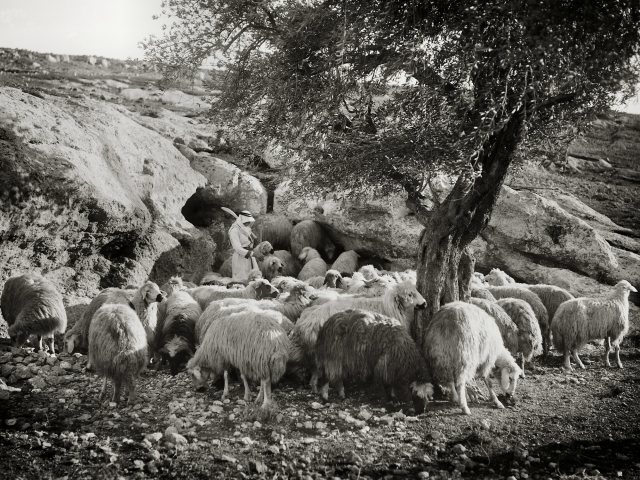
Natural sheepfold at Ras el Ein, mat02985

I will establish one shepherd over them, and he shall feed them—My servant David. He shall feed them and be their shepherd. And I, the Lord, will be their God, and My servant David a prince among them; I, the Lord, have spoken. (Ezekiel 34:23-24)

There Is One Shepherd

When Ezekiel is writing his prophecy in the land of captivity by the River Chebar, David had been dead for more than four hundred years. The days of the once regal nation of Israel were far removed in history when after the death of Solomon, Israel deteriorated into civil war leading to the final destruction of the ten northern tribes and the captivity of Judah and Benjamin by the Babylonians. The prophet Ezekiel was among those taken to the land of the captives and warned the people of the impending destruction of Jerusalem. After the city was razed by the Babylonians, his message centered on the hopes of Israel through the coming Messiah. The group that was largely responsible for the demise of Israel was the shepherds of the land who failed to watch over the people and protect them from idolatry. In a scathing rebuke of the leaders of the nation, Ezekiel shows how self-centered the leaders were neglecting the people and allowing them to follow after the nations around them. As the Chief-Shepherd, the Lord promised to restore His people as a shepherd brings back his lost sheep. Jerusalem has been destroyed along with the Temple and the only hope of Israel comes from the Messiah who will bring a new covenant to the people as spoken by the prophet Jeremiah. In the language of the parable of shepherds, God shows the coming Christ will be the one shepherd that will have authority over the new Israel and unlike the shepherds of Ezekiel’s day; this shepherd will feed and care for his sheep. God will be the God of this new nation and His servant David a prince among them. The reference of Ezekiel is fulfilled in Jesus Christ as the one who will give His life for the flock of His Father. Jesus will call Himself the Good Shepherd because He dies for the sheep. The apostle Peter preaches on the Day of Pentecost that Jesus of Nazareth is the image of the promised Messiah through the lineage of David as the Christ who would sit on the throne of David. Among the many Messianic prophecies of the Old Testament, Jesus fulfills the promise made through Ezekiel of the one shepherd who will reign over the house of God.

Paul writes to the church at Ephesus and describes the body of Christ as the church of Christ. He further explains there is one body signifying there is only one church and that church belongs to Christ. Paul twice in the Ephesian letter declares Jesus as the head of the church and writes in his letter to Colosse that Jesus is the head of the church, which is his body the church. As the one shepherd, Jesus is supreme over all who rise from the dead. This is the fulfillment of Ezekiel’s prophecy of Jesus being the one shepherd of the flock of God. The plan of God for the establishment of the church was determined before time began and through men like Ezekiel unfolded the eternal mystery until the coming of His Son to be revealed in the fullness of time as the one shepherd. As there is one church there is one shepherd. His word is law and His rule is supreme. There can be no other head of the church. Ezekiel says the one shepherd will be His servant David. God never said anything about Peter being the one shepherd or any other man. When Ezekiel wrote the prophecy, David had been dead for a very long time and as Peter would tell those gathered in Jerusalem six hundred years later; his tomb was still in the city of David. The Lord was not speaking of the son of Jesse but His only begotten Son that would come in the flesh and die on the cross. Jesus is the one shepherd and the Prince of God among His people. Jesus was given all authority by the Father as the one shepherd. There is only one head of the church and He is Jesus Christ.

The apostle Peter served as an elder of the church (shepherd) and he exhorted his fellow elders to shepherd the flock of God which was among them and when the Chief Shepherd appears, they will receive a crown of glory that does not fade away. In the organization of the church of Christ, men serve as elders, bishops or shepherds leading the flock of God and protecting them from the wolves of apostasy. They exercise authority only under the will of the Father as servants of the gospel to feed, protect and guide the flock of God in a certain place. While these men serve as shepherds of the local flock, there remains one shepherd and one Prince over the church. The word of Christ is the law of the church and His word is final as the word of God. No man can take that role from Jesus Christ. There are men today who believe they are the head of the church and exercise sole authority over the church. In principle, they are correct in being the head over the church but that is not the church of Christ but an apostate organization that calls itself a church of the Lord. They serve with authority over a body of people that God does not recognize because there is only one shepherd and one Prince and His Son Jesus Christ is that shepherd and Prince. Ezekiel is very clear in how many shepherds there are. I will establish one shepherd over them, and he shall feed them—My servant David.

Posted in Uncategorized | Leave a comment

Jesus Promises Paradise

Sunset, Strait of Juan de Fuca, Washington, U.S.

Then he said to Jesus, “Lord, remember me when You come into Your kingdom.” And Jesus said to him, “Assuredly, I say to you, today you will be with Me in Paradise.” (Luke 23:42-43)

Jesus Promises Paradise

The idea of a paradise was not uncommon for the people of Jesus’ day as it was a word denoting a garden much like the Garden of Eden. Of Persian origin, a lush garden was a welcome relief from the harsh climate and hot desert world. The first time the term paradise was used in a spiritual realm was when Jesus promised the thief on the cross that he would be with the Lord in death. When the two criminals were first crucified with Jesus, they railed against Him and mocked him. A change of heart came over one of the men and he begged mercy from the Lord. By the power of God Jesus granted forgiveness to the man with the promise that in death he would be received into a garden of happiness. This was not the first time Jesus spoke of a place like a garden. In the story of Lazarus the beggar, Jesus tells how the invalid man in life was carried by angels to the bosom of Abraham when he died. Lazarus suffered many cruelties in life but his death was like being transported to a beautiful garden in the presence of the righteous. The Hadean realm was the place of the dead described by the Son of God with a paradise of peace and joy and also a place of great torment and suffering. Death brings about two rewards: one to life and the other to eternal death. All men are found in Hades in death as all men are kept in the realm of the dead until the judgment day of the Lord. Jesus promised the thief that he would be taken to the garden of joy when he died – a place called Paradise. Paul would later write that he had made a journey to the place of Paradise in his letter to Corinth. John the apostle describes in the Revelation the promise of Jesus for those who overcome the renewal of the happiness of Eden where the tree of life abides.

Everything known about the eternal Paradise comes from the words of Jesus. He promised the thief joy in death with the hope of life. Whatever kind of life the thief had led brought him to be executed by the Romans. Nothing is said in scripture about the man and that information is not important because Jesus knew the heart of the man as well as he knew the heart of the second thief. One man recognized his need for the saving power of the man in the middle but the other thief died in misery, sorrow and without hope. There would be no Paradise for the other thief. He died cursing, swearing and denying God until he opened his eyes in eternity and realized he was no longer hanging next to Jesus and the other thief and there was an eternal God. Whatever blessings and joys found in Paradise would not be found where the second thief was going. Jesus gave the thief that sought His mercy hope in life after death in a place called Paradise. It is impossible to believe in Jesus and not believe in Paradise. Accepting the teaching of Jesus includes believing there is a place of joy that awaits the faithful. Jesus describes the place of Paradise as a place of comfort. There is a remembrance of the former life in Paradise without tears, sorrow and heartache. The thief suffered a great deal on the cross especially when the soldiers came and broke his legs to hasten his death. If he had the opportunity to look at Jesus he would have seen He had already expired. Jesus went to prepare a way for the thief to come to Paradise. What a welcome that must have been when finally the thief died and opened his eyes to the joy of eternal life. Paradise was not a dream but the fulfilled promise of Jesus.

All of the promises of God have come true. It is not recorded in scripture about the thief going to Paradise but Jesus was there and if He was there, the thief was there. The consolation of life with its drudgery of pain and sorrow can be mitigated by the hope of an eternal garden that is beyond imagination where all the righteous dwell awaiting the final day of glory. Like the thief, everyone who obeys the word of the Lord can look forward to something beyond this life. The crucifixion was the most horrible means of execution devised by man but it finally ended for the thief in death, and then real joy began in Paradise. Life is a hard and arduous journey but there is nothing to be compared to the hope of leaving the trials of this life for a garden as green as the eternal tree of life and water as crystal clear as glass. Angels carry the saved to the bosom of Abraham where they find eternal comfort. What a day that will be to make that incredible journey to the Paradise of God where all the saints await the coming of the Lord. With this knowledge, death is not so bad after all. The alternative is a better view because it is Paradise.

Posted in Uncategorized | Leave a comment

The Price Of Revenge

Rechab and Baanah bring the head of Ish-Bosheth

When Saul’s son heard that Abner had died in Hebron, he lost heart, and all Israel was troubled. Now Saul’s son had two men who were captains of troops. The name of one was Baanah and the name of the other Rechab, the sons of Rimmon the Beerothite, of the children of Benjamin. (For Beeroth also was part of Benjamin, because the Beerothites fled to Gittaim and have been sojourners there until this day.) Jonathan, Saul’s son, had a son who was lame in his feet. He was five years old when the news about Saul and Jonathan came from Jezreel, and his nurse took him up and fled. And it happened, as she made haste to flee, that he fell and became lame. His name was Mephibosheth. Then the sons of Rimmon the Beerothite, Rechab, and Baanah, set out and came at about the heat of the day to the house of Ishbosheth, who was lying on his bed at noon. And they came there, all the way into the house, as though to get wheat, and they stabbed him in the stomach. Then Rechab and Baanah his brother escaped. For when they came into the house, he was lying on his bed in his bedroom; then they struck him and killed him, beheaded him and took his head, and were all night escaping through the plain. And they brought the head of Ishbosheth to David at Hebron, and said to the king, “Here is the head of Ishbosheth, the son of Saul your enemy, who sought your life; and the LORD has avenged my lord the king this day of Saul and his descendants.” But David answered Rechab and Baanah his brother, the sons of Rimmon the Beerothite, and said to them, “As the LORD lives, who has redeemed my life from all adversity, when someone told me, saying, ‘Look, Saul is dead,’ thinking to have brought good news, I arrested him and had him executed in Ziklag—the one who thought I would give him a reward for his news. How much more, when wicked men have killed a righteous person in his own house on his bed? Therefore, shall I not now require his blood at your hand and remove you from the earth?” So David commanded his young men, and they executed them, cut off their hands and feet, and hanged them by the pool in Hebron. But they took the head of Ishbosheth and buried it in the tomb of Abner in Hebron. (2 Samuel 4:1-12)

The Price Of Revenge

When David was anointed King of Judah, it was a fractured nation left by Saul with rebellions, treachery and deceit. Ishbosheth, son of Saul reigned over Israel while the house of Judah followed David. The family of Saul continued to battle for control of the young nation as apparent heirs to the throne against the house of David who had been anointed by Samuel the prophet. Men like Abner the son of Ner served the house of Saul before joining forces with David. The nephew of David, Joab, served as a military leader for David and was able to defeat a group of soldiers from the house of Saul killing 360 men. In the battle, the brother of Joab was killed by Abner as Asahel pursued Abner. Joab would murder Abner at the gate of the city to revenge his brother’s death. When the house of Saul heard that Abner had been killed, it disheartened the people. Ishbosheth had ruled over Israel for only two years when he is assassinated by two of his generals, Rechab and Baanah. After killing Ishbosheth, the assassins beheaded him and fled all night through the plain to Hebron where David was. Believing they would be rewarded with honor for killing a man they thought was an enemy of David, Rechab and Baanah extolled the name of God as their purpose for killing Ishbosheth. What they failed to tell David is they had murdered in cold blood a man lying on his bed at noon with no defense and the probable motive was revenge against the house of Saul for the slaughter of their kinsmen the Gibeonites. Presenting the head of the slain son of Saul, Rechab and Baanah felt rewarded to kill any of Saul’s house as a favor to David. What they failed to know was the man David and how he had already killed one man who bragged he had killed Saul. To make matters worse, the two men invoked the blessing of God as the cause of their killing Ishbosheth.

As David listened patiently, his anger grew steadily within him. Standing before him were two opportunists who believed they spoke in the name of the Lord to kill a righteous man in his own house on his own bed. No one had told them to kill Ishbosheth and David had not given orders for anyone to destroy the house of Saul. Although Saul spent much of his life chasing David through the wilderness as when one hunts a bird, the son of Jesse held no animosity or hatred for the king. On a number of occasions, David could have killed Saul but restrained his men from doing so because Saul was the anointed of God. When Saul died David mourned and wept and fasted for his king and his friend Jonathan, Saul’s son. In his Song of the Bow, David said of Saul and Jonathan the beauty of Israel was slain and the mighty had fallen. The heart of David was not set on revenge and Rechab and Baanah had served their own purpose in killing a righteous man that David would have spared. Rechab and Baanah were executed and the hands and feet were cut off and the bodies were hung by the pool in Hebron. The king acted quickly as a just reward against all that would dare speak in his name or to bring about acts of revenge against the house of Saul. David acted with judicial prudence in contrast to Rechab and Baanah who acted through a motive of revenge.

Baruch Spinoza said, “He who wishes to revenge injuries by reciprocated hatred will live in misery.” (Ethics, IV, 1677) In all cases of revenge, death takes place. David had many reasons to seek revenge against the house of Saul but he knew that God had delivered him by righteous means and purpose. What Rechab and Baanah had done was not for the righteousness of the Lord. The Christian serves a higher cause than the carnal whims of the wrath of men. Paul would exhort the first-century disciples to do everything in their power to live in peace with all men and never take revenge. All righteous judgment will be meted out by the righteous judgment of God and He will measure out in full what is required. The lesson learned from Rechab and Baanah is that revenge is not to be a battle cry to get back at others who harm us or defame us. If our enemy is hungry, the child of God does not seek revenge but offers bread and if they are thirsty to give them something to drink. The spirit of Christ lives in the hearts of those who do not seek revenge for personal gain or to gain a position as Rechab and Baanah sought. If anyone had a right to seek revenge on those who unjustly charged him and killed him it would be Jesus Christ. On the cross, writhing in pain, Jesus prayed for the Father to forgive those who mocked him and rejected him. Do not let evil, hatred, and prejudice conquer your heart but conquer the anger and hatred and prejudice by doing good in the name of Christ.

Posted in Uncategorized | Leave a comment

Greetings From The First Century

ChurchOfChrist

The churches of Christ greet you. (Romans 16:16)

Greetings From The First Century

Near the end of Paul’s third missionary journey, his thoughts are turning to an opportunity to visit the regal city of Rome and with great hopes to preach in Spain. His present task was to take the contributions from the Gentile churches to the saints in Jerusalem but he writes to the Roman saints a letter of endearment explaining the amazing grace of God. His letter is a powerful testimony of the Christian life declaring the mystery of God to a lost world through faith in Christ. Much of the book covers the doctrinal treatise of justification by faith in Christ. As Paul dictates his letter to Tertius, he includes a list of fellow saints who risked their necks in defense of Paul, labored much in the work of preaching the gospel and the many that assembled the church in their homes. He commends Phoebe, a woman who served well in the work of the kingdom (and probably delivered the letter to the Romans) along with his good friends and fellow laborers Priscilla and Aquila. Many others are named in the list of commendations for his fellow workers, firstfruits, countrymen, fellow prisoners, beloved in the Lord, chosen in the Lord, brethren and saints. Paul exhorts the saints in Rome to have a deep affection for one another and extends greetings from the churches in the region of Achaia. It is important to see how the apostle refers to the churches in that region as churches that belonged to Christ. Greetings are given from the churches of Christ as an appropriate term to identify the character of the first-century church. This is a fitting term to use as Christ was the head of the church; He purchased the church with His own blood and is married to the church as the husband of the spiritual bride.

Titles mean what they represent and describe the character of what they stand for. Identifying the churches in the region of Achaia as the churches of Christ suggest those who gathered in each congregation identified themselves as Christians. During the early days of the church, the followers of Christ were known as those of the Way. Saul of Tarsus had come to Damascus with letters to arrest all those of the Way. On Paul’s visit to Ephesus, Luke records there were those who were hardened against the teachings of the apostle and spoke evil of the Way and serious trouble came against those of the Way. Jesus taught that He was the only way to the Father and the disciples were identified by their faith in that way. Writing to the saints in Corinth, Paul addresses them as the church of God and to the church in Ephesus simply as the saints who are in Ephesus. Again, the references by Paul show the relationship of the disciples to what they believed and how they conducted their lives. The church of Christ is a first-century appeal to the character and nature of early discipleship that should be recognized by those who desire to follow the pattern of Bible authority. While it is not the exclusive name for the church, it is most fitting for the description of what the church stands for. The Holy Spirit explains the development of the church from the beginning at Pentecost to the many churches established by the work of men like Peter and Paul in design, function, organization and what it is called. Among a number of ways to describe the church, the Spirit expresses an appeal to the churches of Christ as a fitting reference to the body of the saved.

Over the last five hundred years with the advent of religious protesting in the form of many churches being established by men, a myriad of names have surfaced describing the theology, doctrine and message of the group. Lutherans (1530) are so-called in deference to Martin Luther, a reformer of the Roman Catholic Church. Presbyterians (1535) get their name from the term “presbyter” (a transliteration of the Greek word presubteros or ‘elder’) and according to F. W. Mattox is used to designate that form of church organization embracing a group of presbyters as the governing body of several congregations. Maddox describes the Methodist (1729) as given by way of reproach because of the methodical regulation of their lives which was begun by John Wesley. Baptist (1607) received their name after the work of John Smyth and others who rejected Calvinism and infant baptism. There is a large plurality of names given to churches in the world with the identifying marks of their belief in the name. Paul expressed the sentiments of the will of the Lord when he identified the church of the first century simply as the churches of Christ. The question remains whether the church you belong to is identified by a Biblical name or the origins of someone who is not Jesus Christ. Does it make a difference?

Posted in Uncategorized | Leave a comment

Praying For Open Doors

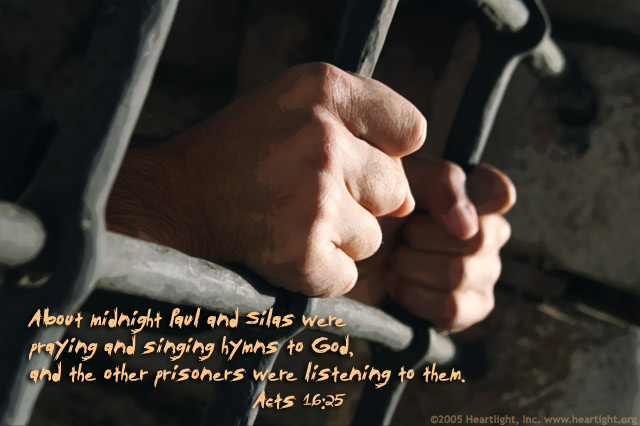
acts16_25

Continue earnestly in prayer, being vigilant in it with thanksgiving; meanwhile praying also for us, that God would open to us a door for the word, to speak the mystery of Christ, for which I am also in chains, that I may make it manifest, as I ought to speak. (Colossians 4:2-4)

Praying For Open Doors

Chains were not unfamiliar to the apostle Paul as a man who often was imprisoned for preaching the gospel of Christ. The Jews persecuted their once staunch leader against the Way as he had turned away from the Law of Moses to preach the gospel of Jesus of Nazareth. While in a Roman prison awaiting his appeal to Caesar, Paul wrote three letters to the churches of Philippi, Ephesus and Colosse including a personal letter of appeal to his friend and brother in Christ, Philemon. Each of these letters was filled with positive and encouraging messages of hope, praise, rejoicing and clear doctrinal lessons needed to fortify the hearts of the saints to keep the faith with all diligence. He reminded all the brethren to pray for him as he bore the chains of persecution faithfully and would find the answer to his prayers in being released sometime later to resume his work in far off places. What is remarkable about Paul is the continual focus of positive hope that God would grant him one more opportunity to preach the gospel. His desire to the church at Colosse was for their prayers to be attentive to the work of the Lord with a thankful heart and that God would give Paul an opportunity to speak about the gospel with others. He was under guard by the Roman Empire which often meant a life sentence or death yet he is filled with the joy of serving Christ and sharing the gospel with as many people as possible with every opportunity made available to him – even in prison. In his letter to Philippi Paul mentions saints in the household of Caesar and how the gospel was known among the whole palace guard. Chains could bind the hands and feet of Paul but not his voice. A man under guard, unable to freely travel to other places and hindered by the legal machine of the Romans is sharing the gospel with all who will hear him and making disciples.

America is the land of the free where the gospel has a free course to be spread to every home that opens the door. Saints are not confined to prisons or jails because they teach and preach a resurrected Christ. Churches of Christ are not under the bondage of legal entanglements for standing for truth in a community. The Bible is printed in as many forms and languages as is humanly possible including the transmission of the holy text in electronic form with computers, smartphones and electronic devices without number. There is greater opportunity to share the gospel with greater numbers than has been seen or heard in generations and yet a man imprisoned in a brutal government two thousand years ago with no electricity, automobile or airplane, and freedom of travel is praying for an opportunity to proclaim the message of Jesus Christ to a lost and dying world. The story of evangelism is filled with the reality that more souls are brought to Christ when the church is being persecuted than when the church cradles itself in the bosom of prosperity. When Saul of Tarsus brought severe hardship to the church, the saints went everywhere preaching and teaching the gospel. By modern standards, everything in the first century was an impossible task to perform in travel, availability of text, opportunities to share the message and yet the church abounded with incredible numbers. Through the centuries under the iron rule of apostasy, the church of Christ continued to thrive in communities around the world. By the grace of God, the world came to a period of peace allowing the gospel to increase and spread to many nations and the United States became a fertile ground for a large scale restoration of truth according to New Testament teaching. Prosperity gave the church in America the ability to send out the message of Christ in incredible ways. There are no laws forbidding the assembly of the saints, no regulations dictating the word of God and no hindrances to the sharing of the gospel. Few saints in America, if any, are imprisoned with chains today for preaching the gospel like the apostle Paul. He prayed for opportunities and found them. The church today has more opportunities and fails to pray for them and languishes as congregations slowly begin to die in many places.

The church of Christ has entered a time of placid and fruitful peace that has made the church an ineffective tool for evangelism. Fewer souls are being added to the church. Remarkably, many want to blame how bad the world has turned in the past years as the cause of the decline. Many will point to the decline of morality and virtue as the reason people do not want to hear the gospel. Denominationalism has been used as a crutch for not teaching the good news of Christ as so many folks believe so many different things it makes it hard to teach the truth. What is more evident than anything is the reality the world Paul lived in was morally bankrupt far worse than any world the child of God has seen today. There was more hostility against the gospel and men like Paul than ever imagined by the modern American Christian. The body of Christ lived in cities so decadent and immoral (Corinth, Rome, Ephesus, and Athens) it would cause the heart of the Christian today to shudder in fear but the gospel had free course and disciples were added daily. Satan has convinced the modern church the gospel will not change lives and opportunities are limited so why bother. Years pass and churches seldom see growth in the number of souls added in the waters of baptism. No one prays for the increase and few will work to teach the good news and the church continues to decline. The problem is not the world – the problem is we are not locked up in a Roman prison with chains on our hands and feet. Maybe then we would pray for an opportunity to speak about the mysterious plan concerning Christ.

Posted in Uncategorized | Leave a comment

From Weeping To Rejoicing

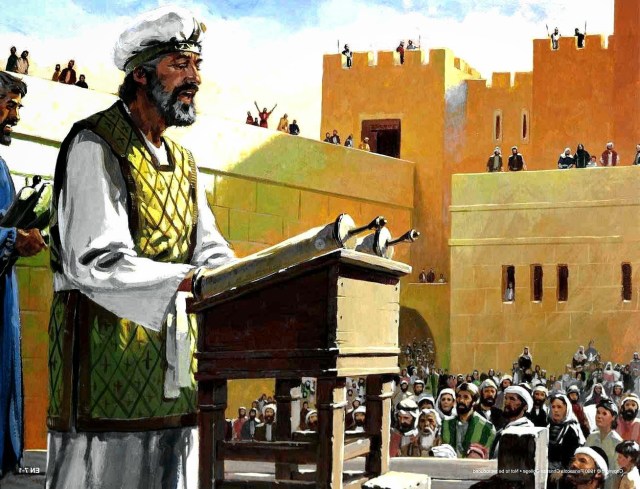
ezra reading the law

So they read distinctly from the book, in the Law of God; and they gave the sense, and helped them to understand the reading. And Nehemiah, who was the governor, Ezra the priest and scribe, and the Levites who taught the people said to all the people, “This day is holy to the Lord your God; do not mourn nor weep.” For all the people wept, when they heard the words of the Law. Then he said to them, “Go your way, eat the fat, drink the sweet, and send portions to those for whom nothing is prepared; for this day is holy to our Lord. Do not sorrow, for the joy of the Lord is your strength.” So the Levites quieted all the people, saying, “Be still, for the day is holy; do not be grieved.” And all the people went their way to eat and drink, to send portions and rejoice greatly because they understood the words that were declared to them. (Nehemiah 8:8-12)

From Weeping To Rejoicing

After seventy years of foreign rule, the nation of Israel slowly began to return to the land given to them through the promise of Abraham. The empire of Babylon had subjugated the people of God to bondage in accordance with the word of God. Following the decree of Cyrus, many of the Jews began the long journey back to Jerusalem. The first task they set their hearts to do was to rebuild the Temple so that worship could be restored and was completed in the month of Adar which was in the sixth year of the reign of King Darius. Under the leadership of Nehemiah, the walls of Jerusalem were rebuilt along with the gates of the city. In the seventh month following the completion of the walls, the people gathered together as one man in the open square that was in front of the Water Gate and asked for Ezra the scribe to bring the Book of the Law of Moses and read God’s word before them. Ezra read from morning until midday and all the people were attentive to the Book of the Law. In a remarkable show of respect for the Book of the Law, the people stood up when the scribe opened its pages. As Ezra blessed the people, they cried out, “Amen, Amen” while lifting up their hands and bowing their faces to the ground in worship to the Lord. Men stood before the people helping them understand the Law giving the sense of the message and lessons to be gleaned from the ancient pages. Nehemiah implored the people not to weep for all the people wept when they heard the reading of the Book and received the meaning of the text. He told them it was a holy day and one of rejoicing for the mercy and grace of the Lord was upon them. The message of God to the remnant was the joy of the Lord is the strength of His forgiveness, kindness and everlasting love for His people. Reading from the Book of the Law helped the hearts of the people turn from sadness and weeping to shouts of joy and praise. So all the people went their way to eat and drink and to share the spiritual fellowship of God’s mercy upon them all and their hearts were turned to rejoicing because they understood the words that were declared to them.

There is a powerful image of the remnant of Israel returning to its homeland and the impact of the Book of the Law upon their hearts. Israel had been punished by the wrath of God because they had disregarded the word of God spoken to them by the prophets. Idolatry had taken the hearts of the people to ignore the preaching of the word and in their rebellion suffered greatly at the hand of the Lord. A new generation arose that hungered for the mind of the Lord to be read and it’s understanding given to the people. What was lost became a sacred trust now. Their fathers and fathers before them had little interest in the word of God but this generation hungered for the words of the Law. When Ezra opened the book they stood up with divine respect for what the parchments meant to them. They were not in comfortable buildings with padded pews when the Law was read. The people gathered in the open square and stood there from morning until midday listening to the reading of the word. What made the difference in the hearts of the people was because the ears of all the people were attentive to the Book of the Law. They had asked for Ezra to read the Book and they responded with respect for the testimony of God’s word being read as it was explained in their presence. It did not matter how long the reading took or exhaustive the explanation became because the hearts of the people were listening closely to the reading of the Book. Remarkably, the people wept when they heard the preaching. Their hearts were so consumed by the message of the word of God they could not hold back their sorrow. Nehemiah implored the people not to weep but to rejoice for the salvation of the Lord had brought His people back to the Promised Land and the worship was restored in the Temple.

The church of Christ finds itself in the bondage of apathy and unconcern in many places. Hearts are dulled at the reading of the word of God and worship services are being abbreviated more and more to suit the needs of a carnal world filling the minds of God’s people. What makes the story of Nehemiah so remarkable is the people asked Ezra to read the book and they were willing to stand from morning to midday in the open square in front of the Water Gate listening to the divine word explained. Teaching and preaching are frowned upon in the Lord’s church when it goes beyond the appointed noon hour as people shuffle and move around in discomfort. It is almost like a horse race beginning when the gates are open so that folk can rush out to their lives outside the building at the sound of the last song and prayer. There was a time when the people of God were very knowledgeable of the word of God but those days are long gone. Many sit in the pew without Bibles open listening inattentively to a message that seldom moves their hearts to any action or response. They fill the prescribed time and do things in accordance with the Biblical pattern of decency and order and walk out the door as dull as a butter knife. There is no emotional response to the word of God and seldom is found a voice of rejoicing at the good news of the gospel. Following the admonition of Nehemiah, the people went out and shared gifts with others as the Law prescribed. The New Testament church characteristically spent time with one another in the joy of Christ. Many among God’s people have no knowledge of those who sit on the other side of the building or the needs of the downtrodden because everyone lives in a secluded bubble of personal security. The gospel is something to be shared with the saints and those who need Christ. There are vital lessons to be learned from the remnant Jews who gathered in the open square in front of the Water Gate. Let the church rekindle the spirit of the assembly of God’s people long ago who wept at the understanding of the word and then went out to live with joy at the word of salvation.

Posted in Uncategorized | Leave a comment