The Testing Of God

humbling you and testing you

And you shall remember that the Lord your God led you all the way these forty years in the wilderness, to humble you and test you, to know what was in your heart, whether you would keep His commandments or not. (Deuteronomy 8:2)

The Testing Of God

Four decades had passed since the Hebrews crossed the Red Sea on dry land and the Lord made them a great nation feared by all. Now the Israelite nation stood before the Jordan River poised to cross again on dry land and begin the conquest of the Promised Land. Moses has been forbidden to enter the land promised to Abraham, Isaac, and Jacob. He views the rich land of bounty from Mount Pisgah where he will die. He writes the final legacy of the children of Israel exhorting them to be faithful and follow the commandments of the Lord. The book of Deuteronomy is a history lesson for the Hebrews to understand the nature of God and how He blessed the generation before and will bless the new generation if they will heed His word. The generation that stands ready to enter Canaan watched their parents and grandparents die in the wilderness. Moses reminds the people that God led Israel through the wilderness for forty years to humble the people and to test their faith. The Lord wanted to know what was in the heart of His people if they would retain their allegiance to Him or deny Him.

The forty years in the wilderness were hard years for Israel. They had first come to Kadesh-Barnea where they could enter Canaan and begin the conquest. Because of a lack of trust in the power of God, the people heeded the warnings of ten spies and rebelled against the word of God. In His wrath, the Lord declared Israel would wander one year for every day the spies were in Canaan. Forty years would see the deaths of everyone above the age of twenty. Throughout the wilderness journeys, the people murmured, complained, rebelled, and started insurrections against Moses and Aaron. In just four short decades, the Hebrews were decimated with plagues, snakes, and the wrath of God bringing judgment against a rebellious people. What happened to Israel was not a coincidence. Throughout the forty years, the Lord was testing the heart of the people to know if they were willing to serve Him and obey Him.

Two reasons are given by Moses why God punished Israel for forty years. It was the plan of God to humble the Israelites and to prove their character. In many ways the people failed; yet in many other ways, the people succeeded. Moses reminds Israel that God needed to take the pride and arrogance out of the people as they enjoyed the blessings of a righteous God. It was easy for the people to take for granted all the Lord had given them. They did not go hungry or lack for water during the forty years. Their clothes did not wear out and their feet did not swell during those forty years. Enemies were defeated by the hand of the Lord. Israel was a nation blessed above all other nations on the earth and yet they still did not appreciate the blessings of God. The Lord made things hard for them to test them and see what kind of character they had. For many, the test of God proved they could not remain faithful. During times of crisis, the weak strengthened their resolve to deny God and perished. At the same time, men like Joshua and Caleb increased their faith in the Lord as they faced the trials of life becoming stronger in their resolve to serve the Lord. The forty years of crisis proved what was in the heart of the people.

There is a great crisis overshadowing the world and impacting the nation of God’s people. Like Israel of old many murmur, complain, rebel, and refuse to serve the Lord. The pandemic has opened the weakness of their faith giving them more resolve to serve the world rather than the Lord. Instead of turning to the family of God in the body of Christ for greater strength, they have embraced the religion of convenience and ease to worship in their own way. The COVID virus has changed the face of the world and the character of the church. For many, it has heightened preexisting weaknesses that are now driving them away from serving the Lord. They are failing the test. In the midst of the pandemic, many have become stronger and more resolute to draw closer to one another and the Lord. Tests of life will always do two things: make a person stronger or expose their weakness.

When this pandemic is over and we stand on the banks of another day, who will be left? Like Israel of old, there will be those who perished in the wanderings of COVID-19 who lost their way, lost their faith, and gave up. The new day will be conquered by those who kept the commandments of the Lord, vanquished their fears, and devoted their hearts to serve the Lord. This pandemic says a lot about the hearts of God’s people. What does your heart say?


Posted in Uncategorized | Leave a comment

The Little Things In Life

little-foxes-2

Catch us the foxes, the little foxes that spoil the vines, for our vines have tender grapes. (Song of Solomon 2:15)

The Little Things In Life

Vineyards were plentiful in Canaan providing a large source of the food supply in grapes, raisins, and juices. Construction of the vineyard began with a boundary trench dug, and posts were driven in to support a hedge or fence. As the vines grew, the branches were raised up on supports. During the months June to August the vines were pruned and cared for with harvest coming in August and September. After the grapes began to form, a shelter of branches or a stone tower was erected to help secure the vineyard against robbers and raiding foxes or jackals. The fox of Palestine was a small creature that enjoyed the fruit and often ruined the lower vines of the grapes. They would steal into an opening of the fence of a vineyard and nibble at the young shoots of the vines. They were small creatures about the size of a medium-sized dog but they could do a lot of damage.

Like the little foxes of Palestine, the little things in life can often bring more harm and problems than the expected looming problems easily identified. The owners of vineyards had a healthy respect for the little foxes because of the incredible amount of damage they could do. Many small things of life left unattended grow into larger problems. Sometimes it develops into the ruin of those who failed to attend to the matters early on. Small cuts and bruises left untreated can result in serious injury, disease, and sometimes death. Little things in a marriage left undone and uncared for will fester into resentment, distrust, and infidelity. Over time, a pebble of sand in a shoe will bring about great discomfort and disharmony and possibly injury. The husband and wife who allow small things to irritate and aggravate will often face the danger of marital dissolution. A marriage that began with deep love will dissolve under the pressure of small things that erode the heart of its soul.

Churches fall prey to the little things that Satan brings against the people of God. He intends to destroy the church. He does not always bring looming threats of persecution by “outside sources” but rather utilizes letting little foxes loose among the brethren who complain and murmur about little things. It may not be seeds of apostasy that destroy a church but the little things that cause disharmony and division. So often these little things do irreparable damage to the kingdom. In the present distress of 2020 many churches are asking its members to wear masks during services. This is a little thing in the scheme of eternal salvation. Wearing a mask may not be an enjoyable thing to do but it looks out for the interest of others in love considering the needs of others more than self. However, murmuring and complaining begin when some refuse to wear a mask and the little things begin to chip away at the harmony and peace of a congregation. Naaman of the Old Testament was reprimanded by his servants for not obeying the command of God by asking him if the Lord had told him to do some great thing, would he not have done it. Yet it was a small thing to dip in the Jordan and he refused.

There should never be a time when brethren allow small things to disrupt the work of the church. Having a mind like Christ is to view what He gave up to save mankind. Was it a small thing for Jesus to leave His Father and come to earth to die? Why should anyone balk at the small things of life to help others? The little foxes could do a lot of damage when left unchecked. There are plenty of dangers lurking outside the walls of the city of God that must be addressed. Do not let the little foxes or the small things of life bring greater harm to the family of God.

Posted in Uncategorized | Leave a comment

When The Church Comes Together

come together

For first of all, when you come together as a church, I hear that there are divisions among you, and in part, I believe it. (1 Corinthians 11:18)

When The Church Comes Together

The church at Corinth was in turmoil. A pandemic of division had swept through the congregation on winds of personal allegiance, carnality, immorality, and disrespect for the authority of Christ. The apostle Paul had a long list of challenges that had to be addressed in the church of God at Corinth. His first letter outlined the problems with solutions given that seemed to strike a responsive chord as evident by the apostle’s second letter to Corinth. In the course of Paul’s rebuking of the manner the saints were abusing the Lord’s Supper, he established a pattern of truth that defined the New Testament church. Worship was a personal act of devotion to the Lord but it was also a collective action of the church coming together as one. Seven times in his letter Paul uses the idea of coming together to address two separate needs of the church.

The first time Paul uses the phrase “come together” is when he admonishes the married couples who were having troubles to not deprive one another of sexual relations unless they agreed to abstain from sexual intimacy for a short time; giving themselves to prayer. He then admonishes the man and woman to come together again so they will not fall to the wiles of the devil and be tempted to commit sexual immorality. The married couple cannot fulfill the design of marriage apart from one another. When God created the woman, He brought her to the man so they could be one together. The union of the man and woman as complete when they were together. Jesus said the Father joined them as one.

Addressing the problem of the Lord’s Supper, five times Paul reminds the Corinthian church that coming together was a requirement of the church. At first, they were coming together not for the better but the worst and there were divisions among them when they came together. By abusing the Supper, they were not coming together for the divine purpose of God. Paul instructs the brethren when they come together to wait for one another lest they come together for judgment. Later, as the problem of the spiritual gifts is addressed, Paul refers to the church coming together with a psalm and teaching showing that worship is a collective action of people coming together in one place for edification.

Corinth did not have the internet. The church would have been in worse shape if they did. One of the challenges of the present distress is the action and reaction to the health concerns facing the world. These concerns are real and viable. The virus that has swept the world is not a political plan to disrupt the governments of the world. Many groups have used the pandemic to further their agendas but the virus is real and people are dying. The reality is clear but the interpretations are anything but. Regardless of how a person views the present distress the challenge of the church is how to address the pattern of New Testament authority and the will of the Father regarding His church. Responsible shepherds of God’s people have addressed this pandemic in the best way they know as well as leaders of the churches who do not have that oversight. The message that must remain at the forefront of any discussion is the matter of the church coming together as directed by the Lord in His word.

A pandemic cannot change the will of God. It may rearrange the normal patterns of a local congregation but it must always be viewed as temporary. Living in Florida there are times that hurricanes close communities because of concerns for safety and well-being. Churches will not meet because of a hurricane bearing down on the area. That is understandable and needful for the church not to come together. There would be danger of demanding people get out in the storm to risk their lives. The COVID virus has become a real threat and churches have taken appropriate actions to deal with the problem. But like a hurricane, these measures must be temporary with a view of coming back together again as a church to fulfill the divine pattern of the New Testament church. God wants his people to come together to worship Him. While stopgaps were put in place at the beginning of the crisis that was necessary, leadership must find ways to bring God’s people back together again.

There are many measures now in place that can create a safe environment for saints to worship together again. All of these decisions are made on a personal level by the needs of a local community and how that can best be served. No group has the right to judge another group in how they are responding to the virus as every situation is different. What is common among all the saints is the admonition to come together as God’s people. This must be done with the greatest care and wisdom for all those concerned. There have been many lessons on how to bring this about but bring this about it must be done. Worship by the proxy of the internet is not the purpose of the Lord. Too many families have become too at ease with this means of televising the services. Leaders must look for the means to return the local family of God to its rightful place of assembling together. Members must respect and honor the leadership in submitting to the role given those who shepherd the flock of God. Paul exhorts all Christians to esteem others better than themselves and be like-minded with the same love, being of one accord, and looking out for the interest of others. Like it says on many packages: assembly required.

Posted in Uncategorized | Leave a comment

Faithful Brethren

Faithful brethren Colosse

Paul, an apostle of Jesus Christ by the will of God, and Timothy our brother, to the saints and faithful brethren in Christ who are in Colosse: grace to you and peace from God our Father and the Lord Jesus Christ. (Colossians 1:1-2)

Faithful Brethren

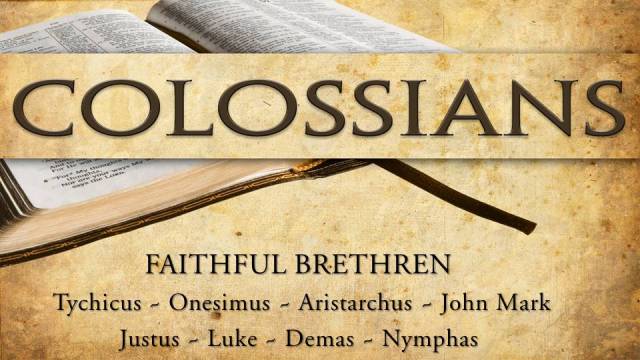
The church at Colosse had a long list of saints who excelled in their service to Christ. Paul addresses the people of God as faithful brethren as being individuals who could be trusted for their pattern of faith and love of truth. Not only were they obedient servants of the Lord, but their lives also reflected an allegiance to the cause of the kingdom and the work of the church. Paul includes in his letter commendations for Epaphras who he called a fellow servant and a faithful minister of Christ. This was a man the church could depend on for his commitment to the work of the church in Colosse. As a faithful brother, Epaphras was a man who showed by his love of the truth that whenever there was a need to be met in the vineyard of God, he would stand ready to help.

There were many other people Paul commended for their service to the work of the Lord. Tychicus was a faithful minister and was very useful for Paul to keep the church in Colosse informed both on their work and the efforts of Paul. Onesimus was a slave that had run away from his master, Philemon. In a providential act of kindness, the slave came in contact with Paul and obeyed the gospel. The apostle wrote a letter to Philemon exhorting him to receive his slave back as a fellow citizen of the kingdom and now commends Onesimus as a faithful and beloved brother. At one time the slave was undependable. Now he is one whose name is preserved through the ages as a man who could be depended upon in the work of God. Paul lists others who were helpful to him: Aristarchus, John Mark, Jesus who is called Justus, Luke, Demas, the brethren in Laodicea and Nymphas, and the church that was in his house. These were faithful brethren who by their diligent efforts were blessings to the church at Colosse because of their willingness to be counted ready to serve.

The local congregation is much like an orchestra. In every orchestra, many parts make up the symphony of instruments. Imagine a conductor trying to create music when many of the individuals of the orchestra cannot be relied upon to come to practice, bring their instruments, or be a part of the symphony. It would be extremely difficult for the music to be harmonious when the brass section fails to show up. If the string section does not bring their instruments it would be of little use for them to be there. Great music is made when everyone is doing their part. Successful orchestras come from individuals committed to the work of the symphony and the music. What the church needs today are faithful brethren committed to the work of the church. The church at Colosse had some great people who were dedicated to the work of the kingdom. They were men and women who could be depended upon.

Faithful brethren are saints who can be relied on to be involved in the church. Their attendance is not a sporadic event that only happens if something else does not come in the way. In the world of pleasure-seeking, so many things can take the mind away from the cause of Christ. The local church will have a difficult time growing when its members cannot be relied upon to show up. Often if they do show up they come late causing disruption. Bible class teachers cannot come to class on time. Company coming over or visits by family members keep people from coming to church. Shopping excursions go late on Sunday and services are missed. A real plague in the church is the misguided notion that a job excuses one from assembling with the saints. There are plenty of excuses given why the brethren cannot be depended upon. It comes down to a matter of allegiance. What is first in the heart of the saint is what is seen in the life of the Christian.

The church at Colosse was blessed with men and women who were committed to the cause of Christ in a world that was not accepting them. They were faithful – not only because they were saints – but they could be depended upon to be involved in the work of the church. Homes were places of hospitality, conversations led to talking about the gospel, invitations were extended from hands that were working in the kingdom, and hearts were guided by their deep love for God. What the church needs today are more faithful brethren who are willing to work – not play.

Posted in Uncategorized | 1 Comment

A Father Who Will Never Fail

psalm-27-10-photo-bible-verse

When my father and my mother forsake me, then the Lord will take care of me. (Psalm 27:10)

A Father Who Will Never Fail

Some passages jump off the page. David’s psalm of faith is one of them. It is almost a startling read when he declares if his father and mother forsake him as if that could happen that draws the attention of the reader to his message. He recognizes there is no fear when the Lord is the light and salvation. No matter what the wicked try to do against him, David will not fear. Everything about the son of Jesse is to seek the Lord and dwell in the house of the Lord all the days of his life. God’s protection overshadows His servants as the Lord places His people high upon a rock. There is reason to sing praises to the Lord for His power, might, and dominion over all those who oppose Him and that seek to harm His people.

God desires men to seek Him and David did everything in his power to seek the face of the Lord. Throughout his life, David trusted in the providential provisions of the heavenly Father to care for him and protect him. His level of trust was so great that he proclaims that even if the worst thing that could happen would come into his life – his parents forsake him – the Lord would take care of him. Human fathers are not perfect. Little is known about Jesse and nothing is known about David’s mother. The depth of faith abiding in David would have come from parents who devoted their lives to training their children in the paths of righteousness. David was a man after God’s own heart not by sheer chance but the diligent work of his father and mother instilled a deep faith in the Lord God of Israel. Without knowing much about his parents it seems clear the parents of David were righteous people.

David honored his parents by his life but the purpose of his life was not to please his parents but to please God. There is no doubt he owed much of his faith to the training of his father and the hymns of his mother. David made his faith his own. He understood that as vital as the faith of his parents, his life would be judged on the merits of his faith. He does not suggest in the psalm his parents had forsaken him. His faith is so established in the Lord that he honors his parents but obedient faith would be found in the Lord alone. Jesse was a good father but he made mistakes. God was a loving father who never made mistakes. David’s trust was in God alone.

Faith is a personal possession. Parents should be honored for their faith and the training they give their children. The scriptures are filled with instructions of fathers not to provoke their children to wrath but to bring them up in the training and admonition of the Lord. Mothers are the law of the Lord bound continually upon the heart. No child should be without these qualities of righteous parents. David knew that if his parents failed him, his heavenly Father would never forsake him. He believed that God would always take care of him regardless of how life changed. Examining the life of David, it is easy to see how deep his trust in the Lord becomes. When challenged by Nathan for the sins committed with Bathsheba, David knew he could trust in God. He learned this defeating the bear and the lion and standing before Goliath. God never failed David and this man of God tried very hard never to fail God. If all the world forsakes you, God will take care of you.

Posted in Uncategorized | Leave a comment

What Jesus Said About Hell

What Jesus Said About hell

But he answered and said, “Assuredly, I say to you, I do not know you” … And cast the unprofitable servant into the outer darkness. There will be weeping and gnashing of teeth … Then He will also say to those on the left hand, “Depart from Me, you cursed, into the everlasting fire prepared for the devil and his angels” … And these will go away into everlasting punishment, but the righteous into eternal life. (Matthew 25:12,30,41,46)

What Jesus Said About Hell

Before Jesus was born the angel of the Lord announced to Joseph the son to be born of Mary would save His people from their sins. An angel of the Lord named Gabriel came to the virgin Mary telling her the son to be born through the Holy Spirit would be great and called the Son of the Highest. At the birth of Jesus, the angels sang before the shepherds the news of glory to God in the highest and on earth peace with goodwill toward men. There would be great joy when the Savior of the world was born and the message of God’s saving grace would bathe the world with joy. Three decades after His birth, the Son of God began to teach the people the will of the Father.

When Jesus finished His mountain sermon, the people were astonished and amazed at his message for He taught them as one with authority, unlike their teachers of religious law. The multitudes and religious leaders who came to hear the man from Nazareth teach soon learned His message was clear, concise, and forthright and emboldened with the power of God. Jesus taught about love and forgiveness and the mercy of God. But He also did not accept the hypocrisy of the Pharisees or the veiled threats of His accusers lightly and His preaching had an edge of strictness. His preaching became more targeted as He drew closer to the cross. Three days before His death, Jesus told His disciples about the coming judgment of His Father upon the world. There was no mincing of words in His message.

Jesus used parables to impress upon the hearts of the people His message. The parables of the fig tree, the days of Noah, the faithful, and evil servant warn the disciples of the uncertainty but the suddenness of the coming of judgment. Jesus tells the parable of the ten virgins to warn of being unprepared for the final day followed by the parable of the Lord who gave three servants responsibilities and the judgment when he returned. In his final parable of sheep and goats, Jesus brings home the reality of divine judgment upon all nations gathered before the throne of the King. A constant theme throughout was the Son of God warning the people there will be consequences to those who refuse to obey the will of the Father.

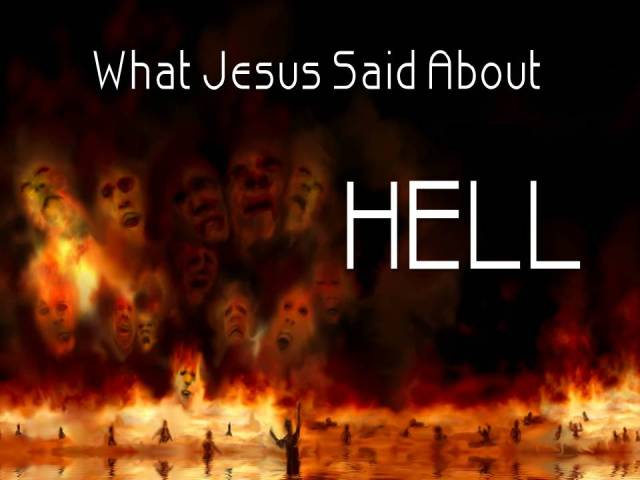
When the Son of God comes all the tribes of the earth will mourn. In the days of Noah, many were eating and drinking, marrying and giving in marriage, until the day came and took them all away. They died in the flood. If the wicked servant says in his heart the master is delayed and begins beating his fellow servants and eating and drinking with the drunkards, the master of that servant will come and cut him in two where there will be the weeping and gnashing of teeth. The five foolish virgins will come late to the bridegroom’s door because they were unprepared and hear the words, “I do not know you.” When the one talent man returned his talent to the Lord, he was called a wicked and lazy servant. His talent was taken from him and the unprofitable servant was cast into the outer darkness where there was weeping and gnashing of teeth. Finally, in the judgment scene of the shepherd dividing the sheep on the right and the goats on the left, Jesus tells the multitudes those who are lost will hear the words, “Depart from Me, you cursed, into the everlasting fire prepared for the devil and his angels.” These will go away into everlasting punishment.

Believing Jesus is the Son of God demands accepting all the teachings of Christ. There is much to learn from the life of Jesus about forgiveness, love, kindness, compassion, and abundant mercy. Jesus loved to spend time with children. He disavowed the hatred of the downtrodden and dispossessed people of His day. The Samaritan woman learned the man at the well was a man of eternal compassion and wisdom. But the message of Jesus also taught there are consequences to sin and the heavenly Father will punish those who do not do His will. From the mountain sermon to His final lessons before the cross, Jesus taught everlasting punishment as the consequence of sin. There will be no mercy for the disobedient. Jesus taught and affirmed the word of His Father that a place of eternal torment is real and most people will find their eternal destiny in the place where there is weeping and gnashing of teeth. Hell is real. God is not willing that anyone should perish but they will lose their soul if they do not obey the word of God. Jesus affirmed and taught this message. Repent. Believe. Obey. Prepare. A great day is coming.

Posted in Uncategorized | Leave a comment

Misjudgments And Misrepresentations

Hannah

And it happened, as she continued praying before the Lord, that Eli watched her mouth. Now Hannah spoke in her heart; only her lips moved, but her voice was not heard. Therefore Eli thought she was drunk. So Eli said to her, “How long will you be drunk? Put your wine away from you!” But Hannah answered and said, “No, my lord, I am a woman of sorrowful spirit. I have drunk neither wine nor intoxicating drink, but have poured out my soul before the Lord. Do not consider your maidservant a wicked woman, for out of the abundance of my complaint and grief I have spoken until now.” (1 Samuel 1:12-16)

Misjudgments And Misrepresentations

In the final days of the judges in Israel, Eli was high priest in the sanctuary at Shiloh and also served as a judge to the people for forty years. The story of Eli is always secondary to other stories revolving around him. When the scriptures introduce Eli it is to frame the story around the birth of Samuel and the beginning of the final days of a judge ruling the people of God. A certain man of Ramathaim Zophim, of the mountains of Ephraim, named Elkanah had two wives. The first was Hannah and the other was Peninnah. Peninnah had children, but Hannah was barren as the Lord had closed her womb. Elkanah would always give Hannah a double portion when it came time to make an offering. The rivalry between Peninnah and Hannah was severe as Peninnah taunted and made fun of Hannah as they went to the tabernacle year after year. Hannah would be reduced to tears refusing to eat.

On one occasion as Hannah came to the tabernacle to pray, she was in deep anguish, crying bitterly as she prayed to the Lord. Eli, sitting on the seat by the doorpost of the tabernacle, watched Hannah as she prayed. The priest was struck by the mood of Hannah as he watched her lips move but hearing no sound. Eli assumed that Hannah was drunk because of the manner of her disposition. Had the high priest seen others come to pray before the Lord in an inebriated condition? Did he think such a righteous woman would come before the Lord in a drunken state? Eli assumed by what he saw that Hannah had too much to drink and rebuked her to throw away her wine and be sober. He misjudged her actions by what he thought he saw.

Hannah was shocked by the affront of Eli proclaiming her innocence that she was a woman of sorrowful spirit. She had come to the place of God to plead for a son to dedicate to the Lord his entire lifetime. The childless years had left her destitute and discouraged. Her only hope was in the grace of God to grant her a son so that he could serve the glory of the Father. She tells Eli she is not drunk but rather a woman pouring out her heart to the Lord. Hannah would never present herself before others as a wicked or worthless woman who got drunk. Her soul was lamenting her childless condition and her actions were pure and holy as she prayed before the Lord. Eli blessed Hannah and the Lord granted her prayer for a son when she conceived and bore a son, and called his name Samuel.

It is easy to make misjudgments when all the facts are not known. Eli assumed he knew what Hannah was doing when he looked upon her face but he wrongly judged her without first inquiring of her. The Lord warns against unrighteous judgments that defame the character of others before taking the beam out of one’s own eye. False charges given by evil hearts have ruined many a righteous soul. The Jewish leaders accused Jesus of being a glutton and a winebibber and a friend of the tax collectors and sinners. They were only partially right because Jesus was a friend to the downcast but how they could accuse the Son of Man to excessive eating and drinking was an incredible stretch even for them. Eli erred when he assumed a truth that was a lie. The child of God should always be ready to see the good in people and to assume the best before making final judgments of character assassination. There are many misjudgments made when men hastily assume what they do not know.

Hannah defended her character by saying that she would never leave the impression that she was a worthless woman. Her definition of a wicked woman was a person who got drunk. It may be a cultural reaction to have more disdain for a drunken woman than a drunken man but Hannah made the distinction about a holy person engaging in unholy things. It was an affront to her desire to live a holy life to have Eli accusing her of being worthless. The apostle Paul would exhort the saints at Corinth to abstain from every form of evil. Hannah knew the power of example. She did not want Eli or anyone to think of her as being wicked. Everything in her life was given to God’s glory and His praise. It would seem a good lesson for men and women today to follow the example of Hannah to refrain from those things that show their hearts as worldly and carnal. Social drinking never convinces a non-believer that Jesus is the Christ, the Son of God. So much of the life of a Christian reflects either a godly attitude or a character compromised on the altar of worldliness. Hannah did not want to present anything that would damage her example of godliness.

A final lesson is to know that even when the heart is doing all that can be done for the glory of God; a wicked and sinful world will accuse and charge impropriety of character. This is exemplified in the life of Jesus. He lived a sinless life and the Jews hated Him, despised Him and had Him murdered on a Roman cross. He taught His disciples if the world hated Him the world would hate them also. Everyone who desires to live a righteous life will enjoy the blessings of the heavenly Father and may have to endure the suffering of persecution from others. Like Hannah, the only person that mattered was God. Live a pure example. Answer the critics. Ignore the false charges. Serve the Lord. Keep praying. Someone will realize you are praying and want to know more.

Posted in Uncategorized | Leave a comment

Was The Apostle Peter A Family Man?

Jewish man, seated, mat13714 (2)

The elders who are among you I exhort, I who am a fellow elder and a witness of the sufferings of Christ, and also a partaker of the glory that will be revealed. (1 Peter 5:1)

Was The Apostle Peter A Family Man?

One of the first disciples called by Jesus was Simon, son of Jonah. His brother Andrew was a fisherman and the two brothers worked the Sea of Galilee with James and John, sons of Zebedee. Peter and Andrew belonged to Bethsaida as did Philip. A few miles from Bethsaida was the city of Capernaum where Jesus would spend much of His time. It was early in the ministry of Jesus when the Lord came to Capernaum and after teaching in the synagogue, came to the home of Peter. When Jesus arrived He found Peter’s mother-in-law sick with a high fever. After being asked to care for her, Jesus rebuked the fever and she was healed. This is the first indication that Peter was a married man. Nothing is said of the other apostles in scripture whether they were married or not but it does show that being married did not prohibit a man from serving as an apostle of Jesus Christ.

When Paul wrote to the church at Corinth, he defended his authority as an apostle of Jesus Christ with the same qualities as the original apostles. In his defense, Paul argues the apostles had the right to bring believing wives along with them in their work as do the brothers of Jesus and Peter. He singles out Peter to show that during the early church Peter and Mrs. Peter were very active in the work of the kingdom. The scriptures are silent to the name of Peter’s wife and where she was from. However, the scriptures are not silent to the existence of Peter’s marital status. He had a wife and she was a very important part of his life.

Two of the letters written by Peter are preserved by the Holy Spirit and it is in the first epistle that Peter affirms his family status. He exhorted men who served as elders or bishops of the Lord’s church to shepherd the flock of God to oversee the work of the kingdom. Peter calls them his “fellow elders” showing that Peter not only was a preacher of the gospel and apostle, but the son of Jonah also served as an elder of the church. The scriptures do not suggest he was the elder or bishop of the church but a fellow elder along with other men. From the writings of the apostle Paul we learn what it takes to become an elder or bishop of the church.

Paul’s letters to Timothy and Titus describe the character of an elder. To Timothy, Paul says an elder must be the husband of one wife, one who rules his own house well and have his children in submission with all reverence. Writing to Titus Paul exhorts the preacher to ordain elders in every city and these men were to be the husbands of one wife, having faithful children not accused of dissipation or insubordination. According to Paul, an elder and bishop are the same office as well as being an overseer. To obey the will of God, an elder must be married and have faithful children. If Peter was a fellow elder, he would be required to be married and have faithful children. There is no doubt Peter was a family man.

There are many false teachings about Peter that are contradicted from the scriptures. Peter was never a Pope or leader of the church. He served as preacher, apostle, and elder along with his wife and children. One would want to know more about the woman married to Peter and how full her constitution must have been. Did Peter have sons that followed in their father’s footsteps as preachers and elders? Were there daughters in the life of Peter (he would have been tempered by having more girls than boys)? The scriptures are silent but only to the names and details of the family. It is easy to see a progression of maturity from the Peter of the gospels to the Peter of the epistles. This would have come from the impact of having a wife and children that would make the impetuous man of the early days become a mature and serious man of older years. A wife can do that. So can children. Peter was a family man. What a great thought.

Posted in Uncategorized | Leave a comment

Entrusted Once For All Time

Contend

Beloved, while I was very diligent to write to you concerning our common salvation, I found it necessary to write to you exhorting you to contend earnestly for the faith which was once for all delivered to the saints. (Jude 3)

Entrusted Once For All Time

In the last two thousand years, the church has undergone significant changes in the worship, organization, purpose, and design of the original New Testament pattern. Clear divisions exist among believers in Christ as each group carves out their specific brand of teaching. Names vary from the Roman Catholic Church to groups calling themselves Baptists, Evangelical, Holiness, Jehovah’s Witnesses, Lutheran, Methodist, Mormon, Nazarene, Pentecostal, Presbyterian, Seventh-Day Adventist, and Unitarians. None of the Protestant churches are older than five-hundred years with the first break away from Roman Catholicism of Martin Luther and the beginning of the Lutheran Church in the year 1530. If a person lived in 1492 they could not be a Baptist or Methodist because those churches (among all the rest of Protestantism) did not exist.

The Holy Spirit warned of a great apostasy that would come soon after the first century. In a slow progression of departing from the faith, doctrines like forbidding marrying and commanding to abstain from foods began to form the mother of spiritual harlots called the Roman Catholic Church and the Orthodox Church. For fifteen-hundred years the Roman Catholic Church held the western world in an iron grip of oppression, immorality, corruption, and murder of millions of innocence – all in the name of God. Martin Luther was not the first to oppose the Catholics but his work galvanized the movement that would be called a period of reformation. Every denomination owes its origins to the period of reformation.

There is one thing that makes each religious group distinctive with their own brand of faith: their creeds of faith. The Roman Catholic Church has its Catechisms and Councils (21 of those) along with the decrees of the Pope that form its body of teachings. It is impossible (unequivocally) that a man can become a Catholic if he uses the Bible and the Bible alone. As the Protestant churches began to develop, men began writing their own doctrines to formulate the orchestration of faith that made them distinctive. Each group developed their Confessions, Creeds, Disciplines, and dogmas that make them unique from other religious groups.  If a man follows the teachings of the Pope, he cannot become a Methodist. Guided by the doctrines of the Lutheran Church a man could never be a Baptist. Accepting the teachings of Joseph Smith will only make a man a Mormon and nothing else. Jehovah’s Witnesses use their own brand of scripture (Watchtower) that teaches what they believe. Each religious group has its own method of using the Bible to create what they call themselves and how they worship the Lord in tandem with man-made dogmas defining their particular doctrines. It is impossible to cross-pollinate one faith to another. Baptists teach Baptists doctrine that makes a man or woman a Baptist; not a Methodist or Lutheran.

It is easy to see why many in the world are confused with the modern view of religion. While tones of unity are played before the world that all Protestant churches are united under the flag of Jesus Christ the reality of truth is that unity demands a common faith. There is no common faith among churches that divide over doctrines, practices, names, and leadership. If Catholics and Methodists are united as one (for example) will the Methodist be willing to obey the edicts of the Pope? Will the Methodist churches begin to practice the doctrines of the Roman Catholic Church? This is impossible because there is no common faith among the churches of men. What makes a man a Baptist will not make him a Lutheran or Mormon. And the list goes on.

There is an answer to the division of religious groups found in the one book that can unify all men. The New Testament writer Jude wrote to those who were called, sanctified by God, and preserved in Jesus Christ of the common salvation found in the faith of Jesus Christ. He exhorted the brethren to contend not with one another but to contend earnestly for the faith that God had entrusted once for all time to his holy people. Jude seemed to think that God had given the early Christian’s everything they needed to know about salvation. The creeds of men were not necessary. If a person can read the Bible and become a follower of Jesus Christ, why is there a need for the Pope, catechisms, disciplines, manuals, another testament of Jesus Christ, or any other thing to save a man? Can the Bible alone make a man a Catholic, Lutheran, Methodist, Mormon, Baptist, or any other man-made religion? Let the Bible stand on its own foundation. The common salvation was once delivered to all the saints two thousand years ago and man needs nothing else to be saved.

Posted in Uncategorized | 2 Comments

What Does God Look Like?

sunrise brilliant

And they will see his face, and his name will be written on their foreheads. (Revelation 22:4)

What Does God Look Like?

There are many things about eternal life that are beyond the ability of man to understand. The expanse of eternity – how can that be explained within the realm of human knowledge? Possessing an incorruptible body? Existing without dying is beyond the scope of wrapping the mind around. Everything about eternal life is so far above the imagination of man that it seems incapable of grasping. On top of the list of experiences enjoyed by every saved person is the knowledge that everyone will get to see the face of God. For the first time, the soul of a man will peer into the depths of the visage of the Creator, the Lord God Almighty, the Jealous God who spewed His wrath upon the disobedient and saved the righteous. When the Hebrews camped at Mt. Sinai they saw a glimpse of the awesome power of God. Moses was granted a cursory glimpse of the passing glory of the Lord but was unable to see God face to face. The imagery of God is so powerful that if a man gazed at the face of the Lord they would die instantly. There is no comparison of humanity looking at the face of God outside the eternal realm.

Heaven is a place of wonder. It is filled with the majesty of the eternal God who was, who is, and who will always be. God existed before the worlds were formed. He watched over the human story from the beginning of time in an ageless existence of grace, mercy, love, justice, and wrath. Throughout the lineage of men, those who obeyed God found peace, and those who turned away from the Maker were destroyed. The scriptures talk about the eyes of the Lord, His ears that hear the plaintive cry of His people, and when God spoke the world was created. He smelled the soothing aroma of the sacrifice of Noah and was pleased. Daniel references the Ancient of Days as possessing hair like pure wool. That is all we know about the face of God and until the final day, nothing more will be said.

The joy of eternal life will include the ability to see the face of God. It will no longer be a mystical image of whatever the imagination can see the face of God looks like but the perfect image of the eternal God clearly outlined before all the righteous. All of the limitations of the mortal will be taken away and the immortal will gaze into the face of the eternal Father. There will be praise at the beauty of His face. Peace will fill the heart peering into the kindness of God’s face. All tears will be wiped away at the face of an eternal God who is joy and love because there will be no fear looking at the face of God. His form will be so incredible no one will be able to take their eyes away from Him. All the joys of life will be found in the blessing of seeing God face to face.

I don’t know what God looks like but I will know what He looks like when I stand before His radiance and hear His words of grace and salvation. He will call me by name and give me a crown that I may embrace a cloak of eternity as my garment. His face will be my everlasting joy as His presence will light the eternal city. I shall see His face. Lord come quickly.

Posted in Uncategorized | 1 Comment