The Temptation Of Jesus

Therefore, in all things He had to be made like His brethren, that He might be a merciful and faithful High Priest in things pertaining to God, to make propitiation for the sins of the people. For in that He Himself has suffered, being tempted, He is able to aid those who are tempted. (Hebrews 2:17-18)

The Temptation Of Jesus

When Jesus was born in the city of Bethlehem, His birth was as common as any other baby born that day. There was nothing unusual about how He was born as Mary gave birth like all mothers before her. As Mary’s time drew near, she experienced labor pains, and when it was time to deliver, the process of birth took the natural course. What made the birth of Jesus unusual was the conception of the divine seed in a virgin’s womb. Joseph was undoubtedly amazed by the whole process as Mary wrapped the little baby boy and placed Him in the warm comfort of the manger. To their surprise, a group of shepherds came by to see the baby as proclaimed by the heavenly hosts. The record does not tell how long it took to find lodging, but in a short time, Joseph and Mary secured a house to live in. A few years passed as the little baby Jesus learned to talk with baby giggles, laugh, eat His vegetables (except brussels sprouts), and learned to walk. As a two-year-old child, Jesus played with toys and explored the world with the wonder of a growing mind.

One day, some men from the East visited Joseph and Mary leaving gifts for the young child. Warned by an angel that Herod the king sought to kill Jesus, Joseph packed his family and made the arduous journey to Egypt. The wonders of the Egyptian landscape filled the mind of the little boy as Jesus saw giant pyramids, colossal statues of Egyptian gods, and temples filling the land. Sometime later, Joseph again packed his family to return to their native land. Instead of returning to Bethlehem, Joseph went north to Galilee to Nazareth, where he worked as a carpenter. Jesus would see the birth of His step-brothers James, Joses, Simon, and Judas along with His sisters. The family would enjoy the hard work of the carpenter’s life in the town of Nazareth. Each year they would travel to the Temple following instructions of the Law of Moses. At the age of twelve, He excelled Himself when He debated the Temple’s teachers and listened carefully to their teachings. At the age of thirty, Jesus would leave home to begin the ministry He was sent to accomplish. Less than three years later, He would be dead. After three days, He arose. The sinless Son of God had fulfilled the eternal plan of redeeming humanity from the scourge of sin. What made the death of Jesus and His resurrection powerful was that Jesus was tempted but never sinned. He never once committed sin – without exception.

The gospels mention the temptation of Jesus when the Lord was driven to the wilderness and, after forty days of fasting, tempted by Satan. Often the idea of the temptation of Jesus centers upon this tri-fold event where the tempter charms the Son of God with the lust of the flesh, the lust of the eyes, and the pride of life. Repeatedly, Jesus rebukes the devil by appealing to scripture. Failing to tempt Jesus, Satan leaves for a short time but then continues the onslaught of wicked temptation on the heart of Jesus. The temptation of Jesus did not begin with Jesus in the wilderness. His trial and suffering the appeal of temptation started when Jesus came to the age of knowing right and wrong. When Jesus was sixteen years of age, He was tempted. At the age of twenty-five, Jesus was tempted. The reality is that Jesus suffered the temptation of sin long before the wilderness journey. Satan knew who Mary’s son was, and he was trying everything in his power to subdue the Son of God. He failed for thirty years. Jesus was victorious for thirty years without exception.

There were constant temptations throughout the ministry of Jesus until finally, Jesus was crucified and died. When the Lord said, “It is finished,” He meant many things, including the satisfaction that His life was complete, and He had kept the will of the Father without sin. Jesus was made like His brethren. If Jesus were not a man like all men, He could not be a merciful and faithful High Priest to aid those who are tempted. It would seem doubtful to live for more than thirty years without sin, but Jesus did that very thing. He never gave in. His life was devoted to refusing the tentacles of sin. Jesus left a pattern of righteousness for all who suffer the pains of sin. There are no excuses. Each person’s object and goal is to sin less in life, knowing the impossibility of being sinless. Jesus accomplished what no man can do so that He could leave an example for all those burdened with the darkness of sin. Temptation can be overcome. Jesus proved that.


Posted in Uncategorized | Leave a comment

Change The World – Do Good

Therefore, as we have opportunity, let us do good to all, especially to those who are of the household of faith. (Galatians 6:10)

Change The World – Do Good

Albert Barnes sums up the admonition of Paul to do good to all men. He writes, “As we have therefore opportunity, let us do good unto all men – This is the true rule about doing good. ‘The opportunity to do good,’ said Cotton Mather, ‘imposes the obligation to do it.’ The simple rule is, that we are favored with the opportunity, and that we have the power. It is not that we are to do it when it is convenient; or when it will advance the interest of a party; or when it may contribute to our fame; the rule is, that we are to do it when we have the opportunity. No matter how often that occurs; no matter how many objects of benevolence are presented – the more the better; no matter how much self-denial it may cost us; no matter how little fame we may get by it; still, if we have the opportunity to do good, we are to do it, and should be thankful for the privilege. And it is to be done to all people. Not to our family only; not to our party; not to our neighbors; not to those of our own color; not to those who live in the same land with us, but to all mankind. If we can reach and benefit a man who lives on the other side of the globe, whom we have never seen, and shall never see in this world or in the world to come, still we are to do him good. Such is Christianity. And in this, as in all other respects, it differs from the narrow and selfish spirit of clanship which prevails all over the world.”

An exciting part of being a child of God is to let the world see the grace of the Father living in the hearts of those who the blood of Christ has redeemed. Religion is not a stuffed shirt feeling of rituals going through rote requirements, but a life changed to express feelings of goodness to all men. The world is filled with the “selfish spirit of clanship,” which should not be a Christian’s attitude. His or her light should brightly shine as one of goodness towards all men. What makes this character unique for the Christian is that kindness is shown to all men, regardless of color, background, and even spiritual degradation. In other words, while not accepting sinful actions, kindness rather than hatred should be shown toward those lost in sin. There is enough hatred in the world, and the Christian should never show contempt toward others. God loves the homosexual, murderer, thief, adulterer, and fornicator and desires them to repent. Showing acts of goodness or kindness toward all men allow the world to see the real character of the love of God in the heart of his children.

The opportunity to do good abounds in the life of a Christian. Small acts of kindness can have as much power as larger deeds. Looking for occasions to say a kind word to all men exemplifies the spirit of God. These acts of kindness can open doors of teaching the gospel and, as a result, save a soul. One of the greatest evangelism tools begins with the heart willing to open hands of goodness towards those mired in the depravities of sin. Jesus left an example of seeking those who desperately needed the love of God. Many did not accept the invitation of Christ but those who did learn the eternal lesson of God’s love and grace. Paul encouraged the brethren to seek those opportunities to do good and use those times to change hearts.

One of the most important areas of influence is within the family of God. If benevolence does not begin in the household of God, it cannot find its worth within a sin-sick world. There is a greater burden to show kindness to the brethren. Kindness begins first at the house of God. If a man is unwilling to be good to his brother or sister in Christ, he will never have the heart to help the man lost in sin. Paul did not suggest that doing good was limited to the household of faith. What begins within the family of God will show goodness to all men. Sowing seeds of kindness will reap a harvest of blessings. When a man sows discord or hatred, he will reap what he sows. Teaching the word is the greatest kindness a man can do for another. As there is the opportunity, let the word of Christ dwell in the heart of the Christian to do good to all men, especially to those who are of the household of faith. If you want to change the world, start here.

Posted in Uncategorized | Leave a comment

Be Careful, Be Quiet, And Do Not Fear

Then the Lord said to Isaiah, “Go out now to meet Ahaz, you and Shear-Jashub, your son, at the end of the aqueduct from the upper pool, on the highway to the Fuller’s Field, and say to him: ‘Take heed and be quiet; do not fear or be fainthearted for these two stubs of smoking firebrands, for the fierce anger of Rezin and Syria, and the son of Remaliah. Because Syria, Ephraim, and the son of Remaliah have plotted evil against you, saying, “Let us go up against Judah and trouble it, and let us make a gap in its wall for ourselves, and set a king over them, the son of Tabel”— thus says the Lord God: “It shall not stand, nor shall it come to pass.”‘” (Isaiah 7:3-7)

Be Careful, Be Quiet, And Do Not Fear

Ahaz was the 12th king of Judah, beginning his rule at twenty years of age. His reign would last for sixteen years, and unlike his father Jotham and his son Hezekiah, evil consumed his legacy. He patterned his life after the kings of Israel, including burning his children in the fire and following the abominations of the nations whom the Lord had cast out before the children of Israel. During his reign, a confederacy of the Syrian king Rezin and fellow brethren led by the king of Israel, Pekah, came against Jerusalem to conquer the city. Pekah killed 120,000 people in one day and took captive more than 200,000. Tiglath-Pileser, king of Assyria, had taken the city of Elath, and the danger of the Assyrians loomed before king Ahaz. He sought to ally with the Assyrians but remained fearful of the partnership and designs of Tiglath-Pileser. Although a king who had rebelled against the Lord, Isaiah is sent to assure Ahaz that Jerusalem will not fall.

Facing uncertainty and the dread of his northern brethren and the Assyrians’ potential threat, Ahaz finds himself in an impossible place. The counsel of Isaiah is to give him the courage to face the imminent dangers that surround him. Even a wicked king has found grace in the eyes of the Lord. Isaiah’s assurance is a sound policy of dealing with forces that seem overwhelming but can be defeated. Isaiah will tell the king that God will not allow His Holy city to be destroyed by the Assyrians or Israel’s northern kingdom. As bleak and frightful the day may seem, God remains in control of the affairs of men. Syria, Ephraim, and the son of Remaliah plotted evil against the people of God, but a higher power will thwart their purpose. Ahaz needed to take heed, remain calm, and not fear. The Lord would deliver him if he trusted the power of God.

Storms often come in life. Some are squalls that pass quickly, and others are intense typhoons that bring fear, anxiety, and worry to the most stalwart’s minds. Like king Ahaz, the future looks bleak if not without hope. Isaiah’s message is the security of knowing that God has a way of working His power into every storm. He is greater than the mightiest storm or trial that comes against righteousness, and He will not allow His people to be destroyed if they will but trust in Him. The city of Jerusalem did not fall by the hands of the northern tribes of Israel, and a more powerful nation would defeat Assyria. A time would come when judgment would be brought against the holy city, but that was in God’s design and purpose. Facing storms requires the insight to believe that God will prevail. It is taking heed to the word of the Lord, trusting in His promises, and keeping the heart from fear. God’s way is how to face conflict. It requires a heart that is not easily moved. The hosts of wickedness stand against the work of the Lord but will never prevail. Being fearless in the face of adversity is the metal God’s people are made of. When the calm resolve of faith enters the heart, then fear is taken away. Let the mind find the peace of God that passes all understanding. Be careful. Be quiet. Do not fear.

Posted in Uncategorized | Leave a comment

A Better House

For we know that if our earthly house, this tent, is destroyed, we have a building from God, a house not made with hands, eternal in the heavens. (2 Corinthians 5:1)

A Better House

The joy of moving into a new house is tempered by the exhaustion of relocating all the earthly possessions accumulated over the years. The fact remains that if it takes more than fifteen minutes to pack, there is more stuff than needed. Of course, few people can gather everything together in less than a few weeks with the task of packing, moving, unpacking, and finding a place for the abundance of things believed necessary to carry on life. Humans are a funny lot of creatures that spend their lives accumulating, protecting, insuring, fixing, and guarding temporary and never-lasting things. The smart mover will reduce the amount of clutter with each move. Still, when the end of the day comes, the stuff is nothing more than stuff and, there is a lot of that stuff. Sadly, when life is spent amassing possessions of this world, it is all left behind in death. What remains is for others to sort through and, by and large, get rid of. What was a precious trinket for the one becomes of little importance for the heirs. And the cycle continues through each generation.

God never intended for man to dwell on the earth gathering possessions, and yet it seems the primary purpose of life is about the stuff here and now. People work seven days a week all their lives and then die with nothing to show for their work. Billions of dollars are spent each year to redesign a failing machine destined to die. Man desires to live longer and fuller lives, so the focus is to extend the body’s life if possible. This is futile. The lesson from Methuselah is that he lived 969 years, and he died. No man can live beyond what God has established as his habitation, and only a few reach the centennial mark and beyond. The earthly house is destined for destruction. All that a man gathers in a lifetime of hoarding is destroyed or forgotten. Life’s cycle is absolute in its design. The body dies, and the possessions of life decay. What becomes life’s irony is why so much effort is spent trying to give life to a body that will die and why so much energy is expended to amass worldly goods that are not received in the grave?

The joy of Paul’s message to the Corinthians is to refocus the aims of life to realize the joy of a better house. There is a house provided by God that will not die and will not decay. When the human body dies, the Christian has the assurance of a new body given by the Father’s grace and love. This is not a building made by the hands of men but eternal in the heavens without end. It will never need medicine to keep its youthfulness. This better house will never move, relocate, or require maintenance. There will be no exhaustion, weariness, pain, sorrow, or tears in this better house. A house in heaven awaits the faithful who live to see the face of God. It will be a place that needs no sun, for the Father will be that light. The weakness of human flesh will be removed as God wipes away all the toils of life. Dwelling in the eternal city of Heaven, the child of God will dwell and abide with the Father, the Son and the Holy Spirit, and the hosts of righteousness. And the best part is there will never come a moving day.

Posted in Uncategorized | Leave a comment

A Purposed Life

Hear a just cause, O Lord, attend to my cry; give ear to my prayer which is not from deceitful lips. Let my vindication come from Your presence; let Your eyes look on the things that are upright. You have tested my heart; You have visited me in the night; You have tried me and have found nothing; I have purposed that my mouth shall not transgress. (A psalm of David; Psalm 17:1-3)

A Purposed Life

Life without purpose is an empty life. Many people try to find happiness in the things of the world, enjoyment of the flesh, and self-contained wisdom and never find fulfillment. A purposed life is trying to find some direction to model one’s life. There is a need to find the true meaning of what man is doing on this planet. The age-old question of self-worth must be answered in the context of divine truth. Whether a man believes in God or not, the question of identity remains the focus of life. Trying to answer why a man exists can only come from the One who formed, designed, and purposed man’s creation. In the beginning, God said, “Let us make man in Our image, according to Our likeness.” That is the purpose of man.

David was a man after God’s own heart because he was willing to invite the Lord to test his heart. It was not that the Lord did not have the power to know the hearts of all men, but David desired the Lord to examine his life. David was a man of prayer. His heart was open to allow the searching eye of God to look closely at his words, his thoughts, and his actions. He asked the Lord to declare him innocent without the pretense of being perfect but the prayer of being blameless. David longed for God to test his heart for righteousness. The omniscience of the Divine peered into the night and saw every part of David’s life. Admitting the knowledge of God about his life, David declared his innocence as he purposed to live a loving life before the Lord. His mouth did not speak guile. The heart of David fully rested in the word of the Lord. His prayer was to invite the Lord to examine him and find him innocent. God did what David asked and found him to be a righteous man.

Purpose-driven people are those who open their hearts to the examination of the Lord. They live each day with the recognition that everything about their life is open to the knowledge of the Almighty – and they find security in that knowledge. A purposed driven life is reliant upon the eye of God seeing everything they do and the ear of the Lord hearing everything they say. This is where purpose comes to fruition. There is no fear of condemnation. David was seeking to align his life with the will of the Father, and although a sinful man, he begged the Lord’s mercy to see his righteous character as he walked before the Lord. The prayer of David sought the presence of God in his life without reservation.

If you want to live a life of purpose, have a purpose in your life. Seeking the things of the world will not give you purpose. Heartache is all that is found in the trappings of the world. Have the courage to ask God to test your heart, examine your life, and hear your prayers. Then you will have a divine purpose that will help you in this life and bless you in the life to come. Purpose in your heart that you will not sin in what you say, what you do, and how you act. God bless your life to be purposed in Jesus Christ.

Posted in Uncategorized | Leave a comment

Watching With Clarity

But concerning the times and the seasons, brethren, you have no need that I should write to you. For you yourselves know perfectly that the Day of the Lord so comes as a thief in the night. For when they say, “Peace and safety!” then sudden destruction comes upon them, as labor pains upon a pregnant woman. And they shall not escape. But you, brethren, are not in darkness, so that this day should overtake you as a thief. You are all sons of light and sons of the day. We are not of the night nor of darkness. Therefore let us not sleep, as others do, but let us watch and be sober. (1 Thessalonians 5:1-6)

Watching With Clarity

The world is coming to an end. There is no doubt the clock is ticking on the earth’s longevity with a day coming when disaster comes in the form of God’s wrath. As sure as the promise of God to destroy the world by a flood in the days of Noah, so the certainty of the end of the world will come by the will of the Father. There are many today who believe that something man will do impacts the existence of the world. Global warming is being publicized as the springboard of global destruction in the next few decades. This will never happen because the Lord Creator will never allow the man to destroy what He has reserved for judgment. The Day of the Lord belongs to the Lord. It is a time reserved in the mind of the Father that only He knows. When the will of the Lord is accomplished, and He determines man’s existence has reached finality, the Son of God will come with His mighty angels, and the universe will come to a sudden end.

There will be no warning when the Day of the Lord comes. Weather patterns will often give signs of approaching danger. Volcanic eruptions can sometimes be known in advance, even with a minimal time before the explosion. When the end of the world comes, there is no hint, no advance notice, and not even the animals will be aware of impending doom. There is found in animals a sense of danger when something terrible is about to happen. They are alerted in their natural reasons to flee to higher ground or find protection soon. The Day of the Lord comes with no warning, notice, or determination by man to know of its day. Pundits of the end of time have tried for many a millennium to determine when the Lord will come. They have all failed and will continue to fail. If a man tells you he knows when the Lord will return, be assured he is a liar. Jesus said He did not know.

The end of the world will come as a thief who comes in the night. He does not give a warning coming when a person least expects it. Sudden destruction will be the nature of the last day. It will be swift, and it will be a total and complete destruction. Like the labor pains of a pregnant woman, the end of the world will come when least expected. No one will escape. There will be no mountains to run to or caves to hide in. Every eye will see the glory of the Lord. In an instant like the blinking of an eye, the universe will explode with incredible fury and be torn asunder. All souls will be ushered before the presence of the Almighty God. Time is destroyed. Death and Hades are destroyed. Satan and his minions are cast into Hell. Judgment comes. Verdicts read. Sentences carried out. Eternity becomes real.

Every child of God knows the Day of the Lord is coming, yet many do not live as if the day could come at any moment. Nonbelievers have no concern for the Day of the Lord. A Christian knows and believes the Lord will send His angels to destroy the world. No child of God should be caught unaware of the day when it comes. As people of light, walking in the light, and living in the light, the reality of the end is clear. The day of destruction should not overtake the righteous. Those who walk in darkness cannot see the light of truth. The people of God are watching with clarity the moment when the Lord comes, and they do so with great anticipation. Watching suggests a constant awareness that today could be the day. Sobriety means being clearheaded about the reality of the coming of the Lord and the knowledge of the sudden appearance of the Lord. These two factors are paramount in the heart of the Christian. Everything they do is preparing for the coming of Jesus. Living a sober life is preparing the soul for the judgment of the Lord. We may not know when the Lord is coming, but it will not matter because we are watching and living sober lives that will find their promise in the hope of eternal life. Pray each day: Lord, come today.

Posted in Uncategorized | Leave a comment

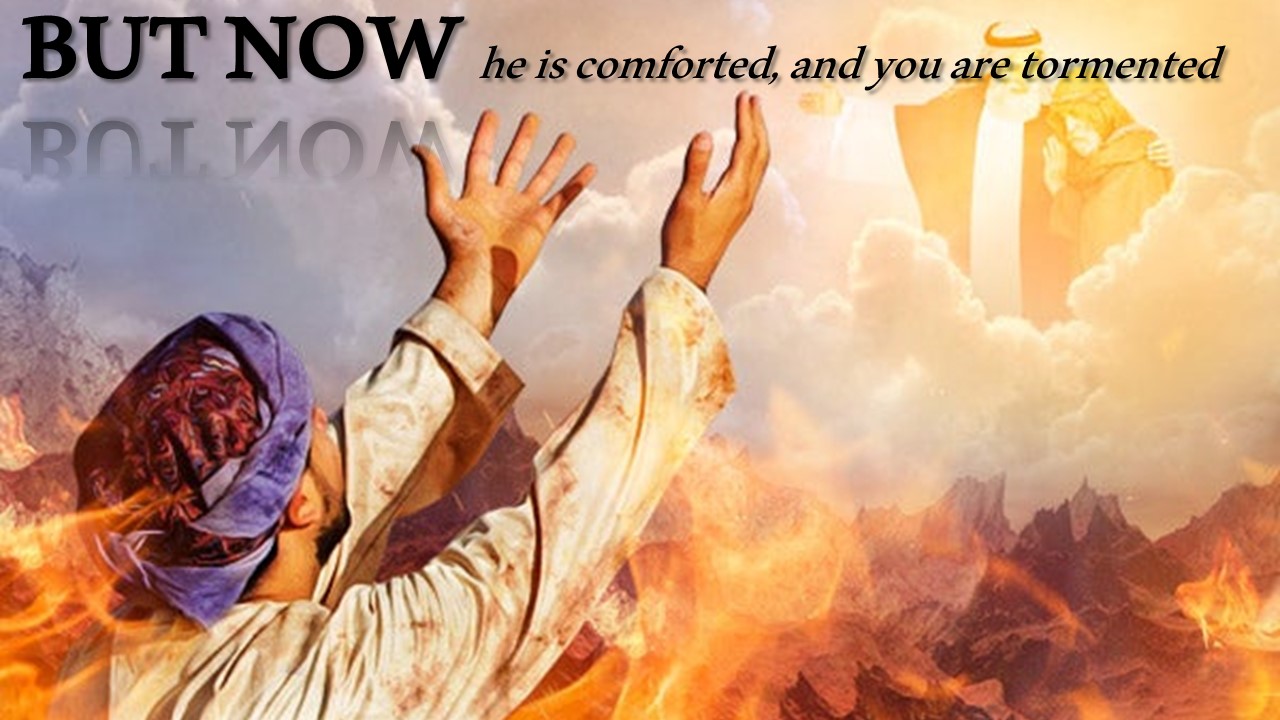
But Now

And being in torments in Hades, he lifted up his eyes and saw Abraham afar off, and Lazarus in his bosom. Then he cried and said, “Father Abraham, have mercy on me, and send Lazarus that he may dip the tip of his finger in water and cool my tongue; for I am tormented in this flame.” But Abraham said, “Son, remember that in your lifetime you received your good things, and likewise Lazarus evil things; but now he is comforted, and you are tormented.” (Luke 16:23-25)

But Now

The news of his death shocked the community. He had been a great leader in the business world and a benevolent philanthropist for many worthwhile causes. His peers heralded his insights as remarkable. The impact of his influence was felt around the nation. Hearing of his death, the community came together to eulogize and bestow honors on a man who helped change the world’s landscape. In another part of the world, a lone soldier is fighting against an assault by armed insurgents seeking to destroy his unit. Two men lay dead, and while his comrades seek shelter from the relentless firepower, the brave warrior throws himself into the heat of the battle, advancing against all odds to destroy the enemy nest. He destroys the first target but is mortally wounded. Collapsing in the enemy bunker, the soldier regains a measure of strength to fight to protect his men and kill as many insurgents as possible. His unit is saved because of his heroic actions, but a fatal blow comes with a bullet to the heart. Death is quick and sudden. Years later, he is awarded posthumous honors of the highest rank and his name engraved on marble as a great warrior.

Few men could have as much influence as the man who filled the world with his deep faith in God. He was a man of religion that spread the Bible’s message across the globe in almost every corner of the world. Thousands flocked to hear him and see his love for the Lord. For many decades, he preached the message of Jesus and salvation by faith only, and untold numbers of people flocked to find salvation in his soothing words. As with all men, time and tide march against him, and age brought him to his final destiny. Buried with great honors and long eulogies of praise for his faith and devotion to God, he finds his place among the tombstones of the myriads that have gone before him. Now only a marker with his name and dates reveals who he is. A few years earlier, a great war hero and successful politician faces his death. His life is remembered for bravery, dedication, honor, and as a part of the political world that changed the scope of government for years to come. Books and magazines are dedicated to his life story, which was quite remarkable. His peers revere his name as one of great historical meaning.

Few men can attain a special remembrance of history and then enter the halls of historical significance. The rarified air of fame is fleeting, and while honors are bestowed on those who gain notoriety for their courage, faith, and influence, there is a reality that is seldom seen and understood. When the man who changed the world as a philanthropist and community leader died, so did all his honors. At the moment of death for the brave soldier, he lost all the accolades of bravery and courage. The religious leader who filled his life with bringing others to what he believed to be salvation finally understood the reality of divine truth. As the great war hero’s life passed out his body, he knew everything he accomplished in life was useless. What all these men have in common is the realization that death has brought them face to face with God.

Death is the great equalizer, and death is a grand reality. The failing of human wisdom is to believe that life is about the importance of what is now without preparing for what is to come. Jesus tells the story of two men who are parables of contrast. The one man is a dejected, abused, and tormented man, while the other is an influential, wealthy, and prosperous community leader. Death comes to both men regardless of their station in life. What makes a difference in the final outcome is where they find themselves. One man finds peace and joy. One man finds horror and eternal torment. Abraham’s two words that draw the rich man’s attention to listen are the words, “But now.” Lazarus lived a horrible life dying without notoriety and fanfare in contrast to the great mourning for the rich man by his five brothers. Death was the wake-up call for the rich man that changed everything.

The news is filled with the rich and famous dying and the brave and the courageous giving their lives for what they believe in. There is great honor to be given to noble men and women who die and contribute to the world’s betterment. But sadly, none of this matters if a man is not a child of God. It will not matter how high the ladder of fame a man climbs or how history will frame his life for years to come. A man’s bravery will not matter if he is not a child of God. Even those who profess love and devotion to God who refuses to teach the pure gospel of truth found in Jesus Christ will hear those terrible words, “Depart from me, you who practice lawlessness.” Life will not save you. Doing the will of the Father is what will save you. If you die and are not a child of God, there will be a dark and horrible eternal fate that awaits you. Do not live to hear the words, “But now.”

Posted in Uncategorized | Leave a comment

Preaching Is Persuasive Arguing

And he went into the synagogue and spoke boldly for three months, reasoning and persuading concerning the things of the kingdom of God. But when some were hardened and did not believe, but spoke evil of the Way before the multitude, he departed from them and withdrew the disciples, reasoning daily in the school of Tyrannus. And this continued for two years, so that all who dwelt in Asia heard the word of the Lord Jesus, both Jews, and Greeks. (Acts 19:8-10)

Preaching Is Persuasive Arguing

Preachers come in different shapes, sizes, and dispositions. The Old Testament prophets were a mixture of personalities ranging from Isaiah and Daniel’s stately presence to the rough and harsh world of Amos. Jesus selected twelve men who could not have been more different from one another and in stark contrast to the teachers of their day. The style of the apostle Paul was not like Philip or Peter and especially not as the orator, Apollos. One of the essential commonalities of the New Testament preachers is found in the preaching they engaged. By his own admission, Paul was not a man of stellar presence when it came to his preaching. His focus was on preaching Christ and Him crucified. Nothing else mattered to Paul, and he devoted his life to preaching the risen Christ. What distinguished his preaching was the manner of his presentation.

When Paul went into the synagogues of the Jews, he preached a bold message. He was not there to preach the words of men or try to impress others with his style. The synagogue was a hostile place to preach the message of the Messiah who died on a Roman cross. The word of God fortified Paul’s boldness. His style was to reason and persuade his hearers to understand the gospel of Christ. In fact, the preaching of Paul was persuasive arguing. Like Peter on the day of Pentecost, he did not hesitate to show Jesus of Nazareth as the promised Messiah. The kingdom of God was preached before all those who would hear him without reservation. It was not a time to tell stories, engage the audience with banter, or impress the crowds with entertainment and fanfare. Paul came to preach. He came to argue in a manner that would convict men to repent and turn to God.

Preaching is about discussing the word of the Lord and engaging in conversations designed to change the heart. So much of preaching today is more about the “feel good, health and wealth” philosophies of men allowing the audience to enjoy a moment of spiritual euphoria with little or no lasting impact on life. Faith comes from hearing the word of God. Deep faith is built upon a foundation of sound doctrinal teaching that storms the soul with the ‘dunamis’ or power of God. The message must argue against vain doctrines and teachings of men. Preaching must convict, reprove and move the heart to action. Paul reasoned and daily discussed the merits of divine grace in the school of Tyrannus because the gospel was about finding the pearl of great price. Knowledge comes from digging for the truth.

The character of preaching is three-fold. There must be a message and someone to hear the message, and the transmission of that message must be clear. Preaching is not hard. When a man preaches God’s word, he does not have to find knowledge because that knowledge has been once delivered to all the world to understand. He should never hesitate to preach the whole counsel of God. Preaching anything less is not preaching. Paul spoke boldly; he reasoned and persuaded and daily argued the word as the word of God and not men. All who dwelt in Asia heard the word of the Lord Jesus because the preacher they listened to preached the word.

Posted in Uncategorized | Leave a comment

The Pivotal Moment In The Life Of Jesus

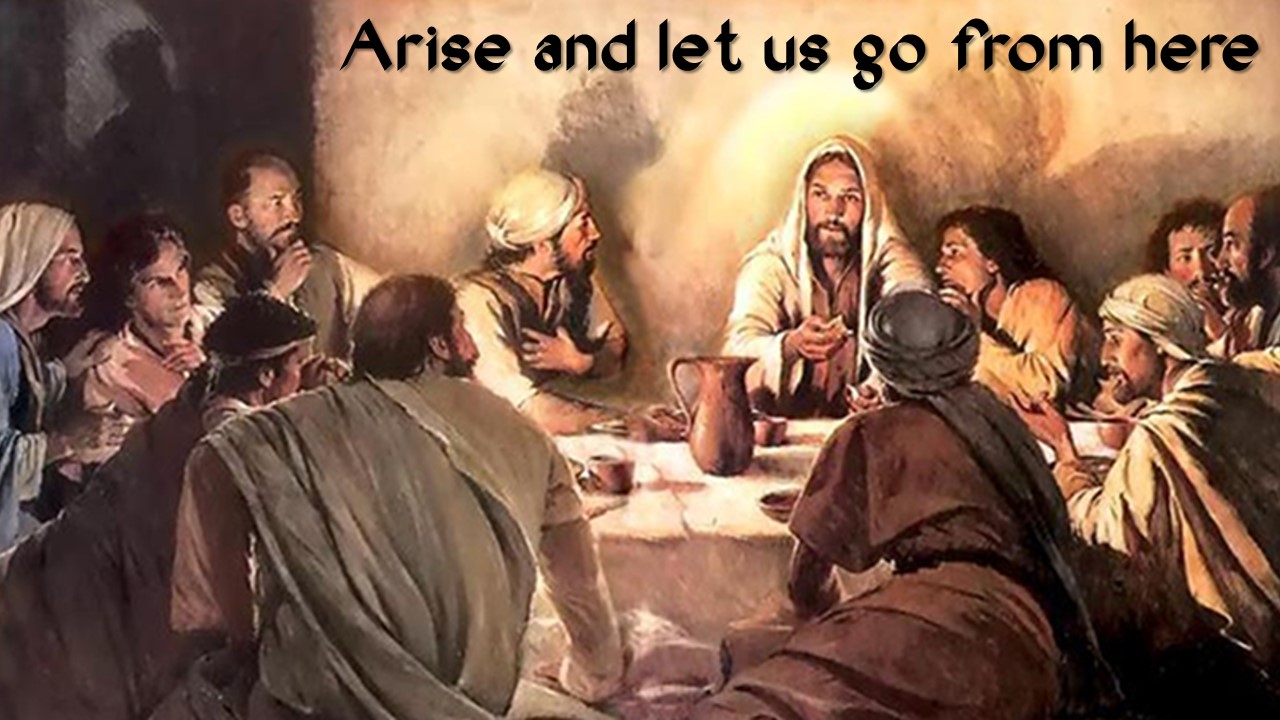
But that the world may know that I love the Father, and as the Father gave Me commandment, so I do. Arise, let us go from here. (John 14:31)

The Pivotal Moment In The Life Of Jesus

He knew He came to die for the sins of all mankind. As God, He did not consider it robbery to be equal with God but willingly offered His body as the Lamb of God for a bloody sacrifice. His journey began when he was thirty years of age, and in less than three years, He would die on a Roman cross as a common criminal. Throughout His ministry, Jesus spoke of the day when He would go to Jerusalem, where He would be treated with hatred by the people and die on the cross. Afterward, He would rise from the dead, but this would not happen without the journey to Golgotha. The scheme of redemption was planned in the eternal halls of God’s grace. Jesus knew when His hour would come.

On a quiet evening in an upper room, the Lord shared the solemn meal of Passover with the twelve apostles as He had done the past few years. His hour had come, and He knew His death was drawing near. First, He knelt before the twelve men and washed their feet. They did not understand the significance of His humility until Jesus explained the nature of servitude. His example would set the scene for the coming crucifixion. Judas would excuse himself from the gathering leaving Jesus with the eleven disciples telling them what He was about to do. And then came that pivotal moment when Jesus tells the eleven it was time to leave. Rising, He tells the disciples they must leave the upper room.

Going down the steps into the city, Jesus and His disciples begin walking toward Gethsemane. As the Lord walks along, He continues to tell the eleven about the ministry they will embark upon in the coming days, months, and years. They are unaware of how clear these words will ring to them as they recount this journey outside Jerusalem. At the same time, Judas has found the leaders who seek the death of Jesus. Soldiers have been secured, the Jewish leaders have gathered a mob together, and following Judas’ instructions, they make their way to a specific place in the garden of Gethsemane where Jesus often went. It is unclear if Judas first went to the upper room and, not finding Jesus, took the mob to the garden. As Jesus arrives in the garden, he takes Peter, James, and John a short distance away and begins to pray. Shortly after He prays a third time, Judas arrives, and Jesus is arrested. Early the next day, the Son of God is condemned to death, taken to Golgotha, and crucified. Hours later, Jesus dies.

It is difficult to describe the suffering of Jesus. He knew He would die a horrible death. His love for the apostles was overwhelming, and His love for Judas was found in a bowl of water and the hands of the Lord washing His betrayer’s feet. Everyone knew the precursor to crucifixion was the savage beating called scourging. Each man would then be compelled to carry his own cross to the place of crucifixion and thrown to the ground where he was nailed to a cross. He was then lifted up to suffer the most excruciating, humiliating, and painful death known to man. Death would be desired but fleeting. Mercifully, Jesus would last only a few hours before succumbing to the horror of Roman execution. Armed with this knowledge, Jesus made a fateful decision in the upper room when He said to His disciples, “Arise, let us go from here.”

When Jesus told the eleven they must leave the upper room, Jesus had fully committed Himself to the plan of His Father. His leaving the upper room proved two things. First, it proved His love for the Father. The world would know that Jesus loved His Father because He arose and went to Golgotha. Second, His leaving the upper room shows the world that He was obedient to His Father’s commandment. Before time began, God gave Jesus a command, and now Jesus was fulfilling that command. None of this could be done until Jesus left the upper room. It was a decisive moment in the life of Jesus, but more than anything, it was a crucial moment in every person’s life on earth. Had Jesus not left the upper room, there would be no joy and no peace. Thank God Jesus said, “Arise and let us go from here” so that all men can die with the words on their lips, “Arise and let us go to the Father.”

Posted in Uncategorized | Leave a comment

Never Satisfied

Finally then, brethren, we urge and exhort in the Lord Jesus that you should abound more and more, just as you received from us how you ought to walk and to please God. (1 Thessalonians 4:1)

Never Satisfied

There is never a time when a child is not growing. Growth is a sign of a healthy child as the body is designed to change over time, becoming more stable and mature for life’s challenges. Without the process of growth, the child would die or be deficient in many ways. It is vital to experience change to grow taller, learn to walk and talk, increase knowledge, and strengthen the immune system against disease. What is necessary for the physical body is of paramount importance for the spiritual man. The nature of humanity is made up of the mortal body and the eternal spirit. In time, the mortal body will decay and die. The eternal spirit, which is the true nature of man, will never cease to exist. Growth of the eternal spirit is a continual journey or abounding more and more in the process of spiritual growth.

Jesus told Nicodemus that to enter the kingdom of God, one must be born again. The illusion of birth is the beginning point of the Christian journey. Peter would encourage his readers to desire the sincere milk of the word to grow thereby. The Hebrew writer chastised the Jewish Christians for not maturing to a spiritual level of understanding and remaining as needing milk instead of solid food. There are many examples of the need to grow in Christ, mature in the faith, and solidify trust in the Lord given throughout scripture. Paul’s admonition to the church at Thessalonica was to exhort them to not only grow but to abound more and more. He wanted to see more growth in their lives. They should not be satisfied with where they were spiritually. He urged them and exhorted them to excel more and more in all things.

One of the amazing things about the word of God is how one can read, study, examine and unlock so many mysteries contained on its pages and, at the end of the day, realize that only the surface has been opened. Men who have studied scriptures all their lives will be amazed at a new teaching or learning as if it were on the page for the first time. As well versed as some can be of the Bible, no man possesses all the knowledge of truth. A discovery awaits each time the book is opened. This should make every Christian realize the potential for growth and the need never to be satisfied with where they are in their relationship with God. Abounding more and more expresses the deep desire that at no time in life will there be a time to be satisfied. Each new day is a new horizon to understand a little more about the divine grace of the Lord.

Paul outlines an essential lesson for the Christians at Thessalonica to abound more and more so they can face the temptations and trials of life. The will of God is for His people to be sanctified or set apart from the world. A Christian should not engage in fornication or uncleanness and to walk properly toward those who are not Christians. This can only be done by a diligent effort never to be satisfied with where the heart is on the spectrum of God’s knowledge. Abounding more and more is a cure for what ails the human spirit – sin. If a person is too busy growing in Christ, they will not have time to wallow in sin. Abounding more and more is never to be satisfied. Do not stop, slow down or give up. The more you grow, the healthier you become. Holiness comes from excelling in Christ. Never be satisfied.

Posted in Uncategorized | Leave a comment