Possibly Outdated Term

Do you not know that the unrighteous will not inherit the kingdom of God? Do not be deceived. Neither fornicators, nor idolaters, nor adulterers, nor homosexuals, nor sodomites, nor thieves, nor covetous, nor drunkards, nor revilers, nor extortioners will inherit the kingdom of God. (1 Corinthians 6:9-10)

Possibly Outdated Term

The days of manual typewriters have been delegated to the dusty corners of the Smithsonian Museum. When the IBM Selectric typewriter was introduced in 1961, it changed the face of the business world. The limitation of manual and electric typewriters was keeping a dictionary or word search manual close by to correct spelling. Checking grammar still required the author to know the proper syntax of English and make needed corrections. All of this changed when the computer took the place of typewriters, evolving into an instrument that can correct spelling immediately and correct grammar upon review through various programs. Using a grammar program like Grammarly still requires a choice by the author to decide if the suggested review is necessary or not, but it offers many suggestions to improve the writing skills of those less versed in the discipline of proper grammar.

A program is only as useful as the information embedded within its design. Programs like Grammarly reflect society’s social and moral norms because they are created by individuals swayed by the winds of change that try to keep in touch with the needs of the people. One such example is found with the review of 1 Corinthians 6:9-10. The word “homosexual” was flagged, “Possibly outdated term. Some readers may consider the word homosexual outdated or clinical and may prefer other terms they regard as more modern and inclusive.” Additionally, the word “sodomites” was flagged with the following disclaimer: “Potentially offensive language. The word sodomites may offend some people. Consider using more inclusive language.” Nothing was said about the word’s fornicators, idolaters, adulterers, thieves, covetous, drunkards, revilers, or extortioners. Apparently, these words are inclusive.

The Holy Spirit inspired men to write as the will of God moved them. Paul addresses a problem in Corinth that is as old as the world: sin. The world of the early church was filled with idolatry that thrived on the sensual provocations of the flesh. Homosexuality was common in the Roman Empire, especially among the leaders. Sexual immorality was an accepted part of society. Fornication and adultery were common. Drunkenness flourished as the degradations of idol worship filled with land with debauchery, depravity, and corruption. It was in this world the early disciples faced the battle of the flesh and the spirit. Were there those in the city of Corinth that would have been offended by Paul’s use of the words “homosexual” and “sodomites”? There is no doubt these words were not inclusive in society. Paul was not writing to please the masses, but his words were clearly from a divine source with divine authority.

Society can change sin to be a more inclusive and acceptable word, but the nature of sin remains the same. Paul defined homosexuality to the Roman Christians as shameful and degrading. He said that God called it unnatural and vile passions. This will never be inclusive to the world’s view, but the divine word of God determines what is right and wrong. The moral compass of humanity never defines righteousness. Calling homosexuality a “lifestyle” does not suggest acceptance from the Lawgiver. Jesus died so that all men could find salvation in the will of His Father. Those who disregard the law of God will not inherit the kingdom of God. Sexual immorality such as adultery, fornication, homosexuality, sodomites, and transgender will keep a soul from eternal life. Those who practice such things will suffer eternal damnation. Only through the blood of Jesus will the sins of the sexual immoral be washed away, and a person is sanctified and justified in the name of the Lord Jesus and by the Spirit of God. Sin may offend you but pray you do not offend the Lord God. He is not inclusive of the whims of human reason.
Posted in Uncategorized | Leave a comment

A Just God Repays Evil Men

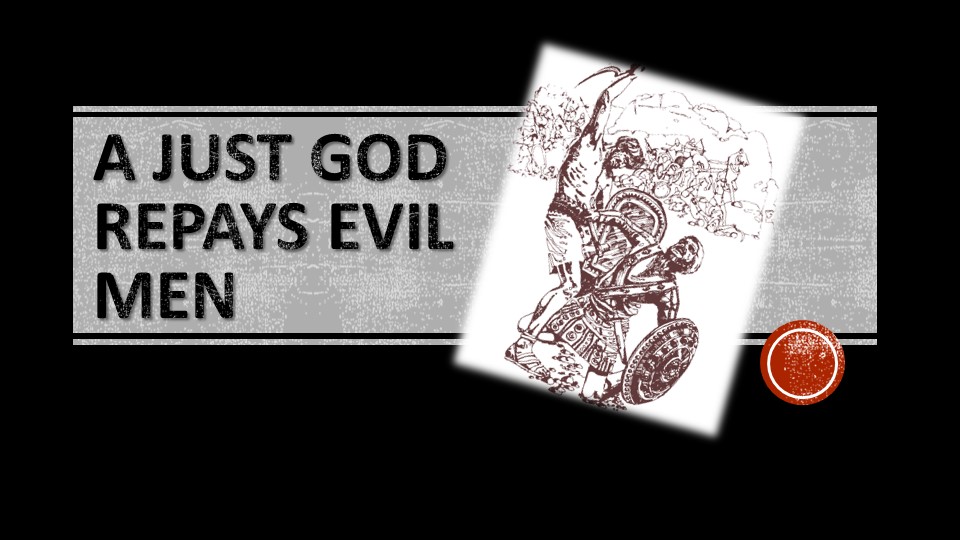
Thus says the Lord: “For three transgressions of the people of Ammon, and for four, I will not turn away its punishment, because they ripped open the women with child in Gilead, that they might enlarge their territory. But I will kindle a fire in the wall of Rabbah, and it shall devour its palaces, amid shouting in the day of battle, and a tempest in the day of the whirlwind. Their king shall go into captivity, he and his princes together,” says the Lord. (Amos 1:13-15)

A Just God Repays Evil Men

The cruelty of humanity against itself is legion in the annals of history. There have been stories of human horror in every generation and will continue until the end of time. During the days of Uzziah, king of Judah, and Jeroboam, king of Israel, the prophet Amos declared the justice of the Lord to the nations that had abused His people. Damascus, Gaza, Edom, Moab, and Ammon would receive the Lord’s wrath along with Judah and Israel. The transgressions of the ungodly nations that corrupted His Holy nation would not go unpunished. Bringing judgment against the people of Ammon was especially harsh for the crimes they committed against the people of Gilead.

Ammon was from the lineage of the incestuous union of Lot and his daughter. The Ammonites worshiped Milehem or Molech, which included the human sacrifice of children. Israel had fallen into the idol practices of Molech to be like the nations around them. There was a certain ferociousness to the cruelty of the Ammonites described by Amos. Fighting against the people of God, the Ammonites sought to destroy all the vestiges of the Hebrews, including ripping open women pregnant with child, killing both the mother and the child. All of this was to enlarge their territory. The action and motives of the Ammonites did not escape the watchful eye of the Lord. Their hatred led them to do great cruelties against others. The land was filled with the blood of the innocent, and the Lord God took notice.

Rabbah was an Ammonite stronghold with a stronger citadel. It seemed impregnable. God would bring it down to destruction through His judgment. The king and princes will face the wrath of the Lord as He brings judgment upon those who defiled His name and disregarded His will. All of the cruelty the Ammonites brought upon the people of God would be repaid by the vengeance of a greater God than the puny idols worshiped by Ammon. This judgment would come swiftly. All that remains of the Ammonite power are broken stones of ruin. A once proud and vicious army that brought fear and dread in the hearts of their victims met the judgment of God.

The lesson from Amos is the judgment of the Lord is absolute and complete. There are many things that men will do against one another. Nations will seek to destroy other countries, and the Lord will repay the evil. Men will revolt against other men and do horrible things, and the Lord will remember and repay the evil that was done. Nothing escapes His eye. No man will escape the wrath of God. A man will take a knife and rip open the womb of a woman and glory in his evil he has done, but the day will come when a greater horror will stand before him as he hears the word of the Almighty cast him to hell.

Injustice is not uncommon in the world of evil men. The sad reality is that across the globe, horrible things are done to the innocent. Murder, rape, plundering, corruption, and injustice are rampant in a world driven by the evil hearts of corrupt men.  Judgment may seem impossible or far off, and often there never seems to be a measure of justice against the evil, but a day will come when all men stand before a just God. It is then the unjust and evil men will receive their due reward by the hand of a pure, righteous, and holy Lord God who is Almighty, Jealous, and Creator. He never sleeps, and He knows what all men do. For three transgressions of the people of Ammon, and for four, the wrath of the Lord will not turn away its punishment. Neither will this same God turn His wrath upon the evil today. Thank God for a just and merciful God.

Posted in Uncategorized | Leave a comment

The Struggles Of A Man Of Faith

O Lord, do not rebuke me in Your wrath, nor chasten me in Your hot displeasure! For Your arrows pierce me deeply, and Your hand presses me down.

There is no soundness in my flesh because of Your anger, nor any health in my bones because of my sin. For my iniquities have gone over my head; like a heavy burden they are too heavy for me. My wounds are foul and festering because of my foolishness.

I am troubled, I am bowed down greatly; I go mourning all the day long. For my loins are full of inflammation, and there is no soundness in my flesh. I am feeble and severely broken; I groan because of the turmoil of my heart. Lord, all my desire is before You; and my sighing is not hidden from You. My heart pants, my strength fails me; as for the light of my eyes, it also has gone from me.

My loved ones and my friends stand aloof from my plague, and my relatives stand afar off. Those also who seek my life lay snares for me; those who seek my hurt speak of destruction, and plan deception all the day long. But I, like a deaf man, do not hear; and I am like a mute who does not open his mouth. Thus I am like a man who does not hear, and in whose mouth is no response.

For in You, O Lord, I hope; You will hear, O Lord my God. For I said, “Hear me, lest they rejoice over me, lest, when my foot slips, they exalt themselves against me.” For I am ready to fall, and my sorrow is continually before me. For I will declare my iniquity; I will be in anguish over my sin. But my enemies are vigorous, and they are strong; and those who hate me wrongfully have multiplied. Those also who render evil for good, they are my adversaries, because I follow what is good.

Do not forsake me, O Lord; O my God, be not far from me! Make haste to help me, O Lord, my salvation! (A psalm of David. To bring to remembrance. Psalm 38)

The Struggles Of A Man Of Faith

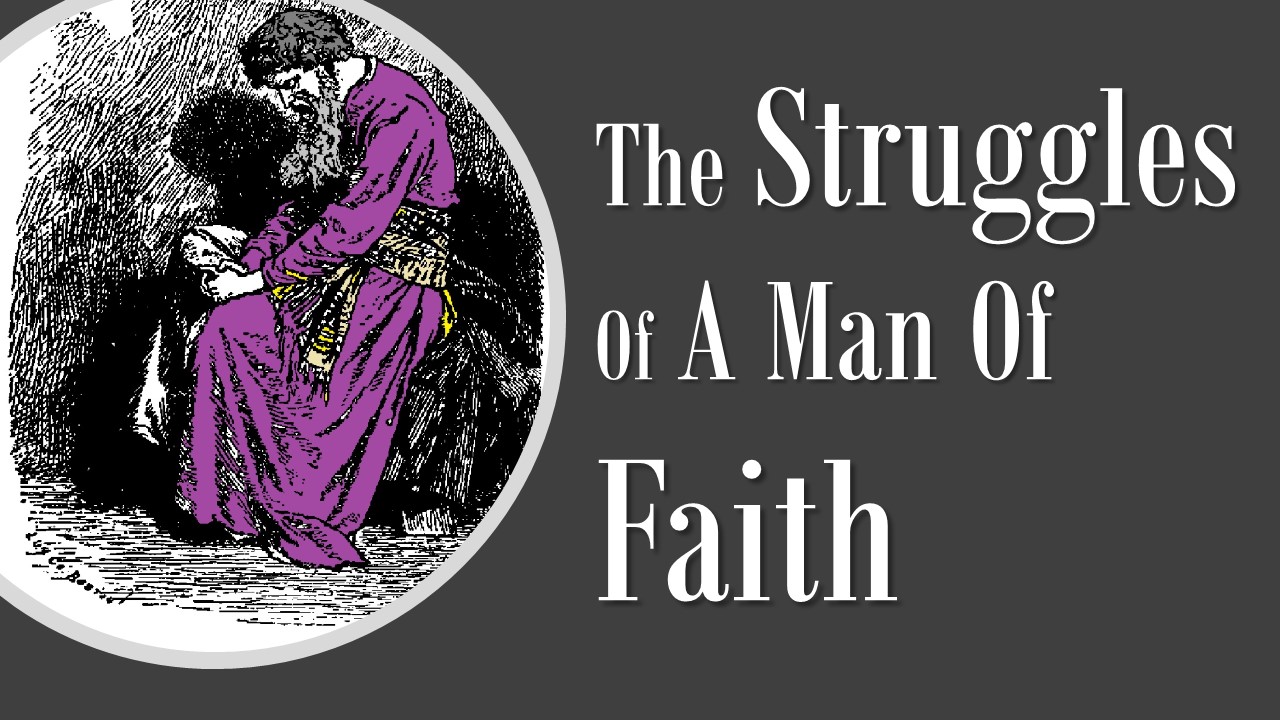
Faith is the substance of things hoped for and the evidence of things unseen, but it can be a harsh lesson to learn and keep focused when sin assaults the spirit with deadly force. No one is immune from the tentacles of temptation, despair, and hopelessness. It consumes the soul with guilt and the foreboding judgment of a wrathful God. Sin easily entangles the unwary and can destroy hope, but it can overpower the godly and the righteous. Of all the great men and women who have walked before the Lord in faithfulness, none remained aloof and untouched by the tragedy of sin. The sweet psalmist of Israel sang his heart away with the dread of the wrath of God and the consequence of his foolishness and rebellion. David was a man of faith struggling to face the reality of his sin.

There are elements of sin that are very clear. It brings the hot displeasure of God like arrows piercing deeply within the soul and like the heavy hand of the Lord pressing upon the weakness of the soul. The faithful heart feels the pain of sin, recognizing that God has been offended. There is fear in the soul because of the hurt that has been done to the heart of the Almighty. Godly sorrow comes from a broken and contrite heart aware of what sin does to the righteous character of a Holy God. There are no excuses for sin. It is not a matter of a simple mistake or sowing of wild oats. Sin is the repudiation of the righteous character of a jealous God who has blessed humanity with His grace, His love, and His mercy. David was troubled. His grief was overwhelming because he had sinned against God. He did not grieve because he got caught in whatever unrighteousness that tore at his soul. David was hurt deeply that he had hurt God deeply. As the man of God stood before his Lord, he was feeble, severely broken, and groaning because of the turmoil of his heart. A man of faith was seeking forgiveness.

Sin is not a surprising event but a harsh reality that all men suffer. Jesus was and will only be the one man who never sinned against His Father. The greatest of men who walked faithfully before the Lord were guilty of sin. David was a man after God’s own heart, and what made his character so powerful was his deep humility to face his own failures and the willingness to acknowledge his failures were his own. His desire was for the Lord. David said his heart was weak and his strength failed, and the light had gone from his eyes because he faced his sin and failure. His friends forsook him, but he knew God would never leave him. All of his hope was in a compassionate and loving Father who would welcome him home and take away his guilt.

Faith is hoping in the Lord and finding in a sorrowful heart of repentance that God will forgive, He will remove sin as far as the east is from the west, and joy will return to the soul. David was a man of faith who struggled with sin. He knew the depths of eternal sorrow, and that is what made him a man of great faith. Sin would not have dominion over the heart of David. He pleaded with the Lord for grace from a heart that was broken and filled with anguish. All of his hope lay in the promise of God who would not forsake him. His psalm began with God’s chastening hot displeasure and ends with the song of hope in the nearness of God and the Lord of salvation. Thank God for his wrath and chastening to prick the soul of sin. Thank God for godly desire that brings a faithful man back to a compassionate Father who will forgive and save.

Posted in Uncategorized | Leave a comment

Only The Blood Of Jesus

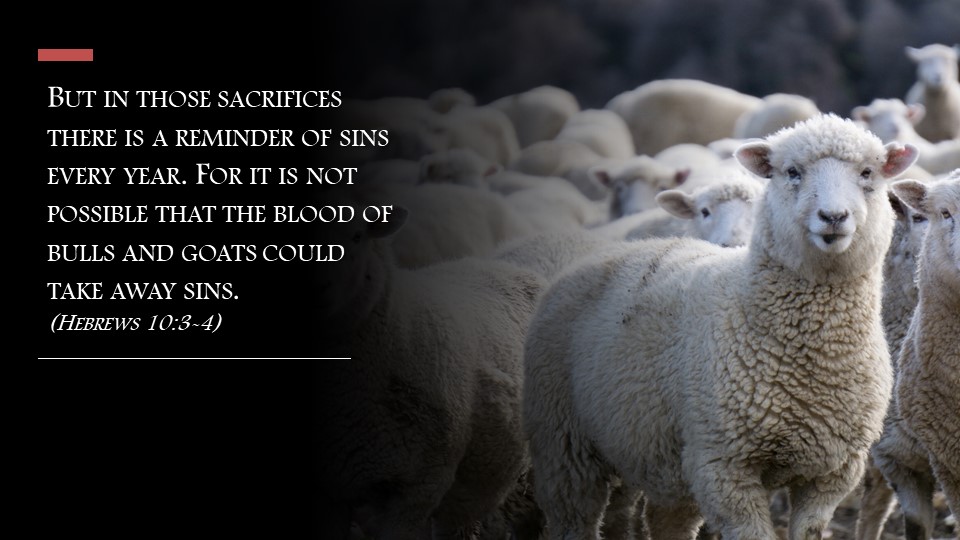
But in those sacrifices there is a reminder of sins every year. For it is not possible that the blood of bulls and goats could take away sins. (Hebrews 10:3-4)

Only The Blood Of Jesus

Animal sacrifice and sin have been perpetually connected since the fall of man in the Garden of Eden. When God clothed Adam and Eve, He covered them with the skin of animals. Abel was a keeper of sheep, and in the process of time, following the Lord’s command to make an offering in worship, he brought of the firstborn of his flock and their fat. Following the great flood, Noah built an altar to the Lord and took of every clean animal and of every clean bird, and offered burnt offerings on the altar. Abraham is a man whose travels were marked by the smoke of his offerings to the Lord God. The covenant with Abraham was confirmed when an offering of a three-year-old heifer, a three-year-old female goat, a three-year-old ram, a turtledove, and a young pigeon. When the Hebrews faced the final plague against the nation of Egypt, their salvation came from the sacrifice of a lamb without blemish, a male of the first year which was taken from among the sheep or goats. The lamb’s blood was put on the two doorposts and the lintel of the houses so that when God saw the blood, He would pass over the house and not bring the death of the firstborn.

Under the Law of Moses, there were thousands of sacrifices offered each year for the atonement of the people. At the coronation of King Solomon, 1,000 bulls, 1,000 rams, 1,000 lambs were sacrificed. When Solomon dedicated the temple, 22,000 bulls and 120,000 sheep were offered to the Lord. Asa offered to the Lord 700 bulls and 7,000 sheep from the spoil they had brought. Hezekiah restored temple worship and sacrificed 70 bulls, 100 rams, 200 lambs along with 600 bulls and 3,000 sheep consecrated to the Lord. He would also give the assembly 1,000 bulls, 7,000 sheep, and the leaders gave the assembly 1,000 bulls and 10,0000 sheep for sacrifice. Josiah gave the people lambs and young goats from the flock to the number of 30,000 plus 3,000 cattle. More than 7,600 from the flock and 800 cattle were offered at the Passover. Untold thousands of animals were sacrificed throughout the generations of Hebrews who kept the law.

When Jesus was born, and Joseph and Mary took their infant son to the temple, they offered a pair of turtledoves or two young pigeons as they were unable to afford the offering of a lamb. One bird was for the burnt offering and the other for a sin offering. Throughout the life of Jesus, the Son of God would witness the sacrifice of thousands of animals. Jesus would keep the Law during His lifetime following the sacrificial laws. All the millions of animals offered as a sacrifice since the beginning of time could not atone for the sins of one man. This would require the blood of the Son of God.

Animals could not take away sins because they were not created in the image of God. David McClister writes, “Why could animal blood not take away sins? The first answer is: because the animals had not done the sinning. How could the death of a dumb animal (bulls and goats) suffice to atone for the guilt of a rational human being? Technically, it could not. There was no connection, no fellowship, between the sinner and the sacrifice. God’s penalty for sin is death, and the sinner, not some animal put in his place, must die to pay for his sins (Ezek 18:4). Human blood was required to atone for human sin.” With all the blood of bulls and goats sacrificed through the centuries, only the blood Jesus can save. God’s Son’s death was required to redeem man because that was the severity of the condition between God and man. No animal could take away sin. Jesus knew as He went yearly to the temple and witnessed the multitudes of sacrifices that His blood would be required to redeem humanity. He faithfully kept His Father’s command and suffered on the cross so that all men could taste the fruit of redemption in His blood. There are no other means of salvation. What can wash away my sins? Nothing but the blood of Jesus.

Posted in Uncategorized | Leave a comment

Mistakes Of Old Men

For it was so, when Solomon was old, that his wives turned his heart after other gods; and his heart was not loyal to the Lord his God, as was the heart of his father David. (1 Kings 11:4)

Mistakes Of Old Men

As a young man, Solomon had more profound wisdom than most men. When the Lord appeared to him at Gibeon, he could ask anything from the divine storehouse of blessings, and it would be granted to him. He did not ask for riches and honor or long life, but he desired to have an understanding heart to judge the people to discern between good and evil. This pleased the Lord, and Solomon was blessed with the greatest wisdom, including the greatest wealth and honor among all the men on earth. Solomon’s reign was an incredible demonstration of the knowledge of righteousness, discernment, devotion to God, and prosperity never known in the history of humanity. Under the leadership of David’s son, the house of the Lord was constructed that would stand as the dwelling place of God with His people in the city of Jerusalem. No edifice was a grand and beautiful as the Temple of the Lord God. The Queen of Sheba would survey the world of Solomon and proclaim the half had not been told her to the expanse of the kingdom of Solomon and his wisdom. All the earth sought the presence of Solomon to hear his wisdom, which God had put in his heart.

The reign of Solomon would last for forty years. At the beginning of his kingdom, there was great success, and God was glorified through King Solomon’s wisdom, wealth, and power. As the prosperity of his wealth increased, so did the many foreign women increase including the daughter of Pharaoh, women of the Moabites, Ammonites, Edomites, Sidonians, and Hittites. When Joshua brought the people of God into Canaan to conquer the land, God had forbidden His people to intermarry with the women of the land lest they turn the hearts of the people away from Him. They disobeyed the Lord, and so did Solomon. Solomon clung to the forbidden women in love, and when he was old, his wives turned his heart away from God. The wisest man on earth sought after the gods of the Ashtoreth, the goddess of the Sidonians, and after Milcom, the abomination of the Ammonites. Solomon had one thousand women surrounding him that he allowed to turn his heart away from the righteousness of the Lord. He did evil in the sight of the Lord, and his heart was not loyal to the Lord his God.

Old age is supposed to be characterized by a maturity of years that emboldens wisdom. The hoary head is revered for the knowledge of old men. There is a sense of purpose in the eyes of those who can look back over many years of experience to discern between the wise path and the path of folly. Men who have served in the house of the Lord are to bear fruit in old age with a fresh and flourishing spirit of divine wisdom. The desire of those of old age is to declare the knowledge of God to the generation of youth and the power of God to the world. No man possessed the wisdom of Solomon, and yet the wisest man that lived allowed the sensual pleasures of his flesh to destroy his life in his old age.

Righteousness is a commodity that men of all ages must possess, especially when a man approaches the end of his life. Solomon’s sad tragedy was he began his reign with such promise and ended his reign with unexpected failure. Devotion to God must continue until death. Old age should be a time of more profound meaning for the heart of the faithful. The lie of evil is to seek youth in old age when this is impossible. Billions of dollars are spent each year on men and women seeking the fountain of youth which can be an eternal folly. Time marches on, and nothing will stop or slow its progress.

Solomon grieved over the mistakes of his old age as found in the book of Ecclesiastes. His life stands as a monument to the failures of men and women who have served the Lord for many years and then choose to seek the follies of youth at the brink of eternity. The end is worse for them than the beginning. A faithful heart must remain faithful until the end. There can be no exception. Old age is a beautiful time of enlightenment, joy, productivity, and letting the world see the glory of God. When the almond tree blossoms, the world should see the eternal tree of life blooming in the hearts of older men and older women. Do not give up, and do not turn from the Lord when eternity is so close. Be thou faithful until death.

Posted in Uncategorized | Leave a comment

Change The Priesthood

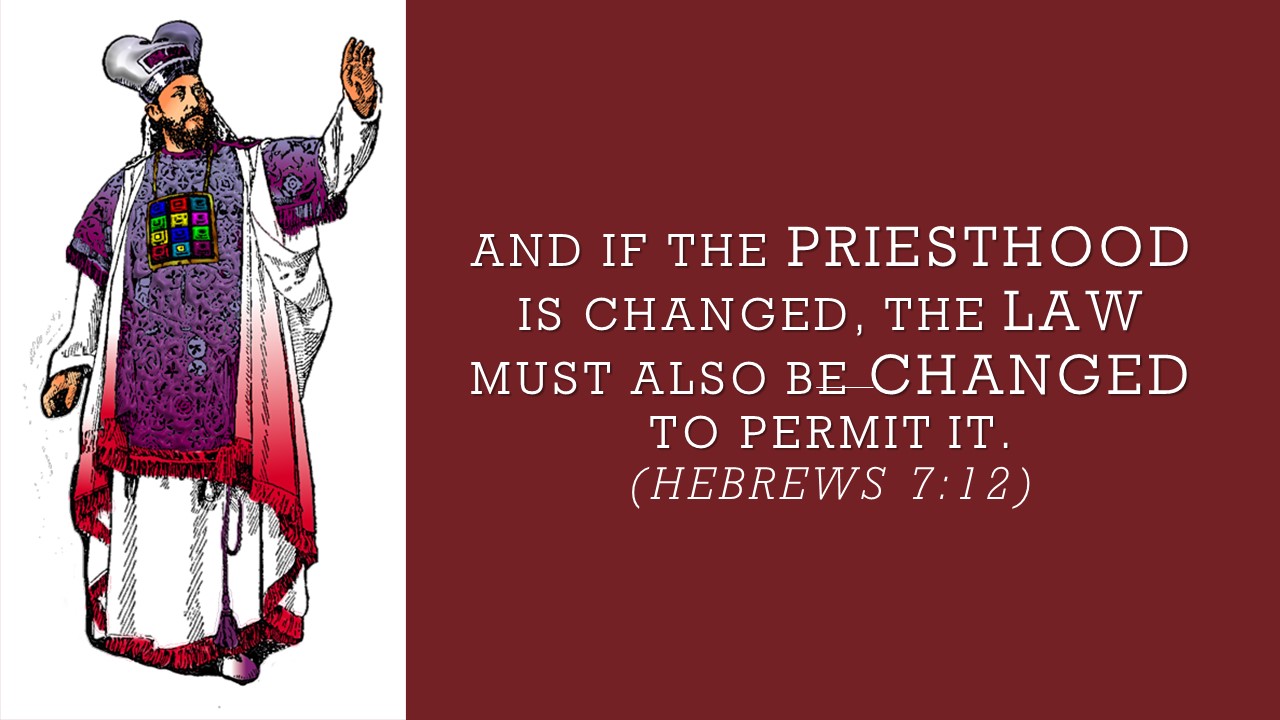
For the priesthood being changed, of necessity there is also a change of the Law. (Hebrews 7:12)

Change The Priesthood

The Law of Moses is no longer binding as law which includes the law’s preamble called the Ten Commandments.  It becomes increasingly difficult for Bible students to understand the law of Christ when they fail to clarify divine authority changing from the children of Israel to men of every nation. Part of the confusion occurs when a separation between the Old and New Testament is not put in its proper order. The Lord gave men the Old Testament as the evidence of His divine will but not as a binding law for all men to follow. Like Paul’s argument to the church at Rome, justification did not come through the Law of Moses. Abraham, who did not live according to the Law of Moses, was justified by faith. Moses lived most of his life without the law named after him. He was eighty years old when the law was given to the Hebrews. The Law of Moses was only given to the nation of Israel.

One of the foundations of the Law of Moses was the priesthood. Moses’ brother, Aaron, was the first High Priest of the nation. His sons, Nadab, Abihu, Eleazar, and Ithamar, were the first priests, with Eleazar succeeding his father as High Priest. The Law was stringent that only those from the tribe of Levi could be priests and serve as High Priest. None of the other tribes could serve as priests, including the tribe of Judah. The apostasy of Israel began when after Solomon’s death, the kingdom was divided, and Jeroboam made shrines on the high places and made priests from every class of people who were not of the sons of Levi. This continued until the destruction of the ten tribes by Assyria. The Law of Moses clearly established the true priests could only come from the tribe of Levi.

Jesus was born of the house of David, the tribe of Judah. Matthew and Luke record the genealogy of Jesus, showing the Lord came from the lineage of David. Under the Law of Moses, Jesus could not be a priest nor a High Priest, and yet the book of Hebrews is a thesis on how Jesus of Nazareth, a man from the tribe of Judah, is now the Apostle and High Priest of those who confess Jesus to be the Christ, the Son of the Living God. Jesus was called by God as High Priest not according to the order of Aaron but the order of Melchizedek, High Priest and King of Salem in the days of Abraham. In the Law of Moses, nothing is said that a man from the tribe of Judah could be the High Priest. Under the law, He would sin by taking on the High Priest role because He was not from Aaron’s lineage. David was a king but was not a High Priest. Jesus was from the house of David.

The argument Paul makes in Hebrews is clear that Jesus is the High Priest appointed by God to serve as King and High Priest. Believing that Jesus is the High Priest over the house of God establishes the Law of Moses (including the Ten Commandments) has been done away with, and the Law of Christ is the only binding authority for salvation. And if the priesthood is changed, the Law must also be changed to permit it. There can be no authority for instrumental music, keeping the Sabbath, and imposing the Ten Commandments as the priesthood has changed, nullifying the old Law and its ordinances. Jesus is both King and High Priest, establishing a law apart from the law given to Israel because He came from the tribe of Judah. It is impossible to serve Jesus as Lord and hold to the Law of Moses.

Posted in Uncategorized | Leave a comment

The Scaffolding Is Gone

Love never fails. But whether there are prophecies, they will fail; whether there are tongues, they will cease; whether there is knowledge, it will vanish away. For we know in part and we prophesy in part. But when that which is perfect has come, then that which is in part will be done away. When I was a child, I spoke as a child, I understood as a child, I thought as a child; but when I became a man, I put away childish things. (1 Corinthians 13:8-11)

The Scaffolding Is Gone

Jesus promised to build His church and following His return to the Father, the church was established on Pentecost. The twelve apostles received the baptism of the Holy Spirit and began speaking in different languages of those gathered for the great feast in Jerusalem. Peter stood up among the apostles and opened the door of salvation to the Jews as promised by Jesus. It was the first day of the church, and three thousand souls obeyed the gospel of Jesus Christ. God added to the church those who were being saved. The day following Pentecost saw more teaching and preaching as the infant church began to grow daily. Disciples of Christ began to learn the new message of salvation apart from the Law of Moses. It was not an easy transition, and questions arose on the new worship and teachings of a risen Christ. More Jews were baptized for the remission of sins. Disciples increased daily.

The teaching, worship, practice, and organization of the church was new to everyone. There were only the writings of Genesis through Malachi in existence in Hebrew and Greek. Philip would begin at Isaiah 53 and teach a man from Ethiopia the gospel of Jesus Christ, leading to him asking why he could not be baptized in water. It would be over ten years before the first book of the New Testament would be written, and throughout the coming years, the canon of the books Matthew through Revelation would be written and reproduced. One of the great providential works of the Godhead is found in the manner of the church’s remarkable growth during the time of its infancy. This work was accomplished by the promise of Jesus to the eleven when He told them a Helper would come and guide them into all truth.

When a building is planned and designed, one of the most important parts of the construction occurs in the early phases of its design. To properly build a firm foundation and construct its walls, scaffolding is used to shore up and hold together the building. Without the scaffolding, it would be impossible for the walls to remain secure and the building to be finished. There comes a time when the building can stand on its own, and the scaffolding is taken away. Then the building’s beauty is seen apart from the skeleton structure of what helped form its structure in the beginning. Jesus said His church would be built, and like a building, the church required a time of scaffolding to help the new kingdom of God come into existence. One of the most critical parts of the success of the early church was the nine miraculous gifts of the Holy Spirit.

Jesus promised to send the Helper or the Holy Spirit to guide the church into all truth. The Spirit’s work was found in the gifts of wisdom, knowledge, faith, healings, miracles, prophecy, discerning of spirits, different kinds of tongues, and the interpretation of tongues. Within forty years, when Paul wrote the epistle of Colossians, the church had been preached to every creature under heaven. The remarkable speed of the spread of the gospel was accomplished through the scaffolding of God’s divine plan to establish the church. When the work of the Holy Spirit was no longer needed, the gifts were taken away. Only those baptized with the Holy Spirit baptism could pass the gifts to others and when those who possessed the gifts died, so did the power. When the generation of those who had the gifts died, the Holy Spirit’s work ended through the agency of spiritual gifts.

Paul explained to the Corinthians a day was coming when the gifts would cease. The reason for the ending of the gifts was because, like scaffolding, a day would come when the church would stand on its own with the fully revealed word of God given to all men. The nine gifts of the Holy Spirit are not needed because the Bible has everything a man needs to know how to be saved. Contained within the sixty-six books of the Bible is the mind of God. Paul wrote that when that which was perfect came, that which was in part was to be taken away. The spiritual gifts were necessary to the building of the church as scaffolding is necessary for the early construction. But the day comes when the structure of support is no longer needed. What can a spiritual gift accomplish that is not found in the word of God? Its purpose is finished, and the Lord removed the spiritual scaffolding so the beauty of His word can be seen.

Posted in Uncategorized | 5 Comments

A Prayerful Believer But Not A Christian

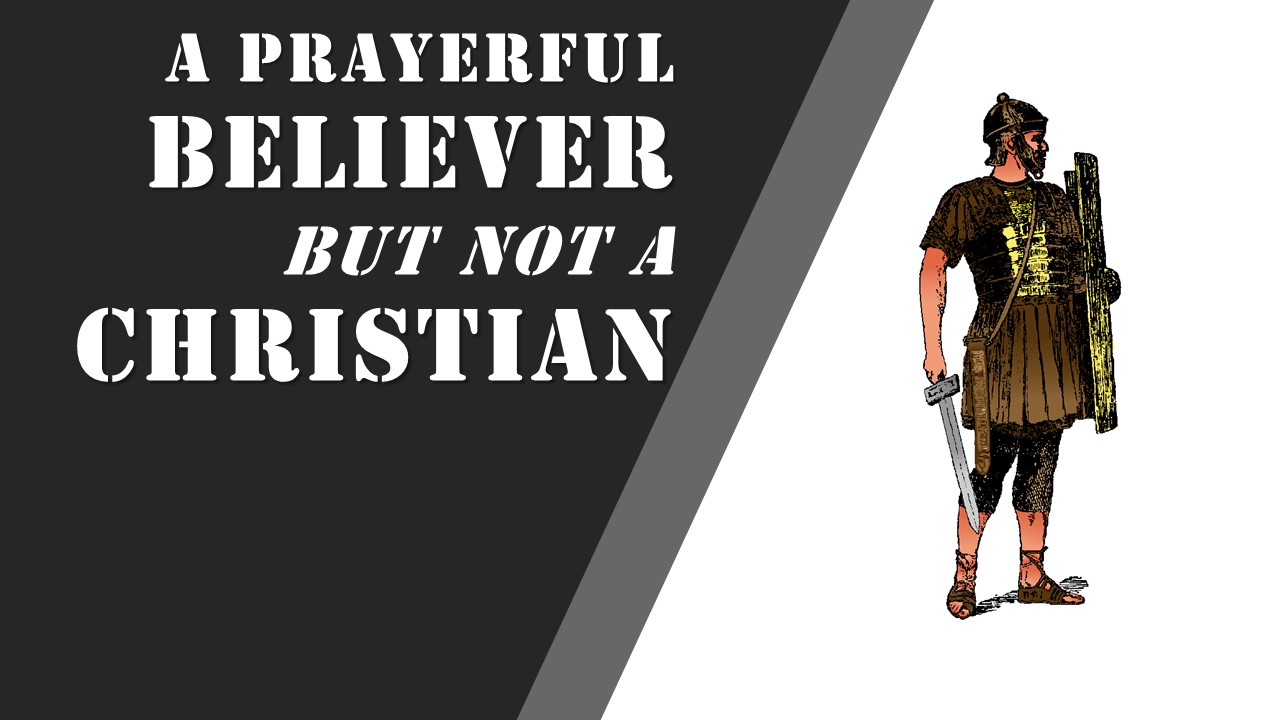
There was a certain man in Caesarea called Cornelius, a centurion of what was called the Italian Regiment, a devout man and one who feared God with all his household, who gave alms generously to the people and prayed to God always. (Acts 10:1-2)

A Prayerful Believer But Not A Christian

Religious people are easily identified. They are unlike the world in their demeanor, attitudes, and dispositions. There is a certain air about a religious person that shows the world devotion to a belief or a cause separating them from others. Sometimes it can be a type of clothing that distinguishes them or their manner of speech or deportment, suggesting a different kind of lifestyle. During the early days of the church, a Gentile named Cornelius was recognized as a religious man for many reasons. His life was one of pious devotion to the Lord God. He was unlike so many in the pagan world of idol worship, sensual pleasures, and self-importance. Cornelius stood in contrast to the world he served as a Roman military commander.

The household of Cornelius followed the ways of the Lord God with fear and reverence. His family honored God with respect and worship. As part of Roman society’s privileged, Cornelius and his family shared their blessings with others in many acts of benevolence. They were liberal in giving charity to those in need. The citizens of Caesarea knew of the kindness of the household of the Roman centurion who had done so much for them. Many of them also knew the Roman was a man of prayer. Cornelius was not a man of wrath and anger but a man of peace and prayer. He did not abuse his authority as a Roman military commander to neglect the Jewish population or any citizen of Caesarea. The people of the coastal town seventy miles from Jerusalem felt very secure with the Roman centurion Cornelius watching over them.

Cornelius was a devout, God-fearing man who gave generously to the poor and prayed regularly to God, but he was not a Christian. As good as his character and reputation were among the citizens of Caesarea and any respect he may have had among the early Christians for the type of religious man he was, in the eyes of God, he was lost and without hope. The story of Cornelius is the message of God’s grace and love. When the angel appeared to Cornelius, he did not suggest that Cornelius was saved. The angel did not tell the centurion what he needed to do to be saved but instructed him to send for a man. Following the instructions of the messenger of God, Cornelius sent two servants and a soldier to Joppa for the apostle Peter.

A few days following the angel’s visit, Peter and a company of six men arrived at the house of Cornelius. There was a gathering of family and friends to hear the words of Peter. As Peter began to speak, the Holy Spirit fell upon those gathered in Cornelius’s house as it had done on the twelve at Pentecost. Peter then baptized in water, for the remission of sins, those in the household of Cornelius.  Later, the apostle will tell the apostles and brethren in Jerusalem that when he arrived at Cornelius’s house, he came to tell those assembled words by which they could be saved.

It is difficult to imagine a devout man, fearing God, benevolent, and praying always as lost, but Cornelius and his household were not saved because they were religious. God did not send the angel to tell Cornelius to send for Peter because Cornelius was already a Christian. The angel did not give instructions to Cornelius on what to do to be saved. This required a man to teach another man because the man was lost and required the word of truth to be taught. The baptism of the Holy Spirit did not save Cornelius and his household. It was a sign that God had opened the doors of the gospel to the Gentiles. Only when Peter baptized Cornelius and his household in water did they become Christians.

There are many religious and devout people in the world today. This does not make them Christians and give them eternal hope. Obedience to the will of God is how a man finds redemption through the blood of Jesus Christ. Until the heart obeys the word of God and finds the blood of Jesus in the waters of baptism, there is no salvation. You can be a great person like Cornelius, but you will not be saved. An angel will not save you. Follow the pattern of Cornelius and obey the word of the Lord.

Posted in Uncategorized | Leave a comment

The Story Of Jesus

And there are also many other things that Jesus did, which if they were written one by one, I suppose that even the world itself could not contain the books that would be written. Amen. (John 21:25)

The Story Of Jesus Cannot Be Contained

Abraham Lincoln is one of the great historical characters that much has been written to define his place in history. As the 16th President of the United States, Lincoln came upon the pages of human history at a pivotal place as an American statesman. It has been suggested that more than 15,000 books have been written about Lincoln. His story is still debated and discussed during one of the most challenging moral and constitutional times in American history. The story of Abraham Lincoln has a lot of value to it, but his life is of little significance for most people of the world. As good a man as Lincoln tried to be, and while his leadership may have saved the young nation from total destruction, the story of the man from a log cabin in the frontier of Indiana cannot change the lives of every human being on earth.

Jesus Christ is the greatest personality in man’s history, and denying the impact of the man born in a small town outside of Jerusalem is futile. Throughout the annals of history, no one individual has changed the world as Jesus. His appearance on earth measures time. The story of Jesus has been retold, reprinted, and reproduced more than any story in the history of mankind. What is more remarkable about the life of Jesus is that only a small portion of His life is written down containing less than three years of a life spanning three decades. From this small fragment of life, the world changed and continues to change. The name of Jesus has molded the face of the destiny of humankind. Wars have been fought in His name, nations created based on His teachings, and faiths established on His words. There are no pictures of the man Jesus, few details to His physical character, and no remaining family genealogical identifications. And yet, this man changes the lives of men daily.

John, the apostle, knew Jesus more than most men. He became one of the closest companions of Jesus as the inner circle, including Peter and James. John’s gospel contains about twenty days in the life of Christ with a profound message of the divine nature of the carpenter’s son from Nazareth. Three other gospels are preserved for prosperity with the writings of Matthew, Mark, and Luke. At the conclusion of his story of Jesus Christ, John recognizes that if everything known about Jesus were written down, even the world itself could not contain the books written. This was not a piece of literary prose to impress the reader but the full realization that there was not enough ink or parchment to describe the life of Jesus in the short life of Jesus. If the sky were made of paper, and all the trees of the forest pens, and every man a scribe by trade, the world could not contain the story of Jesus Christ.

The story of Jesus was written to change the hearts of all men. There are no limitations to the story of Jesus. For two thousand years, His life has changed men of every language, every culture, and walk of life. There is no single man that can change the heart of the world like Jesus. His life story has been produced in more languages and remains the most prolific selling book in humanity’s history. Atheists like Voltaire, Madalyn Murray O’Hair, and Stephen Hawking tried to destroy the life of Jesus and failed miserably. Denying Jesus has never taken His story away. He will remain as the one life that fills the world. John affirms the reason the story of Jesus was written: “These are written that you may believe that Jesus is the Christ, the Son of God, and that believing you may have life in His name.”

Posted in Uncategorized | Leave a comment

The Mouth Of A Christian

But now you yourselves are to put off all these: anger, wrath, malice, blasphemy, filthy language out of your mouth. Do not lie to one another. (Colossians 3:8-9a)

The Mouth Of A Christian

Pulius Syrus said, “Speech is the mirror of the soul; as a man speaks, so he is.” Vance Havner wrote, “The Bible has a lot to say about our mouths, our lips, our tongues, for our speech betray us. What is down in the well will come up in the bucket.” The proverbs of holy writ decry the poison of the tongue and the evil it creates warning against unguarded words. Sailors are marked with a badge of distinction when someone comments on how a person “swears like a sailor.” Every person is recognized for the kind of person they are by the manner of language that comes out of their mouth. A good man is rarely accused of ill-tempered speech. Coarse and foul-mouthed individuals are remembered for their inability to control their language. A man’s reputation is largely established by what proceeds from the mouth, which is no more evident than the mouth of a Christian.

The child of God is a person who has been risen through the blood of Christ to show the world the wonderful grace of a loving Father. Their minds are not in the squalor of worldly language filled with anger, rage, slander, and filthy language. Accepting the mercy of forgiveness, a child of God works extremely hard to change their character from an unruly tongue to a speech seasoned with salt bringing grace to their hearers. A change takes place in a purposeful, forced redesigning of the soul to speak words of joy, love, peace, and forgiveness. As the mind forms eternal thoughts of God’s word, the tongue changes from being angry to kind, the spirit of rage and uncontrolled fury to calm patience and dirty language to words of Jesus Christ. The character of anger, wrath, malice, blasphemy, and filthy language is not a part of the Christian’s vocabulary. There is a determined effort to rid the soul of such foul speech.

Christians are examples, and that example must be how the grace of God has changed their lives. When the world sees little or no change in the Christian’s speech, there will be and cannot be any desire of the lost to desire salvation. It is impossible to walk with the world’s speech with a knee constantly bent in prayer and the word of God. The mind cannot hold the anger and malice of a wrathful heart and the love and grace of God. When the Lord created man, He made the man with only one avenue of character. He will either be a man of grace whose speech is full of kindness and love or be a man of the carnal world whose speech betrays his heart with filthy language. The two are not compatible.

Paul encouraged the saints to get rid of the kind of speech that will obstruct the Christian example. These are not matters that can be ignored. A Christian is not to be known as an angry man. If a man is known to fly off the handle at the drop of a hat, he will not be thought of as a man of a holy character. Having road rage and screaming at the other person does not shine the light of Christ but the devil’s darkness. Telling dirty jokes and allowing cursing as a part of a man’s speech will never bring a lost soul to Christ. Lying is an abomination before God and listed as one of the grievous sins men will go to hell for. The Holy Spirit is admonishing the children of God to be very conscious of their speech and the consequences of an unbridled tongue. These things should not be in a Christian’s life: anger, rage, malicious behavior, slander, dirty language, and lying. Get rid of it before it gets rid of your eternal home.

Posted in Uncategorized | Leave a comment