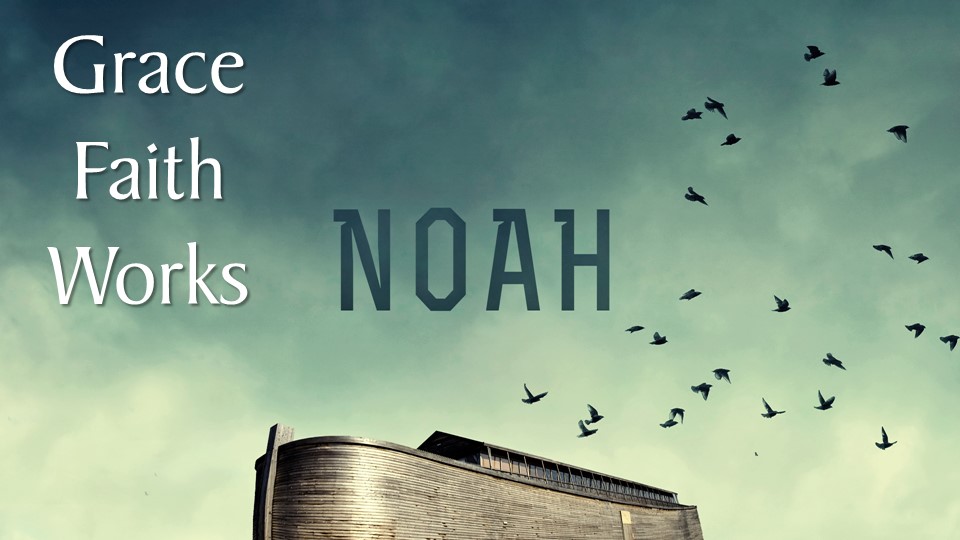
Noah: A Story Of Grace, Faith, And Works

By faith Noah, being divinely warned of things not yet seen, moved with godly fear, prepared an ark for the saving of his household, by which he condemned the world and became heir of the righteousness which is according to faith. (Hebrews 11:7)

Noah: A Story Of Grace, Faith, And Works

The world had become so wicked the Lord God decided to destroy man whom He created from the face of the earth. He would wipe all man and beast, creeping thing and birds of the air. The destruction would be total. Noah found grace in the eyes of the Lord and, moving with godly fear, prepared an ark for the saving of his household. When the flood had killed all men, beasts, creeping things and birds, Noah and his family came out of the ark along with all the animals preserved by the will of God. Jesus taught the story of the flood as a fact. Moses preserved the story in the holy writ as a powerful testimony to the grace of God, the faith of man and the necessity of salvation through works.

Noah was divinely warned of things not yet seen: grace. God looked upon the world He had created and it grieved His heart to see the wickedness that dominated the hearts of men. Everything that man thought of was evil continually. There was no redeeming value to the mass of humanity as it served the will of Satan. God’s wrath burned so intensely; destruction was all that could save the human race. As God looked upon the wickedness of man, He decided to bring a global flood that would kill everyone save Noah and his family. The grace of God expressed itself when the Lord spoke to Noah and told him what was coming and what he must do to be saved.

Apart from God telling Noah of the destruction and how to avoid certain death, Noah could not have known of the flood or the plans for the ark. Grace is the measure of God’s love to tell Noah of the flood and what must be done to avoid death. This was something apart from the works of Noah to know and understand. There was nothing Noah could boast about when he was saved. Did he know of the flood apart from the word of God? Would he have known to build an ark to save himself? Only through the revealed word of God could Noah have known and acted. Grace saved Noah but not grace alone.

Noah moved with godly fear: faith. The story God told Noah was the most incredible event that defied logic. How could a flood consume the whole earth more than twenty feet above the highest mountain? Nothing in what God told Noah made sense to the human mind. The greatest minds of the day could not believe such a myth. Noah did not doubt what he did not understand. He accepted the word of God as truth, believing that God had the desire and the power to kill every creature on the face of the earth. Armed with that knowledge, Noah moved with godly fear and acted in faith. People would ridicule him and mock him for believing such a story. He would face a world opposed to the idea of a wrathful God. Nothing moved Noah from his firm belief in the word of God. Faith caused him to act, but faith alone did not save Noah.

Noah prepared an ark for the saving of his household: works. Grace had told Noah of the impending destruction and what he must do to be saved. Faith moved him to accept without a doubt that God had the power to destroy all life and that building an ark would save his family. His works put him to build a barge of gopher wood with one door and one window. Noah made the ark 450 feet long, 75 feet wide, and 45 feet high because God said so. He did not make it 500 feet long and 50 feet wide. Whatever God told him to do, thus Noah did. His works built an ark. Grace told him to build an ark and his faith in the word of God told him to make the ark exactly like God prescribed.

Nothing about the flood made sense to the rational approach of human wisdom. Only eight people accepted the grace of God, lived by faith and acted in obedience to the word of God. When the flood came upon the world, all life perished because they rejected the grace, faith, and works of salvation. Noah was not saved by grace alone, faith alone, or works alone. The family of Noah was saved by water as that same water destroyed the disobedient. God’s love saved eight souls. It will do the same today.

The same message delivered to Noah is given to all the world through the grace of God. There will never be a global flood, but fire will destroy the world. Through the grace of God, we know this to be true. God did not leave men hopeless without a means to save themselves from the wrath of God. Two thousand years ago, Jesus built His church to save those who would believe in the grace of God. On the day of Pentecost, the Lord added those who were saved to the church. The church is the spiritual ark given to men to save them. Faith is necessary to accept the word of God of the coming judgment and to find salvation in the body of Christ. Like in the days of Noah, there is only one place to find salvation. Jesus died to purchase the church and all those found outside the one church of Christ will perish. Grace, faith and works will not save alone. Accepting the grace of God, moving with godly fear in faith and obedient works, will save a man from the wrath of God.

Water baptism will save a man and condemn the disobedient. Jesus said that when a person believes and is baptized, he will be saved. That same water will condemn those who refuse. Grace is in the waters of baptism as well as faith. No man is saved by works alone. Noah tells the story of the grace, faith, works, and necessity of baptism. Sadly, most will accept the false doctrines of grace alone or faith alone. The sinner’s prayer will condemn more souls to perdition than anything known to man. Noah became an heir of righteousness according to faith.

Posted in Uncategorized | Leave a comment

They Bound Jesus

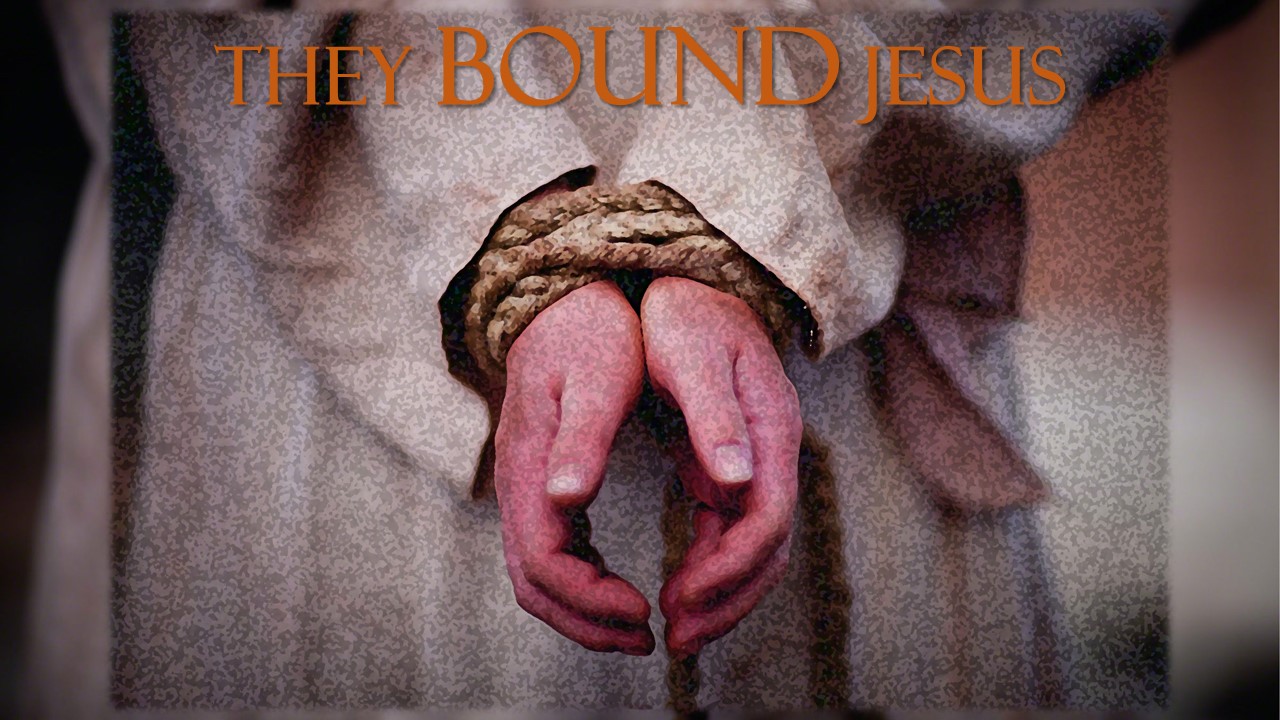
Immediately, in the morning, the chief priests held a consultation with the elders and scribes and the whole council; and they bound Jesus, led Him away, and delivered Him to Pilate. (Mark 15:1)

They Bound Jesus

Jesus of Nazareth was the Son of God. He healed every disease without fail, restored sight to the blind and speech to the mute and caused the deaf to hear. Jesus healed the sick without being present. The dead were raised by the power of God. All the spirits that possessed men fell at the feet of the man from Nazareth, submitting to His will. Jesus walked on water, calmed the violent storm, and turned water into a wedding feast delight. The disciples marveled as Jesus took two small fish and five barley loaves to feed more than five thousand hungry people with twelve baskets of bread left over. Jesus could curse a tree and it would die or bless a crippled man to rise from his bed of affliction to see him jump for joy. And yet they bound Jesus.

Early in the ministry of Jesus, the son of Joseph and Mary returned to the city of Nazareth to read in the synagogue. The people did not receive their native son and became so angry with Jesus, they thrust Him out of the city. Leading Him to the brow of the hill, they planned on throwing Jesus over a cliff to kill Him. He passed through them unnoticed and went His way. It was not His hour to die and the mob stood puzzled at what had happened to the man they planned on killing. After feeding the five thousand, the people desired to make Jesus their king. They were willing to force Him to be their king and seemed to be making plans to carry out their rebellion. Jesus departed to the mountain by Himself alone.

Early one morning, Jesus came into the Temple and began teaching the people. A woman caught in the act of adultery was brought to Him to accuse her before the Lord and test His teaching. The Pharisees were angry that Jesus was able to dismiss the charges and then accused Him of blasphemy when He claimed to be the Son of God. No one laid hands on Him, for His hour had not yet come. Shortly after that, when Jesus claimed to be before Abraham was and to be I AM, the people took up stones to throw at Him, but Jesus hid Himself and went out of the Temple, going through the midst of them. Later, the Jewish leaders would again try to seize Jesus, but He escaped from their hands.

When Judas brought the mob of Jewish leaders and soldiers to the garden of Gethsemane, they bound Jesus and took Him away. In the morning, the chief priests with the elders and scribes and the whole council again bound Jesus to deliver Him to Pilate. Jesus Christ, the Son of the Living God, allowed men to tie His hands and lead Him away. Seventy-two thousand angels were waiting for the call from the Lord God to rescue His Son, but no call came. Jesus had the power to dissolve the restraints that bound Him, but no power would be seen. It was within the power of Jesus to disappear as He had on other occasions, but the Son of God stood before His accusers bound in heart, not bound in hand. The binding that secured Jesus were not the chains or ropes but the will of His Father. He could easily have destroyed His accusers. The Jewish leaders were intent on killing Him and they succeeded. When the Roman soldiers scourged Jesus, He permitted it. Bearing the cross was the choice of Jesus. Arriving at Golgotha and being thrown to the ground and nailed to a cross was an expression of the love of Jesus.

The nails that pierced His hands and feet did not hold Him to the cross. Jesus was bound so that sin would no longer bind the hearts of men. He allowed the hatred of men to kill Him so that His disciples could live in a world of hatred free of malice. Jesus permitted the binding of His body to carry out the will of His Father when it was the time to save humanity. Thank God Jesus was bound and did not resist. He submitted Himself to show His love. How much greater love can I show than to bind my heart to the will of the Son of God to be free.

Posted in Uncategorized | 1 Comment

The Joy Realized

So it was that the beggar died and was carried by the angels to Abraham’s bosom. The rich man also died and was buried. And being in torments in Hades, he lifted up his eyes and saw Abraham afar off and Lazarus in his bosom. “Then he cried and said, ‘Father Abraham, have mercy on me, and send Lazarus that he may dip the tip of his finger in water and cool my tongue; for I am tormented in this flame.’ But Abraham said, ‘Son, remember that in your lifetime you received your good things, and likewise Lazarus evil things; but now he is comforted and you are tormented. (Luke 16:22-25)

The Joy Realized

Life can be ruthless. It is an unfair mistress to the human story as plagues, disease, natural disasters, evil men, and the brevity of life claim thousands of lives every day. Death is never welcomed. Families are torn apart. Relationships severed. The totality of death is almost too much to bear. Sadly, death brings no respite to suffering as most souls die outside of Christ. The joy of the few is the realization that death takes away sorrow and suffering and ushers in eternal joy.

Lazarus was a man who suffered in life the indignities of disease and abuse by his fellow man. He was a beggar, the lowest part of life left to fend for himself. His home was to be delivered to the gate of a wealthy man seeking but the crumbs that fell from the table. Misery and despair were the only companions of Lazarus. His body was full of sores. There was no relief from his daily condition. The only sympathy he received were the dogs who would lick his sores. What a sad and despicable state he found himself in. Every day was painful. He had nothing to look forward to but sadness. His body reeked of pain and the stench of disease made him deplorable in the eyes of others.

Beggars were nobodies, cast out as the refuse of society. The Law of Moses forbade the abuse of the poor, yet the rich man paid no heed to his fellow Hebrew. Everything about the rich man’s life was joyful and happy, and all that made up the life of Lazarus was unhappiness and misery. There could be no greater contrast of life than the rich man and Lazarus. That changed one day when they both died. There can be little doubt the death of the rich man was met with great fanfare and long orations of honor. He was buried in a rich man’s tombs and lamented by his five brothers and a host of family and friends. On the same day the rich man died, someone noticed Lazarus had died. He was given an inglorious burial in a common grave with no one mourning his death. He was quickly forgotten and life went on. The greatest contrast in the life of the rich man and Lazarus came at the moment of death. When the rich man died, he felt the horrors of darkness and torment, crying out in eternal misery for the burning flame he now felt. Lazarus died and was carried by angels to the bosom of Abraham.

Everything about life for Lazarus was pain and suffering, but when he died, the gentle hands of angels embraced the eternal spirit of Lazarus and softly carried him to a place of rest and comfort. All the pain Lazarus endured immediately left him when he died. He realized the joy of a body without pain. The tears that filled his life were gone. All the sorrow that daily met him was taken away to a place of joy beyond description. His mind was clear; his eyes fixed on the glory of God and Lazarus was a man experiencing an eternal feeling of happiness. All the former things of his life had passed away. The joy realized in death was beyond his imagination.

Death will bring either joy and happiness or horror and pain. The rich man enjoyed the brief span of life with all the sumptuous living of carnal desire, but then he faced an eternity of darkness and a lake of fire. Lazarus spent the vapor of life enduring all the sorrows of life with great indignity, but death was a joy. He is comforted. You face death and there will be two choices: eternal life or eternal suffering. You can deny these realities, but it will not change what happens in death. If you are not in covenant with the Lord Jesus Christ, you will be suffering incredible pain without end. Life can be hard and filled with pain, but joy awaits the faithful who obey the Lord Jesus Christ. No more death, nor sorrow, nor crying, nor pain and all the things of this life will be gone. You will realize the joy that is without description. Eternal life will be so incredible – how can we explain it? Lord, come quickly.

Posted in Uncategorized | Leave a comment

The Reality Ignored

So it was that the beggar died and was carried by the angels to Abraham’s bosom. The rich man also died and was buried. And being in torments in Hades, he lifted up his eyes and saw Abraham afar off and Lazarus in his bosom. “Then he cried and said, ‘Father Abraham, have mercy on me, and send Lazarus that he may dip the tip of his finger in water and cool my tongue; for I am tormented in this flame.’ But Abraham said, ‘Son, remember that in your lifetime you received your good things, and likewise Lazarus evil things; but now he is comforted and you are tormented. (Luke 16:22-25)

The Reality Ignored

Death is always a difficult measure to endure. It comes without warning and is no respecter of persons. Loved ones die, friends pass away, neighbors grieve at the loss of family, society mourns the popular, famous, and notable people who die. It is a hard pill to swallow. Death comes clouded with misery, heartache, sadness and loss. The empty places are at the table. Pictures reflect happier days. Families and friends gather to memorialize those who have died. Smiling faces of days gone by flow by in endless pictures of family surrounding the deceased. Memorials are dedicated to the memory of a vibrant life. Stories regale the happiness of a mom, dad, sibling, friend, coworker, hero, and companion.

The stories are legion. A hero lost in a war. They gave their life for others. A devoted mother or father dies. Tragedy strikes unannounced and death takes the young, the popular, the famous and the unknown. Magazines fill the pages with life accomplishments. Museums establish rooms of remembrance in halls of honor. Silent voices through the ages tell a million stories of those who have died. Everyone remembers the one who died in fond memories and happy times. Videos tell the story with laughter, frolic, and fun. Life is shown to be a special part of the memory of the lost one. Death has taken them away. Memories are all that are left. In time, near memories fade into the fog of yesterday and life goes on.

What is lost in the sad reality of death is the other part of the story. This is the part of the story no one wants to think about or to talk about. Jesus tells the story of two men and their stories could not have been more different. One man lives life on the sumptuous platter of prosperity while the other is oppressed by poverty, disease and oppression. They both die. A stark reality is exposed in the teaching of Jesus. The rich man was a famous individual known by his peers as a successful businessman. His friends and family remembered him with great speeches, lavish memorials, and probably a beautiful burial place.

As the rich man’s five brothers gather to remember their deceased brother, they are unaware of what he is experiencing. They think of their brother with a smile on his face. The eternal reality is the rich man is screaming in terror. There is no relief from the pain he feels. Every part of his being is filled with excruciating horror and pain. His mind is exploding with the intensity of the suffering. He desires water from the tip of the finger to cool his tongue. The man is tormented in his agony. This is nothing anyone can endure but endure he must – and without end. The pictures shared by his brothers of a smiling and happy man are not the picture of the man now. He is in an eternal flame with no quenching, no release, and no mercy.

Jesus described the suffering of the lost in graphic terms. The unrighteous who die will experience an everlasting fire. It is possible to imagine the torture if one sees volcanic lava representing the lake of fire – yet death does not end life in the molten flames of eternal torment. The rich man felt it all and knew it all. To be lost is to face torment. It is a place of fire and brimstone and there is no rest and no relief. Torment is likened to where the worm does not die. The rich man was in the outer darkness and was weeping and wailing and gnashing his teeth because he was in so much torment. Blackness is all the rich man could see in a world void of God.

Here is the greatest tragedy that everyone must consider—most people who die face this kind of torment. Good people, nice people, religious folk, famous people, young and old, rich and poor, and people we know – are lost because they have not obeyed the will of God. Many will cry out to the Lord on the last day, but He will tell them He does not know them. They are not playing the harp in heaven, hanging out with their buddies, or filling the streets of glory because they did not die in the Lord. They are not happy, they are not joyful, and they are not delighted about where they are. Those who are lost (Jesus said most would follow the way of destruction) are not smiling anymore. Death changed all that. Only the few who are saved will enjoy happiness in death.

Here is the truth you must face: you will die. People will remember you. Happy memories will be shared. If you are not a child of God, you will be screaming in terror when you die – and your screams will never end. The darkness will never go away. Your torment will never end. You will remember your life before. It will not matter. The darkness you feel will be a terror as you have never known. That is what it means to be lost. Truth!

Posted in Uncategorized | Leave a comment

Thankful For Jesus

John, to the seven churches which are in Asia: Grace to you and peace from Him who is and who was and who is to come, and from the seven Spirits who are before His throne, and from Jesus Christ, the faithful witness, the firstborn from the dead, and the ruler over the kings of the earth. To Him who loved us and washed us from our sins in His own blood, and has made us kings and priests to His God and Father, to Him be glory and dominion forever and ever. Amen. (Revelation 1:4-6)

Thankful For Jesus

There is much to be thankful for what Jesus Christ means to the saved. Redemption is the grace of God allowing sinful man to be cleansed of sin to stand justified before a just and merciful Father. Nothing man has done deserves such love, yet through the blood of Jesus Christ, the joy of eternal life is granted. The story of Jesus is summed up in the words of John in the Revelation. Jesus Christ is like the prophets of old who faithfully witnessed the word of God to the rebellious people of Israel. When Jesus began His ministry, He testified to the message of His Father. Jesus came into the world to bear witness to everything planned by the Father to redeem sinful man. He not only taught the word of God, but He bore witness in His life of the word of God. Jesus was a faithful witness not only in word but also in deed.

Everything about the life of Jesus bore witness to the will of God. Jesus was falsely accused, charged by His enemies of blasphemy, and condemned to die by the envy of the people He was dying to save. His witness was faithful to the will of His Father to accomplish the scheme of redemption. Through His witness, He became truth. In His death, Jesus became the firstborn from the dead. Many had risen from the dead. After Jesus rose from the dead, many bodies of the saints arose from their graves and went into the city of Jerusalem. During the early ministry of the church, miracles and signs included raising people from the dead. Jesus is the firstborn from the dead because He came out of the grave never to die again. The daughter of Jairus, the widow’s son from Nain, Lazarus and Dorcas rose from the dead but then died again. Jesus rose on the third day, conquering death. His resurrection destroyed the shackles of sin and the penalty of death. Jesus is the firstborn from the dead.

Through the power of God Jesus was raised to die no more. He now sits by the right hand of the true and living God, reigning as King over the kings of the earth. Jesus reminded Pilate that all authority came from the Father. The rule of men is nothing before the power of the One who raises nations and destroys nations. All the nations are dust on the scale of God’s wrath. No king reigns that is not subject to the Father. Jesus is King of Kings and Lord of Lords above all those who reign on earth. Pilate, Herod and Caesar ruled the world when Jesus was put to death, but they stand before Jesus as the ruler over all kings.

There is so much to be thankful for when the Christian sees Jesus as the faithful witness, firstborn from the dead and ruler over the kings of the earth. The witness or word of Christ is eternal. His resurrection removes the fear of death. Life is but a vapor to time that removes the fear of what men will do to the faithful of God. The consolation of Christ is knowing there is nothing man can do that will bring fear to the hearts of the faithful. Through the death of Jesus Christ, the saint is a king and priest to His God and Father. There is one word that sings thanksgiving in Christ: VICTORY! He is coming in the clouds. Even so, come, Lord Jesus.

Posted in Uncategorized | Leave a comment

The Will Of God Cannot Be Changed

So Absalom and all the men of Israel said, “The advice of Hushai the Archite is better than the advice of Ahithophel.” For the Lord had purposed to defeat the good advice of Ahithophel, to the intent that the Lord might bring disaster on Absalom. (2 Samuel 17:14)

The Will Of God Cannot Be Changed

After the tragedy of Bathsheba, David suffered rebellion in his own household. God had told David the sword would not depart from his house. David’s son Amnon raped his half-sister, Tamar. Absalom, brother of Tamar, arranged for the murder of Amnon and then fled to Geshur, where he remained for three years. David would forgive Absalom, but then Absalom rose against his father to take his crown. As the people began to swarm around Absalom, David feared for his life and fled Jerusalem. The people’s hearts had turned to Absalom and his army continually increased in number.

One of the counselors of David was the grandfather of Bathsheba. Ahithophel was an influential man who had political aspirations that readily accepted the invitation of Absalom to be his counselor. After David flees Jerusalem, Absalom seeks the counsel of Ahithophel of what they should do. Ahithophel is very certain disgracing the house of David would turn the hearts of the people toward the son. He tells Absalom to take the concubines of David and have his way with them in the presence of all Israel. A tent is pitched on the top of the house and Absalom goes into David’s concubines and rapes them in the sight of all Israel. Further, Ahithophel tells Absalom to give him 12,000 men to pursue David and he would kill his father and all the people would turn to Absalom. The advice was well received but not acted on.

Absalom calls for another counselor named Hushai to tell them what he advises. Hushai disagrees with the counsel of Ahithophel, telling Absalom that it would be better to gather the whole army of Israel together like the sand by the sea and go after David. That way, the army would completely annihilate the forces of David and Absalom would be king. Absalom and the men of Israel agreed the plan of Hushai was better than that of Ahithophel. What Absalom did not know was that Hushai was protecting David and would warn him before Absalom could carry out his plan. When Ahithophel saw that his counsel was rejected, he went home, put his house in order, and hanged himself. David would escape the army of Absalom. Sadly, Absalom would be killed by Joab (against the orders of David), butchered by ten young men who were with Joab.

In the divine scheme of things, the counsel of Ahithophel was not permitted to happen. The advice of Ahithophel was a good plan from human wisdom, but God would not and did not allow Ahithophel’s plan to go forth. David was the anointed one of God. When David found Saul in a cave, he could have killed him, but the servant of the Lord would not kill the anointed of God. David’s reign was protected by the will of God and nothing would change that. Throughout the fall of man, God’s will has been accomplished without human interference.

The world became so corrupt it needed to be destroyed, but eight souls were saved. Abraham and Sarah did not fully understand the will of the Lord when they decided to give Hagar to Abraham to bear a son and the Lord wove the story of Ishmael into the fabric of Jewish history. That was not his plan because the son of promise would be Isaac. The nations that came up against Israel brought great destruction and ruin and it was all done by the hand of God. Cyrus, king of Persia, sent the Hebrew remnant back to Jerusalem by the will of the Lord.

Jesus was born to a young Jewish couple in the city of Bethlehem according to the word of God. Jesus suffered many things from the chief priests, scribes and rulers in Jerusalem and was killed on a cross because nothing was going to change the will of God. The Bible became the complete canon of God’s truth revealed to every nation and will remain until the coming of the Lord – why? That is the will of God and nothing man can do will change that. Gamaliel, a teacher of the law, would later say about the apostles who stood trial for preaching Christ, “If this plan or this work is of men, it will come to nothing; but if it is of God, you cannot overthrow it – lest you even be found to fight against God.” Gamaliel’s advice rings true today.

Posted in Uncategorized | Leave a comment

The Fulness Of Time

But when the fullness of the time had come, God sent forth His Son, born of a woman, born under the law, to redeem those who were under the law, that we might receive the adoption as sons. (Galatians 4:4-5)

The Fulness Of Time

God had promised in the Garden of Eden that a Seed would come that would bruise the head of Satan in response to the fall of man. The story of the Seed promise unfolds throughout history, from the saving of the eight in the ark to the promise to Abram that through him, all nations would be blessed. There were times the fragile events of human history seemed at odds against the Seed coming, but the time came that God’s promise came true. It was the most pivotal moment in time. Nothing compares to the series of events that began when the angel of God appeared to a young couple in the city of Nazareth that would literally and forever change the world. The coming of Jesus was not a coincidence or an unplanned event. What happened in that little town of Galilee is what the apostle refers to as the “fulness of time.”

In the scheme of redemption, there was a singular appropriate time the work of salvation must begin. The set time had fully come of the revelation of God’s will through the incarnation of Jesus Christ. A specific particle of historical blending of events was the right time when Jesus must come to earth. Everything was in place as designed and purposed by God. The factors were all aligned in providential care by the hand of God. As the angel spoke to Joseph and Mary, the scroll of divine wisdom began to open in perfect succession. It would reach a climax nearly thirty-three years later when Jesus rose from the dead on the first day of the week.

The fulness of time is multi-layered. It was not just a single event but a divine combination of timing and preparation that would usher in the coming of God’s Son and the propagation of the kingdom of God throughout the world within forty years of its beginning. History literally changed when the fulness of time came. Jesus Christ moved the world toward the Father. His life and teaching forever changed the world. Jesus came at the exact time prophesied by men like David (1,000 BC) and Isaiah and Zechariah, who promised the coming Messiah hundreds of years before His time. There are at least sixteen prophecies concerning Jesus fulfilled in one 24-hour period surrounding the death of Jesus of Nazareth. No event in history claims such power.

Israel had been in bondage for six hundred years. First, the Babylonians and then the nations of Persia, Greece and Rome continued to oppress the people of God as a conquered people. Daniel prophesied in the days of Rome, a new kingdom would be established. The Roman Empire was the greatest empire of history, spanning the Mediterranean Sea and beyond. Nations filled with ranks of the Roman empire, including the Jews, who were spread throughout the empire. Through the writings of the Old Testament, preserved in the Hebrew and Greek languages, the message of the coming Messiah resonated in the hearts of the Hebrews. They believed in one God, worshiped in synagogues with the reading of the law and longed for the coming Messiah.

There was a unified language throughout the Roman Empire. Widespread dissemination of the Greek culture and language helped the gospel of Christ spread throughout the world. Hebrew, Greek and Latin were common. Alexander the Great had spread the Greek language throughout the world and it became the universal language. Latin was the language of the Romans and Hebrew was the language of the Jews. All men could know the story of Jesus Christ, whether Jew or Gentile. The gospels were written to show the Hebrews that Jesus was the Seed of Abraham (Matthew’s gospel) and to proclaim the power of Christ to the Gentile or Roman mind (Mark’s gospel).

When Jesus was born in Bethlehem, it was a time of peace (Pax Romana). After His death, the gospel spread quickly throughout the world as men like Paul traveled from city to city preaching the gospel. The Roman Empire established consistent authority throughout the land with a universal system of law and order. Roads and travel were a marvel of Roman ingenuity. It was not difficult to travel from one city to another as commerce spurred the growth of regions, allowing the gospel’s teachings to spring up in every town. A standard coinage helped the early disciples travel from one city to another. Everything was in place for the kingdom of God to be found in the uttermost parts of the earth. The fullness of time was proper and Jesus came to save the world from the wrath of God.

The fullness of time is a marvel of the providential power of God, who determined to send His Son into the world at an exact time with an exacting purpose. There is no other time in history that would have fit the model of God’s plan than the birth of Jesus two thousand years ago. As advanced as the world is today, it is not the right time. The fullness of time is the declaration that God rules in the affairs of men directing events to His glory and for His purpose. Thank God for the fullness of time that filled the world with eternity.

Posted in Uncategorized | Leave a comment

What Do People See In Your Life?

Now it came to pass, as Peter went through all parts of the country, that he also came down to the saints who dwelt in Lydda. There he found a certain man named Aeneas, who had been bedridden eight years and was paralyzed. And Peter said to him, “Aeneas, Jesus the Christ heals you. Arise and make your bed.” Then he arose immediately. So all who dwelt at Lydda and Sharon saw him and turned to the Lord. (Acts 9:32-35)

What Do People See In Your Life?

The early church prospered under the hand of persecution. Saul of Tarsus had persecuted the church severely but, through the grace of God, became a devoted disciple of Christ. The saints who were scattered went everywhere preaching the word. Samaria heard the gospel from men like Philip and Peter. Philip taught a man from Ethiopia the gospel and the word spread in that part of the word. The churches throughout Judea, Galilee, and Samaria had peace and the family of God was edified. Many were turning to the gospel of Christ. Peter came to the city of Lydda, about nine miles east of Joppa, on the road from the seaport to Jerusalem. A man named Aeneas had been bedridden for eight years and was paralyzed. Through the grace and power of God, Aeneas was healed. He took up his bed immediately and walked. The miracle astonished the people of Lydda and those who lived in the hill country of Sharon and they turned to the Lord.

An untold number of people turned to the Lord because they saw Aeneas walking around after his healing. Peter fulfilled the promise of Jesus, who told the eleven to go into all the world preaching the gospel and confirming the word by signs, wonders, and miracles. Souls were saved through the life of one man. The healing of Aeneas was a miracle. There were many miracles done in the early days of the church and while there were many converts, there were just as many who did not believe. Something struck the people of Lydda to turn to the Lord because of what they saw in the life of Aeneas. Whatever it was, it convinced them to change their lives.

Miracles have ceased and there are no men like Peter that will raise the infirmed from beds of affliction. The greatest miracle was the resurrection of Jesus from the dead and that miracle can be replicated today when men hear the gospel of Christ and obey its saving message. Paul taught the necessity of baptism as the death, burial, and resurrection of Christ. Aeneas suffered the paralyzing disease of the body. All men are victims of the paralyzing illness of sin and cannot heal themselves. Salvation comes through Jesus Christ and those healed walk in righteousness. The lesson of Aeneas is the impact of a converted life on others. Many turned to the Lord when they saw Aeneas. His life moved them to obey the gospel of Christ. That is the message of the gospel for the modern man.

The power of a godly life can change the hearts of those seeking salvation. Many turned to the Lord when they saw what happened to Aeneas. The challenging question is whether anyone will see Christ living in my life? The light of God must shine in the lives of His children, letting others see the glory of God. There is more to bringing people to Christ than just an example of a godly life, but that is the most important beginning. When the world sees the life of a risen heart living in a changed life, the gospel is more palatable and desirable. Aeneas was an influence for good in his life and every Christian must live in such a way that others see Christ living in them. The risen life in Christ can change the world. God raised Aeneas from a bed of affliction and the city of Lydda took notice. If God has raised you from the affliction of sin, let the world see your life changed. It may be the difference in the salvation of your neighbor and friend.

Posted in Uncategorized | Leave a comment

The God Of Hope

Now may the God of hope fill you with all joy and peace in believing, that you may abound in hope by the power of the Holy Spirit. (Romans 15:13)

The God Of Hope

One of the basic needs of the human spirit is hope. The comfort of hope is to cherish a desire with anticipation and expectation of obtainment. There is a confidence and trust in a thing promised. The feeling of hopelessness is to despair with no expectation of good or success. A feeling of despondency overwhelms the soul in desperation. There is nothing to live for, desire, or expect with no hope. When Adam and Eve sinned, the first emotion they shared was hopelessness as they faced the presence of God. They hid among the trees of the garden, hearing the sound of the Lord God walking in the garden. There was fear in their hearts. They knew they had disobeyed the command of God and understood the reality of consequence. At the moment, there was no hope.

God punished Adam and Eve, but He did not destroy them. His grace opened the door for salvation through the Seed promise. Throughout the history of man, hope would only be found in the mercy of a loving Father. Noah and his family realized divine hope when God showed them a way to save themselves. The ark was a covenant of promise resting on the hope of salvation. David and Bathsheba faced the anger of God for their actions but found grace in His eyes and lived with hope. The nation of Israel lived in the hope of God’s mercy as the prophets warned them against turning away from Him. A remnant was restored and the Seed promise secured. Jesus opened His arms to the world dying on the cross to give every person the hope of eternal life. His Father is the God of hope and peace to all who will come to His Son in obedience.

Hope is the reality of the promises of God. Men make promises and often break them. When God makes a promise, His word is eternal. God is the Father of hope through the evidence of His word that has never failed. Jesus died for every man regardless of nationality, race, gender, or condition. All men can come to Christ and, through obedient faith, receive the remission of sins. Hope comes from the knowledge of God’s cleansing power. There is nothing man has done that God will not forgive if the heart is repentant and willing to obey His word. That is the measure of hope from a God full of love. The hope found in God brings peace and joy in believing. There is only one source of true hope and that comes from the bosom of the Father.

Reading the word of God and learning of the hope found in Christ, the troubled heart will discover the real meaning of life. So many people live hopeless lives, aimlessly wandering through life with no peace and fearful of death. God brings hope to the troubled soul. He is the source of lasting peace. Through the power of the Holy Spirit granted in the waters of baptism, the soul longs for and receives the peace that passes understanding. The reality of God’s peace is that it is beyond the comprehension of men to understand; yet it is more powerful than anything a man can know.

Paul’s prayer is a powerful message of hope. He asks for the God of hope to fill the hearts of the Roman saints with all the joy and peace that comes from knowing and believing how much God loves them. Hope is something that must abound in the life of the child of God. There are no reasons to doubt God or to distrust His word. Everything God promises comes true. Hope, joy, and peace come from the God of hope who promises eternal life. There is no fear of the trials of life and the reality of death. Hope takes the eye of faith and places it in the bosom of God with great security. Hope in God and you will never faint. Trust in the Lord and you will never grow weary. God is the Lord of hope.

Posted in Uncategorized | Leave a comment

Preaching Jesus Is Preaching Baptism

Then Philip opened his mouth, and beginning at this Scripture, preached Jesus to him. Now as they went down the road, they came to some water. And the eunuch said, “See, here is water. What hinders me from being baptized?” (Acts 8:35-36)

Preaching Jesus Is Preaching Baptism

The providence of God to spread the gospel throughout the whole world is found in the stories that fill the Acts of the Apostles. Luke is the preeminent historian who paints the infant church’s picture growing from three thousand souls to multitudes throughout the Roman Empire. The Holy Spirit was instrumental in facilitating the preaching of the gospel through inspiration and instruction. Philip is directed by the Spirit to go toward the south along the road which goes down from Jerusalem to Gaza and he would find a man to share the gospel with. A man from Ethiopia had been to Jerusalem to worship and was returning to his native land. A man of political influence and a notable leader of Ethiopia, the eunuch obtained a copy of the book of Isaiah and was reading the scroll out loud. As Philip approached the Ethiopian, he asked if the man understood what he was reading. The eunuch asked Philip to join him and explain a passage from the prophet Isaiah.

Philip began at the passage where the Ethiopian was reading, and he preached Jesus to him. There were no copies of the New Testament as the canon was being formulated to be assembled later. Philip began at the passage of Isaiah 53 and took the Ethiopian through the prophet and showed him the story of Jesus of Christ. Luke does not detail any of the words used by Philip, but whatever he told the eunuch, he preached Jesus Christ. After some time, it was not Philip who posed the question, but the Ethiopian who asked Philip a very important question. Philip and the eunuch had traveled together in the chariot, talking about Jesus Christ and examining the scriptures when the Ethiopian saw a body of water. It is necessary to point out the question is being asked by the student, not the teacher. The eunuch shows Philip the body of water and asks the evangelist why he could not be baptized. Philip tells him that if he believes Jesus Christ is the Son of God, there is no reason the eunuch cannot be baptized. The Ethiopian commands the chariot to stop and he and Philip go down into the water, where Philip baptized the eunuch in the name of Jesus Christ.

Luke does not tell what Philip said when he began at Isaiah 53 but that he preached Jesus. The Ethiopian is the one who responded with the question about baptism. It is necessary to conclude that whatever Philip was preaching about Jesus involved at some point the question of baptism and the need for salvation. Philip did not tell the eunuch to accept Christ as his personal Savior. Preaching would include the subject of grace and mercy, but the Ethiopian did not believe in salvation by grace alone. There is a straight line of divine connection between preaching Jesus and baptism. Reading the book of Isaiah, there is no doubt Philip showed the necessity of faith, grace, and love. Putting the book of Isaiah in context shows the powerful message of God’s forgiveness to sinful man. At some point in preaching Jesus, Philip had the Ethiopian understand the necessity, the requirement, and the obligation to be baptized. There was no doubt in the mind of the eunuch.

Many (if not most) in the religious community deny baptism is necessary for salvation. Some accept it as an outward sign of inward grace, but salvation is not dependent on immersion in Christ. If modern-day preachers were in the chariot of the Ethiopian, they could not preach Jesus because they deny the need for immersion. It is uncertain what conclusion the eunuch would have come to after hearing the “faith only,” “salvation by grace alone,” dogmas of modern-day religion but it would not have been, “See, here is water. What hinders me from being baptized?” The Ethiopian would not have gone on his way rejoicing because he would have gone home lost in his sin and facing the wrath of God.

Baptism (immersion) is necessary for salvation and the Ethiopian eunuch understood that after examining the prophet Isaiah. Maybe it would help those who deny the importance of immersion begin their studies with Isaiah and learn about the true Christ. Thousands of souls are being led to believe they are Christians based on faith only and the utterance of a ‘sinners prayer’ when the sad reality is they have never put on Christ like the Ethiopian. The Bible teaches that baptism saves. Every example of conversion in the book of Acts emphasizes the necessity of baptism. The New Testament writers affirm the pattern of salvation through baptism. There can be no salvation and no joy if a man rejects the teaching of baptism. It is impossible to preach Jesus and not teach baptism. To deny baptism is to deny Jesus Christ.

The Ethiopian eunuch did not ask about baptism as a convenient thing to do and something he thought would be good for others to see him do. He believed with all his heart that he could not be saved without immersion. He went down into the water and Philip immersed him in the water for the remission of his sins. Like Saul of Tarsus, the Ethiopian had his sins washed away in the water of baptism. He believed Jesus and obeyed the word of Jesus. Preaching Jesus is preaching baptism. Have you been baptized for the remission of your sins?

Posted in Uncategorized | 1 Comment