Let There Be Light

In the beginning God created the heavens and the earth. The earth was without form and void; and darkness was on the face of the deep. And the Spirit of God was hovering over the face of the waters. Then God said, “Let there be light”; and there was light. And God saw the light, that it was good; and God divided the light from the darkness. God called the light Day, and the darkness He called Night. So the evening and the morning were the first day. (Genesis 1:1-5)

Let There Be Light

Moses must have marveled at the revelation of God about the beginning of time. The first book of Moses was called Genesis as the book of all beginnings. Everything in life and all that pertains to life begins in the book. Ironically, the end of all things is alluded to in the book of beginnings in the flood story. As Moses began to write the Genesis, his mind would have filled with wonder at the evolution of divine creation in such a perfect, declarative manner. The world was created in exact detail with a precision that could only come from a divinely creative hand. There was an order required for life to sustain itself as one day built upon another. Plantlife could not be created before light. The Sun, Moon, and stars were created after grass and trees. Adam and Eve were created last as all things were prepared for them to live. Creation was a symphony of perfection.

The beginning was a very dark and scary place. There was no form to what is called earth. A void hung over the expanse, and darkness covered the face of the deep. Water existed before light. There was no unity or life or light. The division of heavens must wait until the second day. Separation of dry land and the waters would be accomplished on day three. Everything else in creation would wait. There was darkness, and that must be addressed first. Then God spoke, and there was light. That is all that was done on day one. Light. God spoke. Light came out of His mouth. There was light. It was good. Now the darkness was divided with light. God called the light Day and the darkness He called Night. The oldest names in creation are Day and Night. Amazing. God spoke, and light came into the world.

Light is the first particle of creation. Without light, nothing would exist. Light was created three days before the Sun, Moon, and stars. Life on earth is reliant on the Sun, but light filled the earth before the Sun was created. During the first three days of creation, there was nothing in the heavens to look upon. For three days, light filled the earth as the firmament was divided, and dry land and seas were formed. It must have been an incredible thing to stand on the shores of dry land and see no Sun or Moon, yet the earth was filled with grass and trees. But there was light. On the first day, God spoke, and there was light.

The first day of creation was necessary for life to exist. Nothing could have been done in the other five days if light did not exist first. Light does not come from the Sun, but the Sun is a producer of light reflected on the Moon. All things that exist begin with light, and God’s power to allow life to continue is found in light. The world without light is a dead world. Man was not created to be a nocturnal creature but a creation dependent on light. Where light is, man thrives. When a man lives in darkness, he dies.

In the beginning, God spoke, and there was light. Many generations after Adam and Eve, God spoke again, and the world’s true Light came to earth. Jesus Christ was born in Bethlehem, and while the world did not see the Light that was born that night, eternal life exploded on the earth as it did in the beginning. The world was filled with darkness, and there was a void that filled the hearts of men. Peace could not come from those who sought to be a law to themselves, and peace could not come from those who sought to be keepers of the Law. Jesus came into the world to be the Prince of Peace and the author of eternal light. He is the Light of the world. He was created as the firstborn of light because, like the light of creation, He must exist first for life to continue. All life is found in Jesus Christ, and without Him, there is no life. No light means no life.

Light was created as the foundational element of life. Jesus came into the world of darkness to be the Light that would give all men the hope of eternal life. There is no salvation outside of Jesus because He is the Light. Life is in Jesus because He is the only life. No man can come to the Father unless they come to the Light. Darkness prevails in the hearts of all who refuse to submit to the will of Jesus Christ. The tragedy of rejecting the Light now is the reality that eternal darkness awaits all who reject Jesus. Light or darkness. The choice is yours.

Posted in Uncategorized | Leave a comment

Troublemakers Take Heed

If you have been foolish in exalting yourself, or if you have devised evil, put your hand on your mouth. For as the churning of milk produces butter, and wringing the nose produces blood, so the forcing of wrath produces strife. (Proverbs 30:32-33)

Troublemakers Take Heed

Strife is as old as the world. Sin introduced the emotions of anger, hatred, wrath, discord, and conflict. Cain killed his brother Abel because Cain had an evil heart and lashed out at Abel with malice. God punished Cain for his transgression as a means to show the consequences of the rash acts of strife and the penalty for sin. Wisdom declares two similes that when milk is churned and tossed, butter is the result. Secondly, if a man takes hold of another man’s nose and twists it in anger, blood will come out, and the man will react violently. What happens next is the consequence of attacking the other person. There are consequences to actions. When milk is tossed about and beaten, a good thing comes forth, but if anger strikes out at another man, there will be no good consequence.

The admonition of the proverb is to warn that whatever a man sows, he will reap. Playing the fool will bring about a host of reactions by those who are not amused by the antics of the initiator. Pride brings about strife. Being stupid will result in others reacting to the folly of the misguided. Speaking without thinking opens the door to insults, cursing, hatred, and then – bodily harm. Unchecked anger comes from uncontrolled emotions. It is best to cover the mouth and thought a fool than to open the mouth and remove all doubt. If a man insists on making trouble, he could receive the worst end of the bargain and get punched in the nose.

Stirring up anger produces strife and quarrels. One of the characteristics of quarreling is the inability of those participating in the foolish endeavor to keep their mouths shut and their minds open. When the volume of the voice elevates, mental acuity shrinks. Pride is the engine that runs the mouth to keep on spouting out words of foolishness, and the more that is said, the higher the emotional temperature of the mind until a breaking point is reached, and conflict ensues. There are many dangers present with an uncontrolled spirit is not reigned in and controlled. Many lives have been lost because of foolish strife and friendships broken with unguarded words.

God created man to be an emotional creature. The apostle Paul wrote that anger is not a sin but the unbridled anger that leads to destruction. Jesus was angry on occasions but never sinned. Unresolved anger leads to strife and discord. The people of God are governed by principles that keep strife in check. James acknowledged the need to be swift to hear and slow to speak, suggesting a divine purpose in having two ears and one mouth. Troublemakers must heed their actions and not be surprised when strife comes. Christians are not troublemakers but peacemakers. The child of God controls his mouth and puts his hand over his mouth if need be. Let strife be left to churning milk into butter. That’s a good kind of churning but learn the lesson from the butter.

Posted in Uncategorized | Leave a comment

Diary Of An Unborn Child (Author Unknown)

For You formed my inward parts; You covered me in my mother’s womb. I will praise You, for I am fearfully and wonderfully made; marvelous are Your works, and that my soul knows very well. My frame was not hidden from You, when I was made in secret, and skillfully wrought in the lowest parts of the earth. Your eyes saw my substance, being yet unformed. And in Your book they all were written, the days fashioned for me, when as yet there were none of them. How precious also are Your thoughts to me, O God! How great is the sum of them! (Psalm 139:13-17)

May 5 – Today my life began. My parents do not know it yet. I am as small as a seed of an apple, but it is I already. And I am to be a girl. I shall have blond hair and blue eyes. Just about everything is settled though, even the fact that I shall love flowers.

May 19 – Some say that I am not a real person yet, that only my mother exists. But I am a real person, just as a small crumb of bread is yet truly bread. My mother is. And I am.

May 23 – My mouth is just beginning to open now. Just think, in a year or so I shall be laughing and later talking. I know what my first word will be: “mama.”

May 25 – My heart began to beat today all by itself. From now on it shall gently beat for the rest of my life without ever stopping to rest. And after many years it will tire. It will stop, and then I shall die.

June 2 – I am growing a bit every day. My arms and legs are beginning to take shape. But I have to wait a long time yet before those little legs will raise me to my mother’s arms before these little arms will be able to gather flowers and embrace my father.

June 12 – Tiny fingers are beginning to form on my hands. Funny how small they are. I’ll be able to stroke my mother’s hair with them.

June 20 – It wasn’t until today that the doctor told mom that I am living here under her heart. Oh, how happy she must be. Are you happy, mom?

June 25 – My mom and dad are probably thinking about a name for me. But they don’t even know that I am a little girl. I want to be called Kathy. I am getting so big already.

July 10 – My hair is growing. It is smooth and bright and shiny. I wonder what kind of hair mom has.

July 13 – I am just about able to see. It is dark around me. When mom brings me into the world it will be full of sunshine and flowers. But what I want more than anything is to see my mom. How do you look, mom?

July 24 – I wonder if mom hears the whispering of my heart. Some children come into the world a little sick. But my heart is strong and healthy. It beats so evenly; tup-tup, tup-tup. You’ll have a healthy little daughter, mom.

July 28 – Today my mother killed me.

(Submitted by Kent Heaton)

Posted in Uncategorized | 3 Comments

The Church Of The Living God

These things I write to you, though I hope to come to you shortly; but if I am delayed, I write so that you may know how you ought to conduct yourself in the house of God, which is the church of the living God, the pillar and ground of the truth. (1 Timothy 3:14-15)

The Church Of The Living God

Idolatry is the religion of dead gods. Carving images out of stone and wood are gods created by the hands of men who foolishly create a totem to become their master. The god cannot save, it cannot speak, and it has no power. Folly is the foundation of idol worship because man is greater than his own god. The body of Christ is the church of the living God. Human wisdom did not create Jehovah God. Nothing in human wisdom can create a theology larger than themselves, yet the teachings of the Bible are far beyond the imaginations of any man. The church of Christ was established on the Day of Pentecost in the city of Jerusalem through the power of the Holy Spirit. Twelve men stood before a hostile crowd of devout Jews and accused them of killing the Anointed of God, the Christ. Three thousand repented that day and were baptized into Christ for the remission of their sins. The church of the living God had begun.

Luke records the spread of the church as disciples multiplied and spread the teachings of Jesus Christ throughout the Roman world. Two thousand years removed from its beginning; the church of the living God lives in every corner of the world. Communities spread across the globe will find groups of devoted saints meeting as the people of God in simple worship, dedicated lives, and devoted hearts. There has been an unceasing line of disciples from the day in Jerusalem until the coming of the Lord, who make up the church of the living God. It is the church that thrives on the gospel of Christ, changing lives and saving souls.

The church of the living God is the church of the living. It is made up of those who have been born again. Those who were dead in their sins are made alive through the blood of Jesus Christ. Sin destroys, but grace saves. The church of Christ is a place of life, abundance, hope, and joy. Jesus died to bring those who are willing to obey the Father into the new covenant that gives life to hardened souls, hope to desperate hearts, and joy in the fellowship of God’s Son. Those who are members of the church of the living God are alive in Christ. There is a vitality not found in the world. Christians face hardships with greater promise. Children of the living God know that death is life. Those made alive in Christ live in the knowledge that God has redeemed them from death.

Life is found in Christ. There can be no union of man and God outside the church. On the Day of Pentecost, God added to the church those who were saved because that is where life is found – in Jesus Christ. In the Garden of Eden, God told Adam and Eve not to eat of the tree of the knowledge of good and evil, or they would die. Satan lied and told them they would not die. They disobeyed God, ate the fruit, and died. Satan knew what God meant and deceived Eve. Adam and Eve did not die physically but were separated from the living God. When Jesus came into the world, the Son of God brought the man back to the living God to give him life. The church of the living God is where life is found, and death is overcome. Without the church of the living God, there is no life. Satan has fooled many souls into believing they can worship God any way they want. Sadly, most believe the lie that life is found outside the church of the living God. Jesus is the Christ, the Son of the living God. Salvation can and will only be found in Christ, in the church of the living God. Do you have life?

Posted in Uncategorized | Leave a comment

Matriarchal Heritage

When I call to remembrance the genuine faith that is in you, which dwelt first in your grandmother Lois and your mother Eunice, and I am persuaded is in you also. (2 Timothy 1:5)

Matriarchal Heritage

Family heritage is very important. The lineage of one generation to another can be a powerful influence in the world for change. There are families that established an economic heritage that changed nations. Some families have a heritage that is centuries old that continues to influence world affairs. Political legacies are found throughout American history. While economic, political, and societal influences are rooted in the fabric of society, none surpass the influence of godliness from one generation to another. All generations will fade away and riches lost, names forgotten, and influences cast aside in the passing winds of time, but the families that give each other the gift of God find a lasting reward that is incomparable.

Lois was a woman growing up in a Roman world. She had a daughter called Eunice and they lived in the city of Lystra. Paul had visited the Asia-Minor city on his first missionary journey. It was a place given over to idolatry and pagan customs. After Paul healed a cripple, the people called him Hermes and Barnabas, Zeus, after the gods of men. They could scarcely constrain the multitudes from sacrificing to them. Later, Jews came from Antioch and Iconium and, stirring up the crowds, had Paul stoned and left for dead. He survived the stoning and the next day departed for Derbe. On his second preaching trip, Paul found Timothy, the son of Eunice, at Lystra and wanted the young man to go with him on his journey. After circumcising Timothy, Paul and his companions continued their work of preaching in all the cities.

Luke writes that Timothy’s father was a Greek married to Eunice. Lois and Eunice were devoted to the word of God in a world filled with all things ungodly. Lystra was not just a city with idols but also a society given over to the influences of idol worship. Paganism and immorality were the same things. As a grandmother and a mother, two women worked diligently to embed in the heart of an impressionable young man the faith of Jehovah God. Sometime before Paul’s second arrival in Lystra, Timothy was baptized for the remission of his sins. He thrived in the work of the Lord as the brethren spoke highly of him to Paul. The apostle was so taken by Timothy that he begged him to join in the work of preaching throughout the Roman world.

Faith must begin at home. Timothy grew up in an idolatrous city, but his home was a bastion of godliness, purity, fidelity, truth, the word of God, and the influence of two women who made certain he stayed faithful to God. Lois and Eunice were matriarchs who taught Timothy to love God by word and by example. It was important for the influence of their faith to find itself in the heart of Timothy. When Paul told Timothy he needed to be circumcised, the young man did not disobey. His faith was not weak but devoted to the work of the Lord. It was hard for Lois and Eunice to hear Paul ask to take Timothy with him on his journeys, but the women gave their grandson and son to the work of the Lord. It was a sacrifice they were willing to give.

A godly woman’s work is never done. Lois learned the truth of Jesus Christ and she taught her daughter to love Jesus Christ. Eunice spent many hours teaching little Timothy to love the Lord with all his heart. When Timothy grew to manhood, he kept those teachings in his heart. How often he must have reflected on the voice of Lois and Eunice as he traveled with Paul throughout the Roman Empire. The matriarchal heritage of Lois and Eunice shows the work of a grandmother is never done and the teaching of a mother does not end. Timothy was blessed with two godly women who taught him to love God in a world filled with ungodliness. May God raise up more women like Lois and Eunice, who are women of God passing on their love to the next generation.

Posted in Uncategorized | Leave a comment

Most People Will Scream After Death

And being in torments in Hades, he lifted up his eyes and saw Abraham afar off, and Lazarus in his bosom. “Then he cried and said, ‘Father Abraham, have mercy on me, and send Lazarus that he may dip the tip of his finger in water and cool my tongue; for I am tormented in this flame.’” (Luke 16:23-24)

Most People Will Scream After Death

The story of Lazarus and the rich man is an astonishing examination of a reality that few are willing to accept. Jesus relates the story of two men who had stark differences in life. For one, life was filled with life’s joys, prestige, and blessings. The rich man was splendidly clothed in purple and fine linen and lived each day in luxury. At the rich man’s gate was a poor man who knew nothing but misery in life. He was diseased, destitute, and had only dogs who would like his open sores. The contrast is not so much how different their lives were before death but what happened after death. When Lazarus died, he was carried by angels to comfort. Immediately upon death, the rich man started screaming. There was no relief, no joy, no comfort, and no hope. As the family prepared the funeral for the rich man, no one thought of their brother and friend as suffering. There were five brothers who lived much like the rich man. The screams of the rich man could not be heard, but scream he did.

In the sermon on the mount, Jesus made another startling statement of truth. Most people will not be saved. This is hard for the world to accept. It is easy to think that everyone that dies finds comfort. Often the expression “RIP” shows how sadly people view death. Resting in peace is not something most people find in death. Most people see darkness, horror, eternal pain, and screaming in death. Jesus was asked by one of His disciples if few were saved. The Son of God said there was a narrow gate to eternal happiness, and many will seek to enter and will not be able. Think deeply about that statement. Jesus says that most people will scream after death. Many will plead for God to admit them, but He will tell them He does not know them. They will say to Him they were good people, religious people, and honest people. It will do no good. They will be in a place where there is weeping and gnashing of teeth. It will be eternal horror.

Most in the world do not believe that Jesus Christ is the Son of God. They will be screaming after death. Many more who believe Jesus is God’s Son refuse to obey His will. Tragically, they will be screaming after death also. Being religious does not guarantee eternal life. Many will tell God how religious they were and how they followed in the name of His Son. The problem they face immediately in death is they will be saying these things through screaming. Jesus will tell many religious people He never knew them. It will be too late. Refusing to obey the will of the Father will cast the soul into outer darkness and screaming.

Denying eternal punishment does not make reality go away. There is joy and peace in knowing the grace and mercy of God, but the Lord is a wrathful judge who will punish those who do not obey His word. Jesus taught that most people who live on the face of the earth would scream after death. The screams will come from a lake of fire and brimstone, unimaginable darkness, and eternal hopelessness. There will be no relief. Satan will be with them, screaming as the author of eternal damnation. Life is important, but life determines eternity. If you do not obey God’s word, you will scream after you die, and you will never stop screaming. Believe it to be true – Jesus said you will.

Posted in Uncategorized | Leave a comment

Biblical Dating

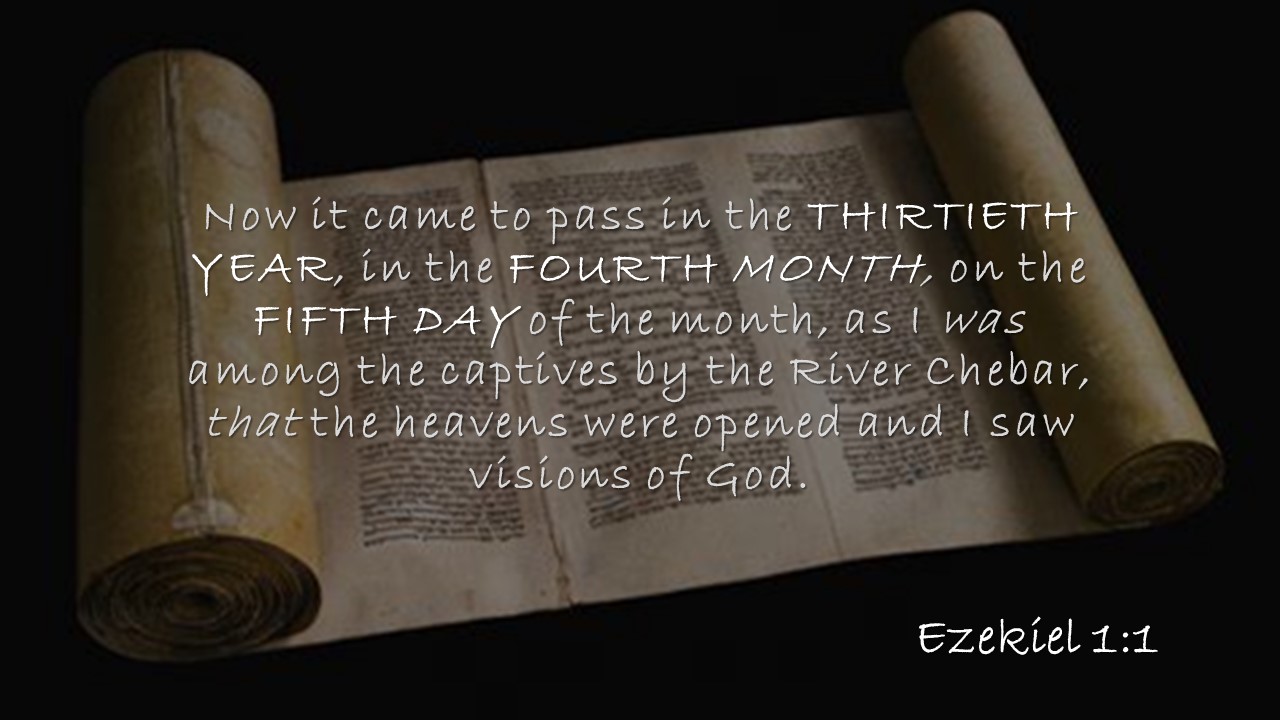
Now it came to pass in the thirtieth year, in the fourth month, on the fifth day of the month, as I was among the captives by the River Chebar, that the heavens were opened, and I saw visions of God. On the fifth day of the month, which was in the fifth year of King Jehoiachin’s captivity, the word of the Lord came expressly to Ezekiel the priest, the son of Buzi, in the land of the Chaldeans by the River Chebar; and the hand of the Lord was upon him there. (Ezekiel 1:1-3)

Biblical Dating

The Bible is a book with many internal pieces of evidence proving the veracity of its claims. Critics of holy scripture must contend with the content of the book, examining the harmony and consistency of the Bible, the unity of diversity, its profound and rational doctrine of God and man, purity of ethics, and agreement of archaeological claims. Fulfilled prophecy is one of the strongest arguments proving the Bible to be divine. Another means of showing the Bible to be authentic is the frequent use of dating Biblical events. There are many instances of dates proven accurate in a historical setting. Others are sometimes vague for modern man in their setting but nonetheless are used to establish authenticity to those who were the first readers of the word.

Ezekiel begins his book by dating the message as the thirtieth year, in the fourth month, on the fifth day of the month. He further says the word of the Lord came to him on the fifth day of the month, which was in the fifth year of King Jehoiachin’s captivity. Scholars disagree on the setting of the thirtieth year. Different views are presented to determine what year this signifies. The setting of the book of Ezekiel follows the captivity of Judah in Babylon. Judah was taken captive by Nebuchadnezzar in 606 B.C. Jerusalem was captured, and a second group was taken into captivity in 597 B.C. In the year 586 B.C. Jerusalem was destroyed along with the Temple. It would be seventy years (536 B.C.) before the people of God returned to their homes. Ezekiel was taken to Babylon in the first days of the Babylonian conquest. The first part of his book warned the Jews of the impending doom of Jerusalem due to their sinfulness. When Ezekiel heard Jerusalem had fallen (586 B.C.), he proclaimed a message of hope and restoration through a remnant that would return to Israel.

The audience of Ezekiel understood the significance of the dates. Using the road signs of time, Ezekiel impresses upon the hearts of the people God’s plan to punish Israel and to save His people. The prophet Jeremiah declared the captivity of Israel would only last seventy years. Daniel would later realize the time was drawing near for God to fulfill His promise to return His people to Israel. In the first year of the reign of Darius, Daniel learned from reading Jeremiah the prophet, that Jerusalem must lie desolate for seventy years. The time was drawing near for God’s word to be fulfilled. Daniel knew this because of the biblical dating embedded in God’s word.

Luke would use extensively the art of dating to validate his book. He begins with the days of Herod, the king of Judea. The birth of Jesus was during the days of Caesar Augustus. Joseph and Mary lived in Nazareth but had to go to Bethlehem to be registered according to the census that took place while Quirinius was governing Syria. John the Baptist began his ministry in the fifteenth year of the reign of Tiberius Caesar, Pontius Pilate being governor of Judea, Herod being tetrarch of Galilee, his brother Philip tetrarch of Iturea and the region of Trachonitis, and Lysanias tetrarch of Abilene. Luke is the only writer that says Jesus was thirty years of age when He began His ministry. Dates were important as road signs to show the validity of scripture on the history pages.

Isaiah prophesied during the days of Uzziah, Jotham, Ahaz, and Hezekiah, kings of Judah. Jeremiah lived in the days of Josiah, the son of Amon, king of Judah, in the thirteenth year of his reign. Jeremiah continued to preach throughout the reign of King Jehoiakim, Josiah’s son, until the eleventh year of the reign of King Zedekiah, another of Josiah’s sons. His work continued up to when the people of Jerusalem were taken away as captives. The book of Daniel begins by dating the events in the third year of the reign of Jehoiakim, king of Judah, when Nebuchadnezzar came to Jerusalem and besieged it.

Biblical dating is not arbitrary. There are many references given in scripture confirming the stories of the Bible are not myths but events based on historical, geographical, and archeological significance. The Holy Spirit places these road markers throughout scripture as silent witnesses to the proof that the Bible is God’s divine word. These dates are part of the complete package of knowing God has revealed His word, and it is true. Take time to examine the dates. It will help to affirm your faith.

Posted in Uncategorized | 1 Comment

Remember Lots Wife – Now

Likewise as it was also in the days of Lot: They ate, they drank, they bought, they sold, they planted, they built; but on the day that Lot went out of Sodom it rained fire and brimstone from heaven and destroyed them all. Even so will it be in the day when the Son of Man is revealed. “In that day, he who is on the housetop, and his goods are in the house, let him not come down to take them away. And likewise the one who is in the field, let him not turn back. Remember Lot’s wife. Whoever seeks to save his life will lose it, and whoever loses his life will preserve it. (Luke 17:28-33)

Remember Lots Wife – Now

There have always been cities filled with immorality and wickedness since the fall of man. The world became so wicked in the days of Noah that God destroyed all life with a flood. Only Noah and his family were saved from the wrath of judgment. During the days of Abraham, the cities of Sodom and Gomorrah were so wicked they became the focus of God’s wrath. It takes a lot of cruel wickedness to bring the Lord to the decision of obliterating a place on earth. Sodom and Gomorrah came into the periscope of the anger of the Lord, and He determined to destroy them. The only thing standing in the way of God’s judgment was the mercy the Lord extended toward Abraham and his nephew, Lot.

Lot and his family joined Abraham on their journey from the Ur of Chaldee. When Abraham came into Canaan, he pitched his tent between Bethel and Ai. Both Abraham and Lot were very rich in livestock, flocks, and herds. After a time, the land could not support both herds, and Abraham allowed Lot to choose the choice land. However, the plains of the Jordan had the cities of Sodom and Gomorrah. These cities were already known as very wicked. Lot would eventually move his family into the city, and this decision would cost him everything dear to him. He was vexed about the city’s immorality but never removed his family. The influences of Sodom and Gomorrah began to break down the righteousness of Lot and his wife.

One day, two men appeared in the city of Sodom. Lot was a leading member of the community as he sat at the gate of Sodom. Realizing the danger for the two men remaining in the city unprotected, Lot took them into his home. Later that night, the men of the city surrounded the house demanding the visitors be given to them. It was the intention of the men of Sodom to rape the visitors and use them for their pleasure. God delivered Lot and his family through the hand of the two men who were angels of the Lord. After striking the men blind, the angels warned Lot of the impending doom, telling them to flee the city. Lot lingered. He and his wife hesitated. They were conflicted about what to do. Finally, the angels seized his hand and the hands of his wife and two daughters and rushed them to safety outside the city. Only for the mercy of the Lord were Lot and his family rescued.

The angels warned the family to escape to the mountains and not look back. God was going to destroy Sodom, Gomorrah, and the cities of the plain. When Lot and his wife fled from the destruction, she looked back, and God killed her. She turned into a pillar of salt. Disobedience cost Lots wife her life because she looked back when the Lord commanded her not to look back. There was nothing of value to look back for, but she did not obey. The immediate destruction of Sodom and Gomorrah came as sudden upon the people of the city as it did for Lot’s wife. There was mercy given to deliver Lot and his family, but that mercy was denied when she disobeyed God. A warning of disobedience is engrained in the story of Lot and his family.

Jesus tells the story of Sodom and Gomorrah to reveal the manner of God’s destruction of all humanity. There was no warning to the people of the cities. They went on with their lives of drinking, buying, selling, planting, and building as if they had many years left to enjoy life. Then suddenly, without warning, the sky rained fire and brimstone, and they were dead. When the Son of Man returns, life will continue as it has for centuries. Then suddenly, the brilliance of the Son of God appears in the heavens, and the world is destroyed. Judgment begins. Souls saved and souls lost. Sadly, Lots wife looked back to something of no worth and value. She had set her heart on things of this earth, and it was destroyed. Lots wife was killed because her heart longed for the world.

So many people live every day seeking possessions that will be burned up in a greater conflagration than what rained down on Sodom and Gomorrah. When the Lord returns, all the lost will be looking back, wishing for another moment to find salvation; but will find none. The peril of looking back is believing that life is found in the abundance of things we possess. What will it profit a man when he gains all the world has to offer and lose his soul? The mercy of God has provided a way of escape. Without taking hold of the hand of Jesus Christ, there is no hope. Looking back to this world will destroy you. Look to Jesus. He will save you.

Posted in Uncategorized | Leave a comment

Jesus Was Homeless

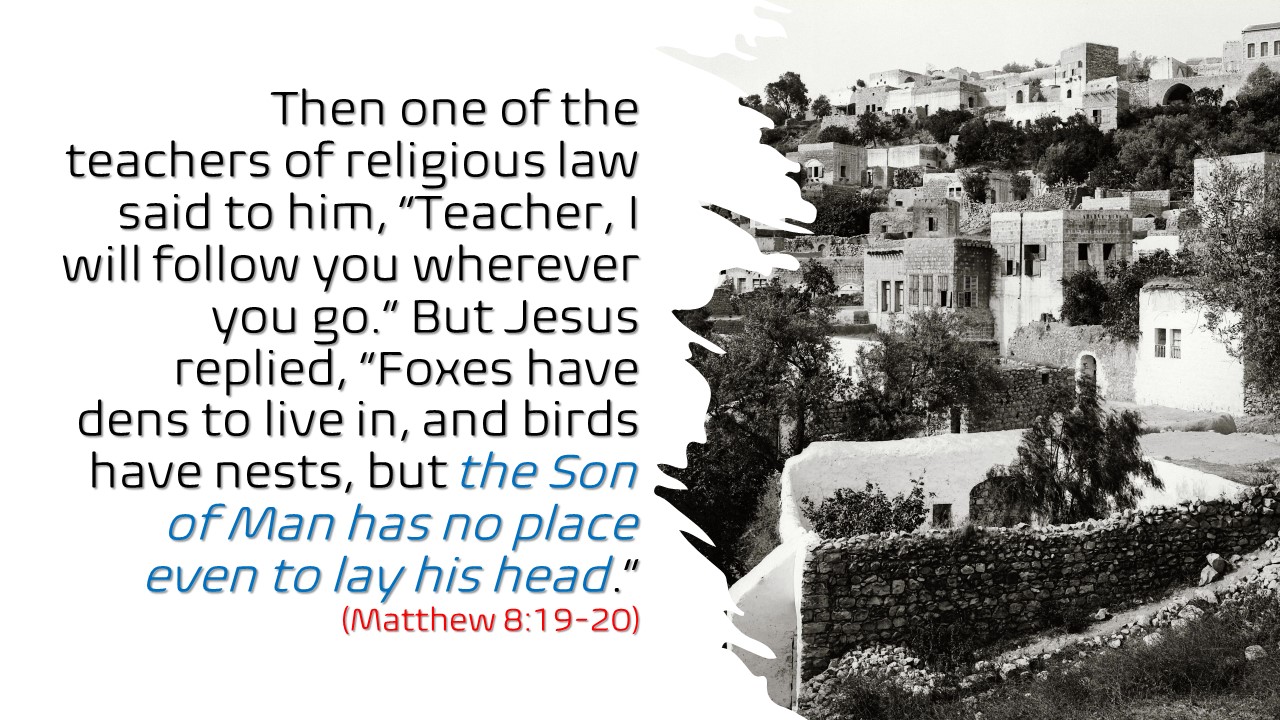
Then one of the teachers of religious law said to him, “Teacher, I will follow you wherever you go.” But Jesus replied, “Foxes have dens to live in, and birds have nests, but the Son of Man has no place even to lay his head.” (Matthew 8:19-20)

Jesus Was Homeless

Located about midway between the Sea of Galilee and the Mediterranean, Nazareth was a small town in Galilee of no importance. One of the disciples of Jesus, Nathanael, remarked that nothing good came out of Nazareth indicating a view many of Israel had about this southern town of Galilee. In Nazareth, Gabriel appeared to Joseph and Mary to declare the birth of God’s Son. Some months later, near the time of her delivery, Mary joined Joseph for the trip to Bethlehem because of the census required by Caesar Augustus. Arriving in Bethlehem, Mary gave birth to Jesus in a stable because there was no room in the inn. Shortly after that, Joseph secured a house where the family stayed for a few years.

When Jesus was around two years old, wise men came to bring gifts and worship the young boy. After the wise men returned home, an angel of the Lord warned Joseph that Herod would try to kill Jesus. The angel of God told them to flee to Egypt and remain until the word of the Lord came. Joseph took Mary and Jesus to Egypt, where they stayed until the death of Herod. The family wanted to return to Bethlehem but hearing the son of Herod, Archelaus, was reigning over Judea, Joseph returned to Nazareth. The first few years of Jesus’ life were filled with a king trying to kill him, the long trip to Egypt, and growing up in a foreign land. All of this was according to the will of the Father, who spoke of the travels in the prophets. Jesus was born in Bethlehem, raised in Egypt, and grew up in Nazareth. He would become known as Jesus of Nazareth.

Joseph and Mary had other children. Jesus had four half-brothers and at least two half-sisters. As a young man, Jesus grew up in Nazareth following his earthly father’s trade to be a carpenter. His other brothers probably followed a similar trade. Life for Jesus was as placid and peaceful as any other Jewish boy growing up in the Roman Empire. There was a uniqueness about Jesus that was evident to all, but only Joseph and Mary knew the real reason. Sometime in the life of Jesus, it seems clear Joseph died. As the elder son, Jesus would have taken the family’s leadership role.

Luke is the only writer that tells the age of Jesus. The Lord was thirty years of age when He began His ministry. This would be a remarkable change in the life of Jesus. For three decades, He had lived with His earthly family in the relative comfort and security of a home. Jesus had a place to lay His head, a place at the table to eat His meal, and a place in the community. His custom was to go to the synagogue every Sabbath and read from Moses’s scrolls. Everyone in Nazareth knew Jesus. He was one of five sons of a carpenter.

When Jesus began His ministry, He never had a place to call His own. Capernaum would become a central part of His ministry, but the ministry of Jesus took Him from one end of Israel to the other. For nearly three years, Jesus walked, rode, shared a boat, and traveled the length and breadth of Israel. He was known as a man from Nazareth, but His fellow citizens became enraged at His teaching and tried to kill Him. The preaching of Jesus was nonstop. He seldom had time to Himself. Often He would escape to a mountain to talk with His heavenly Father. Traveling by ship was more relaxing for Him as He had a respite from the surging crowds. Jesus had no home, a place to lay His head, a place at a table that was His, and the security of belonging. The pace of His work was frantic, unending, and grueling. Following Jesus was not an easy life.

The purpose of Jesus’ ministry was not to establish a home, and pray men would come to Him. Jesus went out among the people, walked with them, talked with them, healed their sick, comforted them, and took children in His arms to bless them. The animals had dwelling places but not the Creator of the world. Jesus had come to provide a spiritual home, and He had no time for a home of His own. The Son of Man had nowhere to lay His head. Understanding the life of Jesus is to see Him from the viewpoint of a homeless man on a mission. His sacrifice was not just at the cross. The ministry of Jesus was a sacrifice. A homeless man died for all men to give them a home with His Father.

Posted in Uncategorized | Leave a comment

She Gave All

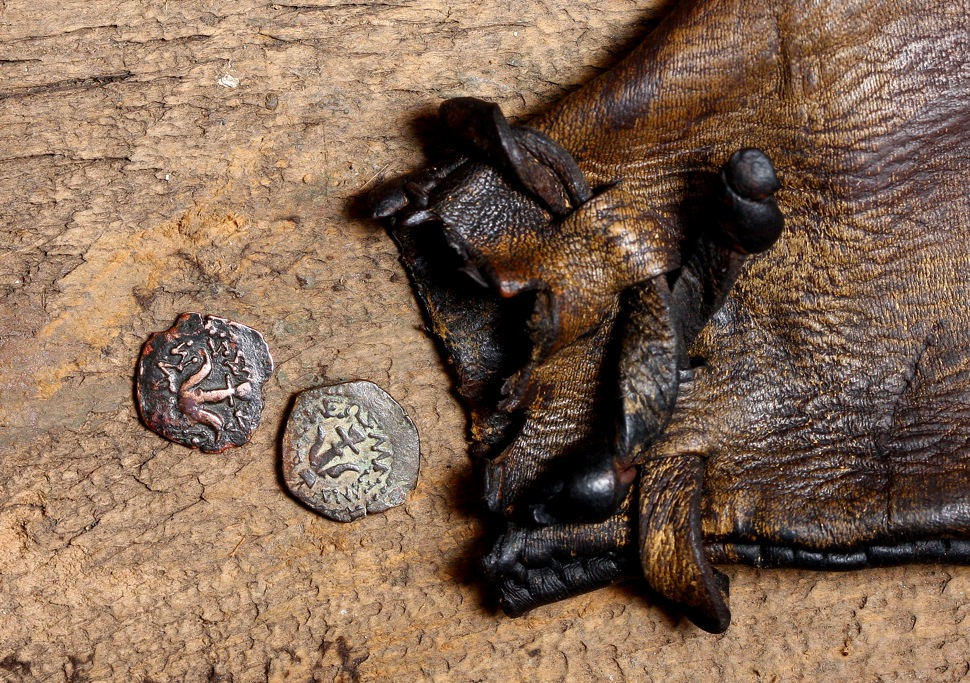
And He looked up and saw the rich putting their gifts into the treasury, and He saw also a certain poor widow putting in two mites. So He said, “Truly I say to you that this poor widow has put in more than all; for all these out of their abundance have put in offerings for God, but she out of her poverty put in all the livelihood that she had.” (Luke 21:1-4)

She Gave All

The Law of Moses gave protection for widows not to be treated unjustly and to be cared for through tithes. It was very difficult to be a widow in Biblical times. Protected under the Law of Moses, widows still faced a difficult and uncertain future. Without a source of income, the daily lives of widows were a meager existence. Jesus was in the Temple observing how the people came in to offer their tithes into the treasury. Men of wealth deposited their tithes, and the common man put in much less. It was the widow that caught the eye of the Lord when He saw her putting her two mites in the treasury. The sound of her coins was barely heard. No one took notice of the poor woman in torn clothes hobbling along quietly, putting in her small gift.

Nearly a millennia before, when the prophet Samuel was seeking to anoint the next king of Israel, God reminded the prophet that He does not look at the outside of a man but rather what is in the heart. As Jesus stood watching those who brought their gifts to His Father, He saw an offering of poverty as a gift of immeasurable treasure in the poor widow. The rich people dropped their gifts in the collection box, but it was a poor widow that became the object lesson of the day. Out of her poverty, she put in all the livelihood that she had.

The poor widow’s story is not about the two mites or the coins of the rich. It was about the heart of a woman who was so fully devoted to the Lord she gave more than anyone. Wealth is not determined by the size of the bank account but by the abundance of the heart that is seeking the favor of God. Nothing is known about the woman after she returns home. Her stomach may not have been full, but her heart was overflowing. God is not interested in the size of the gift. The rich gave much out of their abundance, and that was easy. There was much remaining after they gave their gift. The poor widow was poor before she gave and remained poor after giving. What made her story different is she was rich before she gave and remained rich after she gave. Her treasure was in heaven.

Men measure success outwardly. God seeks loyalty from the heart. The widow’s story does not suggest all men must divest themselves of all of their wealth to prove faithfulness. Giving two mites did not make her righteous no more than a rich man giving twenty gold coins made him righteous. God looks on the heart when it comes to worship. He seeks what is in the spirit of a man to know his worth. Everyone is measured by the willingness to devote themselves to the Lord fully. What Jesus saw in the woman was complete, unfailing, total devotion. That is what made her gift so amazing. The Lord is seeking such to worship Him.

Honor for God is found in the humble hearts of fully devoted people, putting God first in every part of their lives. Nothing comes before their service to the Lord. They are not seasonal warriors in the cause of Christ but dedicated soldiers for the kingdom of God. The poor widow trusted God would care for her, and He did. Trust comes from knowing the Lord will care for His own. This releases the worries of men to trust in themselves or their own power. All things can be accomplished through the power of God when we allow the power of God to work in our lives. Have a trust like the widow. It’s not the amount. She had the heart to serve her Lord. That is what Jesus saw. What does He see in you?

Posted in Uncategorized | 1 Comment