The Small And Great

Then I saw a great white throne and Him who sat on it, from whose face the earth and the heaven fled away. And there was found no place for them. And I saw the dead, small and great, standing before God, and books were opened. And another book was opened, which is the Book of Life. And the dead were judged according to their works, by the things which were written in the books. (Revelation 20:11-12)

The Small And Great

Death is the great equalizer. The world is filled with the young and old, rich and poor, masters and slaves, righteous and wicked, leaders and followers, despots and tyrants, and all the human families of the small and great. Conditions of life separate humanity from one another through birth, privilege, economics, fear, love, wisdom, and a host of traits that elevate some and oppress others. Life is often unfair in the measure of blessings given to some and withheld from others. It is a man that creates the disparity among the peoples of the earth because the small and great come into the world in the same manner, and the small and great leave this world exactly the same.

The first equalizer is birth. Everyone is born in the same manner. Through God’s creative power, a child comes from a woman’s womb. Rich women give birth to children in the same way a poor woman gives birth. The circumstances and surroundings may be different, but birth remains the same. Life is what makes a person great or small. Human wisdom creates inequality with perceptions of greatness personified through pride. All men come from Adam and share the same biological seed created when Eve was brought to the man. Thomas Jefferson and Benjamin Franklin did not pen a new doctrine when they stylized the phrase of all men being equal, endowed by God with certain unalienable rights, among which are life, liberty, and the pursuit of happiness. The Bible established the equality of all men when Moses wrote that God created man in His image. All men are equal because all men share in the image of their Creator.

Equality in life is a tenuous pursuit. Men will spend a lifetime seeking fame, fortune, wisdom, and power. The irony is the amount of effort put into making a name for oneself only to face the chasm of death where names are forgotten. Riches amassed in life are left behind. The greatest wisdom a man can achieve will not extend his life one moment. Great men rise to rule their worlds only to find that death easily comes into their fortified citadels. No man escapes death, whether great or small. Death is the final equalizer because all men die the same way. The door of death is the same reality for every man who has lived. Methuselah lived for 969 years and he died. The poorest man living today will live a certain amount of years and, like Methuselah, die. Equality.

What makes death the great equalizer is the knowledge of how death changes the station of a person’s place in the eternal scheme. In life, there are the small and the great, but in death, there are the saved and the lost. What makes a man different in life ends in death. How a man faces eternity is the manner of life he lives before death. The time on earth is very short, but on that slim vapor of life, eternity depends. All men will stand before the great white throne as equals, whether small or great. What separates men in eternity is written in the Book of Life. The dead are judged according to their works and the things written in the book by the Finger of God. Whether a man is small or great in life matters not in the mind of God. What matters in the mind of God is whether that small or great man has his name in the book.

The devil’s great lie in mortals’ hearts is to seek greatness and power in this life. There is no consciousness of the eternal, and most men seek greatness in wealth, fame, pleasure, and wisdom. Death takes all that away and bares the soul before a just and wrathful God. What matters in life is what matters in eternity. The great and the small will stand on the same parcel of eternity and be judged by one book and one book alone. Every heart will know the answer of the eternal ages when they die. All the dead, small and great, stand before God.
Posted in Uncategorized | Leave a comment

He Gave Them Power

And when He had called His twelve disciples to Him, He gave them power over unclean spirits, to cast them out, and to heal all kinds of sickness and all kinds of disease. Now the names of the twelve apostles are these: first, Simon, who is called Peter, and Andrew his brother; James the son of Zebedee, and John his brother; Philip and Bartholomew; Thomas and Matthew the tax collector; James the son of Alphaeus, and Lebbaeus, whose surname was Thaddaeus; Simon the Cananite, and Judas Iscariot, who also betrayed Him. (Matthew 10:1-4)

He Gave Them Power

Sickness and disease is a consequence of sin. When God placed Adam and Eve in the Garden of Eden, there was no sickness, disease, or death. As a consequence of eating the forbidden fruit, God removed access to the tree of life to Adam and Eve and drove them from the garden. Death reigned as disease spread throughout the world. The wisdom of men sought remedies for the maladies of the human body, but the power of disease continued destroying lives. Nothing could be done for Rachel, the wife of Jacob, when she died in childbirth. Leprosy was common in the Bible lands, but there was no cure. Thousands of men and women died from plagues. Sickness and disease have taken lives too early, too often, and too many. There was little anyone could do but offer solace and comforting words. And then Jesus came.

The Son of God did not come to take away the disease of the body. In the thirty years of Jesus’ early life, sickness infected the people, and many died from disease as it had done from time beginning. During the ministry of Jesus, He healed thousands of people with every known disease, sickness, and plague without exception. Jesus raised the dead and cast out demons. There was no disease that Jesus could not heal completely. His healing was not a temporary fix but a complete cure. When the Lord gathered His twelve apostles, He gave them the power to do the same thing. They had the power of unclean spirits to cast them out and to heal all kinds of sicknesses and all kinds of diseases. There was nothing the power of the Holy Spirit could not work through the hands of the apostles. The power was unlimited. Twelve men had incredible power – the power of God.

After Jesus commissioned His apostles, the twelve men went out preaching, teaching, and casting out unclean spirits. They healed every kind of disease and illness without exception. Peter healed a man of disease. Matthew cast out a demon. And believe it or not – Judas healed people of sickness. John gave relief to lepers. The power of God flowed through the twelve apostles as they healed sick people and made them whole. It must have been an amazing experience to come into a city and find a number of sick people who were miserable, lonely, hopeless, and afflicted. Peter would walk to the crowd and put his hand on the sick, feeling God’s power taking away their affliction. The smiles on the faces of the thousands healed from the infirmities of the flesh had to resonate in the hearts of the twelve men. Jesus gave them the power of God to heal, and they healed people, casting out demons and raising the dead. What an incredible power to have in their hands.

What is remarkable about the story of the twelve apostles is that they possessed God’s power and experienced God’s power in using that power. Yet, they continued to struggle in their faith to understand the will of God. The power of God was theirs, and they did not understand what they possessed. It is easy to judge the twelve and not understand how they could possess such power and not be full of faith in the work of the Lord. But they healed people, raised the dead, and still doubted and failed in their devotion to God. The answer to the dilemma of their faith is found in the faith of those in the body of Christ who possess the power of God. Miracles and gifts of healing ended nearly two thousand years ago. No one has the power to heal sickness, cast out demons, or raise the dead. While that power is gone, a greater power remains and is forgotten.

God sent His Son to help men fight the disease of sin. Physical disease will kill the body, but spiritual disease destroys a soul for eternity. Medicines can stave off disease for a time, and then death comes. Dying from sin will never change. The gospel of God is the greatest power man has ever known. The twelve apostles had the power of physical healing and spiritual healing. The Bible is the message of divine healing placed in the hands of God’s people to share with others. Did the apostles take for granted their power to heal all sickness? We can and often take for granted the power of the gospel to heal what is truly wrong with man – sin. Having the power and using it for its purpose is where we fail. We have the power. Share the gospel. Save a soul.

Posted in Uncategorized | Leave a comment

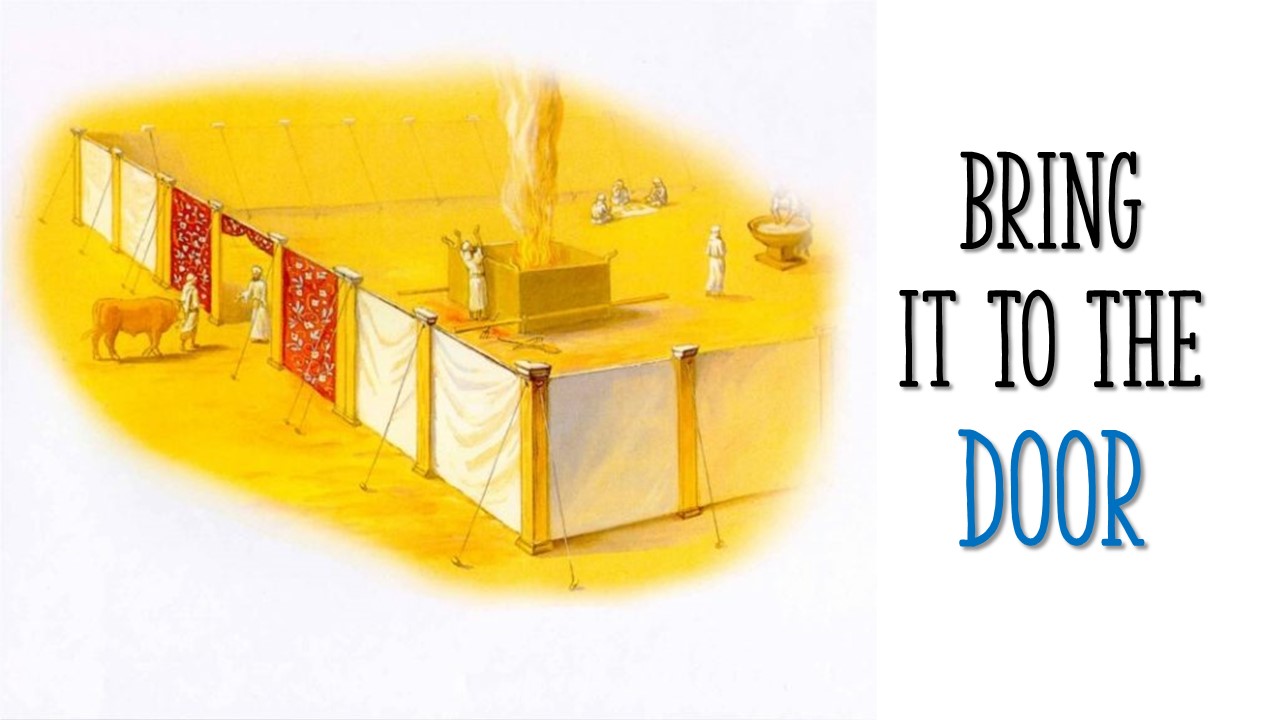
Bring It To The Door

Whatever man of the house of Israel who kills an ox or lamb or goat in the camp, or who kills it outside the camp, and does not bring it to the door of the tabernacle of meeting to offer an offering to the Lord before the tabernacle of the Lord, the guilt of bloodshed shall be imputed to that man. He has shed blood; and that man shall be cut off from among his people, to the end that the children of Israel may bring their sacrifices which they offer in the open field, that they may bring them to the Lord at the door of the tabernacle of meeting, to the priest, and offer them as peace offerings to the Lord. (Leviticus 17:3-5)

Bring It To The Door

Central to the history of the nation of Israel was the center of worship during the wilderness wanderings and early history of the young nation. Moses received the Law from God at Sinai, including constructing a place where God would commune with His people. It was vital to the relationship of God to be near His people, and the Tabernacle or Tent of Meeting would serve that purpose. The tabernacle was made up of many parts, including the Ark of the Covenant, the Lampstand and Table of Shewbread, the Altar of Incense, and the Brazen Altar. Constructed as a portable tent, the tabernacle was set up at the center of twelve tribes, with the tribe of Levi responsible for the care and moving of the place of worship.

Moses was given specific instructions on how to build the tabernacle. When Moses was getting ready to build the tabernacle, God warned him to make everything according to the pattern He had shown him on the mountain. Moses obeyed the will of the Lord exactly as commanded. The worship also contained certain commandments that must be followed. One of those had to do with bringing the sacrifice to the door of the tabernacle. The door of the tabernacle was where God communed with Israel. When Moses entered the tabernacle, the pillar of cloud descended and stood at the door of the tabernacle, and the Lord talked with Moses. When Aaron and his sons were consecrated, the congregation gathered at the door of the tabernacle of meeting. They were told to remain at the door of the tabernacle day and night for seven days until their consecration was complete. Aaron and his sons did all the things God commanded.

The people were also commanded with respect to the door of the tabernacle to bring their offerings to the door. God told Moses if a man killed an ox or lamb or goat in the camp and he did not bring the sacrifice to the door of the tabernacle of meeting to offer as an offering to the Lord, the man would be held guilty of unholy blood. The penalty would be that man is cut off from the people of God. To be cut off from the people was to treat the man as an outlaw or one who rebelled against the law. If a man kills an ox or lamb or goat outside the camp and does not bring the offering to the door of the tabernacle, he will be held guilty of the blood and cast out from among the people. If a man offers a burnt offering or sacrifice and does not bring it to the door of the tabernacle of meeting to offer it to the Lord, that man will be cut off from the covenant of God.

It might seem a trivial thing whether a man brings the offering to the door of the tabernacle. If a man makes a sacrifice to the Lord by offering up an ox, lamb, or goat, he can believe he is worshiping the Lord and be pleasing to God by his sacrifice. Everything seems to be in order as a sacrifice is made, and a burnt offering or sacrifice is made in the name of the Lord. The Law of Moses demanded the sacrifice be brought to the door of the tabernacle. When Israel camped around the tabernacle, more than a million people were pitching their tents around the tabernacle. If someone from one of the outlying tribes made a sacrifice, they had to go to the trouble to take their sacrifice through the thousands of people standing between them and the tabernacle. They could not offer acceptable worship at the door of their tent. Salvation required them to do what God said – take the sacrifice to the door of the tabernacle.

Many churches today offer similar sacrifices to what is found in the Bible. Sadly, they have chosen to make their sacrifices where they are, refusing to come to the door of the tabernacle. The religious world teaches baptism is not necessary for salvation. In other words, a man can be saved without going to the door of the tabernacle. Taking a sacrifice to the door of the tabernacle may not make a lot of sense, but if a man refused to obey the word of God, he was cut off. God requires assembly to worship. Many refuse to come to the door. Marriage is sacred in the eyes of the Lord, and God hates divorce. Men ignore God’s law. The Lord forbids sexual immorality, and the church turns a blind eye. It is easy for men to pick and choose which commands they will follow. They worship God in form but refuse to come to the door. If a man does not come to the door here, the door of Heaven will be shut there. Come to the door. Eternity depends on it.

Posted in Uncategorized | Leave a comment

Is Resurrection Possible?

But someone will say, “How are the dead raised up? And with what body do they come?” Foolish one, what you sow is not made alive unless it dies. And what you sow, you do not sow that body that shall be, but mere grain—perhaps wheat or some other grain. But God gives it a body as He pleases, and to each seed its own body. (1 Corinthians 15:35-38)

Is Resurrection Possible?

The belief in life after death did not come from the wisdom of human judgment but the divine word of God. Nothing in humanity’s arsenal would suggest what is beyond death because man cannot see beyond the grave. No matter how advanced science or technology will become, peering into the realm before and after life will be impossible. The suggestion of eternity comes from the revelation of God. Through the power of the Creator, life is given to a man and woman to create life. There is no instrument to declare the beginning of life, only the mind of God. When a man dies, he cannot return. The Lord has established the habitation of man that limits his power. Death is final; whatever is beyond death cannot be known from human wisdom.

Resurrection has been accepted by believers in the one true God since the beginning. Abraham believed God had the power to raise his dead son and acted in faith, believing the Lord would perform such an act. Saul spoke to Samuel from the grave. Hananiah, Mishael, and Azariah defied the orders of King Nebuchadnezzar because they believed the fiery furnace would not end their life and their God would deliver them. Jesus rose Lazarus from the dead after four days. The apostles performed miracles, including raising saints from the dead. Believing in the resurrection was challenged in the first-century church as the people of God wrestled with the questions of how and what. The church of God at Corinth was rocked by disbelief that the dead could rise again because some began to doubt Jesus Christ had risen from the dead.

Some were asking how the dead were raised. It was an honest question. The curious mind of man wants to understand the mechanics of how something is done, and bringing a dead body back to life was a huge concern. Death is final. Nothing in the wisdom of man could change that. To witness Dorcas raised from the dead defied logic and human understanding, but Peter brought her back from the dead. The question by the Corinthians was valid. How are the dead raised up? Paul used the illustration of sowing seed as an example of God’s power. A seed is planted in the ground in one form, dies, and breaks the soil in another form. How does that happen? God makes it happen. If God can show his power in the wheat seed, why can He not raise up the body of a man? How are the dead raised up? By the power of God.

If a man accepts that God can raise someone from the dead, the second question is, what kind of body will they have? The answer to this question is more vague than the first because it requires an understanding that is beyond the wisdom of human logic. Using the illustration of the seed planted in the ground, Paul shows that a new body comes from the tiny seed. When wheat comes out of the earth, it does not have the form of the seed. The seed died and transformed into another body – so it will be with the human body. A man will die in one form and, in the resurrection, arise in another body. Defining what the image of the heavenly man will be is difficult to describe. That does not suggest there is no resurrection. Understanding what kind of body a man will have in eternity is challenging, but this does not deny the resurrection.

A change occurs in death when a body removes the tabernacle of flesh and lives on in the eternal spirit. Most people do not understand that death does not make one an eternal creature. Every human being is created in the image of God. A man does not possess a soul; instead, he is an eternal creature first who inhabits a fleshly body. The spirit a man possesses from creation will never cease. That spirit takes on a new body, a house not made with hands, eternal in the heavens. Mortality will be swallowed up by everlasting life. That new body will never die. Eternity comes to all men, good or bad. The difference will be how that eternal body will spend time without end. Most will be in darkness and endless pain. The faithful will rest in the bosom of God in peace. Are you ready for the resurrection?

Posted in Uncategorized | Leave a comment

What God Sees In The Blood

But the blood on your doorposts will serve as a sign, marking the houses where you are staying. When I see the blood, I will pass over you. This plague of death will not touch you when I strike the land of Egypt. (Exodus 12:13)

What God Sees In The Blood

Blood to the naked eye does not look different, whether human blood or animal blood. The blood of humans is always red, and most animals have red blood. Typing blood (A, B, and O) was not discovered until 1901. Science has unlocked many mysteries about blood, including the makeup of human blood consisting of red blood cells, white blood cells, and platelets. When the Hebrews were preparing to leave Egypt, nothing was known about blood at the cellular level. A man’s blood did not look much different than the blood of an animal. Distinguishing between the blood of a camel, bull, or goat was not possible. Smearing blood on a piece of wood would further hide any evidence about the origins of the blood. The blood looked the same to the human eye with no distinguishing marks.

God told Moses the final plague against Pharaoh and the people of Egypt would be the death of the firstborn. The Lord instructs Moses to say to the congregation of Israel to take a one-year-old male lamb with no blemish or defect as the sacrifice. On the fourteenth day of the first month, the lamb (taken from the sheep or goats) will be killed. The people shall smear some of the blood on the sides and top of the house’s doorframes. They will eat the flesh that night roasted in fire, with unleavened bread and bitter herbs. None of the animal shall remain; if any is left, it is to be burned in the fire. The people are to have a belt on their waist, sandals on their feet, and a staff in their hand. When the Lord passes through the land of Egypt on that night, He will strike all the firstborn in the land of Egypt, both man and beast.

The blood commanded by God to be put on the doorposts and lintels would be a sign, and when the Lord saw the blood, He would pass over the house and not kill the firstborn. As the Hebrews prepared for the night of death, the question of the blood must be answered. When the blood was put on the doorposts, what difference did it make what kind of blood was there? Who could tell the difference in the blood that was smeared on the wood? As far as the human eye could see, the blood of a camel and the blood of a lamb were the same, and smearing camel’s blood on the door would look just like the neighbor who put a lamb’s blood on the doorpost. If a man decided to put camel’s blood on his house, what would happen to his firstborn? They would die! Did it make a difference in the blood? It may not have looked different to the human eye, but to the eye of the Lord God, it made a difference.

When the Lord passed over the land of Egypt, He was not looking for blood on the doorposts and lintel; He was looking for obedience. God could tell if the blood was from a lamb without blemish through the divine eye of discernment. Even modern science cannot tell from blood if a lamb has a broken leg or some blemish. God could make that discernment. The Lord wanted to see the blood of a male of the first year that had been killed on the fourteenth day of the first month. With all the science of modern technology, can forensic science determine on what day a lamb is killed? God can. The lamb must be killed at twilight. Where in the study of blood can scientists know what time of day it is killed? When the Lord saw the blood, He knew if it was killed at twilight or the third hour.

The religious world tries to fool God into believing it does not matter what kind of blood is smeared on the doorposts of the house. To the religious world, one blood is as good as another. Churches fill the landscape of every community with the false doctrine that nothing really matters to the Lord and variety is accepted. If the religious leaders today lived in Egypt with the Hebrews, they would tell people, “Choose the blood of your choice.” People are being led astray with the false doctrine of the wrong kind of blood. They go through the motions and believe the blood will save them. Then the night comes with the judgment of God, and they die. Did God see the blood? Yes, He saw the blood, but He knew it was the wrong kind of blood. Does it matter what type of blood the Hebrews put on their houses? If you asked those who lived through the terrible night of death, rest assured they emphasized how important the one blood was to their salvation. They may have been ridiculed for believing in the one blood, but salvation was in their house when morning came. What blood have you put on your house? There is only one blood, and it matters when God sees the blood!

Posted in Uncategorized | Leave a comment

Do Not Profane God’s Name

Therefore you shall keep My commandments and perform them: I am the Lord. You shall not profane My holy name, but I will be hallowed among the children of Israel. I am the Lord who sanctifies you, who brought you out of the land of Egypt, to be your God: I am the Lord. (Leviticus 22:31-33)

Do Not Profane God’s Name

The Ten Commandments forbade taking the name of the Lord God in vain and included severe consequences for those who did. Swearing by God’s name was an abomination. There was an incident where an Israelite woman’s son blasphemed the name of God, and they took him out and stoned him to death. Using God’s name in vain will bring destruction to all those who trifle with the holy name of God. Aaron and his sons were also warned against profaning the name of the Lord, but it was more than using the name of God in vain. As priests, they served the Lord in the holy things when they made sacrifices for the people. They were forbidden to profane the name of the Lord by serving in an unclean manner before the Lord. If a priest were ceremonially unclean when he approached the sacred offerings that the people of Israel consecrated to the Lord, he would be cut off from the presence of the Lord. His actions would profane the name of the Lord.

Profaning the name of the Lord goes beyond the verbal swearing of His name. Priests of the Lord could not present themselves before the holy things with uncleanness. They would be cut off from the presence of the Lord. The priests were given a long list of regulations regarding what made them unclean and how they must cleanse themselves before coming to serve the Lord. What was sanctified by God could not be profaned by the disregard of those who served the Lord. The holiness of the Lord required His people to honor Him in their speech and conduct.

The Law of Moses has long passed away, and its laws are no longer binding. Reading the Law is a body of truth written for the children of Israel, but the principles and applications of the law remain the same. Profaning the name of the Lord was a sin before the Law, and it is a sin after the Law. Holy people living unholy lives profane the name of the Lord. God has always demanded His people to set themselves apart from the world in their conduct. Since the fall of man in the garden, evil has overshadowed the world with its power. As lights set on a hill, the righteous must let their lights shine brightly in a dark world. A Christian who lives as those of the world profane the name of God’s Son.

Living in an unholy world is a difficult challenge. The child of God must remain in the world but be separate from the world. The Christian can’t live without the world’s influence, but it must be the constant work of a diligent heart to remain above the world’s trappings. Too many Christians look like the world, talk like the world, dress (or lack thereof) the world, and think like the world. Coming before a Holy God with unholy lives profanes the nature of the righteousness of God. Jesus died to set men free from the bondage of sin to glorify the Father. Shedding the cloak of sin is a daily battle to fight against the wiles of the devil. Keeping the commandments of the Lord and doing the will of the Father honors the name of God. Refusing to keep His commandments profane His name. God must be hallowed in the life of the child of God. Do not bring shame on God’s holy name. He will display His holiness in the world through the sacred lives of His people.

Posted in Uncategorized | Leave a comment

Have Fun But Be Careful

Rejoice, O young man, in your youth, and let your heart cheer you in the days of your youth; walk in the ways of your heart, and in the sight of your eyes; but know that for all these God will bring you into judgment. Therefore remove sorrow from your heart, and put away evil from your flesh, for childhood and youth are vanity. (Ecclesiastes 11:9-10)

Have Fun But Be Careful

Life is a series of transitions from infancy, adolescence, young adulthood, maturity, and old age. Each portion of life has its blessings and dangers. There is discovery in the heart of an infant. The adolescent is sorting out feelings of identity. Young adults investigate the avenues of life with deep curiosity. The age of maturity is when life becomes more real with responsibilities. Old age is a time of reflection and awareness of mortality. Some of life’s most important decisions will be found in that time of investigation when the spirit of youthfulness runs down the paths of adventure, seeking answers to life. God created man to enter each phase of life with a unique pattern of knowledge, preparing them for the next. That time when young men and women open their hearts to the world can be enjoyable and rewarding.

God created the days of youth to be a time of joy. The Lord tells young people they are living in a wonderful time of life. There is no reason not to enjoy what God has created. Youth is a time of energy and fun when hearts are carefree and not burdened with the issues of life. God wants young people to enjoy every minute of life, soaking in all the gusto of a time in life that seems unbounded. The days of youth fade quickly, and God desires young people to embrace the energy that will one day be gone. Yes, youthfulness is a time of unlimited vitality, but it comes with a cost. The Lord warns young people not to sow their wild oats and expect a crop failure. What they reap in their youth comes due for the rest of their lives.

The warning the Lord gives is a sobering reality that one cannot spend his youth in folly and not suffer consequences. For every action of youthful failure, there will be a time when the debt comes due. God encourages young people to enjoy life and do what they enjoy, but only with the knowledge that every action comes with a penalty. Everyone will give an account before God for everything they have done in life. The advice of wisdom to young people is to enjoy life but never make decisions that will haunt them for the rest of their lives. A shadow of guilt for mistakes made in youth will never make life the full purpose God intended. Many a man has entered the latter part of life looking back at the mistakes of youth with deep regret. God tells young people to live in such a way as to diminish regrets in life.

There is a judgment that comes upon the young and the old. Sometimes, the judgments come to bear in life. Sexual immorality may be fun in youth, but infidelity will scar a soul for life. There are consequences to the freedom one thinks he has as a young man or woman. When maturity comes later in life, reflecting on past decisions will make it difficult to deal with future realities. God warns young people to enjoy life but measure their decisions with the counsel of sowing and reaping. He counsels young people to put away sorrow and remain pure. Do not allow evil to corrupt the joy of youth. There is a judgment coming that will not bring happiness. Life is painted as a time of freedom to let young people live without restraints. The wisdom of God teaches the consequences of youth will live on in life. Life is better lived with restraint to enjoy a time of joy without the consequences of youthful decisions.

God reminds young people there is another judgment coming. This judgment comes when all men stand before the Creator. Solomon ends his thesis on life, reminding everyone that God will bring every work into judgment, including every secret thing, whether good or evil. That includes secret things of youth, good things of youth, and evil things of youth. Everything will be there. The best advice is for the young man and woman to enjoy life and live full lives with youthful energy – but to do so with a cautionary warning to sow seeds of righteousness. It is much easier to harvest a crop of goodness than evil. Enjoy life. Make right decisions.

Posted in Uncategorized | Leave a comment

The Indictment Against Jesus

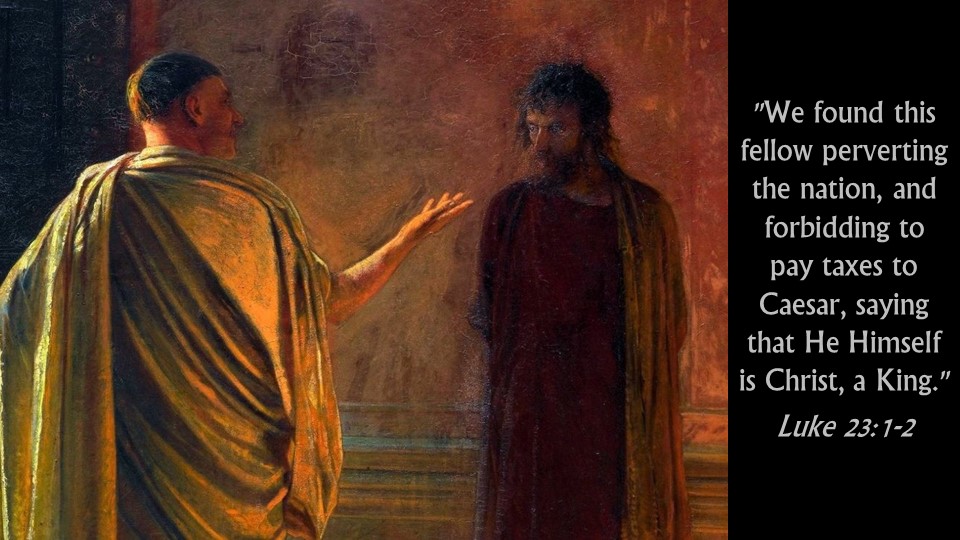
Then the whole multitude of them arose and led Him to Pilate. And they began to accuse Him, saying, “We found this fellow perverting the nation, and forbidding to pay taxes to Caesar, saying that He Himself is Christ, a King.” (Luke 23:1-2)

The Indictment Against Jesus

When the Jewish leaders brought Jesus to Pilate, they needed to establish a cause as the first step in a criminal proceeding. The indictment or Nominis Delatio against Jesus was that He was perverting the nation with His teaching. He taught the people to refuse to pay tribute to Caesar, placing Himself as Christ, a king. Pilate ignored the first two parts of the indictment and touched on the matter of high treason, the charge against the prisoner. Jesus answered Pilate with respect to his authority to interrogate Him judicially but explained to the Roman ruler His kingship was a spiritual kingdom. The defense of Jesus was clear; the indictment against Him was false, and Pilate immediately saw the shallow ground of the charges brought by the Sanhedrin. Hearing the answer of Jesus, Pilate declares an acquittal.

In a bold and radical move by the Jewish authorities, the crowds became more fierce in their insistence on a guilty verdict against Jesus. Seeking to appease the masses and deflect the responsibility of his office, Pilate sent Jesus to Herod, who was also in Jerusalem at that time. This act by Pilate was illegal as an acquittal had already been established. Sending Jesus to Herod was not such much a trial as an examination. When Jesus was returned to Pilate, what proceeded bears little resemblance to a lawful proceeding. A coward sat on the seat of law, and the blind fury of the mob drove the decision to kill Jesus. The result was judicial murder.

Jesus was accused of perverting the nation. The indictment charged the teaching of Jesus excited the people to incitement to rebellion and turmoil. In the early stages of the ministry of Jesus, multitudes in the thousands followed Him. On one occasion, He provided food for five thousand men, not counting the women and children. Many people came to Jesus to be healed of disease. On a few occasions, Jesus raised people from the dead. The Pharisees, scribes, and Chief Priests tried in vain to trap the man from Nazareth in His teaching and failed every time. When Jesus finished the sermon on the mount, the people were amazed He taught with such authority. Jesus never sought to pervert the nation but to convert the nation. The Jewish leadership was envious of Jesus from Nazareth. Pilate could see the charge of perversion was empty.

The second part of the indictment was Jesus leading the people in a tax revolt and refusing to pay taxes Himself. Some Pharisees and supporters of Herod had tried to trap Jesus into saying something for which he could be arrested. They knew Jesus was honest and impartial and refused to play favorites among the people. Jesus was asked directly if He thought it was right to pay taxes to Caesar or not. Seeing through their hypocrisy, Jesus took a Roman coin and asked them whose image was stamped on the coin. He then told them to give to Caesar what belonged to Caesar and give to God what belonged to God. Desperate to show Pilate the evil nature of Jesus, the Jews presented a false indictment against an innocent man. Charging Jesus with forbidding to pay taxes to Caesar was a blatant lie. Pilate ignored the charge.

Jesus was charged with a third crime, calling Himself a king. It was on this part of the indictment that Pilate would focus. It was ill-advised to call oneself a king in the Roman Empire. There were many who tried to revolt against the Romans but were crushed by the iron will of the Roman Army for insurrection. Pilate examined the charge against Jesus and could see that Jesus was only a man who had visions of some spiritual identity to be a king but was no threat to the Roman government. To the more serious parts of the indictment, Pilate found Jesus innocent. The trial should have ended at that moment as the accusation was proven invalid, and no proof was offered to substantiate the charges. Only later, when Pilate ignored Roman law and bent to the will of the mob, he delivered Jesus to be crucified.

The greatest travesty of human jurisprudence took place that day, but the result was the greatest example of divine jurisprudence in the history of man. An innocent man was charged with false accusations; yet the guilt of man was judged that day. Jesus died with sinless perfection before the mob demanding His death. Mercy was given on a day when no mercy was shown. Love poured out in a world filled with hatred. The sacrifice of one man brought salvation to all men. A lamb was sacrificed on the altar of grace so that the human heart could find the joy of peace in a man from Nazareth. The indictment against Jesus was false, and the indictment against man was validated. Jesus Christ is a king – the King of Kings and the Lord of Lords.

Posted in Uncategorized | Leave a comment

The Futility Of The Climate Agenda

For this they willfully forget: that by the word of God the heavens were of old, and the earth standing out of water and in the water, by which the world that then existed perished, being flooded with water. But the heavens and the earth which are now preserved by the same word, are reserved for fire until the day of judgment and perdition of ungodly men. (2 Peter 3:5-7)

The Futility Of The Climate Agenda

Global warming is the focus of the world seeking a zero-emission climate to avert global catastrophe. It is believed and widely politicized the reckless actions of humanity destroying the world, leading to the total annihilation of man on earth. The Green Agenda pushes the doctrine of human wisdom’s capability of destroying its domain. Rooted in the pride of the arrogant heart of those who do not believe in God, the climate agenda seeks to convince the naïve world that man has the power to destroy his environment. Using data based on skewed perceptions of self-driven agendas, pundits for climate change seek to have their voices heard above the voice of reason and truth. The reality that many do not realize is what God says about climate change and the end of the world.

The Bible is not just a book about the divinity of God. There are many parts of the word of God that answer questions that concern people of every generation. Before modern science and technology, human pollution filled the air and desecrated the land. The 1970s were a time of global consciousness to make the world a better place. Walt Kelly’s famous Pogo cartoon shows his character standing in the middle of the Okefenokee Swamp with the caption, “We have met the enemy, and he is us.” Yes, man can make a mess of his world. The question is not whether humanity can defile the earth with pollution, but rather the question if it is in the power of human waste to destroy the planet. The answer is a resounding, “No!” There is nothing within man’s wisdom and power that will ever end the world. Using fear to drive people to a “green world” is nothing more than a tactic of a godless world.

Earth is man’s domain and will always be the residing place of humanity until God decides differently. Man will never live on the moon, much less on Mars. The counsel of the Creator determines the habitation of man. The earth will continue to exist and experience seedtime and harvest, cold and heat, winter and summer, and day and night. That will never change. Peter declared what men forget. The world was destroyed a long time ago, not by global warming but by global flooding. In the days of Noah, God looked at the hearts of men and saw nothing but wickedness. Ironically, the pollution of the heart destroyed the world when God brought a global flood that killed all life on earth except eight souls. Using the flood as a backdrop, Peter shows the world that exists is held together by the word of God. It will not change unless God says so. There will be a day of global warming, but it will not be warm – it will be so hot the universe itself will explode in one giant conflagration. Then, and only then, will the earth be destroyed.

Mankind can mess up his world, and that should not be. As the earth’s caretaker, he should take as good care of his environment as possible. To think that any generation has the power to destroy the world is a failed theology. The agenda of the climate alarmists and Green Deal doomsayers are not based on truth but the lie of human wisdom. God will not allow anyone to do what is in His power and will to do. When it comes time for the earth to end – God will speak. Then, those who did not believe in the Bible will realize another climate agenda. There will be a climate of joy and peace in heaven, and there will be a climate of darkness in a lake of fire. The best climate change a man can make is seeking salvation from God’s wrath. Spend more time changing your heart. That is where true pollution is found. Let the blood of Jesus Christ cleanse your heart.

Posted in Uncategorized | Leave a comment

Going To Church In 1420

Then the churches throughout all Judea, Galilee, and Samaria had peace and were edified. And walking in the fear of the Lord and in the comfort of the Holy Spirit, they were multiplied. (Acts 9:31)

Going To Church In 1420

The 15th Century was a time of upheaval and war. The Polish-Lithuanian-Teutonic War was the largest land battle in Medieval Europe, England was fighting against the Welsh uprising, and Joan of Arc was burned at the stake while fighting for the French. Johannes Gutenberg invented the first printing press. Constantinople fell to the Ottoman Empire, and the War of the Roses was fought in England. During the 15th Century, Christopher Columbus landed in the Americas looking for a passage to the Indies. It was a busy time for the world. For the commoner, little was changed by the historical events of the 15th Century. When it came time to go to church, he had limited opportunities.

Many religions existed in the 15th Century, including Hinduism, Judaism, Buddhism, Confucianism, Daoism (Taoism), and Islam. The Roman Catholic Church and the Eastern Orthodox Church dominated the Christian world. In Europe, the choice of where a person went to church was limited to only two places: either the apostate Roman Catholic Church or the New Testament church of devoted disciples. Many people do not realize that in 1420, the landscape was not filled with churches of different faiths. The Lutheran Church was one hundred years away from being organized, and the Baptist Church would not be established for 187 years. There were many cathedrals but no Presbyterian or Methodist. If you were religious and went to “church,” in all likelihood, you were Catholic, not a Protestant. The 16th Century would introduce the world to the Protestant Reformation. A Catholic monk named Martin Luther was successful in beginning a period of reforms from the apostate teachings of the Catholic-dominated landscape.

The Lutheran Church was established in 1520, followed 14 years later when Henry VIII of England created the Church of England or the Episcopalian Church. Two years later, in 1536, John Calvin started the Presbyterian faith. The Baptist Church was not founded until 1607, and the Methodist came 132 years later. If a man lived in the 14th Century, he could not go to any of the Protestant churches that are so familiar in modern times. The Bible teaches the New Testament church existed in the 1st Century and, according to the Bible, was a kingdom that could never be shaken. In the midst of the prophesied apostasy, the New Testament disciples continued to serve the Lord as devoted saints of the true pattern. The historical reference through the centuries may not have recorded their enclaves of influence, but God knew where they were. Nothing stopped the New Testament church from its mission.

Bible-believing people need to recognize the apostasy of the church when men build something that is not found in the Bible. The Lutheran church is only 502 years old. If you lived 600 years ago, where would you go to church? No Lutherans, Methodists, Baptist, Mormon, Adventists, or Jehovah’s Witnesses existed in 1492. If these churches did not exist for nearly fifteen hundred years, why is it so easy for anyone to embrace those churches as Biblical? None of the names of the churches are found in the Bible – does that not make an impact on the hearts of truth-seeking people? If the Bible is the word of God, should we not declare our faith in what is found in the word of God and no other allegiance? Demand truth from where you go to church. Let the Bible be true and every man a liar. Find the New Testament church and follow its pattern. That is the church that Jesus built.

Posted in Uncategorized | Leave a comment