A Sad And Wasted Life

So he said, ‘I will do this: I will pull down my barns and build greater, and there I will store all my crops and my goods. And I will say to my soul, “Soul, you have many goods laid up for many years; take your ease; eat, drink, and be merry.” ‘ But God said to him, ‘Fool! This night your soul will be required of you; then whose will those things be which you have provided?’ “So is he who lays up treasure for himself, and is not rich toward God.” (Luke 12:18-21)

A Sad And Wasted Life

Death is the testimony of how a life is lived. There is no partiality with death. The popularity of a person does not change the reality of dying. Whether a person is rich or poor will not prolong life. Pleasures of life end in death. All of the trinkets and toys gathered through a lifetime of hard labor are left behind for others to divide. The names of the dead vanish on the pages of days gone by. There is little memory of the person. Death is the reality that exposes a sad and wasted life for those who did not believe they would die.

When a man dies, the questions asked are how he died and what he left. A sad and wasted life is the story of those who live full lives of fun and frolic, enjoying the pleasures of alcohol, drugs, sexual pleasures, and popularity. Some realize the futility of drugs and alcohol and turn their lives around as former addicts. They are treated as role models of the power to overcome addictions. Their lives are empty and without purpose, having wasted the seeds of youth in a life of destruction. Outside, they look happy. Inside, they are sad.

The worth of a man at death is a curious question. How much did he leave when he died? Hundreds of millions of dollars? The reality is that no matter what he was worth when he died, he left all of his mansions, cars, clothes, awards, fame, and money – all of it. He is laid to rest in an expensive coffin, with thousands mourning his death. And then he is slowly forgotten and remembered only as a name. The greater tragedy is not found in those who stand around his coffin weeping but in the tears of the horror of the man who has died.

Jesus tells the story of a man who had everything in life. He was blessed by God. His wealth increased so much that he built bigger barns to store all his stuff. He hired an architect to draw up his barns and employed the contractors to build his edifice. As he gazes at the beauty of his newly constructed barn full of all his worldly possessions, he feels a tug on his chest. In a moment of terror, clutching his heart in searing pain, he feels the blackness of death surrounding him. His hands reach out to the barn, but they fall to his side. The rich man falls to the ground dead.

The rich man lived a sad and wasted life. He was a successful and blessed man to his friends above most men. They looked at his great wealth with a sense of envy for the incredible riches he owned. It only took one night to change that. The friends of the rich man heard he died. Now, the riches the man was so intent on keeping for himself became the object of covetous hearts seeking the inheritance. It took only a short time for his wealth to be gone. Jesus makes a point of not using a name for the rich man because those who live for the pleasures of this life and never prepare for eternity remain unnamed. The story of Lazarus and the rich man illustrates the point.

God created man for His glory. The sad and wasted life is when a man dies worth millions and faces an eternity in spiritual poverty apart from God. Those who are not rich toward God are fools. Riches must come from the Lord God. The real heroes of life are the souls who never find bondage in drugs, alcohol, pleasures, and wealth. They seek the eternal home, living simple lives to the glory of God, facing death with joy. Their testimonies become the cloud of witnesses that shine forth as stories of faith. They seek Jesus, the author and finisher of faith, as their guide. Is your life sad and wasted? Come to Jesus. He will make you alive again.

Posted in Uncategorized | Tagged , , , , , , , , , , , , , , , , , , , , , , , , , , , , , , , , , , | 1 Comment

Ghosts, Goblins, And Spirits

Then he said, “I beg you therefore, father, that you would send him to my father’s house, for I have five brothers, that he may testify to them, lest they also come to this place of torment.” Abraham said to him, “They have Moses and the prophets; let them hear them.” And he said, “No, father Abraham; but if one goes to them from the dead, they will repent.” But he said to him, “If they do not hear Moses and the prophets, neither will they be persuaded though one rise from the dead.” (Luke 16:27-31)

Ghosts, Goblins, And Spirits

The fascination of the spirits of the dead has long intrigued men. Every culture contains stories of those who have died, returning to haunt the world or to speak to spirits long dead. Do ghosts appear from the dead? Are there spirits that roam the earth? Is it possible to talk to the dead? Can the dead manifest a presence to the living? There are many questions about the spirit world, and the only place to know what occurs in the realm of the dead is the Bible.

Everything to be known about life and death and life after death is found in the words of the One who created all things. God created the world, and He formed man out of the dust of the ground and the woman from the side of Adam. Because of sin, death reigns over all the world. No one can know what happens after death but the One who lives in the world of the eternal. Through the revealed word of God, men learn there is life after death. Death destroys the physical body, but the spiritual man continues to exist.

Jesus taught death ushers in two worlds: one that is full of joy and one that is filled with horror. The Lord taught there is a judgment coming where humanity will be divided as a shepherd separates his sheep. Most will go away into eternal darkness and pain, and the few will enter the place of the redeemed. The realm of the dead is called Hades. Jesus described Hades as a place of Paradise and a place of torment. Lazarus and the rich man is a story of life after death. Because he was a righteous man, Lazarus went to the bosom of Abraham. The rich man was condemned to torment because he was an unrighteous man.

There are many lessons to learn from Lazarus and the rich man, and one of those helps to answer the question of whether the dead return to haunt the living or whether it is possible to talk to the deceased. The rich man begged Abraham to allow Lazarus to bring a drop of water to cool the flame that tormented him. Abraham said something that is the first declaration about eternity: there is no travel allowed! The rich man cannot enter the bosom of Abraham, and no one in Paradise will be sent to torment. This is a defining moment of eternity. Dead people cannot go from one place to another.

As the rich man suffered torment, he begged Abraham to send Lazarus back to his five brothers to testify. Again, Abraham reminds the rich man there can be no travel from realm to realm. The rich man further begs Abraham and is rebuffed with the truth that no one from the realm of the dead can return to the world of the living without the power of God. Many were raised from the dead, but that was only for the glory of God. The raising of the dead was a manifestation of physical bodies, not a spirit body.

When Jesus returned from the dead, He was in a physical body. After the resurrection of Jesus, the tombs around Jerusalem opened, and people rose from the dead in physical bodies. These bodies were full of life and would die again one day. No ghosts, ghouls, or spirits were walking around or haunting houses or cemeteries. The story of the rich man and Lazarus affirms there are no ghosts of people who have died inhabiting the world. Believing in ghosts is a fairy tale suited for the end of October and nothing else.

Posted in Uncategorized | Tagged , , , , , , , , , , , , , , , , , , , , , , , , , | Leave a comment

The Eyes Of The Lord

For the land which you go to possess is not like the land of Egypt from which you have come, where you sowed your seed and watered it by foot, as a vegetable garden; but the land which you cross over to possess is a land of hills and valleys, which drinks water from the rain of heaven, a land for which the Lord your God cares; the eyes of the Lord your God are always on it, from the beginning of the year to the very end of the year. (Deuteronomy 11:10-12)

The Eyes Of The Lord

As Moses reflects on the previous forty years of Israel’s history, he reminds them of the promises God made to them before leaving Egypt. God told Moses at the burning bush He had heard the cries of the Hebrews and their sorrow, and He would deliver them to a land flowing with milk and honey. After the rebellion of Israel at Kadesh Barnea and forty years of wilderness wandering, God’s promise was to be fulfilled under the leadership of Joshua. The land of Canaan was given to the Hebrews by the power of God.

Canaan was unlike Egypt. In the land of Egypt, the people had to work hard to bring about a productive land. God gave the people a land with vineyards, groves, gardens, and cities well established and abounding with harvest. The inhabitants would be driven out, and the promised land would be given to the people of Israel. Not only would the Lord help them drive out the inhabitants, but the eyes of the Lord would always be upon it from the beginning of the year to the end of the year.

The land of Canaan was given to Israel through the promise of God. His presence would oversee the land to bless it and bring about a bountiful harvest. Moses reminded the people if they obeyed the word of the Lord, their crops would never fail; God would open the good treasures of heaven to give the rain in its season and grant them plenty of goods in the fruit of their bodies and the increase of livestock. Canaan would be a land of milk and honey with the eyes of the Lord watching over it every day.

Israel received the land and enjoyed the bounty of God’s blessings for a time. In less than seven hundred years, the people had rejected God and fallen to the hands of the Assyrians. One hundred thirty-six years later, Jerusalem burned, and the Temple of God was destroyed. The once blessed nation among all nations lay in ruin and would never regain its glory. They remained in bondage to another nation until 70 A.D. when the Romans destroyed Jerusalem and razed the Temple to dust. The nation of Israel would never return.

Jesus did not come to rule over the nation of Israel. He came to establish a spiritual kingdom that was not of this world. The kingdom He established was the church, His Bride, His Body, and His people. God had promised to keep His eyes upon the nation from the beginning of the year until the end of the year. The eyes of the Lord are upon His people, the church. This nation is the one for which the Lord your God cares. He is not looking down on a building but upon the spirits of His children who serve Him faithfully. The joy of being a Christian is knowing the eyes of the Lord are always upon them, from the beginning of the year to the very end of the year.

As a doting Father, God looks over the lives of His children with love and care. He promises not to allow more to come upon them than they can handle. Jesus asked the Father in prayer to teach His children to seek the protective care of the heavenly Father from the evil one. God is not a message lost in a book but a personal relationship of a loving Creator who wants to care for His children. The rich storehouse of blessings are available but for the asking. There are so many blessings waiting for the child of God to seek for and ask. God looks upon your life every moment of every day – from January 1 to December 31. He cares. He knows. He works. Isn’t that a wonderful thought to have?

Posted in Uncategorized | Tagged , , , , , , , , , , , , , , , , , , , , , , , , , , , , , | Leave a comment

Naming The Animals

Out of the ground the Lord God formed every beast of the field and every bird of the air, and brought them to Adam to see what he would call them. And whatever Adam called each living creature, that was its name. So Adam gave names to all cattle, to the birds of the air, and to every beast of the field. But for Adam there was not found a helper comparable to him. (Genesis 2:19-20)

Naming The Animals

On the fifth and sixth day of creation, God created all the animals. The fish and birds were formed first, and then the land animals. On the fifth day, the waters abounded with great sea creatures and every living thing that moved in the waters. The skies were filled with the winged birds in great abundance. There were no land creatures or man on earth. When the sixth day of creation began, the Lord brought forth the land creatures such as cattle, creeping animals, and beasts. God looked upon His creation and said it was good.

God created man in His image on the sixth day, according to His likeness. Creating the man was different than the animals that preceded him. He bore the likeness of an eternal creature and was given dominion over the fish of the sea, the birds of the air, the cattle, and over all the earth. God gave man the power to subjugate the animals of the world. As master of the earth, man would rule over the animals in intelligence, wisdom, and eternal nature. Animals would never be equal to men. God gave man the image of the eternal while the animals would be nothing but dust.

Man’s superiority over animals is demonstrated in how God brings the animals to name them. There is a hint of curiosity later when the serpent speaks to Eve, suggesting a means of communication between man and animals. God brings all the animals to Adam to see what he would call them. Adam named all the cattle, birds of the air, and every beast of the field. Whatever name chosen by Adam was the name animals are known by today.

Before the flood, man and animal lived together in harmony. After the flood, the fear and dread of man came upon every beast of the earth, birds of the air, and all that moves on the earth. Man’s dominion changed after the flood when God permitted animals to be eaten for food. Every living thing that lives became food for the man. As ruler of the earth, man’s dominion was over all the animals to be used for his purpose. Adam’s naming of the animals illustrates the authority of rule over all animals as given to him by God.

As Creator, the Lord God has all power and dominion. God gave man the right to rule over the animals because He is the Creator. Adam naming the animals was the first right given by the Lord for man’s dominion over the animals. The rule of dominion continued after the flood when man was allowed to eat the flesh of animals. There were restrictions put upon man not to eat flesh with its life (blood), but man could kill and eat an animal. Under the Law of Moses, the Jews were restricted from eating certain animals, but this only applied to the nation of Israel.

Man’s dominion of the animal kingdom will last until the coming of the Lord. Adam named the animals because he had dominion. Animals share a relationship with man as creatures of the earth, but animals are not eternal and have no spirit that continues after death. The animals did not name themselves. God created them for man, and man rules over the animal world. Whatever name Adam called the animals, that name remains today. The authority of God to allow man to rule over the animals shows His power and might and authority over all things. Animals are subject to man, and man is subject to God.

Posted in Uncategorized | Tagged , , , , , , , , , , , , , , , , , , , , , , , , , , , , , , , , | Leave a comment

Denominationalism

For it has been declared to me concerning you, my brethren, by those of Chloe’s household, that there are contentions among you. Now I say this, that each of you says, “I am of Paul,” or “I am of Apollos,” or “I am of Cephas,” or “I am of Christ.” Is Christ divided? Was Paul crucified for you? Or were you baptized in the name of Paul? (1 Corinthians 1:11-13)

Denominationalism

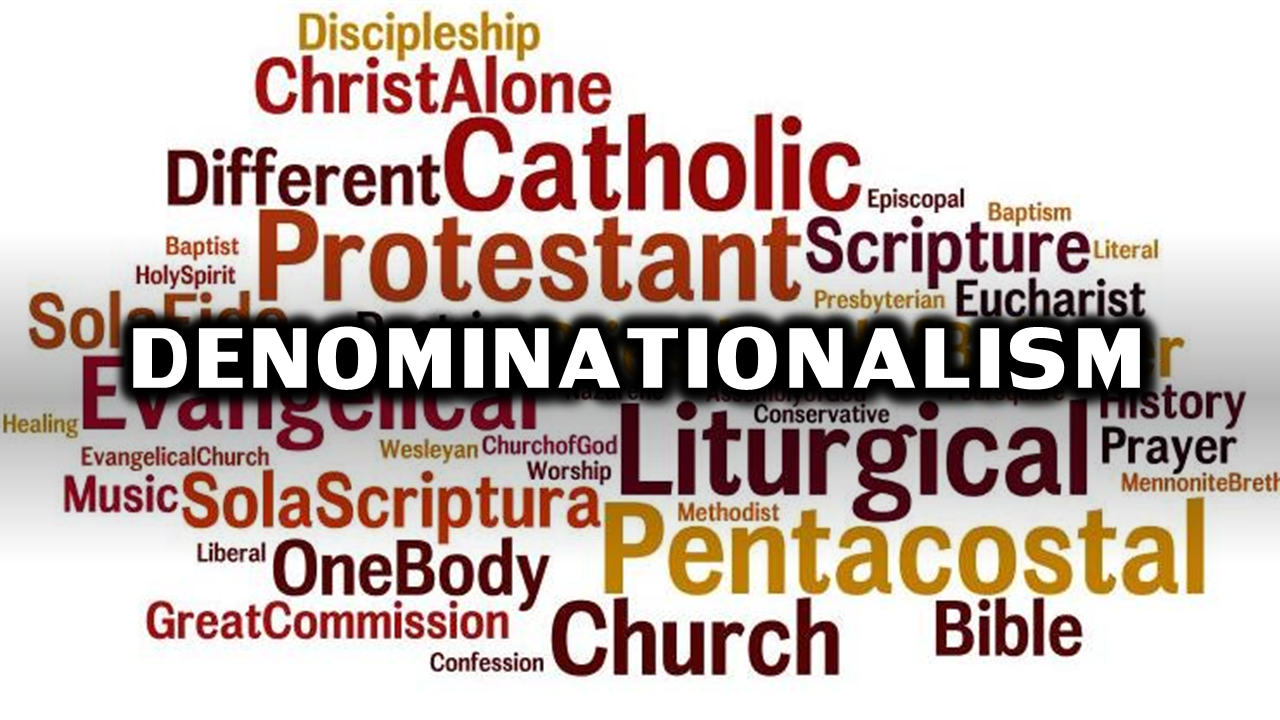
A denominator is the bottom number in a fraction or the number below the horizontal bar of a fraction. A fraction represents a part of a whole. Denominationalism is the devotion to denominational principles or interests emphasizing differences to the point of being narrowly exclusive. A denomination is the act of denominating and, by its nature, is a process of division. One of the common terms used for different churches is the question of what denomination a person belongs to and adheres to. The word itself suggests it is a group that is part of a division.

Jesus prayed that His disciples be one and united so the world could know they were disciples of the Christ. When the world looks at the religious world of Protestantism, what they see is a fractured, divided, exclusive group of individual churches following different creeds, worship, beliefs, and names. There is no unity among the believers in Christ. Using the term denomination proves the division of those who say they follow Christ. Everything about denominationalism is contrary to what the Bible teaches.

After Peter confessed Jesus as the Christ, the Son of God, Jesus promised to build His church. The emphasis of the text shows the singular nature of what Jesus would build rather than a plurality of churches as found in today’s religious market. Jesus told the disciples His kingdom was coming, but there would only be one kingdom. The church would be known as the flock of God, and there would be one Shepherd and one sheepfold.

Paul described the church as the bride of Christ. How many brides does Jesus have? There is only one bride. Jesus is the head of the body, the church. Can there be more than one body if Christ is the head? The church is called the household of God, where He is the Father. How many households does God possess? Finally, the church is called the Temple of God. Solomon built one Temple in Jerusalem, and Jesus built one Temple beginning in Jerusalem that would spread throughout the world. The church cannot be fractured and be the church of Christ.

Denominationalism is less than five hundred years old. The early church was not denominated as Paul declared to the saints in Ephesus that there was one church (Ephesians 4:4-6). In the first century, the Protestant denominations so common today did not exist. After the apostasy came, the Roman Catholic Church held the European world hostage in the Dark Ages, suppressing the word of God. In 1517, a Catholic monk named Martin Luther posted 95 theses or propositions of his opposition to the system of indulgences on the church door at Wittenberg, Germany. Luther came into conflict with the church for his criticism. Excommunicated by the Pope, Luther continued to challenge the papal authority. The term Protestant was first used by Lutheran princes who protested the authority of the Roman Catholic Church.

From the reformation of Luther and other men, more denominations began to emerge from the apostasy of the Roman Catholic Church. The Church of England was established by Henry VIII in 1534. In Switzerland, the Presbyterian Church began in 1535. John Smyth was instrumental in forming the Baptist Church in London in 1607 and John Wesley the Methodist Church in 1729. The World Christian Encyclopedia, a comprehensive reference work, estimated over 45,000 Christian denominations worldwide in 2020. That is a far cry from the one church in the New Testament.

Paul rebuked the church at Corinth for division. There was division in the local church brought about by carnal men seeking to please themselves. Some brethren gave allegiance to Paul, some to Apollos, others to Peter, and some to Christ. None of these men desired for the brethren to act so childishly, and Paul condemned them for it. Christ is not divided. He desires no division. The Lord declares denominating sinful and contrary to the will of the Father. God is not well pleased with anyone who belongs to a denomination because that is a church divided. His Son did not die for a divided church. There is only one church because there is only one body.

Posted in Uncategorized | Tagged , , , , , , , , , , , , , , , , , , , , , , , , , , , , , , , , , , , , , , | 1 Comment

Judging On The Balance

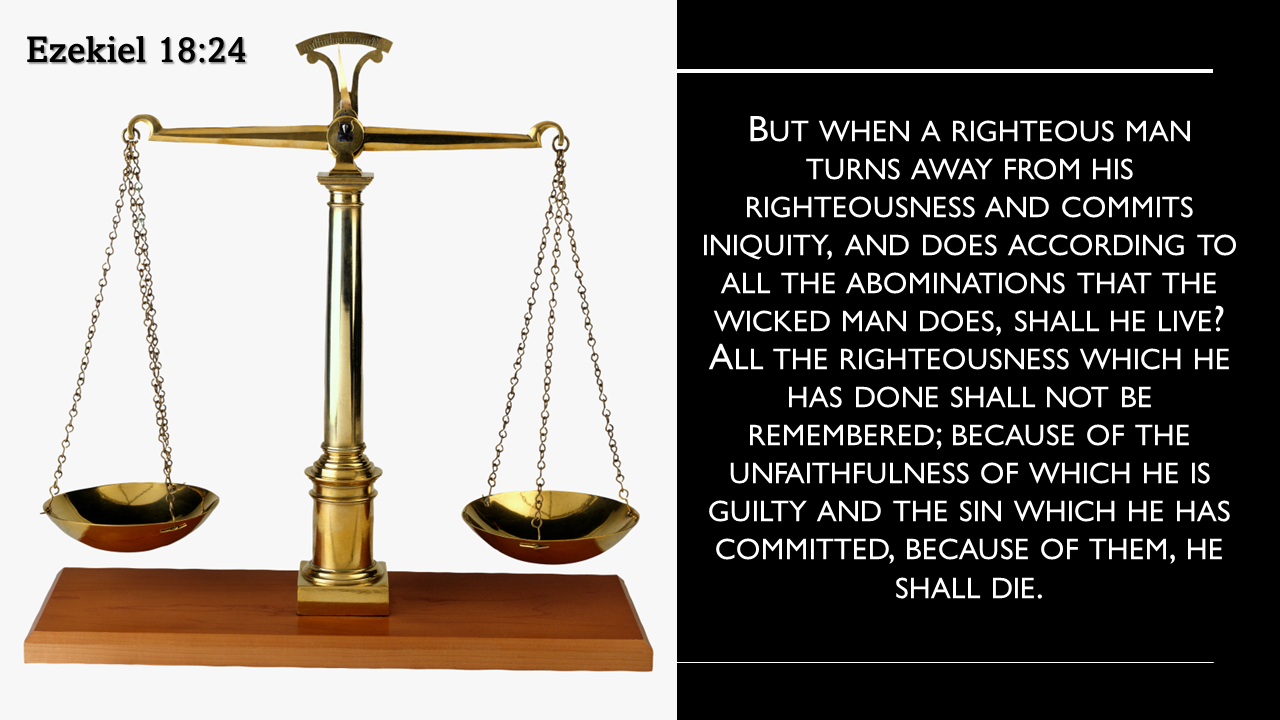
But when a righteous man turns away from his righteousness and commits iniquity, and does according to all the abominations that the wicked man does, shall he live? All the righteousness which he has done shall not be remembered; because of the unfaithfulness of which he is guilty and the sin which he has committed, because of them, he shall die. (Ezekiel 18:24)

Judging On The Balance

A man lives a full life of seventy years. In those seven decades, he learned early the love of God and obeyed the gospel of Christ. As he grows into manhood, he devotes his life to serving the Lord as a husband and father. The church is blessed with his love for the Lord. His family is an example of righteousness. Children grow to become parents, blessing the man with grandchildren. It seems for the man growing into the golden age of life he is a very blessed man.

Somewhere in the twilight of his life, the man’s heart turns cold and hard against the Lord. He has suffered tragic heartache and has become disillusioned. His love for the Lord wanes. The once devoted heart is now hardened into resentment. A life that was once dedicated to the service of Jesus Christ is now an empty shell. There is no love for the Lord and no desire to serve the Lord. The final years of the man’s life are spent away from God’s love, and he dies apart from the saving grace of Christ.

On the balance of the man’s life, everyone saw his righteousness and good works. He was a man for almost all his life who, was dedicated in his heart to serving God with love. Tragically, his life turned for the worse, and he rejected the Lord. From a human standpoint, the largest balance of his life was lived in righteousness for God. However, at the end of his life, he turned away from the Lord. Everything he lived for, he rejected. He died outside of Christ. As death consumed his life, he woke up in terror at the horror of divine judgment. Hell was real. A man who lived most of his life for Jesus Christ now found himself without the Son of God.

Another man lived seventy years and was a vile and corrupt man of immoral pleasures. He was not an example of righteousness. His life indulged in every pleasure of the flesh for many years, living to the gusto of all life had to offer. Everyone who knew this man saw a heart hardened with the deceitfulness of sin and wickedness to the excess. He was known as a man who pleasured himself with sin. His family was destroyed, his name smeared among the unrighteous, and his body wracked with disease for the pattern of life he had lived for so many years.

Somewhere in the twilight of the man’s life, he learned about Jesus Christ. Near the end of his life, he turned his heart to God and found grace. Through the love and mercy of a compassionate Father, this man’s sins were washed away in the blood of Jesus Christ. Rising from the waters of baptism, the second man’s face was filled with tears of joy. He was lost, but now he was found. The amazing grace of God had washed away all his sins. Shortly after his obedience, he lay in the hospital with death coming closer. As he closed his eyes in death, the saints he came to know who witnessed his transformation cried as they watched him pass into the realm of eternal glory. Angels carried him to the bosom of Abraham.

Two men. The first lived most of his life for righteousness, and the second lived most of his life in unrighteousness. Judgment is not measured by the balance scale. God will not look upon the totality of life and sum up salvation by how long a man is righteous or unrighteous. When a righteous man turns away from his righteousness and fills his life with ungodliness and sin, all his righteous acts will be forgotten, and he will die condemned. When a wicked man turns away from all his sins and serves the Lord to do what is just and right, they will live and not die. All their past sins will be forgotten, and they will live because of the righteous things they have done.

A balance scale cannot measure eternal salvation. A man can obey the gospel in the eleventh hour and be saved. Another man can turn away from the Lord at the eleventh hour and be lost. God is not impressed by the years of a man’s service to righteousness. The Lord demands a heart pure of sin. “For I have no pleasure in the death of one who dies,” says the Lord God. “Therefore turn and live!”

Posted in Uncategorized | Tagged , , , , , , , , , , , , , , , , , , , , , , , , , , , , | Leave a comment

Death Cannot Keep Its Prey

Men of Israel, hear these words: Jesus of Nazareth, a Man attested by God to you by miracles, wonders, and signs which God did through Him in your midst, as you yourselves also know— Him, being delivered by the determined purpose and foreknowledge of God, you have taken by lawless hands, have crucified, and put to death; whom God raised up, having loosed the pains of death, because it was not possible that He should be held by it. (Acts 2:22-24)

Death Cannot Keep Its Prey

Jesus taught His disciples that He was going to die. He described how He would suffer many terrible things and be rejected by the elders, chief priests, and the scribes. Jesus said that He would be killed, but three days later, he would rise from the dead. This is something He told the disciples on multiple occasions. He spoke this word openly of His death and resurrection. On one occasion, Peter took Jesus aside and began to rebuke the Lord for saying such things. Jesus, in turn, rebuked Peter in front of the disciples and told them that His death was the will of the Father.

The announcement of His death was startling enough, but no one seemed to take seriously the news that after three days, he would rise from the dead. Jesus used Jonah’s story to illustrate how He would die but rise three days later. What Jesus knew and what He and the Father had planned before time began was for Him to suffer the death of a mortal man, and then God would raise Him up on the third day before corruption could set in.

Death reigned over the world with a deadly grip of fear. There had been no demonstrations of the power of the forces of Hades before Jesus. The death of Jesus was not only to redeem sinful man from the wrath of God but to break the bonds of slavery encased in the realm of the Hadean realm. Jesus knew He would die, but death would not be able to keep Him. The Father would not allow His Son to suffer corruption in the grave. On the first day of the week, the Son of God rose. Death was unable to hold Him.

Peter explained to the devout Jews gathered for Pentecost the death of Jesus was by the foreknowledge of God. The Jews had killed Jesus by lawless hands, but it was in keeping with the will of the Father. They crucified Jesus and put Him to death. God raised Jesus up, having loosed the pains of death. The reason is because death could not keep its prey. Jesus could not be held by the tentacles of death. The Son of God rested in the bosom of Abraham until the third day. He left the realm of the dead, returning to the world as a man for forty days. He then ascended to the Father.

Paul declared Jesus was seen by the apostle Peter and then by the twelve. After that, He was seen by over five hundred brethren at once. Many of those people still lived when Paul wrote to the church at Corinth. Jesus was seen by James, then by all the apostles. Paul writes Jesus appeared last to him as one born out of due time. Death did not keep its hold on Jesus. The Lord remained in the grave for three days and rose so His body would not suffer the corruption of the flesh.  

Robert Lowry (1874) wrote the hymn, “Christ Arose,” where he said, “Death cannot keep its prey, Jesus my Savior; He tore the bars away, Jesus my Lord.” The sting of death is gone because Jesus rose from the dead. Victory in Jesus gives joy to the heart of the Christian, knowing that death will come, but death has no power to keep its prey. All men will die, but not all men will suffer the pain of death. Jesus said most will be lost, but the few will not be held hostage to the shackles of death. For the Christian, death is a release, a new beginning, an eternal journey of joy. Death cannot keep me. We will tear the bars away. Jesus, our Lord.

Posted in Uncategorized | Tagged , , , , , , , , , , , , , , , , , , , , , , , , , | Leave a comment

Gleaning In The Corners

So Ruth the Moabitess said to Naomi, “Please let me go to the field, and glean heads of grain after him in whose sight I may find favor.” And she said to her, “Go, my daughter.” (Ruth 2:2)

Gleaning In The Corners

God has always defended the weak and impoverished people. As Creator, the Lord made man in His image to glorify Him. He is not a respecter of persons and has no interest in the divisions of economy between rich and poor. The commandments of God have always been for the rich to have benevolent hearts towards the needy, with provisions made to care for the unfortunate. The principles of benevolence toward one another are clearly defined in the story of Ruth.

In the days of Israel, when judges ruled the land, a famine came upon the nation. A man called Elimelech from Bethlehem took his wife and two sons to Moab, where Elimelech would die shortly after arriving in the far land. His two sons, Mahlon and Chilion, married Moabite women named Orpah and Ruth. Ten years later, the two sons died, leaving Naomi destitute with her two daughters-in-law. Naomi returned to Judah, telling Orpah and Ruth to return to their families. Ruth desired to remain with Naomi and returned with her to Bethlehem.

The situation for Naomi and Ruth was dire. Without their husbands, the women must fend for themselves. Ruth asked her mother-in-law if she would permit her to go to the fields and glean heads of grain after the reapers. Like many poor people of the land, Ruth worked in the field all day gathering up what was left over from the reapers. The benevolent heart of the owner of the field, Boaz, allowed Ruth to gather grain among the sheaves without the reproach of the reapers. Boaz and Ruth married and became the great-grandparents of David, the king. Ruth, a Moabite woman, is found in the genealogy of Jesus Christ.

God included in the Law of Moses commandments that when a field is being harvested, the corners would not be gathered, and the field would not be totally gleaned. This included vineyards of grapes that were not to be wholly picked. God wanted the poor to have the opportunity to harvest what was left over. These were not suggestions but commandments of the Lord, qualified by the declaration, “I am the Lord your God.”

The reason God required His people to provide for the poor was to remember how they were once strangers and slaves in Egypt. If a sheaf of grain was forgotten, they were forbidden to go back for it. Beating the olive trees could only be done once without going over the boughs again. Vineyards were not to be stripped of grapes. The stranger, the fatherless, and the widow would be allowed to gather what is left over in the fields, orchards, and vineyards. This was to remind the people of God how blessed they were to have the storehouse of His blessings given to them in bounty. They were once slaves in Egypt, subjected to hardships and lack of food. God delivered them with innumerable blessings and brought them to a land of milk and honey. Remembering people in need among them was to remember how needy they were at one time.

There was no choice for the people to leave the corners and fruits of the land for the poor and needy. God commanded it. The land owner may look upon the corners and leftover olives and grapes as his, but God commanded him to leave it for others. The greedy man would take all of it for himself. Jesus told a parable of a rich fool who had no interest in helping others and lost his soul because of it. The people of God are benevolent spirits who know the blessings of the Lord are great. Having a willingness to share is the character of the Christian. The apostle Paul said one of the purposes of having a job is to share with others.

Do we leave corners for others to gather? Is the spirit of benevolence in our hearts? It will teach us not to trust in riches and give greater joy in sharing what God has richly blessed with others. This type of spirit is not found in the world but should be found in the church among God’s people. Covetousness robs us of the kindness we can show to others. Let the light of Christ shine in the manner we leave the corners for others.

Posted in Uncategorized | Tagged , , , , , , , , , , , , , , , , , , , , , , , , , , , , , , , , , , , , | Leave a comment

Where Do You Take Refuge?

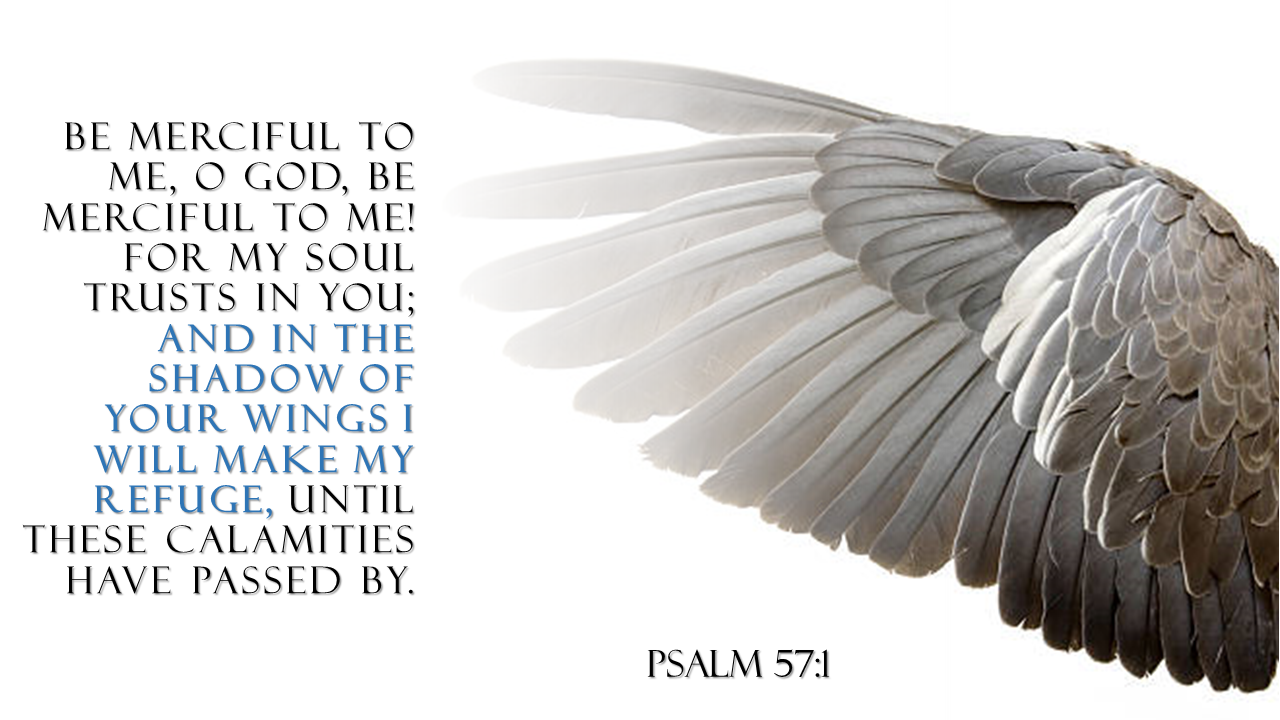
(To the Chief Musician. Set to “Do Not Destroy.” a Michtam of David when He fled from Saul into the cave.) Be merciful to me, O God, be merciful to me! For my soul trusts in You; and in the shadow of Your wings I will make my refuge, until these calamities have passed by. (Psalm 57:1)

Where Do You Take Refuge?

The first king of Israel was Saul of the tribe of Benjamin and son of Kish. Saul was a very handsome man standing head and shoulders taller than anyone else in the land. When the people demanded a king, Saul was chosen to lead the people of God. At first, Saul was a good king, but shortly after his reign began, the king began making bad decisions. After two years, Saul fought against the Philistines in Gilgal when he made his first grave mistake of offering a burnt offering rather than waiting for the prophet Samuel. When God told Saul to destroy the Amalekites utterly, Saul spared the king and the best of the flocks. Samuel declared to the king the Lord would remove his kingdom.

Samuel was told by the Lord to anoint another king for Israel, and David was selected. The young king would not take the throne for many years until the death of Saul. During this time, Saul was troubled by a distressing spirit. He was jealous of David after the young shepherd killed the Philistine champion, Goliath. The women would sing, “Saul has slain his thousands, and David his ten thousands.” Saul began to resent David with great hatred. The king started a ruthless campaign to kill David. On one occasion, David and his four hundred men found safety in the cave of Adullam. Later, David spares the life of Saul when he finds the king in a cave in the wilderness of En Gedi.

The background for Psalm 57 is unsure. It may be connected to one of the stories mentioned by the writer of 1 Samuel. The story could have been another occasion when David felt threatened by Saul and his army and found refuge in one of the many caves that dotted the landscape of Palestine. Whatever the circumstance, David found refuge in a cave and the knowledge of the Lord’s protection.

David uses beautiful language to describe the protection of God as the refuge in the shadow of His wings. Young birds will seek protection from danger under the wings of the parent bird. A mother hen will sweep her brood under her wings to protect them from danger. God will send from heaven to save His children with His mercy and truth. Facing the wrath of his enemies, David finds safety in the knowledge of God’s protective care. There is nothing to fear in the shadow of God’s wings.

Taking refuge in the Lord is the blessing of being a child of God in Christ. Through the blood of Jesus, the Christian will find refuge in the shadow of God’s wings to care for them against all danger. Satan has no power over those who abide in Christ. There is no condemnation for those in Christ. The Holy Spirit testifies to the Father of the needs of His children. Jesus taught His disciples to ask God to deliver them from evil. Peace fills the soul of the Christian. There is no greater joy than to find the shadow of God’s wings and His protection.

Posted in Uncategorized | Tagged , , , , , , , , , , , , , , , , , , , , , , , , , , , , , , , | Leave a comment

The Memorial Stones

And it came to pass, when all the people had completely crossed over the Jordan, that the Lord spoke to Joshua, saying: “Take for yourselves twelve men from the people, one man from every tribe, and command them, saying, ‘Take for yourselves twelve stones from here, out of the midst of the Jordan, from the place where the priests’ feet stood firm. You shall carry them over with you and leave them in the lodging place where you lodge tonight.'” (Joshua 4:1-3)

The Memorial Stones

God wants His people to remember. The function of the memory is given by the Creator as a tool to guide the spirit of man to the throne of God. Memorials are as ancient as the world. Great feats are remembered, courageous men are honored, and stories are immortalized in memorials. When the children of Israel crossed the Jordan River to enter the land of promise, God wanted memorial stones erected to remind them of the One who brought them there and gave them the land.

The twelve tribes of Israel were represented by one stone taken from the midst of the Jordan River. Like crossing the Red Sea forty years before, the people would cross the flooded Jordan River on dry ground. The priests bore the ark of the covenant before the people, and when their feet dipped in the water’s edge, the waters flowing downstream stood still and rose up in a heap. Then, the priests stood still in the midst of the Jordan as all of Israel (nearly two million souls) crossed on dry land.

After the people crossed the Jordan, Moses told the people to take twelve men from each tribe and gather twelve stones from the midst of the Jordan. These stones would form a memorial at Gilgal for the people to know who delivered them and gave them the land of milk and honey. As a sign of the power of God, the memorial stones will tell how the flooded Jordan stood up and the people crossed on dry ground. The peoples of the earth would know the hand of the Lord, that it is mighty, and to fear the Lord God forever.

The Lord has given the church memorial stones to cause the people to remember. Jesus stood in the midst of Hades and stopped the power of death. The hand of God permitted the hands of men to kill His Son. Only through the mighty power of the Father did the Son offer Himself as the lamb for sacrifice to redeem sinful man. The Lord’s Supper is a memorial feast to remind the people of God of the price paid, allowing them to enter the eternal promised land. Each first day of the week is a time to ask, “What does this memorial mean?” As an everlasting memorial, the Supper turns the hearts of the penitent to the love of God, His power to redeem man, and the ultimate sacrifice of Jesus on the cross.

Joshua set up the memorial in Gilgal. Jesus established His memorial in Gethsemane when He gave Himself willingly to the angry mob. The Lord’s Supper was given by Jesus earlier that night as a reminder of God’s love. On the following day, Jesus suffered on a cross of wood and died. The memorial stones had turned to wood. Jordan could not hold the Son of God, and on the third day, Jesus rose. When the children ask what the memorial of the Supper means, they must be told this is where Jesus crossed over Hades and conquered death. The sting of death is dried up. Jesus has given the victory to God’s people. Lord, come quickly. The land of promise awaits.

Posted in Uncategorized | Tagged , , , , , , , , , , , , , , , , , , , , , , , , , , , , | 2 Comments