Learning To Do God’s Will

Teach me to do Your will, for You are my God; Your Spirit is good. Lead me in the land of uprightness. (Psalm 143:10)

Learning To Do God’s Will

From the beginning, God has desired men to listen to His word and do as He commands. The first thing Satan challenged Eve with is whether God really meant what He said. Sin is a transgression of the law of God when the heart refuses to obey the commands of the Lord. God has shown His grace, mercy, love, and compassion and generously shares that with those who come to Him but demands those who approach Him to do so with reverence and fear. Nadab and Abihu, sons of Aaron and priests of God, were killed by the wrath of God for not regarding God as holy. How did they disregard the holiness of God? They did not do His will.

Israel was given a written law to follow with instructions to obey the law of the Lord, the testimonies of the Lord, the statutes of the Lord, and the commandments of the Lord. When they failed to do His will, God punished them. Jesus came into the world to offer Himself as a sacrifice for the sins of all men. The Hebrew writer quotes the psalms of David to show that Christ came in the volume of the book as it was written of the Messiah to do the will of God. Jesus was the Son of God, yet He obeyed the commands of the Father. If the divine Son of God comes to do the will of the Father, how can anyone refuse to obey?

Obedience does not remove grace; it enhances it. The religious dogmas of men denounce salvation by works accepting the false notion of salvation by faith or grace alone. What it missed is that salvation is never by works alone, but faith without works is dead. David desired to do the will of God and knew he needed to learn how to obey. He wants the Lord to teach him how to do His will. Obedience begins with learning. A child does not learn to obey by osmosis. It requires training and instruction. If a man believes he can be saved by faith alone with obedience, he becomes an empty shell of a man with faith without knowledge. True faith comes by hearing the word of God, which establishes obedience.

God has given commandments in His word and expects men to obey Him. Jesus pondered why men would call Him “Lord, Lord” and refuse to do what He said. If a man loves the Lord, he will keep His commandments. When a man refuses to follow the word of the Lord, he does not love the Son of God. He will not find joy in judgment when Jesus declares that He does not know the man. The religious world frowns on teaching obedience to the will of God. Sadly, many believers in Jesus Christ will never see eternal life because they refuse to do the will of the Father.

The spirit of the faithful seeks ways to learn the will of God. David desired to be taught the will of God, which required time and effort. His desire was based on what he had at the time and his limited knowledge of God’s plan. Now, two thousand years removed from the coming of Christ, the world has God’s complete revelation, with the mystery revealed through the Son of God. Bibles are readily available on multiple platforms and in every language known to man. Opportunities for most people of the world (many live in oppressive societies) to know the will of the Father abound, and yet the majority of ‘believers’ know little or nothing of the will of God. Pray the prayer of David. Teach me to do Your will. And then go and do His will.
Posted in Uncategorized | 1 Comment

Jesus Was Innocent

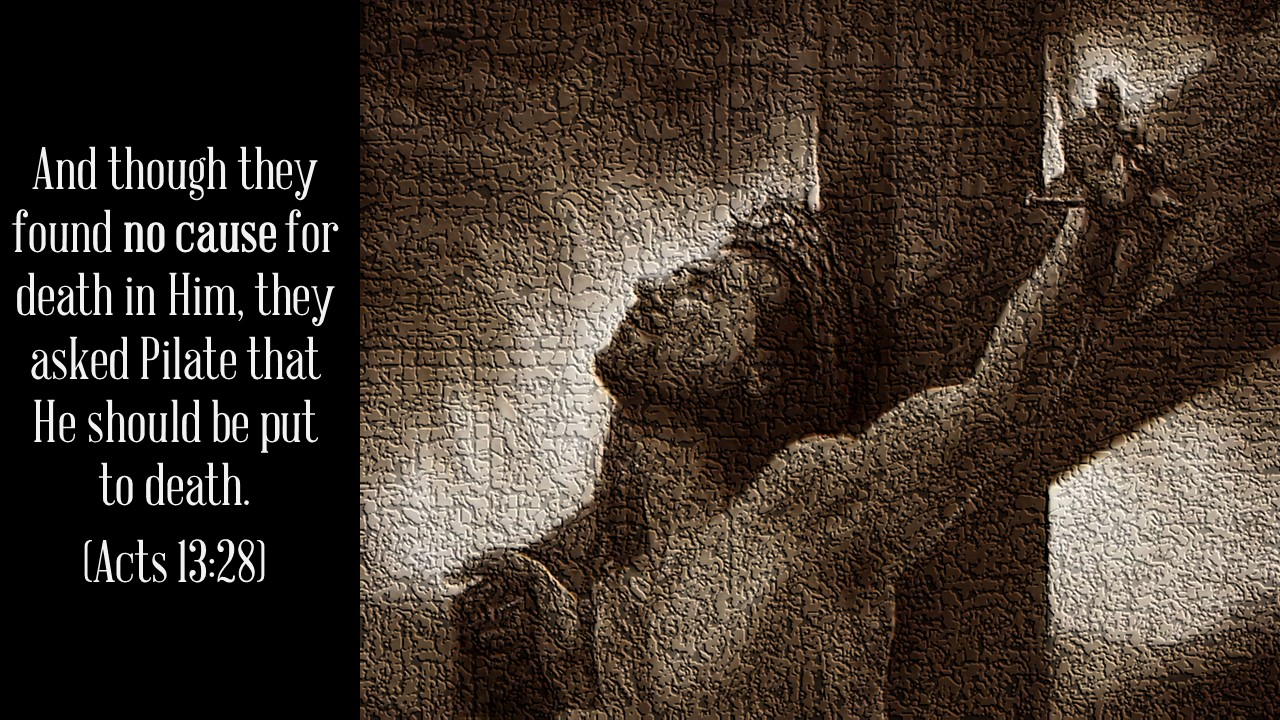
And though they found no cause for death in Him, they asked Pilate that He should be put to death. (Acts 13:28)

Jesus Was Innocent

The cross of Jesus is the greatest example of divine sacrifice and the greatest failure of human wisdom. Jesus had shown Himself as the Son of God by miracles, wonders, and signs, which God did through Him in the presence of all men. Nothing was hidden. No miracle was disavowed. The power of Jesus was never challenged, and the Jewish leaders could not deny the miracles. Trying to trap Jesus in His teaching was the only way the Pharisees and rulers sought to incriminate the Lord and failed every time. There was nothing they could say or do to stop Jesus until they decided to have Him killed. They had no cause for death in Him, but they asked Pilate to crucify Him.

It would seem in an established legal system as the Romans had, it would be difficult to kill a guiltless man whom even Pilate believed to be innocent. Pilate tried to appease the people and, at the same time, save the life of the man he believed to be delivered up through envy, but his heart was filled with cowardice and malice. A man’s life was nothing to him. He thought he had the power to execute any man he wanted, never realizing the One standing before him would be his judge in eternity very soon. There was no cause for death in Jesus, and Pilate sealed His fate by ordering the Lord to be scourged and crucified.

When God cast Adam and Eve from the garden, they were guilty of disobeying the word of the Lord. In Noah’s days, every human being was destroyed in the flood because they were guilty of complete depravity. Only Noah and his family were saved through the grace of God. God promised Abraham the land of Canaan, but not until the iniquity of the inhabitants had become fully deserving of death. Joshua carried out that mission many years later when the nation of Israel marched into Canaan and began destroying the people. The land’s inhabitants were not innocent and deserved the judgment of God.

Israel turned their hearts away from God, and they received a just recompense. First, the northern ten tribes rebelled. Two hundred years later, the Assyrians annihilated the ten tribes because they were guilty of wickedness, judged, and punished. God did not destroy them because they were innocent. One hundred thirty-six years after the fall of Israel, Judah was taken to captivity. Jerusalem was destroyed, and the Temple was leveled. The remnant was spared to secure the seed of Christ, but the people were not innocent.

Divine wisdom ordained the world’s punishment by grace, mercy, and truth. Human knowledge is ordained by sinful men incapable of knowing their right from their left. There have been many times when innocent men have been judged guilty when they are innocent. Jesus Christ was not only innocent, but He had also never sinned. The people found no legal reason to execute Jesus, but they asked Pilate to have Him killed anyway. Jesus allowed the world to kill Him because that was the will of the Father. The injustice of the world was the justice of the divine.

Lest we forget that while we were not there when they demanded the death of Jesus, our human wisdom fails us because we pronounce judgment on Jesus every time we sin. We condemn Jesus to death, and only through the grace of a loving Father is redemption found in the blood of the Son of God to redeem our sins. God be praised for His love to allow us to stand justified before Him, washed of our sins. Jesus is the innocent lamb slain from the foundation of the world. They called Him guilty. He was innocent.

Posted in Uncategorized | Leave a comment

The Sons Of Moses

Then, at this saying, Moses fled and became a dweller in the land of Midian, where he had two sons. (Acts 7:29)

The Sons Of Moses

Stephen’s historical account of the nation of Israel includes the reminder that Moses had two sons. The Hebrews had fallen under the tyranny of an Egyptian ruler who did not know what Joseph had done for the people and worried about how the Hebrews were multiplying. Pharaoh passed a law that all Hebrew babies would be killed in an effort to stem the tide of the increasing population. The parents of Moses did not fear the king’s order and hid Moses for three months. Unable to hide the infant any longer, his mother, Jochebed, placed Moses in a small ark near the river where the daughter of Pharaoh bathed. When Pharaoh’s daughter saw the ark among the reeds, she sent her maids to retrieve it. Miriam, the sister of the infant Moses, told Pharaoh’s daughter that she would get a woman from among the Hebrews to nurse the child. Jochebed nursed Moses until such a time as she took her son to live in the Egyptian palace. Moses would be raised as the son of Pharaoh’s daughter.

At the age of forty, Moses killed an Egyptian for beating a fellow Hebrew. The next day, knowing his act of murder was known, Moses fled to the land of Midian, where he would remain for forty years. Moses married one of the seven daughters of the priest of Midian and had two sons, Gershom and Eliezer. After God called Moses to return to Egypt, Jochebed, and the two boys joined Moses on his journey back to Egypt. On the way, the Lord met Moses, intending to kill him. The context lends itself to the belief that Moses had not circumcised Eliezer. The covenant of circumcision was first given to Abraham as a sign of the covenant. Zipporah took a sharp stone and cut off the foreskin of her son, and the Lord relented.

Sometime after arriving in Egypt and before the exodus of the people, Moses sent Zipporah back to Midian, where she stayed with her father. When the people were at Sinai, Jethro brought his daughter and two grandsons to Moses. After Moses recounted the story of the people’s deliverance, Jethro made a burnt offering and made other sacrifices to offer to God. Aaron and all the elders of Israel came and ate bread with Moses and Jethro. The next day, when Moses was judging the people, Jethro suggested that Moses was overtaxing himself by taking on all the leadership. He suggested Moses establish rulers in various numbers to care for the judging of the people. Moses agreed and did all that he said.

The Holy Spirit records no further details of Zipporah. Moses marries an Ethiopian later, which causes problems with Miriam and Aaron, arousing the anger of the Lord against Moses’ brother and sister. Gershom and Eliezer pass from the records, with only a mention of their sons in David’s records many years later. From the family of Amram, Shebuel was a descendant of Gershom and was called the chief officer of the treasuries. Other descendants of Moses through Eliezer were Rehabiah, Jeshaiah, Joram, Zicri, and Shelomoth. The records fall silent to the story of the family of Moses.

It is remarkable to consider how central to Old Testament history Moses is, yet very little is known about his family. He died at the age of one-hundred-twenty with his strength undiminished and his eyesight clear. Were his sons there? It is unknown. Moses was buried in a valley in the land of Moab, opposite Beth Peor; but no one knew where God buried him. His resting place remains in the shadows of history unknown. His sons’ legacy may live today in the lives of unknown people; they will never know it. Moses had a single purpose in life and became the great lawgiver for the Lord. And he had two sons.

Posted in Uncategorized | Leave a comment

The Danger Of Drifting

Therefore we must give the more earnest heed to the things we have heard, lest we drift away. (Hebrews 2:1)

The Danger Of Drifting

There is a danger of drifting away from the truth learned in Jesus Christ. The book of Hebrews is written to Jewish saints who were in danger of drawing back into the Law of Moses and perdition. Jesus Christ is the better High Priest who shed His blood to establish a better covenant. The early Jews had suffered under persecution, with many giving up their faith to return to the old law. It was a real danger faced by many early Christians who had been enlightened with the gospel of God. They had tasted the heavenly gift of grace in its fullest measure. Obedience to the gospel of Christ had given them the gift of the Holy Spirit. The word of God had tasted good, but now they were having doubts. They were drifting away from God.

Truth is not gained without effort and will not be retained without the caution against losing what was once precious and dear. It is tragic to know of so many who never obey the gospel of Jesus Christ and lose their souls. Greater still are those who once served the Lord with faithfulness and devotion, who turn their backs on the only means of salvation they have. Drifting away from the truth has taken their hearts back to the world, the false religions of human wisdom, and a certain appointment with judgment. The danger of drifting is real, and the consequences are eternal.

Drifting begins in a very gradual manner. On the water, a boat can slowly move away from its secure mooring without notice. Before long, the boat was in jeopardy, and there was danger. An airplane can start to change course very slightly, drifting away from its appointed path. In time, without notice, the airplane was lost and far off course. Drifting is easy, and it is dangerous. Satan knows the tactics of drifting and is very crafting in alluring the heart to slowly move away from the truth of the gospel. Without taking notice, the soul can find itself outside the covenant of God.

The solution to the danger of drifting is to take earnest heed to the conditions that can lead to destruction. Satan desires for those who have tasted the gospel to turn away from God gradually. Without taking heed to his pernicious ways, the heart can easily be led astray by the allurements of Satan’s devices. Truth must be established and given the stricter attention of heeding the instructions of the Lord. Faith comes from hearing the word of God and applying it to the heart. The answer to drifting away is to stand firm with a knowledge of the word of God. Each day is an affirmation of establishing truth. Daily meditation of the word will keep the heart from drifting from the shores of God’s grace.

Paul described the faith of Hymenaeus and Alexander, who, concerning the faith, suffered shipwreck. They had lost their way. They began drifting away from the truth, destroying their faith. Examples such as these early saints stand as warnings of the danger of not taking the more earnest and holding fast to the pattern of sound words. Taking heed is necessary to maintain the faith in Jesus Christ. Prayer, daily Bible study, collective worship, evangelism, and fellowship in the Lord’s work are tools to keep one’s heart from drifting. Secure your life with an anchor that is steadfast and sure. Remain with Jesus, and you will not drift.

Posted in Uncategorized | 1 Comment

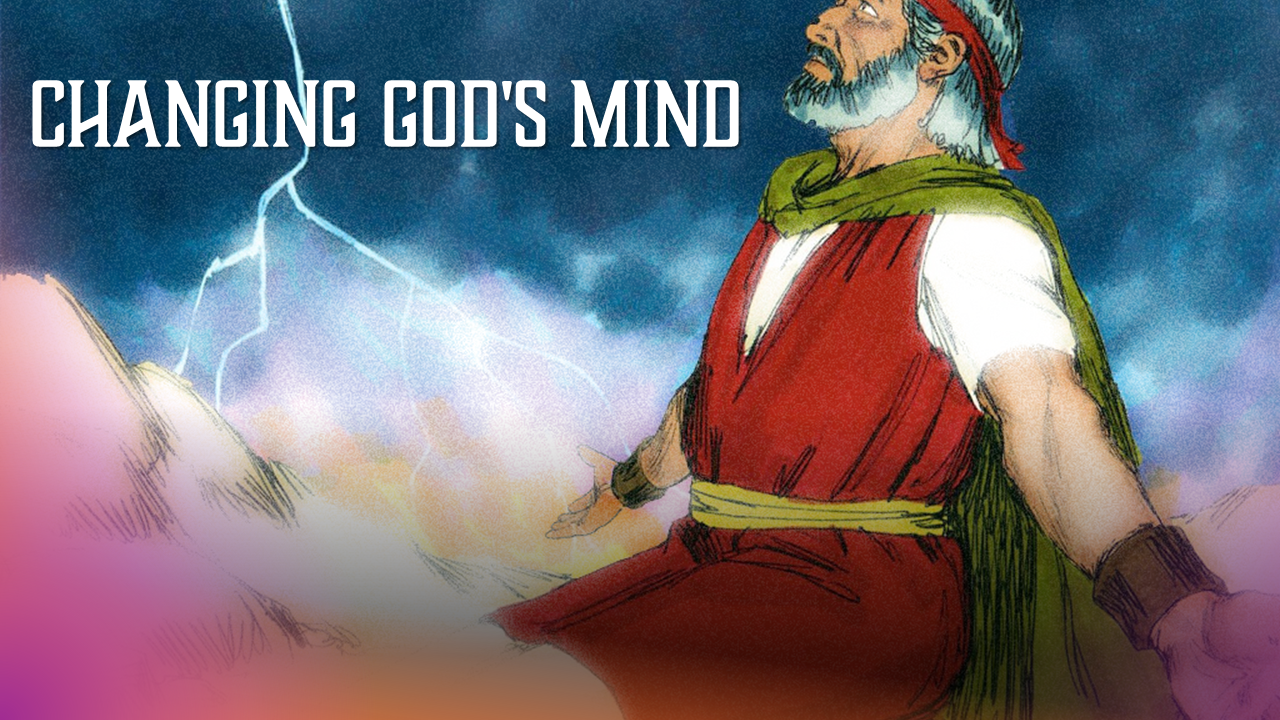
Changing God’s Mind

Remember Abraham, Isaac, and Israel, Your servants, to whom You swore by Your own self, and said to them, “I will multiply your descendants as the stars of heaven; and all this land that I have spoken of I give to your descendants, and they shall inherit it forever.” So the Lord relented from the harm which He said He would do to His people. (Exodus 32:13-14)

Changing God’s Mind

It did not take the Hebrews long to turn back to the influence of Egypt and make a golden idol to worship. The children of Abraham lived in the land of the Egyptians for four hundred years, and while they retained a belief in the one true God, the influence of pagan worship filled their minds. Moses had led the people out following the terrible plagues against Egypt. God had delivered nearly two million souls when the Red Sea parted, and the people walked across on dry land. The Lord had won a great victory against the Amalekites. Since leaving Egypt, God provided water and bread from heaven. Three months after leaving the land of Egypt, they came to Mt. Sinai.

Moses had gone to the mountain to receive the law. The Ten Commandments were inscribed on tablets of stone. When the people saw that Moses did not return quickly from the mountain, they became restless. They supposed something had happened to their leader, and they had been abandoned. Aaron, the brother of Moses, agreed with the people, instructing them to bring their gold to him, where he fashioned a golden calf. Remarkably, Aaron believed his brother had died on the mountain or had gotten lost. He proclaimed the next day as a feast to the Lord.

The people rose early in the morning, offering burnt offerings and peace offerings, and then began the feast of idol worship by feasting and drinking and indulging in pagan revelry. There was no restraint among the people. All the miracles they had seen by the hand of God were forgotten. They had become like the nations around them and the Egyptians they had despised. The Hebrews were acting like licentious, immoral, and ungodly people who did not believe in the one true God.

As Moses communed with the Lord on the mountain, the anger of the Lord grew hot against the Hebrews. God was angry with the people. In His anger, the Lord God promised to rain down His wrath upon the people He had delivered from bondage. He promised Moses He would make a great nation from him. There was nothing to stop the anger of the Lord from destroying the people. Then Moses did what few men would embolden themselves to consider and to be successful. Moses pleaded with the Lord.

Moses’ plea was for the Lord to remember the covenant made with Abraham. Moses reminded God of the great power of delivering the Hebrews, showing how great the God of Israel was compared to the gods of Pharaoh. If God killed the people now, what would the Egyptians say about the benevolent God who delivered them? Moses interceded for the people, and the wrath of God abated. The Lord relented from the harm which He said He would do to the people. Moses changed the mind of God.

Prayer is pleading the promises of God. The Bible is filled with stories of the power of prayer. What seemed impossible was made possible because of prayer. All things in this world will be for the glory of God, but it should never be thought impossible to change God’s mind. Jesus taught that faith and prayer can move mountains. We laugh and say it is impossible; we are right because we do not believe in that kind of prayer. Moses pleading with God was seeking the mountain moving prayer – and God listened. How often have we not believed in the power of prayer because the answer did not suit our needs, and yet God is saying, “Just ask.” Moses did not know if God would relent, but he asked. Because of Moses’ prayer, Israel was saved that day.

Posted in Uncategorized | Leave a comment

Uriah The Hittite

Then it happened one evening that David arose from his bed and walked on the roof of the king’s house. And from the roof he saw a woman bathing, and the woman was very beautiful to behold. So David sent and inquired about the woman. And someone said, “Is this not Bathsheba, the daughter of Eliam, the wife of Uriah the Hittite?” (2 Samuel 11:2-3)

Uriah The Hittite

The sin of David and Bathsheba is a familiar story from the Old Testament. David engaged in adultery with another man’s wife when he took Bathsheba and lay with her. He had seven wives before his adultery with Bathsheba and would have more wives and concubines. Nathan, the prophet, comes to David after it is discovered Bathsheba is pregnant with his child and tells him the Lord has put aside the penalty of death prescribed under the Law of Moses.

David’s sin led him to more transgressions when he brought the husband of Bathsheba home from the war and got him drunk to cover his adultery with Bathsheba. Unable to use her husband to cover his sin, David sends a message to Joab to have the husband killed in battle. As the battle rages near Rabbah, Joab places Bathsheba’s husband in the fiercest fighting and withdraws, leaving him to die at the hands of the enemy. Joab sends notice to David that the command was carried out. The husband of Bathsheba is dead.

The husband of Bathsheba was Uriah. Bathsheba was the daughter of Eliam (Ammiel), one of David’s officers. She was also the granddaughter of Ahithophel, a close advisor of David, who would align himself with the rebellion of Absalom. Uriah was one of the elite soldiers for the army of David, numbered among the “Thirty” (there were thirty-seven in all). These soldiers demonstrated great bravery and allegiance to the king of Israel. Uriah was an unusual part of the Israelite army because he was a Hittite.

When Abraham came to Canaan, the Hittites had long been resident there. They were a warlike group of local tribes descended from Canaan (son of Ham, grandson of Noah). Abraham bought his burial plot in the field of Ephron the Hittite. When Esau was forty years old, he married two Hittite women, to the disappointment of Isaac and Rebekah. God told Moses He would drive the Hivites, Canaanites, and the Hittites out of the land of Canaan like hornets. The Angel of the Lord would drive out the Canaanites, Amorites, Hittites, Perizzites, Hivites, and Jebusites. God wanted the Hittites to be utterly destroyed.

Israel conquered the land of Canaan, but they never destroyed the people of the land (like the Hittites). God did not want Israel to make a covenant with them, nor with their gods. The Hittites were not to dwell in the land because of the influence they would have upon God’s people. God wanted the race of the Hittites to be removed entirely from the land so Israel would not serve their gods and follow their ungodly ways. Uriah the Hittite is a testimony of the failure of Israel.

Ironically, in the story of David and Bathsheba, Uriah is the man of character. David called him back to cover his sin, but Uriah would not sleep in his house while his men fought at Rabbah. Even getting Uriah drunk would not get him to go home. Uriah carried his death sentence to Joab, never knowing what was to happen. During the final battle, Uriah must have wondered why his commander withdrew the forces from the wall, leaving him and others to die. Uriah would die bravely in battle, fighting for the king who had treacherously condemned him to death because of his adultery with the man’s wife.

Uriah was a Hittite, but he was a man of character. David was a child of Abraham, and he lost his dignity and respect in the affair with Bathsheba. Nathan’s parable shows the depths of David’s sin. The adultery was a sinful act that turned into the murder of a mighty man. Uriah also stands testimony to those who refuse to obey the command of God. If Israel had carried out the word of the Lord, Bathsheba would not have been married to a Hittite. Ultimately, the influence of the people of the land (Canaanites, Amorites, Hittites, Perizzites, Hivites, and Jebusites) would destroy Israel when the people of God became like the nations around them. One of God’s heroes was a Hittite.

Posted in Uncategorized | Leave a comment

Saul Did Not Argue

As he journeyed he came near Damascus, and suddenly a light shone around him from heaven. Then he fell to the ground, and heard a voice saying to him, “Saul, Saul, why are you persecuting Me?” And he said, “Who are You, Lord?” Then the Lord said, “I am Jesus, whom you are persecuting. It is hard for you to kick against the goads.” So he, trembling and astonished, said, “Lord, what do You want me to do?” Then the Lord said to him, “Arise and go into the city, and you will be told what you must do.” (Acts 9:3-6)

Saul Did Not Argue

The conversion of Saul of Tarsus was a remarkable example of grace. In the early days of the church, Saul was the antagonist of all those who followed after the Way. He was unabashedly seeking every man and woman who professed to follow Jesus of Nazareth to destroy their lives and, in some cases, take their lives. In Saul’s mind, Jesus was a blasphemer of the law of God, and all those who called themselves after His teachings needed to rot in jail or die. Saul’s work was designed to devastate the movement. He left no stone unturned. Disciples of Jesus were not safe anywhere, including in foreign cities.

Through his contacts in the city of Damascus, Saul had learned of disciples there. He went to the High Priest in Jerusalem, seeking authority to go to the foreign city to root out the troublemakers. It would be a long journey of nearly two hundred miles, but Saul was not to be kept from his mission of destruction. Leaving Jerusalem, he and his company traveled many miles to within sight of Damascus. Saul’s plan was coming together. He anticipated many disciples to be arrested and carried to Jerusalem.

As Saul came near Damascus, a piercing light shone around Him from heaven. Jesus appeared to Saul to show Him His glory and told Saul to go into Damascus and be told what to do. Saul arose from the ground to discover he was blind. His companions led him into the city to the house of Judas, where he remained for three days. At the end of three days, Ananias came to Saul and told him God had chosen him to be a chosen vessel. Receiving his sight, Ananias baptized Saul, washing away his sins. Immediately, he preached Christ in the synagogues of Damascus, saying that He was the Son of God.

One of the salient points of Saul’s story is the acceptance of obedience without question. There was little or no hesitation for Saul to obey the voice of the Lord. The brilliant light on the road to Damascus would be convincing but would not require Saul to obey. His passion to destroy Christ was fully zealous to persecute the church beyond measure. He did not have to go into the city. His passion could have rejected the word of Jesus and allowed him to continue his crusade against the disciples. He obeyed without question.

The three days without sight and refusing food and water were not why he obeyed Ananias’ voice. It is not hard to imagine all the emotions that were going through the mind of Saul as he sat in darkness in the home of the ones he came to arrest and possibly cast a vote of death against. He had served God with the greatest purpose and consciousness, believing he was doing the work of the Lord as a faithful Jew. His life had been dedicated to the service of Jehovah God. It was only now he realized he was wrong.

How does a man admit failure in a life so full as Saul’s? He heard and saw Jesus and knew he was talking to the Son of God, but what of his life as a Hebrew of Hebrews? Can he give all that up to serve the man from Nazareth? What about his family? How would this impact his position in the Jewish community? What would happen to Saul? Ananias comes into the room and, with great compassion, shows the love of God to a man feared by all the saints. When Saul was told to arise and wash away his sins in baptism, he did not argue about works, outward signs, or whether baptism was necessary. He arose immediately and obeyed the voice of God.

The faith of Saul led him to be the apostle Paul. Saul had faith in God and trusted in his word. Like Apollos, Saul needed to learn the more perfect way, and when he did, there was no arguing with the word. He obeyed. Saul would be amazed at how people today argue about everything. A man seeking what to do to be saved will read in the Bible he needs to repent and be baptized – and walk away denying the importance of baptism. Many people have accepted the lie of salvation by faith alone or grace alone, refusing to do what Jesus said. Saul did not argue when he knew what the word said. What value is there in arguing with what is plainly written in scripture? Read it. Believe it. Obey it. Act in faith. Stop arguing about truth that will not change no matter how long you deny it.

Posted in Uncategorized | Leave a comment

Long Distance Love

No one has seen God at any time. If we love one another, God abides in us, and His love has been perfected in us. (1 John 4:12)

Long Distance Love

During World War 2, many newlyweds had to spend their first few years of marriage apart from one another. The war lasted nearly six years, which could take a toll on relationships. Unknown to many today, a communication apparatus called “letter writing” was the only lifeline between a loved one at home and the soldier. It took long periods of time for letters to find their way to the right person. Some wrote letters every day. Over time, these letters became the foundation of the relationship of a strong marriage after the war, which goes against the psychology of how many believe love develops between a man and woman.

Is it possible to establish a deep and abiding love for two people who have never met? Stories have proven that through the avenue of the written word, love can become a striking response to a relationship based only on words. A man falls in love with a girl and is immediately rushed to war. The crucial time of marriage is found in those first few years. With a constant flow of letters between the couple, they develop a strong and vibrant feeling without seeing or touching one another. It is done only by words.

The greatest love story is found when a man falls in love with the heavenly Father. There are some considerations that must be realized when a man becomes a Christian. He is serving a God he has not seen and will not see until death. The world is filled with the evidence of the Father, but actually saying that he has seen the Father is impossible. What the Father has done is leave His testimony in the written word that describes His divine nature. The Bible talks about the goodness and severity of God. There are stories filled with grace, mercy, and love. Many stories describe the wrath of God, where He destroys thousands of souls. The nature of God is conveyed through words.

No man can see God, and the scriptures reveal that no one has ever seen God. Moses was allowed to see the passing glory of God, which is as close as any human has been to looking into the visage of God. The value and importance of seeking God’s word is knowing more about the Father. Through that knowledge, love begins to grow. Faith comes from hearing the word of God, and that is where love comes from. There is no way to love God without knowing His word. Through the divine “letters” of the hand of God, written to all men to read and understand, a man can fall in love with the Father.

The love of God abides in the heart of the faithful because they have spent endless hours talking to the One whom they have never seen and cannot see. God abides in the heart through the correspondence of His word. It is impossible to love God and not spend time in the word – the Bible. Love can never be perfected in man’s heart until he spends time communicating with the Father. God’s letters are found in the Bible. Man’s return letters come from his prayers, songs, worship, and obedience.

Take time to read the words of the divine revelation to grow a deeper love for God than ever before. If you lack faith, read the word, pray to the Father, and fall in love with the grace of God. The greatest long-distance love relationship is found in how we seek to know all about our Father – whom we have not seen! That will become the most powerful love you can ever experience. Fall in love with God. Read His letters.

Posted in Uncategorized | Leave a comment

Running Eyes

For the eyes of the Lord run to and fro throughout the whole earth, to show Himself strong on behalf of those whose heart is loyal to Him. In this you have done foolishly; therefore from now on you shall have wars. (2 Chronicles 16:9)

Running Eyes

King Asa was the third king of the kingdom of Judah and the grandson of Rehoboam. Because of the leadership of his grandfather, Rehoboam, and his father, Abijam, the people had endured the rule of wicked kings for twenty years. Asa would reign over Judah for forty-one years and did what was right in the eyes of the Lord. However, near the end of his reign (year thirty-six), he made a grave mistake when attacked by Baasha, king of Israel.

The civil war between the northern tribes of Israel and the southern two tribes of Judah had ravaged the land for many years. Baasha was a wicked king who refused to follow the word of the Lord. He invaded Judah and began building a fortress called Ramah. He planned to seal Asa in not allowing anyone to go out or come into Asa, king of Judah. When Asa heard of the invasion of Baasha, he brought silver and gold from the treasuries of the house of the Lord, including the kings’ house, and sent them to Ben-Hadad, king of Syria.

Asa sought a treaty with the Syrians to fight against Baasha. Ben-Hadad was in a treaty with Baasha, but he agreed when he received a bribe from Asa to break his treaty. Attacking cities in Israel, the Syrians stopped building Ramah and returned home. King Asa took all the provisions used to build Ramah and used them to build Geba and Mizpah. The grievous error Asa made was seeking the help of the Syrians instead of asking for the help of the Lord.

The prophet Hanani came to King Asa and rebuked him for not seeking the help of God. Asa relied on the king of Syria to deliver him from Baasha. Early, Zerah the Ethiopian came against Judah with an army of a million men and three hundred chariots. Asa was outnumbered with only an army of five hundred eighty thousand warriors. God delivered the Ethiopians to the army of Asa in a great victory. Now, faced with Baasha and the army from Israel, Asa did not ask God to help him. What Hanani told the king is revealing.

Hanani reminds King Asa that the eyes of God run to and fro throughout the whole earth, seeking those He can help. God desires to strengthen the hands of the weak and stir the feeble hearts of His people with courage. The eyes of the Lord seek ways to help His people. There is no greater army to fight against Satan than the army of the Lord led by the Commander of the army of the Lord. Asa had the opportunity to call upon the Lord, but he called on the king of Syria.

Our prayers fail because we trust in our own wisdom to solve our problems. Satan has convinced us that God does not answer our prayers, and we then do not trust Him. We seek answers in everything but God. Hanani declares God is looking for opportunities to help His people. What greater strength can a man receive than what comes from the Lord? Prayers are always answered. When the answers do not fit our desire (or demand), it is God’s will. Asa made an alliance with the wrong source. God is always faithful and will never leave His people. Trust in Him, and do not lean on your own understanding. Let the eyes of the Lord look down upon your life and bless it with the power of God. Ask, and you will receive. Knock, and it shall be opened to you.

Posted in Uncategorized | Leave a comment

Lessons From Two Men

But there was a certain beggar named Lazarus, full of sores, who was laid at his gate, desiring to be fed with the crumbs which fell from the rich man’s table. Moreover, the dogs came and licked his sores. So it was that the beggar died and was carried by the angels to Abraham’s bosom. The rich man also died and was buried. (Luke 16:20-22)

Lessons From Two Men

The story of Lazarus and the rich man is a story of contrast that is common to all men. On the one extreme is a man who lives with all the enjoyments of a worldly life. The rich man was very wealthy and enjoyed daily increases in wealth and prosperity. A man of his stature was an influential man. As a Jew, he could point to the success of his life to the blessings of God, but he was a man devoted to himself, not the Lord. The Law of Moses did not forbid a man from being rich, but the law prescribed that the poor be cared for and those in need be loved. The rich man did none of these.

A contrast to the rich man’s life was found at his gates. Little is known about Lazarus as Jesus relates the story. He has friends and family who carry him to the rich man’s gate to receive alms. It was a common practice for the oppressed to be placed at the gates of the well-to-do to receive some benevolence. According to the Law of Moses, this is how the people of God took care of one another. Lazarus begged for crumbs that fell from the rich man’s table.

Lazarus was not only a poor man, but he was also afflicted with a disease manifesting in sores all over his body. The gnawing in his stomach was overshadowed by the intense pain from the many sores covering his body. His misery was heightened by the degradation of lying on a thin carpet begging for the mere morsels of crumbs that could be found. Lazarus’s life was filled with suffering every waking moment. He could see and hear how well the rich man was doing. On occasion, the rich man would come through the gate to attend some great gathering, and there was Lazarus, reaching out his hands for a crumb. The rich man was disgusted with all the beggars surrounding his gate as he glared at them contemptuously.

The rich man was a Jew bound to keep the Law of Moses, but he did not. His life was an unrighteous affair of riches, sumptuous living, and seeking the fame and fortunes of life. He did not fear death because he knew he would be remembered for all he accomplished. When he died, there would be great festivals in his honor. His legacy was established, and he felt confident. At the rich man’s gate sat a man in contrast to his station in life. Lazarus was a righteous man who trusted in God. He did not make great fanfare about his faith. Whatever circumstance placed him at the rich man’s gate was not unlike the story of the patriarch Job. During his suffering, he believed in the promises of God.

Lazarus was a man of vision. He had nothing to eat and suffered from the sickness of sores covering his body. The only creatures giving sympathy were dogs, who would come and lick his sores, easing his pain. Through all his suffering, he kept his eyes on the better homeland, a heavenly country. Like Abraham of old, Lazarus looked to a city prepared for him by God. Lazarus learned to live a righteous life in his poverty. Lazarus was a righteous man who looked to a time when God would wipe away his tears and take away his sorrows. That time came for Lazarus and the rich man at the same time.

On a certain day, two men died who, in life, were the contrast of human suffering and prosperity. What is significant about the death of the rich man and Lazarus is they died the same way. When the rich man died, he left all his wealth and prosperity; when Lazarus died, he left all his poverty and disease. What makes the story of the two men different is what happened immediately upon their deaths. The man who suffered terribly during life was carried by angels to the bosom of Abraham. What a joy to feel the pains of a diseased body to be lifted. Lazarus was comforted by the joy of the Lord. His life had been a faithful love for the promise of God.

The rich man also died, and that is all Jesus said. Jesus said the rich man died and was buried, and being in torment, he lifted up his eyes and saw where Lazarus was. He never took notice of Lazarus in life, but now, in death, Lazarus has become a real person. The rich man refused to honor God. Now, he would remain in the torment of fire and gnashing of teeth forever. He knew – too late – what was important in life. Lazarus believed in God and found eternal comfort in the arms of a loving Father.

Two men are in contrast, and you are one of those men. Either you live like the rich man ignoring God’s will or serve the Lord God in faith and obedience like Lazarus. Death comes to all men. You will die. If you are unprepared for death, you will not be prepared for what comes next. It is real, it is horror, it is suffering. No one will come from the grave to warn you. You have the gospel of Jesus Christ. If you do not obey the gospel, there is no hope. Are you ready?

Posted in Uncategorized | Leave a comment