The Beer Can

beercanThe Beer Can 

It was lying on the side of the road on the corner to my house. A single beer can discarded as a piece of trash by a person who had used its contents to fill a pleasure and then thrown out the window. I have seen hundreds of discarded cans and this one was no different with the exception of what it represented at that moment. The appeal of its contents had caused a person to purchase it and then consume the momentary feeling of pleasure. When the can was emptied, it had no use and was carelessly thrown out for someone else to pick up. It was empty. It had no use. It had lost its appeal. It was but for a moment. It was worthless.

Man has always sought for the momentary pleasures to fill his void. Looking for the appeal of alcohol man seeks out these cans of vipers poison and drinks his fill and while finding a sense of satisfaction for the moment realizes that it is only for a moment. His life is like the can he threw away – emptied, rejected, little use, shallow and unfulfilled. Lives have been destroyed because of intoxicating drink. Families are torn apart daily by its presence in the home. Young people live with consequences of their actions through the use of alcohol for the rest of their lives. As Herman Melville wrote in “Moby Dick,” it is truly a “demon.”

The wise man wrote in Proverbs 23:29-35, “Who has woe? Who has sorrow? Who has contentions? Who has complaints? Who has wounds without cause? Who has redness of eyes? Those who linger long at the wine, those who go in search of mixed wine. Do not look on the wine when it is red, when it sparkles in the cup, when it swirls around smoothly; at the last it bites like a serpent, and stings like a viper. Your eyes see strange things, and your heart will utter perverse things. Yes, you will be like one who lies down in the midst of the sea, or like one who lies at the top of the mast, saying, ‘They have struck me, but I was not hurt; they have beaten me, but I did not feel it. When shall I awake, that I may seek another drink?’ “People of God have been shown by the Lord that alcohol has no value in their lives and no purpose. The great tragedy of its use is the end result – like a discarded can on the side of the road.

The appeal of momentary pleasure has driven many to the basement of alcohol’s deceit. There is no value in following a life of drunkenness or even flirting with the dangers of drinking as many do in what they refer to as “social drinking.” That makes as much sense as “social fornication.” The appeal of the Lord is for His people to be “obedient children, not conforming yourselves to the former lusts, as in your ignorance; but as He who called you is holy, you also be holy in all your conduct, because it is written, ‘Be holy, for I am holy’” (1 Peter 1:14-16). Peter quotes from Leviticus 11:44 where the appeal of God to the people is for them to “sanctify” themselves before Him. One cannot sanctify themselves with a beer in hand.

Someone will pick the beer can up and throw it away. It will be left to families to pick up the pieces of shattered lives. Many who have found themselves in the slavery of alcohol will find their lives thrown on the side of the road as nothing more than an empty life. Christ has the answer and it is found in His love, His mercy, His forgiveness and His strength to overcome. He is the way out of sin, He is the only truth one can find about sin and He is the only one who can give life to empty lives (John 14:6). His path leads to the Father and to salvation. Don’t throw your life away. Be filled with the Spirit (Ephesians 5:18).

Posted in Character Study, Christian, Morality, New Testament, Old Testament, Proverbs, Social Issues, Uncategorized | Leave a comment

Right Turn Only (Kent Heaton)

Right Turn OnlyRightTurnOnlyLg

The famous quote from ‘Pirates of the Caribbean: The Curse of the Black Pearl’ is when Jack Sparrow says to Mr. Gibbs, “I thought you were supposed to keep to the code.” Gibbs replies, “We figured they were more actual guidelines.” This quote is seen when men challenge law as merely a guideline rather than a rule to abide by. Waiting behind a couple of trucks in the “Right Turn Only” lane I was rather surprised when a break in the traffic allowed them time to turn – left. Moving across four lanes of traffic the trucks barreled down the road considering the sign instructing them to turn right “more actual guidelines” than law.

Four things were at play that day. First, they had a need to turn left and they found themselves in the wrong lane. Second, they understood the law requiring them to turn right but the law did not suit their needs. Third, law only applied to them when they had no choice (like the presence of law enforcement). Finally, there were no immediate consequences to their action and they gave their disobedience no further thought. While their action did not impact anyone it does speak to an attitude of heart that has been the driving force of the serpent’s plea so long ago. “Has God indeed said” (Genesis 3:1) is how Satan drove a wedge between man and God. Eve found herself thinking how unfair it was for God to forbid the tree from her. She knew the law of God as she repeated it to Satan. Believing the Lord would not know what she was doing she reached out and took the fruit. After eating the fruit she did not die; at least the way that Satan explained it.

Most men view the Bible as a book of guidelines rather than a law to live by. The books of Genesis to the Revelation are the mind of God but the mind of man will only accept what suits his needs and desires. Murder may be wrong but homosexuality must be accepted. Faith in God is necessary but baptism has no place in salvation. It matters not what church you belong although the New Testament only speaks of one church. The moral code has given way to the moral guidelines adaptable to the whims of modern culture. Isaiah warned of this attitude when he wrote, “Woe to those who call evil good, and good evil; who put darkness for light, and light for darkness; who put bitter for sweet, and sweet for bitter! Woe to those who are wise in their own eyes, and prudent in their own sight” (Isaiah 5:20-21)!

The Bible is filled with stories of those who turned left when the law says “right turn only.” Nadab & Abihu (Leviticus 10:1-3) turned left and were punished. Moses was guilty of not giving God the glory (Numbers 20) and was forbidden from entering the Promised Land. David was punished for his sin with Bathsheba (2 Samuel 11). Ananias and Sapphira tried to hide their greed from God and received the penalty of death (Acts 5). Many will reject the gospel and will see the Lord returning “in flaming fire taking vengeance on those who do not know God, and on those who do not obey the gospel of our Lord Jesus Christ. These shall be punished with everlasting destruction from the presence of the Lord and from the glory of His power” (2 Thessalonians 1:8-9).

God’s laws are not merely guidelines – they are life and death (Deuteronomy 30:15). They cannot be viewed as a convenience to the needs of man. “Whoever commits sin also commits lawlessness, and sin is lawlessness” (1 John 3:4). Disobeying the law of God will bring eternal penalty.

Posted in Character Study, Christian, Church, Morality, New Testament, Old Testament, Social Issues, Uncategorized | Tagged , , , , , , , , , , , | Leave a comment

Hope

hope_id20790441_jpgHope

The frailty of the human spirit cannot survive without the expectation of something better. Since the beginning of time the desire for that which is beyond has brought man to the shores of a new world and touched the edges of space. A desire to know what is on the other side of the horizon compels the insatiable drive of man to reach past what he knows for what can be known. The bounds of the habitation of man does not allow him to see beyond the veil of death and remains wrapped in an enigma yet challenges his desire to know what is beyond. Death’s finality underscores the limits of what man understands of life. And then comes hope.

When God created man He made him in His own image (Genesis 1:26-27). Man is a spirit dwelling in a mortal body. Moses writes, “The days of our lives are seventy years; and if by reason of strength they are eighty years, yet their boast is only labor and sorrow; for it is soon cut off, and we fly away” (Psalms 90:10). The body will die but the spirit lives on and this is where man must understand the true character of his nature. There is something beyond the grave. Life is not about the here and now. All that we see about us is temporary (2 Corinthians 4:18). Hope is the message from God that life is an eternal presence without end. The travails of this life are but a “light affliction” (2 Corinthians 4:17) and beyond the sunset of life is a new day of resurrection.

Hope is the knowledge that sickness is but a temporary malady. Lazarus suffered greatly as a beggar at the rich man’s gate but in death he was “comforted” (Luke 16:25). The faithful of the Lord were stoned, sawn in two and slain with the sword but with hope sought a homeland where God had prepared a city for them (Hebrews 11). The joy of hope is brought about by tribulation, perseverance and character (Romans 5:1-4). “Now hope does not disappoint, because the love of God has been poured out in our hearts by the Holy Spirit who was given to us. For when we were still without strength, in due time Christ died for the ungodly” (Romans 5:5-6). C. A. Bartol said that “Hope is the parent of faith” and without faith we cannot be pleasing to God (Hebrews 11:6). How can we live without hope?

The comfort found in hope is lifting the eyes beyond life and seeing the favor of God bestowed upon His children. Death is not to be feared. The end of life is the beginning of resurrection. Paul best defined hope in Romans 8:18. “For I consider that the sufferings of this present time are not worthy to be compared with the glory which shall be revealed in us.” The world is passing away but our hope in God does not. Pleasures of the flesh are only moments of desire fulfilled without lasting joy but hope in the eternal is everlasting. Jesus looked beyond the garden of Gethsemane and the place of the skull to the reward of sitting at the right hand of the Father. He lived with hope. He died with hope. He raised the third day to instill in all of us our hope of a new day.

“Blessed be the God and Father of our Lord Jesus Christ, who according to His abundant mercy has begotten us again to a living hope through the resurrection of Jesus Christ from the dead, to an inheritance incorruptible and undefiled and that does not fade away, reserved in heaven for you, who are kept by the power of God through faith for salvation ready to be revealed in the last time. In this you greatly rejoice, though now for a little while, if need be, you have been grieved by various trials, that the genuineness of your faith, being much more precious than gold that perishes, though it is tested by fire, may be found to praise, honor, and glory at the revelation of Jesus Christ, whom having not seen you love. Though now you do not see Him, yet believing, you rejoice with joy inexpressible and full of glory, receiving the end of your faith–the salvation of your souls” (1 Peter 1:3-9).

Posted in Character Study, Christian, Church, Morality, New Testament, Old Testament, Proverbs, Social Issues, Uncategorized | Tagged , , , , , , , , , , , , , , , , | Leave a comment

The Meanest Mother In The World

823The Meanest Mother In The World
(Author Unknown)

I had the meanest mother in the world. While other kids ate candy for breakfast, I had to have cereal, eggs and toast. When others had cokes and candy for lunch, I had to eat a sandwich. As you can guess, my supper was different than the other kids also. But at least I was not alone in my suffering. My sister and two brothers had the same mean mother I did.
My mother insisted upon knowing where we were all the time. You’d think we were on a chain gang. She had to know who are friends were and what we were doing. She insisted, if we said we’d be gone an hour, that we be gone an hour or less, not one hour and one minute. I am almost ashamed to admit it, but she actually struck us. Not once, but each time we did as we please. Can you imagine someone actually hitting a child just because he disobeyed? Now you can begin to see how mean she really was.
The worst is yet to come. We had to be in bed by nine each night and up early the next morning. We could not sleep until noon like our friends. So while they slept my mother actually had the nerve to break the child labor law. She made us work. We had to wash dishes, make the beds, and learn to cook and all sorts of cruel things. I believe she laid awake nights thinking up mean things to do to us.
She always insisted upon our telling the whole truth and nothing but the truth even if it nearly killed us – and it nearly did. By the time we were teenagers, she was much worse and wiser and our lives became even more unbearable. None of this tooting the horn of a car for us to come running. She embarrassed us to no end by making our dates and friends come to the door and get us. I forgot to mention: while my friends were dating at the mature age of 12 or 13, my old fashioned mother refused to let me date until the age of 15 and 16. Fifteen, that is, if you date only to go to a school function and that was maybe twice a year.
My mother was a complete failure as a mother. None of us have ever been arrested or beaten his mate. Each of my brothers served his time in the service of this country. And whom do we have to blame for the terrible way we turned out? You are right, our mean mother.
Look at all the things we missed. We never got to march in a protest parade, nor to take part in a riot, burn our draft card and a million and one things that our friends did. She forced us to grow up into God-fearing, educated, honest adults.
Using this as a background I am trying to raise my three children. I stand a little taller and I am filled with pride when my children call me mean. Because you see, I thank God he gave me the MEANEST MOTHER IN THE WORLD!

Posted in Character Study, Christian, Church, Marriage, Morality, New Testament, Old Testament, Proverbs, Social Issues, Uncategorized | Leave a comment

Do Not Go Near The Door

holding-door-openDo Not Go Near The Door

The danger of temptation is overlooked for the danger one finds in being at the wrong place at the wrong time and not making a better choice. Succumbing to immorality is never a single step but a process as James describes that begins when desire draws the heart away and following conception birth gives place to sin (James 1:13-16). In the case of King David the focus is on his sinful act with Bathsheba followed by the murder of Uriah but lessons should also be directed toward the door on the housetop of the King. Walking one evening on his roof “he saw a woman bathing and the woman was very beautiful to behold” (2 Samuel 11:2). Immediately a door appeared that gave David a choice of turning around and removing himself from the circumstance or to walk through the door and bring great sorrow to the family of God. He chooses the latter and suffered for it.

David knew what he was doing was wrong and when he first saw Bathsheba sin had not taken hold. But he decided to linger and to ponder her beauty. Asking who she was he continued on his course of sin flinging wide the door of temptation. What if he would have seen Bathsheba bathing and realizing the potential for what would come turned away and refused to go on the roof unaccompanied? He would have learned the proverb written by the second child born to Bathsheba – “Remove your way far from her, and do not go near the door of her house” (Proverbs 5:8).

The Lord always offers a way of escape (1 Corinthians 10:13) but the best antidote to sin is to not go near the door of temptation. Solomon is admonishing the young man to stay far from the clutches of the immoral woman (Proverbs 5). Too often those who say they are strong enough to stand at the door find themselves on the wrong side of the door. Why put yourself in harm’s way when the way of harm is clearly marked with danger? Not only should we resist evil we need to stay as far from evil as we can.

In days gone by many towns had what was referred to as the “red light district” of town. This was a place where sexual immorality was prominent and godly people were not even found near the place (although many found themselves drawn in). Solomon alludes to the wisdom of staying as far away from these kinds of circumstances as one can find. The red light district has now turned to a glimmering blue hue of computers, smart phones and electronic devices that create a stronger appeal of immorality.

It is hard to accept a world without our electronic devices that run our lives and bring us (so-called) happiness. But at what cost? Because we enjoy our cable television on big (huge) screens with so much high definition it looks better than real life we are unwilling to live without it we fall prey to its temptation time and time again? How can we get anything done without the internet and yet for many it because a millstone around the neck drowning them in the ocean of immorality. Our phones have got to be the smartest and newest phones that let us do things Dick Tracy would not have imagined and what dangers await us there?

Jesus warned in the sermon of Matthew 5 that “If your right eye causes you to sin, pluck it out and cast it from you; for it is more profitable for you that one of your members perish, than for your whole body to be cast into hell. And if your right hand causes you to sin, cut it off and cast it from you; for it is more profitable for you that one of your members perish, than for your whole body to be cast into hell” (vv29-30). The sin is not in the computer or IPad or smart phone; the sin is in the heart. But we must also be aware of the agents of change that cause one to sin. Solomon was not condemning the door in Proverbs 5 he was challenging the young man to stay away from the door.

Job was a man who “shunned evil” (Job 1:1). He tried to stay as far away from sin as he could and would not allow anything to be presented before him that would bring about sin (Job 31:1). Is it possible David wrote Psalm 101 after the story of Bathsheba? “I will set nothing wicked before my eyes; I hate the work of those who fall away; it shall not cling to me” (Psalms 101:3). Paul admonished young Timothy in both letters to “flee youthful lusts” (1 Timothy 6:11; 2 Timothy 2:22). The point is simple: STAY AWAY FROM THE DOOR! We do not go through doors we are not standing at.

Someone said, “Satan, like a good fisherman, baits his hook according to the appetite of the fish.” He knows what appeals to our desires and we must identify the doors of the devil and stay as far away from them as we can. Remember these doors do not have his name on the mailbox nor do they look uninviting. But so often we know whose street we walk and we think we can just walk by and it will not get us.

When you bravely drink that beer proud of the fact you are not drunk beware of the door you are going through. Your hand is turning the handle and with little effort you will be inside. As the lights go dim and the one you are with is beside you and feelings become action you have taken the wrong path and come to the wrong door. Love is not the name of that door – it’s called fornication and adultery. Finding yourself alone on the internet or texting a friend that challenges you to ‘sex-text’ or having a relationship on Facebook hidden from your spouse is standing at the door of Satan with your hand on the doorbell. “Do not enter the path of the wicked, and do not walk in the way of evil. Avoid it, do not travel on it; turn away from it and pass on” (Proverbs 4:14-15).

Posted in Character Study, Christian, Church, Morality, New Testament, Old Testament, Proverbs, Social Issues, Uncategorized | Tagged , , , , , , , , , , , , | Leave a comment

Death By Snake Bite

Snake handler webDeath By Snake Bite

The news of Jamie Coots death is sad on many levels. For his family they are without a husband, father and friend. No matter the cause of death grief will fill the hearts of loved ones in the loss and separation. A second level of sadness will be the manner in which he died. Jamie Coots was the pastor of the Full Gospel Tabernacle in Jesus Name located in Middlesboro, Kentucky where snake handling is a common practice. Refusing treatment after a rattlesnake bite Coots went home where later his wife also refused treatment from the ambulance crew and later died from his injury. The family’s explanation was “when it’s your time to go, it’s just your time to go” (ABC News Nightline, February 17, 2014).

What is more tragic in this story is the bite people receive from “that serpent of old, called the Devil and Satan, who deceives the whole world” (Revelation 12:9). With respect to the grieving family the worst bite Coots and his followers are inflicted with is a false understanding of the word of God. Jesus warned of those who worshipped outside the bounds of the will of God (Matthew 7:21-23) and it is sad to find good and honest hearts deceived by the mockery of Satan.

Snake handling takes its teaching from the gospel of Mark: “Go into all the world and preach the gospel to every creature. He who believes and is baptized will be saved; but he who does not believe will be condemned. And these signs will follow those who believe: In My name they will cast out demons; they will speak with new tongues; they will take up serpents; and if they drink anything deadly, it will by no means hurt them; they will lay hands on the sick, and they will recover” (Mark 16:15-18). An example of this can be found in Acts 28:1-6 when Paul was bitten by a viper and received no harm. The snake however suffered a righteous end by dying in the fire (much like the “serpent of old” will suffer – Revelation 20:10).

Today those who handle snakes (and are bitten frequently) believe they are showing the power of God in their lives to handle venomous snakes without being harmed. This has never been the case as even Coots lost a finger to a snake bite. Paul did not lose his arm when he was bitten by the viper. The purpose of the Lord’s admonition in Mark 16 was to confirm the Word through the accompany signs (like taking up serpents or drinking anything deadly). Snake handlers by their actions deny the Word of God has been confirmed. There are many snake handlers in the world today that do so without regard to religion. What these Pentecostals are doing is nothing more than handling dangerous snakes. Where is the practice of drinking deadly potions (Mark 16:18) among religious folk today? They died out immediately. What demons are cast out or speaking in foreign languages by the power of God or laying hands on the sick is done today? These miracles happened in the 1st Century to confirm the word of God “But when that which is perfect has come, then that which is in part will be done away” (1 Corinthians 13:10). “That which is perfect” is the Bible!

Snake handling is found in Mark 16:18 but obedience to the gospel is found in Mark 16:15-16 and is seldom (if ever) taught by Pentecostals. The way of salvation is still active and true today but the confirming of signs as found in Mark 16:17-18 has been done away with. Satan is filling the hearts of good people today with the lies of his deception to reject the word of God. Death by snake bite is a horrible way to die especially when a cure is available. The curse of the devil is a more horrible manner of death to be deceived into believing a lie that will bring about a more serious death than the first death. “Then Death and Hades were cast into the lake of fire. This is the second death. And anyone not found written in the Book of Life was cast into the lake of fire” (Revelation 20:14-15).

Our prayers are with the Coot family. There is a need for greater prayer to help those blinded by the false teachings of the master liar to “open their eyes, in order to turn them from darkness to light, and from the power of Satan to God, that they may receive forgiveness of sins and an inheritance among those who are sanctified by faith in [Jesus Christ]” (Acts 26:18).

Posted in Character Study, Christian, Church, Morality, New Testament, Uncategorized | Tagged , , , , , , , , , , , , | Leave a comment

The Challenge Of Young Adult

The Challenge Of Young Adult

Graduation from High School is an exciting time for young people. With great anticipation they look forward to a new dawn of opportunities taking them to new places and meeting new friends. Plans are made to move away to college or pursue jobs in many fields of interest. Some join the military while others marry and find a settled job that satisfies the needs of a family. So many decisions await the young mind that at times it seems to overwhelm the imagination.

The transition from high school is an awkward time as the excitement of leaving home meets the face of reality. Independence is much desired but comes at a cost few realize until thrown into the midst of responsibility. The accountability of a free spirit still requires paying the bills and feeding the body. There are myriads of temptations that lay on the threshold of a young man’s life that can destroy a good character. Decisions made now will impact the rest of one’s life. This period of ‘wilderness wandering’ is fraught with many dangers that if not kept in check will bring misery and heartache to the lives of the young adult.

From the beginning of time the Creator of man has shown the creation how to make the right decisions. The young person must recognize that he is made in the image of God and that happiness and completeness in life can only be found by seeking the wisdom of God. Six lessons will help all young people know their place in life and guide them to a long and fruitful life.

(1) THERE ARE CONSEQUENCES TO LIFE. One of the lessons learned in science is that for every action there is a reaction. The apostle Paul reminds us of the consequences of our actions – “Do not be deceived, God is not mocked; for whatever a man sows, that he will also reap. For he who sows to his flesh will of the flesh reap corruption, but he who sows to the Spirit will of the Spirit reap everlasting life” (Galatians 6:7-8). The fun you have today will bring a harvest tomorrow. Sowing wild oats in youth will bring a future marred by regret and sorrow.

Wisdom for youth knows that while the heart should be filled with the joys of this time in life, “God will bring you into judgment” (Ecclesiastes 11:9). There will be a day of reckoning as in all things in life. Fill your days of youth with the good things you can take with you tomorrow. The treasures of today will be a lot more enjoyable in the years to come than trying to live down the mistakes of the past.

Be careful with the decisions you make in regard to your career (Matthew 6:33), your friends (1 Corinthians 15:33), the one you marry (1 Peter 3:7) and your faith (Acts 16:2). You stand at the headwaters of your life to decide the course your life will take. Make certain your decisions are guided by the hand of the Creator.

(2) LIFE IS ONLY ONE TRIP: THERE ARE NO DO-OVERS. In golf you may be allowed a mulligan but life offers no such reward. A mulligan allows you take to take the shot over again but playing golf does not imitate life. Every day is imprinted on the pages of history and cannot be changed. We are victims of our past, prisoners of the present and judges of the future. What we do today cannot be done over; we can only seek to make better decisions today.

The challenge of life is not to live without regrets but rather to live life with a few regrets as possible. King David was a man after God’s own heart but he lived with regret. Showing the consequence of sin the Lord through the hand of Matthew reminds everyone of the sin David committed with Bathsheba in Matthew 1:6. There can be no doubt David wanted a ‘mulligan’ in life to change his fateful decision but he had to live with the decision he made. He remained faithful to the Lord and overcame his sin but the memory of it remained.

“See then that you walk circumspectly, not as fools but as wise, redeeming the time, because the days are evil” (Ephesians 5:15-16). The decisions you make today will set a course of decisions tomorrow. Some things you can change but some things you cannot change. “Trust in the LORD with all your heart, and lean not on your own understanding” (Proverbs 3:5). The wisdom literature in the Old Testament is especially valuable for young people to read and learn valuable life lessons from.

(3) LIFE IS NOT FOR THE FAINT OF HEART. The days after high school seem to be framed with golden days of frolic and frivolity. So often young people leave the embrace of home and run headlong into the embrace of a cruel world that cares nothing for them. The young man of Jesus’ parable in Luke 15 found that out the hard way. He wanted freedom and he got freedom for a while until he found himself feeding swine and wishing he could eat their slop. The freedom of choice in youth does not take away the penalty of tomorrow’s payment that will come due. There are many dangers waiting to consume the young heart and bring a life of regret.

The crafty woman of Proverbs 7 is all too often the life story of many a young person. Enticing speech and flattering lips lead many hearts to drown in sorrow. The dangers of pornography, sexual promiscuity, challenges to faith in God, ridicule of religion in general, rejection of parental advice and an appeal to making it rich no matter the cost stand at the threshold of a young person’s life. Without a resolve to withstand the harsh world by the determined faith in God a young man or woman will find themselves in many troubles. “Flee also youthful lusts; but pursue righteousness, faith, love, peace with those who call on the Lord out of a pure heart” (2 Timothy 2:22).

(4) FAITHFULNESS TO GOD BEGINS WITH YOU! The faith of your parents and grandparents is a very important part of your life. Examples of godly people that you may have known growing up help mold you life in many ways. Friends will encourage you to be a good person as you spend time with them. But when you leave home and enter a world given over to unbelief your faith must come from a heart developed by your own love of truth. Your parent’s faith will not save you because of your last name. Satan will be defeated because your faith is what you have made your own.

When Joseph was sold into Egypt by his brothers (Genesis 37) the faith he had in the Lord God came from his trust in God’s love. He did not have anyone to lean upon but the belief that God would provide for him. David stood in the valley of Elah facing Goliath without the army of Israel, neither the blessing of his brothers nor the advice of his father. He stood alone. Yet in faith he gained the victory. Daniel and his three friends faced an onslaught of faith challenges in Babylon without the support group they may have had in Jerusalem. Young man Timothy made his faith his own. “Let no one despise your youth, but be an example to the believers in word, in conduct, in love, in spirit, in faith, in purity” (1 Timothy 4:12).

(5) YOU ARE AN ETERNAL BEING. The previous four points are dependent upon knowing the decisions you make will have consequences not only in this life but also after death. Understanding you are an eternal being is to say that you know you will never cease to exist. Death may seem like a far off mystery to you but learning early not to fear death and to see it as a bridge from mortality to immortality will help in making the right decisions. The book of Ecclesiastes is written for the young man and young woman to consider the questions of life. When all is said and done – what is life all about? Let us hear the conclusion of the whole matter: “Fear God and keep His commandments, for this is man’s all. For God will bring every work into judgment, including every secret thing, whether good or evil” (Ecclesiastes 12:13-14). You see, you are made in the image of God (Genesis 1:27) and although your body will die you will not. Life is short but on this short span of time eternity will be determined.

(6) BUILDING A GODLY LIFE IS A LIFE OF JOY. “Bodily exercise profits a little, but godliness is profitable for all things, having promise of the life that now is and of that which is to come” (1 Timothy 4:8). Living a life for God will temper the impact of sin upon your life. This does not suggest that bad things cannot happen to young people. Disease, death, sorrow and the challenges of life are for all ages. But living a godly life will bring a greater amount of joy to life than sowing wild oats today and praying for a crop failure tomorrow. Being a godly man and woman will bring greater fulfillment in life with wisdom from above. “I have restrained my feet from every evil way, that I may keep Your word” (Psalm 119:102).

The wisdom of man will only bring despair. Finding the wisdom of God will bring clarity and understanding for life. Listen to the older folk who tell you of the regrets made in life when they did not follow a path of godliness. The right answers are found in God’s word. Happiness in life is built upon a faith in the way of the Lord. Living for the Lord is a life not to be regretted. May God bless your hearts and minds to serve him each day and find the joy of living in Jesus Christ.

Posted in Uncategorized | Leave a comment

The Last Enemy

resurrThe Last Enemy

Since the beginning of time and throughout the world in every corner of civilization a common picture is found. Scattered on hills and mountains and filling the valleys of earth scenes of memorials declare the lives of the countless millions who walked as mortals but now repose in the shadow of death. Markers bear the names and dates of a life lived and concluded in the arms of mortality. Millions more lie undiscovered through the ages as death reigns among the legions of men. The apostle Paul reminds humanity that “death spread to all men” (Romans 5:12) and from the pen of the Hebrew scholar comes the declarative cry that “it is appointed for men to die” (Hebrews 9:27).

Death is a common part of life that no one has ever escaped regardless of age, gender, wealth, power or fame. George Herbert said, “Old men go to death; death comes to young men” (Jacula Prudentum 1651) declaring the uncertainty of death to all ages. A man does not choose to be born and he cannot dismiss the call of death. The frailty of life is summed up as a “vapor” in James 4:14. The first man Adam lived a remarkable 930 years and had a descendent who lived 969 years called Methuselah (Genesis 5:5,27). The lesson of Genesis 5 is the oft repeated phrase “and he died.” Living over nine hundred years means nothing because death came to them all.

The spirit of death is portrayed as dark and menacing with evil intent and purpose. A cloaked image of a skulled being carrying a sickle brings fear and torment to the imaginations of men who paint the presence of death of horrific and full of dread. This comes from the mystery of death and how overwhelming the touch of death invades the lives of all men and buries them deep within an ocean of despair. The finality of death cannot be reconciled in man’s wisdom. Throughout the centuries philosophy attempts to encapsulate the borders of death and dying into a realm of understanding and falls short of explaining its nature to man. Death cannot be understood in the halls of man’s wisdom. He builds great pyramids to embrace a false hope of an afterlife and finds nothing more than dust and corruption. Marble edifices dot the landscape that fade in time to a distant memory.

To understand death one must understand life. The Creator of life is the only one who can help the creation see the mortality of his existence. Death does not happen because the body ceases to function. The end of life comes because the Creator of life has determined the habitation of creation with limitations. Death is designed in the cords of life as birth is the beginning. When God formed the man from the dust of the ground and created the woman from the side of man He ordained the body at that moment to be mortal. Death is not a mystery. “And out of the ground the Lord God made every tree grow that is pleasant to the sight and good for food. The tree of life was also in the midst of the garden, and the tree of the knowledge of good and evil” (Genesis 2:9). The tree of life was taken from man “lest he put out his hand and take also of the tree of life, and eat, and live forever” (Genesis 3:22). Paul shows that death came as a consequence of sin (Romans 5:12).

The Bible is the only book that explains the nature of life and death. With the exception of Enoch (Genesis 5:24; Hebrews 11:5) and Elijah (2 Kings 2) all have suffered at the hands of death – including Jesus Christ. Many died and were resurrected (2 Kings 13:21; Matthew 10:8; Hebrews 11:35) but only one died and was raised to never die again.      “Which He worked in Christ when He raised Him from the dead and seated Him at His right hand in the heavenly places” (Ephesians 1:20). The death of Jesus was in the fashion of all men and He went to Hades where he lay in the bosom of Abraham. It was the third day that everything changed. “Now when they had fulfilled all that was written concerning Him, they took Him down from the tree and laid Him in a tomb. But God raised Him from the dead” (Acts 13:29-30). Death has always been for man a final departure and without understanding. The resurrection of Jesus takes away the finality of death and completely fills the void of understanding with the love of His Father.

Through the sacrifice of Jesus and the power of God to raise Him from the dead, man has the answer to death. “’Death is swallowed up in victory. O death, where is your sting? O hades, where is your victory?’ The sting of death is sin, and the strength of sin is the law. But thanks be to God, who gives us the victory through our Lord Jesus Christ” (1 Corinthians 15:54b-57). Because of God’s love there remains no longer a fear of death and the world of death (Hades) will no longer have dominion over man. “For if by the one man’s offense death reigned through the one, much more those who receive abundance of grace and of the gift of righteousness will reign in life through the One, Jesus Christ” (Romans 5:17). What a joy to know that death is not a horrible and unknown beast filling us with fear. “Death would be terrifying if there were not alongside it, resplendent immortality” (Adrien-Emanuel Roquette, 1882).

All men must die and whether accepted or not it is a reality (save the coming of the Lord Jesus). Our loved ones will die and our friends will suffer the pains of death. The world is still held under the sway of bereavement with wails of sorrow and remorse in the separation death brings. For the child of God death is not a finality but a beginning of an eternal presence with the Father. Francis of Sales wrote, “We must die! These words are hard, but they are followed by a great happiness: it is in order to be with God that we die” (1567-1622). The greatest joy we share as promised children of the covenant of God is the knowledge that death also is mortal. The mortality that we fear has its own mortality. “But now Christ is risen from the dead, and has become the firstfruits of those who have fallen asleep. For since by man came death, by Man also came the resurrection of the dead. For as in Adam all die, even so in Christ all shall be made alive. But each one in his own order: Christ the firstfruits, afterward those who are Christ’s at His coming. Then comes the end, when He delivers the kingdom to God the Father, when He puts an end to all rule and all authority and power. For He must reign till He has put all enemies under His feet. The last enemy that will be destroyed is death” (1 Corinthians 15:20-26).

Death is our enemy but Jesus Christ has conquered death and conquers death every day the world exists. There is coming a day when the enemy of life will be destroyed and will never inflict its sting upon man. “Then Death and Hades were cast into the lake of fire. This is the second death” (Revelation 20:14). Victory! Overcoming! Finality! Destruction! Death is no more. Praise God He takes away the fear of death. “Now if we died with Christ, we believe that we shall also live with Him, knowing that Christ, having been raised from the dead, dies no more. Death no longer has dominion over Him” (Romans 6:8-9).

Posted in Christian, Church, Morality, New Testament, Old Testament, Social Issues, Uncategorized | Tagged , , , , , , , , , , , , , , , , , , | Leave a comment

The True Man

Bibles013The True Man

The Jews had a hard time accepting the man from Nazareth as a person of worth and consideration. They never denied His miracles but constantly battled Jesus over His teachings. In John 7 they could not get past the problem of His education. “Now about the middle of the feast Jesus went up into the temple and taught. And the Jews marveled, saying, ‘How does this Man know letters, having never studied?’ Jesus answered them and said, ‘My doctrine is not Mine, but His who sent Me. If anyone wills to do His will, he shall know concerning the doctrine, whether it is from God or whether I speak on My own authority. He who speaks from himself seeks his own glory; but He who seeks the glory of the One who sent Him is true, and no unrighteousness is in Him’” (John 7:14-18). The teachings of Jesus astonished the people (Matthew 7:28-29). He was the son of a carpenter and unlearned but taught with such authority the Jewish leaders could never trap Him in His teachings.

Throughout the ministry of Jesus, He affirmed His teaching was not His own but from the Father. Every word He spoke came from the Father above. Later Jesus would tell the Jews, “When you lift up the Son of Man, then you will know that I am He, and that I do nothing of Myself; but as My Father taught Me, I speak these things” (John 8:28). The Son of God established that all truth came from the Father and not Himself. The true man is one who teaches what the Father has said. If Jesus would tell the multitudes His teaching was His own apart from God He would glorify Himself apart from the Father. Jesus knew His mission was not His own but His Father’s.

The temptation of the pride of life would weigh heavy upon Jesus in His work. He was adored by the multitudes when He turned five loaves of bread and two fishes into a banquet for over five thousand people (John 6:1-14). “Therefore when Jesus perceived that they were about to come and take Him by force to make Him king, He departed again to the mountain by Himself alone” (John 6:15). Satan tempted Jesus with the pride of life in Matthew 4:8-9 offering Him the kingdoms of the world. The Lord retorted to the devil that worship belongs only to the Lord and to Him alone (Matthew 4:10). He knew that all He did was for the glory of the Father and not Himself. It was imperative that all men know the teachings of Jesus were the words of the Father.

Jesus established a pattern for truth that comes from the throne of God. Standing before Pilate, the Son of God was asked, “What is truth” (John 18:38)? The answer is not found in the wisdom of men but the authority of the Father. All of the teachings of Jesus came from the mind of God and establishing truth must come from the mind of God alone. Creation is established upon the word of God as written by Moses (Genesis 1-2). Righteousness finds its character in how the Father defines what is right and wrong (Genesis 3). The consequence of disobeying the word of God is demonstrated by the flood in Genesis 6-7. Found in the flood is the grace of God and the need for obedience by man. The nation of Israel shows the nature of what is right as the Old Testament unfolds their history and final rebellion and punishment. The law of God glories the Father. The law of man glorifies man.

Religious error comes from men establishing their own law of truth exalting the wisdom of creation over the Creator. No religion would stand if they appealed only to the law of God. The word of God is the sole foundation for authority and whether a person agrees or disagrees with the Bible it does not change what is true. A person can believe the world is flat but that will not change the truth. Churches today can peddle their goods of religious zeal and fervor but without truth it is vain. Jesus told the woman at the well that “the hour is coming, and now is, when the true worshipers will worship the Father in spirit and truth; for the Father is seeking such to worship Him. God is Spirit, and those who worship Him must worship in spirit and truth” (John 4:23-24).

“What must I do to be saved” can only be answered from a diligent study of the word of God. The man who is true is the one who will seek only the word of God for his answer. Worship cannot be based upon a “feel good” religion of popular ideals that excite the senses of the spirit. Worship must be according to what the Bible directs. Marriage is confirmed by the words of God and divorce is explained only through the word of God. Morality can never be measured by the whims of societal placations. “Sanctify them by Your truth. Your word is truth” (John 17:17). Too many Bible studies are studies without the Bible. The opinions of men and norms of worldly minded experts begin to define what truth is appealing to the multitudes who desire to live as a law to themselves. There is only one body of truth and that comes from the Father above.

Jesus said, “My doctrine is not Mine, but His who sent Me” (John 7:16). No man should take a lesser stand than Jesus. Peter exhorts the early disciples, “If anyone speaks, let him speak as the oracles of God. If anyone ministers, let him do it as with the ability which God supplies, that in all things God may be glorified through Jesus Christ, to whom belong the glory and the dominion forever and ever” (1 Peter 4:11). The apostle echoes the words of his teacher. God must be glorified in our teaching regardless of what men say or do. Paul told Timothy to “Preach the word” (2 Timothy 4:2). What else is there?

Posted in Character Study, Christian, Church, Marriage, Morality, New Testament, Social Issues, Uncategorized | Tagged , , , , , , , , , , , , , , , , , | Leave a comment

She Stood At The Tomb Weeping

AP0306She Stood At The Tomb Weeping

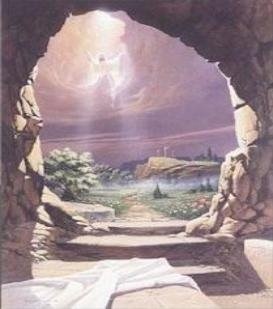
 It was the last day she would be able to enter the tomb to dress the body of Jesus. Joseph and Nicodemus had hurriedly prepared the body on Friday placing Jesus in the tomb of Joseph. Returning on the first day of the week final preparations would be made to the body for entombment. The day after Sabbath was the last day friends would be able to come and commune with their teacher as he lay in the tomb. Sadly when Mary came to the tomb her heart was rent in two finding the tomb empty. What had happened? How could this be? The stone had been removed and realizing that something was terribly wrong Mary hastened to Peter and John telling them the alarming news the body of Jesus was missing. The two disciples raced to the tomb finding it empty. Puzzled and dismayed they returned home leaving Mary in the garden weeping and broken hearted.

The lone figure of a weeping woman filled the garden with the mournful tears of fear and sadness. Still disbelieving her Lord was taken she looked inside the tomb and found two men sitting where the body of Jesus lay. They asked Mary, “’Woman, why are you weeping?’ She said to them, ‘Because they have taken away my Lord, and I do not know where they have laid Him’” (John 20:13). She did not know who the “they” were but she could not understand why “they” had taken his body. The soldiers who had guarded the tomb were in the city reporting to the chief priests what had happened (Matthew 28:11-15). How could anyone take the body of Jesus? Why would they desecrate the tomb by taking the body? She wanted to know where her Lord’s body was!

Standing behind her a man appeared. She did not know it was Jesus and thought He was the gardener. “He asked her, ‘Woman, why are you crying? Who is it you are looking for?’ Thinking he was the gardener, she said, ‘Sir, if you have carried him away, tell me where you have put him, and I will get him’” (John 20:15-16). A little frustrated anger rises up in her broken heart because if this man did something with the body of her Lord then he better tell her right now where it is and she will take care of it. How dare he take the body out of the tomb? He should know what happened to the body and she demands to know what happened.  A determined woman.

And then it happens. Can you see this moment? Can you see the face of Jesus as He utters these words, “Mary”? Now turn the camera on the face of Mary as “she turned toward him and cried out in Aramaic, ‘Rabboni!’ (which means ‘Teacher’)” (John 20:16). Tears of grief become a flood of joy and she wants to grab him and squeeze him so tight He would bust. Her joy is tempered by the Lord’s admonition that His presence does not suggest He is there to stay. Jesus said, “Do not hold on to me, for I have not yet ascended to the Father. Go instead to my brothers and tell them, ‘I am ascending to my Father and your Father, to my God and your God'” (John 20:17). He knows that in forty days He will return to His Father. His work on earth will be accomplished and the task of teaching the lost the good news of a risen Savior will rest upon the shoulders of people like Mary. Racing back to the disciples she expresses with unbounded joy the news of the risen Lord.

She stood at the tomb weeping. Someone had taken the body of her Lord and she was distraught. The deep feelings of grief filled her heart because of her love for Jesus. Her feelings were not uncaring, uninterested nor indifferent. We hear often of people dying but our feelings are not expressed with weeping and sadness of heart. A simple reason is we do not know the person and while we may mourn the loss because of a tragedy our connection does not create feelings of deep sadness. Mary stood at the tomb weeping and broken-hearted because she loved her Lord. She would learn in the next few days how special Jesus was and after Jesus ascended to His Father she would grow to love Him more and more. But at this moment she was a broken woman because of her relationship to the man from Nazareth. We all need to spend time at the empty tomb weeping for our Lord.

The challenge for us is that we know He rose and that He lives and reigns at the right hand of God. But the empty tomb means more than a cavern void of a body. It signifies the cruelty of Jesus’ death on a cross and the sting of death. He suffered in the days of His flesh and learned obedience by the things which He suffered (Hebrews 5:7-8). Mary wept because of her love for Jesus. She had been crying for three days as she witnessed the crucifixion, spending a Sabbath day without her Lord and finding on the first day of the week His body was gone. We need to have the heart of Mary to experience the feelings of sadness for what man (you and I) has done to the Son of God. Our weeping is trying to understand what cannot be understood. How can a loving God save such a wretched creature like man? Look in the empty tomb and you will find the answer. “Why do you seek the living among the dead? He is not here, but is risen” (Luke 24:5-6)!

Mary Magdalene knew the horror of Satan (Mark 16:9; Luke 8:2) but she found peace in the presence of Jesus. It is probable that Mary was among the women of Acts 1:14 (see John 19:25). The story of Jesus to those early disciples would include the day she stood at the empty tomb of Jesus weeping. But she would tell them of her tears of joy when she saw her Lord face to face. He was not just a figure to her; He was her “Rabboni.” Our faith will only be as strong as the tears we shed standing at the empty tomb of Jesus and finding the power of the resurrection to change our lives.

Posted in Character Study, Christian, Church, New Testament, Uncategorized | Tagged , , , , , , , , , , , , , | Leave a comment