Man’s Thoughts And God’s Will

224Now it came to pass, when David was dwelling in his house, that David said to Nathan the prophet, “See now, I dwell in a house of cedar, but the ark of the covenant of the Lord is under tent curtains.” Then Nathan said to David, “Do all that is in your heart, for God is with you.” But it happened that night that the word of God came to Nathan, saying, “Go and tell My servant David, ‘Thus says the Lord: “You shall not build Me a house to dwell in.” (1 Chronicles 17:1-4)

Man’s Thoughts And God’s Will

Israel was beginning a golden era of prosperity and peace that would apex under the leadership of David’s son, Solomon. The ark of God had been at Kirjath Jearim when David command the people to assemble to bring the ark to Jerusalem. There was a three month delay of bringing the ark to the city of David as the Lord struck down Uzzah for unlawfully touching the it. Finally, David prepared a place for the ark of God and great preparation went into worship of setting the ark with the tabernacle David had erected. All of Israel joined in magnificent praise accompanied by instruments of music, stringed instruments, harps, and cymbals and raising the voice with resounding joy. The psalmist of Israel penned a psalm for the occasion and all the people said, “Amen,” and praised the Lord. After the order of worship was established everyone returned to the homes including David.

As David sat in his house, he called Nathan the prophet to come. The king had been thinking about all that had transpired and the glorious celebration of bringing the ark to the tabernacle set up in Jerusalem. In the mind of David there was something lacking in all of this he needed to fix. The ark was resting under tent curtains. Why should the ark of God – the ancient box constructed at Mt. Sinai and carried by the people of God since the beginning of the nation – be housed in a temporary dwelling place? David determined to build a house for the Lord and to put the ark in a proper place. He lived in a house of cedar. The ark should be placed in a house of honor and the king was determined to do whatever he needed to do in building a house for the Lord. Calling Nathan the prophet, he unveiled his plan. The prophet agreed and told David to do all that was in his heart. Finally the ark of the Lord would be given a proper place to dwell with the blessings of the king and his prophet. There was an important detail that David and Nathan had forgotten to look into. What did God say about this?

The same night of the great plan the great Planner came to Nathan and told him that David would not build a house for the ark. It was clear the Lord was moved by the thought of His shepherd to build Him a house but the will of the Father was for the Temple to be built later under the rule of Solomon. Further, the Lord embedded a prophecy about His own Son that would come true many generations later in the city of Jerusalem when the first gospel sermon was preached. But David would not build a house for the ark. When Nathan revealed the words to David the king’s humility shines forth as he accepts the will of the Father. David’s response to the Lord is a beautiful statement of faith worth reading.

David must have been very excited about building a house for the Lord. Even Nathan the prophet thought it would be a great idea and probably the two of them spent a long time talking about the many facets of construction. As the day ended spirits were high and their hearts were filled with the praise of God for the wonderful things that were to come. The night changed all of that when the Lord revealed another plan. The lesson is clear the thoughts of men and the will of God are at odds with one another. So often men think of things that would be pleasing to the Lord but are contrary to God’s will. Was there anything morally wrong about building a house for the ark? The answer is found in the will of God and how the Temple would be built by someone else. Just because the king and his prophet thought it was a good idea did not mean the Lord approved.

There are many things done in the name of God today that are wholesome and good but without the authority of the Lord. This is so hard to understand as the plea is much like David of the glory that will be given God. But – this is not His will! Authority is the necessary foundation for all that we teach, we practice and follow. Someone will come along and suggest ‘building a house for the ark of the Lord’ and we must examine the will of the Father to see if there is authority. Personal zeal does not replace what the word of God says. People of the book inquire of the Lord first. Stand upon His law and His law alone.

If your will is with God you work with God; God is then the life of your soul, and you will have your life with God to all eternity. (William Law; 1686-1761, The Way to Divine Knowledge)

Posted in Uncategorized | Leave a comment

Resigned To Die

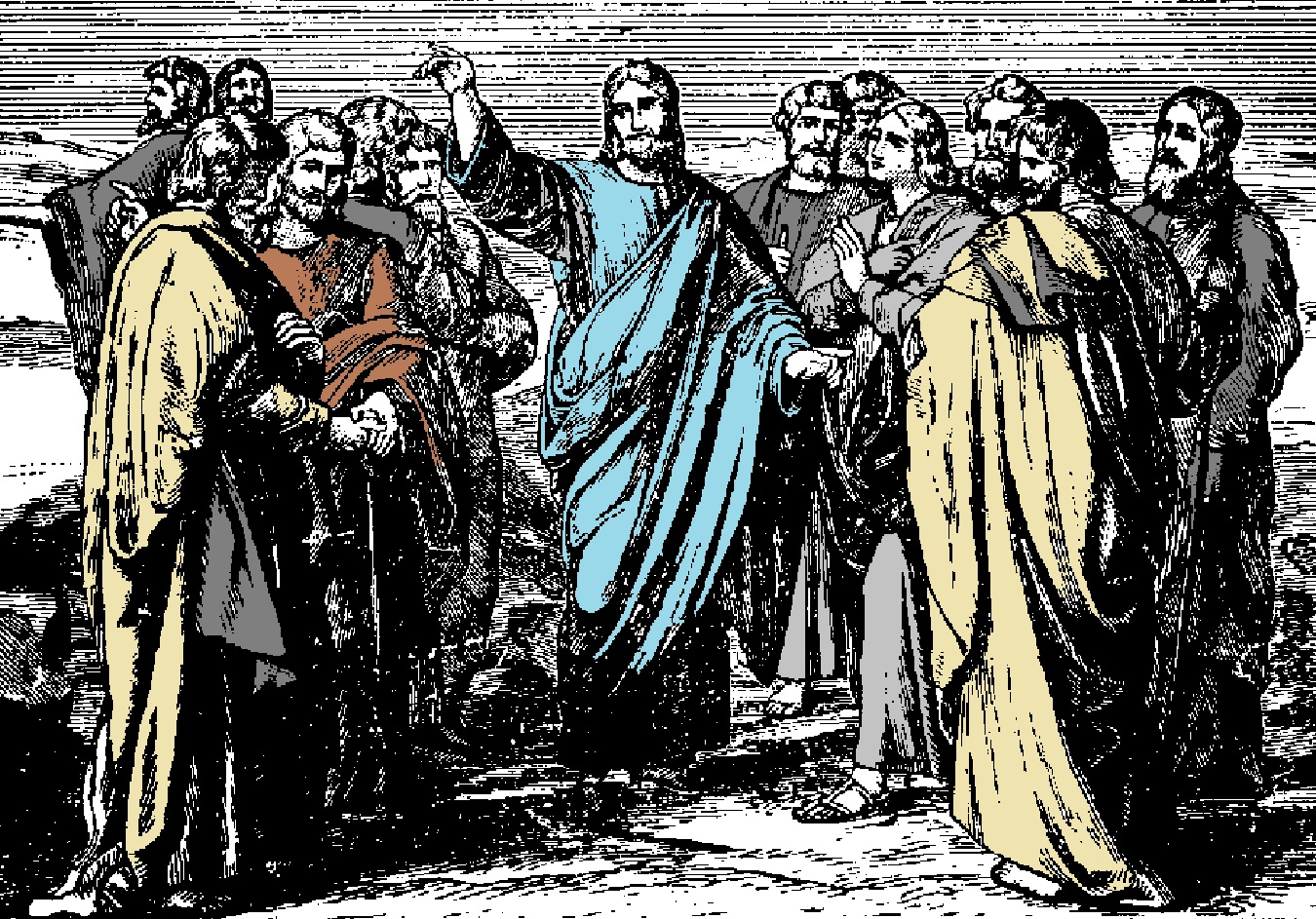
jesus-gloryThen He came the third time and said to them, “Are you still sleeping and resting? It is enough! The hour has come; behold, the Son of Man is being betrayed into the hands of sinners. Rise, let us be going. See, My betrayer is at hand.” (Mark 14:41-42)

Resigned To Die

There was a moment in the final hours of Jesus’ life that He knew everything His Father had planned to happen was going to take place. Long past the time in eternal glory when the scheme of redemption was revealed and many years following His incarnation as a man on earth the Son of God stared down at three wearied men fast asleep and knew the moment of horrific suffering had begun. Jesus had frequently talked about His suffering in Jerusalem at the hands of the Jews. During the feast of the Passover the Lord explained how the bread represented His broken body and the fruit of the vine His blood. Assuring the eleven as they walked to Gethsemane He explained How He must go away so the Helper could come. Arriving at His place of prayer Jesus took Peter, James and John a short distance away from the others for deep prayer to His Father. It was here He anguished in soul for the cup He was about to bear. Three times He pleaded with the Father to let the cup pass or another way to be found but none was granted. Knowing Judas was coming with a large contingency of soldiers and Jewish leaders the moment arrived for Jesus.

“It is enough, the hour has come.” Creation took a breath anticipating what was about to happen. Angels became silent as they witnessed God’s Son arrested, bound and beaten. They watched in horror as the puny created things spit in the face of Jesus, slapped Him and beat Him about the head. The Heavenly host gasped as God was dragged away to a place called Golgotha and nailed to a tree. Incredibly, they watched Him die and enter Paradise. It was in the garden at the moment that all the Father had desired of His Son for the redemption of man was realized leading up to most awful death of Jesus. He knew the time had come. He knew the suffering would be intense. He understood the cup must be accepted so that man could live. Looking down at the wearied faces of Peter, James and John the heart of Jesus knew why He had come.

The picture of the three sleeping disciples was the decisive moment. Man was weak. He could not endure the sufferings needed for redemption. Jesus had asked the three to remain vigilant for His cause but they failed. While the spirit was willing there was no strength in the flesh. Judas had forsaken the Lord for thirty pieces of silver and would bring a band of men to the garden to arrest Him. Death was coming. No one could defend the Lord. His disciples would forsake Him. Peter would deny Him. The hour of His suffering had come. His moment of glory was upon Him. “It is enough.”

There is no language that can tell the grief filling the heart of Jesus as He knew He was about to die. He understood and He was willing to give His life for three sleeping men and for all of humanity. His hour had come and He offered His life so that all men could live. In our feeble and contrite hearts dear Lord we thank you for that moment of truth when You fully accepted the will of the Father and – while having the power to call twelve leagues of angels to defend you – love overshadowed your heart and you willingly suffered death on a cross so that I could bask in the glory of eternal life. When that moment comes in my life when I feel the bonds of mortal flesh ebb to the eternal shores of time – may I have the courage to say with my Lord: “It is enough. The hour is come.”

The hope of dying is the only thing that keeps me alive. (Vance Havner; 1901-1986)

Posted in Uncategorized | Leave a comment

All To Thee I Surrender

potters hand 2But now, O Lord, You are our Father; we are the clay, and You our potter; and all we are the work of Your hand. (Isaiah 64:8)

All To Thee I Surrender

When a worker takes soft clay in his hand, he can create objects of beauty because of the pliability of the material. Clay is the ultimate simulacrum, essentially able to mimic whatever the hand creates the material to be. When pliable the artist can shape, mold and fashion the clay with ease. As the mud begins to harden, it is difficult to change. Isaiah uses the image of the potter working with the clay as a parabolic story of God’s relationship to His people. Earlier the prophet had shown how silly it is to imagine the potter to be esteemed as the clay and the thing made say of him who made it, “He did not make me”? Why would man say of God (his Creator and Maker) “He has no understanding”? Reinforcing this illustration the man of God declared the failure of those who would strive with his Maker! How can anyone rebel against the Father denying the one who made all men; forming them like clay?

The relationship we have with God the Father is one of total surrender. Our hearts must be soft to accept the nurturing hand of the great Creator to mold our lives by His will. There is nothing more soothing than to allow the beauty of the Father to permeate our hearts, minds and souls to be fashioned by His hands into an image of eternal glory. Full surrender is yielding all of our life to the Father. If God can create a world that leaves us breathless as we stand in awe of His creative hand what can I see Him doing in my life as He holds me like soft clay. I cannot mold myself. If I allow others to mold me, they will seek to fashion me in their image. Both will end in disaster. When I go back to Genesis 1 and see how powerful and majestic the creation of God is described I will be able to see how I can be formed by that same hand into something more beautiful than the entire universe.

Remember that with all the beauty of this world there is a tragic end. One day it will be burned up. The greatest splendor of creation is found in the image of a godly man and woman. When the Father creates the heart of truth and righteousness within the soul of man there is no end to its beauty. It lives forever. Accepting the hand of the heavenly potter to mold my life will give me the hope of living without end. The treasures of Heaven will be the vessels of God’s creation basking in His light and glory. He created us for His glory.

Total surrender takes a lot of will. The more we soften our hearts to His love the more He will fashion us for good. Trusting in the Lord God means letting go of self and receiving the tender molding of the Master Potter. He knows what is best for our lives. Mold me Lord into Your image that I may shine forth the glory of Your creation. All to thee I surrender – ALL.

If we trust, and if we relinquish our will, and yield to the divine will, then we find that we are afloat on a buoyant sea of peace and under us are the everlasting arms. (Helen Keller, Story of My Life, 1905)

Posted in Uncategorized | Leave a comment

A Most Unusual Healing


prayer-changes-things-1024x682And the child grew. Now it happened one day that he went out to his father, to the reapers. And he said to his father, “My head, my head!” So he said to a servant, “Carry him to his mother.” When he had taken him and brought him to his mother, he sat on her knees till noon, and then died. And she went up and laid him on the bed of the man of God, shut the door upon him, and went out. Then she called to her husband, and said, “Please send me one of the young men and one of the donkeys, that I may run to the man of God and come back.” So he said, “Why are you going to him today? It is neither the New Moon nor the Sabbath.” And she said, “It is well.” Then she saddled a donkey, and said to her servant, “Drive, and go forward; do not slacken the pace for me unless I tell you.” And so she departed, and went to the man of God at Mount Carmel. So it was, when the man of God saw her afar off, that he said to his servant Gehazi, “Look, the Shunammite woman! Please run now to meet her, and say to her, ‘Is it well with you? Is it well with your husband? Is it well with the child?’ ” And she answered, “It is well.” Now when she came to the man of God at the hill, she caught him by the feet, but Gehazi came near to push her away. But the man of God said, “Let her alone; for her soul is in deep distress, and the Lord has hidden it from me, and has not told me.” So she said, “Did I ask a son of my lord? Did I not say, ‘Do not deceive me’?” Then he said to Gehazi, “Get yourself ready, and take my staff in your hand, and be on your way. If you meet anyone, do not greet him; and if anyone greets you, do not answer him; but lay my staff on the face of the child.” And the mother of the child said, “As the Lord lives, and as your soul lives, I will not leave you.” So he arose and followed her. Now Gehazi went on ahead of them, and laid the staff on the face of the child; but there was neither voice nor hearing. Therefore he went back to meet him, and told him, saying, “The child has not awakened.” When Elisha came into the house, there was the child, lying dead on his bed. He went in therefore, shut the door behind the two of them, and prayed to the Lord. And he went up and lay on the child, and put his mouth on his mouth, his eyes on his eyes, and his hands on his hands; and he stretched himself out on the child, and the flesh of the child became warm. He returned and walked back and forth in the house, and again went up and stretched himself out on him; then the child sneezed seven times, and the child opened his eyes. And he called Gehazi and said, “Call this Shunammite woman.” So he called her. And when she came in to him, he said, “Pick up your son.” So she went in, fell at his feet, and bowed to the ground; then she picked up her son and went out. (2 Kings 4:18-37)

A Most Unusual Healing

The period of miracles was always marked with powerful testimonies of God’s power. Jesus healed every kind of disease but not always in the same manner. The Lord healed a blind man spitting on the ground making clay with the saliva and instructing the still blind man to wash in the pool of Siloam. When He healed Bartimaeus the healing was immediate by speaking the word. During the days of the prophets, unusual miracles took place and none as peculiar as the healing of the Shunammite’s son. Her story began earlier when she convinced her husband to build a small upper room for Elisha. As a blessing for her kindness she was granted the birth of a son.

One day as the young child was with his father in the fields he fell ill. Sadly, as his mother held him in her arms he died. It is hard to imagine the intense grief the mother felt in the loss of her promised son. Taking the child into the room prepared for Elisha the mother concealed his death from her husband. Asking for a donkey to make a journey to the prophet the husband (still unaware the boy had died) wondered why his wife needed to go and see the prophet at this time. Providing the escort the woman makes the journey of about fifteen miles to Mount Carmel. Her calm demeanor hid her sorrow as she tells Gehazi that all is well. When at last she comes to Elisha her heart pours forth the grief of her son’s death.

Elisha immediately sends Gehazi to the child to restore him. However, the insistence of the Shunammite woman tells the prophet that nothing would be accepted but his presence alone. Gehazi arrives at the home of the child but is unsuccessful in reviving him. When Elisha enters the room he leaves everyone outside. The first thing the prophet does is pray to the Lord. He then lays on top of the child mouth to mouth, eyes to eyes and hands to hands. This brings warmth to the child. Walking around the house for a moment he again stretches himself over the child. The child sneezes seven times and opens his eyes. A smile breaks across the face of Elisha. Calling Gehazi and instructing him to bring the mother a tearful reunion is shared between mother and child.

This story began because of the benevolence of an unknown woman. She wanted to show the prophet of God how much she loved him and the work he did for the Lord. Building a room was not a small adventure but she did so for his comfort. Without asking for a reward, the prophet blessed her with something she had longed for but was unable to have because of the age of her husband. The son born to them was a son of promise. How her heart sang the songs of Zion for the graciousness of the Lord as she looked in the eyes of her little baby boy.

Tragedy struck hard when he died. Everyone else would have grieved and buried the child. But the heart of the Shunammite woman was a heart of great faith. She had a history with the powerful hand of God. Her husband was old yet she bore a son. Now she believed by that same power the Lord could raise her son. Believing the impossible she sought the prophet. Her faith was so great nothing would hinder her from bring the prophet to save her son. By God’s mercy and grace, she received her son back to life.

Faith is not merely a religious feeling of words. The deepest meaning of faith comes from a history of seeing the power of God. There can never be a reward for the veneer of faith that shows the world only a hint of belief. Deep faith comes from hearts that have walked the halls of the impossibility and felt the hand of God in their lives move them and guide them. The small thing of asking for a son prepared her for the greater thing to revive her dead son. Small victories ensure greater victories. She believed! She trusted! She accepted an impossible answer! She believed the prophet could raise her son from the dead!

Jesus told the disciples that true faith in prayer could say to a mountain move from here to there. We scoff at that today and say it was a figure of speech and it cannot really be done. Don’t miss my point – but do not miss the lesson of Jesus either. Faithful prayer can raise the dead. I am afraid so often the reason the world does not change is because we are content to bury our son than to seek the prophet believing he can raise him from the dead. That kind of faith should not be rare among the ranks of God’s people. We need more Shunammite women who will leave us examples of abundant faith to believe – yes believe – in the impossible. Now that is a great story.

When we pray, we link ourselves with the inexhaustible power that spins the universe. We ask that a part of this power be apportioned to our needs. Even in asking our human deficiencies are filled and we arise strengthened and repaired. (Alexis Carrel, Reader’s Digest, March, 1941)

Posted in Uncategorized | Leave a comment

How The Just Live By Faith

habakkuk-boxI will stand my watch and set myself on the rampart, and watch to see what He will say to me, and what I will answer when I am corrected. Then the Lord answered me and said: “Write the vision and make it plain on tablets, that he may run who reads it. For the vision is yet for an appointed time; but at the end it will speak, and it will not lie. Though it tarries, wait for it; because it will surely come, it will not tarry. Behold the proud, his soul is not upright in him; but the just shall live by his faith.” (Habakkuk 2:1-4)

How The Just Live By Faith

The prophet Habakkuk was a prophet of questions. His burden was to cry to the Lord for answers of the cruelty of what he witnessed against the righteous. After he received his first answer he posed another question to God. He was wanting to understand the nature of the Lord’s allowance for trials that plagued the righteous. The Lord’s answer would lead the prophet to prayer and to complete his burden with the promise that no matter what befell the people and himself he would remain faithful.

Following his second question, it is important to see the attitude of the prophet toward his God. The first lesson we learn is that questioning the Lord is a means of gaining knowledge when we do not understand. There is nothing wrong with asking God questions wanting understanding about the nature of man’s cruelty and how the Lord can allow it to happen or continue. We must also be assured that our Father wants to talk with us about anything. Often we have questions that trouble us. He is not a Father who ignores our childlike inquiries. We must ask. Talking to the Creator is a first desire of all men but how little we spend time talking to Him.

It is intriguing the manner of Habakkuk’s questions. He concludes his second question with the terrible things done by the wicked and asks of the Lord, “Shall they therefore empty their net, and continue to slay nations without pity?” He is not arguing with God to bring the Lord down to the feet of the prophet. It is the man of God who recognizes that he must go to the Father. He knows that it is man that must stand his watch, setting himself on the rampart and watch to see what the Lord will say to him. He is not making demands of God. He is asking for answers in a humble and contrite manner. The prophet is waiting on the Lord. When the answer comes it will be something that reproves the man and exalts the Lord. Habakkuk is a man of great faith and he knows how to approach God to be found just.

The prophet waits for the answer of God to obey the word of God. He is told to write the vision and make it plain. The Lord knows what is going on and the justice of the Lord will always find its way with the affairs of men. There is so much misery and heartache in the world causing the child of God to wonder how the Father can allow suffering. Faith can be challenged when the mind is not kept in proper understanding of the will of God. The Creator is aware of more death and sorrow than any of else will imagine in a lifetime. He has witnessed the savage cruelty of man since the beginning of time. Let’s just be careful to remember that God knows what He is doing. The just? We live by faith and we trust Him to carry out His will in the affairs of men whether here on earth or the judgment to come. Is it wrong to ask questions of God? No. Trusting in His answers requires us to order our lives by waiting for His answer, waiting for when He reproves us, and living by faith. “Though the fig tree may not blossom, nor fruit be on the vines; though the labor of the olive may fail, and the fields yield no food; though the flock may be cut off from the fold, and there be no herd in the stalls — yet I will rejoice in the Lord, I will joy in the God of my salvation. The Lord God is my strength; He will make my feet like deer’s feet, and He will make me walk on my high hills.”

The world will not perish just because we cannot do everything. God still has things under control. (Hans Urs von Balthasar, Prayer, 1962)

Posted in Uncategorized | Leave a comment

Purge Out The Leaven

Passover-PictureTherefore purge out the old leaven, that you may be a new lump, since you truly are unleavened. For indeed Christ, our Passover, was sacrificed for us. (1 Corinthians 5:7)

Purge Out The Leaven

The feast of the Passover was one of the most holy days for the Jew. It commemorated the terrible night when God struck the firstborn of all Egypt (including animals) with death. Moses received the command from the Lord for the Hebrews to make a sacrifice of a lamb without blemish, a male of the first year, taking some of the blood and putting it on the two doorposts and on the lintel of the houses where they ate the sacrificial meal. Among the instructions given for the Passover night, they were to remove any leaven on the first day of the feast of unleavened bread. For seven days no leaven shall be found in the house. Every effort must be made to remove any type of leaven from the house to remove any impurities. Later in the Law of Moses, the regulation of Passover would include no leaven to be seen in the territory for seven days.

Paul addresses a serious problem in Corinth with a man who has his father’s wife. Challenging the saints to remove such a one from their midst he uses the imagery of the Passover to show how to maintain purity in the church. The leavening influence of wickedness will change the glory of the church. This principle is also true for the life of a Christian. There are many things that Satan puts in our way to tempt us, lure us away and destroy us with sin. Purging out these influences will help us to maintain a pure life and a holy service to God. If the Jews failed to purge out the leaven from their homes they would be cut off from Israel. When we fail to purge out the influences of temptation we leave ourselves susceptible to many dangers.

When the children of Israel were told to purge out the leaven it was a choice they made to obey or disobey. They had to strenuously remove any type of leaven. As the people of God, we must take every effort to remove any type of leaven from our homes so that we will not be tempted to sin. Our favorite television show may have content that is unfitting for the Christian. Many of the movies use God’s name in vain. Do we have the courage to purge out these kinds of influences from our lives for the sake of purity? We can act as if it does not matter if there is “a little language” or “brief nudity” but did the Lord allow “a little leaven” to remain? The internet without controls can destroy lives. For the sake of a little leaven in the home families are torn apart because someone did not have the bold courage to take a stand against the evils of what can be found. The truth comes to bear when we realize the worth of a soul lost over something as trivial as television, movies and the internet.

Brethren feel comfortable having alcohol in the home suggesting that a social drink is an allowable character of the holy child of God. Purging out the leaven would be to remove any form or fashion of alcohol from the home of a Christian. Purity means what it says. Being pure removes any impurities. This is especially true if a person is prone to drink. The home of the devoted child of God will remove any form of alcohol as a purging of the leaven of temptation. It seems that some brethren believe it is pleasing to God for His child to walk as close to Satan as they can without holding hands but staying close to the roaring lion. Placing oneself in the vicinity of the devil will only result in the devil catching hold of the simple one. Fleeing Satan means to remove his influence as far away as possible. Get rid of it. Throw it way. What shall it profit you if you lose your own soul? Purge out the leaven of temptation.

The process of purging takes many forms. It may mean a change in personal relationships, job positions, clubs, recreational pursuits and community involvements that hinder growth as children of God. Purging out the leaven is a vital part of Christian growth. There will come a great day of the ‘Passover’ when the judgment of the Lord will be brought to all men. When the Lord comes again – what leaven will He find in our homes and in our lives? Death came to those who did not remove the leaven and who did not embrace the sacrificial blood of the lamb. Salvation will only come to those whom the Lord will ‘pass over’ because He sees the blood of His Son and He sees lives purged of the influence of leaven. Today is a day for cleaning.

[Purity] is not an inactive virtue; it does not merely consist in not committing certain sins. It means using your life in the way God wants, exercising constant restraint. (Francis Devas, The Law of Love, 1954)

Posted in Christian, Law of Moses, Morality, Passover | Leave a comment

Is The Church Dying Or Am I?

j0289346Is The Church Dying Or Am I?

It is hard to believe the church of the Lord has been in existence for more than two thousand years. Pentecost was where the Lord added to the church daily those who were being saved (Acts 2:47) and where the gospel first sounded forth across the world. Twelve disciples stood before an immense crowd of devout men declaring a new message of salvation. Three thousand would respond in obedience to God’s message of grace and the early church began. As the years unfolded the infant church faced many problems: misunderstanding, neglect, jealousy, persecution and the growing pains of establishing the pattern laid out by the Holy Spirit.

Paul would warn of a coming apostasy that would change the world’s view of the body of Christ.  “Now the Spirit expressly says that in latter times some will depart from the faith, giving heed to deceiving spirits and doctrines of demons, speaking lies in hypocrisy, having their own conscience seared with a hot iron, forbidding to marry, and commanding to abstain from foods which God created to be received with thanksgiving by those who believe and know the truth” (1 Timothy 4:1-3). In fulfillment of the Spirit’s words the apostasy came full force through the instruments of men corrupting the purity of the gospel. The Roman Catholic and Greek Orthodox churches divided the east and west up in the apostate doctrines that thrive to this day. What is lost (sometimes) in this study of how the church went into apostasy is the one true church never went out of existence. It is clear the dominance of the true church was minimized from the view of history but the church has never ceased to be in the world.

The church can never die. “Therefore, since we are receiving a kingdom which cannot be shaken, let us have grace, by which we may serve God acceptably with reverence and godly fear. For our God is a consuming fire” (Hebrews 12:28-29). Since Pentecost, the world has never been without the church built by Jesus and bought with His blood. God is a consuming fire and will never allow His church to perish on the earth no matter what Satan brings against it. The influence of the true church has changed over the centuries but not its existence. Through the power of God the church of the New Testament will never cease to exist until the coming of the Lord – but then it will be as one before the Heavenly Father.

Skepticism can creep into the hearts of saints today who look upon the church with disparity and gloom. Studies may suggest the church is dying but is it really the church that is dying or is it the individual? The view of what the church means often clouds the real meaning of church. The church of Jesus Christ is the people. Collectively we gather as congregations to worship the Lord. When Paul wrote to the church at Philippi he addressed the letter to the “saints in Christ Jesus” (Philippians 1:1). If the church is dying then we are dying. It is easy to beg off why the church is not growing because the church is dying; but the truth of why the church is not growing is because we are not growing. We have to take accountability for the spread of the gospel or lack thereof. The church of modern day America has become a satisfied, complacent un-growing institution serving the conscience whims of Sunday only Christians. In the face of great persecution the “churches throughout all Judea, Galilee, and Samaria had peace and were edified. And walking in the fear of the Lord and in the comfort of the Holy Spirit, they were multiplied” (Acts 9:31).

The reason the gospel spread to “every creature under heaven” (Colossians 1:23) in the first forty years of the church was because of those devoted saints who lived everyday sharing the message of a risen Savior to a lost and dying world. Church to the modern day saint has become a building, an edifice. Jesus did not die for stone and mortar. He shed His blood for the hearts of men. Seeking the lost is not leaving the front door of the church building open hoping some passing sinner will wander in. Letting our light shine forth in a dark world is something more than keeping the front light on of the church building. Lost souls are longing for something better in life and the saints of God have the cure. The body of the elect in a community should be the force of change in the lives of these lost souls who need Jesus Christ. Two feet under a kitchen table in the home of an unbeliever is where the gospel finds its power. All the devices of men and technology will never replace the need of one heart speaking to another heart.

Let us change the course of history. Instead of despairing on whether the church may be dying let us be united to proclaim the church is growing in my community because we are growing. Saints of Christ arise and share the good news of Jesus Christ with others. Bring someone to Christ this year. Be a force to make the church grow in your area. Make your life to be an instrument of change in teaching the good news of salvation. The world can be turned upside down again like it was in the New Testament (Acts 17:6). The church will never die as long as the world stands and we need to stand to make sure we do not die. “Do you not say, ‘There are still four months and then comes the harvest’? Behold, I say to you, lift up your eyes and look at the fields, for they are already white for harvest” (John 4:35)!

Posted in America, Christian, Church, Colossians, salvation | 2 Comments

A Little Bird Told Me

sparrow houseWoe to you, O land, when your king is a child, and your princes feast in the morning! Blessed are you, O land, when your king is the son of nobles, and your princes feast at the proper time — for strength and not for drunkenness! Because of laziness the building decays, and through idleness of hands the house leaks. A feast is made for laughter, and wine makes merry; but money answers everything. Do not curse the king, even in your thought; do not curse the rich, even in your bedroom; for a bird of the air may carry your voice, and a bird in flight may tell the matter. (Ecclesiastes 10:16-20)

A Little Bird Told Me

Living in the ‘land of the free and the home of the brave’ can be a great blessing. It can also bring about a serious offense in the eyes of the Lord. Since early childhood, we are taught how our great democracy was formed by the rebellion of the colonists to the rule of Great Britain. An independent spirit of American zeal flows in our blood to enjoy the benefits of freedom that allows us to bear arms, live where we choose and worship in any manner we desire. Few nations have enjoyed the breadth of liberty found in the United States of America. This is a great nation to live in and we should never take for granted to blessings we have in this great nation. But like so many blessings there must also be a warning.

Paul tells us in Romans 13 that God establishes government. The relationship of man to authority for the child of God is very peculiar in the relationship of the citizen to civil authority. As Christians we are held to a higher principle of obedience than the person who does not subject themselves to God. Our first allegiance is to God and Him alone. Government falls down the pecking order after we have served the Lord and His will. As the elect of God we view government in a different manner than the world. Throughout the history of the Bible the Lord shows His hand in the affairs of man and emphasizes in the New Testament a continued presence in the rising and falling of nations. Jesus was subject to the Roman Empire rendering to Caesar the things that belonged to Caesar and to His Father all that was required. Peter exhorted the citizens of Nero to honor the king. Our text in the wisdom literature shows the continual mind of God on how His people are to conduct themselves in relationship to government.

Every nation has good rulers and bad rulers. The United States has had good presidents and bad presidents. Some of our presidents have shown themselves to be of less character morally and spiritually. The evils of government plague the nation as the highest office in the land is used for personal gain. This should not surprise us as we see men of corrupt character gain a foothold in the leadership of our country. Ecclesiastes is a book about the trials of life including how to deal with government gone awry. Our text also shows the blessings of a nation guided by men of wisdom and noble character. Presidents will arise that bring order and prosperity to the citizens. In our land there have been days of greatness and days of shame. The lesson points to the voice of the bird.

The people of God do not have a democratic freedom to express their American views of dishonor to the one who resides in the oval office or the one who may be taking the reins of government. God emphatically states that His children are not to curse the king nor curse the rich – even in their thoughts. The influence of godly people is destroyed when they are caught up in the political fray of disrespecting the leaders of the land and not giving honor to whom the Lord God Almighty demands His people to respect. Too many noble Christians have taken the penknife of self-righteousness and removed passages that speak against cursing the king in the fervor of freedom. Just because we have freedom in America does not mean we have freedom in the body of Christ.  Our allegiance is not to country first; our allegiance is to God alone.

We live in perilous times – but friends we do not live in anything close to what Jesus lived in and even the early disciples. Jesus never railed against leaders. The early church was an example of righteousness that endured the wrathful hand of a despot leader but did not curse the king. Even when the ruler is personally unworthy of respect, the people of God shone as lights of purity in a dark world. We can do no less. How many birds have flown to the throne of God telling the thoughts of His people against their government? The warning is clear. Do not curse the king even in your thoughts lest a little bird gives wings to your voice and the Lord hears.

There is a worse evil than misgovernment, and that is anarchy (J. Willcock)

Posted in America, Character Study, Christian, Ecclesiastes | 2 Comments

The Difference Between The Righteous And The Wicked

word-of-god_tThen those who feared the Lord spoke to one another, and the Lord listened and heard them; so a book of remembrance was written before Him for those who fear the Lord and who meditate on His name. “They shall be Mine,” says the Lord of hosts, “On the day that I make them My jewels.  And I will spare them as a man spares his own son who serves him.” Then you shall again discern between the righteous and the wicked, between one who serves God and one who does not serve Him. (Malachi 3:16-18)

The Difference Between The Righteous And The Wicked

Throughout the writing of the Old Testament, the character of the righteous and the wicked is always in conflict with one another. In the Garden of Eden Satan tempted Eve to disobey the Lord by suggesting the word of God could be challenged. “Has God indeed said” has been the basic tool of how men have fallen away from the Lord. As the history of the world unfolds men seek after their own pleasures rather than serving the Lord. The Flood of Noah’s day brings judgment upon all men with only eight souls saved. When Israel forms by the will of God the conflict of righteousness and unrighteousness is revealed in the struggles of the people. Malachi presents the final message of the Lord before the famine of God’s word descends upon man. Israel has lived its days of glory but found the severity of the Lord because of their unrighteousness. The nation was ripped apart by civil war, carried away to foreign lands under bondage returning to be possessed by another nation until their final demise in 70 A.D.

Malachi does not bring a new message. It has been the same since time began. The judgment of God is based upon the whole of man; whether he has lived in righteousness or served the devil in wickedness. There is always a remembrance of what man has done. He may forget but God never does. Those who fear the Lord are remembered for their faithfulness and those who do not fear the Lord will be remembered for their wickedness. Two kinds of people walk upon the earth: those who serve the Lord and those who do not serve the Lord. The righteous serve the Lord. Those who do not serve the Lord are unrighteous.

The message of Malachi is true for all men today. Being religious does not make one righteous or being a good person will not save anyone. The defining character of righteousness is whether a person is serving the Lord. So many believe that God accepts all men regardless of how they live. The character of God is brought low to the whims of man who have God serve them. Truth is defined by the righteousness of men serving God. Servitude to the Lord requires obedience. Man cannot pick and choose how he serves God. The Lord is a Jealous God and He demands complete obedience. Man must learn to bow before the great I AM and serve Him with fear.

Religion is painted with any color that man devises. It becomes relative to the ideals of man instead of the word of God. Truth can only be found in Jesus Christ and Him alone. There is no other body of Truth but what is found in the Son of God. If a man wants to find righteousness, he will become a disciple of Jesus Christ and follow the commandments of the will of God. What separates a righteous man from an unrighteous man is obedience. Jesus reminds us that we cannot call upon the Lord and do not the things that He says. How does one discern between the righteous and the wicked? Who is serving the Lord!

If ye love me ye will keep my commandments [John XIV, 15]. If we don’t, we shan’t. Let no one deceive himself about that. There is no possibility of meeting His claim upon us, unless we truly love Him. So devotion is prior to obedience itself. (William Temple, Readings in John’s Gospel, 1939)

Posted in Character Study, Christ, Malachi, truth | Leave a comment

I Have Not Found Such Great Faith


got-faith_tNow when Jesus had entered Capernaum, a centurion came to Him, pleading with Him, saying, “Lord, my servant is lying at home paralyzed, dreadfully tormented.” And Jesus said to him, “I will come and heal him.” The centurion answered and said, “Lord, I am not worthy that You should come under my roof. But only speak a word, and my servant will be healed. For I also am a man under authority, having soldiers under me. And I say to this one, ‘Go,’ and he goes; and to another, ‘Come,’ and he comes; and to my servant, ‘Do this,’ and he does it.” When Jesus heard it, He marveled, and said to those who followed, “Assuredly, I say to you, I have not found such great faith, not even in Israel! And I say to you that many will come from east and west, and sit down with Abraham, Isaac, and Jacob in the kingdom of heaven. But the sons of the kingdom will be cast out into outer darkness. There will be weeping and gnashing of teeth.” Then Jesus said to the centurion, “Go your way; and as you have believed, so let it be done for you.” And his servant was healed that same hour. (Matthew 8:5-13)

I Have Not Found Such Great Faith

The ministry of Jesus was directed towards the people of Israel but on a few occasions the Lord acknowledged the needs of the uncircumcised. A centurion was an officer of the Roman army that subjugated the land of Palestine. The Romans were not looked upon with favor by the Jewish people and often scorned because of their cruel treatment of the citizens. For a Roman commander to come to Jesus seeking a miracle to heal his servant was truly a remarkable story. Jesus did not hesitate and told the centurion He would come immediately to his home and heal the servant. To the astonishment of the Lord the centurion humbly begged Jesus to only speak a word and his servant would be healed. Believing in the power of healing by touch or making spittle for the eyes is one thing but to acknowledge that Jesus had the power to heal a man without being present was truly remarkable. Sadly, the Lord could not find that kind of faith among His own people.

Jesus uses the opportunity with the centurion to show that a day will come where all men will come to the feast of the Lord. The multitudes that followed Jesus would find it difficult to believe the pagan Gentile would be granted a place with the righteous but the testimony of the centurion was clear evidence that greater faith often resided in the uncircumcised. The Jews were so filled with the pride they could not accept the idea that God loved the non-Jew. However, the incredible faith of the Gentile that implored Jesus to only speak a word to heal the servant was something unheard of among the nation of God’s people. Jesus had not seen that among His own people.

The story of the centurion leaves many questions of whom the man is and where he gained his improbable faith in the power of Jesus. Many of the Jews would not believe Jesus when they saw a miracle first hand. The centurion was a man of conviction that accepted only a spoken word. What influences in life brought him to Jesus? Would he have a part in the early church? No doubt he would have a common thread with Cornelius, another Roman centurion who would be the open door of the gospel to the Gentiles.

Faith comes in many forms. Having the kind of faith that only asks Jesus to say a word is faith on a higher plane. The faith we need today is not just a marginal belief in what makes us comfortable. Prayer is an expression of our faith and through prayer we acknowledge the power of God. When we have faith like the centurion, we will ask for the Lord to work in our lives by only speaking a word. Simple trusting faith. A child-like faith that fully trusts in the will of God is the kind of faith the Father desires for His children. Our faith must be governed by the belief that God can and will work in our lives to His glory and that nothing is impossible for Him. The courage of the centurion to approach Jesus is remarkable. His request is even more remarkable. Can the Lord find that kind of faith in the spiritual house of Israel today? Only speak a word, and my servant will be healed.

Faith furnishes prayer with wings, without which it cannot soar to Heaven. (John Climacus; 525-600; Climax)

Posted in faith | 1 Comment