It Is Good

lamentations-3-25

Through the Lord’s mercies, we are not consumed, because His compassions fail not. They are new every morning; great is Your faithfulness. “The Lord is my portion,” says my soul, “Therefore I hope in Him!” The Lord is good to those who wait for Him, to the soul who seeks Him. It is good that one should hope and wait quietly for the salvation of the Lord. (Lamentations 3:22-26)

It Is Good

The book of Lamentations is a series of five lyric poems lamenting the destruction of Jerusalem yet interspersed with the abundance of hope for Israel. There will be terrible calamities that fall upon Israel because of their disobedience and disloyalty to the Lord God as He brings judgments against the rebellious nation. The language is hard, the message unyielding and the consequences are written in the stone of God’s wrath. When the Chaldeans come against Israel it will be the terrible day of the Lord. While the immense power of the anger of the Lord is brought to bear against His people, a kernel of hope is always found in the message to remind the people of the love, mercy, and grace of a kind Father. Israel will spend seven decades in captivity but it will come to an end because God will bring His people back. The wrath of God is poured out but measured by the hope in the salvation of the Lord for those who trust in Him.

Jeremiah is called the “weeping prophet” for good cause. There was much to mourn as the people of God plunged deeper into idolatry, rebellion, and a stubborn refusal to return to the Lord. The message of hope also abounds in the writings of the prophets. God was not a cosmic bully that reveled in destroying what He had created for His glory. Israel was going to suffer many things from the hand of God for their disobedience and through that destruction, the love of God would be shown to the world. The mercy of God was everlasting in sparing Adam and Eve from destruction, saving Noah and seven others from the flood, and redeeming Israel from total annihilation. God is a compassionate Creator as much as He is a wrathful avenger against unrighteousness. Each day is a fresh dawn of God’s mercy and love. It the midst of trials and turmoil, there is hope in God.

God never fails His people but His people often fail Him. When they refuse to put their trust in Him alone relying on their own wisdom, they will find no hope. Making God the inheritance of the heart is establishing the will of God as the portion of life that will give hope in the time of despair. Hope comes from putting the Lord first in life. Life becomes good when the heart trusts in the way of the Lord. Faithful people will search for the Lord in every part of their life. During the dark days of Israel when Babylon took them off to a foreign land, God was still among His people. Men like Daniel, Hananiah, Mishael, and Azariah knew the Lord was good and they put their trust in Him. They waited on the power of God to work in their lives. Every part of their life sought to understand the word of the Lord. They were in a captive land but they lived in hope with the promise of God.

Jeremiah reminds the people of God that it is good to wait quietly for the salvation of the Lord. This will come about in His time, in His way, and according to His will. Hope is built upon the patient endurance of a soul at ease with the salvation from the Lord. In a world of chaos, the soul of God’s children can rest assured that He still reigns, He still rules and all the affairs of life are measured by the hand of Him who spans the universe with ease. There is nothing to fear. The world cannot change the will of God. No man will find peace outside of Christ. The joy of salvation is waiting for His will to be completed. This is a good thing. It is good to hope and wait quietly for the salvation of the Lord.

Posted in Uncategorized | Leave a comment

United We Stand In Christ

united in Christ

But we have this treasure in earthen vessels that the excellence of the power may be of God and not of us. We are hard-pressed on every side, yet not crushed; we are perplexed, but not in despair; persecuted, but not forsaken; struck down, but not destroyed— always carrying about in the body the dying of the Lord Jesus, that the life of Jesus also may be manifested in our body. (2 Corinthians 4:7-10)

United We Stand In Christ

It is certain the apostle Paul could never imagine the impact of a virus upon the church but he understood something of a greater magnitude than anything facing the church today. The COVID-19 virus has turned the world upside down. Economies are struggling with the impact of businesses closed or learning to work within a masked and social distancing mandate. Society has shifted with a new normal that find children wearing a mask to school, churches reorganizing assemblies to accommodate audiences, medical facilities heavily regulated with strict guidelines, grieving families unable to hold funerals for loved ones, and a political tsunami sweeping the nation with an odious rhetoric of division. These are troubled times.

Paul lived in troubled times. It was not a virus. The main problem that hindered the apostle to the Gentiles was the persecution from the religious zealots of Judaism and the oppressive hand of the Roman government either politically motivated or by the false gods of idolatry opposing the preaching of Christ. He faced a world divided, confused, and rebellious and filled with tyranny no generation today has ever experienced. Pundits of fear try to convince the present world that things are worse than ever before. They do not realize how well they have it. This can be especially true for the people of God who believe the present crisis is more than they can handle. The truth remains there are periods of history that are worse than others and no generation has the market cornered for the most troublesome times. It is not such much the events that shape the world but the way men react to events of the world. This is true with the COVID virus.

Do you feel hard-pressed on every side and perplexed by the present distress? Some may feel persecuted under the social conditions imposed by the government. With all the mandates and restrictions a person can feel knocked down all around. There can be an overwhelming feeling of despair and downtrodden in spirit. The apostle Paul appears over two thousand years of history and asks the people of God, “What is your problem?” The world the apostle lived in was filled with many troubles but he was not crushed. Why? He did not allow the troubles to trouble him. There were times of perplexity and confusion and again the apostle Paul was not driven to despair but taken to the throne of God. He knew who was in control of the chaotic world he lived and it was not the Jews or the Roman government. Christians were hunted down and yet they did not abandon their faith. The conditions the early church faced did not destroy them.

Change the channel to the modern-day – why has COVID caused problems in the lives of God’s people? Has their faith been challenged? Are the troubles of our day making it hard for the people of God to remain faithful? God’s people are not crushed, they are not in despair and forsaken and nothing should destroy them because God still reigns, rules and His will continue to hold the world together. If there is a time for the church to be stronger – that time is now. This is a time to be united. There is a need to gather as one united with a common purpose and single cause. The virus will end one day but the church will not. Let the church of Jesus Christ let the world know that God rules and His kingdom is the house of God filled with devoted and faithful people. We shall see the King one day. Let the King see His subjects brave and true. May the Lord see His people united as one under the banner of courage.

Posted in Uncategorized | Leave a comment

It’s Not Hard To Be A Christian

1john 53

For this is the love of God, that we keep His commandments. And His commandments are not burdensome. (1 John 5:3)

It’s Not Hard To Be A Christian

God created a world in perfection and beauty. Everything touched by the hand of God was the highest expression of His glory, His majesty, and His wisdom. Creating the world, the Lord made a perfect union between light, energy, space, and matter that in its own right was perfectly matched and placed in its exact order. When the man was formed from the dust of the ground and the woman taken from the side of Adam, the family became a perfect union of two creations fitted for one another. God placed the man in a garden that suited every need he had with the provisions of taking of every fruit of the trees except one. There was nothing harsh about the conditions set forth by God or oppressive that would punish man. Everything was provided for the good of man. At the time of the garden, there was only one tree man was not permitted to eat and that became the downfall of humanity.

Before Adam and Eve ate of the forbidden fruit, what did they lack? What had God denied them? Were the commandments of God too strict for them and did the Lord impose too harsh a law upon His creation? A cursory examination of the story finds there was nothing hard or difficult for Adam and Eve to understand and it was not a law that was complex in its meaning and consequence. If they ate of the forbidden fruit, they would die. They ate of the forbidden fruit and they died – first spiritually and then physically because they lost the garden. What Adam and Eve gave up was everything good God planned for them. After the fall of man and his expulsion from the garden, life was more difficult and harsher but the commandments were not harder or impossible to keep.

What time in history has the Lord demanded more of man than he could deliver? Outside the garden, conditions would be more severe but if man could not keep the commandments of God in the perfect world of Eden he would struggle with keeping the commandments of the Lord outside the garden. The Lord did not impose impossible commandments upon the people of Noah’s day yet everyone died in the flood except eight souls. During the days of Abraham, which laws were too difficult to understand and obey? Abraham did not think anything God asked of him was impossible; even when he was asked to sacrifice his only son. The children of Israel were given a law written down in the book of Moses. Which one of the commands were the Hebrews unable to keep? Only the ones they did not want to follow. There was nothing in the Law of Moses that was a burden for the people to follow.

Jesus came and died for all men teaching the world to obey the Father and follow after His will. Which of the commandments of Christ (from the Father) did He give the world that is burdensome? There is nothing God has asked a man to do today that he cannot do. Men act as if God has given them something they cannot do. A father can ask more of his children at times. The employer may expect more of his workers than can be done. There can be expectations from the world that men can never achieve but there is never a time that God has commanded a man to obey His will that any man could not follow. The law of God is not burdensome. It is not impossible to follow. The Lord has not asked any person to do something or to live in such a manner they cannot follow through. All the commandments of God are for the good of man.

Too many men act as if they cannot follow the will of God because it is impossible. With God all things are possible. Each command of the Lord is structured to bring out the best of a person and to show the beauty of God’s creation. Commandment keeping shows love for the Father. Refusing to keep the commandments of God shows distrust and disloyalty to Christ. If a man says he loves God he is a man who is willingly subject to all the commands of God. There are no complaints or misgivings of what the Lord demands. Obedience is open and free and willing to go however far the measures required. There is not one soul who will stand before God in judgment and claim the commandments of the Lord were too hard to follow. They will know at that moment that God expected nothing more than what a man could do if he was willing. Sadly, most men will realize too late how wonderful the commandments of God were for their lives and their eternal souls. Love God. Keep His commandments. All of them. It is a good thing.

Posted in Uncategorized | Leave a comment

The Joy Of Reading

The Joy of reading

How that by revelation He made known to me the mystery (as I have briefly written already, by which, when you read, you may understand my knowledge in the mystery of Christ), which in other ages was not made known to the sons of men, as it has now been revealed by the Spirit to His holy apostles and prophets. (Ephesians 3:3-5)

The Joy Of Reading

There is a fundamental part of life that almost everyone takes for granted: the ability to read. Few if any take thought over the power of being able to read although for many cultures this is not the case. There was a time in years past that many people did not know how to read. Public education was not common and any knowledge children gained was from working on the farm or in industrial mills in large cities. When America was largely an agricultural community, schools where a part of every community but few were able to spend time away from the farm to learn reading, writing, and arithmetic (more commonly referred to as the three “R’s”.)

With public education compulsory, reading is a gift that is as normal as breathing and yet the most underrated ability used by man. One of the most significant inventions in the history of humanity was Guttenberg’s printing press in 1436. It allowed for the printed word to more easily produced including the publication of the Bible but in this time, few could read and fewer could read the language of the Bible: Latin. Through the years (and under great persecution), the Bible was printed in English and other languages to where it is the most read book in the world today translated into every known language. It is also the least-read book in the world.

The advent of technology has blessed the world with incredible inventions. In the digital age, the printed word has fallen on hard times. Bookstores have closed, and newspapers in print struggle to stay profitable and children grow up seldom opening a book to read. The days when libraries teemed with curious seekers of knowledge are gone. Reading is a byword that allows for the commerce of business and entertainment to prosper but the reading of the Bible is becoming a lost art. Churches are filled with people who sit passively listening to the preacher without opening the Bible to follow along. The art of note-taking has disappeared. Few keep notes of sermons or classes anymore. As the prophet Hosea declared, the people of God are destroyed by a lack of knowledge.

When Paul wrote his letter to the saints in Ephesus, he explained that what he had received from the Lord, he wrote down in a few words so they could read and understand a mystery hidden since the beginning of time. It should not be lost in the incredible blessing of being able to read the mystery of God and understand things hidden for millennia. Reading is a powerful tool to enlighten the soul of the word of God. It is the vehicle that takes the mind of God and plants the seed of eternal knowledge within the heart of a man. The Bible is printed in so many different forms and fashions today that few homes do not possess multiple copies. How often are the pages opened and read? That is the key to who we are, what we are, and what we can become. The greatest avenue to take the knowledge of the divine into our hearts is to read the word of God. How simple and yet how powerful a thought.

There is a great hymn that says “Take time to be holy.” Feeding on the word of the Lord takes time and reading is how that word can be imparted. There is value in listening to the word but there is greater value in allowing the eyes to fill the pages of God’s word in our minds and our hearts. I am old fashioned for a reason but I believe the printed page is the most effective manner to read. There is a connection with the hand and the book. Palm oil is the most powerful means to preserve a book. Pages worn from reading tell about a life that is worn the cross of Jesus on the heart. The Bible is a pearl of great price that should be treasured not because of the material that binds its cover but the treasure that is found when the pages are opened and read. Paul said that we can read what he wrote and we can understand the mystery. Lord – let me read.

Posted in Uncategorized | 3 Comments

The Testing Of God

humbling you and testing you

And you shall remember that the Lord your God led you all the way these forty years in the wilderness, to humble you and test you, to know what was in your heart, whether you would keep His commandments or not. (Deuteronomy 8:2)

The Testing Of God

Four decades had passed since the Hebrews crossed the Red Sea on dry land and the Lord made them a great nation feared by all. Now the Israelite nation stood before the Jordan River poised to cross again on dry land and begin the conquest of the Promised Land. Moses has been forbidden to enter the land promised to Abraham, Isaac, and Jacob. He views the rich land of bounty from Mount Pisgah where he will die. He writes the final legacy of the children of Israel exhorting them to be faithful and follow the commandments of the Lord. The book of Deuteronomy is a history lesson for the Hebrews to understand the nature of God and how He blessed the generation before and will bless the new generation if they will heed His word. The generation that stands ready to enter Canaan watched their parents and grandparents die in the wilderness. Moses reminds the people that God led Israel through the wilderness for forty years to humble the people and to test their faith. The Lord wanted to know what was in the heart of His people if they would retain their allegiance to Him or deny Him.

The forty years in the wilderness were hard years for Israel. They had first come to Kadesh-Barnea where they could enter Canaan and begin the conquest. Because of a lack of trust in the power of God, the people heeded the warnings of ten spies and rebelled against the word of God. In His wrath, the Lord declared Israel would wander one year for every day the spies were in Canaan. Forty years would see the deaths of everyone above the age of twenty. Throughout the wilderness journeys, the people murmured, complained, rebelled, and started insurrections against Moses and Aaron. In just four short decades, the Hebrews were decimated with plagues, snakes, and the wrath of God bringing judgment against a rebellious people. What happened to Israel was not a coincidence. Throughout the forty years, the Lord was testing the heart of the people to know if they were willing to serve Him and obey Him.

Two reasons are given by Moses why God punished Israel for forty years. It was the plan of God to humble the Israelites and to prove their character. In many ways the people failed; yet in many other ways, the people succeeded. Moses reminds Israel that God needed to take the pride and arrogance out of the people as they enjoyed the blessings of a righteous God. It was easy for the people to take for granted all the Lord had given them. They did not go hungry or lack for water during the forty years. Their clothes did not wear out and their feet did not swell during those forty years. Enemies were defeated by the hand of the Lord. Israel was a nation blessed above all other nations on the earth and yet they still did not appreciate the blessings of God. The Lord made things hard for them to test them and see what kind of character they had. For many, the test of God proved they could not remain faithful. During times of crisis, the weak strengthened their resolve to deny God and perished. At the same time, men like Joshua and Caleb increased their faith in the Lord as they faced the trials of life becoming stronger in their resolve to serve the Lord. The forty years of crisis proved what was in the heart of the people.

There is a great crisis overshadowing the world and impacting the nation of God’s people. Like Israel of old many murmur, complain, rebel, and refuse to serve the Lord. The pandemic has opened the weakness of their faith giving them more resolve to serve the world rather than the Lord. Instead of turning to the family of God in the body of Christ for greater strength, they have embraced the religion of convenience and ease to worship in their own way. The COVID virus has changed the face of the world and the character of the church. For many, it has heightened preexisting weaknesses that are now driving them away from serving the Lord. They are failing the test. In the midst of the pandemic, many have become stronger and more resolute to draw closer to one another and the Lord. Tests of life will always do two things: make a person stronger or expose their weakness.

When this pandemic is over and we stand on the banks of another day, who will be left? Like Israel of old, there will be those who perished in the wanderings of COVID-19 who lost their way, lost their faith, and gave up. The new day will be conquered by those who kept the commandments of the Lord, vanquished their fears, and devoted their hearts to serve the Lord. This pandemic says a lot about the hearts of God’s people. What does your heart say?

Posted in Uncategorized | Leave a comment

The Little Things In Life

little-foxes-2

Catch us the foxes, the little foxes that spoil the vines, for our vines have tender grapes. (Song of Solomon 2:15)

The Little Things In Life

Vineyards were plentiful in Canaan providing a large source of the food supply in grapes, raisins, and juices. Construction of the vineyard began with a boundary trench dug, and posts were driven in to support a hedge or fence. As the vines grew, the branches were raised up on supports. During the months June to August the vines were pruned and cared for with harvest coming in August and September. After the grapes began to form, a shelter of branches or a stone tower was erected to help secure the vineyard against robbers and raiding foxes or jackals. The fox of Palestine was a small creature that enjoyed the fruit and often ruined the lower vines of the grapes. They would steal into an opening of the fence of a vineyard and nibble at the young shoots of the vines. They were small creatures about the size of a medium-sized dog but they could do a lot of damage.

Like the little foxes of Palestine, the little things in life can often bring more harm and problems than the expected looming problems easily identified. The owners of vineyards had a healthy respect for the little foxes because of the incredible amount of damage they could do. Many small things of life left unattended grow into larger problems. Sometimes it develops into the ruin of those who failed to attend to the matters early on. Small cuts and bruises left untreated can result in serious injury, disease, and sometimes death. Little things in a marriage left undone and uncared for will fester into resentment, distrust, and infidelity. Over time, a pebble of sand in a shoe will bring about great discomfort and disharmony and possibly injury. The husband and wife who allow small things to irritate and aggravate will often face the danger of marital dissolution. A marriage that began with deep love will dissolve under the pressure of small things that erode the heart of its soul.

Churches fall prey to the little things that Satan brings against the people of God. He intends to destroy the church. He does not always bring looming threats of persecution by “outside sources” but rather utilizes letting little foxes loose among the brethren who complain and murmur about little things. It may not be seeds of apostasy that destroy a church but the little things that cause disharmony and division. So often these little things do irreparable damage to the kingdom. In the present distress of 2020 many churches are asking its members to wear masks during services. This is a little thing in the scheme of eternal salvation. Wearing a mask may not be an enjoyable thing to do but it looks out for the interest of others in love considering the needs of others more than self. However, murmuring and complaining begin when some refuse to wear a mask and the little things begin to chip away at the harmony and peace of a congregation. Naaman of the Old Testament was reprimanded by his servants for not obeying the command of God by asking him if the Lord had told him to do some great thing, would he not have done it. Yet it was a small thing to dip in the Jordan and he refused.

There should never be a time when brethren allow small things to disrupt the work of the church. Having a mind like Christ is to view what He gave up to save mankind. Was it a small thing for Jesus to leave His Father and come to earth to die? Why should anyone balk at the small things of life to help others? The little foxes could do a lot of damage when left unchecked. There are plenty of dangers lurking outside the walls of the city of God that must be addressed. Do not let the little foxes or the small things of life bring greater harm to the family of God.

Posted in Uncategorized | Leave a comment

When The Church Comes Together

come together

For first of all, when you come together as a church, I hear that there are divisions among you, and in part, I believe it. (1 Corinthians 11:18)

When The Church Comes Together

The church at Corinth was in turmoil. A pandemic of division had swept through the congregation on winds of personal allegiance, carnality, immorality, and disrespect for the authority of Christ. The apostle Paul had a long list of challenges that had to be addressed in the church of God at Corinth. His first letter outlined the problems with solutions given that seemed to strike a responsive chord as evident by the apostle’s second letter to Corinth. In the course of Paul’s rebuking of the manner the saints were abusing the Lord’s Supper, he established a pattern of truth that defined the New Testament church. Worship was a personal act of devotion to the Lord but it was also a collective action of the church coming together as one. Seven times in his letter Paul uses the idea of coming together to address two separate needs of the church.

The first time Paul uses the phrase “come together” is when he admonishes the married couples who were having troubles to not deprive one another of sexual relations unless they agreed to abstain from sexual intimacy for a short time; giving themselves to prayer. He then admonishes the man and woman to come together again so they will not fall to the wiles of the devil and be tempted to commit sexual immorality. The married couple cannot fulfill the design of marriage apart from one another. When God created the woman, He brought her to the man so they could be one together. The union of the man and woman as complete when they were together. Jesus said the Father joined them as one.

Addressing the problem of the Lord’s Supper, five times Paul reminds the Corinthian church that coming together was a requirement of the church. At first, they were coming together not for the better but the worst and there were divisions among them when they came together. By abusing the Supper, they were not coming together for the divine purpose of God. Paul instructs the brethren when they come together to wait for one another lest they come together for judgment. Later, as the problem of the spiritual gifts is addressed, Paul refers to the church coming together with a psalm and teaching showing that worship is a collective action of people coming together in one place for edification.

Corinth did not have the internet. The church would have been in worse shape if they did. One of the challenges of the present distress is the action and reaction to the health concerns facing the world. These concerns are real and viable. The virus that has swept the world is not a political plan to disrupt the governments of the world. Many groups have used the pandemic to further their agendas but the virus is real and people are dying. The reality is clear but the interpretations are anything but. Regardless of how a person views the present distress the challenge of the church is how to address the pattern of New Testament authority and the will of the Father regarding His church. Responsible shepherds of God’s people have addressed this pandemic in the best way they know as well as leaders of the churches who do not have that oversight. The message that must remain at the forefront of any discussion is the matter of the church coming together as directed by the Lord in His word.

A pandemic cannot change the will of God. It may rearrange the normal patterns of a local congregation but it must always be viewed as temporary. Living in Florida there are times that hurricanes close communities because of concerns for safety and well-being. Churches will not meet because of a hurricane bearing down on the area. That is understandable and needful for the church not to come together. There would be danger of demanding people get out in the storm to risk their lives. The COVID virus has become a real threat and churches have taken appropriate actions to deal with the problem. But like a hurricane, these measures must be temporary with a view of coming back together again as a church to fulfill the divine pattern of the New Testament church. God wants his people to come together to worship Him. While stopgaps were put in place at the beginning of the crisis that was necessary, leadership must find ways to bring God’s people back together again.

There are many measures now in place that can create a safe environment for saints to worship together again. All of these decisions are made on a personal level by the needs of a local community and how that can best be served. No group has the right to judge another group in how they are responding to the virus as every situation is different. What is common among all the saints is the admonition to come together as God’s people. This must be done with the greatest care and wisdom for all those concerned. There have been many lessons on how to bring this about but bring this about it must be done. Worship by the proxy of the internet is not the purpose of the Lord. Too many families have become too at ease with this means of televising the services. Leaders must look for the means to return the local family of God to its rightful place of assembling together. Members must respect and honor the leadership in submitting to the role given those who shepherd the flock of God. Paul exhorts all Christians to esteem others better than themselves and be like-minded with the same love, being of one accord, and looking out for the interest of others. Like it says on many packages: assembly required.

Posted in Uncategorized | Leave a comment

Faithful Brethren

Faithful brethren Colosse

Paul, an apostle of Jesus Christ by the will of God, and Timothy our brother, to the saints and faithful brethren in Christ who are in Colosse: grace to you and peace from God our Father and the Lord Jesus Christ. (Colossians 1:1-2)

Faithful Brethren

The church at Colosse had a long list of saints who excelled in their service to Christ. Paul addresses the people of God as faithful brethren as being individuals who could be trusted for their pattern of faith and love of truth. Not only were they obedient servants of the Lord, but their lives also reflected an allegiance to the cause of the kingdom and the work of the church. Paul includes in his letter commendations for Epaphras who he called a fellow servant and a faithful minister of Christ. This was a man the church could depend on for his commitment to the work of the church in Colosse. As a faithful brother, Epaphras was a man who showed by his love of the truth that whenever there was a need to be met in the vineyard of God, he would stand ready to help.

There were many other people Paul commended for their service to the work of the Lord. Tychicus was a faithful minister and was very useful for Paul to keep the church in Colosse informed both on their work and the efforts of Paul. Onesimus was a slave that had run away from his master, Philemon. In a providential act of kindness, the slave came in contact with Paul and obeyed the gospel. The apostle wrote a letter to Philemon exhorting him to receive his slave back as a fellow citizen of the kingdom and now commends Onesimus as a faithful and beloved brother. At one time the slave was undependable. Now he is one whose name is preserved through the ages as a man who could be depended upon in the work of God. Paul lists others who were helpful to him: Aristarchus, John Mark, Jesus who is called Justus, Luke, Demas, the brethren in Laodicea and Nymphas, and the church that was in his house. These were faithful brethren who by their diligent efforts were blessings to the church at Colosse because of their willingness to be counted ready to serve.

The local congregation is much like an orchestra. In every orchestra, many parts make up the symphony of instruments. Imagine a conductor trying to create music when many of the individuals of the orchestra cannot be relied upon to come to practice, bring their instruments, or be a part of the symphony. It would be extremely difficult for the music to be harmonious when the brass section fails to show up. If the string section does not bring their instruments it would be of little use for them to be there. Great music is made when everyone is doing their part. Successful orchestras come from individuals committed to the work of the symphony and the music. What the church needs today are faithful brethren committed to the work of the church. The church at Colosse had some great people who were dedicated to the work of the kingdom. They were men and women who could be depended upon.

Faithful brethren are saints who can be relied on to be involved in the church. Their attendance is not a sporadic event that only happens if something else does not come in the way. In the world of pleasure-seeking, so many things can take the mind away from the cause of Christ. The local church will have a difficult time growing when its members cannot be relied upon to show up. Often if they do show up they come late causing disruption. Bible class teachers cannot come to class on time. Company coming over or visits by family members keep people from coming to church. Shopping excursions go late on Sunday and services are missed. A real plague in the church is the misguided notion that a job excuses one from assembling with the saints. There are plenty of excuses given why the brethren cannot be depended upon. It comes down to a matter of allegiance. What is first in the heart of the saint is what is seen in the life of the Christian.

The church at Colosse was blessed with men and women who were committed to the cause of Christ in a world that was not accepting them. They were faithful – not only because they were saints – but they could be depended upon to be involved in the work of the church. Homes were places of hospitality, conversations led to talking about the gospel, invitations were extended from hands that were working in the kingdom, and hearts were guided by their deep love for God. What the church needs today are more faithful brethren who are willing to work – not play.

Posted in Uncategorized | 1 Comment

A Father Who Will Never Fail

psalm-27-10-photo-bible-verse

When my father and my mother forsake me, then the Lord will take care of me. (Psalm 27:10)

A Father Who Will Never Fail

Some passages jump off the page. David’s psalm of faith is one of them. It is almost a startling read when he declares if his father and mother forsake him as if that could happen that draws the attention of the reader to his message. He recognizes there is no fear when the Lord is the light and salvation. No matter what the wicked try to do against him, David will not fear. Everything about the son of Jesse is to seek the Lord and dwell in the house of the Lord all the days of his life. God’s protection overshadows His servants as the Lord places His people high upon a rock. There is reason to sing praises to the Lord for His power, might, and dominion over all those who oppose Him and that seek to harm His people.

God desires men to seek Him and David did everything in his power to seek the face of the Lord. Throughout his life, David trusted in the providential provisions of the heavenly Father to care for him and protect him. His level of trust was so great that he proclaims that even if the worst thing that could happen would come into his life – his parents forsake him – the Lord would take care of him. Human fathers are not perfect. Little is known about Jesse and nothing is known about David’s mother. The depth of faith abiding in David would have come from parents who devoted their lives to training their children in the paths of righteousness. David was a man after God’s own heart not by sheer chance but the diligent work of his father and mother instilled a deep faith in the Lord God of Israel. Without knowing much about his parents it seems clear the parents of David were righteous people.

David honored his parents by his life but the purpose of his life was not to please his parents but to please God. There is no doubt he owed much of his faith to the training of his father and the hymns of his mother. David made his faith his own. He understood that as vital as the faith of his parents, his life would be judged on the merits of his faith. He does not suggest in the psalm his parents had forsaken him. His faith is so established in the Lord that he honors his parents but obedient faith would be found in the Lord alone. Jesse was a good father but he made mistakes. God was a loving father who never made mistakes. David’s trust was in God alone.

Faith is a personal possession. Parents should be honored for their faith and the training they give their children. The scriptures are filled with instructions of fathers not to provoke their children to wrath but to bring them up in the training and admonition of the Lord. Mothers are the law of the Lord bound continually upon the heart. No child should be without these qualities of righteous parents. David knew that if his parents failed him, his heavenly Father would never forsake him. He believed that God would always take care of him regardless of how life changed. Examining the life of David, it is easy to see how deep his trust in the Lord becomes. When challenged by Nathan for the sins committed with Bathsheba, David knew he could trust in God. He learned this defeating the bear and the lion and standing before Goliath. God never failed David and this man of God tried very hard never to fail God. If all the world forsakes you, God will take care of you.

Posted in Uncategorized | Leave a comment

What Jesus Said About Hell

What Jesus Said About hell

But he answered and said, “Assuredly, I say to you, I do not know you” … And cast the unprofitable servant into the outer darkness. There will be weeping and gnashing of teeth … Then He will also say to those on the left hand, “Depart from Me, you cursed, into the everlasting fire prepared for the devil and his angels” … And these will go away into everlasting punishment, but the righteous into eternal life. (Matthew 25:12,30,41,46)

What Jesus Said About Hell

Before Jesus was born the angel of the Lord announced to Joseph the son to be born of Mary would save His people from their sins. An angel of the Lord named Gabriel came to the virgin Mary telling her the son to be born through the Holy Spirit would be great and called the Son of the Highest. At the birth of Jesus, the angels sang before the shepherds the news of glory to God in the highest and on earth peace with goodwill toward men. There would be great joy when the Savior of the world was born and the message of God’s saving grace would bathe the world with joy. Three decades after His birth, the Son of God began to teach the people the will of the Father.

When Jesus finished His mountain sermon, the people were astonished and amazed at his message for He taught them as one with authority, unlike their teachers of religious law. The multitudes and religious leaders who came to hear the man from Nazareth teach soon learned His message was clear, concise, and forthright and emboldened with the power of God. Jesus taught about love and forgiveness and the mercy of God. But He also did not accept the hypocrisy of the Pharisees or the veiled threats of His accusers lightly and His preaching had an edge of strictness. His preaching became more targeted as He drew closer to the cross. Three days before His death, Jesus told His disciples about the coming judgment of His Father upon the world. There was no mincing of words in His message.

Jesus used parables to impress upon the hearts of the people His message. The parables of the fig tree, the days of Noah, the faithful, and evil servant warn the disciples of the uncertainty but the suddenness of the coming of judgment. Jesus tells the parable of the ten virgins to warn of being unprepared for the final day followed by the parable of the Lord who gave three servants responsibilities and the judgment when he returned. In his final parable of sheep and goats, Jesus brings home the reality of divine judgment upon all nations gathered before the throne of the King. A constant theme throughout was the Son of God warning the people there will be consequences to those who refuse to obey the will of the Father.

When the Son of God comes all the tribes of the earth will mourn. In the days of Noah, many were eating and drinking, marrying and giving in marriage, until the day came and took them all away. They died in the flood. If the wicked servant says in his heart the master is delayed and begins beating his fellow servants and eating and drinking with the drunkards, the master of that servant will come and cut him in two where there will be the weeping and gnashing of teeth. The five foolish virgins will come late to the bridegroom’s door because they were unprepared and hear the words, “I do not know you.” When the one talent man returned his talent to the Lord, he was called a wicked and lazy servant. His talent was taken from him and the unprofitable servant was cast into the outer darkness where there was weeping and gnashing of teeth. Finally, in the judgment scene of the shepherd dividing the sheep on the right and the goats on the left, Jesus tells the multitudes those who are lost will hear the words, “Depart from Me, you cursed, into the everlasting fire prepared for the devil and his angels.” These will go away into everlasting punishment.

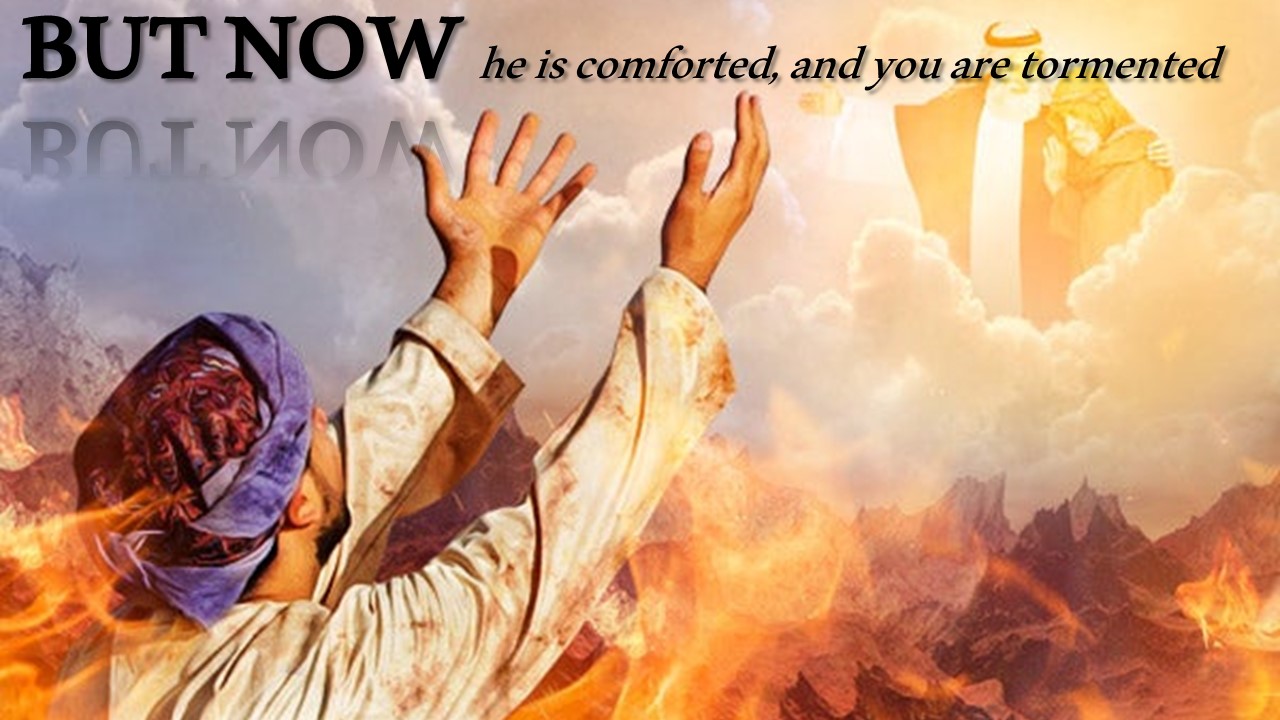
Believing Jesus is the Son of God demands accepting all the teachings of Christ. There is much to learn from the life of Jesus about forgiveness, love, kindness, compassion, and abundant mercy. Jesus loved to spend time with children. He disavowed the hatred of the downtrodden and dispossessed people of His day. The Samaritan woman learned the man at the well was a man of eternal compassion and wisdom. But the message of Jesus also taught there are consequences to sin and the heavenly Father will punish those who do not do His will. From the mountain sermon to His final lessons before the cross, Jesus taught everlasting punishment as the consequence of sin. There will be no mercy for the disobedient. Jesus taught and affirmed the word of His Father that a place of eternal torment is real and most people will find their eternal destiny in the place where there is weeping and gnashing of teeth. Hell is real. God is not willing that anyone should perish but they will lose their soul if they do not obey the word of God. Jesus affirmed and taught this message. Repent. Believe. Obey. Prepare. A great day is coming.

Posted in Uncategorized | Leave a comment