It Was His Just Due

Then Samuel said, “Bring Agag king of the Amalekites here to me.” So Agag came to him cautiously. And Agag said, “Surely the bitterness of death is past.” But Samuel said, “As your sword has made women childless, so shall your mother be childless among women.” And Samuel hacked Agag in pieces before the Lord in Gilgal. (1 Samuel 15:32-33)

It Was His Just Due

The king of the Amalekites was a ruthless killer. His expeditions against Israel and unsuspecting travelers in the region were fierce, cruel, and without mercy. None were spared the barbarous murder of the Amalekites. Women with child were ripped open. Children were slaughtered. Men tortured to the pleasure of the horde. Virgins raped and killed. The atrocities of the Amalekites were well known and feared. God had sent Saul to utterly destroy the Amalekites. He told the king to completely destroy the entire Amalekite nation—men, women, children, babies, cattle, sheep, goats, camels, and donkeys. Nothing was to be spared. Amalek had ambushed Israel after they left Egypt and continued to spread a reign of terror with their murderous exploits.

Saul took 210,000 soldiers and defeated the Amalekites from Havilah all the way to Shur, east of Egypt. His conquest of the people of Amalek was nearly complete, with thousands killed. The instructions of the Lord were quite clear. There was no doubt what Saul was to do. His job was to annihilate the Amalekites where none would remain. He captured Agag, the Amalekite king, and instead of killing him, spared the king his life. Refusing to follow the command of God, Saul and his men kept the best of the sheep and goats, the cattle, the fat calves, and the lambs. They could not see the purpose of destroying everything, so they kept what appealed to them. They destroyed only what was worthless or of poor quality. Together with King Agag and the bounty of war, Saul went to Carmel, set up a monument for himself, and then traveled to Gilgal near Jericho.

The Lord came to Samuel, the prophet, telling him what Saul had done. Grieved at the continued disobedience of the king, Samuel met Saul in Gilgal. He told the king that God had rejected him from being the Anointed one of Israel, and the kingdom would be taken away from him. Before leaving, Samuel demanded Agag be brought before him. Saul had repented for his actions, but a very serious matter remained. King Agag was supposed to die, and Saul did not carry out the will of the Lord. Samuel carried out the will of the Lord. It seems Agag sought pity from Samuel, but no sympathy would be given. The king of the Amalekites would die in the manner he had slaughtered so many thousands, but his execution would be at the hand of a righteous God. Samuel hacked Agag in pieces before the Lord in Gilgal.

There will always be justice against those who live apart from the will of the Lord. Two kings received their due that day. Saul had his kingdom taken away because he had a rebellious heart. Agag lost his kingdom and his life from his reckless abandon of righteousness, reigning terror on others. God’s hand is against those who do evil. Judgment may not always be found in this life, but a fate worse than being hacked to death lay in store for Agag in hell. His death may have been swift, but his eternal death will never end. The justice of God is found against those who are filled with wickedness. Agag received his just due, meaning that righteousness was carried out against him.

All men stand before God accused and guilty and should receive that which is due to them. Only through the blood of Christ is the wrath of God abated. Without the sacrifice of Jesus Christ, all men would stand spiritually before the Father as Agag. Thank God for the grace and love of God that offers redemption, joy, and forgiveness to those who deserve the wrath of God (their due)  – but grace abounds. It was right what Samuel did because it was the will of God.
Posted in Uncategorized | Leave a comment

There Really Is Something Called Sin

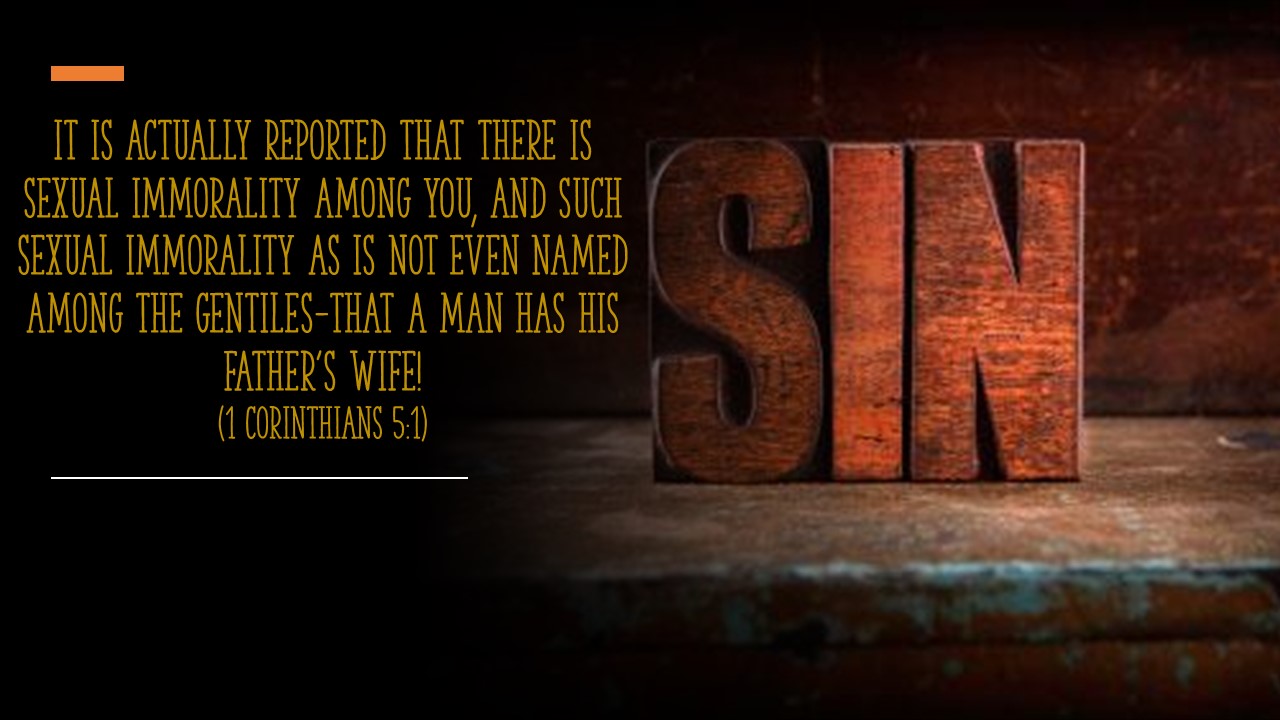
It is actually reported that there is sexual immorality among you, and such sexual immorality as is not even named among the Gentiles—that a man has his father’s wife! And you are puffed up and have not rather mourned that he who has done this deed might be taken away from among you. (1 Corinthians 5:1-2)

There Really Is Something Called Sin

When the apostle Paul sat down to write a letter to the church at Corinth, he had a lot on his mind. The church suffered from numerous problems rising out of a divisive spirit, jealousy, rebellion, confusion, and immorality. At the forefront of the issues, a church member was living with his stepmother in an immoral relationship. It was such a horrific situation; even the pagans were appalled by such a thing. What made matters worse, the leadership of the Corinthian church and the body of believers failed to respond to the blatant immorality with any concern. To say the least, Paul was beside himself with concern the church had taken no action to save the people involved, and allowing sin to dwell within the borders of God’s church was reprehensible.

It would seem likely the report about the man with his father’s wife came from the house of Chloe, who had contacted Paul about the problems at Corinth. As Paul considered the question, he realized that at some point, the man had boldly entered a relationship with his father’s wife, and no reaction was found from the Corinthian brethren. There may have been personal disgust and gossiping filling the airwaves, but the man was allowed to be among the brethren in fellowship. What struck a nerve with the apostle Paul was how easily blatant sexual immorality was accepted within the body of Christ. At the root of the problem was an unwillingness to confront the man and the woman and call their relationship what God called it – sin!

Ignoring sin is not uncommon. The fabric of humanity call good, evil, and evil, good; light, darkness, darkness, light; sexual immorality, lifestyle, and a host of other names that suggest acceptance and approval. Paul did not hesitate to call the relationship of the man with his father’s wife sexual immorality because it was an abomination in the eyes of God. Sin must be recognized for what it is. Mitigating immorality does not change the character or nature of what God abhors. Ignoring sin does make it go away. Defining sin as anything but immorality will not change the mind of God. Lying is not advantageous as an acceptable means to conduct business – it is a sin. Lusting in the heart from pornographic images is immoral in the eyes of the Lord God. Failing to assemble with the saints to remember the sacrifice of Jesus Christ is sin. Cheating on taxes is a sin. Drunkenness is sin. It does not matter how man defines sin – God’s view of sin remains unchanged. Paul was bold and courageous to call out the couple that had been accepted within the fellowship of Corinth. There were consequences of sin the apostle likened to the effect of leaven. Failing to identify sin as immorality allowed the disciples’ hearts to turn a blind eye to any sin. It is not an easy task to preach about sin, but any other message is not the word of God. Sin must be identified for what it is and what it has done to the world. The measure of sin can only be understood in what it cost to defeat sin: the blood of the Son of God who died without sin. When men fail to call sin what it is, they deny the sacrifice of Jesus Christ and His atoning blood. God so loved the world; He allowed sinful men to kill His Son. That was the price of sin. Thank God for His redeeming grace that identifies sin and, then by His mercy, is willing to wash sin away in baptism.

Posted in Uncategorized | Leave a comment

The Wisdom Of The World

Let no one deceive himself. If anyone among you seems to be wise in this age, let him become a fool that he may become wise. For the wisdom of this world is foolishness with God. For it is written, “He catches the wise in their own craftiness”; and again, “The Lord knows the thoughts of the wise, that they are futile.” Therefore let no one boast in men. For all things are yours: whether Paul or Apollos or Cephas, or the world or life or death, or things present or things to come—all are yours. And you are Christ’s, and Christ is God’s. (1 Corinthians 3:18-23)

The Wisdom Of The World

There are many things humanity has accomplished in the past thousands of years. From the pyramids of Egypt to the great wall in China and present-day technologies placing men on the moon and machines on Mars, human wisdom has vaunted itself as a power of dominion over the world. God instilled in the mind of His creation an incredible tool of knowledge to take possession of the world given to him to subdue. Sadly, the wisdom offered by the Divine to man has been his downfall. The world of Noah rejected the word of God for the wisdom of the flesh and perished. Building the tower of Babel was an example of how impressive the wisdom of united men had become but through a single act of dividing tongues, the Creator subdued man. There is a habitation that limits the knowledge of man, and God is the one who draws the line.

Knowledge has always caused problems when men fail to seek the wisdom of God. In creation, the Lord created knowledge, giving men the ability to accomplish great things. His failing has always been that rather than using the knowledge to glorify his Maker, he has used his knowledge to promote himself. Measuring wisdom by the standards of the world exalts the spirit of pride. Proper understanding is when the heart of man sees humanity’s foolishness compared to God’s word. What can man accomplish that is greater than God? Building the tower of Babel would be a great feat, but how does that compare to the multitude of stars that fill the night sky? A man can marvel at the small shiny reflection of the International Space Station as it passes overhead in the canopy of the night sky and remark at how smart man has become to place men in space. But what of the untold number of stars that surround it – how can the wisdom of man match the starry hosts?

Paul warns the Corinthians the wisdom of men is foolishness, divisive, and the root of trouble. Pride comes before the fall when men think they stand taller than angels. The greatest feat accomplished by humanity is microbiologically insignificant to everything God has done. His creation resounds with His wisdom. Science bursts forth with the evidence of the power of God. Nature is a symphony of divine design. The word of God is unparalleled in the writings of men. Nothing compares to the message of the Bible that has remained unchanged and unmoved. The word of God traps the wisdom of men in a snare of their own cleverness. God knows the mind of man, and they are worthless. Why would a man boast about anything? Do not the angels amuse themselves with the pride of men?

The Corinthians were trying to elevate the wisdom of men above God. Paul admitted he was only a man, as was Apollos. These men were servants of the Lord. They had no desire to be exalted by human standards. Their humility was found in the willingness to teach the word of God to glorify the Father. They did not seek elevation in the company of human wisdom. Their preaching was Christ crucified and nothing else. Preaching the wisdom of the world would deny the character of the Son of God. True wisdom comes when one accepts the Lordship of Jesus Christ. The only knowledge that saves is found in Jesus Christ. It is easy for men to seek a higher plane with self-glory, but the true disciple of Christ will seek the well-being of others, desiring the betterment of their fellow man above themselves and putting Jesus Christ first in all things. Glory in no one but Christ and, in so doing, glorify God.

Posted in Uncategorized | Leave a comment

Spirit Fruit: Faithfulness

But the fruit of the Spirit is love, joy, peace, longsuffering, kindness, goodness, faithfulness, gentleness, self-control. Against such there is no law. (Galatians 5:22-23)

Spirit Fruit: Faithfulness

Faith is the foundational character of a man’s relationship with God. Without faith, it is impossible to please God. Through faith, a man can see the hope of eternal life and the promises made by the Lord. Men like Abel, Enoch, Noah, Abraham, and Moses exemplify the power of faith to believe the impossible and accept the unknown. Paul writes that faith comes from hearing the word of God, showing all men the revealed pattern of divine love and grace. It is from this kind of faith that faithfulness comes. The first faith brings one to God, and faithfulness is the character that solidifies the spirit to fidelity.

As one of the fruits of the Spirit, faithfulness is more than believing in God. The Holy Spirit expresses the character of faithfulness in the child of God as one of action. Faith and faithfulness are like love when a man loves God and shows that love through his manner of life. There is more to love than saying it. To find the true value of love, it must be exercised. Faith follows the same path. Saying one has faith in God has little meaning with the expression of faith through faithfulness. Faith will lead a man to God, but faithfulness is the manner of life that springs forth from the word of God to be evidenced in the life of the man.

A faithful man is one of integrity and honesty. He is known as a man of his word because of his faithfulness. As a member of a community, people will see his character as one of truth. In the workplace, the faithful man exhibits honesty, productivity, reliability, and a willingness to help others. There is no place faithfulness is more important than in the home. A man and woman are faithful in their relationship with one another as husband and wife. Their children see faithfulness in their character as parents. The home is established with the fruits of the Spirit, including showing faithfulness.

As a fruit, faithfulness comes from the Holy Spirit. Speaking truth from the heart requires guidance and counsel. As strangers and pilgrims in a perverse generation, showing faith takes more courage, and the Holy Spirit will bear the fruit of faithfulness to concrete the soul into the image of the Father. Daniel and his friends showed their faithfulness by standing for truth and not allowing the world’s influences to change their character. Faith had them stand before the fiery furnace and the lion’s den, but faithfulness guided their hearts, minds, and souls to show their love for God. Christians must show faithfulness in their speech, manner of dress, behavior, disposition, and attitude.

Faithfulness is a vital ingredient in the work of the church. What the church needs more than ever are members who show their faithfulness in the integrity of their work in the kingdom. A man bearing fruit from the Holy Spirit will show faithfulness in his worship to keep the commands of the Father in the assembly. This is found in prayer, song, remembering the sacrifice of Christ, returning the Lord the bounties of life, and growing in the knowledge of Jesus Christ. Faithfulness born of the Spirit will help give the courage to talk to others about eternal life. The fruit of the Spirit is a manifestation of the growth of the Christian. The Lord will bless those who are faithful.

Posted in Uncategorized | Leave a comment

The Agency Of Teaching Is By Men

As he journeyed he came near Damascus, and suddenly a light shone around him from heaven. Then he fell to the ground, and heard a voice saying to him, “Saul, Saul, why are you persecuting Me?” And he said, “Who are You, Lord?” Then the Lord said, “I am Jesus, whom you are persecuting. It is hard for you to kick against the goads.” So he, trembling and astonished, said, “Lord, what do You want me to do?” Then the Lord said to him, “Arise and go into the city, and you will be told what you must do.” (Acts 9:3-6)

The Agency Of Teaching Is By Men

There are few stories as riveting as the conversion of Saul of Tarsus. The early disciples were terrified of Saul, who participated in the death of an early Christian named Stephen and made havoc of the church, dragging men and women to prison from every city he could find those of the Way. Saul was relentless in his pursuit of the Christians. He was zealous toward God to destroy the church. His single purpose in life was to stamp out all that followed Jesus of Nazareth. With the authority of the Jews in Jerusalem, Saul chased down Christians in foreign cities, compelled believers to blaspheme Christ, and cast his vote against them when they were condemned to death. Saul of Tarsus was exceedingly enraged against the Christians.

One day, Saul was on a mission to find Christians in the city of Damascus when about noon, a bright light shone about him. Unknown to Saul, he was a chosen vessel for the Lord to take the name of Jesus to the world. The Lord appears to Saul on the road to Damascus and tells him to go into the city to the house of a man named Judas. Jesus came to Saul to appoint him as a minister and witness of the gospel to both Jew and Gentile. The Lord was telling Saul what his life would be in the service of the kingdom of God, but there was one thing the Lord did not do. He did not save the man from Tarsus while he stood in the road. Saul was going to become a great disciple for Christ, but the first thing that needed to be done was for someone to come and baptize Saul.

Jesus did not take away the sins of Saul. The Lord told Saul to go into the city, and it would be told him all the things he was appointed to do. Saul arose and went into the city. He found the street called Straight and then found the home belonging to Judas. It was quite a shock for Judas and his household to see Saul of Tarsus standing at the front door, considering all the things people knew about Saul. They would have known that Saul had come to Damascus to arrest all those who called upon the name of Jesus, including their household. By faith and trust in the power of God, Judas and his family accepted Saul into their homes, waiting for the word of the Lord. When the Lord appeared to Saul on the road, he had been blinded, requiring others to lead him by the hand. Now in the house of Judas, Saul was cared for by the very people he sought to destroy.

Shortly after the Lord appeared to Saul, the Lord also came to a man named Ananias and told him to find Saul and restore his sight. He would find him at the house of Judas. Ananias stood before Saul and, by the power of God, restored his sight to him. With everything that had happened to Saul from the Lord appearing to him, his blind walk to the house of Judas, and not eating or drinking for three days, one thing remained unresolved. Saul was still a lost sinner. The appearance of the Lord had not saved him. His belief in the word of the Lord had not saved him. Waiting three days without eating and drinking did not save him. It was not until Ananias came to the house of Judas and said to Saul, “Now why are you waiting? Arise and be baptized, and wash away your sins, calling on the name of the Lord.” Saul arose and was baptized.

Saul was not saved on the Roman road to Damascus. The appearance of Jesus did not save him but the agency of a man coming to tell the man from Tarsus what he must do to be saved. This pattern of salvation is repeated throughout the story of the gospel. The gospel was given through the agency of men to the devout Jews gathered in Jerusalem at Pentecost. The Holy Spirit sent Philip to teach a man from Ethiopia. Paul and Barnabas, and Silas would travel many thousands of miles teaching the gospel to lost souls. Peter would teach a Roman Centurion and his household the saving gospel of Christ even though an angel had appeared to Cornelius.

The gospel is carried through the agency of men to other men. It is within the power of God to save any man with His grace and mercy without the intervention of human participation: but it is not His will! The gospel is carried by faithful men who teach other men. Our neighbors will not be saved by the appearance of an angel or intercession of the Lord in some bright light. It requires a man discovering the truth of God’s love either through his own study or a man like Ananias who will come and show the way of salvation. All the good feelings and signs a person will find in life will not save him. The idea that a man is saved because he feels saved is a lie. Faith comes from hearing the word of God and obeying that word. The agency of the gospel is through the interaction of men willing to teach other men redemption.

Posted in Uncategorized | 1 Comment

Wrong Parental Advice

Ahaziah was forty-two years old when he became king, and he reigned one year in Jerusalem. His mother’s name was Athaliah, the granddaughter of Omri. He also walked in the ways of the house of Ahab, for his mother advised him to do wickedly. Therefore he did evil in the sight of the Lord, like the house of Ahab; for they were his counselors after the death of his father, to his destruction. (2 Chronicles 22:2-4)

Wrong Parental Advice

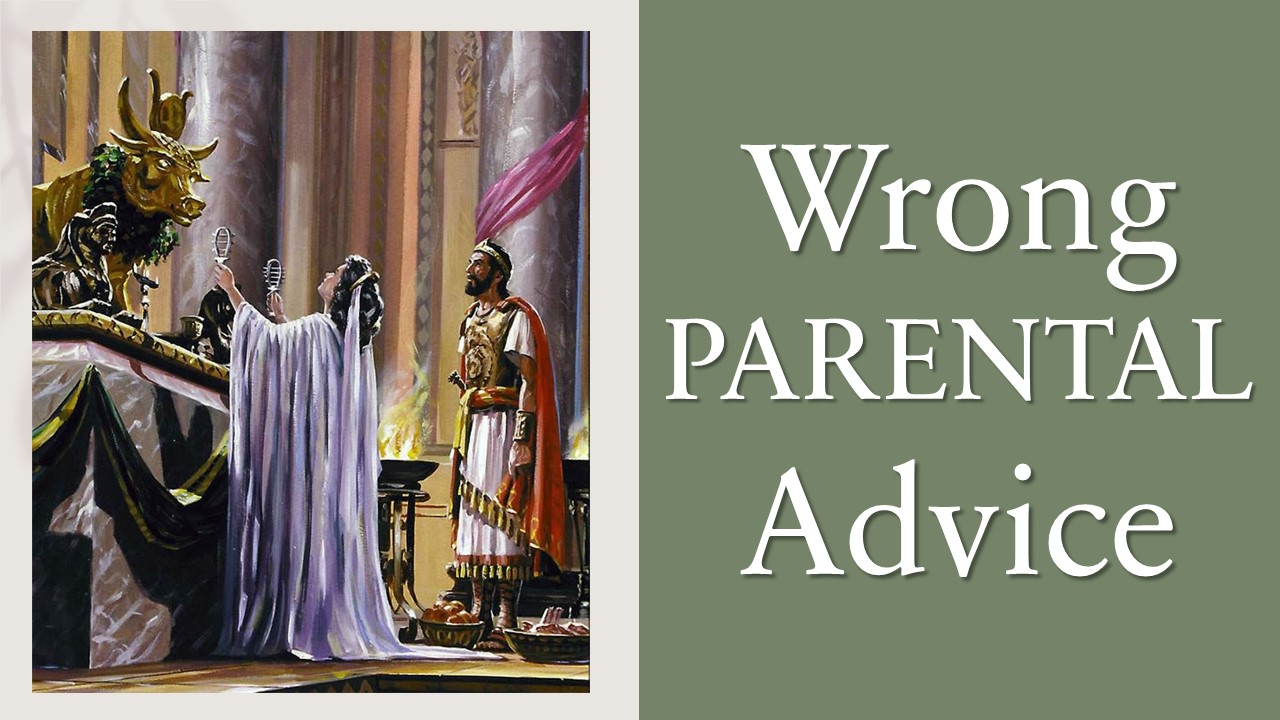
Every child born into the world comes with a fresh innocence of newborn purity. Jezebel was one of the most wicked women in the Bible, and yet there was a time when her heart was as pure as the driven snow. Like her husband, Jezebel made a name for herself as the antithesis of righteousness, goodness, and holy character. Her reputation came through the influence of the world around her and parental guidance leading her down a path of destruction. She did not lose time to mold her daughter in the ways of Baal and idol worship. Athaliah was born to Ahab and Jezebel and, as a young baby, had a pure heart. Taught by her wicked parents, Athaliah would rise to power one day that would set her on the road to infamy as one of the cruelest women who lived.

In a marriage of political expediency, Athaliah was given to Jehoram, eldest son of Jehoshaphat, king of Judah. After Jehoram became king, he murdered his six siblings, probably at the behest of his wife. Eight years later, Jehoram dies from an incurable disease of the intestines which he suffered two years until his intestines came out. He died in severe pain. His death was to no one’s sorrow. After the death of Jehoram, his son Ahaziah became king, with his mother serving alongside him. He walked in the ways of his grandparents (Ahab and Jezebel), led by the strong influence of his mother, Athaliah. The reign of Ahaziah would last only one year before he was killed by Jehu, son of Nimshi, whom the Lord appointed to cut off the house of Ahab. After the death of Ahaziah, his mother murdered her grandchildren, taking the throne of Judah for herself. But Jehoshabeath, the king’s daughter, took Joash and hid him from the wrath of Athaliah.

The family of Ahab and Jezebel were a blight to the nation of Israel. Ahab married Jezebel, the daughter of Ethbaal, king of the Sidonians. “In Jezebel, his Phoenician wife, Ahab found a champion of the foreign culture, who was as imperious and able as she was vindictive and unscrupulous. She was the patron of the prophets of Baal and of the devotees of Asherah” (ISBE). Jezebel taught her daughter, Athaliah, well in the art of evil and manipulating others. Jezebel and Athaliah were very capable of killing their own children and grandchildren for their personal cause. Influenced by these parents, Jehoram and Ahaziah ruled with the same wickedness.

Every child is born in innocence without any corrupt or evil seed. Ahab and Jezebel were without sin when they were babies, but it changed quickly. They had children that were born in purity, but they changed their hearts. The teaching of their parents primarily influenced the corruption and ungodliness that charactered their lives. Joash would be one of the great reforming kings of Judah, and it largely had to do with his grandmother, Athaliah, not influencing him. It can be assumed his aunt Jehoshabeath (Jehosheba), the wife of Jehoiada, the priest, instilled in the young boy love for God. The power of parental influence is overpowering to determine a child’s destiny.

The Bible is filled with the godly influences of parents who sought to instill in their children a love of God. Abraham and Lot are examples of how one man guided his home with God, and the other allowed the wicked influence of Sodom and Gomorrah to destroy his home. Manoah and his wife sought the Lord’s counsel to establish the rule of life and work of their son, Samson. Hannah was a powerful influence upon her son, Samuel. Daniel’s parents taught him from an early age to pray three times to the Lord, and he never forgot those lessons. Joseph and Mary were the parental influence of the Son of God. Parenting is fraught with danger and is not for the weak-hearted. The only goal a parent should have is to make sure their children are safely in the ark when it begins to rain. Nothing else matters. Life only gives one opportunity, and those days quickly pass. Which parent are you? Teach your children to fall in love with God by your example.

Posted in Uncategorized | Leave a comment

Now Hiring

For even when we were with you, we commanded you this: If anyone will not work, neither shall he eat. For we hear that there are some who walk among you in a disorderly manner, not working at all, but are busybodies. Now those who are such we command and exhort through our Lord Jesus Christ that they work in quietness and eat their own bread. (2 Thessalonians 3:10-12)

Now Hiring

It is not hard to find a business that does not have a notice looking for help. “Now Hiring” is more common as the economic outcome of COVID-19 and government assistance have driven many to stay home collecting unemployment checks. The government has been so generous, many of the basic level jobs pay less than what can be received from collecting federal and state assistance. Some companies are paying prospective employees to interview. Free money is a great temptation that does not make a community great but begins to destroy the fabric of what made America a strong nation: its workforce.

The Second World War was tragic for the cause and effect of the carnage inflicted worldwide. One of the strengths that came from the early 1900s is establishing an incredible labor force that changed the face of the world. It was not a throwaway, plastic society but a world of quality work done by hard-working people. There was a national pride in the country following the war that helped put men on the moon, create an industry of technological wonders through computers, wireless devices, cellphones, and science far beyond the imagination of men. Opportunities abounded with endless possibilities. Those days are gone.

Businesses are struggling to find people who are willing to work. Often, those who work have little desire to do a good job, barely getting by with minimal effort. Quality of product has lagged, customer service is almost non-existent, and going beyond the job requirements is refused. What is lacking is the spirit of Christ in the workplace. The gospel of Christ will save a soul from eternal judgment, but it will also make a world in this life that is noble, honest, just, and willing to work. Paul exhorts the church in Thessalonica to be examples of hard work and diligence. The apostle says that if a man refuses to work, he is walking disorderly. He rebukes those who live idle lives, refusing to work and meddling in other people’s business. The church has an obligation (a command) to withdraw from every brother who walks disorderly, including those who refuse to work.

Paul taught a gospel of integrity. The Christian example is found in the workplace, and there is no better place for the grace of God to shine in a community than when the Christian goes to work. When God created Adam and Eve, He placed them in the garden with the command to tend the garden. Sin had not entered the world yet, but God expected His creation to work. Throughout the book of Proverbs, the Holy Spirit condemns a lazy spirit, a person who refuses to work, and those who expect to live off handouts from others. The government may pay people not to work, but the Christian must be diligent in living a quiet life and working with their hands to give glory to Jesus Christ. Paul said he preached this message to the Thessalonians. Refusing to work was sinful and brought shame to Christ.

It is hard to change the world and impact how others behave, but a Christian is a person who knows that God is their master before all men. Judgment day will not just be about whether a man has committed adultery or lied or stolen. His judgment will primarily be about something he will spend most of his life doing – working at a job. If a Christian is a lazy, slothful, and belligerent person refusing to work, he jeopardizes his soul. Churches led by courageous men will challenge those who refuse to work, citing scripture to condemn such attitudes. If a man refuses to work, note that man and do not keep company with him, that he may be ashamed.

Posted in Uncategorized | Leave a comment

The Same Word

“For his letters,” they say, “are weighty and powerful, but his bodily presence is weak, and his speech contemptible.” Let such a person consider this, that what we are in word by letters when we are absent, such we will also be in deed when we are present. (2 Corinthians 10:10-11)

The Same Word

It is hard to imagine the apostle Paul as anything but a powerful force to reckon with. When he was called Saul of Tarsus, he was exceedingly enraged against the church and persecuted the disciples of the Lord even to foreign cities. Luke describes after Paul’s conversion, the church was afraid of him when he tried to join the church family in Jerusalem. Paul began to take missionary journeys where he helped to establish numerous churches converting many people to Christ. Reading any of his epistles to the churches would leave the impression the apostle Paul was a formidable man in presence.

In his second letter to Corinth, Paul seeks to defend his authority as an apostle as some were trying to discredit him. One of the charges that Paul knew the brethren made against him was his physical presence. There are no descriptions of the apostle in Scripture, but Paul suggests of himself his bodily presence was not impressive and his oratory lacking. This was the opinion of his detractors, whether justified or not. Paul defends himself with the authority that his letters were weighty and powerful, and his words were the same when he was present with the brethren. He may not have been a man like Apollos, who was an eloquent man and mighty in the Scripture, but Paul was a man whose word was as straightforward and demonstrative when he spoke as it was when he wrote his letters. The preaching of Paul was not to impress others with his physical appearance. He was not in the kingdom of God to make a name for himself among men.

Paul was a preacher of the gospel with the same diligence to speak the truth whether in person or in letter. He reminds the Corinthians that what he is in word by letters is the same man he is when he is present with the brethren. He may not be much to look at but what he says has eternal consequences. The power of the word is what drove Paul. There was no need to change the word of God to impress people. Paul preached the truth regardless of the opinions of men. Some may reject him because of his physical presence, but they are rejecting the word of God. The only message that Paul preached was the gospel of Jesus Christ.

The word must be the same in every part of a man’s life. There cannot be two sides of a man who on one side is hard on the truth and then in the presence of others softens the impact. It is easier to rebuke through the written word because there is no personal confrontation. Courage comes from a heart that will speak the truth in love face to face. Paul warned his detractors that his message when he came to them was the same as when he wrote them a letter. His faith was consistent with his belief which was rooted in the gospel of Jesus Christ. What we are in word by letters must the same when we are gathered with others.

Posted in Uncategorized | 1 Comment

Committed To The Power Of Prayer

Then I proclaimed a fast there at the river of Ahava, that we might humble ourselves before our God, to seek from Him the right way for us and our little ones and all our possessions. For I was ashamed to request of the king an escort of soldiers and horsemen to help us against the enemy on the road, because we had spoken to the king, saying, “The hand of our God is upon all those for good who seek Him, but His power and His wrath are against all those who forsake Him.” So we fasted and entreated our God for this, and He answered our prayer. (Ezra 8:21-23)

Committed To The Power Of Prayer

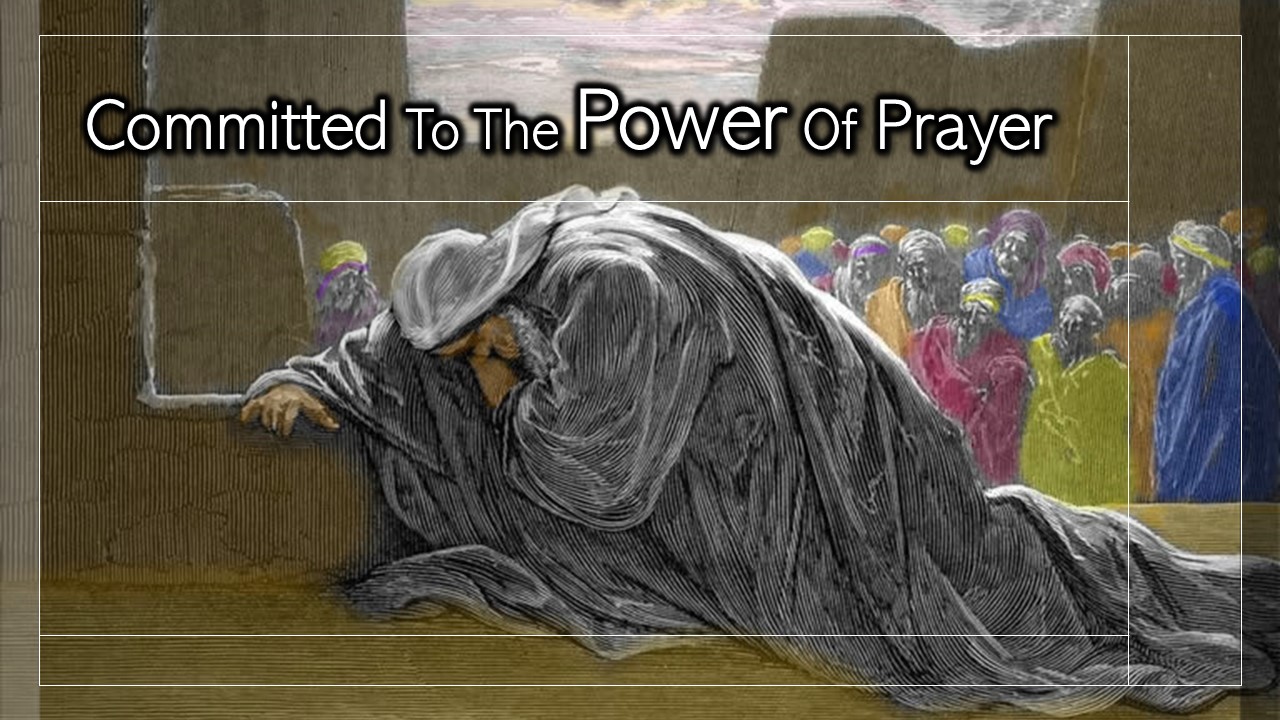
The dangers of caravan travel were very real for Ezra and the Hebrews who desired to return to Jerusalem. Bedouin Arabs thrived on plundering caravans caught in the web of their attacks. Considering the amount of gold, silver, articles, and offerings for the house of God Ezra was carrying, the fear of attack was genuine. It was common to ask the king for an escort of soldiers and horsemen to protect the convoy of souls, but Ezra had boasted to the king there would be no need for such protection as the Lord God would protect them. It seems the reality of his boasting had caused some trepidation in the heart of Ezra as the plans became real and the journey fraught with danger. Ezra had boldly proclaimed to the king his confidence in the power of God to see them through.

As the caravan prepared to begin its long journey to Jerusalem, Ezra proclaimed a fast at the river of Ahava to entreat the Lord’s blessings. He understood the need for humility to take on such a monumental task of taking all those souls on a perilous journey without the king’s protection. Instead, he sought the Lord’s favor to humble the hearts of the people to seek from Him the right way and protect the little ones and all the possessions. Ezra boldly proclaimed his faith to the king, and now he must prove his faith to God. The people fasted. Entreaties were made to the Lord God. Faith lifted the prayers with fervent desire. Courage took hold of the hearts of the weak to be emboldened to seek the protection of the Lord. Trust flooded the souls to believe God would answer their prayers. And God answered their prayer.

The company of travelers left the river of Ahava on the twelfth day of the first month for Jerusalem and arrived safely in the city with no attacks from marauding tribes. God’s mercy granted through the accompanying fasting and prayers proved the word of Ezra to the king that the Lord God was powerful and mighty to protect His people. The journey must have been filled with anticipation as each day, the Jews looked for the protection of God. They would have been mindful of the dangers lurking behind the mountains and the shadows of darkness. Their journey was an incredible show of faith when they left without an armed guard. Everyone would have ridiculed their refusal to accept the soldiers and horsemen from the king, but they set out with only the hand of God to protect them. Imagine the surprise to those who heard the caravan had made it safely to Jerusalem. Some would have said the people were lucky, and that was all. Others would have come to know the power of God because of the faith of Ezra.

Prayer is a powerful tool, but it requires the faith of the man to show belief in the power of prayer. Ezra could have asked for soldiers, but he had proclaimed to the king his undying faith in the power of God to deliver them. From a security view, going without soldiers was a risky and dangerous decision. It seemed to be an irresponsible and costly mistake. As the procession left, many people probably remarked how incredibly tragic the news of the caravan would be when they would be plundered and the people killed. When word came back the group arrived safely in Jerusalem, the stories were mixed as to how it happened. The king knew the God of Ezra was truly a great and powerful God.

The difficulty of prayer is to ask the favor of God and then let God take over. Often, prayer is given with a caveat in case the Lord cannot carry out the request. It is easy to tell God how to answer prayer. Ezra told the king the Lord would deliver them and asking for soldiers would deny his claim. Prayer must be made in bold language with the heart of faith willing to head out into the wilderness without soldiers and let God protect the caravan. It takes a committed heart to pray the prayer of faith. Ask God and then let Him do His work without telling Him how to do His work.

Posted in Uncategorized | Leave a comment

Spirit Fruit: Goodness

But the fruit of the Spirit is love, joy, peace, longsuffering, kindness, goodness, faithfulness, gentleness, self-control. Against such there is no law. (Galatians 5:22-23)

Spirit Fruit: Goodness

The character of goodness is a trait common in most people. Having a good spirit is a natural result of proper training, instruction, and practicing established manners. Being a good person can come naturally. Young people should be taught to be honest, courteous, and kind to others, making them a good person. There are those in a community that stand out as people of kind acts and pleasant dispositions that everyone would consider to be a good person. These are commendable for anyone to follow after, and the world needs more people filled with goodness.

Paul’s description of the fruit of the Holy Spirit includes the fruit of goodness. Good fruit comes from a good tree, and a good tree comes from good stock. It may not be as natural a process as one might think. The kind of goodness Paul writes about is not the goodness found in the world. Goodness as a fruit of the Holy Spirit is something that is above the good things people do in the world. There is a spiritual connection with this type of goodness. It serves a higher purpose, often at a higher cost. Foremost to the fruit of the spirit is the willingness to abstain from everything evil and seek good things. Jesus reminded His disciples that good men come from hearts filled with good treasures, and evil men are born from hearts filled with evil. The Holy Spirit is where the spiritual goodness comes from to refrain from sin, which is the transgression of the word of God. If a man is not a Christian, he may be a good man, but the counsel of the Divine does not govern him. He is a good man in the general sense. The man who is filled with the fruit of the Holy Spirit will be good regardless of the circumstance.

Goodness from the Spirit is found in the desire of the heart to walk in the ways of God. The psalmist said the Lord orders the steps of a good man as he delights in the way of God. This type of goodness is a higher spiritual manifestation than being a good neighbor. Good people who serve the Lord find favor in the spiritual world as they serve the Lord Jesus Christ. It takes a good heart to pray for an enemy and to bless those who curse them. Without the fruit of the Holy Spirit, this will not be possible. To be a son of the Father, goodness must come from an abiding presence of the Holy Spirit so the fruit of righteousness will shine forth in the life of the Christian.

The fruits of the Spirit come from the Holy Spirit. Barnabas was called a good man, and he was full of the Holy Spirit and faith. Good men and good women led by the counsel of the Lord will show their faith in their goodness. What separates the good man in the world and the good man in the Lord is the Lord. One is motivated by common grounds of decency. The man who is a good man in the Lord is moved by the goodness of God to show forgiveness, mercy, kindness, love, and compassion. God’s goodness sent His only begotten Son to die for the world. The goodness and severity of God are proclaimed loudly throughout scripture.

When a child of God is filled with the fruit of the Spirit, they abide in the Father’s character with goodness. Their spirit is guided by the righteousness of God, showing the world His grace. It is easy to think that goodness is a natural process, but the fruit of the Spirit comes through faith and dependency on the word of God. This type of goodness is the highest form of benevolence and only comes from the Holy Spirit. Being good is great. Showing the fruit of goodness obtained from the Holy Spirit is divine.

Posted in Uncategorized | Leave a comment