
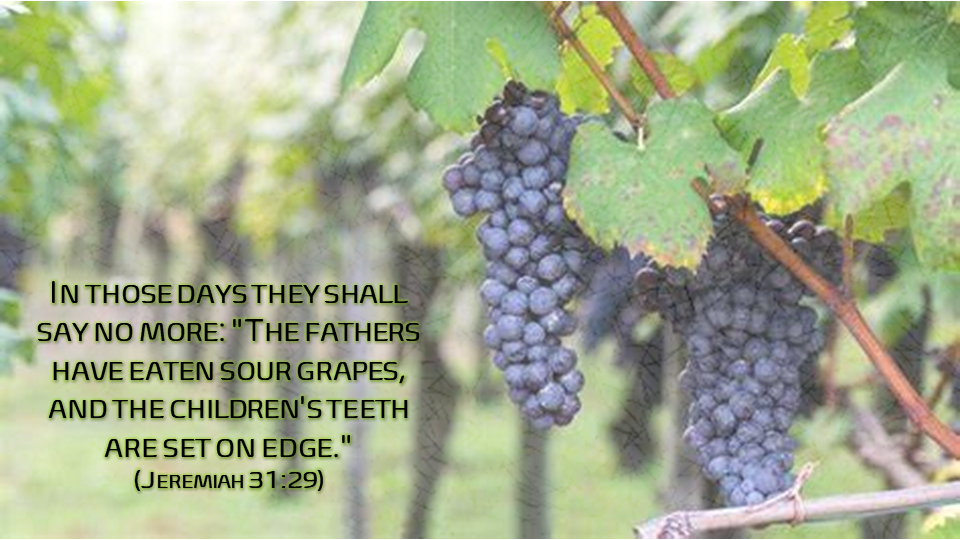
In those days they shall say no more: “The fathers have eaten sour grapes, and the children’s teeth are set on edge.” (Jeremiah 31:29)
No One To Blame
The art of blaming others for self-made mistakes is common in the human spirit. Someone is always to blame for the bad things that happen or the injustices brought against an innocent person. Prisons are filled with voices that blame others. Social injustice comes from finding others to blame for the conditions of the times. There is a movement to blame past generations for crimes, holding present-day society accountable for reparations. In reality, every individual is responsible for himself and his actions alone.
It is easy to blame parents for the way a man behaves. Society can be charged as the culprit of destroying the character of a group of people or community. There are limitless ways to turn the blame upon the faults of others. The greater truth in this phenomenon is that it is all false and a lie. Blaming others for the individual’s actions does not agree with the will of God. One of the foundational truths of scripture is that all men are accountable for one person: themselves.
During the final days of Judah, before the Chaldeans destroyed them, the people cried out how unfair it was for the punishment of God. The last days of Judah had come, and a foreign nation began to move toward Judah to conquer. Prophets like Jeremiah told the people to repent, but they could not believe they had any reason to repent. What was happening to them was the fault of their fathers. The people in the final days of God’s kingdom blamed others for their impending doom. They were not to blame. A proverb claimed the fathers had eaten the sour grapes and the children were innocent victims of what their fathers had done. This same proverb will be heard by Ezekiel when the people complained to him.
God makes it abundantly clear that blaming the fathers for the sins of the children does not work. It seems the people asked the Lord for a pass on their sins so they could blame others. God would have none of it. He punished the people who had sinned without regard to their fathers, mothers, teachers, prophets, or king. If a person was condemned, it was because they were guilty. Ezekiel would later explain the soul that sins dies. A father will not bear the sins of the son, nor will the son bear the father’s sins. The principle is that each individual would be responsible for his own sin – regardless of who he tried to blame.
The will of God has never wavered from the fundamental truth that every person is accountable to God for himself and himself alone. A father cannot stand before God pleading the case for his son. The son will not be able to defend his father. Every soul will stand before the judgment of God and stand alone. The preacher will not be able to defend the souls of others. Parents cannot explain their children. Society will not be considered as an excuse for sin. Husbands and wives cannot defend one another. The soul that sins will die.
What is learned from the proverb of sour grapes is that God does not accept the blame of others for the actions of the individual. There is no mercy in blaming the fathers for eating sour grapes. When I stand before God, I stand alone. You will stand all by yourself. God is not a respecter of persons, and His judgment will not come from shifting blame on others. The judgment of the Lord God is the purest of judgments where all men are accounted equally based upon the individual alone. That is how serious the judgment will be. How do you measure yourself? Stop blaming sour grapes on someone else. You are accountable for you.
 The Heaton File