The Hireling Christian

I am the good shepherd. The good shepherd gives His life for the sheep. But a hireling, he who is not the shepherd, one who does not own the sheep, sees the wolf coming and leaves the sheep and flees; and the wolf catches the sheep and scatters them. The hireling flees because he is a hireling and does not care about the sheep. (John 10:11-13)

The Hireling Christian

Sheep require constant care under the watchful eye of a shepherd who depends on his flock for many of life’s needs. Keeping sheep was not a hobby for those in Biblical times but a daily need of caring, tending, protecting, and leading to green pastures and still water. The life of a shepherd was hard. Constant threats of bears and lions keep the shepherd on guard. Every sheep was important to the family’s income, and if one sheep was lost, it was a tragedy. A good shepherd would do everything in his power to protect his flock. King David kept his father’s sheep when he was a boy. When a lion or a bear came and took a lamb out of the flock, David would go after it and strike it on the head to deliver it. If the bear rose up against David, he would grab it by its beard, strike, and kill it. There was no fear of the young shepherd boy to give his life for his father’s flock.

On occasion, a family would hire a man to keep the sheep. He was called a hireling, which means he was hired to watch over the sheep. His job was to be employed for a limited time and receive a payment at the end of the watch. He had little concern for the sheep as his job was a paid observation of a flock that was not his own. The only thing he considered necessary was what he got out of the employment. If a wolf came up against the flock, he would not give his life for something he had no commitment or reward for and would flee. The wolf would take whatever he wanted, and the flock would be scattered. Hirelings are not devoted to the work. Unlike the shepherd, who is committed to the protection and care of the flock, the hireling is just a temporary part of the work with little or no interest in the outcome.

Jesus explained to the Pharisees that He was a good shepherd willing to give His life for the flock. The purpose of the Son of God coming to earth was to give His life as a ransom for all. Jesus was willing to die for the flock. He died on the cross for every man because He was the good shepherd who gave His life without compulsion. No one forced Jesus to die. He gave His life of His own accord. Unlike David, who took the bear by the beard and killed him, Jesus took the beard of Satan and died. But God had a greater plan to raise His Son from the dead to destroy the works of the devil and accomplish salvation for all those who would come to Him. Jesus gave a full sacrifice as the good shepherd.

The Christian is a disciple or follower of Jesus. Like the good shepherd, the child of God is to be committed fully to the work of the Lord. This requires a heart willing to give time, energy, and devotion to the work of the Lord. God desires to have shepherd Christians dedicated to the kingdom’s work without reservation. Hireling Christians are half-hearted in their desire to grow, encourage, share the gospel, and become better kingdom citizens. There is a sense of doing as little as required and less if expected. Hireling Christians never reach the point of dedication to Christ. Their hearts are just not in it. They attend sporadically, if much at all. The Bible is never opened, and prayer is never a part of life. Life for the hireling Christian is doing as little as possible.

Jesus was the good shepherd leaving an example for the Christian to become a shepherd Christian. When the ewe lamb is born, he must learn to trust in the good shepherd’s voice. As he grows in Christ, the lamb becomes a shepherd in the kingdom of God, looking out for others and doing the will of the Great Shepherd, Jesus Christ. Hirelings are not committed and run at the first sign of danger. Shepherd Christians are willing to lay down their lives for the work of the kingdom.

Posted in Uncategorized | Leave a comment

Blessings Come From How Many Vessels You Have

A certain woman of the wives of the sons of the prophets cried out to Elisha, saying, “Your servant my husband is dead, and you know that your servant feared the Lord. And the creditor is coming to take my two sons to be his slaves.” So Elisha said to her, “What shall I do for you? Tell me, what do you have in the house?” And she said, “Your maidservant has nothing in the house but a jar of oil.” Then he said, “Go, borrow vessels from everywhere, from all your neighbors—empty vessels; do not gather just a few. And when you have come in, you shall shut the door behind you and your sons; then pour it into all those vessels, and set aside the full ones.” (2 Kings 4:1-4)

Blessings Come From How Many Vessels You Have

The northern kingdom of Israel never had a righteous king. From Jeroboam to the final king, Hoshea, the land of Israel was filled with evil, ungodliness, immorality, human sacrifice, and all the trappings of idolatry. God sent His prophets to warn the people of His wrath if they did not repent. Two of the great prophets of the northern kingdom were Elijah and Elisha. During great times of world conflict, the Lord would send His messengers with the power of the Holy Spirit to work miracles and signs among the people showing His judgment on sin. Elisha was a prophet sent by God to show the people the way of truth.

There was a widow in the land who, like many of the day, suffered under the hand of God’s judgment on the wicked nation. The widow was left destitute when her husband died with two sons to raise. Evil men did not pity the widow, declaring her sons would become enslaved to pay the debt she owed. Pleading to Elisha for help, she asked for blessings on the sons of her husband, a prophet. All the widow had to sustain her was a jar of oil. Elisha could have made money appear, or he could have persuaded the creditors to leave her family alone. There were many things the prophet could have done to alleviate the woman’s plight. He tells her to gather as many vessels as possible from friends and neighbors. Elisha exhorts her to gather many vessels and not just a few. The widow follows the prophet’s instructions with little idea of how that would help her cause.

Elisha instructs the widow to gather all the vessels in the room and shut the door. She is to take the one jar of oil and begin pouring it into all the empty vessels until they are full and set them aside. Pouring the oil into the vessels, she fills all the containers until there are no more jars to fill, and the oil ceases. The widow takes some of the oil, pays her creditors, and uses the remaining oil to live on. Elisha instructed the widow to gather as many vessels as she could. The amount of her blessings was dependent on how many vessels she could secure. If she had gathered a few, her blessings would have been few. Collecting as much as she could, her blessings abounded.

The story of the widow’s oil is a story about the blessings of God. All men are impoverished and subject to the slavery of sin. Jesus came to give the abundant life, but the blessings can only be measured by how much a man is willing to seek the blessings of God. Too often, only a few vessels are gathered or none at all. So many blessings are waiting for the child of God that go unused and unasked for. The storehouse of God’s blessings is endless, and all a man has to do is to gather all the vessels of his life he can find and ask God to fill them. And the Lord will fill them. Seeking the blessings of God is where the joy of the Christian life is.

God is willing and able to fill the vessels of life with the abundance of heavenly oil. He could give His blessings without any effort on our part, but we have to gather those vessels. Proportionate to our seeking vessels to fill is where our blessings come. If we gather little, we are blessed little. When we gather much, we are blessed much. Examine how often you seek the empty vessels of life for God to fill. Those vessels represent our faith, our marriages, our families, our jobs, and the work of sharing the gospel with others. Jesus said those who seek, find, and those who ask, receive. How many vessels do you have?

Posted in Uncategorized | Leave a comment

I Love Money

But those who desire to be rich fall into temptation and a snare, and into many foolish and harmful lusts which drown men in destruction and perdition. For the love of money is a root of all kinds of evil, for which some have strayed from the faith in their greediness and pierced themselves through with many sorrows. (1 Timothy 6:9-10)

I Love Money

The need for currency has always moved the world in commerce and economic growth. There have been many versions of how the exchange was represented, whether by barter, coins, oil, paper, or land, but the outcome was the same. Transactions between parties were sealed in one form or another. The token used as money served as a legal tender that an item had exchanged hands. Early man worked in metallurgy which, from the beginning of time, established the use of coins as money. The Chinese introduced paper as a means of money. Modern technologies introduced electronic versions of currency in different forms. The mechanism of currency has changed since the beginning of time, but one thing has remained a constant: covetousness and greed.

Man is the only creature that will kill another over a coin or piece of paper. A bear will walk along a river seeking food and stumble across vast amounts of gold but will pay no heed or concern to the glittering mineral shining in the water. He only wants to find his next meal. A man will walk the same river and discover gold, and his life will change. The heart fills with a strong desire to find more and more, consuming the man with a feverous passion. He will guard his stake with all of his life. How many men have been killed over the possession of money? Lotteries are heralded as opportunities to have instant wealth in the millions of dollars, reaching as high as $1.586 billion. Money is not the evil no more than gold in a river. The love man places on currency is where sin and degradation begin.

Paul warns the people of God to refrain from the desire and love of money. The Holy Spirit never condemns wealth. Many of God’s greatest servants were very wealthy. Abraham, Job, Solomon, Matthew, and probably Paul himself before he became a Christian. Money is a necessary part of life that allows a man to work and provide for his family. In the early church, the disciples helped one another in need. Collections were taken up weekly to help support the work of the church. The desire to be rich comes from a heart filled with covetousness. God wants His people to be content with what they have. Desiring to have wealth can destroy a soul. Loving money takes away the heart of love devoted to God. Because of the love of material things, children of God have abandoned their faith and worshiped the dollar more than the Lord.

Loving money is misusing the blessings given by God. Currency is a form of exchange to provide for a family and to help others. The Christian works to provide for his own and seek opportunities to share what he has with those in need. Jesus told the story of a rich man that was blessed beyond measure seeking to store his crops in new barns. The failure of the man’s heart was his unwillingness to share with others. God called him a fool. Anyone seeking money is a fool because money has no value to a dead man. The wealthiest man in the world will die and take nothing with him. Sadly, many Christians waste their lives seeking after the wealth of the world rather than the riches of eternal life. Loving money invites disaster. Allowing the love of money to consume the heart will lead to all things unholy. Love God. Use His blessings to glorify Him.

Posted in Uncategorized | Leave a comment

The Holy Spirit In Conversion

There was a man of the Pharisees named Nicodemus, a ruler of the Jews. This man came to Jesus by night and said to Him, “Rabbi, we know that You are a teacher come from God; for no one can do these signs that You do unless God is with him.” Jesus answered and said to him, “Most assuredly, I say to you, unless one is born again, he cannot see the kingdom of God.” (John 3:1-3)

The Holy Spirit In Conversion

When God created Adam and Eve, He instilled in them the quality of moral choice to make judgments and decisions. Created in the image of the Divine, Adam and Eve were not like animals with no eternal nature and could not make moral choices. God placed the man and woman in the garden with instructions to care for the garden and eat any fruit found in abundance. The only exception was the tree of the knowledge of good and evil was forbidden for them to eat. It was in the midst of the garden, placed next to the tree of life. Adam and Eve understood the Lord’s word to eat all of the fruit of the garden (including the tree of life) but not to eat of the tree of the knowledge of good and evil.

Satan knew he must find a way to win over the creation of God. He began with the woman convincing her the limitations of God were unfair and that she had the moral choice to do as she desired. When Eve looked at the fruit that was something to make her wise, good for food, and pleasant to the eyes, she took of the fruit. Adam also took the fruit as a free moral agent to choose what he could and could not do. Immediately, the eyes of both of them were open, and they knew they were naked. Their choice had opened the doors of sin to enter the world. Satan never touched Adam and Eve. He did not force them to make a choice. All that Satan did was whisper in the ear of Eve the lie, causing the woman’s moral compass to focus on her wants and needs. Adam followed suit.

When God told Noah the world would be destroyed with a great flood and all of humanity would be destroyed except his family, the Lord was reacting to the moral corruption of the heart of men. After Adam and Eve were cast from the garden, men continued to have the ability of moral choice. Because of the overpowering influence of sin, the heart of mankind grew so wicked they could only imagine evil and wickedness. God did not destroy the world because men were without excuse. The righteousness of the Creator killed everyone save the eight in the ark because the world had chosen to rebel against the word of the Lord. Noah found grace in the eyes of the Lord through faith measured by the mercy of God. The salvation of Noah was his faith, moving him with godly fear to obey the word of the Lord. God did not force the people to sin nor force Noah to be saved.

Conversion is to change a thing or person into something else. Corn can be turned into many wonderful foods. A tree is cut down and becomes paper through an extensive process. Converting the corn and the tree is a process of change for something of greater value. From the beginning, men have converted their lives into the image of the Father. In a Biblical sense, conversion is when a man uses his moral compass to make a moral decision to accept the word of the Lord. Noah was converted to the truth of God sometime in his life. Living in such a wicked world highlights the incredible nature of Noah’s conversion and would be true of his wife, sons, and daughters-in-law. Conversion is found in the faithful Israelites who believed in God’s word and obeyed God’s commands. David was a believer in the power of God, and at one point in his life, he changed his heart to be fully devoted to God.

In the New Testament, conversion is characterized by those who hear the gospel of Christ, believe it, and obey the message of grace. The Holy Spirit is a vital part of that conversion, as He was with Noah, David, and all those in the Old Testament. Jesus told Nicodemus that he must be born of the Spirit and the water showing the relationship of the Holy Spirit to conversion. There is nothing miraculous about conversion. God never forces someone to obey him or reject Him. The Holy Spirit is the agency in which the word of God works in the heart of the lost to show them the light of Jesus Christ. False doctrines assume the Holy Spirit forces His will on men – that is impossible because God will never allow such. Man is a free moral agent responsible for his decisions – good or bad.

Ferrell Jenkins points out that conversion is experienced in the new birth when one is washed in regeneration, made alive in Christ, and obedient to the word of God (faith). There must be purification of the heart by faith, a change of life by repentance, and a change of state or relationship by baptism. All of these are accomplished through the individual’s moral choice to accept the word of God. The Holy Spirit works as the means through which the grace of God is made possible for those facing God’s wrath to be saved. Jenkins illustrates: a man is drowning. A man on shore throws a rope to save the man. The drowning man grabs the rope and is pulled to shore. What saved him? The man casting the rope? The rope itself? The man taking hold of the rope? All had a part! The Holy Spirit convicts and converts, but He acts through the agency or instrumentality of divine truth. There is no difference in how God the Father and Jesus Christ the Son work in the conversion of the lost.

Conversion is a choice made by a man through the agency of the working of the Holy Spirit. If a man does not obey the gospel, the Holy Spirit cannot be blamed. When a man does accept the teaching of Jesus Christ, the Holy Spirit helps to guide and instruct when the will of the man humbles itself to the will of the Father. Peter told those gathered on Pentecost to repent and be baptized for the remission of sins. He also told them they would receive the gift of the Holy Spirit. This is not a miraculous gift or manifestation. It is the blessing of God through the Holy Spirit that a man becomes a child of God, cleansed and purified to walk with the Father. Thank you, Holy Spirit.

Posted in Uncategorized | Leave a comment

Sacrifice Is Worship

Now it came to pass after these things that God tested Abraham, and said to him, “Abraham!” And he said, “Here I am.” Then He said, “Take now your son, your only son Isaac, whom you love, and go to the land of Moriah, and offer him there as a burnt offering on one of the mountains of which I shall tell you.” So Abraham rose early in the morning and saddled his donkey, and took two of his young men with him, and Isaac his son; and he split the wood for the burnt offering, and arose and went to the place of which God had told him. Then on the third day Abraham lifted his eyes and saw the place afar off. And Abraham said to his young men, “Stay here with the donkey; the lad and I will go yonder and worship, and we will come back to you.” (Genesis 22:1-5)

Sacrifice Is Worship

The testing of Abraham highlighted the confidence God had in His servant and the trust and faith Abraham had in his Lord. When men are tested, they face overwhelming odds in many ways. The testing of physical strength requires men of robust character to win the prize. Testing one for knowledge can task the mind beyond comprehension. The spiritual challenge from the devil is a constant source of affliction. Little in life does not present itself as a test of the will of the human spirit.

Abraham had incredible faith. At the age of seventy-five, he obeyed God when he was told to leave his family and go to a place that God would show him. He obeyed, not knowing where he was going. The Lord promised Abraham a son. In the days of Abraham, men of seventy-five and above would not be considered candidates for fathering a child. God told Abraham he would have a son by his wife, Sarah, who was ten years younger. The fulfillment of that promise came when Abraham was one hundred years of age. Sarah gave birth to a healthy baby boy when she was ninety. Only by the power of God could the joy of birth be shared by two people beyond the age of childbearing. Abraham did not waver. He believed in the promise of God.

It is uncertain how old Isaac was when the Lord came to Abraham and gave him the greatest test of his life. Isaac was not an infant, and while the age is not given, Abraham calls him a lad. God told Abraham to go to the land of Moriah and offer his only begotten son as a burnt offering to the Lord. Early the following day, Abraham takes Isaac and two servants and begins the journey to Moriah. It takes three days to complete the trip. Abraham knew for three days what he would do with his beloved son. There would be a natural affinity for a man to cherish a son that was a miracle birth. As Abraham watched Isaac grow from infancy to adolescence, his heart filled with love and joy. There was a special bond between the aged parents of the young child. But God demanded a burnt offering, and that sacrifice was the son of Abraham.

The man of God thought of what needed to be done to sacrifice Isaac. The two of them would ascend the mountain told them by God. They would carry the wood and the fire to prepare the offering. Using rocks and sticks from the mountain, Abraham and Isaac would build an altar to the Lord. Abraham knew Isaac would ask what the purpose of the journey was and, when it came time to sacrifice, where they would get the offering. God told Abraham to offer Isaac, and Abraham fully planned to bind his son, put him on the altar, and kill him. After killing his son, Abraham would set the wood on fire and watch the flames consume his only begotten son. While his heart grieved at the sight of his dead son burning, he would not waver in his obedience.

When Abraham ascended the mountain, he told his servants he and Isaac were going to worship the Lord, and they would return. Abraham knew what was going to happen. He would kill his son, offer him as a burnt offering, and the Lord would raise his son from the dead. Then, he and Isaac would come down from the mountain and return home. In the mind of Abraham, that was worship. Worship was not a casual experience of a bored mind going through rituals long held by traditional culture. Abraham was obedient to the word of the Lord in his willingness to kill his son, believing in the power of God to raise him from the dead. The Lord did not permit Abraham to kill Isaac and offered another sacrifice. Worship is God giving His only begotten Son to die so that you and I would not suffer. Our worship is the faith of Abraham. We believe we will ascend the mountain and give everything to the Lord we love and serve with all our hearts. Until that heart is created in the mind of the child of God, worship is empty. Worship is obedience, and obedience manifests our worship of the Lord God Almighty.

Posted in Uncategorized | 2 Comments

He Was Famous

And Jesus went about all Galilee, teaching in their synagogues, preaching the gospel of the kingdom, and healing all kinds of sickness and all kinds of disease among the people. Then His fame went throughout all Syria; and they brought to Him all sick people who were afflicted with various diseases and torments, and those who were demon-possessed, epileptics, and paralytics; and He healed them. Great multitudes followed Him—from Galilee, and from Decapolis, Jerusalem, Judea, and beyond the Jordan. (Matthew 4:23-25)

He Was Famous

The beginning of the ministry of Jesus was remarkable. His preaching was filled with authority, grace, love, sternness, and wisdom. Multitudes in the thousands flocked to Him on the mountain, by the sea, and in many homes. The people had not heard the preaching the man from Nazareth brought to their synagogues. His style was appealing. The Jewish leaders were astonished a man of low upbringing was so wise. Great multitudes followed Jesus from Galilee, Decapolis, Jerusalem, Judea, and beyond the Jordan. Everyone wanted to hear what the man from Nazareth said.

Not only did Jesus teach the gospel of the kingdom in the synagogues, but He also healed all kinds of sickness and disease among the people. Blind men received their sight. Women with life-threatening infirmities found immediate relief. Young children crippled by disease were made whole again. Lepers were released from the bondage of a crippling illness. There was nothing Jesus of Nazareth could not heal as the multitudes crowded around Him for healing. Dead were raised. All who came to Jesus found relief through His healing hand. During the ministry of Jesus, men and women suffered the cruel hand of demon possession. Jesus cast out the demons. Epileptics found relief in the hand of Jesus. Paralytics received strength in their bodies to be whole again. Jesus healed them. The fame of the Healer spread throughout the land, with thousands coming to Him.

It could be said there was no one as famous as Jesus of Nazareth. The power of God was evident in the ministry of Jesus, and the people looked to Him with eyes of fame. Everyone knew the name of Jesus. He was a teacher and a healer. Thousands walked away from Jesus, fully healed of any disease returning home to the surprise of family and friends. The fame of Jesus reached the ears of the Jewish leaders and the Roman governors. Jesus of Nazareth was an anomaly that was worthy of investigation. The early days of Jesus were filled with fame that propelled Him to the front page of every city and town. There was confusion about how a man from Nazareth could be such a learned man exhibiting such great power, but there was never a doubt about the miracles, and no one could refute His teaching. For a brief time, Jesus was famous. And then they killed Him.

Fame is as fleeting as water spilled on the ground. Jesus did not seek fame, and it was not His mission to be received by the people as a person of historical importance as men seek fame. His purpose was not to take away disease and sickness. It was not the will of the Father that Jesus was raised up as a deliverer from the bondage of the Romans. There would be no awards or commendations for the man from Nazareth. No one would raise a statue in His name in the city square of Nazareth. The teacher from Galilee who enjoyed a brief time of fame was killed as a criminal at the insistence of His own people. A handful of disciples mourned his death. Few people paid attention when Jesus of Nazareth died on a hill outside Jerusalem. Two wealthy men buried the criminal in a tomb. The world took no notice of the once famous man who was now nothing but a passing notation of a failed life. And then Sunday came.

The fame of Jesus was in response to the fickle notions of human frivolity that lifted a man up for a moment and then destroyed Him. Jesus came to die. It was not His intent to be famous but to be found. Disease, sickness, and wars have continued for two thousand years, but the teachings of Jesus remain as the testimony to His purpose in coming to earth. He came to bring the gospel of salvation to heal the souls of men. There is no fame in being a servant. Accolades will not come from a cruel world objecting to the gospel. Men who seek fame in this life will not be found in eternal life. Those who seek mercy in the gospel of Christ find peace. Jesus was famous, but that is not what He wanted. The Lord desires a heart that is open to the Word and a spirit that is willing to obey. What will it profit a man if he gains all the glory of the world and loses his soul?

Posted in Uncategorized | Leave a comment

The Holy Spirit And His Gifts

But the manifestation of the Spirit is given to each one for the profit of all: for to one is given the word of wisdom through the Spirit, to another the word of knowledge through the same Spirit, to another faith by the same Spirit, to another gifts of healings by the same Spirit, to another the working of miracles, to another prophecy, to another discerning of spirits, to another different kinds of tongues, to another the interpretation of tongues. But one and the same Spirit works all these things, distributing to each one individually as He wills. (1 Corinthians 12:7-11)

The Holy Spirit And His Gifts

The building blocks of the early church are made up of the necessary ingredients for the expansion and growth of the church. Jesus gave the apostles the commission to go into all the world and preach the gospel of Christ. Considering the magnitude of their work, the twelve men could not have accomplished much without divine help. On the night He was betrayed, Jesus spoke to eleven of His apostles about a Helper He would send to guide them and instruct them concerning the kingdom of God. These words were hollow at first, as the eleven could not imagine what would happen to Jesus. After His resurrection, Jesus appeared to the eleven and spent forty days with them. During that time, He gave them the Holy Spirit to forgive sins. On the day of Pentecost, after a twelfth apostle was chosen, the Holy Spirit was poured out on the apostles with manifold power from on high. It was so unusual; it startled the thousands of people assembled as they witnessed the power of God on twelve men from Galilee.

Early church growth was necessary for the survival of the church. God did not leave the twelve without the power to spread the gospel quickly from Jerusalem, Judea, and the uttermost parts of the earth. Paul would later declare in his letter to Colosse the gospel had gone into all the world. This was not by accident or chance. It was the work of the Holy Spirit through the agency of disciples. The tools at the disposal of the early church prolificated the message of salvation to Jews and Gentiles. What is remarkable about the gifts of the Holy Spirit is how effectively the signs, wonders, and miracles confirmed the word, which in turn helped lost souls find Christ.

Jesus sent the disciples to teach the word, and through the accompanying signs, the word would be confirmed that it was from God. The signs were to accompany those who believed, and the Lord worked with them, confirming the word. Through the agency of the Holy Spirit, the special gifts were given to men to possess knowledge, wisdom, and faith. Healings of all kinds (without limitation) would be shown through the hands of those given the gifts. Miracles accompanied the word showing the speaker was declaring the divine truth. Prophecies and discerning of spirits helped to mold and confirmed the word.

One of the significant challenges facing twelve Jewish men was to carry the gospel to a world filled with many different languages. On the day of Pentecost, there were people from Parthia, including the Medes and Elamites, those dwelling in Mesopotamia, Judea and Cappadocia, Pontus and Asia, Phrygia and Pamphylia, Egypt and the parts of Libya adjoining Cyrene, visitors from Rome, both Jews and proselytes, Cretans and Arabs. Twelve Jewish preachers could not possess the knowledge or ability to speak in so many languages. Through the power of the Holy Spirit, Matthew could speak any language he came upon. Imagine the ability to spread the gospel throughout the Roman Empire unhindered by the many national languages the disciples would face.

The Holy Spirit gave gifts to the early church as scaffolding is used to build a building. When the church matured with the complete revelation of God’s will in written form, there was no need for the spiritual gifts. Paul reminded the saints at Corinth that the work of the Holy Spirit was limited. When the fully revealed word of God was given, the gifts of the Holy Spirit would cease. There was no longer a need for signs, wonders, and miracles. The Bible is now the perfect gift of the Holy Spirit that any person in any language can read and understand the fellowship of the mystery now revealed by the Father. God revealed Himself as the prominent part of the Godhead in the Old Testament. Jesus fully revealed Himself in the gospels declaring His deity. Finally, the Holy Spirit imprinted His image on the hearts of the early church through the pages of the epistles and John’s revelation. The Holy Spirit moved and shaped the course of the church as we know it today.

Posted in Uncategorized | Leave a comment

Voices From The Past

My son, keep your father’s command, and do not forsake the law of your mother. Bind them continually upon your heart; tie them around your neck. When you roam, they will lead you; when you sleep, they will keep you; and when you awake, they will speak with you. For the commandment is a lamp, and the law a light; reproofs of instruction are the way of life. (Proverbs 6:20-23)

Voices From The Past

According to the Guinness World Records, the oldest recorded human voice is a ten-second fragment of the French folk song ‘Au Clair de la Lune.’ It was recorded on 9 April 1860 by inventor Edouard-Leon Scott de Martinville (France). Technology has advanced in light years from that simple recording to a time when the video is broadcast immediately from any place on the earth and occasionally from outer space. The marvel of the spoken word no longer enthralls its listeners. Smartphones have made the ability to record and listen to others as a social media platform an everyday occurrence.

Thousands of years were silent in the ability to hear voices from the past. Manuscripts, monuments, books, and thousands of written forms have been preserved but have no voice. Imagine what it would be like to hear the voices of Abraham, David, Amos, John the Baptist, the apostles, and of course, Jesus Christ. The inflections of the voice would be heard for the first time. It would be impossible for most to understand the dialect or language as humanity has developed through the eons of time. There would be a special fascination in hearing the many voices of those in the past. In the past century, many notable people have been preserved through sound and video. Franklin D. Roosevelt’s stirring speech declared war after Japan attacked Pearl Harbor. Winston Churchill’s resounding words of courage in the face of the Nazi blitz. History preserved.

The wise man, Solomon, spoke of a voice he heard in his life that molded him and guided him. It was not a recording of a scratching cassette tape or video of a family member. Solomon reminded the wise son to keep his father’s commands and not forsake his mother’s law. He exhorts young people to bind upon the heart and tie around the neck the words of righteous parents. The voice may lay silent in the grave, but the words of godly advice continually guide the spirit. There are many dangers in the world, and often the only barrier between truth and folly is the voice of a parent speaking words of God to guide the heart. Binding the words of God upon the heart will guide a man’s life no matter how old he becomes. The joy of godly example is the power of persuasion throughout life.

Parents leave a legacy to their children, good or bad. It is incumbent upon the father and mother to leave a clear pathway for the child to follow that leads them to heaven. This will be the voice that transcends the years of time guiding that child’s heart. The voice may never be heard with the human ear. Listening to parents who love the Lord will always resonate in the tender hearts of those whose that voice has trained. Having voices from the past filled with the love of God will be a blessing for the next generation. Make certain the voice you leave will lead people to heaven. Especially make sure your children are guided by your voice to seek eternal life. Leave a legacy. Give them the voice of God.

Posted in Uncategorized | Leave a comment

The Fickle Crowd

And when he heard that it was Jesus of Nazareth, he began to cry out and say, “Jesus, Son of David, have mercy on me!” Then many warned him to be quiet; but he cried out all the more, “Son of David, have mercy on me!” So Jesus stood still and commanded him to be called. Then they called the blind man, saying to him, “Be of good cheer. Rise, He is calling you.” (Mark 10:47-49)

The Fickle Crowd

Jericho was about nineteen miles northeast of Jerusalem. Jesus has spent time there and is making His way to Jerusalem, where He will soon be arrested and crucified. He knows His hour has come and begins preparing for the journey to His death. On the way, He interacts with a blind man named Bartimaeus. When Bartimaeus heard Jesus coming down the road, he cried out to the Lord for mercy. By unseen faith, the blind man believed Jesus of Nazareth could heal his blindness. The faith of Bartimaeus was remarkable for the power of healing he believed could be imparted by the man from Nazareth. As he called out to Jesus, the crowd warned him to be quiet. He persisted and refused to stop calling out to Jesus. The only one who could see the power of Jesus was the blind man as the crowds sought to crush his faith.

When Jesus called for Bartimaeus to come to Him, the crowd encouraged the blind man to be happy and go to Jesus. They were excited. Jesus stopped to speak to the blind man. Seeing Jesus’ interest in the man by the road, the multitudes changed their minds and urged the man to go and see Jesus. Bartimaeus arose and went to Jesus. Seeking the grace of healing from the man from Nazareth, Bartimaeus received his sight. As Jesus turned toward Jerusalem, Bartimaeus followed Him. Tragically, the healer of the blind man would be murdered by a crowd blind to the power of the Son of God shortly after that. How did Bartimaeus take the death of Jesus? The Holy Spirit does not reveal, but it must have been a devastating blow.

As Bartimaeus called out to Jesus, the crowd sought to scold him. They must have tried to dissuade the blind man from bothering Jesus. If Bartimaeus had listened to the multitude and given in to their warnings, Jesus would have passed by, the blind man would remain blind, and Jesus would never come that way again. Listening to the crowd is a great temptation. If everyone were yelling to be quiet and not to bother the man from Nazareth, it would be easy to be swayed by the fickle nature of their taunting. Within moments of ridiculing the man, the crowd becomes a great swelling audience of encouragement. They changed their tune from rebuking to exhorting. That is the way human nature works. One moment, the crowd is putting a man down, and the next, they are seeking to be part of the joy.

Human wisdom is indecisive because of the erratic way it seeks to solve the problem. God created man to be a needy creature that cannot care for itself. Often throughout scripture, human nature is related to the character of a sheep. The sheep are indefensible, incapable of caring for themselves, and helpless. It is not in man to know how to walk with direction. In the story of Bartimaeus is found the fickle reality of human wisdom cannot be trusted. Thankfully, the blind man did not listen to the crowd. He believed with all his heart; Jesus could heal him of blindness. No one and nothing would hinder him from what he believed – including the multitudes who told him to be quiet. Here is the takeaway: do not listen to the crowd. Believe in the power of God to heal you and cleanse you. Do not let anyone keep you from believing what the Lord has given in His word. Your eternal life will depend on it.

Posted in Uncategorized | Leave a comment

Wrong Views Of God

So Moses returned to the Lord and said, “Lord, why have You brought trouble on this people? Why is it You have sent me? For since I came to Pharaoh to speak in Your name, he has done evil to this people; neither have You delivered Your people at all.” (Exodus 5:22-23)

Wrong Views Of God

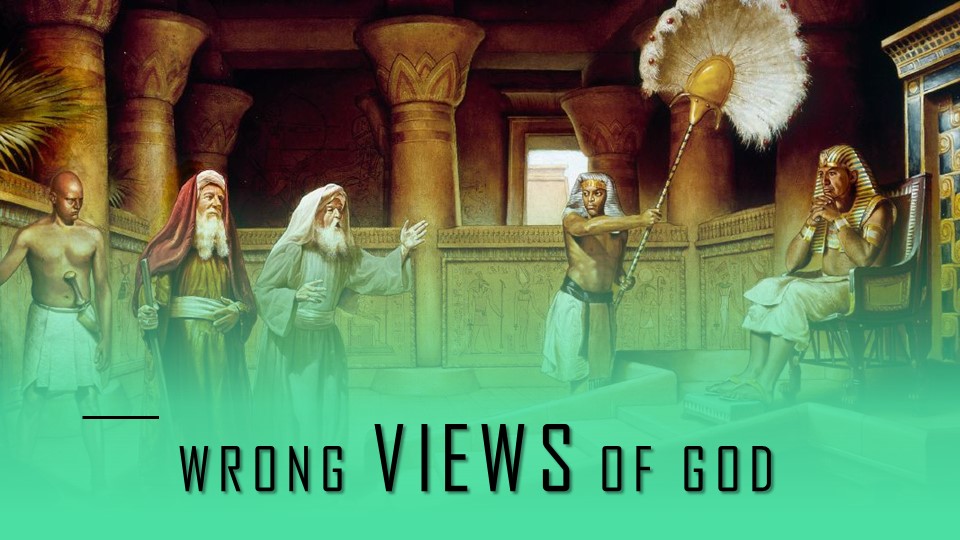
The folly of human wisdom does not determine the will and work of the Lord. What God thinks and the purpose of His will is so far above the imagination of anything the greatest minds among men can understand. At the age of eighty years, Moses was called by the Lord to return to Egypt and lead them out of bondage. The Lord brings the brother of Moses, Aaron, to accompany him to Pharoah, demanding the Hebrews to be released. Moses and Aaron demanded that the king of Egypt let the people go. Pharaoh scoffs at the request with contempt. Angered by the action of Moses and Aaron, Pharaoh made the labor of the Hebrews more difficult. The Egyptians supplied the Hebrews with straw to make bricks, but now they must find their own straw without diminishing the required quotas. Moses and Aaron had made the plight of the Hebrews much harder.

Moses was the Hebrew prince of Egypt. Forty years earlier, he had killed a man for beating a fellow Hebrew. Moses thought the Lord had sent him to deliver his people by his hand, but the people did not understand. Fear for his life, Moses fled to Midian, where he remained forty years. Many years later, he returned to free the people, but his actions created more hardship for them, and they resented him. The officers of the children of Israel pleaded with Pharoah to change his command, but there was no relief. As they left the audience with Pharaoh, the Hebrew leaders blamed Moses and Aaron for making the people abhorrent in the land. They told Moses he had put a sword in the hands of the Egyptians to kill the people of Israel. Moses was devastated.

Reacting to the anger of the Hebrew leaders, Moses comes to the Lord, blaming Him for the trouble brought on by Pharaoh. He thought his mission was a ‘one-and-done,’ and Pharoah would immediately let the people go; Moses would be a great hero, and he would lead the people out with great power. It did not happen. He had argued with the Lord at the burning bush, but God insisted on sending him. Why had he sent him? The plan to give his fellow Hebrews had backfired, and now the people were in worse condition than before, and God was to be blamed. Moses blames God for not delivering His people as He said he would.

The problem facing Moses was he had a wrong view of God. He had a preconceived idea about how things would work, and for some reason, the Lord did not follow his plan. From the perspective of Moses, the Lord did not know what He was doing. It would take ten plagues to convince Moses and the people of the power of the Lord God. The challenge of faith would continue to plague the Hebrews even after the crossing of the Red Sea, the victories over the enemies, the fierceness of Mount Sinai, and all the miracles in the wilderness. True to form, the human mind has always failed to understand that God knows exactly what He is doing, and His will is not determined by the will of men.

David thought it would be a good idea to build the Lord a temple. He was wrong. Elijah thought there were no more faithful people in the land but his righteous self. He was wrong. Peter rebuked Jesus for talking about dying. He was wrong. Time and time again, the kernel of human wisdom is pitted against the vast universe of the might and power of God. His will is done without the efforts of what men think. The challenge has always been not to blame God but to accept the word of the Lord by faith and walk in obedience with a heart of submission. Did Noah understand what the flood meant? Abraham did not waver when God told him to sacrifice Isaac. The view we have of God will determine the reason we obey Him.

Posted in Uncategorized | 2 Comments