The Prodigal Who Did Not Return

Then He said: “A certain man had two sons. And the younger of them said to his father, ‘Father, give me the portion of goods that falls to me.’ So he divided to them his livelihood. And not many days after, the younger son gathered all together, journeyed to a far country, and there wasted his possessions with prodigal living. (Luke 15:11-13)

The Prodigal Who Did Not Return

When the Pharisees and scribes complained about how Jesus received ‘sinners’ and ate with them, the Lord spoke parables to them, showing how His Father loved everyone, even the one sheep who went astray. The parables of the lost sheep and lost coin declare God’s eternal love for those who cannot find their way home. Jesus tells another story about a young man who left home for a far country and lived a wicked and prodigal life. When the young man came to himself, he repented, confessed his sin, and was restored to the father. The story of the prodigal son is a powerful testimony to God’s love, mercy, grace, and forgiveness. But not all prodigals come home.

There are souls in the church who obeyed the gospel of Christ with great joy and, like the seeds of the sower’s parable, find the world’s attraction too great and succumb to its power. It is a tragic story when faith is lost, and the child of God lives apart from the grace of God. Sin attracts the holy to live unholily. Because of the influence of friends, reputations are lost. Children of God fill their lives like the prodigal son in the parable with wine, women, and merriment without regard for their souls. Hearts are broken. Lives are shattered. There is hope the soul will turn to the Lord again. Some do come back to the Lord. Their stories are powerful testimonies of how God will forgive and cleanse. When they tell how they forsook the Lord and returned, hearts are filled with courage and hope. But some never had a chance to return.

The tragedy of prodigal living is there is no guarantee of a day to repent. When those who tell of their struggles with sin find grace in forgiveness, they realize by the grace of God, time was allowed to change their lives. Sadly, those who think they have until midnight to repent die at 11:30. There are many prodigals who run out of time. If more time were given, maybe they would find in their hearts the comfort of a forgiving heavenly Father. There is no promise of today to repent. Listening to the stories of those who have returned is measured by all those who did not return. There is great joy in the prodigal coming home and greater sadness at the prodigal left in the hog pen dying.

Sin brings consequences. The example of the prodigals who changed their lives to serve the Lord should always be greeted with great enthusiasm and hopeful courage. A deeper question must be answered why they took that path to begin with? There is power in the story of those who fell away from the Lord and returned, but greater still are those who never fell away and remained faithful. The circumstances are not different. What makes a difference in life will be the choices that are made. The story of a man or woman living faithful and devoted to God all their lives may not be as exciting as the one who falls into drug abuse, alcohol, and sexual immorality, but the greater story is the first one. It grieves the heart of God to see His child live in a prodigal world. He will forgive if there is repentance. God is also aware of those who struggle with sin and refuse to allow its overwhelming power cause them to leave His grace.

Being faithful until death is not easy, but it makes for a more remarkable story. The baggage of sin is not carried, the guilt of a sinful past does not fill the heart, and the wasted years of righteousness are replaced by a lifetime of glory and honor to God. It is always a blessing to know of those who came back home. Thank you. To those who fought the good fight and won – thank you especially.


Posted in Uncategorized | Leave a comment

Killed For Picking Up Sticks

Of how much worse punishment, do you suppose, will he be thought worthy who has trampled the Son of God underfoot, counted the blood of the covenant by which he was sanctified a common thing, and insulted the Spirit of grace? (Hebrews 10:29)

Killed For Picking Up Sticks

There is a tragic story in the history of Israel involving the execution of a man for picking up sticks. The children of Israel were in the wilderness when they found a man gathering wood. Nothing in the story indicates the purpose of this wood collection, whether it was to build a fire to warm by or to cook food. Whatever the case, the man was walking around bundling wood for himself. The people brought the man to Moses and Aaron, seeking guidance on what to do. All of Israel was brought together trying to find out what must be done to the man. As guidance was sought from the Lord, the man was arrested and put under guard. His crime was apparent: he was picking up sticks.

After inquiring of the Lord, Moses and all the congregation took the man outside the camp and stoned him to death with stones. It was a horrific way to die. The people took stones and threw them at the man. His death was slow as each stone bruised and broke him until he was unconscious. Finally, death came, and the rocks stopped flying. As the congregation walked away, the image of the battered and bloodied man burned in their minds. He was not executed by an unknown hooded executioner. Each member of Israel had taken part in killing a man who was found picking up sticks.

The story is not about gathering sticks. There is nothing immoral about working to gather wood for a fire to warm by or cook food. The people brought the man to Moses and Aaron because the man was picking up sticks on the Sabbath day. Under the Law of Moses and expressly declared in the Ten Commandments was the prohibition of working on the day God set aside as the Sabbath. The law clearly stated that any person who profaned the Sabbath day would be put to death. Any work done on the Sabbath day would bring a judgment of death against the individual. God had set aside the Sabbath day as a holy day, and the man picking up sticks on the Sabbath found the word of God to be faithful.

When Christ died and rose from the dead, the Sabbath law was abolished. Before His death, Jesus instituted the memorial feast of His death, burial, and resurrection. The Lord commanded the early church to meet on the first day of the week and remember His sacrifice. Paul wrote to the church at Corinth, warning them against taking the memorial feast in an unworthy manner. Eating the bread and drinking the cup of the Lord in an unworthy manner brings guilt and judgment to the individual. Like the man picking up sticks, taking the supper in an unworthy manner can bring severe judgment as being guilty of the body and blood of the Lord.

The early Hebrew Christians struggled with their faith, and the book of Hebrews is a message of hope found in the covenant of Jesus Christ. Throughout the book, the appeal is made to see the failure of the old law and the glory of the new law. As the author begins to close the book’s message, he warns those who would refuse to assemble with the saints on the first day of the week. He exhorts them to remember the purpose of the assembly to consider one another in order to stir up love and good works. Another reason not to forsake the assembly is to realize that they profane the Lord’s Supper when a person refuses to worship on the first day of the week.

God requires His people to worship every first day of the week. This is not a suggestion from the Lord but a command He expects His people to keep. The man picking up sticks may not have thought it was a big deal to do so on the Sabbath, but God’s law was clear. He was put to death for profaning what God had made holy. The first day of the week is not an optional gathering that Christians can choose to ignore. When a person refuses to assemble with God’s people on Sunday, they trample underfoot the body of Jesus Christ, count the blood He shed on the cross as a common thing; and they insult the Holy Spirit. If a man can be judged for taking the Lord’s Supper in an unworthy manner while sitting in the building, imagine the judgment of the man who refuses to assemble.

The church has long turned a blind eye to those who fail to assemble as if some small thing is done. In the story of the man picking up sticks; it was not about the sticks but profaning what God had called holy. When a man or woman chooses to forsake the assembly purposely, they deny the memorial feast of Jesus Christ. It is a fearful thing to fall into the hands of the One who commanded the memorial. These words from God must echo in the hearts of the disobedient: “Vengeance is Mine; I will repay. The Lord will judge His people.”

Posted in Uncategorized | Leave a comment

The Consequences Of Unbelief

But if there is no resurrection of the dead, then Christ is not risen. And if Christ is not risen, then our preaching is empty and your faith is also empty. (1 Corinthians 15:13-14)

The Consequences Of Unbelief

The early church lived in a time when many of the saints were eyewitnesses to the resurrection of Jesus. Paul reminded the Corinthians that over five hundred brethren saw Jesus at once, and most of those saints were still alive when he wrote to them. There was ample proof that the resurrection of Jesus took place. The twelve apostles had seen Jesus. James had testified to the resurrection of Jesus. Paul had seen the Lord himself. However, the false doctrine denying the resurrection plagued the church at Corinth. Paul had preached the resurrection when he was at Corinth. Why were their brethren who were denying the resurrection?

There were serious consequences to saying there is no resurrection of the dead. Paul’s argument is straightforward and demonstrative. He preached Christ was resurrected. If there is no resurrection, Paul is a liar. When a man denies the possibility of resurrection, he must deny what Jesus said He would do. He often told His disciples he would rise on the third day. Refusing to believe in the resurrection makes Jesus a liar. If the dead do not rise, the empty tomb is a lie. Resurrection is the foundation of the gospel of Jesus Christ. Without the belief that Jesus died and rose on the third day, faith is empty, useless, vain, and the biggest lie committed to humanity.

Jesus came to take away the sins of the world. He died, was buried, and rose on the third day to confirm the covenant of grace with God and man. Salvation did not come because Jesus died and was buried. All men die and are entombed in one form or another. What makes the life of Jesus the eternal grace of God is that He rose from the dead and lives. The resurrection of Jesus is the cornerstone of the scheme of redemption. Without it, everything falls. With it, everything stands. The consequence of unbelief impacts the lives of all of God’s people who seek to die in the Lord. John writes in the Revelation that those who die in the Lord are blessed and rest from their labors. If there is no resurrection, this is a lie. Paul tells the Corinthians that all those who died as faithful children of God will be cast into Hell if there is no resurrection.

There are serious consequences to unbelief. The last enemy to be destroyed is death, but this will not happen without resurrection. Personally, a greater consequence to those baptized into Christ who see their loved one die in the hope of resurrection is knowing it is all a lie. Those who are baptized for the dead live in the hope of the saints who died in the Lord. Take resurrection away, and there is no reason to be baptized for the remission of sins. It is a hopeless and useless act. Paul would need to stop preaching salvation in baptism because what difference would it make? All of the work of the early disciples to go into all the world and preach the gospel, baptizing in the name of the Father, and of the Son, and of the Holy Spirit, is empty if there is no resurrection.

The language Paul uses of the baptism of the dead connects the spiritual death found in the waters of baptism to the hope of eternal life in physical death. Without the resurrection, none of this is necessary and has any purpose. The church Jesus died for needs to close shop, go home, and die miserable sinners with no hope. When a loved one dies in Christ, it is hopeless if there is no resurrection. But there is a resurrection! Jesus did rise from the dead. Baptism is the spiritual death, burial, and resurrection of the crucified old man. We preach Christ, and we preach the glory of the resurrection in baptism and the resurrection of the body. Many have gone before us and stand as spiritual sentinels of God’s grace that eternal life is real. Resurrection. Thank God for resurrection.

Posted in Uncategorized | Leave a comment

The Baptism For The Dead

Otherwise, what will they do who are baptized for the dead, if the dead do not rise at all? Why then are they baptized for the dead? (1 Corinthians 15:29)

The Baptism For The Dead

There are passages in the holy writ that challenge the Bible student, and Paul’s letter to Corinth fits that bill. The essential part of Bible study is ensuring a text provides the context. Paul wrote a letter to the church, not a book. His style and approach were to write to the Corinthians about things they had written to him and to address serious problems that arose in the church. There are many subjects in this letter. Some of the discussions in Paul’s letter relate to apparent concerns, while others come from a background only the Corinthians knew. When Paul wrote about the conduct of husband and wife, it was in response to some things they had written to the apostle. Nothing further is known about this correspondence but what Paul reveals in this part of the letter.

It is also important to know that Paul did not write in chapters and verses. The “book of 1 Corinthians” is nothing more than a letter written by the apostle to the church at Corinth. As someone said long ago, “We are reading someone else’s mail.”  The style of writing and the measure of the Greek language has a bearing on how a passage is read. Punctuations are added by translators and by those who publish the Bible. When unpacking a series of passages, these factors must be considered to understand their meaning best.

The question of what Paul meant about those baptized for the dead has created a myriad of answers and discussions to its meaning. It is recognized as a difficult passage but not a text that is without understanding. Consider the context is the first order of business in trying to flesh out the teachings of Paul. Beginning in the part of the letter where Paul mentions the baptism of the dead is paramount and essential to understanding what he may refer to. Without this foundation, there can be no full understanding of the text. One of the glaring problems at the Corinthian church was the teaching that the resurrection had passed, and there would be no other resurrection. Some were teaching that there was no resurrection of the dead. Paul argues that if there is no resurrection of the dead, Jesus did not rise from the dead, and there was no hope.

Eleven times Paul mentions death in the first Corinthian letter. All of the references are in the section of his letter where he writes about the resurrection. He first established that Jesus rose from the dead. Jesus died, was buried, and rose on the third day. Many people saw Jesus alive after the resurrection. Paul saw Jesus with his own eyes. The question he poses to the doubters of Corinth is if Christ is preached that He has been raised from the dead, why would a child of God believe otherwise? Paul outlines the consequences of denying the resurrection of Jesus. The end is a useless and empty faith if Christ has not risen.

Paul affirms that Christ is risen, and every part of the doctrine of Christ rests upon the fact of the resurrection. Christ became the firstfruits by the resurrection of the dead. He was given all authority and power by the Father when He became Lord and Christ. The New Testament church is built upon the confession that Jesus is the Christ, the Son of the Living God. Without the resurrection, Christ is nothing, the church is invalid, and faith is empty. When a man denies the resurrection, he voids the very act that brings a man into a covenant relationship with God – baptism.

The question of the baptism of the dead can only be answered by its context. It is clearly evident and strongly argued in scripture against the idea that anyone can be saved for another. Everyone will give an account of themselves before God. The soul that sins shall die. Mormonism is built upon the false teaching that many embrace. If a man refuses to accept the resurrection, he makes the power of baptism void. Paul’s letter to the Romans explains how baptism is being buried into the death of Christ Jesus. Denying resurrection denies the purpose of baptism. Earlier, in his letter to the Corinthians, Paul asked what good it would be for those who had died (literally) in Christ if there was no resurrection and baptism meant nothing. All those baptized into Christ (spiritually dead) and died physically had no hope – if there is no resurrection of the dead.

There is no baptism of the dead in a literal sense (to be baptized for someone else). That is a false doctrine and a lie. Paul wanted to reassure the Corinthians of the hope of salvation found in the resurrection, first experienced in baptism and then in death. Why be baptized if there is no resurrection of the dead (literal dead)? Thanks be to God, who gives victory through the Lord Jesus Christ.

Posted in Uncategorized | 1 Comment

Four Woes

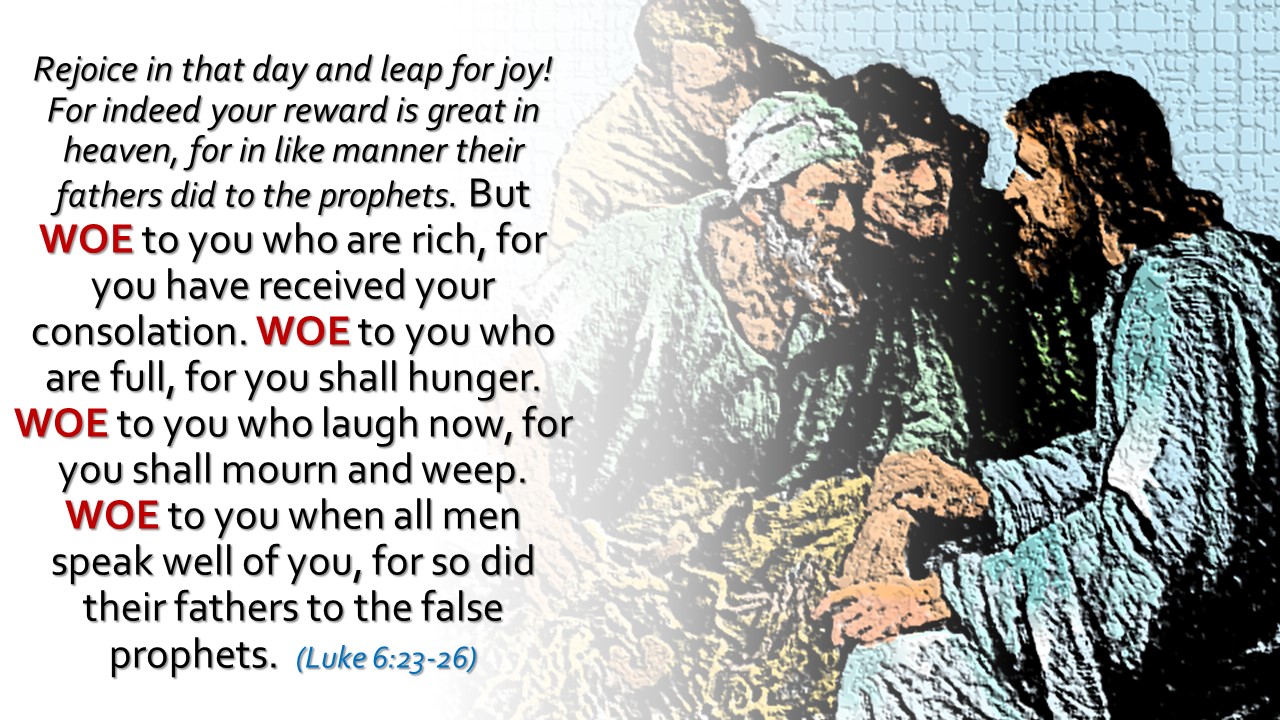
Rejoice in that day and leap for joy! For indeed your reward is great in heaven, For in like manner their fathers did to the prophets. “But woe to you who are rich, For you have received your consolation. Woe to you who are full, For you shall hunger. Woe to you who laugh now, For you shall mourn and weep. Woe to you when all men speak well of you, For so did their fathers to the false prophets. (Luke 6:23-26)

Four Woes

The sermon on the mount is a fundamental framework of the kingdom of God. Matthew’s account is a longer version of a sermon Jesus preached throughout Israel. Luke has a similar rendering of the sermon in his book with a few additions and lacking material from Matthew’s account on other parts. One notable inclusion of Luke is the four woes pronounced by Jesus to His disciples. The woes are not meant to be matters of judgment but rather lamentations of sorrow over the plight of those whose hearts were not devoted to the Lord.

Covetousness has always been a challenge of faith for God’s people. Many warnings are given throughout scripture showing the danger of greed and the desire to be rich. Jesus laments those trapped in the futile effort to find happiness in the possessions of this world. One of the deceitful temptations of seeking riches is to believe that life will be complete if only one possesses the right amount of money. Riches cannot buy a baby’s smile. Money does not bring happiness. The commerce of money is necessary for life, but at the end of life, money will not change anything. If a man puts all his happiness in the amount of money he has, he will be a sad and miserable person.

In contrast to those who hunger and thirst after righteousness, the soul full of the worldly pleasures of this life will only find famine. These people do not desire the spiritual manna of God’s word. They live their lives seeking the joys and pleasures of life. There is no regard for eternal consequences. The motto of this type of person is that whoever dies with the most toys wins. Jesus laments the empty lives that fill themselves with the drudgeries of life without purpose. God created man for His glory. Man decides to live for his own glory, which becomes his demise. Woe to those who are full because they will always find themselves hungering.

The frivolity of life is the favorite pastime of most people. Life has little purpose except to eat, drink, and find merriment. This is the opposite of those who mourn and weep for righteousness’ sake. It is sad to Jesus to see so many who waste their lives seeking the pleasures of life and not preparing for the judgment of God. Life is filled with laughter and the superficiality of seeking things carnal. There is no hope found in this life. Jesus mourns the souls who waste a lifetime seeking the enjoyment of life and only find misery and hopelessness.

Courting the favor of men is a temptation of pride. Seeking the accolades and favors of men will only end in an empty vacuum. Jesus uses the example of those who spoke well of the false prophets to gain favor with them and to be known among all men. This was a useless expression of false humility. When the godly refuse to admonish the ungodly and commend them in their spirit, danger awaits. Jesus reminds the disciples how the fathers of old sought to please the false prophets by encouraging them in their wicked ways. If all men (of the world) speak well of the righteous, the righteous have something to fear.

Jesus is not lacking in offering woes upon the miserable condition of the people who have fallen to the wiles of the devil. He provides a perspective on how to live. Most men live for themselves, seeking riches, pleasure, entertainment, and fame. This is sad to the heart of Jesus, who sees the consequences of all things as a wasted life. Through the knowledge of the word of God, life is measured by those things that last and have worth. It is to this measure that Jesus rejoices. If Jesus looked at your life, would He declare four woes or four blessings?

Posted in Uncategorized | Leave a comment

Dead Faith

You believe that there is one God. You do well. Even the demons believe—and tremble! (James 2:19)

Dead Faith

The religious world is a world of religious diversity and non-unity. There are as many ways to find God as there are modes of faith described through human wisdom. Satan has thoroughly filled the landscape of religion to be a potpourri of appeasing and appealing theology to soothe the fragile consciousness of those who seek God. As the father of lies, the devil created the greatest lie perpetrated on the human race. He does not object to someone believing in God and sometimes encourages such a belief. How he deceives the hearts of the unaware is to convince them to trust that God will save them only if they believe.

The modern world calls it salvation by “faith only.” Nothing is expected or demanded, but the heart must accept Christ as a personal Savior and believe He is the Son of God upon that acceptance. Based upon a feeling of joy in accepting Christ, the individual rejoices that he is now saved in Christ and Heaven is the glory awaiting them in death. There is nothing further from the truth. The blinded hearts of the deceived accepting the doctrine of salvation by faith alone die expecting to see the Lord in glory; finding only the misery of a false doctrine perpetrated by Satan.

Few passages can be any more explicit than the declarations found in the book of James. The text’s subject matter is about the relationships found in the body of Christ, but the application of such principles is rooted in the question of salvation. If a man can be saved by faith alone, it must be concluded that demons will also be saved – and with greater clarity.

Will a man be saved because he believes there is one God? Impossible. During the ministry of Jesus, the demons proclaimed Jesus as the Son of God. The Lord refused the demons to acknowledge who He was, but they knew and trembled in His presence. If there is any being that knows without doubt Jesus is the Christ, the Son of the Living God – the demons know. This knowledge does not save them even if they tremble. James shows that salvation by faith alone is impossible. He does not deny the power of grace, faith, love, forgiveness, and mercy. He affirms that belief alone or faith alone cannot and will not save one person.

The only time faith alone is found in the Bible is when James writes that a man is justified by works and not by faith only. There is a dead faith, and faith only is a dead faith. Sadly, thousands of helpless souls follow the religious dogma of faith only (sinner’s prayer) and have no hope of Heaven. Believing there is one God is the beginning of faith that saves but refusing to go beyond the acceptance of God’s existence cannot save. Noah believed in God, but that alone did not save him. He accepted the grace of God and moved with godly fear in preparing the ark to the saving of his household. If he had thought faith only would save him, he would have died in the flood with the millions of others who rejected the word of God. Do you believe there is one God? That alone cannot save you. Salvation will only be found by those who do the will of the Father.

Posted in Uncategorized | 3 Comments

He Gave Him A Tithe Of All

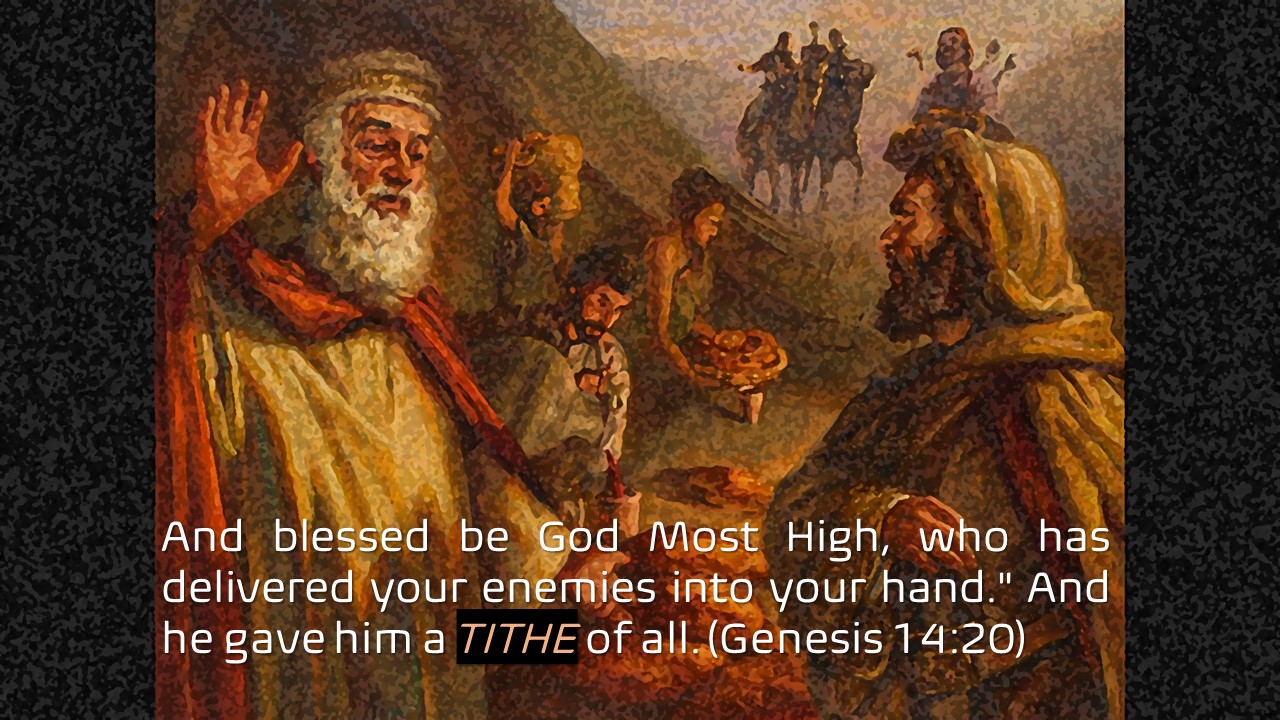
Then Melchizedek king of Salem brought out bread and wine; he was the priest of God Most High. And he blessed him and said: “Blessed be Abram of God Most High, Possessor of heaven and earth; and blessed be God Most High, who has delivered your enemies into your hand.” And he gave him a tithe of all. (Genesis 14:18-20)

He Gave Him A Tithe Of All

It was not uncommon for regional kings to go to war against one another. In the days of Abraham, four kings decided to go to war against five kings. For twelve years, Chedorlaomer king of Elam had ruled over all the kings, but after twelve years, the five kings rebelled. In the fourteenth year, Chedorlaomer and his allies captured the cities of Sodom and Gomorrah, taking all the goods of the cities with their provisions and people as captives. Included among the number of slaves was the nephew of Abraham and his family. Lot moved his family into Sodom when he and Abraham agreed to separate their flocks from one another. Sodom was an excessively wicked and evil city.

When Abraham heard that Lot was captured, the patriarch gathered three hundred eighteen of his trained servants born in his house and attacked the forces of the five kings. God delivered the kings into the hand of Abraham. Lot and his family were rescued, along with the people taken from Sodom and Gomorrah. Abraham destroyed the alliance of kings taking all of their possessions along with the provisions and goods from the cities of Sodom and Gomorrah. The Holy Spirit does not tell the worth of the goods returned from the two cities, but it would have been a staggering amount. Lot’s material wealth was such that he and his uncle, Abraham, needed to separate to allow their flocks to survive. Abraham and Lot’s possessions were so great that the land could not support them.

After Abraham returned from defeating the five kings, he was met by Melchizedek, king of Salem. Melchizedek was not only the king of Salem but also a priest of God Most High. Melchizedek blessed Abraham for his great victory, and Abraham gave the king of Salem a tenth of all he had. A tithe is a tenth of something and was part of the worship of God before the Law of Moses. Abraham recognized the importance of Melchizedek as a king and priest. Giving him one-tenth of what he had (including all he had captured) was immense. There was no hesitation on the part of Abraham. He honored God with his giving to show glory to God Most High.

The Law of Moses would establish a covenant with the Jews about tithing. It is clear tithing was a part of God’s law before Moses. When the early church was established, tithing was taken away as a command. From the days of Abraham (and before) to the modern world, God Most High has required of His children to return to Him what they have gained in this world. In the early church, the Holy Spirit directed that giving must come from the heart as a man will purpose. Moses gave a tenth. The Law of Moses required a tenth and more. In the Law of Christ, the decision is left to the individual as a test to see how much a man will give.

Giving has been a delicate question because of the covetous desires of the heart. While tithing is no longer a command of God, some think it gives them the license to give sparsely and minimally. Failing the test of giving can bring judgment on the heart. Abraham is an example of a heart willing to give to God Most High all He desires. The amount of the gift to Melchizedek was enormous, but without hesitation by the hand of Abraham. What is offered today is measured by the heart. It really is not so much the amount of what is given but what is kept. At best, as an example only, if a man gives ten percent of all he has, he keeps ninety percent for himself. Abraham was not concerned about numbers. He had defeated five kings by the power of God, and he was giving glory to God Most High for His grace and mercy. What you and I have is only by the grace of God and His mercy. Think more deeply when returning to God what He can take from us. Give cheerfully. Abraham did and never regretted it.

Posted in Uncategorized | Leave a comment

Overcoming Sin

So the Lord said to Cain, “Why are you angry? And why has your countenance fallen? If you do well, will you not be accepted? And if you do not do well, sin lies at the door. And its desire is for you, but you should rule over it.” (Genesis 4:6-7)

Overcoming Sin

Satan deceived the woman in the garden to disobey the command of God, and when Adam took the forbidden fruit, the world’s fate was sealed. The righteousness of the Lord could not abide the transgression of Adam and Eve, and they were expelled from the garden. Nothing is known of the first years of life outside the garden, but the first child born in the world was called Cain. Another child was born, and they named him Abel. In time, Cain and Abel grew to adulthood. Following the command of God, Cain and Abel brought sacrifices to the Lord.

From the beginning, God has required worship in spirit and truth. Adam and Eve understood this, as did Cain and Abel. Cain brought the offering of the fruit of the ground to the Lord as an acceptable sacrifice as he was a tiller of the ground or farmer. Abel shepherded flocks and brought to the Lord the firstborn of his flock and of their fat. There does not seem to be anything wrong with the sacrifices, but the heart of Cain was evil. God respected the sacrifice of Abel and refused to acknowledge the sacrifice of Cain. Because God refused to accept the offering of Cain, the firstborn son became upset and full of anger.

Sin had troubled man from the first day Adam and Eve walked out of the garden. In the passing of time, before the offerings of Cain and Abel, Satan sought to destroy the creation of God. The devil had gained a foothold in the heart of Cain. He had a wicked heart. His jealousy and hatred for his brother increased daily because Abel’s sacrifices were more excellent than Cain’s, and God accepted Abel’s offerings. Sin also comes with a warning. When Cain’s heart turned dark toward Abel, the Lord came to Cain and warned him. Cain could have changed his heart and found love for his brother. He refused the admonition of the Lord and killed Abel.

God did not leave Cain without an avenue of escape. Rarely has the Lord come to a man about to commit a terrible crime and warned him directly of the consequences. God comes to Cain and asks him why he is so angry and dejected. Sin does not have to conquer the soul. A penitent heart can change angry hearts and bring joy. If Cain changed his heart and did the right thing, God would accept him. The problem with sin is how deeply entrenched the tentacles of evil can reach the spirit of a man. If Cain did not change his heart, dire consequences would occur. God warns Cain that sin is crouching at the door of his heart to murder his brother. Satan was eager to control Cain, and Cain was allowing it.

Sin does not have to have dominion over the heart. God tells Cain he can win this battle. Warning him of the consequence of uncontrolled anger, the Lord reminds Cain he can subdue sin and be its master. Evil can be overcome, and Cain could win that battle if he chooses. Sadly, Cain’s heart was full of hatred, and it came to pass when Cain was talking with his brother in the field; Cain attacked Abel and killed him. Satan rejoiced. Cain murdered his brother. The devil’s evil plan had taken wings, and the world would be held under the sway of sin. Many generations later, God would destroy all life on earth because the intent of the heart was only evil continually. The only souls saved during the devastating flood were the eight found in the ark.

There is no reason to sin, and man is without excuse. The three-fold plan of Satan is clearly defined in scripture as the lust of the eyes, the lust of the flesh, and the pride of life. There is no doubt about how the devil operates. God offers a three-fold plan to defeat Satan. It is possible for a man to do well. He can do the right thing. Secondly, he must choose which path to follow. Will the heart seek the path of truth and righteousness or the broad way of destruction? Sin is a choice. Man cannot blame God or others for his decision. Sin is personal. The third part of God’s answer is that man can rule over sin. Sin can be mastered. There is no excuse for sin to have dominion over a man’s heart. God has given men the ability to reject, refuse, and deny sin. Cain killed Abel because his heart was evil, and he refused to bring it into subjection.

Cain killed Abel, but his murderous act did not happen without warning. It is possible to do the right thing. There is a right path to choose. Sin can be defeated. Jesus lived a perfect life because He overcame the power of sin. We should not use sin as an excuse to sin. It is possible to sin less in life if we have the will. Choose to do the right thing. Sin crouches at the door. Don’t open the door. Stay away from the door. Remove yourself far from that door. Master the spirit to serve the Lord. Don’t sin.

Posted in Uncategorized | Leave a comment

They Both Died

There was a certain rich man who was clothed in purple and fine linen and fared sumptuously every day. But there was a certain beggar named Lazarus, full of sores, who was laid at his gate, desiring to be fed with the crumbs which fell from the rich man’s table. Moreover, the dogs came and licked his sores. So it was that the beggar died and was carried by the angels to Abraham’s bosom. The rich man also died and was buried. (Luke 16:19-22)

They Both Died

Life is unfair, but death is not. No greater contrast is seen than a man who lives a sumptuous life enjoying all the benefits the world can offer and a man who lives in such abject poverty only the dogs have mercy. Death has no inequality. The rich man’s choices were self-created to serve the passions of his carnal desire. Everything he did was about the satisfaction of his needs. Whatever business he had in life gave him the greatest power of wealth. He lived life to its fullest measure. Accompanied by five brothers, the legacy of the rich man’s family was known as one of the most blessed families on earth.

At the gate of the rich man sat the antithesis of his wealth. Lazarus was a poor man begging for crumbs. The body of Lazarus was covered with sores. His life was of misery and despair. Every day was a struggle to stay alive. Just a short distance from where the beggar lay dying, the rich man filled himself with all the finer things of life. Hunger wracked the stomach of Lazarus with sharp pains. The sores covering his body burned with intensity. When the dogs came up to Lazarus, they knew his suffering and licked his wounds, easing his misery. What a contrast between the rich man and the poor man.

Death is feared and misunderstood, but one thing death does to all men is bring reality. Rich men die just as certain as poor men. It matters not how much money a man has; he will die. Power will not change the destiny of a man. Arrogant and proud men die. The poor die. Their plight is different in life, but death is the one equality shared across the human divide. All men die in the same way. A man lying in an expensive bed with his rich friends surrounding him will die like a beggar will die on the street surrounded by dogs. The cruelest man on earth will die the same way the righteous man will. Life is gone, and eternity begins. And that is where the difference begins.

There can be little doubt when the rich man died, his funeral was an elaborate display of his accomplishments in life and his wealth. The community of friends enjoyed a feast in his honor, lavishing great words of praise on the rich man. His five brothers mourned their brother’s passing with fond words of memory. Soon the funeral was over, and life returned to its normal pace. All of the wealth of the rich man was gathered by his family and distributed among them. The rich man remains unnamed and unknown. When Lazarus died, only the dogs took notice. A few days may have passed before someone noticed he had died. When did the ones who laid Lazarus at the gate discover his dead body? There was no funeral of great pomp and circumstance for the beggar. A place was found, and his body was interred. No headstone. He died, and few took notice. Death changed the story of the rich man and Lazarus.

The rich man died unnamed, but God preserved the beggar’s name. Lazarus died, and God took notice. Angels carried Lazarus to the bosom of Abraham. No angels carried the rich man. He just died and was found in a place of torment. Death brought equality to the rich man and Lazarus. The poor man did not get what he deserved in life, while the rich man enjoyed all the bounties of life. Death gave the rich man what he deserved and blessed Lazarus with what he believed. Even in a state of abject poverty, Lazarus was a righteous man. He lived a faithful life devoted to the God he trusted. Death was a blessing because it brought equality.

The rich man and Lazarus died. They both died. What happened next is the real story. You are either the rich man or Lazarus. What you have in this life will be taken away. Have you made yourself ready for death? You will die – that is certain. Where you spend eternity – that is your decision.

Posted in Uncategorized | Leave a comment

Love And Commandment Keeping

I rejoiced greatly that I have found some of your children walking in truth, as we received commandment from the Father. And now I plead with you, lady, not as though I wrote a new commandment to you, but that which we have had from the beginning: that we love one another. This is love, that we walk according to His commandments. This is the commandment, that as you have heard from the beginning, you should walk in it. (2 John 1:4-6)

Love And Commandment Keeping

There is a feeling among many religious people that God is a God of love, and as long as a person loves God, eternal life is guaranteed. Commandment keeping is frowned upon as salvation by works. The idea is that if a person loves God, he can live in accord with his own desires, and God accepts this because the person loves God. Salvation is only measured by God’s love and the person’s love. To keep rules and regulations is inhibiting the grace of God. The result becomes people feeling good about their religion because they ‘love’ God but never do anything expected of them.

John is considered the apostle of love. His final three epistles abound with the story of love, with more than forty references to the attribute of love. Four times in the second epistle, John speaks of love, and three times, he connects commandment keeping with love. It was a joy for John to write about those walking in the truth. Suggesting a person is walking in truth shows the necessity of works on the part of the disciple. The Christians were walking in truth according to the commandment from God. Love and law keeping go hand in hand. John admonished his readers to follow the new commandment to love one another. Loving one another is commandment keeping. If a man is not saved by works (commandment keeping), then he cannot love others.

During the ministry of Jesus, the people asked Jesus what they must do to work the works of God. The Son of God told them that God’s work is to believe He was the Son of God. If a man cannot be saved by works, he cannot be saved by belief. Commandment keeping is showing the love of man toward God. John declares that love is walking according to the commandments of God. James discussed in his letter how that faith without works is dead. It is also true that if a man says he loves God and does not follow the commandments of God, he is a liar (John established this in his first epistle).

Love and commandment keeping cannot be separated. Obeying the will of the Father is a demonstration of the love one has for God. Refusing to do what God says demonstrates the heart lacks love for God. Jesus loved His Father and obeyed His Father’s command to die on the cross. Without commandment keeping, Jesus would have never saved mankind. He expects the same measure from His disciples, who say they love Him. Loving Jesus is where the heart begins to know the love of God. Keeping the commandments of God shows how much a man loves God. Do you love God? Check your commandment keeping.

Posted in Uncategorized | Leave a comment