Have Thine Own Way, Lord

But now, O Lord, You are our Father; we are the clay, and You our potter; and all we are the work of Your hand. (Isaiah 64:8)

Have Thine Own Way, Lord

Adelaide A. Pollard (1902) desired to go to Africa for mission work for the Lord. She never achieved her goal even though it was heavy on her heart to help in some small way in the service of God. As she reflected on her lost opportunities, she realized a special part of the work of the Lord. God is a potter who forms clay to His will and His desire. She accepted her life and that she would not be able to fulfill her dream, realizing that it was not to be in the plan of God. In that acceptance, she focused on the passage, reminding her that God designs the clay in the fashion He desires.

Adelaide entreated the Lord to search her heart to know the desire that was there. She wanted to present herself to God as a humble spirit obedient to His will. It wasn’t easy to accept her dream could not be realized, and she begged for the power to learn the lesson of acceptance. In her final statement of faith, she acknowledged the yielding of her spirit to the design and purpose of God. No matter what life would bring, she sought to live for Christ and Him alone. All she desired was for the Lord to have His way in her life. That is all that mattered to her.

Life can be a challenge, and challenges come that can be overwhelming. For the heart unprepared for the trials of life, it can be a difficult and almost impossible journey. Learning to allow God to work His will in life is a very difficult task to embrace. There is a tendency to want to direct the affairs of God to fit the needs of the individual rather than asking the Lord to have His way and leaving it at that. A man comes to the Father with a particular request and then tells God how and when to carry out the request. God will not hear those prayers.

Singing the hymn “Have Thine Own Way, Lord” is a quiet reminder that in all things, God remains the potter and men the clay. The clay has no power over the potter. There is nothing the clay can do against the potter. God is the potter because He is the Creator. Man is the clay because he is the creation. Those roles never change. When a person becomes a child of God, they give their life to serve Jesus Christ and Him alone. In the same sense that God is the potter, Christ is the potter over the life of the Christian. Everything about the Christian life is about molding the character to the image of Christ.

To be in Christ is to be a slave of Christ, bending to His will, submitting to His word, and obeying His commands. A slave has no choice but to obey. As the clay in the potter’s hand, the design of the clay comes from the potter’s hand whatever He wills. Seeking the Lord to have His own way is finding the peace that passes understanding and the communion of the Holy Spirit. Life is measured – with its ups and downs – by the potter’s will. Developing this type of trust in the Lord helps to heal the hurt, find joy in the moments of life, and look more and more for the eternal glory to be revealed in death. Have thine own way, Lord. We are the work of Your hand.
Posted in Uncategorized | Leave a comment

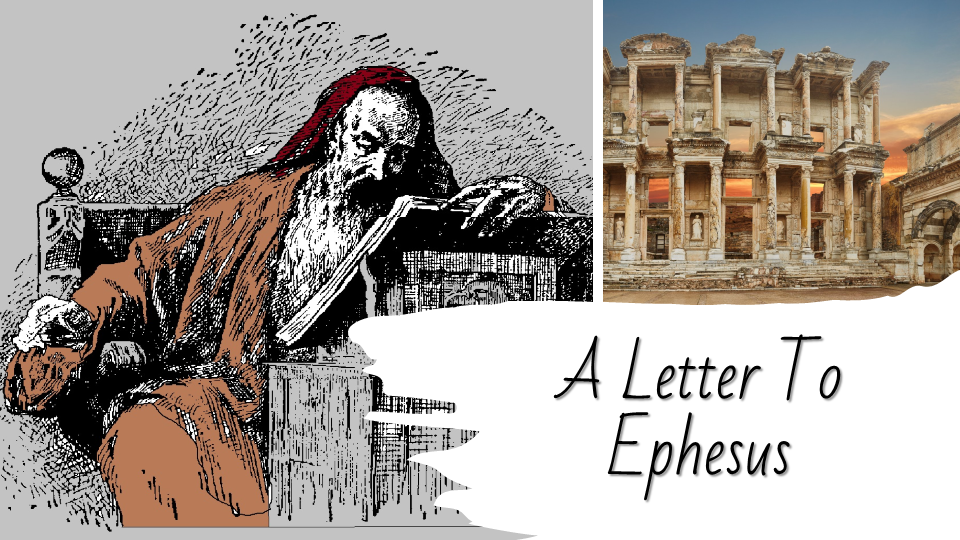
A Letter To Ephesus

To the angel of the church of Ephesus write, “These things says He who holds the seven stars in His right hand, who walks in the midst of the seven golden lampstands: I know your works, your labor, your patience, and that you cannot bear those who are evil. And you have tested those who say they are apostles and are not, and have found them liars; and you have persevered and have patience, and have labored for My name’s sake and have not become weary. Nevertheless I have this against you, that you have left your first love. Remember therefore from where you have fallen; repent and do the first works, or else I will come to you quickly and remove your lampstand from its place—unless you repent. But this you have, that you hate the deeds of the Nicolaitans, which I also hate.” He who has an ear, let him hear what the Spirit says to the churches. To him who overcomes I will give to eat from the tree of life, which is in the midst of the Paradise of God. (Revelation 2:1-7)

A Letter To Ephesus

Paul spent more time with the church at Ephesus than any other. The brethren were dear to the heart of Paul. On his way to Jerusalem, which would lead to his arrest and trial before Caesar, Paul called the elders of Ephesus to meet with him at Miletus. The farewell was sad as they stood on the seashore, kneeling down, praying, and weeping freely. Paul would never see the brethren again. A few years after his last meeting while imprisoned in Rome, the apostle wrote to the Ephesian saints and faithful in Christ. His letter declared the New Testament church promised by Jesus Christ.

A little more than twenty years after the death of Paul, the church at Ephesus was on the mind of God as He unfolded His revelation to the apostle John. The aged apostle had been banished to the island of Patmos when the Lord brought His revelation. John saw Jesus standing among the lampstands, each representing a church in the region of Western Asia Minor. The first letter addressed the church of Ephesus with many positive things to say but challenges that needed to be met. God’s letter to Ephesus (like the other six letters) is a testimony to how each church throughout the world can define itself. The church of Ephesus can be a pattern to build the church of the Lord today.

The Ephesian church was a church where everyone was active. Jesus commends Ephesus for their work and labor, showing the brethren were unafraid of industry. The vineyard of the Lord requires workers willing to get their hands dirty. There is much work to do in the fields white to harvest. A growing and thriving church is filled with workers. Jesus commends the church for their industry. Faced with trials of persecution, the church patiently carried out its evangelism and teaching. Teaching, admonishing, and seeking out lost souls is hard work. The church of Ephesus was not a lazy church.

Jesus knew what they had done. That brought comfort to the brethren, who knew the Lord saw their efforts. When troubles arose in the church, the saints would not tolerate unrighteousness. Some claimed to be apostles, but because of the diligent teaching of truth, the men were found to be false. The church at Ephesus was active in establishing truth to follow the admonition of Paul many years prior. Paul had warned the Ephesians elders to watch out for wolves among the flock of God who would come in and teach false doctrine. The Ephesian church was a vigilant church.

The church of Ephesus was in a city overcome with idolatry and wickedness. It would be easy to allow the world’s influences to infiltrate the church to change its teachings and doctrines. Jesus commends them for persevering and, through patience, not becoming weary in holding forth the light of truth. It can be overwhelming to watch for error and immorality constantly. The Ephesians successfully kept the church pure by testing the spirit of those who came among them. They had a lot of things to do and were very busy with the work of the kingdom. But there was one thing that Jesus pointed out that hindered their growth.

Paul had written to the church about their strong faith in Jesus and love for God’s people. Their roots would grow into the love of God as Paul exhorted the brethren to love one another. Now, Jesus warns the Ephesian church of their lack of love. They were busy with many things, but their love for God was empty. Their ‘first love’ was filled with vitality, vigor, and joy. Now, many years past their beginnings, they had become stale in their relationships with one another and with God. They were going through the motions.

Jesus reminds them of their first fruits and to repent for their lack of love. He encourages them to fill their hearts with love again and be busy with the work of the Lord. They hated the doctrine of the Nicolaitans, and so did the Lord. He wanted them to rekindle that first love to help them grow more and more in the grace of God. They were doing well, but they could do better.

Ephesus is a church that we should model in practice and examine what the Lord would say to us if He were to write a letter. Which one of the seven churches would best describe where we worship? The seven letters clearly show that not one church is perfectly filled with perfect people. Some churches had serious problems, while others needed to work harder. Take a test of the seven letters. Which church are you modeling after?

Posted in Uncategorized | Leave a comment

A Godly Man Found In The Annals Of A Great Nation

Now all the acts of his power and his might, and the account of the greatness of Mordecai, to which the king advanced him, are they not written in the book of the chronicles of the kings of Media and Persia? For Mordecai the Jew was second to King Ahasuerus, and was great among the Jews and well received by the multitude of his brethren, seeking the good of his people and speaking peace to all his countrymen. (Esther 10:2-3)

A Godly Man Found In The Annals Of A Great Nation

The story of Esther is a remarkable book of the providential hand of God working in the nations of men. Esther was a Hebrew maiden elevated to be the Queen of the empire of Persia and Media, spanning one hundred and twenty-seven provinces from India to Ethiopia. Her rise to prominence was through the hand of God for a time such as was needed to save the Jews from complete annihilation. A man named Mordecai was Esther’s relative who instilled in her the courage to be a queen and a servant of the Most High God.  

Mordecai saves the king’s life, and Esther saves her people from annihilation. The enemy of the story, Haman, is hung on a 75-foot gallows intended for Mordecai. Through the intercession of Queen Esther, the Jews defeated all their enemies with the stroke of the sword, with slaughter and great destruction, and did what they pleased with those who hated them. To celebrate the deliverance of the Jews, the feast of Purim has been kept for generations. Esther and Mordecai were in a place of history to save the people of God.

As the story of Esther closes, a note is made that all the acts of King Ahasuerus of his power, and his might, and the account of the greatness of Mordecai were written in the book of the Chronicles of the Kings of Media and Persia. These were not divine books but historical documents preserved in the state archives. Contained somewhere within the books of Media and Persia is the story of how a man of God rose to power through the grace of the Lord and instilled the stamp of the Lord God on the hearts of the Medes and Persians. A man of God is left in the annals of the history of man.

There are more stories of the people of God rising to positions of authority and power through the providence of God. Joseph was over all Egypt in everything but the matters of the throne of Pharaoh. The king of Egypt acknowledged the wisdom of Joseph and said that no one was as discerning as him, inasmuch as God had shown him. Somewhere in the buried treasures of Egypt, the name Joseph may be found inscribed upon a stone or parchment. There is a house with tantalizing clues about the owner, whose origin could have been Joseph.

Daniel rose to power under two dynasties. First, the Babylonian kingdom under Nebuchadnezzar, where Daniel was made ruler over the whole province of Babylon and was the chief administrator over all the wise men of Babylon. When Darius the Mede conquered Babylon, Daniel was one of the three governors ruling over the kingdom. Daniel prospered in the reigns of Darius and Cyrus the Persian. There can be little doubt the state records of the Medes and Persians contain references to Daniel. Whether these documents will be found is left to the mind of God.

What makes Mordecai, Joseph, and Daniel important to study is how men of God rise to places of authority. While their names are recorded in the divine record, they are also retained in historical state documents. There is no way of knowing what great finds will be unearthed in the future and whether anything with these names inscribed will be found. These men lived in such a manner that secular records of state importance contain their names. Mordecai is written in the book of the Chronicles of the Kings of Media and Persia. He let his light shine in the world he lived in.

Posted in Uncategorized | 1 Comment

Commendations To A Messed Up Church

I thank my God always concerning you for the grace of God which was given to you by Christ Jesus, that you were enriched in everything by Him in all utterance and all knowledge, even as the testimony of Christ was confirmed in you, so that you come short in no gift, eagerly waiting for the revelation of our Lord Jesus Christ, who will also confirm you to the end, that you may be blameless in the day of our Lord Jesus Christ. (1 Corinthians 1:4-8)

Commendations To A Messed Up Church

To say the church at Corinth was a messed up church is an understatement. There were many problems faced by the Corinthian disciples, and Paul was going to attempt to help them correct their deficiencies. The church was a divided group of followers seeking to follow after a favorite teacher. This caused a great deal of contention among the brethren. Some claimed to be followers of Paul, some Apollos, and others Peter. There were brethren who claimed discipleship to Christ. The division among the saints was clear, and it was a problem.

The disciples of the Corinthian church acted like babies, weak Christians. Paul rebuked them for acting in such a carnal way. All the fussing and arguing and contentions among them was like a room full of small children arguing and fussing with one another. Worldly wisdom had divided the group, causing them to lose focus on the fundamental mission of God’s work. Worse still, the carnality and division filling the church allowed a situation to develop within the church that was completely unbearable. A man had his father’s wife.

Paul warned them of the dangers of allowing the leaven of unrighteousness to dwell in the church. He commanded the guilty party to be dealt with swiftly to preserve the church’s sanctification. The problems grew worse. They had brethren suing one another in civil court. Questions of marriage challenged the teachings of God. The mature saints were abusing the weaker consciousness of the brethren. Idolatry plagued the church. Women began to abandon the custom of the head covering.

The Lord’s Supper had become a shambles. Brethren argued over the spiritual gifts, creating an atmosphere of confusion in the worship service. The problem became so difficult that Paul was concerned that those who visited the church in Corinth would think the brethren were crazy. Incredibly, some of the disciples at Corinth did not believe in the resurrection of Jesus. To say the least, the order and authority of the church were in peril. There was a lot on the plate for Paul to unpack. What is remarkable is how he began his inspired letter to a church with serious problems.

Paul’s introduction seems in stark contrast to the contents, but it shows a pattern of speaking the truth in love. He knew what he was going to write about before pen touched paper. Realizing the gravity of the situation, he could have begun boldly and forcefully with angry words of condemnation for their egregious lack of spirituality. He begins with thanksgiving for who they were and what they stood for. They were called the church of God at Corinth. Paul calls them the sanctified in Christ Jesus. He refers to them as saints, with all who in every place call on the name of Jesus Christ. Grace and peace are offered to them immediately as a greeting of love.

Paul remained in Corinth on his second missionary journey for eighteen months. He knew the saints quite well, and Paul was very much endeared to them by the tone of his letters to Corinth. The problems at Corinth disappointed the apostle, and he grieved that Satan had caused many problems in the church of God. Paul was not dismayed by the overwhelming challenge of correcting the problems at Corinth. He began by showing his love for them and fervent expectation they could change. The gospel was a message of change, and he pleaded for them to accept the gospel of Christ he had preached to them and correct their problems. And they did.

The appeal of Paul at the beginning of the letter is why the second letter was so successful. One of the severe problems at Corinth was the man who had his father’s wife. The church acted in the fashion commanded by Paul, and the man repented to the glory of God. Paul shows the character of speaking the truth in love when dealing with the problems at Corinth. It must also be noted that the character of the Corinthians was humble enough to bear the harsh words of Paul’s first letter of change. The church at Corinth was filled with saints who wanted to do the will of the Father. God is faithful, by whom all men are called into the fellowship of His Son, Jesus Christ the Lord.

Posted in Uncategorized | Leave a comment

Long Devoted And Faithful Christians

Greet Andronicus and Junia, my countrymen and my fellow prisoners, who are of note among the apostles, who also were in Christ before me. (Romans 16:7)

Long Devoted And Faithful Christians

As Paul ends his letter to Rome, he highlights thirty-five named brethren (among others unnamed) of special note to himself and the work of the Lord. Some names are well-known disciples like Aquila, Priscilla, and Gaius. Others are referenced only in the text with some information; with many, nothing is known but their names. Two people stand out on the list for which Paul has special words. Andronicus and Junia were fellow Jews and, at some time during the ministry of Jesus, shared a jail cell with the apostle. It is unknown when this event took place. Andronicus and Junia are only mentioned in the Roman letter.

The two countrymen of Paul were of note among the other apostles, showing a special relationship that was shared with Peter and the eleven. How this relationship bonded is left out of the divine record. Andronicus and Junia were very involved in the work of the early church and had been active for many years. Some think Paul became a Christian around 37 AD and wrote the letter to Rome in the mid-50s. Paul mentions them as part of the Roman church with special thanksgiving for their long, devoted, and faithful service to Christ.

Christians share a refreshing bond when saints who have served the Lord for many years are recognized for their tireless work. Andronicus and Junia would have been some of the early disciples of the church who enjoyed the blessings of a period of incredible church growth followed by persecution. Ironically, the persecution of Saul sent many of the disciples who were persecuted everywhere preaching the word. Is it possible Andronicus and Junia fled the persecution of Saul only to find him in the kingdom of God and share chains with him one day? The answers are intriguing.

Paul commended Andronicus and Junia for their long, devoted service to Christ. One of the joys of traveling as a preacher is visiting places from long ago where saints continue to work hardily for the Lord. The faithful saints who continue year after year to hold the banner of truth in a dark world are so encouraging. Paul wanted the Roman saints to know the blessing of Andronicus and Junia and to give thanks for them. There is a curiosity to know so much more about their lives and how they endured hardships with Paul. Suffice it to say, the Holy Spirit gave the eternal record the mention of their names with the glory they gave God in their lives. Saints who have served the Lord for many years deserve a thank you. They have continued each day and each week through years of trials and toils, remaining faithful to the cause and work of Jesus Christ. Thank you for your service.

Posted in Uncategorized | Leave a comment

Prayer Takes Patience

I waited patiently for the Lord; and He inclined to me and heard my cry. He also brought me up out of a horrible pit, out of the miry clay, and set my feet upon a rock, and established my steps. He has put a new song in my mouth—praise to our God; many will see it and fear and will trust in the Lord. (Psalm 40:1-3)

Prayer Takes Patience

The timing of the Lord is always according to His eternal purpose and design. What makes it hard for the human heart is learning patience. There is a tendency to want things now, even when the expectation is from God. David knew that the Lord is not accountable to the time limits of human wisdom. When there is trouble, and the spirit of man cries out to God, the prayer of the impatient demands the Lord answer prayer as the petitioner desires in a timely manner. Often, a prayer demands action rather than accepting the will of the Father to answer in His time. That is why prayer requests are seldom realized.

Prayer is pleading the promises of God with a view in mind that God answers prayers according to His will. The problem arises when the heart is impatient and unwilling to accept God on His terms. David wants the prayerful heart to realize that when a man waits patiently on the Lord, God will listen. A trial of faith overshadowed David, and he cried to the Lord for help. He was in a horrible pit that was consuming him. There was no one to rescue him but the Lord. When he cried out, the Lord did not answer immediately. David trusted in the Lord to respond. When the answer came, it inspired David to proclaim the good news of righteousness in the great assembly.

Patience is the quality of waiting for the Lord to work His will in His way and in His time. A prayer life will be tested to accept how God answers. Prayers can be answered immediately but are more often at a time when the Lord chooses to reveal Himself. David knew the greatest lesson of prayer was to wait patiently for the Lord. Then, and only then, can he realize the true blessings received from the eternal hand of the Lord.

David’s patience was filled with the expectation of an answer. God always answers prayer. He never fails to answer a prayer from His child. David waited with an expectant heart that his petition would come at the pleasure of the Lord. David knew God would respond regardless of how long the answer would take. What he found in waiting for the Lord is a greater blessing than he imagined. Not only did the Lord bring him out of the pit and the miry clay, but God set the feet of David upon a rock and established his steps. The blessings of the Lord always outshine the request of the petitioner.

When a man develops a patient heart, he will see more of the blessings of God in his life. There is no reason to try and hurry God. Waiting on the Lord is the greatest challenge of prayer, but waiting on the Lord will bring the greatest blessings. Let the Lord work in His way for His purpose. That is how a child of God trusts in the wisdom of the heavenly Father. Like a child who depends upon their Father for everything, the Christian seeks the blessings of God with a patient heart. Pray – but be patient!

Posted in Uncategorized | Leave a comment

Those Who Practice Such Things

Now the works of the flesh are evident, which are: adultery, fornication, uncleanness, lewdness, idolatry, sorcery, hatred, contentions, jealousies, outbursts of wrath, selfish ambitions, dissensions, heresies, envy, murders, drunkenness, revelries, and the like; of which I tell you beforehand, just as I also told you in time past, that those who practice such things will not inherit the kingdom of God. (Galatians 5:19-21)

Those Who Practice Such Things

Paul lists seventeen specific areas of sin that plague the hearts of men. The list is not complete, as many other things are found to be transgressions of God’s law. Paul’s list is illustrative of the conclusion he reaches at the end. The works of the flesh are evident as opposed to being hidden. Those who practice such things will not inherit the kingdom of God. They cannot possibly be saved. This is the reality of the consequences of sin. God does not accept those who continually rebel against His will.

Sin is defined by God, not men. A transgression of law is established by the one who gives the law. As Creator, God has the authority to determine what He regards as sin and what is not. Sexual immorality in any form is a sin, and those who practice such things will face the wrath of God. There is no changing the mind of God. In a world given over to the passions of the flesh, sexual relations before marriage will damn a soul to eternal fire regardless of whether it is acceptable in society or not. Unfaithfulness in marriage is condemned.

God does not accept impure hearts and minds. Uncleanness is characterized by the desire to fill the mind with pornography, sensuality, promiscuity, and lustful pleasures. Society may pay no heed to such things, but God has never changed His will about the heart of men. The pagan world lives with idolatry, but the Christian is not immune to the dangers of idolatry. Covetousness is idolatry, and seeking the base desires of the world is idolatry.

The other sins listed by Paul illustrate the impact Satan has on the hearts of men to destroy them. Paul’s admonition is to understand that hatred, uncontrolled anger, drunkenness, and such things will keep a person from eternal life. A study of each of the works of the flesh is helpful, but Paul’s real lesson is that not everyone is going to heaven. Many people in the world live after the works of the flesh, and those who practice such things will perish in eternal fire. God does not judge on a sliding rule. His law is straightforward, demonstrative, and final. Sin brings the wrath of God when left unchallenged.

Jesus taught that few will be saved, while the world teaches that everyone goes to heaven. Most people who die will never see the eternal city of God because they practice such sinful things. God is not willing that any perish, but most will. It is a sad reality that most do not prepare themselves for the judgment of God. He has told all men in His word what He demands for eternal life. The works of the flesh is an illustration of how God views sin. Those who practice such things will not – will not – inherit the kingdom of God (eternal life).

Posted in Uncategorized | Leave a comment

God Among The Nations

All nations before Him are as nothing, and they are counted by Him less than nothing and worthless. To whom then will you liken God? Or what likeness will you compare to Him? (Isaiah 40:17-18)

God Among The Nations

In their book, ‘Lessons From History,’ Will and Ariel Durant observed, “There is no significant example in history, before our time, of a society successfully maintaining moral life without the aid of religion.” History is the forgotten teacher describing what men repeat generation after generation. Solomon pined; there was nothing new under the sun. The failings of men repeat themselves repeatedly, and with each lesson, a higher price is paid.

When men call themselves the “modern man,” they believe they have advanced beyond their ancestors in knowledge and wisdom. It is true that with each generation, advancements are made that change people’s lives and alter the course of history. The one fundamental truth that never changes is the character of man. It is hard to believe that a society living in 746 B. C. would have anything in common with a community in 1492, but they are the same. Society in the modern world may look different, but the men and women who make up the world remain the same.

Nations have their cultures, ideals, and history. Common to all nations is their beginning. The man from an Eastern nation will battle the questions of morality as much as the man from a Western nation. Morality is the single gem of truth that everyone must answer, regardless of nationality, language, or history. When a man, any man, rejects the knowledge of God, they begin a downward spiral into hedonism. The psalmist David declared that a nation that forgets God will be destroyed.

Trying to determine morality cannot be done through the wisdom of man. History illustrates the failures of human knowledge in trying to answer a divine question. A man’s character cannot determine what is right and wrong because men are unlike God, who is omniscient or all-knowing. When men make moral laws, they create morality based on personal preference. God establishes morality based on the needs of all men.

The Bible is an example of how perfect the moral compass of the Lord is for all men in all times, regardless of where they live on earth. If the word of God is followed in India, it will help a man find Jesus Christ and peace in Christ’s gospel. That same gospel will take a man living in Kansas and show him the way of truth. Both men, living separate lives far from one another, will live similar lives based on the same truth.

America used to be one nation under God. Now, it is under siege by the warmongers who are taking belief in the Bible away. There is little doubt where the nation will find itself. Look at history, and you will find the answers. Abraham Lincoln warned this great nation would not be destroyed from without – it will come from within. One hundred sixty years later, his prophetic words are realized.

Posted in Uncategorized | Leave a comment

And Such Were Some Of You

Do you not know that the unrighteous will not inherit the kingdom of God? Do not be deceived. Neither fornicators, nor idolaters, nor adulterers, nor homosexuals, nor sodomites, nor thieves, nor covetous, nor drunkards, nor revilers, nor extortioners will inherit the kingdom of God. And such were some of you. But you were washed, but you were sanctified, but you were justified in the name of the Lord Jesus and by the Spirit of our God. (1 Corinthians 6:9-11)

And Such Were Some Of You

Jesus Christ came to earth to bring a peace that passes understanding. It is beyond the comprehension of human wisdom to consider the magnitude of God’s mercy against the sinful nature of men. All men face the wrath of God because of rebellion against the nature of the Divine and the acceptance of wickedness. All sin is the transgression of the law of God, leading to punishment for breaking God’s commandments. The carnal mind leans toward the desires of the flesh to appease and satisfy the lusts of the eyes and flesh and encourage the human will to exalt itself with pride. Everything about the spirit of sin lures the heart’s desire to reject God, seeking the satisfaction of the flesh.

The natural desires of the flesh seek satisfaction with sexuality, worshipping idols, committing adultery, practicing homosexuality, stealing, coveting, and getting drunk, just to name a few. Paul describes the world of his day as not unlike any period of history from Adam to the present day. Satan has filled the world with the desires of the flesh. Jesus came to destroy the works of the devil and to free men from the bondage of sin. Those who practice unrighteous will not inherit the kingdom of God. There will be no peace in death. Jesus preached often about the lake of fire and brimstone, the second death. There is a place of punishment for all who fill their lives with unrighteousness. God did not leave man in his destruction. Jesus came to bring freedom to anyone who would follow His call.

Corinth was a Roman city that was filled with immorality. If a person were an evil man, his life would be characterized as “living like a Corinthian.” In this backdrop of gross immorality, saints of God appeared who had lived in the sinful desires of sexual immorality, idolatry, adultery, homosexuality, sodomites, thieves, covetous, drunkards, revilers, and extortioners. Through the grace of God, these saints had turned away from the unrighteousness of the world and obeyed the gospel of Jesus Christ. Paul says they were baptized into Christ, set apart for the works of the Holy Spirit, and found justified before God. What can compare to the grace of God to save such people? Only in Jesus Christ.

The joy of Paul’s message to Corinth was what is possible when God is believed and obeyed. Some of the Corinthian Christians were, at one time, part of the wicked world, as illustrated by Paul. Through the mercy of God, they became children of God, leaving that world behind and seeking the eternal weight of glory. Becoming a Christian may have been difficult for some of these saints. Their lives were dramatically changed by the gospel of Christ. This illustrates what Paul told the Roman Christians when he said the gospel is the power of God unto salvation. When the gospel comes to an honest heart, no matter what the person has done, God will forgive those who come to Him in obedience.

A final lesson about the Corinthian saints is the view that evangelistic hearts must take toward those who find themselves in the slavery of sin. Everyone needs the gospel, and some need the gospel more than others. In other words, they have much to give up and change, but through the love of God, anyone can find eternal life. If God will forgive them, we must forgive them. The soul is not to be judged by the actions of the previous life but by the cleansing power of how the grace of God can wipe away all sins. The Corinthians prove that sin can be overcome. We must demonstrate the love of God by embracing these saints into the fold of God. And such were some of you. Praise God.

Posted in Uncategorized | Leave a comment

See God In The Eclipse

The heavens declare the glory of God; and the firmament shows His handiwork. Day unto day utters speech, and night unto night reveals knowledge. There is no speech nor language where their voice is not heard. Their line has gone out through all the Earth, and their words to the end of the world. In them He has set a tabernacle for the Sun, which is like a bridegroom coming out of his chamber, and rejoices like a strong man to run its race. Its rising is from one end of heaven, and its circuit to the other end; and there is nothing hidden from its heat. (Psalm 19:1-6; To the Chief Musician. A Psalm of David.)

See God In The Eclipse

A total solar eclipse will happen today, spanning across the Pacific Ocean, Mexico, the United States, Canada, and the Atlantic Ocean. During a total solar eclipse, the Moon moves between the Earth and the Sun, completely obscuring the Sun. Through the knowledge of where the Moon and Sun are situated in the sky at any given moment, astronomers can predict to the second when and where the eclipse will take place. According to Popular Science, it is possible to predict and map eclipses farther into the future, even centuries from now. By understanding the precise positions of the Moon and the Sun and how they shift over time, scientists can project the Moon’s shadow onto Earth’s globe. And with cutting-edge computers, it’s possible to chart eclipse paths down to a range of a few feet.

There is excitement in witnessing a total solar eclipse, with people traveling from around the world to be part of the unusual phenomenon. On average, there are only two total solar eclipses a year (in different locations), with a rarity of five taking place within a year (the last was 1935; the next will be the year 2206). Scientists calculate precisely the conditions needed to replicate the event where the Moon aligns perfectly with the Sun to block it totally. Is this a result of spontaneous generation or chance mathematical occurrences, or does this show the glory of God as the divine Creator? The heavens proclaim the glory of God, and the skies display his craftsmanship. God is the Master Creator.

The universe is the divine canvas of the brush strokes of an awesome God who created a world that screams His name in every corner. Total solar eclipses are a phenomenon that has struck fear and awe in the hearts of men for centuries. Through science, understanding the how and why of the eclipse has taken the mystery away but has also cast into the shadows of a spiritual eclipse the knowledge this does not happen by chance. The reason scientists can predict to the second when and where the eclipse will take place is because of the precise nature of God’s creation. On the fourth day of creation, the Creator commanded lights in the firmament of the heavens to divide the day from the night. They would be for signs and seasons and for days and years. God made two great lights, and they remain in orbit just as He ordained thousands of years ago.

Looking at the eclipse as a testimony of the glory of God is why the Lord placed these objects in space. The Sun gives light and warmth to the Earth, and the Moon serves as a barometer for the Earth’s movements. These have remained unchanged since the beginning. Adam and Eve looked upon the Sun and Moon, which are found in the heavens today. Considering that Adam lived 930 years, he probably experienced a total solar eclipse more than one time. What did he see? The glory of God.

Care must be taken today so as not to damage the eyes. Let today be a teaching moment for our children to show them the glory of God’s incredible universe that is ordered by a Divine Creator. Explain the reason the eclipse is happening and how the Lord placed the heavenly bodies in the sky to show His power and glory. Read the creation account in Genesis. Ponder the message of David’s psalm declaring the glory of the heavens. When you walk away today, having lived at a special time in our country to witness a most remarkable event, praise God. Give Him the glory He deserves for showing through the acts of nature His thumbprint of glory. Praise God for His wonderful display of glory.

Posted in Uncategorized | Leave a comment