Be A Christian First

And when he had found him, he brought him to Antioch. So it was that for a whole year they assembled with the church and taught a great many people. And the disciples were first called Christians in Antioch. (Acts 11:26)

Be A Christian First

Jeff Himmel relates the story of when he was in business school, Japan was the dominant economic challenger in the world. During the course of study in world business affairs, the focus was given to learn the customs of the Japanese. One such custom had to do with how they introduced themselves to others. Whenever someone would ask the name of someone in Japan, they would first tell them the company they worked for and then tell them their individual name. For example, a man working for Yamaha would first answer where he worked before telling his name. His value of what he did in life was greater than who he was. Jeff made a great point in the spiritual world that this is how Christians should live their life.

Everything about the life of a Christian begins with being a Christian. When the disciples at Antioch were first called Christians, there was a reason. Something in the pagan world stood out in the minds of those who recognized the disciples as followers of Jesus Christ. The attitudes of the disciples of Antioch impressed the world with who they were following. A Christian is a person who is a follower of Christ. Apparently, this was evident by those who saw the Antioch disciples interact with the community, one another, and the Roman government. Christians paid their taxes because Jesus said to render to Caesar what belongs to him. As a disciple of Jesus, forgiveness was a common trait among those of the church at Antioch. In the face of persecution, the disciples of Christ did not revile in return but accepted their plight with joy to suffer like Christ.

Too many Christians follow the example of Nicodemus, who came to Jesus at night. John does not disclose the reason for the visit under the cloak of darkness, but many of the leading Jews hid their faith in the man from Nazareth. In a dark world of compromise, many of God’s people move easily among the shadows of the world without anyone knowing they are disciples of Jesus Christ. Everyone should be identified as a Christian first before any other information is given about a person’s life. If an employer does not know his employee is a Christian, they should be ashamed. The community must be able to identify every member of the Lord’s body by the life they live, and the message shared in their lives. Neighbors should not have to wonder where the Christian is going every Sunday morning, Sunday evening, and Wednesday. As members of a local community, the home where the Christian lives are easily identifiable. Jesus warned those who were ashamed of Him in this life would be put to shame at the judgment.

Make a practice to let others know of the importance of Christ in your life. The disciples at Antioch were called Christians because their life reflected the glory of the risen Christ. Whether the name was given in derision or not, it was a name labeled after a manner of life that identified a person as a follower of Jesus. Let Jesus shine in your life. Show the world what is first!


Posted in Uncategorized | Leave a comment

Jesus Is The Prince Of Life

But you denied the Holy One and the Just and asked for a murderer to be granted to you, and killed the Prince of life, whom God raised from the dead, of which we are witnesses. (Acts 3:14-15)

The Prince Of Life

Not long after Pentecost, Peter and James go to the Temple to pray when they find a lame man asking alms from those entering the Temple. Peter heals the man, which causes quite a commotion among the people as they rush together to them on the porch, greatly amazed. Realizing an opportunity to preach Christ, Peter delivers a brief message about the power of Christ and the impact of the lame man being healed. His sermon is pointed, direct, and accusatory against the Jews for killing some days earlier Jesus of Nazareth. Peter boldly charges his fellow Hebrews of delivering up, denying, and killing the Prince of life, whom God raised from the dead. Jesus of Nazareth was the fulfillment of the prophets who spoke of Christ’s suffering and dying. Although the people acted in ignorance, the death of Jesus was part of the divine plan.

Peter refers to Jesus as the prince of life. A prince is someone who is a commander or captain, someone with authority. The Greek carries the thought further in suggesting Jesus as the Author of life or the originator of life. Paul would later call Jesus the author and finisher of the faith in his letter to the Hebrews. Jesus was the prince of life or author as one who has dominion over life. All rule and authority was given to Jesus following His resurrection as He Himself declared to the eleven. Life emanates from the Son of God as the author of eternal life through His blood.

It was the irony of human tragedy that men killed the source of their life. Jesus created the world and formed man from the dust of the ground. The breath of life came through the hand of the one crucified at Calvary. God was nailed to the cross by His creation. Jesus tells Pilate that it was within His power to call twelve legions of angels to destroy all of humanity. This was the power of God ruling through His Son. As the prince of life, Jesus is more than the Creator. The spiritual character of humanity was tainted by sin resulting in death, both physical and spiritual. Jesus did not come to take away physical death but to give all men hope in eternal life. As the author of salvation, Jesus offers hope through His sacrifice that all men could have life and have it more abundantly. The prince of life can give life to a sinful body through the grace of forgiveness.

Barabbas had been released at the demand of the Jewish people to fuel their hatred of Jesus and have Him killed. Peter does not shy away from the accusation of the Jews denying the Holy One, asking for a murderer to be set free. As Barabbas was released from prison scarred with the burden of sin, the Son of God died on a cross to release all men from the wrath of God. Jesus was innocent of all sin, and Barabbas represented the worst in all humanity. When the prince of life was killed, the joy of eternal life was opened for all who would believe Jesus to be the Son of God. As the author of faith, Jesus is the one who reigns at the right hand of the Father with all authority and power. No one can come to the Father but through Jesus Christ. He is the only way because He is the prince of life. The truth of God is found in the message of the author of life. Life comes from the prince of life. Jesus is the prince of life.

Posted in Uncategorized | Leave a comment

Why Preach In A Sinful World?

Now Naaman, commander of the army of the king of Syria, was a great and honorable man in the eyes of his master, because by him the Lord had given victory to Syria. He was also a mighty man of valor, but a leper. And the Syrians had gone out on raids and had brought back captive a young girl from the land of Israel. She waited on Naaman’s wife. Then she said to her mistress, “If only my master were with the prophet who is in Samaria! For he would heal him of his leprosy.” (2 Kings 5:1-3)

Why Preach In A Sinful World?

During the days of the divided kingdom of Israel, every king, without exception of the northern tribes, was wicked. Among the vilest of kings was Ahab, the son of Omri. The Holy Spirit declared that Ahab did evil in the sight of the Lord more than all who were before him. He incited the wrath of God by taking as wife Jezebel, daughter of Ethbaal, king of the Sidonians. Ahab did more to provoke the Lord God of Israel to anger than all the kings of Israel who were before him. After the twenty-two-year reign of Ahab, his son Ahaziah inherits the throne and follows in the evil path of his parents. Ahaziah did evil in the sight of the Lord serving Baal and worshipping him, and provoking God to anger.

Two years after becoming king, Ahaziah falls through the latticework of an upper room at his palace in Samaria and is seriously injured. He sends messengers to the temple of Baal-zebub, the god of Ekron, to ask whether he would recover. The Lord sends Elijah to tell Ahaziah he would die from his injuries. At his death, his brother Jehoram, son of Ahab and Jezebel, takes over the reign of the northern kingdom. Jehoram would be the last of the dynasty of Omri, ruling only twelve years.

For nearly one hundred years, the evil kings filled the land with wickedness from Baal worship, sacrificing children as burnt offerings, sexual immorality, murder, deceit, three kings assassinated, one king committing suicide, and Ahab killed in battle. Life in Israel is a cesspool of sin and incredible evil. There is nothing that can redeem Israel from the fate that is set before her. God sends men like Elijah, Elisha, Amos, and Hosea to warn the people and to preach the message of repentance, but it falls on deaf ears. The people refuse to repent, and the nation plunges further into wickedness.  In 722 B.C., the Assyrian army destroys Samaria, and the ten tribes are never heard from again.

Why would God send prophets to preach in a place like Israel? The world of the northern tribes was completely given over to do evil. Immorality was common, corruption was expected, and the political leaders were decadent despots seeking pleasure and power with no knowledge of God in the land. In this dark, dark world of sin shone a small light of God’s grace in the heart of a young maiden who believed in the impossible. During a raid from the commander of the Syrian army, a young girl from the land of Israel was taken captive. This unnamed maiden lived in the dark world of the northern tribes of Israel who never had a righteous king. Her parents raised her in the sinful world of Ahab and his sons.

When the maiden was taken captive, she became a servant of the wife of Naaman, a great and honorable man in the eyes of the king of Syria and a mighty man of valor. But Naaman was a leper. One day, the young maiden spoke to her mistress and told her if her master would seek the help of the prophet in Samaria, he could be healed of his leprosy. Where did the young girl find this kind of faith in a dark world of sin? Leprosy was not something anyone could be cured from, yet this maiden believed in the power of God to do the impossible. Jesus would speak of this young lady many centuries later when He said, “Many in Israel had leprosy in the time of the prophet Elisha, but the only one healed was Naaman, a Syrian.” Naaman was healed because a family living in the putridity of wickedness kept the light of truth and righteousness alive in their home and changed the course of divine history spoken about thousands of years later.

The world can be a dark place. Sin abounds in greater frequency, and the dark forces of Satan continue to overshadow a land that once had a sense of moral rightness and truth. Homosexuality is common, adultery and fornication are expected, political leaders lie, cheat, deceive, and corrupt the system, and the world seems to be spinning in a whirlpool of immorality and sin. What God needs are families – parents teaching their children – to be lights of truth, righteousness, holiness, and godliness. The northern ten tribes of Israel were destroyed, but righteous men, women, and children held to the gospel of truth in the one true God. Like the church at Sardis, there will always be the few who walk in white. When the world turns dark, that is the time for the lights of God’s people to shine brighter. Who knows? Maybe someone with leprosy (sin) may find the cleansing power of the spiritual Jordan and be cleansed of their leprosy (sin). Why preach in a sinful world? There are souls that need the saving message of God.

Posted in Uncategorized | Leave a comment

Four For’s

For with the heart one believes unto righteousness, and with the mouth, confession is made unto salvation. For the Scripture says, “Whoever believes on him will not be put to shame.” For there is no distinction between Jew and Greek, for the same Lord over all is rich to all who call upon Him. For “Whoever calls on the name of the Lord shall be saved.” (Romans 10:10-13)

Four For’s

There are four “For’s” in Paul’s letter to Rome explaining the mercy and grace of God’s love for mankind. Each one is an individual stamp of the plan to redeem men from sin. Paul had a deep desire for all men to be saved, especially for Israel. The problem many had with the preaching of Paul was while they expressed a zeal for God, they were not submitting the will of the Lord in righteousness. There was a need for obedience to be found in keeping the commandments of the Lord and for faith to dwell in the heart with all diligence. Part of the plan of salvation came from the verbal declaration of the Lord Jesus and the belief in the heart that God had raised Jesus from the dead. Salvation begins with these necessary ingredients.

‘FOR Number One’ is for the heart to believe in the story of Jesus. Hundreds of saints could testify, having seen Jesus resurrected from the dead. Believing unto righteousness accepts the word of the Lord, declaring Jesus of Nazareth as God’s only begotten Son. Understanding the right thing is to know Jesus was crucified, buried, and then rose the third day by the power of God. There are no doubts. The story of Jesus is not a myth but the manifestation of God in the flesh walking among men. Jesus lived a perfect and sinless life before suffering as an innocent lamb led to the slaughter. Through the blood of Jesus, redemption is found.

Belief is not all that is required. Confession is made with the mouth. It is not enough to think one believes Jesus is the Christ. There is a demand to vocalize that belief before others. This takes courage to let others hear with their ears a statement of belief that Jesus is the Christ, the Son of the living God. A testimony is declared of belief in the resurrection. Modern men deny the power of God to raise a man from the grave. Visit all the tombs of the notable religious leaders, and every tomb will be filled with bones. The tomb of Jesus has been empty for two thousand years. Three days after to righteous men sealed Jesus in a tomb; two disciples found the tomb empty. Confession with the mouth acknowledges that belief.

‘FOR Number Two” confirms Jesus to be the fulfillment of the word of God. Paul quotes the prophet Isaiah to bridge the writings of the Old Testament to the life of Jesus. Believing Jesus is the Son of God is accepting the truth of the prophets who spoke of the coming Messiah. Jesus was not a good man doing good things. He fulfilled scripture as the Chosen and Beloved of God to bring all men to Himself. Jesus is the Christ – the Anointed One. Believing and making that declaration does not bring embarrassment or shame. The heart that believes in Jesus as the Son of God boldly proclaims allegiance to the King of Kings. Believing Jesus is God’s Son is proven by scripture encouraging the child of God to accept the word of God as truth. There is no doubt what the scriptures teach about Jesus. He is the promised Christ.

‘FOR Number Three’ is the beauty of God’s grace. Salvation is not given to a select group of people. All lives matter in the scheme of redemption. God could have selected one race to be the chosen ones. He might have only picked the Jews as His redeemed. There are many possibilities of whom God would grant salvation, but He chose every race, every nation, every time, and every person to be offered the measure of grace to save them. The early converts to Christ were Jews, Ethiopians, foreigners, men, women, rich and poor, and even among the household of Caesar. There was no distinction made of who could be saved. The color of skin did not elevate or declare unworthy a needy soul. A Roman jailor was saved, a successful magician found grace, and the great persecutor of the church found salvation in the bosom of Christ. All lives matter to God.

‘FOR Number Four” is the eternal message from the beginning. The prophet Joel declares that all who call upon the name of the Lord will be saved. This message was from the beginning as men began to call upon the name of the Lord. There is a lot of confusion about what this means. Many think it just means to call (vocally) on God, and He will save them. Every time the idea of calling on the name of the Lord is found in scripture, it demands obedience. Calling on the name of the Lord is not a single act of declaration but a willingness to obey every command of God. Salvation by faith only has never been in the mind of God. No man has ever been nor ever can be saved only by ‘calling on the name of the Lord. If God’s name is called upon, the heart must obey. The final “FOR’ is where the heart turns entirely to the Lord in obedience to all God commands.

Four ‘FOR’S’ to consider.

Posted in Uncategorized | Leave a comment

Knowledge And Sin

My people are destroyed for lack of knowledge. Because you have rejected knowledge, I also will reject you from being priest for Me; because you have forgotten the law of your God, I also will forget your children. The more they increased, the more they sinned against Me; I will change their glory into shame. (Hosea 4:6-7)

Knowledge And Sin

The relationship between God and man has always been related to what God has told man and how man reacts to the will of the Lord. Adam and Eve had the knowledge of truth but denied it. Humanity in the days of Noah was not ignorant of the will of the Lord and continued to reject truth for their own desires, resulting in their destruction. God gave Israel the written Law of Moses to remind them of His counsel where they were without excuse when He finally punished them. Jesus came to be the Word, revealing to the world the word of God in the flesh. Through the working of the Holy Spirit, the written word was preserved for generations to read and understand the knowledge of the mystery of God. In time, the knowledge of truth was formed into what is called “The Bible.”

Everything man needs to know about truth is found in the Bible. There is only one truth, one way, and one life, and all the knowledge of the Divine is contained in the sixty-six books of Genesis to the Revelation. Reading the mind of God, a man can know and understand the nature of his Creator, the expectations and desires of God, and the path of eternal life. Sin is a dominant part of the divine story beginning with the fall of man in the Garden of Eden to the exultation of the redeemed in the heavenly garden of the Revelation. What has destroyed the work of men is the ignorance of the knowledge of God. There is evidence for God in creation, but His nature can only be discovered on the pages of holy writ. Without that knowledge, no one can know God. When men reject the word of the Lord, they reject the will of God, and He will turn away from them. This is exemplified by God’s dealing with His own people – Israel.

Hosea is a prophet sent to the rebellious northern tribes of Israel. Every king of Israel was wicked (without exception). In the final days of the ten tribes, the Lord sent Amos and Hosea to turn the people’s hearts back to the one true God. Hosea’s life is used as an object lesson between God and Israel. The prophet lays out the charge against Israel in plain language, unambiguous, powerful testimony of their wicked hearts. There was no truth or mercy, or knowledge of God in the land. Israel was filled with swearing, lying, killing, stealing, and committing adultery because they had forsaken the knowledge of the one true God. Lack of knowledge kills. The people rejected God, denying His power and refusing to worship the only true and living God.

If men reject the knowledge of God, He will reject them. Sin is not the absence of truth but the rebellious heart leaving God’s will. Eve told Satan what the will of the Lord was and then ignored what she knew for her own selfish desires. Israel was not ignorant of the word of God. Many prophets were sent to Israel to turn their hearts back to God, but they were told to stop preaching and, in many cases, were killed for preaching the truth. When the word of God is ignored, sin reigns, and the judgment of the Lord awaits. The more the nation filled their hearts with ignorance, the greater the sin and the greater the condemnation. When a nation turns its heart away from the knowledge of God, doom is its future.

Knowledge and sin can either save or condemn. The righteous man knows the will of the Lord and changes his heart to defeat sin. Lacking the knowledge of the Lord allows the carnal spirit to prevail and sin to abound. It becomes a choice about what to do with knowledge. Those who will be saved in the day of eternal judgment are those who came to the knowledge of truth and obeyed. The vast majority of people will be damned to hell – not because there was a lack of knowledge – but because the knowledge delivered by God was rejected. Every page of the Bible reveals the love, grace, and mercy of God. Whether those words save or condemn will depend on whether you accept it or not.

Posted in Uncategorized | Leave a comment

You Are My Portion

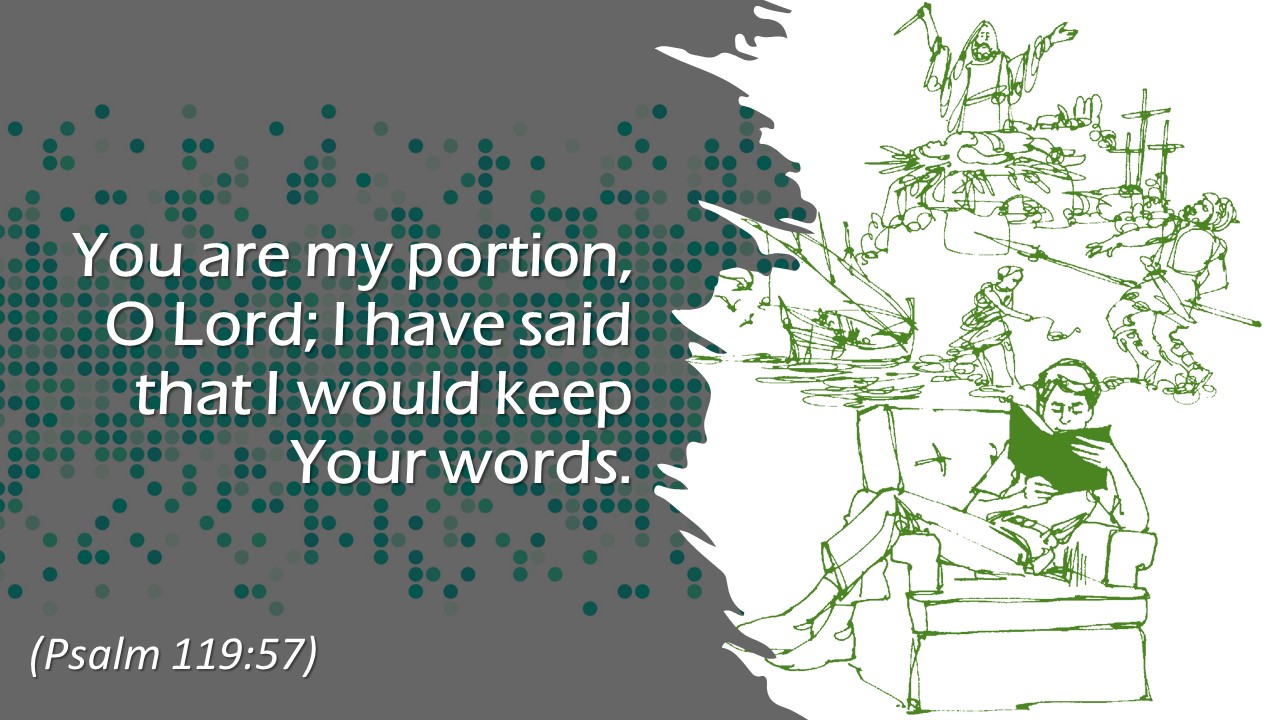
You are my portion, O Lord; I have said that I would keep Your words. I entreated Your favor with my whole heart; be merciful to me according to Your word. I thought about my ways, and turned my feet to Your testimonies. I made haste, and did not delay to keep Your commandments. The cords of the wicked have bound me, but I have not forgotten Your law. At midnight I will rise to give thanks to You, because of Your righteous judgments. I am a companion of all who fear You, and of those who keep Your precepts. The earth, O Lord, is full of Your mercy; teach me Your statutes. (Psalm 119:57-64)

You Are My Portion

The world is filled with the desires of wealth, appeals of honor, enjoyments for pleasure, and recognition of fame. Life can be governed by seeking the greatest amounts of wealth in every form. Men will seek to accomplish a noble act of significance to be honored with awards, prestige, and recognition. Pleasures drive the heart to seek after everything carnal in the pursuits of the lust of the flesh. The greatest reward many seek is to be remembered in history as a person of note. To know a man’s character, find out what his life goals are and what he hopes to accomplish in life. Living in large homes with every finery of life in the glitzy world of the “jet-set” crowd of flash is all many men seek. Lives are devoted to honing a craft to be the best in the field of sports, science, entertainment, or politics. For the majority of humanity, living one day at a time with the gusto of a passionate desire to enjoy every part of life is all they desire. Fame is all some men seek, and then they are remembered by two generations and forgotten as quickly.

Goals define a man. What is important to a man is how he will spend his life. Some men achieve all aspects of life that bring them wealth, honor, pleasure, and fame. But then an incredible irony takes place. They die. Their wealth goes to another, the honor they had will be remembered for a short time and forgotten, and all the pleasure they enjoyed dies with them in the grave. Fame is fleeting. A few generations will remember, but quickly the fame they earnestly craved is lost in the cobwebs of history found only in museums that few visit. The portion of life achieved is lost in the grave.

The psalmist had a goal in life, and he had a desire. His portion or inheritance was what he could know about God. Nothing else was as important and special to him as the knowledge of God’s word. The words of the Lord were his desire. Following the commandments of God was his only need. All he wanted in life was to learn the statutes of the heavenly Shepherd. His portion was singular. The inheritance of the Lord filled his cup. As the author of Psalm 119, the appeal to the power of the Old Testament gospel was all he wanted to know, experience, understand and share with others. His portion was the knowledge of God in every aspect. The beauty of this desire was it would never be taken away from him.

Wealth for the psalmist was the rich treasures of God’s word. The honor he sought was the blessing of a benevolent Father who would acknowledge a humble spirit. Pleasure came from hearing and obeying the word of the Lord. The fame the psalmist desired was only to hear his Lord say, “Well done, good and faithful servant.” All the trappings of the world were of no significance to the heart of the man had not forgotten the law of the Lord. At midnight, he rose to give thanks to the Father. His companions were those who feared the Lord. Defining the life of the psalmist was explained by the word of God. None of these blessings would be taken away from him. Death would not end his pleasure but increase his joy. He had the right priorities in life, and God rewarded him for it.

Posted in Uncategorized | Leave a comment

Things Improper For God’s Children

But fornication and all uncleanness or covetousness let it not even be named among you, as is fitting for saints; neither filthiness, nor foolish talking, nor coarse jesting, which are not fitting, but rather giving of thanks. For this you know, that no fornicator, unclean person, nor covetous man, who is an idolater, has any inheritance in the kingdom of Christ and God. (Ephesians 5:3-5)

Things Improper For God’s Children

Certain things should never be part of the Christian’s life. This has always been true how a child of God should live separate from the world’s influences. Saints are those who are in covenant with God through the blood of Christ, living above the standards of the world. It is not uncommon for the carnal mind to accept fornication as a part of life. Covetousness is an engine that drives the soul to look for happiness in material gain. The lottery is so popular because it is covetousness. Obscenities fill the airwaves, movie screens, social media and have become the language of the world. Foolish talking or coarse jesting is the speech of the worldly mouth engaging in the language of Ashdod. However, the Christian will not accept the standards of the world as their framework for life.

Ephesus was the capital of proconsular Asia. Paul visited the city near the end of his second missionary journey and established a church. There were many things in the city destructive to the character of the first disciples of the church. The Temple of Diana had been prominent in the city, with sexual immorality at the center of the religion. Ephesus was such a wealthy city, they rejected the coffers of Alexander the Great to rebuild the city destroyed by fire and paid for the project out of their own pockets. The background of Ephesus is strong in Paul’s letter to the church at Ephesus. He admonishes them to reject the lifestyle of the Ephesians. Fornication may be acceptable to the Ephesian culture, but no one called a child of God should engage in such immorality. Premarital sex was sinful. No Christian should be accused of such degradation.

Covetousness is the quiet sin that is often overshadowed by perceived larger sins. Ephesus was a town filled with wealth and materialism. Material gain was the goal of a city filled with riches. Everyone lived prosperous lives with an abundance of fine homes, servants, food, wine, expensive clothing, and a couple of Lexus chariots parked out front. Wealth was not the problem. The heart longing for and desiring those things is where sin produced a bumper crop of covetousness. Paul pleads with the Ephesians saints to not be known as greedy, materialistic people in the midst of the dark, sinful world of Ephesus. They were to stand apart from that kind of greed. The saint was also to be distinguished by the nature of his speech. It is easy to fall into the speech of the world to fit in with the world. The saint must change his speech to mold itself perfectly with the language of God. Filthiness, foolish talking, and coarse jesting do not the Christian make.

Paul’s plea is a strong warning. He desires for God’s people not to let those things that defile even be named among the church, as is fitting for saints. This same plea is needed today for Christians to refrain from activities associated with the world that identify them with the world. The people of God (saints) should not engage in sexual immorality. Do not engage in such activity that would bring shame and reproach to the church of Christ. Let the conduct of life (speech especially) be filled with the grace of God and not the language of the world. Paul makes it clear that those who engage in such activities will not inherit the kingdom of God. Engaging in sexual immorality, covetousness, and uncharacteristic speech will damn a soul to hell. The saint does not act that way. They set themselves above the pollutions of the world to be near the heart of God. There are things proper for the child of God, and there are things improper. A Christian makes a distinction.

Posted in Uncategorized | Leave a comment

It Begins With Desire

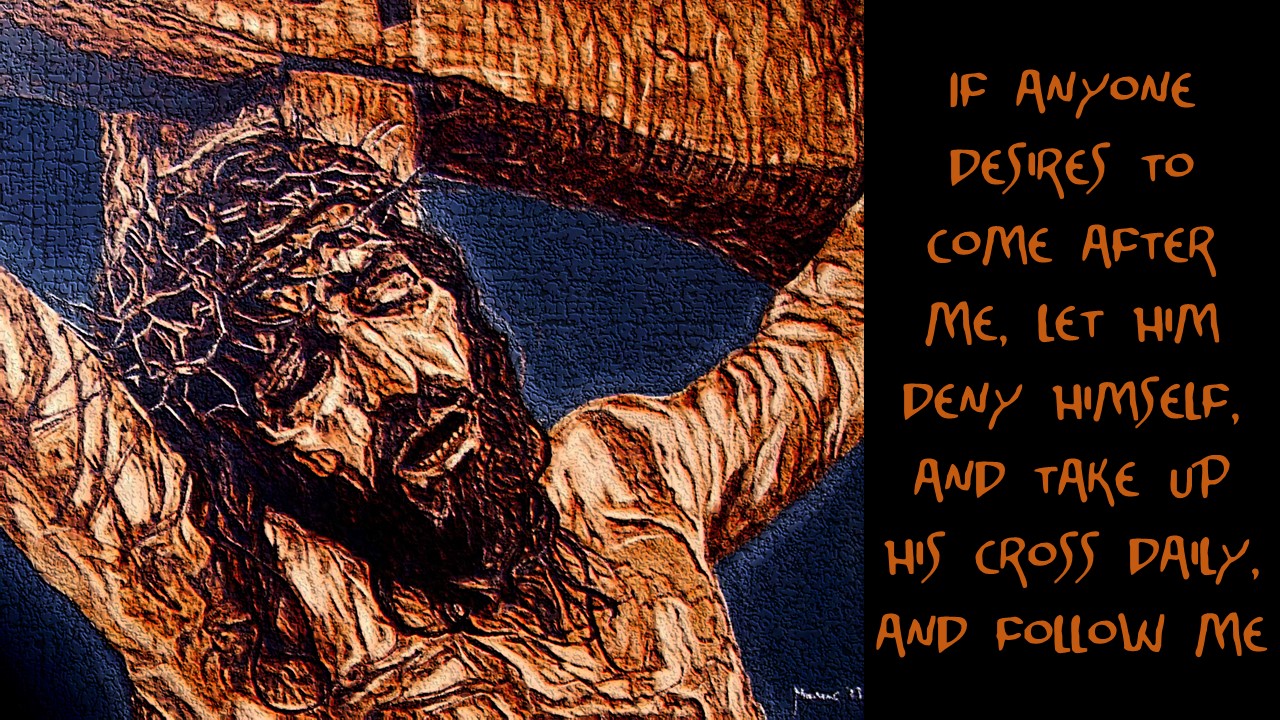
Then He said to them all, “If anyone desires to come after Me, let him deny himself, and take up his cross daily, and follow Me.” (Luke 9:23)

It Begins With Desire

Carrying a cross would not have been an appealing thought to the first-century disciples following Christ. Crucifixion was a common occurrence. The Romans perfected the craft of slowly killing a man with surgical precision with thousands nailed to crosses all across the empire. Golgotha was a place of crucifixion stinking with the smell of death. Many had suffered the cruel privations of humiliation and torture in the place where Jesus was crucified. The cross of Jesus was a frequently used piece of wood that had the blood of men filling its gaps and crevices. Birds flocked around the place of the skull feeding on the rotting remains of previous criminals left to die. Everything about the picture of crucifixion was a scene of horror, incredible suffering, and intense smells revolting to the nostrils of everyone.

Jesus called me to Him with an appeal to carry a figurative cross. The illusion of the price paid in cross bearing was the cost a man would pay to be a disciple of Jesus. This would not be a matter of choice whether to take up a cross or not. The only way – with no exceptions – to be a follower of the Son of God was to take up a cross daily and follow Jesus. A. W. Tozer explained the price of crucifixion when he wrote, “To be crucified means, first: the man on the cross is facing only one direction; second: he is not going back; and third: he has no further plan of his own.” The sanitized version of this crucifixion has led many to believe they can follow Jesus without taking up a cross. There is not only a price to be paid to be a Christian; it is a high cost. The will of man has become void, empty, and of no worth. Any man who comes to Jesus must empty himself of everything. Taking up a cross demands surrendering the total will.

The picture of the cross is the invitation Jesus used, drawing men to His kingdom. Before the cost of the cross is accepted, there must first be the desire of the heart to bear a cross, experience the suffering of crucifixion, and the willingness to endure until the end. Desire is where it must begin. Jesus said, “If anyone desires to come after Me.” Until this commitment is met, there will be no cross bearing. When the heart is not dedicated to suffering for Christ, they bear a plastic cross with wheels. There is no suffering. A cost has not been paid. The desire is to follow Jesus on the easy path. If there are conflicts involved, the heart is unwilling to comply. Desire is the total dedication of facing Jesus and asking for a cross.

The Romans gave Jesus His cross, but now the Lord delivers His cross to His followers and demands they desire it. Before a man is nailed to the cross of Jesus, he must confess his desire to be crucified. The irony of discipleship is Jesus had no choice when He was crucified and now demands all who come to Him choose to take a cross. That is where desire comes in. God will not force anyone to bear a cross. The cross of the Christian is one taken with a fervent desire to be like their King who suffered on a Roman cross and was without sin. Desire demands a choice. Bearing a cross is the ultimate sacrifice of self. When the desire is lacking, the commitment fails.

Picture for a moment standing at the cross of Jesus and seeing His suffering. As the Son of God dies, Joseph and Nicodemus come and take the body down. You raise your hand and tell the Roman centurion that you would like to be nailed to a cross. He asked you why and you tell him your heart’s desire is to be crucified like the man from Nazareth. The Romans comply. Your desire is fulfilled. Glory to God. Like Jesus was buried and arose, you suffer crucifixion and one day die so that you also can raise from the dead to the glory of the Father. And that was your desire at the beginning.

Posted in Uncategorized | Leave a comment

Kindness Toward The Unkind

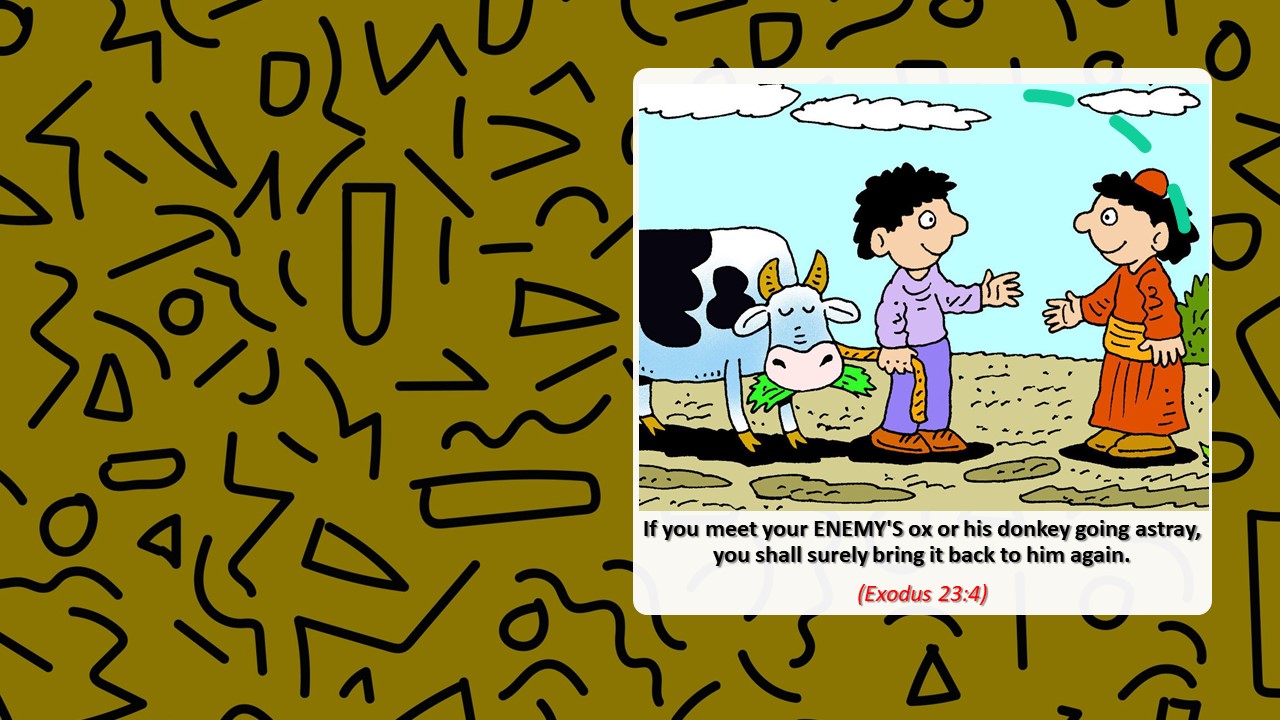
If you meet your enemy’s ox or his donkey going astray, you shall surely bring it back to him again. If you see the donkey of one who hates you lying under its burden, and you would refrain from helping it, you shall surely help him with it. (Exodus 23:4-5)

Kindness Toward The Unkind

An enemy is someone antagonistic to another, seeking to injure, overthrow, or bring harm to another. To have enemies is to know that relationships are strained to the breaking point of anger and hatred. Since the beginning of time, the world has been filled with individuals that seek harm to others and nations that go to war against perceived enemies. Jealousy, envy, strife, and selfishness have led to families becoming enemies of one another, nations dividing into a civil war where brother fights against brother, and among the people of God, friendships deteriorating to hostility (King Saul and David). Among the many commands of the Law of Moses, God required His people to treat their enemies with compassion.

The natural response when a man finds the animal of his enemy going astray is to help it go in the wrong direction or to make sure the animal never returns to its master. That would bring satisfaction of revenge against the one who seeks to injure the person. A man walks down the road and finds the donkey of his enemy collapsed under a heavy load crying out in pain, unable to gain its footing. It would be easy to laugh at the plight of the stricken animal and allow it to die because it belonged to an enemy. That would teach the enemy a lesson and bring pain to him. God forbids the act of vengeance against an enemy. Moses is not writing about good suggestions for learning how to get along with an enemy. What he writes down in the law are commands, judgments, and statutes requiring the individual not to have feelings of hatred toward their enemies.

Using animals as an illustration of compassion shows the depth of love and concern a child of God must have for their enemies. An animal can be abused at the enemy’s expense, but God forbids the child of God to allow such abuse. Two things happen when the law is followed. The animal is relieved, and the enemy is shown compassion. Then animal does not learn any lesson, but the enemy does. This is a character-building and humbling experience. Imagine the surprise on a man’s face when he looks out over the field and sees his enemy leading his ox back to the corral. In an agrarian society, animals are the lifeblood of survival. They are not pets. These animals are necessary for life itself. As a beast of burden, a donkey is a machine to move vital goods to market. Finding a donkey of an enemy lying under a burden could be financial ruin for him. God commands holy people to help the enemy and bring a blessing to the enemy.

Jesus instructs His disciples to love their enemies and do good to them. This is not a new command, but now the example of love for enemies is found in the sacrifice of Jesus Christ. Humanity had gone astray in a rebellious spirit of defiance against God and became burdened with the weight of sin. Like the donkey, which could not lift the burden, sin oppressed the soul of man with no relief. There was no help. God did not look upon humanity with hatred and malice. Mankind was the enemy of God. Make no mistake about the putridity of man’s condition before a righteous Lord. Only through the benevolent love of a gracious God was the burden of sin lifted and man restored to the sheepfold of God. What God did for man is what God demands men do for one another.

The world has a view of enemies that is based on revenge. Anyone who is an enemy deserves all the harm that can be done to be brought upon them with full force. No quarter and no relief. If that were the view of God, the world would have been destroyed long ago. An example of God’s love is how holy people view their enemies. When we were enemies of a righteousness God, we were reconciled to God through the death of His Son. Because God loved humanity (enemies), in Christ, we have been reconciled and saved by His life. In this world, there will be those who seek the harm of God’s people. Let no animosity or hatred spring up in the hearts of those devoted to the love of God. Be kind to the unkind, and you will find the forgiving grace of God.

Posted in Uncategorized | Leave a comment

The Winds And The Sea Obey Him But Not Men

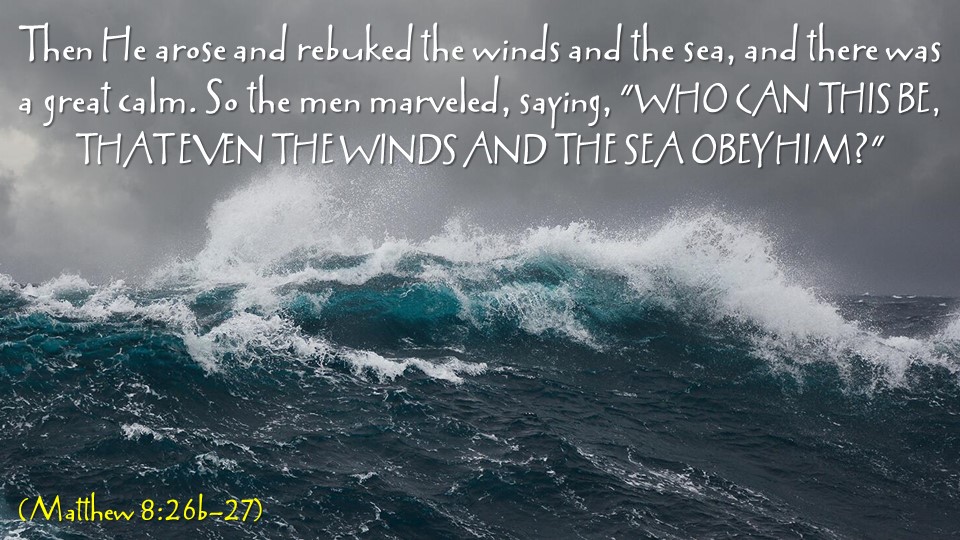
Now when He got into a boat, His disciples followed Him. And suddenly a great tempest arose on the sea so that the boat was covered with the waves. But He was asleep. Then His disciples came to Him and awoke Him, saying, “Lord, save us! We are perishing!” But He said to them, “Why are you fearful, O you of little faith?” Then He arose and rebuked the winds and the sea, and there was a great calm. So the men marveled, saying, “Who can this be, that even the winds and the sea obey Him?” (Matthew 8:23-27)

The Winds And The Sea Obey Him But Not Men

Jesus proved He was the Son of God through the miracles, signs, and wonders He did in the presence of the people. There was never a doubt a miracle happened with the harshest critics of Jesus acknowledging a miracle had taken place. The variety of wonders performed by the hand of the Lord established His dominion over nature, time, distance, quantity, disease, and death. Jesus was not limited by His miracles. He took five loaves of bread to two fishes and fed more than five thousand people. His rising from the dead exalted His place as a divine being sent from the Father. Walking on water was natural for the One who created the seas.

It was a challenge for the peers of Jesus to see Him as anything but a man. Even the disciples of Jesus, while witnessing the power of Jesus to heal lepers, a centurion’s servant (long distance), the mother-in-law of Peter, demon-possessed people, and all who were sick could not grasp the enormity of His power. Peter, Andrew, James, and John were seasoned sailors accustomed to the dangers of the open water. Leaving the multitudes and seeking solitude on the sea, Jesus and the twelve find themselves in a great tempest with waves covering the boat. The Lord is exhausted from His work and has taken refuge on the boat, falling fast asleep. As the storm rages, the Lord sleeps but not so with the twelve. The violence of the storm brought great fear to their hearts believing they would perish. They are so fearful; they wake Jesus to warn Him of the impending doom.

Rising from sleep, Jesus is frustrated with the faith of His disciples. If they had seen the miracles by His hand earlier, what reason would there be to fear a storm? Miracles, signs, and wonders confirm deity, and if Jesus could do all manner of signs, what fear would there be for the disciples who saw Jesus sleeping in the storm. They may not have been able to sleep but looking at Jesus asleep in such a violent storm should have assured them that nothing would happen to them. Jesus arose and rebuked the winds and the sea, and immediately, all was calm. That must have been an incredibly powerful moment from terrifying chaos and impending death to the Sun shining, calm seas, and safety. The twelve stood in awe at the power of Jesus. Why should they wonder who the man before them was, but they did? Who else could calm a storm but the Son of God?

The faith of the disciples had a long process to understand the power of Jesus. Eleven of those terrified men would go on to preach the gospel to the world, and ten would die a martyr’s death. They were unsure how powerful Jesus was, but they learned there were no limitations to His power. Belief overwhelmed them when they saw the miracles. Jesus performed many miracles, but eventually, most men denied the Lord and refused to walk with Him. The winds and the waves obeyed the voice of the Lord because they understood who held dominion over them. Sadly, most men today hear the voice of Jesus and refuse to acknowledge Him. The miracles of Jesus proved Him to be the Son of God, instilling faith in honest hearts to obey Him. Nature cries forth with obedience from its Creator and Maker, and the one creature made in the image of God denies Him. When the Lord returns, the winds and the waves will be destroyed. Man will not. He will stand before the judgment bar of God to answer for how he accepted or rejected the power of Jesus. Who can this be, that even the winds and the sea obey Him? Jesus Christ is His name.

Posted in Uncategorized | Leave a comment